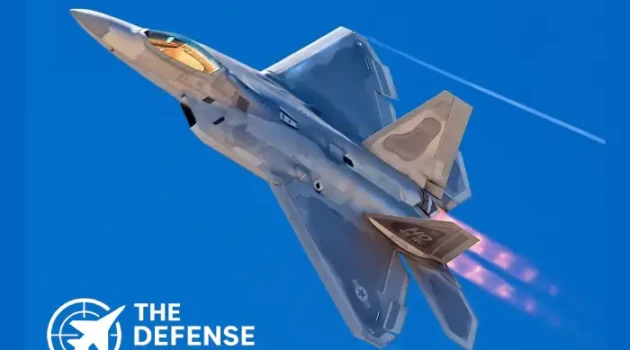
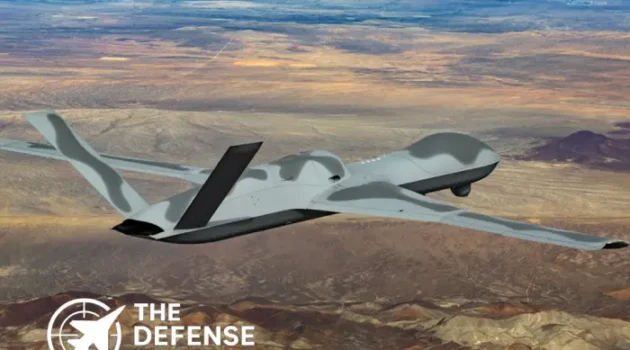
In a landmark demonstration on October 21, 2025, General Atomics Aeronautical Systems (GA-ASI), Lockheed Martin, and L3Harris successfully executed a cre wed-uncrewed teaming flight test in which an F-22 Raptor pilot commanded an MQ-20 Avenger drone integrated on board – a first of its kind. The exercise, carried out at the Nevada Test and Training Range, marks a significant step forward in the U.S. Air Force’s push toward Collaborative Combat Aircraft (CCA) and advanced manned-unmanned operations.
What Happened: The Flight Test Details
- The test involved installing two L3Harris software-defined radios (SDRs): one aboard the F-22, and another aboard the MQ-20.
- These radios used L3Harris’ BANSHEE advanced tactical datalinks and the Pantera SDR system integrated via Lockheed Martin’s open-radio architecture.
- From the cockpit, the F-22 pilot used a Pilot Vehicle Interface (PVI) tablet in conjunction with a new GRACE module (“Government Reference Architecture Compute Environment”) to send commands.
- GA-ASI characterized the communications chain as entirely non-proprietary and fully U.S. government-owned, built on Open Mission Systems principles.
Technical and Strategic Context
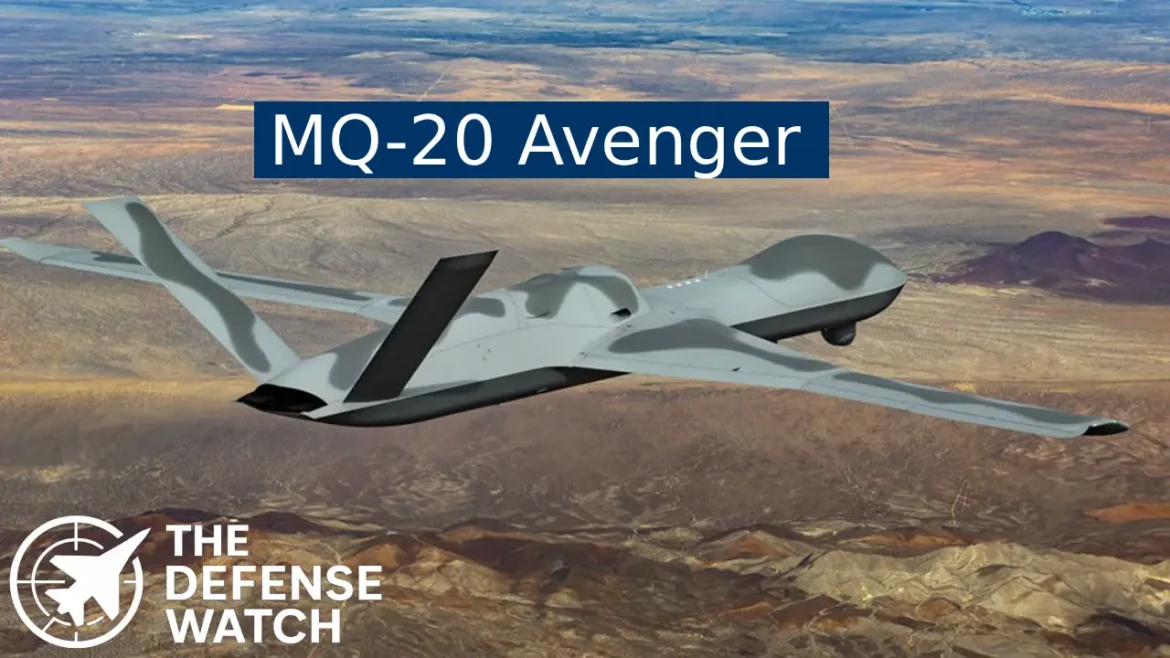
The MQ-20 Avenger is a stealthy, jet-powered unmanned combat aerial vehicle (UCAV) developed by GA-ASI. Unlike turboprop drones, it features a low-observable profile, internal weapons bays, and high speed/endurance.
Over the past year, the Avenger has been integrated with autonomy software, most notably Shield AI’s Hivemind, enabling it to conduct complex maneuvers like combat air patrols and simulated air-to-air engagements.
Moreover, this F-22/Avenger test follows previous milestones, such as the U.S. Navy’s live-control flight of the MQ-20 via a carrier-based ground station using Lockheed Martin’s MDCX platform.
Why This Matters: Analysis
Advancing the CCA Vision
This demonstration directly feeds into the U.S. Air Force’s Collaborative Combat Aircraft (CCA) strategy, which envisions manned fighters working alongside autonomous “drone wingmen” to enhance combat effectiveness, resilience, and flexibility.
By showing that a legacy platform like the F-22 can control an autonomous UCAV using open-architecture radios, the test proves that even older high-end assets can be rapidly modernized for future force structures.
All-Domain Connectivity and Interoperability
The use of non-proprietary, government-owned datalinks is particularly significant. It ensures greater resilience against supply-chain vulnerabilities, expands opportunities for allied interoperability, and reduces dependence on single-vendor systems.
Modular Autonomy in Action
Coupled with earlier tests of Shield AI’s Hivemind software, this trial underscores how modular autonomy (open architectures + reference software) can deliver agile, rapidly fieldable capabilities.
This model supports future scaling: additional drones, different fighter jets, or alternative autonomy stacks can be integrated without rearchitecting the entire system.
Implications for Force Multiplication and Cost Efficiency
If F-22s (and eventually other fighters) can reliably control UCAVs, it could dramatically expand the force’s reach. Pilots may direct more assets for strike, surveillance, or suppression missions, potentially reducing the number of manned sorties required and lowering risk to human pilots.
Challenges and Considerations
- Security & Jamming Risks: In contested electromagnetic environments, maintaining reliable datalink performance under jamming or cyberattacks remains a critical concern.
- Pilot Workload: Managing a high-performance fighter and simultaneously controlling a drone raises questions about cognitive load and ergonomic design.
- Certification & Safety: Extensive testing will be required to certify such systems for regular operational use, especially considering safety, autonomy fail-safes, and emergent behavior in contested airspace.
- Scalability: While this was a company-funded R&D demo, scaling to full operational deployment (across squadrons) will involve cost, logistics, training, and sustainment challenges.
Conclusion & Outlook
The F-22–MQ-20 Avenger teaming test represents a major milestone in the U.S. drive toward crewed-uncrewed collaborative warfare. By proving that a stealth fighter can directly command a stealth drone using open, government-owned datalinks, industry and the Air Force are laying the technical and doctrinal foundation for scalable Collaborative Combat Aircraft operations.
Looking ahead, we can expect further demonstrations involving other platforms (e.g., F-35, F-15), more sophisticated autonomy stacks, and perhaps even live-fire exercises. As the CCA vision matures, such teaming concepts could reshape how the U.S. projects airpower — blending human judgment with autonomous persistence, creating more flexible, resilient, and distributed mission architectures.
What Happened
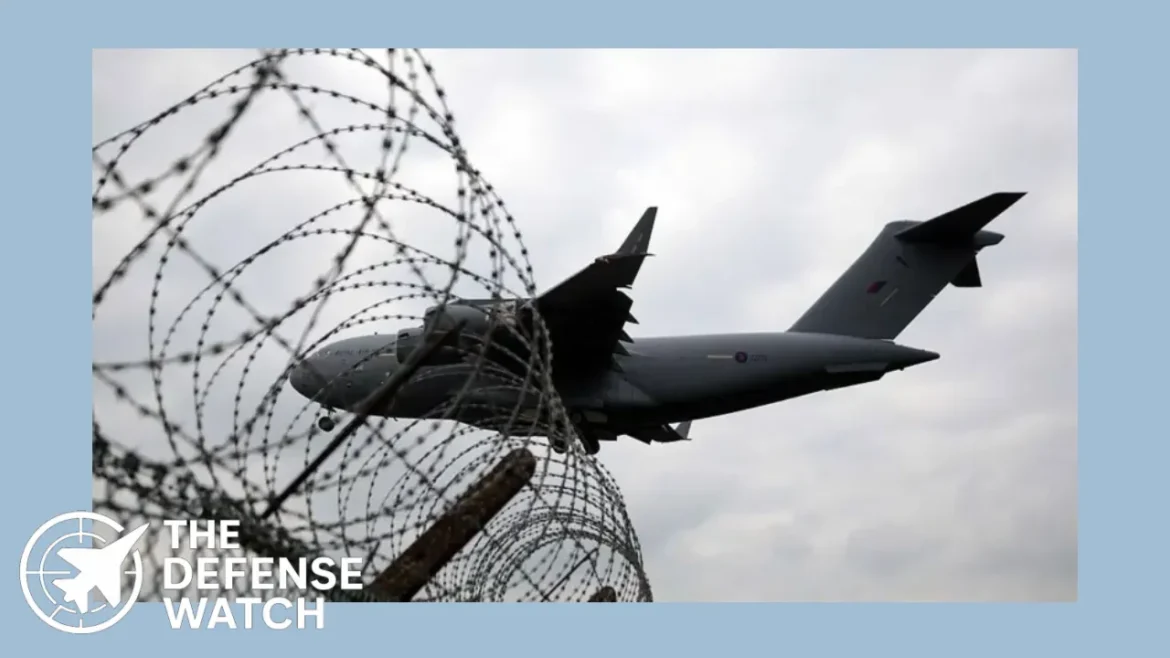
A recent BBC report alleges that Pakistan sold 155 mm artillery shells to Ukraine via contracts worth $364 million, involving two U.S. companies: Global Military and Northrop Grumman. The report claims these deals were signed in August 2022 and subsequently carried out via deliveries that involved British military cargo flights. Pakistan’s Foreign Office, however, strongly denies the claims, reiterating its formal stance of “strict neutrality” in the Russia-Ukraine war.
Background
The allegations appear in a BBC Urdu investigative report, which draws on U.S. Federal Procurement Data System documentation. According to the report:
- A $232 million contract was awarded to Global Military.
- A $131 million contract went to Northrop Grumman.
- Both agreements reportedly expired in October 2023.
- The munitions were allegedly transported from Nur Khan Air Base in Pakistan, flown by a British military transport aircraft that made multiple stops in Cyprus and Romania on its way to Ukraine.
Pakistan’s Foreign Office and its Defense Ministry, meanwhile, have firmly rejected the report.
Why It Matters
If validated, these arms sales would represent a serious challenge to Pakistan’s declared neutrality in the Russia-Ukraine war. More broadly:
- Geopolitical Risk: The deal could strain Pakistan’s diplomatic balancing — potentially undermining relations with Russia or raising questions about its broader security policies.
- Defense Export Implications: Pakistan is increasingly seen as an emerging defense exporter. This report could raise transparency and compliance concerns about its defense export regime.
- Trust & Credibility: For Western partners and Pakistan’s own regional allies, allegations of clandestine arms transfers complicate its credibility as a responsible defense actor.
Expert Perspective
Defense analysts note that while the BBC report draws on public procurement data, independent verification remains a challenge. U.S.-based security experts observe:
- U.S. defense sales to Pakistan are typically subject to rigorous export controls. If the report is accurate, it raises questions about oversight gaps in the contracting process.
- The timing of the contracts — August 2022 — coincides with a period of intense fighting in Ukraine, which could suggest deliberate risk-taking by Pakistani actors.
- On the other hand, Pakistani analysts argue that such transactions may have been structured in a way to obscure end-use, a tactic sometimes used in global arms trade to preserve plausible deniability.
Policy-wise, some experts warn of potential fallout: Western countries may demand tighter export monitoring, while Russia could perceive Pakistan’s role as adversarial, potentially diminishing Islamabad’s value as a regional balancer.
What’s Next
- Independent verification: Observers and governments will likely press for detailed audits of procurement and logistics records.
- Diplomatic fallout: Depending on the outcome, Pakistan may face greater diplomatic scrutiny, especially from major powers invested in European security.
- Defense posture recalibration: Islamabad might further tighten its export regulatory regime to avoid reputational damage and maintain alliances.
- Strategic signaling: Pakistan’s response could shape how future defense cooperation deals — both civilian and military — are negotiated.

Historic Defense Pact Signed in Paris
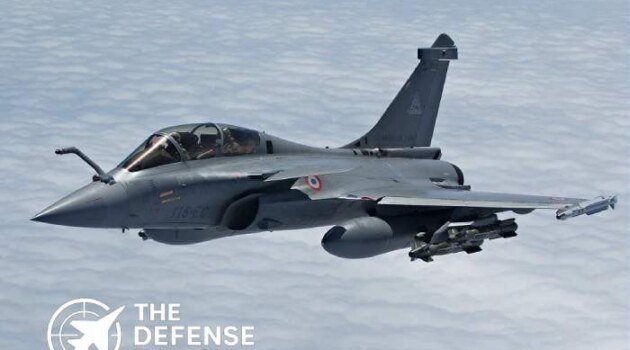
Ukrainian President Volodymyr Zelenskyy and French President Emmanuel Macron signed a historic defense agreement on November 17, 2025, at Villacoublay Air Base near Paris, establishing a framework for Ukraine to acquire up to 100 Dassault Rafale F4 fighter jets and eight SAMP/T next-generation air defense systems. The 10-year strategic cooperation agreement represents one of the largest single combat aircraft acquisitions in Ukrainian military history and signals France’s commitment to Ukraine’s long-term security architecture.
The agreement was signed as heavy Russian drone and missile attacks on Ukraine have increased in recent weeks and Moscow has reported sharp ground advances in the southeastern Zaporizhzhia region. Zelenskyy described the signing as a truly historic moment for both nations, emphasizing that it will significantly strengthen Ukraine’s combat aviation and air defense capabilities.
Background: Ukraine’s Multi-Platform Fighter Strategy
The Rafale acquisition is part of Ukraine’s broader efforts to increase its long-term fighter fleet to 250 warplanes, including the U.S. F-16 and Sweden’s Gripen. This three-platform strategy represents a fundamental transformation of the Ukrainian Air Force from Soviet-era aircraft to a modern Western-equipped force capable of deterring future Russian aggression.
France has emerged as a critical pillar of Western support for Ukraine since the February 2022 full-scale invasion. Paris previously supplied Mirage 2000-5F fighter jets, SCALP long-range cruise missiles, and jointly delivered with Italy a SAMP/T air defense battery that proved its effectiveness by shooting down its first Russian aircraft in March 2025. The current agreement builds upon this foundation while addressing Ukraine’s urgent need for enhanced air defense capabilities against Russia’s sustained aerial campaign, which currently involves approximately 1,700 drone strikes per week plus ballistic and cruise missile attacks.
Details of the Defense Agreement
Rafale F4 Fighter Acquisition
The agreement enables Ukraine to purchase 100 Rafale F4 aircraft for Ukraine’s combat aviation by 2035. The Rafale F4, manufactured by Dassault Aviation, represents one of Europe’s most advanced 4.5-generation multirole fighters, capable of air-to-air combat, precision ground strikes, maritime operations, and even nuclear strike delivery missions.
The Elysee Palace confirmed that the purchases covered by the letter of intent would span the next 10 years. Initial deliveries are not expected until at least 2029, with the full fleet operational by 2035. The extended timeline reflects both the rigorous training programs required for pilots transitioning from Soviet-era platforms and the production capacity constraints faced by Dassault Aviation.
The Rafale package includes associated advanced weaponry systems, including SCALP long-range cruise missiles, AASM Hammer precision-guided bombs, MICA short- and medium-range air-to-air missiles, and Meteor beyond-visual-range air-to-air missiles. These weapons systems will provide Ukrainian forces with standoff strike capabilities and enhanced air superiority options against Russian aviation.
SAMP/T Next-Generation Air Defense Systems
Ukraine aims to acquire eight SAMP/T systems, each comprising six launchers. Macron announced that Ukraine will receive a “new generation” of the SAMP/T missile interceptor, largely comparable to the U.S.-made Patriot system, which will be available in 2026.
The SAMP/T NG (next generation) system represents a significant upgrade over current models. According to French defense officials, the system demonstrates superior performance against advanced Russian missile threats, including adapted flight profiles designed to evade interception. Ukraine’s existing SAMP/T batteries have proven highly effective, with French sources noting the system successfully intercepts Russian missiles that evade Patriot defenses.
Eight complete systems will be supplied, each comprising six launchers of eight missiles. The package includes Aster 30 surface-to-air missiles produced by European consortium MBDA, designed to counter ballistic missiles, cruise missiles, and aircraft across multiple threat vectors.
Additional Defense Cooperation
The wider package includes the Ground Master 200 radar from Thales, and unmanned platforms including the X-Wing Interceptor drone from Alta Araes for counter-UAS missions and Delair’s DT-46 and UX-11 tactical UAVs for reconnaissance, mapping, and artillery correction.
Macron stated that some deliveries of drones, interceptor drones and guided bombs would come in the “very short term” with manufacturing commitments made for the coming three years. This indicates immediate capability enhancements even as longer-term platform acquisitions proceed through development and training cycles.
Strategic and Operational Implications
Transformation of Ukrainian Air Power
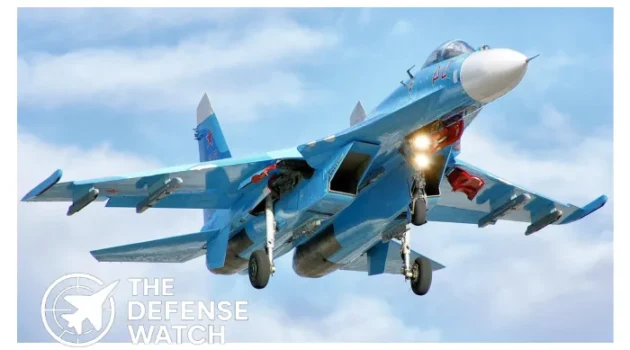
The Rafale acquisition marks a watershed moment for the Ukrainian Air Force. Moving from legacy MiG-29 and Su-27 platforms to advanced Western fighters like the Rafale F4 represents a generational leap in combat capability across every domain: sensor fusion, network-centric warfare, precision strike, electronic warfare, and sustained operations tempo.
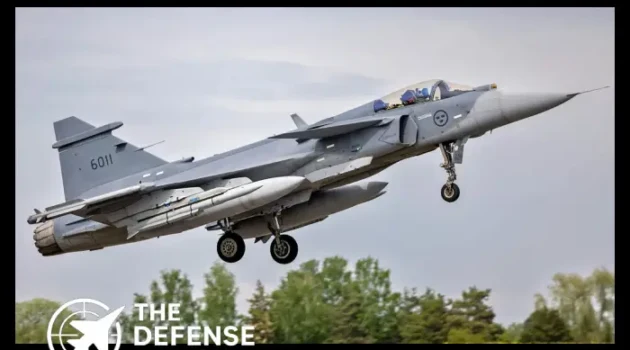
Together with the previous agreement signed with Sweden, this new deal would in theory see Ukraine’s air force as the first operator of both the Dassault Rafale and Saab Gripen, which would quickly catapult the Ukrainian Air Force to become one of the most well equipped air arms in Europe if full numbers are realized.
Ukraine signed a letter of intent with Sweden in October 2025 to explore acquiring up to 150 Gripen E fighters. Combined with ongoing F-16 deliveries from Denmark and the Netherlands, Ukraine is positioning itself to field a diverse, interoperable fleet of Western combat aircraft exceeding 250 fighters. This multi-platform approach provides operational flexibility, reduces single-source dependency, and complicates adversary targeting and planning.
Industrial Cooperation and Co-Production
When questioned over the financing of the deal, Zelenskyy indicated Ukraine was examining the possible co-production of the French-made jets. Co-production arrangements could address several strategic objectives simultaneously: reducing per-unit costs through economies of scale, establishing indigenous aerospace manufacturing capabilities within Ukraine, creating high-value employment opportunities, and ensuring long-term sustainment and upgrade paths independent of foreign supply chains.
Such arrangements would follow established precedents in European defense cooperation, where partner nations participate in manufacturing and maintain their own sustainment capabilities. For France, expanded production runs help amortize development costs and strengthen Dassault’s position in the competitive international fighter market.
Air Defense Architecture Enhancement
The SAMP/T NG systems address Ukraine’s most pressing operational requirement: defending against Russia’s relentless missile and drone campaign targeting critical infrastructure, particularly energy facilities as winter approaches. The system’s demonstrated effectiveness against advanced Russian threats makes it a cornerstone of Ukraine’s layered air defense architecture.
The integration of eight complete SAMP/T NG batteries would provide Ukraine with theater-level air and missile defense capabilities comparable to major NATO member states. Combined with existing Patriot systems supplied by the United States and Germany, NASAMS batteries from Norway, and shorter-range systems from various partners, Ukraine is constructing one of the most comprehensive integrated air defense networks in Europe.
Policy and Geopolitical Context
France’s Leadership in European Security
France, along with Britain, has pushed for the creation of a coalition of about 30 countries willing to send troops and assets to Ukraine or along its western borders once a peace deal with Russia is agreed. This Coalition of the Willing framework aims to provide credible security guarantees that deter future Russian aggression even in the absence of formal NATO membership.
Standing alongside Zelenskyy at a news conference, Macron stated the two countries were putting in place the security guarantees required for any possible peace agreement with Russia that may be negotiated down the line. This positions military aid not merely as assistance during active conflict, but as foundational elements of a future European security architecture.
Macron’s approach reflects broader French strategic thinking about European defense autonomy and France’s historic role as a leading military power on the continent. With questions surrounding long-term American commitment to European security, particularly given political volatility in Washington, France and Britain are positioning themselves as anchors of sustained support for Ukraine.
Financing and Budget Considerations
Sources indicated it was not clear how these deals would be financed. French defense officials acknowledged that political and budgetary instability in Paris raises questions about funding mechanisms. Potential approaches include direct French government financing, European Union instruments like the European Peace Facility, international consortium funding, or long-term credit arrangements.
The Ukrainian government may also explore creative financing structures leveraging frozen Russian assets, international loans backed by future reconstruction commitments, or deferred payment schedules tied to post-war economic recovery. These mechanisms would allow Ukraine to secure critical capabilities without immediate cash outlays during wartime fiscal constraints.
Timeline and Training Requirements
Operating advanced jets would take time given the rigorous training program for would-be pilots. Transitioning pilots from Soviet-era aircraft and tactics to Western platforms requires comprehensive retraining encompassing flight operations, weapons employment, maintenance procedures, and integration with NATO-standard command and control systems.
Initial deliveries beginning in 2029 provide a realistic timeline for establishing training pipelines, potentially at French military flight schools or specialized international training centers. France may leverage its existing Rafale training infrastructure, which already supports international customers including Egypt, Qatar, India, and Greece.
The extended timeline also allows for infrastructure development within Ukraine: construction or modification of airbases to Western standards, establishment of maintenance and logistics facilities, and creation of secure operational dispersal sites to protect valuable assets from Russian strikes.
Expert Analysis: Building Deterrence Through Capability
Defense analysts emphasize that the letter of intent, while not a binding contract, sends powerful strategic signals. By publicly committing to long-term defense cooperation, France and Ukraine demonstrate resolve that the conflict will not result in Ukrainian capitulation and that Western nations are prepared to support Ukrainian sovereignty for decades.
The multi-platform fighter strategy reduces risk compared to single-source dependencies. If production delays, technical issues, or political complications affect one platform, Ukraine maintains alternatives. This approach also creates competitive pressures among suppliers to deliver quality products and support on favorable terms.
Several analysts note, however, that a letter of intent differs substantially from executed contracts with firm delivery schedules and payment terms. Converting intent into operational capabilities requires sustained political will, consistent funding, and successful navigation of complex defense industrial processes across multiple nations.
The psychological and political dimensions may prove as significant as the military hardware itself. Russia must plan for a Ukrainian military capable of fielding several hundred modern Western fighters with advanced weapons systems. This fundamentally alters the strategic calculus for any future Russian military action and may influence current battlefield decision-making as Moscow assesses long-term trends unfavorable to Russian objectives.
Looking Ahead: Implementation Challenges and Next Steps
Converting this historic agreement into operational capability faces several challenges. First, financing mechanisms must be finalized and sustained across multiple budget cycles in both France and Ukraine despite political uncertainties. Second, training pipelines must be established to produce sufficient numbers of qualified pilots, maintainers, and support personnel. Third, infrastructure development within Ukraine must occur while the country remains under active attack.
Fourth, industrial production rates must meet ambitious delivery schedules while Dassault fulfills existing commitments to other international customers. Fifth, weapons integration and tactical doctrine development must occur to effectively employ these platforms within Ukraine’s operational environment and command structure.
Despite these challenges, the agreement represents tangible progress toward Ukraine’s strategic objective of building a military capable of deterring future Russian aggression. The combination of advanced fighters and state-of-the-art air defense systems addresses Ukraine’s most critical capability gaps while signaling long-term Western commitment to Ukrainian security.
France will prepare a new defense aid package for Ukraine by year’s end, according to Ukrainian presidential statements. Additional announcements may clarify interim capability deliveries, financing arrangements, and specific implementation timelines for various agreement elements.
The Ukrainian defense establishment faces the complex task of simultaneously fighting a present war while building forces for future contingencies. Success requires balancing immediate operational needs against long-term force structure goals, integrating multiple disparate weapons systems from different suppliers, and maintaining combat effectiveness during fundamental organizational transformation.
Conclusion: Historic Milestone in Ukraine-France Relations
The November 17 agreement between Ukraine and France marks a historic milestone in bilateral defense relations and European security architecture. By committing to supply up to 100 advanced Rafale fighters and eight next-generation SAMP/T air defense systems over the next decade, France demonstrates long-term commitment to Ukrainian sovereignty and deterrence of Russian aggression.
While implementation challenges remain significant, the agreement establishes a framework for transforming the Ukrainian Air Force into a modern, Western-equipped force capable of defending the nation’s airspace and projecting power across operational theaters. Combined with parallel agreements with Sweden and ongoing F-16 integration, Ukraine is positioning itself to field one of Europe’s most capable air forces.
The strategic implications extend beyond immediate military capabilities. France and its partners are constructing security architecture designed to function whether or not Ukraine achieves NATO membership, providing credible deterrence against future Russian adventurism. This approach acknowledges current geopolitical realities while creating pathways toward long-term stability in Eastern Europe.
As winter approaches and Russian aerial attacks intensify, the agreement offers both immediate hope through near-term deliveries of drones and guided weapons, and long-term assurance that Ukraine will possess the capabilities necessary to defend itself for decades to come.

Recent footage from Russian military channels reveals a troubling development for Moscow’s air defense capabilities: Cold War-era surface-to-air missiles from the 1970s are being jury-rigged onto more modern launcher systems, suggesting Russia may be running critically low on interceptor missiles as Ukraine’s relentless drone campaign continues to intensify.
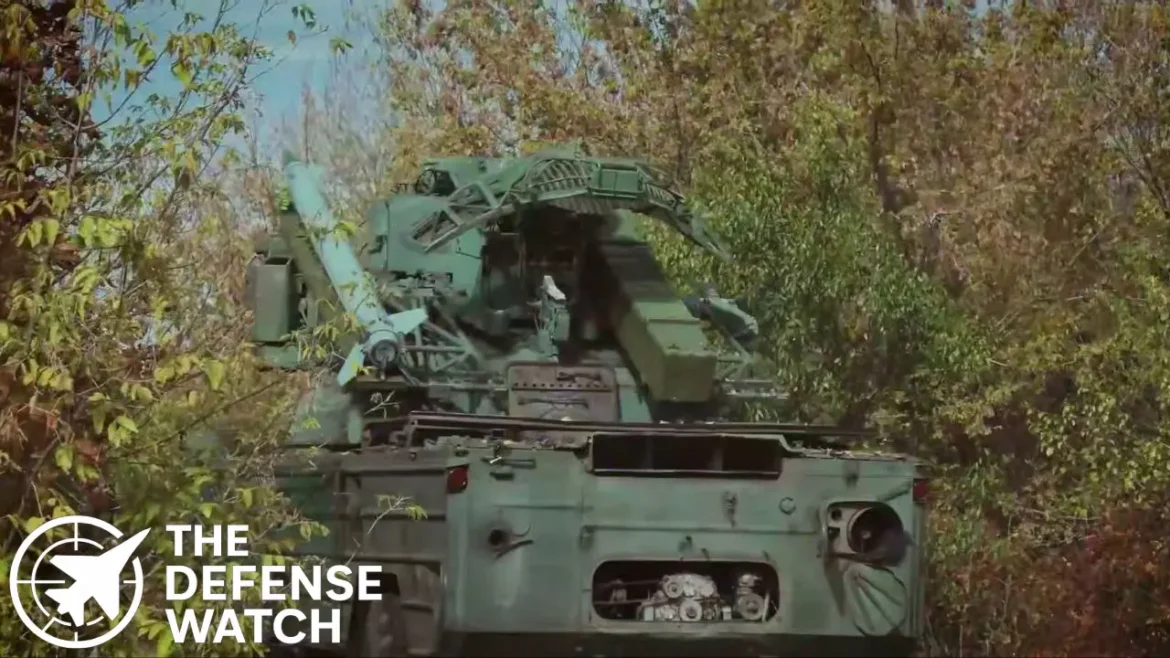
The imagery shows a combat-ready 9K33M3 Osa-AKM system loaded with aging 9M33 missiles—hardware designed five decades ago—instead of the standard 9M33M3 missiles the launcher was built to carry. Defense analysts view this improvised configuration as a potential indicator that Russia’s air defense missile production cannot keep pace with consumption rates driven by Ukrainian unmanned aerial vehicle operations.
Cold War System Adapted for Modern Shortages
The Osa air defense system entered Soviet service in 1970 as the 9K33, carrying four 9M33 missiles without protective transport-launch containers. The system underwent significant upgrades throughout the following decade. In 1975, the 9K33M2 Osa-AK variant increased missile capacity to six rounds and introduced the improved 9M33M2 missile, which required different mounting hardware and was stored in sealed containers.
The final major upgrade came in 1980 with the 9K33M3 Osa-AKM, featuring enhanced 9M33M3 missiles with modernized proximity fuzes and updated electronics designed specifically for engaging helicopters and low-flying aircraft. This represented a two-generation leap in capability over the original system.
What Russian forces have now done is reverse this technological progression. Mechanics appear to have salvaged original 9M33 mounting brackets from decommissioned 9K33 systems and bolted them directly onto Osa-AKM launchers—a configuration never intended by Soviet designers. Photographs show one obsolete 9M33 missile mounted alongside a newer containerized round, creating a mismatched hybrid system.
Implications for Russian Air Defense Capacity
This improvisation carries significant strategic implications. While the modification required minimal technical effort—possibly no software changes whatsoever—its necessity suggests Russian stockpiles of modern 9M33M3 interceptors are running dangerously low. There is no publicly available evidence that production of these missiles continues, and if it does, output appears insufficient to meet operational demands.
Ukraine’s drone warfare strategy has proven remarkably effective at forcing exactly this kind of resource exhaustion. By deploying large numbers of relatively inexpensive unmanned systems—many costing a fraction of the missiles used to intercept them—Ukrainian forces are imposing unsustainable attrition on Russian air defense stocks.
The decision to reintroduce 50-year-old missiles into frontline service, even on systems no longer considered primary air defense assets, indicates the shortage extends beyond elite units to reserve and secondary formations. Russia should theoretically possess substantial reserves of 9M33 missiles in storage, as the naval Osa-M variant deployed on Russian warships also uses this ammunition type.
U.S. Defense and Strategic Context
For U.S. defense planners, this development offers several key insights. First, it validates Western assessments that sustained attrition warfare—even with asymmetric weapons like drones—can strain Russian logistics and industrial capacity despite Moscow’s vast Cold War inheritance.
Second, it demonstrates the vulnerability of air defense networks to high-volume, low-cost aerial threats. The U.S. military has invested heavily in counter-drone technologies, but the Ukrainian model shows how quantity can overwhelm quality when interceptor production cannot match consumption rates.
Third, the situation highlights Russia’s limited defense industrial reconstitution capacity. Despite transitioning to a wartime economy, Moscow appears unable to scale production of critical munitions fast enough to replace combat losses. This suggests Western sanctions on electronics and precision components are having measurable effects on Russian military manufacturing.
Interestingly, Ukraine faced similar air defense missile shortages earlier in the conflict and responded with an even more ambitious improvisation: integrating R-73 air-to-air missiles onto Osa launchers. That modification required far more complex engineering than Russia’s current bracket-swapping approach, but it demonstrated how necessity drives innovation under combat pressure.
Future Outlook and Strategic Assessment
The reappearance of obsolete missiles on modernized launchers represents more than a technical curiosity—it signals a critical inflection point in Russia’s ability to sustain air defense operations. As Ukrainian drone production accelerates with Western support, and as attacks on Russian oil infrastructure and military installations intensify, Moscow faces a stark choice: accept degraded air defense coverage or divert resources from other military priorities to interceptor production.
For NATO and U.S. planners, the lesson is clear: long-term attrition strategies backed by industrial capacity can achieve strategic effects even against numerically superior adversaries. The Ukrainian drone campaign has demonstrated that relatively modest investments in unmanned systems can impose disproportionate costs on conventional air defenses.
As the conflict continues, watch for further indicators of Russian air defense stress—including increased reliance on electronic warfare systems, concentration of remaining modern SAMs around critical sites at the expense of forward positions, and potentially even requests for air defense assistance from allies like China or Iran.
The improvised Osa configuration may seem like a minor battlefield adaptation, but it reveals a deeper vulnerability in Russia’s military-industrial complex—one that Ukraine and its Western partners can continue to exploit through sustained pressure on Russian logistics and production capacity.
Ukrainian Innovation Against Hypersonic Threats
Ukraine has reportedly developed a novel countermeasure against one of Russia’s most advanced weapons: the Kh-47M2 Kinzhal hypersonic missile. Ukrainian military sources reveal that the Lima electronic warfare (EW) system is capable of jamming the missile’s satellite navigation guidance by transmitting a patriotic Ukrainian anthem, “Our Father Is Bandera.” This approach disrupts the missile’s trajectory, forcing it off course and reducing the risk to civilian and military targets.
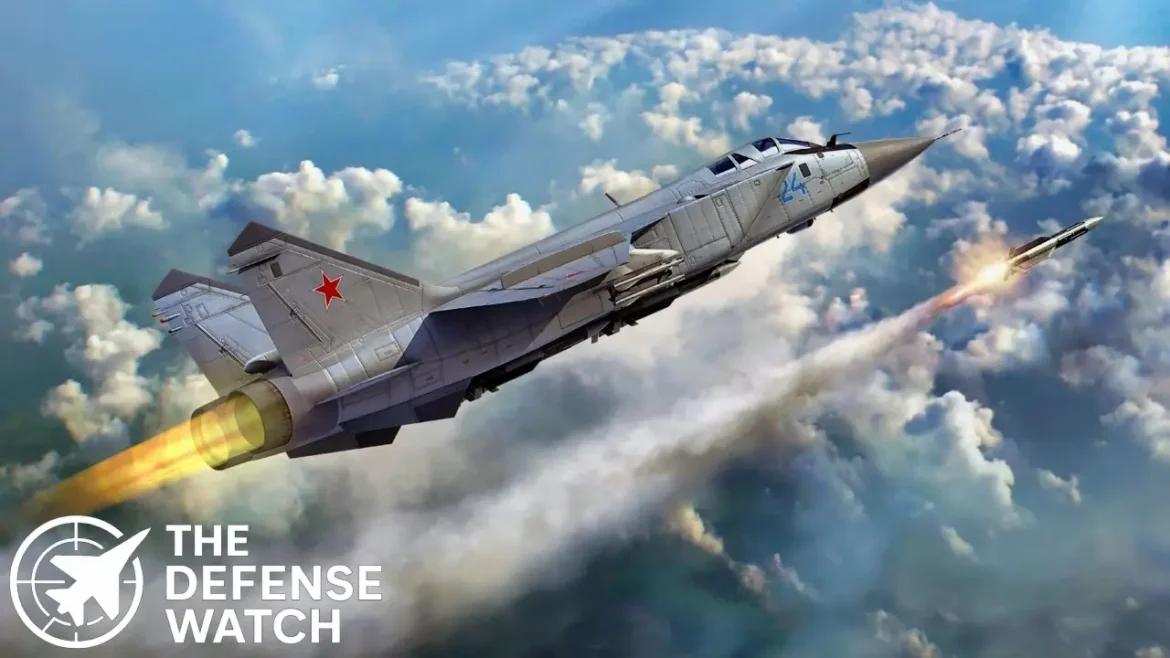
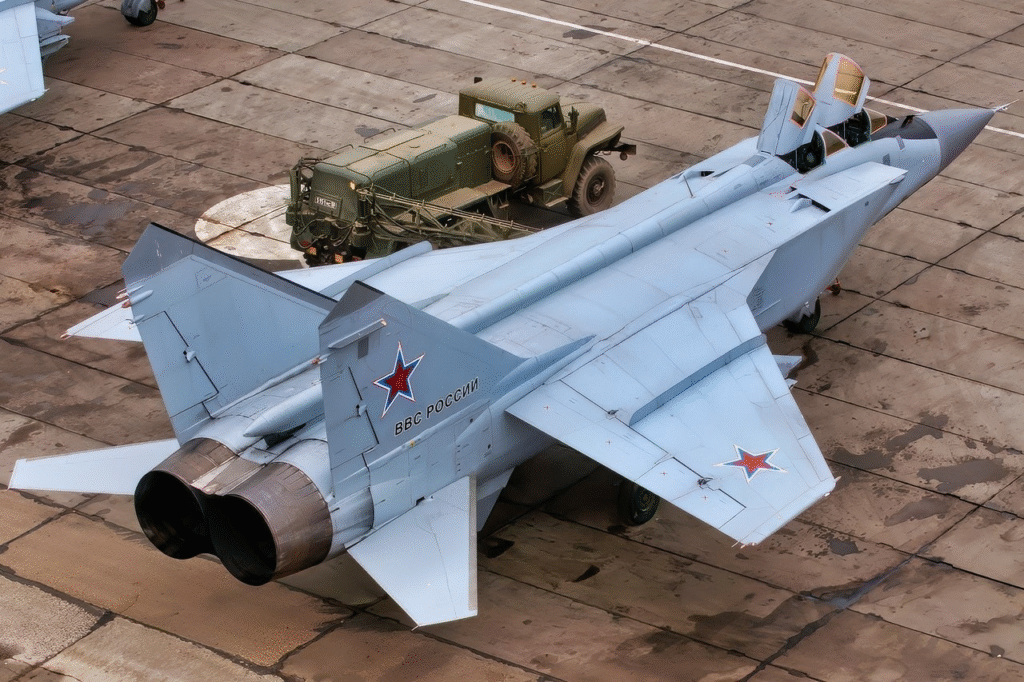
The Kinzhal, a Mach 10 air-launched derivative of the Iskander-M ballistic missile, is known for its extreme speed and maneuverability. Launched from modified MiG-31K or Tu-22M3 aircraft, the missile carries a 1,000-pound warhead and can strike targets up to 300 miles away. Its high velocity and terminal-phase evasive maneuvers—dives and lateral shifts—have significantly challenged Ukraine’s air defense, particularly Patriot missile batteries.
Russian Tactics to Evade Interception
Recent modifications to the Kinzhal’s flight profile have lowered its interception rate around Kyiv from approximately 37% in August to just 6% in September. Russian forces have employed complex maneuvers, including abrupt pull-downs and lateral jinks, often embedded in mixed missile salvos. Slower missiles in these salvos mask the hypersonic Kinzhal, making radar tracking and target prioritization more difficult for Ukrainian defenders.
Lima EW: A Creative Electronic Defense
Ukraine’s Lima EW system, initially designed to counter Russian guided bombs, has proven adaptable against the hypersonic threat. By injecting nonstandard navigational data in the form of music, the system corrupts satellite guidance signals, effectively “spoofing” the missile. Operators report that Lima’s performance surpasses that of comparable foreign systems, reflecting Ukraine’s ability to leverage asymmetric tactics against technologically superior adversaries.

MiG-31 Russian Air Force. Image Credit: Creative Commons. Strategic and Technological Implications
The use of musical payloads in electronic warfare highlights a broader trend in modern conflict: combining digital deception with traditional defense measures. For U.S. and NATO planners, Ukraine’s success illustrates the growing importance of EW capabilities in countering high-speed hypersonic threats, which conventional missile defense systems struggle to intercept. Lima’s effectiveness may inform future research into low-cost, agile electronic countermeasures capable of disrupting advanced missile guidance.
Moreover, the incident underscores the vulnerability of even sophisticated missile systems to adaptive countermeasures. As hypersonic technology proliferates globally, the development of complementary electronic and cyber defenses will be crucial to maintaining strategic stability.
Conclusion: Forward-Looking Defense Considerations
Ukraine’s innovative approach to neutralizing Kinzhal missiles demonstrates that creative electronic warfare can alter the balance against cutting-edge threats. For U.S. defense planners, investing in agile EW solutions alongside kinetic interceptors will be essential in preparing for the next generation of hypersonic weapons. Lima’s performance may signal a shift toward integrating asymmetric countermeasures as standard practice in modern air defense.
Massive Drone and Missile Strike Hits Kyiv
Russian forces carried out one of their most significant aerial assaults on Ukraine overnight, according to Ukrainian officials. The strike involved “hundreds” of drones and missiles, targeting Kyiv and other regions, leaving at least six civilians dead and dozens more injured.
The city’s mayor, Vitali Klitschko, said multiple districts caught fire and buildings were damaged, including around 30 residential structures. The Azerbaijani embassy in Kyiv was also struck by missile debris, according to reports.
Ukrainian Prime Minister Yulia Svyrydenko condemned the attack as a terrifying breach of civilian safety — “families went to sleep expecting a normal night and instead faced terror from the sky,” she said. President Volodymyr Zelensky called the assault “wicked,” framing it as a deliberate attack on civilian life and Ukraine’s energy infrastructure.
German Defense Minister Boris Pistorius echoed the sentiment, condemning the attack as showing “Russia’s contempt for humanity.”
Technical Scale and Strategic Implications
Based on official Ukrainian sources, the barrage included a mix of attack drones, decoy unmanned aerial vehicles, and ballistic and cruise missiles.
This assault appears to build on a pattern of mass drone-and-missile strikes by Russia. Previous attacks this year have also broken records: in May 2025, Russia reportedly launched 355 Shahed loitering munitions and dozens of Iskander ballistic missiles in a single weekend. In a later strike in September, Ukraine reported more than 800 projectiles — mostly drones — in what many called the largest single-day air attack of the war.
Experts note that Russia is combining large drone salvos with more capable missile systems — such as Iskander-M/KN-23 and air-launched cruise missiles — to overwhelm Ukraine’s layered air-defense architecture.
Civilian Toll and Political Fallout
Beyond the destruction of residential buildings, critical infrastructure also suffered. Ukrainian authorities say that energy networks were specifically targeted, heightening fears of winter blackouts.
The attack also carries political weight. Zelensky referenced it while calling on Western allies to step up support, notably with more interceptor systems. Kyiv is highlighting its urgent need for advanced air-defense platforms such as medium- and long-range interceptors, radar systems, and electronic warfare tools capable of coping with mass drone swarms.
European leaders, including those in the European Parliament, have pushed back strongly, arguing the strikes demonstrate Russia’s willingness to inflict civilian suffering and destabilize Ukraine further.
Analysis: What It Means for U.S. Defense and Global Security
- Air Defense Strain on Ukraine
The scale of this assault underscores how stretched Ukraine’s air defenses are. While Kyiv has received significant Western aid, this strike may expose gaps in current capabilities—particularly in intercepting large-volume drone swarms and mixed missile-drones threats. - Urgent Case for More U.S. and NATO Support
For U.S. defense planners, the assault reinforces the strategic priority of supplying Ukraine with cutting-edge air-defense systems. This could accelerate discussions on future deliveries of systems like Patriot PAC-3, medium-range SAMs, or even next-generation interceptors. - Validation of Asymmetric Warfare Tactics
Russia’s reliance on large drone salvos combined with ballistic and cruise missiles highlights a costly but effective asymmetric threat. This may influence how NATO and the U.S. think about investing in counter-drone technologies, electronic warfare, and multi-domain resilience. - Global Signaling
By launching such a high-intensity strike, Russia is signaling it can sustain high-tempo aerial operations — even under international sanctions. That capability has implications for not just Ukraine, but regional and allied security planning, particularly in Europe.
Conclusion: What Comes Next
This assault marks a worrying escalation in Russia’s aerial campaign and highlights the urgency of reinforcing Ukraine’s air-defense architecture. For the U.S. and NATO, it’s likely to intensify calls for faster and more advanced weapons deliveries.
Looking ahead, we can expect Kyiv to redouble its appeals for long-range interceptors and resilient C2 (command-and-control) networks. Meanwhile, Russia may continue to test Ukraine’s defense limits, leveraging mass drone attacks to force political pressure and wear down civilian morale.
U.S. Supercarrier Arrives in Caribbean as Pressure Mounts on Venezuela
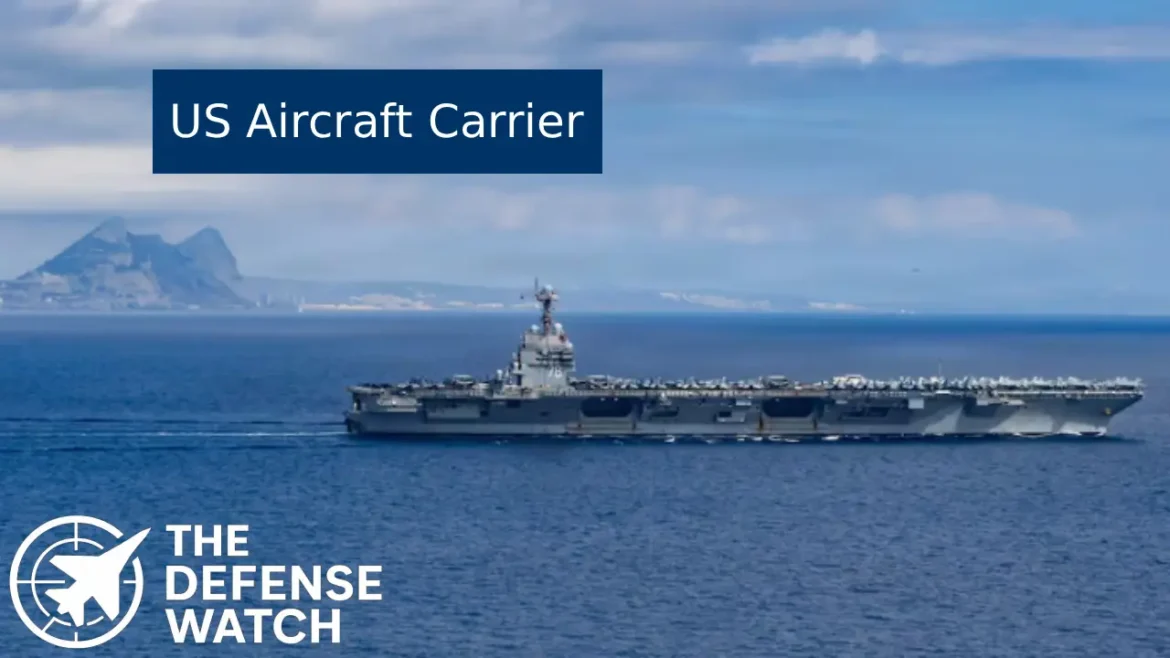
The U.S. Navy’s flagship, USS Gerald R. Ford, has arrived in the Caribbean Sea, joining a large contingent of American warships and Marines in what officials describe as a counter-narcotics mission—but which many analysts interpret as a growing show of force directed at Venezuela.
The deployment, dubbed Operation Southern Spear, now encompasses nearly a dozen Navy vessels and approximately 12,000 sailors and Marines, making it one of the most significant U.S. military buildups in the region in decades.
Mission Purpose and Force Composition
According to U.S. Navy statements, the Ford leads a carrier strike group that includes squadrons of tactical aircraft and guided-missile destroyers. The strike group transited the Anegada Passage, near the British Virgin Islands, en route to its Caribbean station.
Rear Admiral Paul Lanzilotta, commander of the strike group, said the force is deployed to “protect our nation’s security and prosperity against narco-terrorism in the Western Hemisphere.”
Adm. Alvin Holsey, head of U.S. Southern Command (SOUTHCOM), emphasized that the deployment “stands ready to combat the transnational threats that seek to destabilize our region.”
Regional Reactions and Military Moves
In Trinidad and Tobago, U.S. Marines from the 22nd Marine Expeditionary Unit have begun joint training exercises with local forces. The country’s foreign minister, Sean Sobers, framed the drills as efforts to counter violent crime and the drug trade.
Meanwhile, the Venezuelan government has strongly criticized the deployment as aggressive. Caracas has mobilized ground, air, riverine, and missile forces and placed them on high alert in response.
Legal and Political Debate
While the Trump administration frames the buildup as a counterdrug operation, critics in Washington and internationally question its legal basis and broader intent. Since September, U.S. strikes on small vessels in Caribbean and Pacific waters have reportedly killed at least 80 people.
Some experts argue that the Ford may be a blunt tool against narcotics trafficking, but its presence sends a powerful political and military signal. Others warn that such a show of force could escalate into more direct conflict.
Analysis: What This Means for U.S. Defense and Global Security
The arrival of the USS Gerald R. Ford in the Caribbean signals more than just an intensified drug-fighting campaign; it reflects a strategic pivot in U.S. posture toward Latin America. By leveraging its most advanced carrier strike group, the U.S. is projecting credible power to deter the Maduro regime while asserting dominance in the Western Hemisphere.
Key strategic implications include:
- Deterrence through presence: The Ford’s advanced capabilities—aircraft, sensors, and destroyer escorts—are less about interdiction and more about signaling. This deployment may deter Maduro or other actors by threatening escalation if diplomatic or economic pressure fails.
- Blended operations: The force includes maritime strike units, but also integrates Marines and potentially special operations. This underscores a hybrid strategy combining counter-narcotics, intelligence, and coercion.
- Diplomatic leverage: By escalating militarily, the U.S. may be aiming to force Maduro to negotiate or concede, whether on drug trafficking, political legitimacy, or economic concessions.
- Regional risk: The buildup raises the risk of miscalculation or confrontation. Venezuela’s mobilization, combined with U.S. overwatch, could make any incident prone to escalation.
Conclusion: A Pivotal Moment in U.S.–Venezuela Relations
The deployment of the USS Gerald R. Ford to the Caribbean marks a turning point in U.S. engagement with Venezuela. As Operation Southern Spear continues, the U.S. faces a critical choice: whether to rely on deterrence and diplomacy or move toward more aggressive action. The coming weeks will likely reveal whether this is primarily a pressure campaign, or the opening act of a broader military initiative.
Suggested image idea: Aerial photograph of the USS Gerald R. Ford at sea, accompanied by destroyers and support vessels, overlaid with a map showing its position relative to Venezuela.
U.S. President Trump Signals Decision on Military Action in Venezuela
Washington, D.C., November 16, 2025 — Former President Donald Trump indicated on Sunday that he has made a decision on pursuing potential military action in Venezuela, following high-level U.S. briefings and a surge in American military presence in the region.
Background
In recent days, U.S. forces deployed over a dozen warplanes and approximately 15,000 troops to Latin America in what the Pentagon has designated Operation Southern Spear.
Reports suggest that these deployments are part of a broader strategy to pressure Venezuelan President Nicolás Maduro and potentially facilitate his removal.
According to multiple sources cited by CNN, Trump was briefed on a range of military options, weighing the potential costs, risks, and strategic benefits of a campaign aimed at ousting Maduro.
Details of the Decision
U.S. Military Build-up
- The Pentagon has reportedly sent more than a dozen aircraft and 15,000 personnel to the region.
- The scale of deployment underscores Washington’s seriousness about potential military operations in Venezuela.
Trump’s Statement
- Trump stated that he has “decided” on a course of action regarding Venezuela, though he stopped short of confirming an imminent strike.
- The decision comes after several high-level briefings by U.S. officials, according to the report.
Strategic Goals and Risks
- According to the sources, American strategists are evaluating whether regime change in Venezuela could stem illegal migration and drug flows.
- Officials are also assessing possible backlash, including how such an operation could further destabilize the region or provoke international condemnation.
Regional Implications
- The potential campaign would mark a significant escalation in U.S.–Venezuela tensions, which have flared repeatedly in recent years.
- Deploying such a large force signals that the U.S. is positioning itself not merely as a deterrent but as ready to act decisively.
Policy and Expert Perspectives
Strategic Rationale
Analysts suggest that the U.S. could see a regime change in Caracas as a lever to address multiple security challenges: controlling migration northward, cutting narcotics trafficking, and reasserting U.S. influence in Latin America.Risk Assessment
However, military analysts caution that intervention carries grave risks: a drawn-out conflict, civilian casualties, and the possibility of asymmetric warfare. The Venezuelan regime has experience in resisting external pressure, and allies like Russia and Cuba might respond to protect Maduro.International Law and Diplomacy
Any military intervention would likely provoke scrutiny under international law. Experts contend that Washington may push diplomatic cover or multilateral legitimacy to justify any aggressive posture.What Comes Next
- Decision Implementation: Trump’s confirmation of a decision raises the likelihood that the U.S. will convert political will into concrete military or hybrid operations.
- International Reaction: How regional powers and international bodies respond will shape the legitimacy and feasibility of any action.
- On-the-Ground Intelligence: Deployments suggest that U.S. forces are preparing not just for deterrence but for possible escalation — meaning operational orders may follow the policy decision soon.
- Long-Term Implications: A U.S. intervention, if realized, may significantly alter the geopolitical landscape of Latin America, influence migration flows, and reshape U.S.-Venezuela relations for years to
China released footage of a live-fire test of its HQ-20 surface-to-air missile (SAM) system, confirming that the system has moved from ceremonial display into active operational use. This marks a significant milestone in Beijing’s strategy to build a more integrated, layered air defense network.
Background: The Evolution of China’s Air Defence Architecture
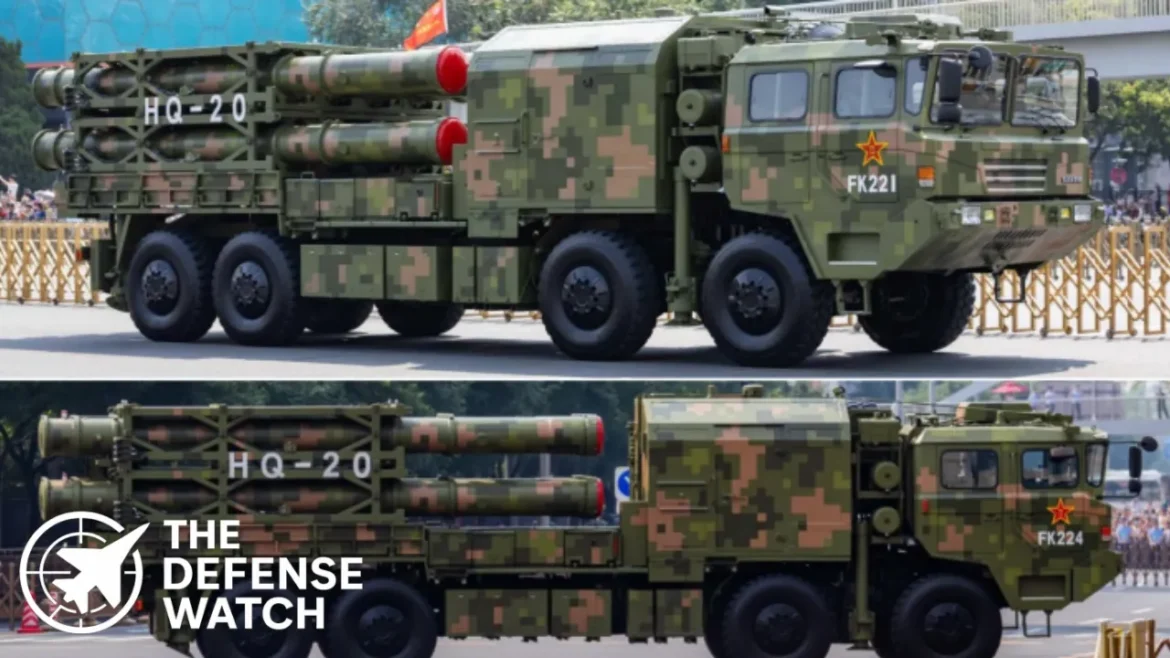
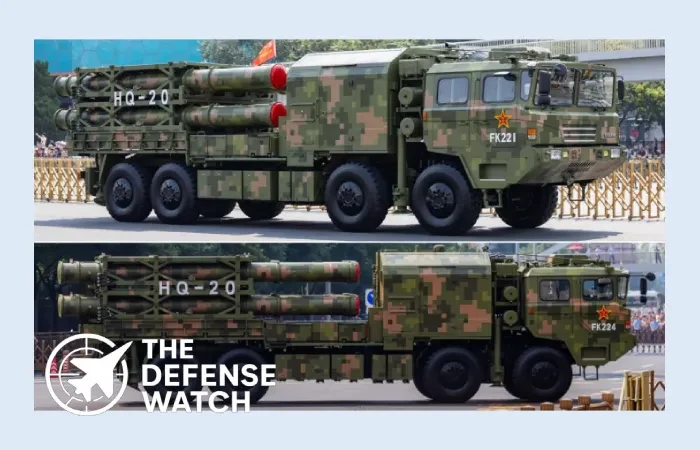
China has increasingly emphasized a multi-tiered air defense system, combining ground-based SAMs, radar networks, airborne early warning assets, and command and control nodes. The HQ-20, unveiled publicly during China’s Victory Day Parade in September 2025, is the latest addition to this architecture.
Strategically, the HQ-20 fills a medium- to upper-medium range segment, positioned between shorter-range systems like the HQ-16 and longer-range systems including the HQ-22A and HQ-9-series.
HQ-20 Details: What’s New and What It Means
Live-Fire Validation
The November 2025 film documents the full launch sequence of a vertical eight-cell launcher, confirming earlier open-source assessments of the HQ-20’s configuration. Unlike earlier public appearances—such as the September parade when only a ground formation was shown—the new footage underscores that the system is now integrated into active training and operational duties.
Technical Capabilities
- Launcher & Mobility: The system uses a highly mobile 8×8 wheeled transporter-erector-launcher (TEL), each launcher carrying eight sealed canisters.
- Missile Design: Its interceptors are believed to use solid-fuel rockets with dual-pulse motors (for maneuverability), inertial midcourse guidance, and terminal active radar homing.
- Engagement Envelope: While earlier assessments ranged widely, reported engagement ranges vary between ~50 km to possibly as high as 400–500 km, depending on variant and mission profile. Altitudes are estimated to span from very low (around 10 m) up to ~25 km.
- Radar & Network Integration: The system appears to integrate active phased-array fire control radars and early-warning sensors (e.g., meter-wave JY-27–type radars), contributing to a networked, multi-target tracking architecture.
- Launcher Readiness: The vertical launch concept allows 360° engagement without repositioning the vehicle, improving reaction time and flexibility.
Role in China’s Defense Framework
According to analysts, the HQ-20 assumes a critical role in bridging coverage between medium-range and long-range air defense systems, effectively increasing the fire-density of China’s SAM network. Its eight-round vertical launcher offers a higher ready-to-fire capacity than some older systems, such as HQ-16 launchers.
In parade formations shown in 2025, China displayed the HQ-20 alongside HQ-11, HQ-22A, HQ-9C, HQ-19 and HQ-29 systems, underlining its layered defense doctrine across short, medium, and long ranges, and covering multiple altitude bands.
Expert & Policy Perspective
Defense analysts see the HQ-20 as a crucial element in China’s A2/AD (anti-access/area denial) strategy. By embedding the HQ-20 within a robust sensor and command network, China boosts its ability to track, engage, and saturate aerial threats — from aircraft and UAVs to cruise missiles.
From a policy angle, the deployment of HQ-20 may also serve as a deterrent tool, signaling to regional actors that China is serious about defending its airspace with a modern, resilient, and redundant air-defense grid.
What’s Next: Implications and Trajectory
- Operational Expansion: With live fire now publicly demonstrated, China is likely accelerating the fielding of HQ-20 batteries across its territorial defence zones. This could expand in key strategic areas, especially along its periphery and potentially in contested regions.
- Network Consolidation: As more HQ-20 units come online, integration with existing radars, airborne early warning platforms, and command systems will likely deepen, improving overall sensor-to-shooter latency.
- Export Prospects: While no confirmed exports of HQ-20 have been reported, its operational debut may pave the way for future foreign sales to countries aligned with China’s defense exports.
- Countermeasure Development: Potential adversaries will evaluate the HQ-20’s capabilities to adjust their tactics, including development of countermeasures, electronic warfare, or stealth approaches.
Conclusion
The public live-fire test of the HQ-20 system underscores China’s rapid push to strengthen and modernize its layered air defense network. By combining mobile launchers, advanced radars, and networked command elements, the HQ-20 is poised to play a central role in Beijing’s strategy to defend its airspace against a growing array of modern aerial threats. As deployment continues, its operational integration will be closely watched by regional and global security observers.
HQ-20 Air Defense System
Defense Systems Full Specifications
1. General Information
System Name HQ-20 Manufacturer China Aerospace Science & Technology Corp. Country of Origin China Type / Role Long-Range Surface-to-Air Missile System In Service Limited / Development Phase Year Introduced 2020s (Estimated) Unit Cost Estimated USD 1.5–2 Billion per Battery 2. Performance & Capabilities
Maximum Engagement Range 250–300 km Maximum Engagement Altitude 30+ km Target Types Aircraft, Ballistic Missiles, UAVs, Stealth Targets Interception Probability Not Disclosed Reaction Time 8–12 seconds Radar Detection Range 300–450 km 3. Missile Specifications
Missile Type HQ-20 Interceptor Missile Missile Length Estimated 6–7 m Missile Weight Estimated 1,200–1,500 kg Warhead Type High-Explosive Fragmentation Warhead Weight Estimated 150–200 kg Speed Mach 5+ (Estimated) 4. Radar & Fire Control
Radar Type AESA Long-Range Radar Radar Name Undisclosed (Likely Type 415 or Derivative) Detection Range 300–450 km Tracking Capacity 100+ Targets Guidance System Active Radar Homing + Command Guidance Fire Control System Integrated Digital Battle Management 5. Launcher & Mobility
Launcher Type Mobile / Truck-Mounted No. of Missiles per Launcher 4 Reload Time 30–45 minutes Mobility Platform 10x10 Heavy Military Truck Crew Required 3–5 personnel 6. Command & Control
C2 System Integrated Air Defense Network Connectivity Secure Military Datalink Network Capability Yes Operation Mode Autonomous / Networked 7. Operational Use
Primary Operator China Combat Proven No Conflict History None Notable Feature Long-range strategic interception capability PROS
- Advanced long-range intercept capability
- AESA radar with improved target tracking
- Potential stealth-detection enhancements
- Mobile, truck-mounted launcher
- Multi-layer integration with national air defense network
CONS
- Limited publicly confirmed performance data
- Not combat-proven
- Dependent on classified Chinese sensor infrastructure
- Potential vulnerabilities to cyber and EW threats
- Not available for international users
HQ-20 Long-Range Strategic Air Defense System
The HQ-20 represents China’s next generation of long-range air and missile defense technology, developed to counter advanced threats including stealth aircraft, ballistic missiles, and high-altitude surveillance platforms. Positioned as a strategic counterpart to the U.S. THAAD and Russian S-500, the HQ-20 aims to extend China’s layered air defense network with improved interception range and multi-domain targeting.
Development & Purpose
Manufactured by the China Aerospace Science and Technology Corporation (CASC), the HQ-20 is engineered to fill capability gaps between the HQ-9B and future hypersonic interceptors. Designed for operations within China’s Anti-Access/Area Denial (A2/AD) strategy, the system enhances long-range precision engagement and boosts deterrence against fifth-generation aircraft and medium-range ballistic missiles.
Key Capabilities
The HQ-20 is believed to incorporate active radar homing, two-stage solid-fuel propulsion, and advanced datalink integration, enabling mid-course updates and improved terminal engagement accuracy. Estimates suggest a maximum engagement range of 250–300 km and interception altitudes surpassing 30 km. Its AESA-based radar suite provides wide-area surveillance, high-resolution target tracking, and resilience against jamming.
Technology & Operational Use
The system reportedly integrates with China’s dual-band early warning radars and space-based sensors, enabling precision tracking of stealth platforms and high-speed airborne threats. With a multi-launch truck-mounted configuration, the HQ-20 is optimized for rapid deployment and mobility across diverse terrain.
Though exact performance remains classified, defense analysts consider the HQ-20 a major step toward expanding China’s strategic air defense coverage and countering next-generation aerial threats.
HQ-20 Price in United State
The HQ-20 is not available for export and is currently exclusive to the Chinese military. As such, there is no official price for the United States, but defense analysts estimate that a complete battery—if hypothetically sold—could exceed USD 1.5–2 billion, depending on radar suites and missile loadout.
FAQs
What is the Chinese equivalent of the Patriot missile?China’s closest equivalent to the U.S. MIM-104 Patriot system is the HQ-9 long-range surface-to-air missile (SAM). The HQ-9 provides comparable capabilities in targeting aircraft, cruise missiles, and some ballistic missile threats. Modern variants such as HQ-9B and HQ-9C offer improved range, radar performance, and enhanced anti-ballistic features.
What is the strongest air defense system in the world?While rankings vary by mission profile, many defense analysts consider the Russian S-500 Prometey and the U.S. Terminal High Altitude Area Defense (THAAD) among the strongest current systems.
S-500: Designed for intercepting ballistic missiles, hypersonic threats, and high-altitude targets.
THAAD: Provides advanced exo-atmospheric interception against ballistic missiles with proven combat performance.
No single system is universally “strongest,” as effectiveness depends on threat environment, radar network, and integration with national defense architectures.What is the best air defense system in China?China’s most advanced known air defense system is the HQ-20, a next-generation long-range SAM intended to counter stealth aircraft, ballistic missiles, and high-speed aerial threats. It is considered superior to the HQ-9 family in terms of engagement range, radar capability, and overall strategic value. For layered defense roles, the HQ-9B and HQ-22 remain widely deployed across the PLA.
Does China have a missile defense system?Yes. China maintains a multi-layered missile defense network that includes long-range SAMs such as HQ-20 and HQ-9, mid-range systems like the HQ-16, and point-defense systems such as the HQ-17 and LD-2000. China is also developing early-warning radars, anti-ballistic interceptors, and space-based surveillance assets, indicating a growing strategic missile defense capability.
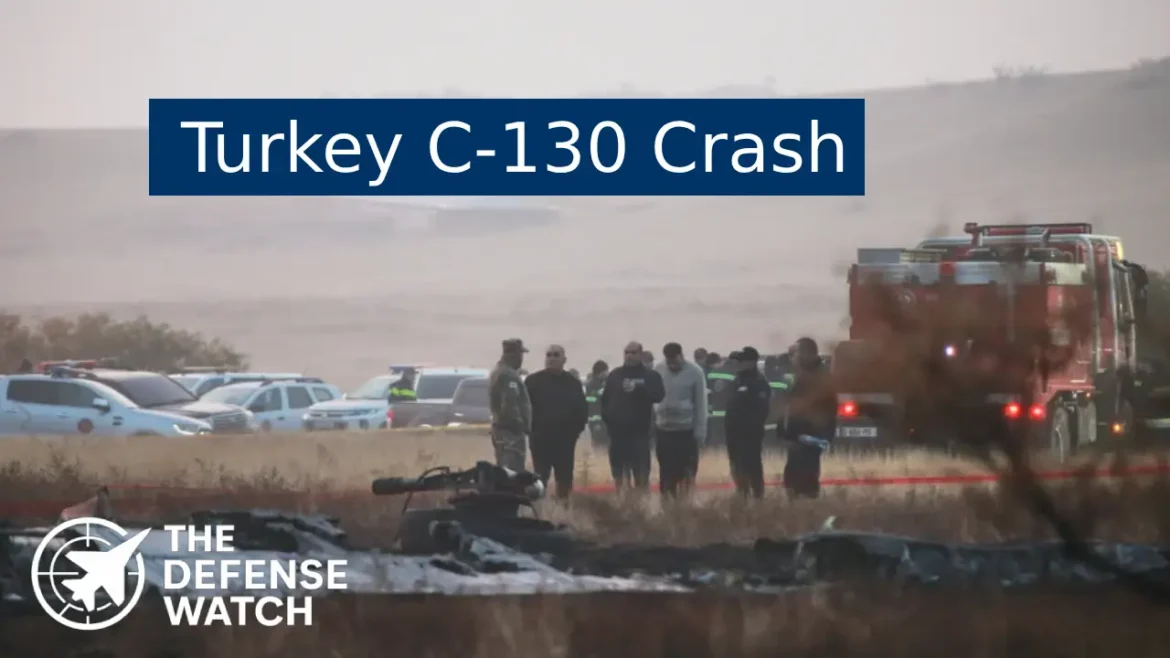
A military transport aircraft belonging to the Turkish Armed Forces crashed in the eastern Georgian municipality of Sighnaghi, near the Azerbaijan border, killing all 20 personnel on board. In response, Turkey’s Defense Ministry has grounded its entire fleet of Lockheed C‑130 Hercules transport aircraft pending technical inspections and investigation into the accident.
Background
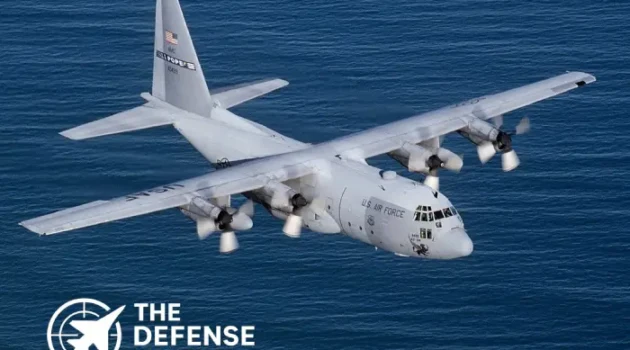
The C-130 Hercules is a four-engine turboprop transport aircraft widely used by militaries globally for cargo, personnel and logistic support missions. Turkey’s C-130s are central to its air transport capability, supporting both routine and allied operations. The crash marks the deadliest aviation incident involving Turkey’s armed forces since 2020.
Crash Details
According to the Turkish Defense Ministry, the aircraft departed from the Azerbaijani city of Ganja and crashed in Georgian airspace shortly after crossing the border, with no distress call issued. Initial reports and footage show the aircraft spiralling out of control and then impacting the ground, with debris strewn across a plain near Sighnaghi.
Turkey confirmed that the 20 people aboard were military personnel. The flight data and cockpit voice recorders (black box) have been recovered and are under analysis.
Following the crash, the Defense Ministry announced that all Turkish C-130 aircraft will undergo comprehensive inspections and maintenance checks before returning to service.
Technological and Operational Context
The aircraft involved was identified as a C-130 model, used for troop and logistical transport. Reports indicate the specific tail number was 68-1609, a unit delivered in 1968, which had entered Turkish service in 2010 after previous use by another air force. Ageing aircraft like this raise issues around maintenance, structural fatigue, upgrades and mission scheduling. The wear and lifecycle of such platforms are critical in ensuring safety across operations.
Strategic and Policy Implications
For Turkey, the grounding of the C-130 fleet has immediate implications for logistical readiness, strategic airlift capability and participation in allied missions. The delay or suspension of transport operations could impact troop movements, humanitarian support and rapid response tasks.
From a policy perspective, the incident may accelerate Turkey’s considerations for modernizing its transport fleet, potentially shifting to newer airframes or expanding existing contracts for upgrades. Military transport aircraft often remain less visible than combat jets, yet their readiness underpins broader force projection and alliance responsibilities—especially within the North Atlantic Treaty Organization framework.
Expert View
Aviation-safety analyst commented that in-flight structural failure or mid‐air breakup remains a leading hypothesis when no distress call is made and debris is widely scattered. Age‐related fatigue, maintenance gaps or unexpected load stresses could all contribute. Early video reported indicated a rapid descent and separation of parts. Investigators will focus on flight-data, maintenance records, weather conditions and any external factors such as bird strike or collision with terrain.
What’s Next
Investigators from Turkish and Georgian authorities will proceed with forensic examination of the wreckage, black boxes, and flight path data. The grounding of the C-130 fleet will remain in effect until each aircraft passes detailed structural and systems inspections. The Turkish Defence Ministry’s findings could influence procurement decisions, maintenance protocols and future airlift planning.
Closing
The crash of the C-130 transport aircraft has tragically cost 20 lives and exposed vulnerabilities in air-mobility operations of a key NATO member. As inspections proceed and investigations deepen, the Turkish military faces urgent decisions on fleet readiness and modernization. The outcome may shape not just domestic transport aviation policy, but Turkey’s broader strategic posture and alliance commitments.
Lockheed C-130 Hercules – Full Specifications
- Maximum Speed: 417 mph (670 km/h)
- Range: 2,800 mi (4,500 km)
- Payload Capacity: 45,000 lb (20,400 kg)
- Crew: 3–5