

UK Navy Tests Wildcat Helicopter Drone Teaming for Martlet Missile Strikes
The Royal Navy has carried out integration trials showing how a Wildcat helicopter can use live drone sensor data to support simulated Martlet missile engagements, including beyond visual line of sight (BVLOS) and over the horizon (OTH) scenarios. The tests form part of the UK military’s Eagles Eye programme to link crewed aircraft with uncrewed systems in a tactical network.
Wildcat Helicopter as a Data Node
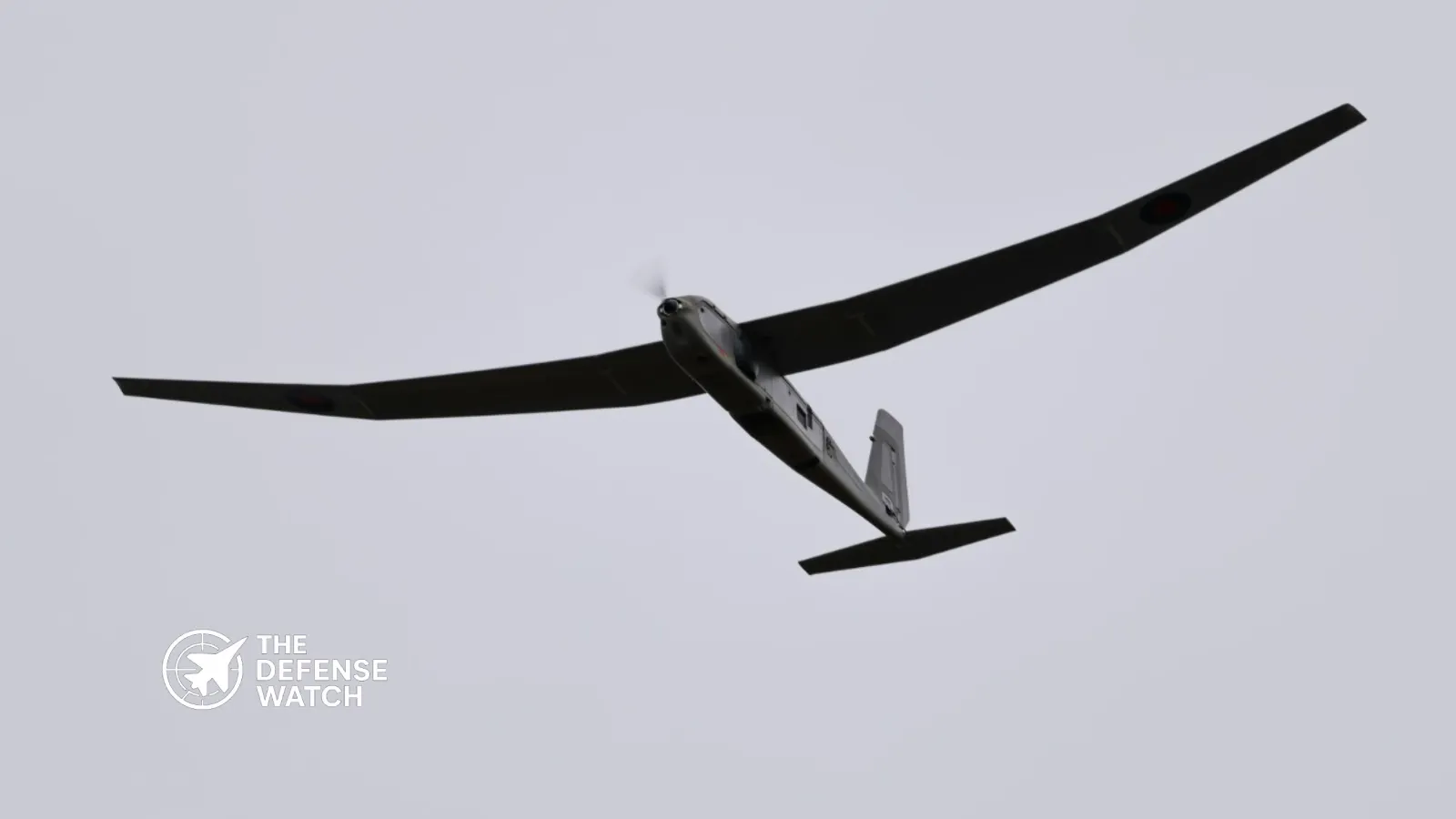
Trials at the National Drone Hub at Predannack Airfield on Cornwall’s Lizard Peninsula saw an 815 Naval Air Squadron Wildcat HMA2 receive and fuse live data from two small uncrewed aerial vehicles, an RQ-20 Puma and a Providence UAV, plus additional sensor inputs. This information was delivered via a multi-node mesh network to the Wildcat crew in near real time.
The Royal Navy described the effort as converting the helicopter into a flying command node, capable of sending and receiving data from multiple drones during a mission. The mesh network enables automatic rerouting of information if individual nodes are degraded or lost.
Simulated Martlet Engagements
While the Wildcat did not fire live weapons in this phase, the integrated sensor picture was used to conduct simulated engagements using the Thales Martlet lightweight multirole missile. Martlet is fully operational on Wildcat helicopters and is designed to engage small fast targets, including small boats, unmanned surface vehicles, and aerial threats.
The Puma, already in Royal Navy service since 2020 and deployed with Carrier Strike Group 25, provided imagery and track data. Personnel aboard the Wildcat also had the option to operate the Puma directly from within the helicopter cabin.
Networked ISR and Future Air Wing Concepts
The trials support a broader shift toward distributed sensing and networked operations within naval aviation. By linking crewed aircraft with unmanned systems and ground sensors, the UK aims to field more resilient reconnaissance and targeting capabilities against fast and mobile threats in littoral and contested environments.
The concept reflects growing interest among Western militaries in hybrid air wings where piloted platforms and unmanned assets operate together under a shared data fabric rather than as isolated elements. The mesh network tested in the Eagles Eye programme is a core part of that approach.
What Comes Next
Royal Navy officials say lessons from the Predannack trials will feed into future exercises, including planned operations in Norway’s fjords where terrain can challenge line of sight and signal continuity. Additional work will refine tactics, network reliability, and integration with larger sensor fleets.
(adsbygoogle = window.adsbygoogle || []).push({});The National Drone Hub itself is expanding its facilities, with larger hangars and new airspace arrangements off Cornwall’s north coast aimed at supporting tests of larger unmanned systems beyond Predannack’s runway limits.
Context on Wildcat and Martlet
The Wildcat HMA2 is a maritime attack and reconnaissance helicopter operated from Royal Navy frigates and destroyers. It can carry Martlet missiles for precision engagements against small, fast targets. The Martlet LMM achieved full operating capability in 2025 after live-fire trials showed its effectiveness against both surface and aerial threats.

