
U.S. Plans Starshield Satellite Communications For The F-35
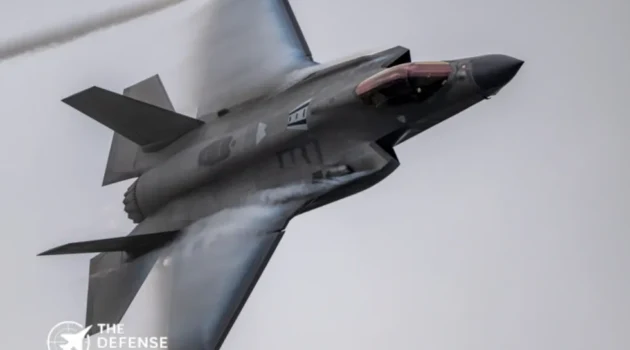
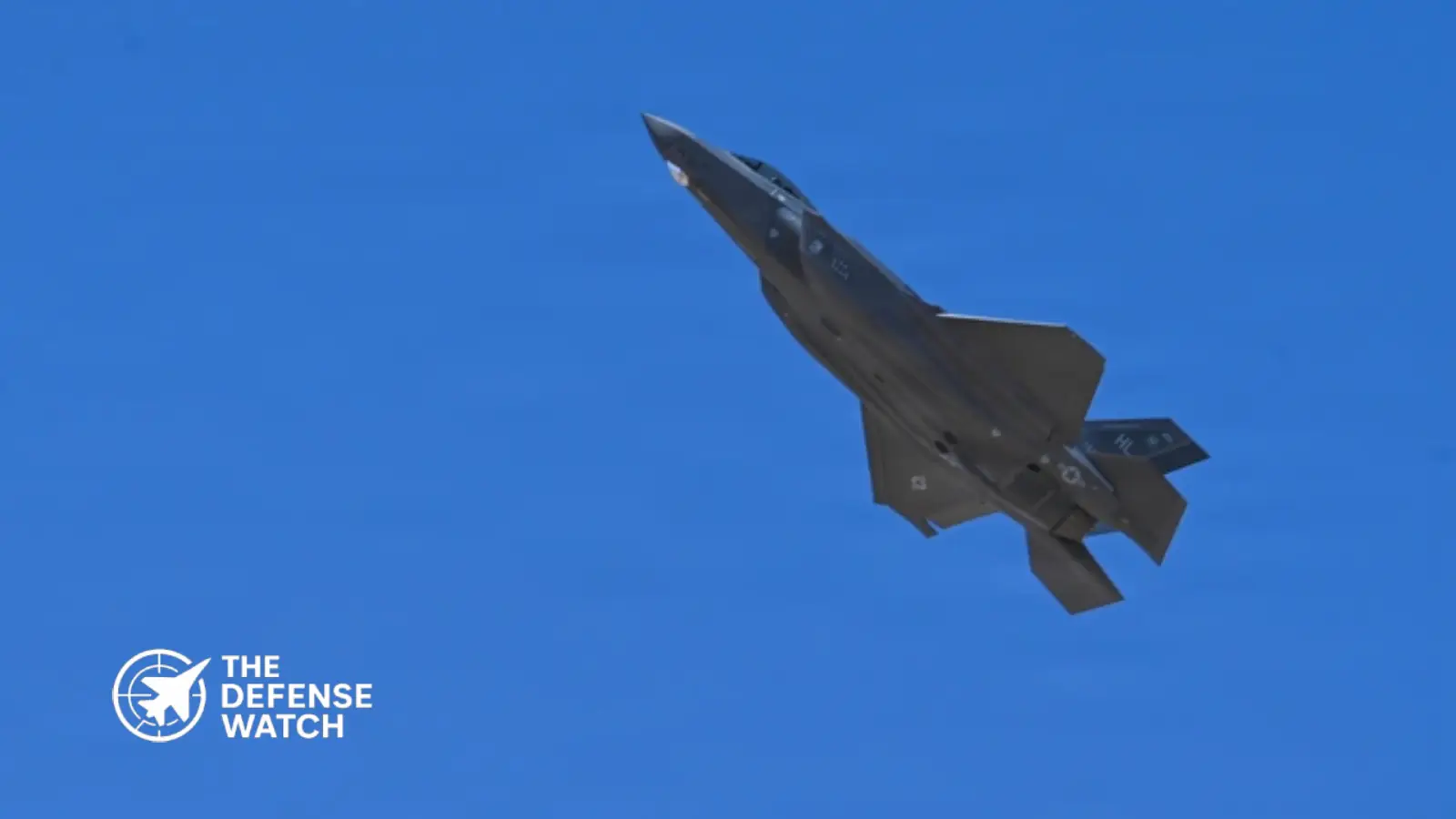
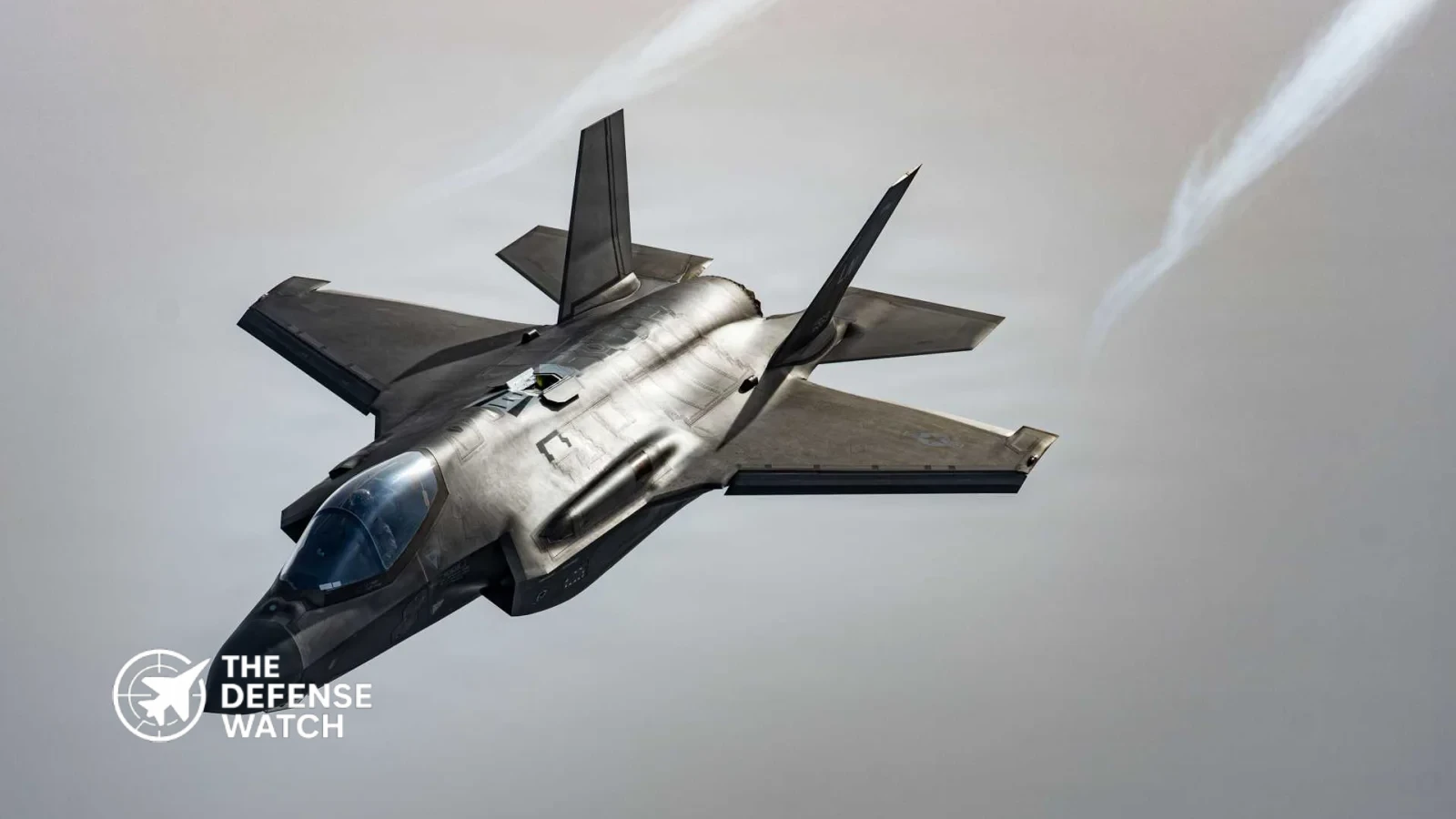
The United States plans to equip the F-35 Lightning II with a Starshield-enabled Beyond Line of Sight satellite communications capability by September 2031, according to the FY2027 F-35 Modernized Selected Acquisition Report dated April 21, 2026. The planned upgrade is part of the aircraft’s Block 4 modernization roadmap and is intended initially to move track data through satellite links beyond the range of conventional line of sight tactical communications.
- U.S. Plans Starshield Satellite Communications For The F-35
- Takeaways
- What The Starshield Upgrade Is Designed To Do
- Why Beyond Line Of Sight Communications Matter
- Protected Tactical Waveform Is A Key Part Of The Architecture
- F-35 Communications Modernization Extends Beyond Starshield
- The F-35 Is Becoming More Important As A Sensor Node
- Technical And Operational Challenges Remain
- Strategic Implications For U.S. And Allied Forces
- A Staged Path Toward A More Connected F-35
- Bottom Line
Takeaways
The Pentagon plans to add a Starshield-enabled Beyond Line of Sight satellite communications capability to the F-35 by September 2031, expanding the aircraft’s ability to move track data across geographically dispersed forces.
The capability is designated BLOS Phase 0 SATCOM in the acquisition documentation. It is planned to use the Protected Tactical Waveform and operate across Ku band and Ka band frequencies, according to the reporting on the acquisition report.
The significance is not simply that an F-35 will receive another communications system. The larger change is the extension of the aircraft’s role from a tactical sensor operating within local networks to a forward sensing node capable of contributing information to a geographically dispersed force.
What The Starshield Upgrade Is Designed To Do
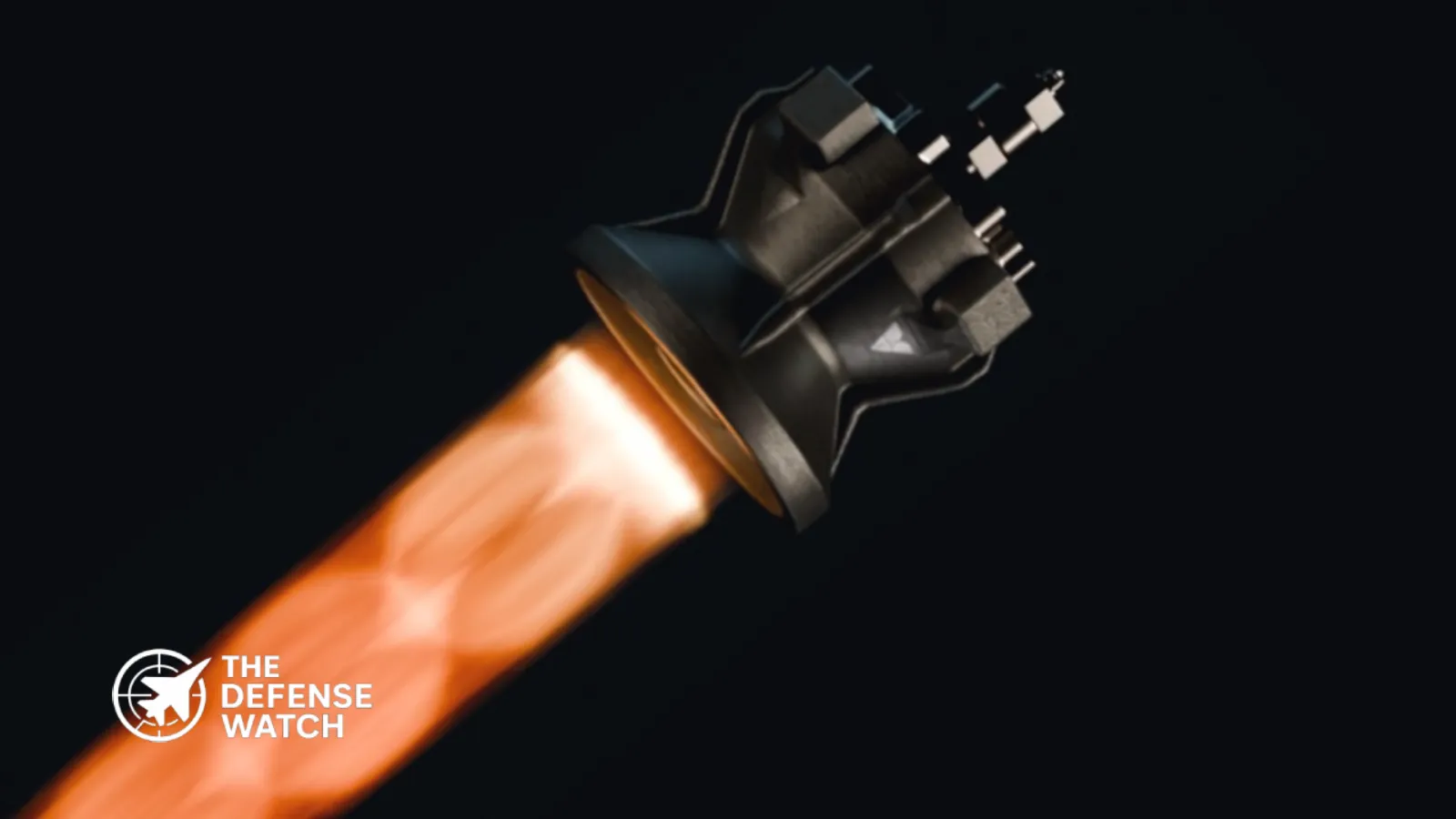
Starshield is SpaceX’s government-focused satellite network derived from the company’s Starlink technology and launch architecture. SpaceX describes Starshield as a secure satellite network for government users, with communications, Earth observation and hosted payloads among its primary areas. It also identifies additional high-assurance security measures for government missions.
For the F-35, however, the relevant capability is the communications function rather than Starshield as a complete standalone military architecture.
The initial BLOS Phase 0 capability is focused on transferring track data. That distinction is important because the acquisition reporting does not establish that the F-35 will directly control a distant weapon through Starshield.
Instead, the immediate objective is to extend the movement of sensor information beyond the aircraft’s local tactical network. The F-35 could detect, identify or track an object and make relevant track information available through a longer range communications path to other elements of a joint force.
That creates a potentially important separation between sensing and engagement.
Planned Capability Target Date Intended Function BLOS UHF receiver software September 2026 Receive Integrated Broadcast Service track data BLOS Phase 0 SATCOM September 2031 Transmit track data through satellite communications BLOS Phase 1b September 2031 Add two-way video communications BLOS Phase 2 September 2035 Add voice communications MADL dynamic mesh September 2030 Improve network resilience and connectivity Expanded Link 16 capability September 2031 Increase network participation and message handling The dates above come from the reported F-35 modernization roadmap. The acquisition documentation also distinguishes the 2026 UHF capability from the later SATCOM architecture.
Why Beyond Line Of Sight Communications Matter
Modern long range combat increasingly depends on networks connecting sensors, command nodes and weapons that may be separated by hundreds or thousands of miles.
A fighter may possess the best tactical view of a target without being the aircraft that ultimately engages it. Conversely, a ship, aircraft, ground unit or long range weapon may have the required range but lack the sensor information needed to act.
That is the basic problem a distributed kill chain attempts to solve.
The Space Force has identified data transport as a critical element of long range kill chains. Its broader Protected Tactical SATCOM work is aimed at maintaining communications in environments where adversaries can interfere with satellite and radio links.
Adding BLOS SATCOM to the F-35 therefore addresses an important part of the network rather than adding another weapon to the aircraft.
The F-35 already combines sensors, onboard processing and tactical data links. Its value in a distributed force increasingly depends on how reliably that information can reach other nodes. Lockheed Martin describes the aircraft as a platform designed to gather, process and securely share information across domains, while Block 4 adds further sensor, electronic warfare and weapons capabilities.
The planned SATCOM upgrade extends that networking concept beyond the geographic limits imposed by line of sight.
Protected Tactical Waveform Is A Key Part Of The Architecture
The Protected Tactical Waveform is particularly relevant because a long range communications link is useful only if it can survive the electromagnetic environment of a major conflict.
The U.S. Space Force demonstrated PTW capabilities in 2025, including frequency hopping under variable interference levels, secure voice over internet protocol communications and operation through a commercial satellite. Space Systems Command said the program is intended to provide anti-jam and low probability of intercept communications for tactical users.
That work provides important context for the planned F-35 integration.
The challenge is not simply establishing a satellite connection. A military aircraft operating against a capable opponent may face jamming, interference, detection and attempts to disrupt the broader network. Protected waveforms and resilient satellite architectures are intended to reduce those vulnerabilities.
The Space Force is also developing additional protected tactical satellite capacity. In June 2026, Space Systems Command awarded contracts totaling $437.7 million for the first two Protected Tactical SATCOM Global satellites, designed to provide anti-jam communications and connectivity in denied environments.
F-35 Communications Modernization Extends Beyond Starshield
The planned Starshield capability is only one element of a much larger communications modernization effort.
By September 2030, the F-35 program plans to transition the Multifunction Advanced Data Link from its current manually configured string topology toward a dynamic mesh architecture. The objective is to improve network resilience and reduce connectivity losses.
Link 16 is also scheduled for further upgrades, including increased message handling and the ability to listen to as many as four Link 16 networks simultaneously by September 2031. The roadmap also includes improved electronic warfare coordination.
Taken together, these changes point toward a communications architecture with several layers rather than dependence on a single data link.
That matters because different networks serve different operational purposes. MADL is central to F-35 tactical connectivity, Link 16 provides broad joint and allied interoperability, while BLOS SATCOM provides a longer range communications path.
The combination gives commanders more options for moving information when individual links are unavailable or geographically unsuitable.
The F-35 Is Becoming More Important As A Sensor Node
The planned upgrade also reinforces an established direction in F-35 development.
The aircraft was designed around sensor fusion and information sharing rather than treating the fighter solely as a platform that carries weapons. Its ability to collect information from onboard sensors and distribute useful data has become a central part of its operational value.
Lockheed Martin has also demonstrated concepts in which F-35 information can be passed through other communications nodes to fourth generation aircraft and ground based systems, including scenarios involving HIMARS and MLRS family weapons.
The Starshield integration would extend that basic concept over a much larger geographic area.
An F-35 operating forward could potentially provide track information to a distant command or engagement architecture without requiring the receiving element to be within the fighter’s conventional line of sight communications range.
The acquisition report does not specify which aircraft, ships, ground systems or weapons will receive Phase 0 data. It also does not establish a direct F-35 to weapon engagement pathway through Starshield. Those distinctions are important when assessing what the program has actually announced.
Technical And Operational Challenges Remain
The 2031 target should be viewed as a planned fielding date rather than evidence that the capability is already operational.
The F-35 Block 4 modernization effort involves major changes to software, computing, sensors, electronic warfare equipment, communications and weapons. The acquisition documentation identifies the technical complexity of the modernization effort as a significant risk and calls for expanded laboratory, simulation and flight testing.
Nine new fully instrumented Flight Science Aircraft are planned to support Block 4 development, weapons integration and certification. Technology Refresh 3 provides the additional computing capacity and memory required for future capability inserts.
SATCOM integration also creates aircraft-level engineering challenges.
The system must fit within the F-35’s existing architecture while preserving aircraft performance, electromagnetic compatibility and low observable characteristics. It must also integrate with classified mission systems and broader joint communications networks without creating an unacceptable dependency on any single communications path.
These issues are especially important because the F-35 operates in environments where electromagnetic emissions can affect survivability and where communications systems may themselves become targets.
Strategic Implications For U.S. And Allied Forces
The strategic value of the planned capability lies in network reach.
Large Indo-Pacific operating areas make this particularly relevant to U.S. force planning, but the underlying requirement applies more broadly to any theater where aircraft, ships, ground forces and long range weapons are separated by significant distances.
A distributed force can reduce the need to place every sensor and weapon in the same location. The F-35 can operate forward and collect information, while other platforms positioned farther away can contribute command, sensing or engagement functions.
That approach also fits the broader U.S. move toward joint all domain operations, in which information must move between air, maritime, land, space and cyber elements.
The F-35’s future communications architecture is therefore becoming almost as important as its individual aircraft capabilities. A stealth aircraft with advanced sensors has greater operational value when the information it generates can reach the rest of the force reliably.
A Staged Path Toward A More Connected F-35
The planned modernization schedule shows that the Pentagon is not treating BLOS communications as a single upgrade.
The 2026 UHF receiver capability provides an earlier means of receiving beyond line of sight track information. Phase 0 in 2031 would add satellite based track-data transmission. Phase 1b would expand the system to two-way video, while Phase 2 is planned to add voice communications in 2035.
This staged approach is consistent with the wider development of protected tactical SATCOM across the Department of Defense.
The U.S. Space Force is simultaneously expanding protected satellite communications through government and commercial satellite architectures, including systems designed around the Protected Tactical Waveform.
For the F-35, the result could be a more flexible communications architecture in which the aircraft contributes sensor information through multiple paths depending on the tactical environment.
Bottom Line
The planned Starshield integration represents a significant change in how the F-35 is expected to participate in distributed combat networks.
The initial objective is specific: provide Beyond Line of Sight SATCOM capable of transmitting track data by September 2031. The program does not currently establish that the F-35 will directly control distant weapons through Starshield.
Its importance is instead tied to the broader sensor-to-shooter problem. By connecting the F-35’s sensors to geographically separated forces through a protected satellite communications path, the Pentagon is seeking to make the fighter a more effective node in long range joint kill chains.
That effort will depend on successful integration with MADL, Link 16, Block 4 mission systems and protected tactical SATCOM infrastructure. If the planned milestones are met, the F-35’s role will increasingly extend beyond detecting and engaging targets itself to helping other elements of the joint force act on information collected at the forward edge.