Germany Tests Israeli LORA Ballistic Missile In North Atlantic
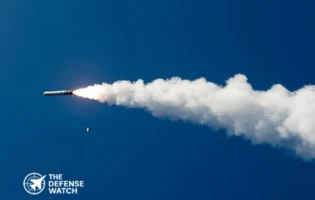
Germany has successfully tested the Israeli-made LORA ballistic missile from a German naval platform in the North Atlantic, demonstrating a new long-range precision-strike option as Berlin expands its military capabilities in response to a deteriorating European security environment. Reuters reported that the test involved the LORA system developed by Israel Aerospace Industries, or IAI, and represented Germany’s first publicly reported test of a ballistic strike weapon of this type.
- Germany Tests Israeli LORA Ballistic Missile In North Atlantic
- Takeaways
- LORA Test Demonstrates Naval Strike Capability
- What Is The LORA Missile?
- Why The Ballistic Flight Profile Matters
- A New Layer For German Long-Range Strike
- OPEX And Germany’s Marine 2035 Strategy
- The Broader European Security Context
- Implications For NATO Maritime Deterrence
- Procurement Is The Next Major Step
- What The LORA Test Means For Germany
Takeaways
Germany has successfully demonstrated the launch of Israel Aerospace Industries‘ LORA ballistic missile from a German naval platform, giving Berlin a potential new long-range precision-strike capability at sea.
The German Navy conducted the trial as part of its Operational Experimentation, or OPEX, program. IAI said two operational firing scenarios were completed successfully, with the missiles following their planned trajectories, navigating to their targets and achieving successful impacts.
The test is significant because Germany has historically relied heavily on aircraft-launched cruise missiles for long-range conventional strike. A naval ballistic missile would give the Bundeswehr a different flight profile, launch architecture and potential response option.
LORA Test Demonstrates Naval Strike Capability
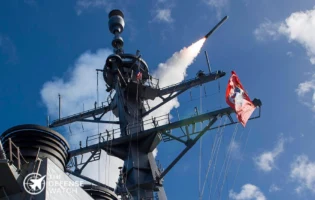
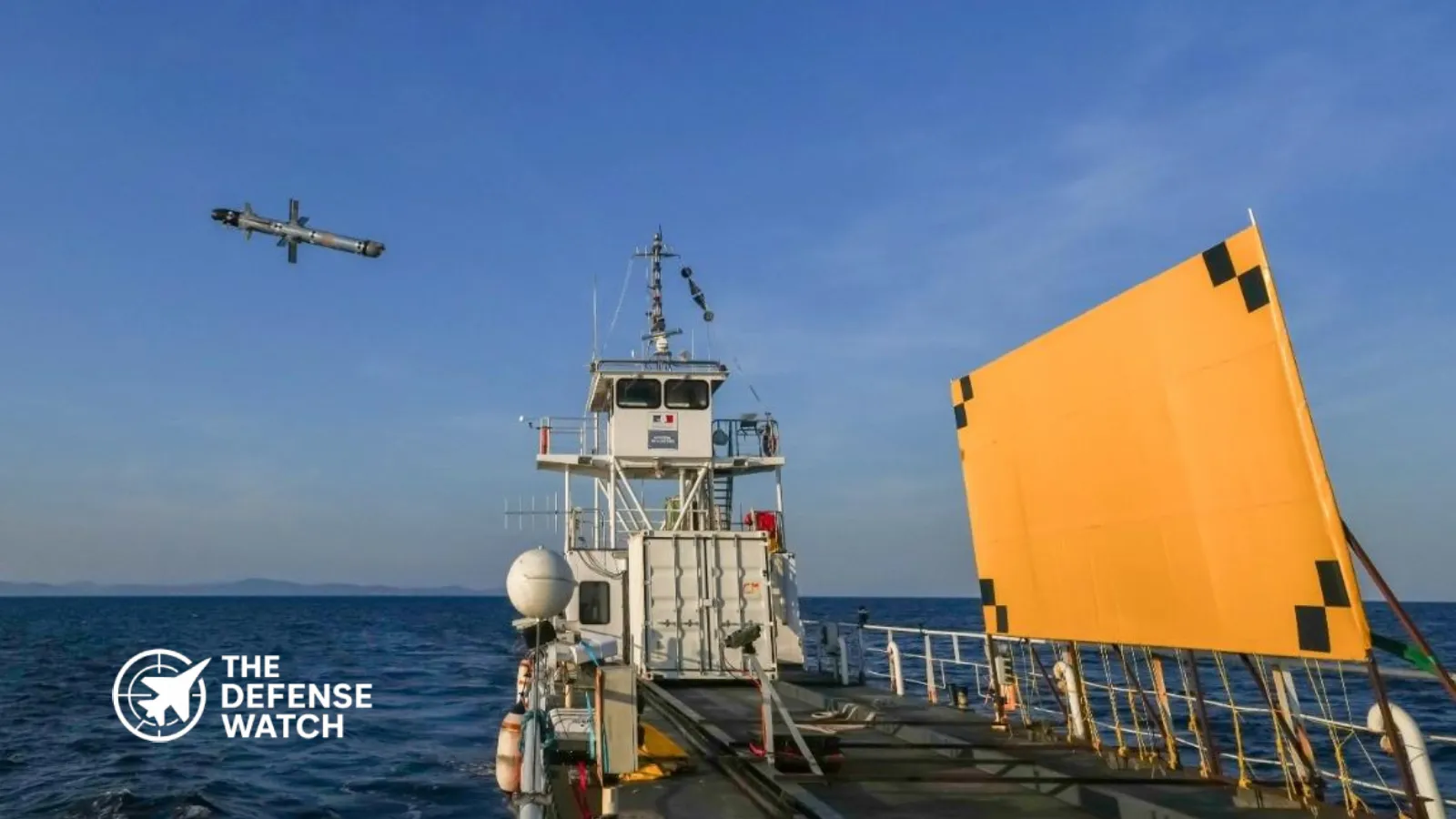
According to IAI, the German Navy launched the naval LORA system from an operational German vessel equipped with the missile’s launcher and command equipment. The company said both firing scenarios met the objectives established for the trial.
German Navy Inspector Vice Adm. Jan Christian Kaack described the test as a major milestone for the service and said the possible range of the system exceeds the range of previously known German naval weapons. Reuters reported that German officials now intend to advance procurement planning for the missile.
The firing took place in the North Atlantic, in waters between Ireland and Iceland, according to German reporting. Two German frigates were moved into the area for the trial, while maritime and air traffic restrictions were announced ahead of the event because of the planned missile launches.
The test therefore was more than a demonstration of missile performance. It also examined the practical requirements for operating a long-range ballistic strike weapon from a German naval force.
What Is The LORA Missile?
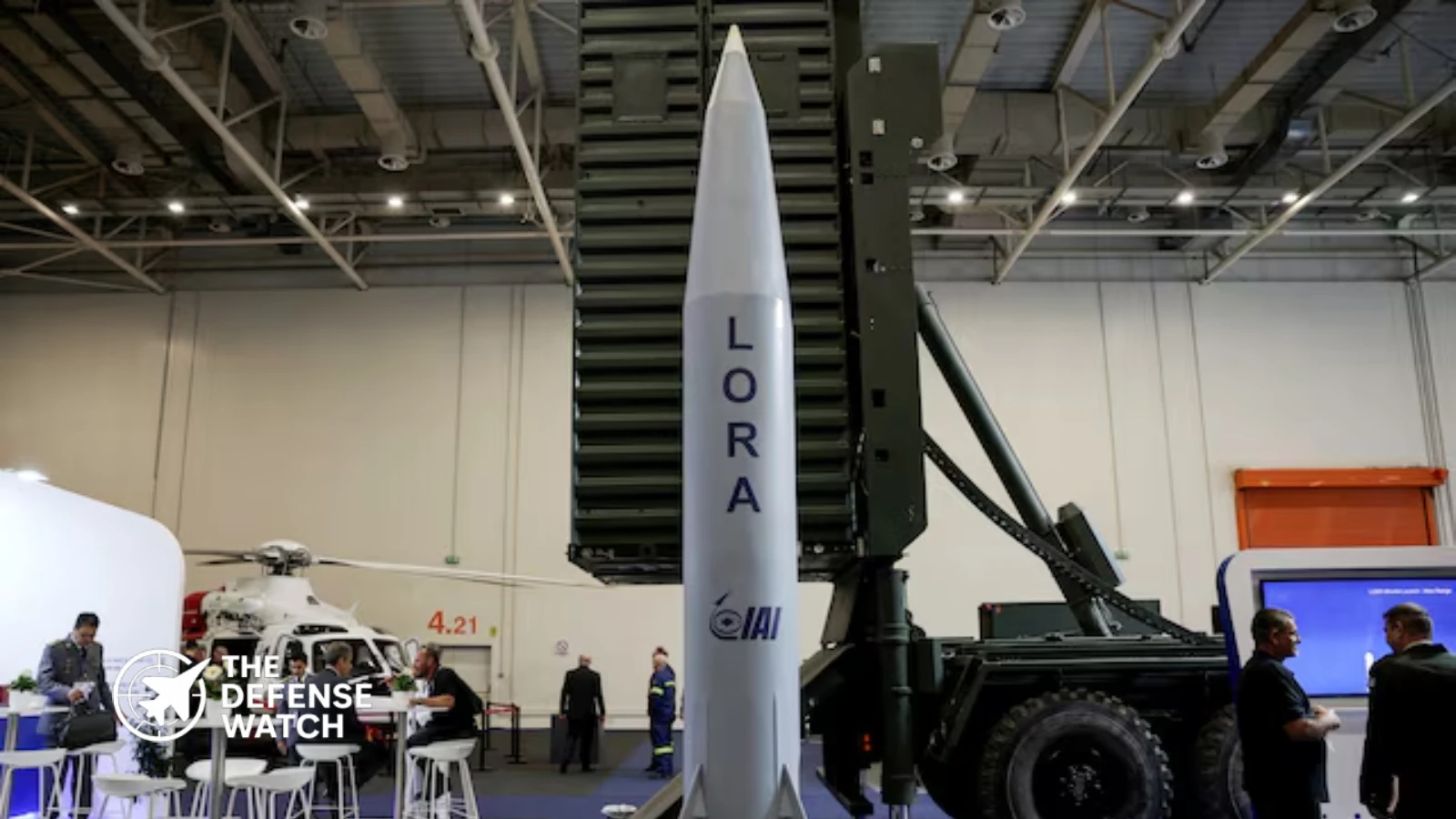
LORA, which stands for Long-Range Artillery, is a surface-to-surface ballistic strike weapon developed by IAI. The company describes it as an all-weather system designed to attack strategic targets from either mobile land-based or maritime platforms.
IAI lists the baseline LORA with a range of 90 to 430 kilometers, a launch weight of approximately 1,600 kilograms, a length of 5.2 meters and a diameter of 624 millimeters. The manufacturer also lists GPS/INS guidance and a stated accuracy of about 10 meters circular error probable.
Public reporting surrounding the German naval trial has cited a potential range exceeding 500 kilometers for the configuration being considered by Germany. That figure should be treated separately from IAI’s currently published baseline LORA specifications, which list a maximum range of 430 kilometers.
| Capability | Publicly Reported Information |
|---|---|
| Weapon | IAI LORA |
| Type | Surface-to-surface ballistic strike missile |
| Manufacturer | Israel Aerospace Industries |
| Launch options | Land and maritime |
| Published baseline range | 90 to 430 km |
| Published missile weight | About 1,600 kg |
| Length | 5.2 m |
| Diameter | 624 mm |
| Guidance | GPS/INS |
| Stated accuracy | About 10 m CEP |
| Propulsion | Single-stage solid rocket motor |
| German trial | North Atlantic, September 2026 |
The distinction between published baseline specifications and the greater range discussed by German officials is important. Germany has not publicly disclosed a complete configuration or final procurement specification for a future LORA acquisition.
Why The Ballistic Flight Profile Matters
LORA would complement rather than simply duplicate Germany’s existing cruise missile capability.
A cruise missile such as Taurus flies a largely aerodynamic trajectory at relatively low altitude, allowing it to use terrain-following techniques and approach targets through complex terrain. A ballistic missile follows a different flight path, using a powered ascent followed by a high-speed ballistic trajectory toward its target.
That difference can affect warning times, target engagement geometry and defensive planning.
IAI states that LORA uses a shaped trajectory and supersonic flight characteristics intended to improve survivability. The company also says the missile can engage fixed or transportable targets, including military infrastructure and air-defense-related targets.
For Germany, the most important issue is not simply the missile’s maximum range. The operational value comes from combining range, precision, mobility and the ability to launch from a naval platform.
A New Layer For German Long-Range Strike
Germany’s long-range strike inventory is undergoing a broader transformation.
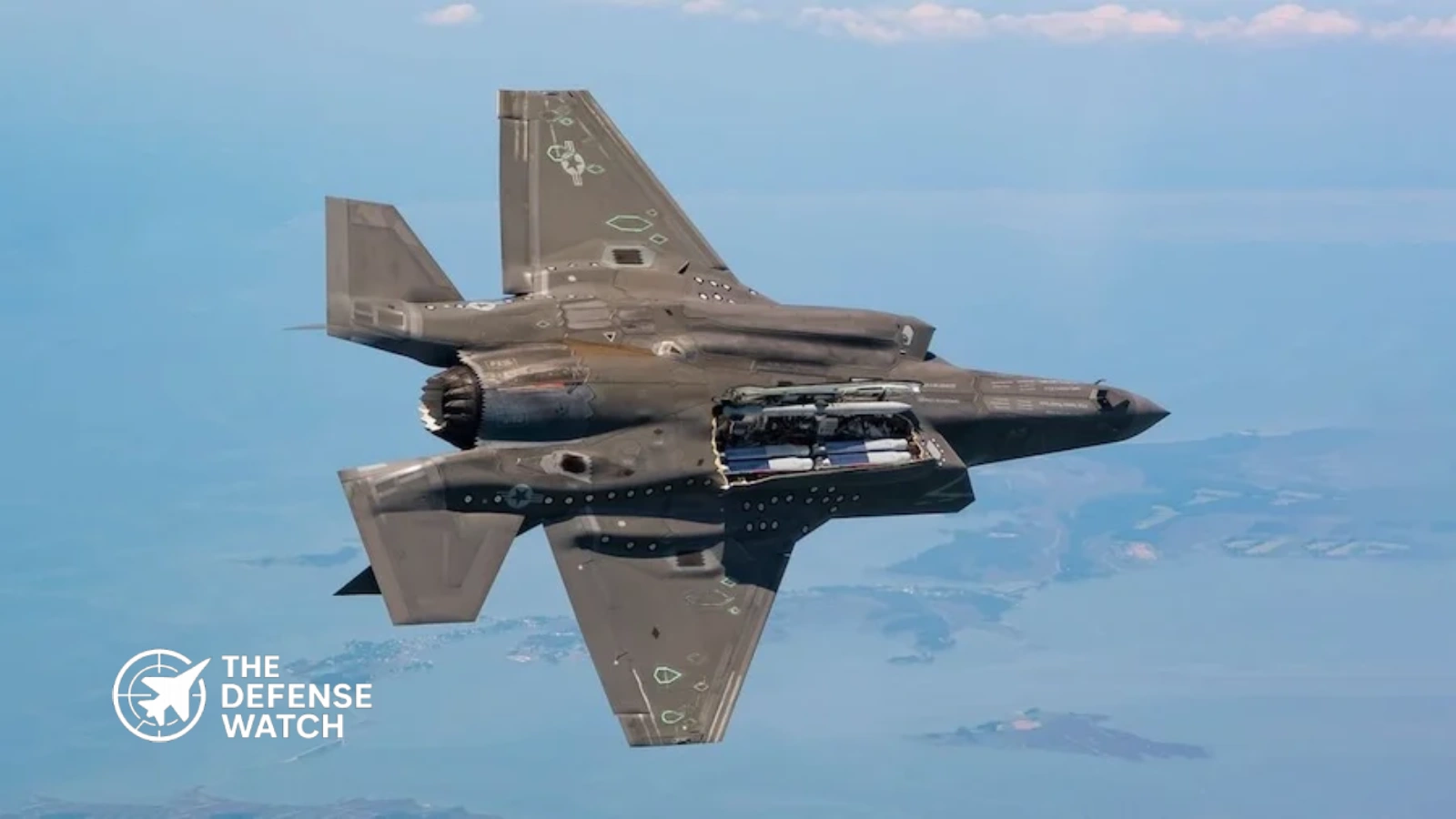
The country operates the Taurus KEPD 350 air-launched cruise missile and is working toward a future Taurus NEO modernization. Reuters reported that the upgraded Taurus is expected to enter the German arsenal later this decade.
Berlin is also pursuing additional long-range strike capabilities through multinational and bilateral programs. The LORA test therefore fits into a wider effort to increase Germany’s ability to hold targets at extended distances at risk.
The naval dimension is particularly important.
A ship carrying long-range precision weapons can reposition its launch point without requiring an established land-based missile site. That can increase geographic flexibility and allow a navy to generate strike options from different maritime operating areas.
At the same time, naval integration introduces its own requirements. A ballistic missile system must be integrated with shipboard command networks, navigation systems, communications, targeting processes, safety procedures and rules for employment.
The September test provided an opportunity to validate those elements under realistic conditions.
OPEX And Germany’s Marine 2035 Strategy
IAI said the LORA firing was conducted under the German Navy’s Operational Experimentation program, known as OPEX. The program is intended to test technologies and operating concepts that could contribute to the Navy’s Marine 2035 and Beyond modernization plan.
This approach is significant because Germany is not simply purchasing another missile and adding it to an existing launcher. The LORA trial examined whether a relatively new type of strike capability could be operated from German naval forces.
The successful firing establishes an important technical baseline, but it does not by itself establish full operational capability.
Procurement, training, logistics, targeting infrastructure, ammunition storage, maintenance, command-and-control integration and fleet-wide deployment would still be required before the weapon could become a mature capability.
The Broader European Security Context
Germany’s interest in long-range strike is closely connected to the wider transformation of European defense planning since Russia’s full-scale invasion of Ukraine.
Berlin has accelerated investment in air defense, missile defense, long-range fires and other capabilities intended to strengthen national and NATO deterrence. The German government has also described the country’s Arrow 3 missile-defense system as part of a layered architecture for protecting German territory against exo-atmospheric ballistic missile threats.
LORA serves a fundamentally different purpose.
Arrow 3 is defensive, designed to intercept ballistic missiles.
LORA is offensive, designed to deliver a conventional strike against ground or maritime targets.
That distinction is strategically important. Germany is developing both defensive and offensive missile capabilities as part of a broader effort to reduce capability gaps within NATO’s European members.
The German government has said its Arrow architecture is intended to operate alongside other NATO Integrated Air and Missile Defence capabilities.
Implications For NATO Maritime Deterrence
If Germany eventually fields LORA at scale, the weapon could add another long-range strike option to a European NATO navy.
The key benefit would be diversification.
An adversary planning against German or NATO forces would have to account for aircraft-launched cruise missiles, land-based systems under development and potentially ship-launched ballistic weapons. Multiple launch platforms and different missile flight profiles can complicate defensive planning.
However, LORA should not be viewed as a replacement for Germany’s aircraft-launched Taurus capability. The systems operate from different platforms and use different approaches to reach their targets.
The more relevant comparison is whether Germany can create a layered long-range strike architecture in which aircraft, ships and land forces provide complementary options.
That architecture could become increasingly important as European militaries seek greater capacity to conduct precision strikes without relying exclusively on U.S. long-range strike assets.
Procurement Is The Next Major Step
The successful test does not mean Germany has already fielded LORA.
Reuters reported that German officials intend to move forward with procurement plans following the successful trial, but no final acquisition value or complete procurement quantity has been publicly announced.
That leaves several important questions unresolved, including the number of missiles Germany could purchase, the number of naval launchers required, the final range configuration and how the weapon would be integrated across the fleet.
Those decisions will determine whether LORA becomes a limited experimental capability or a significant part of Germany’s long-range strike force.
For now, the September 2026 trial has demonstrated the central technical requirement: a German naval unit can launch the Israeli ballistic missile, guide it through its planned trajectory and successfully engage a designated target.
That gives Berlin a concrete basis for deciding whether to move from experimentation to procurement.
What The LORA Test Means For Germany
The North Atlantic firing represents an important step in Germany’s effort to rebuild long-range conventional strike capacity.
The significance is not simply that Germany tested an Israeli missile. The larger development is the demonstration of a ship-based ballistic strike capability that could eventually complement Germany’s aircraft-launched cruise missiles and other long-range weapons.
For the German Navy, the test provides evidence that LORA can be integrated into an operational naval environment. For Germany’s broader defense strategy, it points toward a more diversified force capable of delivering precision effects from multiple domains.
The next milestone will be procurement and fleet integration. Until those decisions are finalized, LORA remains a tested capability rather than a fully established German weapons system.