Turkish Defense Industry Puts Baykar at Center of Unmanned Warfare Push
The Turkish defense industry is placing increasing emphasis on Baykar’s unmanned aircraft, precision weapons and emerging unmanned fighter technology as Ankara expands indigenous military capabilities. Türkiye’s Defense Ministry highlighted Baykar’s contribution to reconnaissance, surveillance, intelligence and attack capabilities during a September 3 briefing held at the company’s Özdemir Bayraktar National Technology Center in Istanbul.
- Turkish Defense Industry Puts Baykar at Center of Unmanned Warfare Push
- Baykar’s Portfolio Is Moving Up the Capability Ladder
- TB2 Established the Export Model
- TB3 Adds a Naval Aviation Dimension
- KIZILELMA Marks a More Ambitious Step
- Autonomy Is Becoming a Core Design Feature
- Why Baykar Matters to U.S. and NATO Defense Planning
- Export Growth Supports a Broader Defense Ecosystem
- The Next Challenge Is Operational Maturity
Türkiye is expanding its indigenous unmanned warfare capabilities through Baykar’s established drone fleet and newer combat aircraft and precision weapons programs.
Defense Ministry spokesperson Zeki Aktürk said Baykar’s engineering and research capabilities were contributing to the Turkish Armed Forces while also strengthening Türkiye’s position in the international defense market. The ministry specifically identified the Bayraktar TB2, Akıncı, KIZILELMA, Kemankeş and K2 systems among the company’s products.
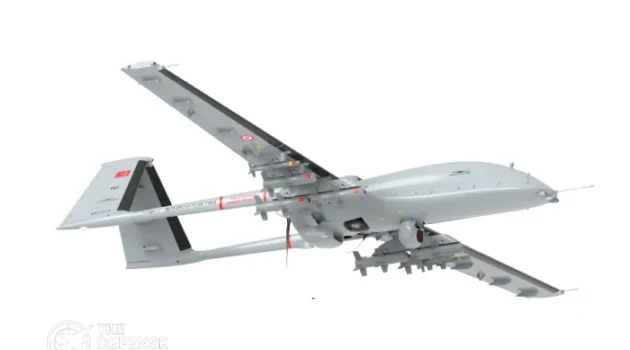
The significance of Baykar extends beyond one aircraft. Its portfolio now covers several layers of unmanned operations, from the mature TB2 to the heavier Akıncı, carrier-capable TB3 and the faster, more fighter-like KIZILELMA.
Baykar’s Portfolio Is Moving Up the Capability Ladder
Baykar’s current portfolio shows how Türkiye’s unmanned aircraft strategy has expanded beyond the relatively simple armed reconnaissance mission associated with the early TB2.
The company’s official product portfolio includes the TB2, Akıncı, TB3 and KIZILELMA, along with smaller unmanned systems and the Kemankeş family of mini cruise missiles.
| System | Primary Role | Key Development Significance |
|---|---|---|
| Bayraktar TB2 | Armed ISR and strike | Mature, widely exported UCAV |
| Bayraktar Akıncı | Heavy UCAV | Larger payload and higher-altitude operations |
| Bayraktar TB3 | Naval UCAV | Designed for operations from short-runway vessels |
| KIZILELMA | Unmanned combat aircraft | High-speed combat aircraft development |
| Kemankeş | Mini cruise missile | Adds long-range precision effects to unmanned platforms |
| K2 | Kamikaze UAV | AI-assisted autonomous and loitering capability |
The distinction matters because these platforms are not simply larger versions of the same aircraft. They represent different approaches to surveillance, strike, naval aviation and increasingly complex combat-air missions.
TB2 Established the Export Model
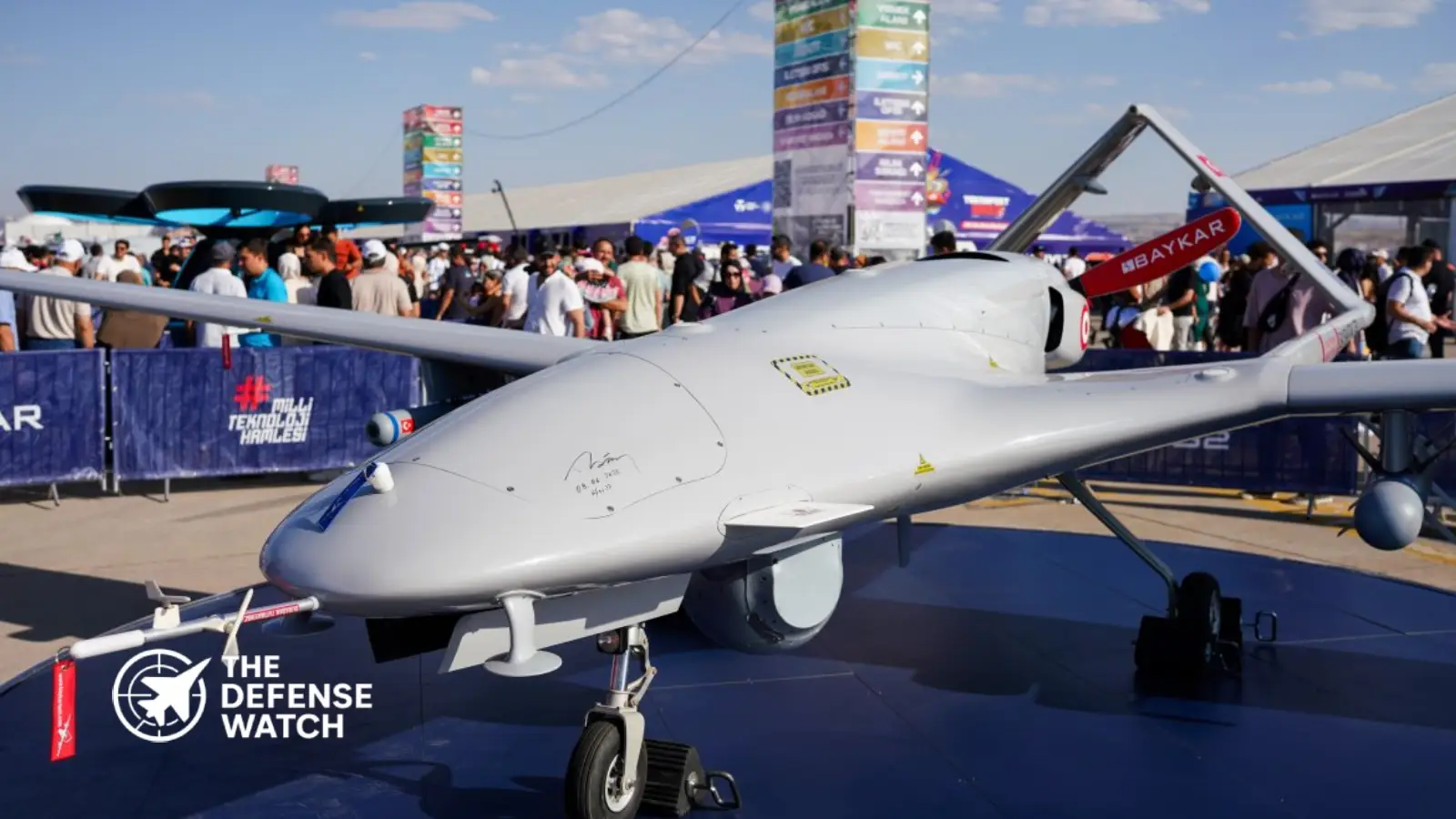
The Bayraktar TB2 remains the foundation of Baykar’s international business.
Baykar says it has signed TB2 export agreements with 36 countries and AKINCI agreements with 16 countries. The company reported $2.2 billion in exports in 2025, describing that figure as a record.
The company’s export expansion has also helped make unmanned systems a significant component of Türkiye’s defense-industrial presence abroad. That creates a feedback loop in which international sales support production capacity and provide an expanding installed base of Turkish-origin systems.
The TB2’s importance is therefore not limited to its technical specifications. Its widespread adoption has helped establish Türkiye as a major supplier in the global armed unmanned aircraft market.
Baykar says the TB2 has accumulated more than 1.25 million flight hours. Its published specifications include a 27-hour endurance, 12-meter wingspan and maximum speed of 120 knots.
TB3 Adds a Naval Aviation Dimension
The Bayraktar TB3 represents a different operational challenge because it is designed to operate from a short runway aboard a ship.
The aircraft successfully conducted autonomous takeoffs and landings from TCG Anadolu during testing, establishing a capability that connects unmanned aircraft operations with Turkish naval aviation.
That capability received additional exposure during NATO Steadfast Dart 2026. Baykar reported that TB3 operated from TCG Anadolu and conducted a live-fire MAM-L strike against surface targets during the exercise in the Baltic Sea.
Türkiye’s Defense Industry Agency also reported that TB3 conducted operations from TCG Anadolu during Steadfast Dart 2026, including 232 sorties and flight operations alongside Eurofighter aircraft over the Baltic Sea.
For naval forces, the operational value of a short-runway UCAV is tied to more than simply carrying weapons. It provides a way to extend surveillance and strike capacity from a ship without requiring a conventional aircraft carrier with catapults and arresting gear.
The principal challenge is maintaining reliable launch, recovery, communications and command-and-control performance in a maritime environment. Wind, deck movement, limited runway length and electromagnetic interference all impose constraints that do not exist to the same degree at a conventional land airfield.
KIZILELMA Marks a More Ambitious Step
KIZILELMA represents Baykar’s move toward an unmanned combat aircraft rather than a conventional MALE-class UCAV.
The program has progressed through increasingly complex weapons and autonomy testing. In July 2026, the serial production S2 aircraft conducted its first firing tests from its internal weapons bay, using ROKETSAN TEBER-82 and ASELSAN TOLUN munitions.
The internal weapons bay is significant because weapon carriage affects an aircraft’s radar signature and aerodynamic characteristics. Baykar says the configuration is intended to support strike operations while maintaining a lower radar signature than external carriage.
KIZILELMA has also demonstrated air-to-air and air-to-ground weapons integration. Baykar reported that the aircraft successfully engaged a jet-powered aerial target with the GÖKDOĞAN beyond-visual-range missile during a November 2025 test.
In July 2026, the aircraft also conducted a firing test with Roketsan’s JET-230 supersonic air-to-ground missile.
These tests do not by themselves establish operational combat capability. They do, however, show the direction of the program: integrating an unmanned aircraft with sensors, weapons and autonomous flight functions normally associated with more complex combat aircraft.
Autonomy Is Becoming a Core Design Feature
Another important element of Baykar’s development strategy is autonomy.
In December 2025, two KIZILELMA prototypes conducted an autonomous close-formation flight using algorithms developed by Baykar. The company has also participated in the K-SWARM program with Leonardo, involving autonomous formation operations between KIZILELMA aircraft and Leonardo M-346 aircraft.
This points toward a broader concept of crewed and uncrewed aircraft working as a coordinated force.
For military planners, the challenge is not simply making an aircraft fly autonomously. Effective combat autonomy requires reliable navigation, sensor fusion, communications, identification and engagement controls, while maintaining human authority over critical decisions.
That makes software, data links and mission systems as important as the aircraft’s airframe.
Why Baykar Matters to U.S. and NATO Defense Planning
Baykar’s expansion is relevant beyond Türkiye because Turkish unmanned aircraft are increasingly appearing in NATO exercises and in the inventories of allied countries.
The TB3’s Steadfast Dart deployment is particularly significant because it demonstrated a Turkish unmanned naval aviation concept in a multinational NATO environment rather than solely during a domestic test program.
For NATO planners, the broader issue is interoperability.
A growing fleet of allied unmanned aircraft introduces requirements for common communications, airspace deconfliction, intelligence sharing, electronic warfare resilience and command-and-control integration. These considerations become more demanding as unmanned platforms move from intelligence and surveillance missions toward contested air operations.
The KIZILELMA program adds another layer. An unmanned combat aircraft operating alongside crewed fighters could eventually change how air forces approach high-risk missions, but doing so requires extensive validation of autonomy, communications resilience, weapons employment and human-machine teaming.
Türkiye’s experience therefore provides a useful case study in how a country can build an indigenous unmanned aviation ecosystem rather than purchasing individual platforms as isolated capabilities.
Export Growth Supports a Broader Defense Ecosystem
Baykar’s reported $2.2 billion in 2025 exports are important because the company has become a significant source of foreign demand for Türkiye’s defense sector.
The company’s product portfolio also illustrates a broader Turkish industrial model in which aircraft, sensors, weapons and mission systems are increasingly developed domestically or integrated through national defense companies.
KIZILELMA’s recent testing provides a clear example. Its weapons trials have involved systems from several Turkish companies, including ASELSAN and ROKETSAN, while the aircraft itself is developed by Baykar.
That level of domestic integration can reduce dependence on foreign suppliers for individual components and gives Türkiye greater control over how its aircraft evolve.
It also creates export opportunities for a wider group of Turkish defense companies when aircraft, sensors, communications systems and weapons are marketed as an integrated capability.
The Next Challenge Is Operational Maturity
The most important question for Baykar is no longer whether Türkiye can develop and export armed UAVs. The TB2 has already demonstrated that.
The harder challenge is scaling more advanced systems into reliable operational fleets.
For KIZILELMA, that means moving from successful individual demonstrations to repeatable performance across navigation, sensing, weapons employment, communications, maintenance and autonomous operations. For TB3, the challenge is sustaining shipborne operations at useful tempo while integrating the aircraft into wider naval and joint-force command structures.
The evolution also raises questions about survivability. Modern air defenses can combine radar, passive sensors, electronic warfare and short-range interceptors, making the operating environment considerably more difficult than the permissive conditions in which many earlier armed UAVs demonstrated their value.
Baykar’s trajectory suggests that Türkiye is addressing that challenge by developing a layered family of systems rather than relying on one platform.
The TB2 provides a mature and widely exported baseline. Akıncı increases payload and mission capacity. TB3 extends unmanned aviation to naval operations. KIZILELMA moves toward high-speed combat missions, while Kemankeş and other systems provide additional precision effects.
That progression is the central development to watch in Türkiye’s defense industry. The country’s unmanned warfare strategy is increasingly becoming an ecosystem of aircraft, weapons, sensors and autonomous systems rather than a single successful drone program.