General Electric F414 Contract Expands Navy Engine Sustainment
General Electric has secured a $2.8747 billion performance-based logistics contract from the U.S. Navy to support 17 F414 engine components used by its F/A-18E/F Super Hornet and EA-18G Growler aircraft. The Department of War announced the award Sept. 1, identifying the contract as a five-year, not-to-exceed agreement with no option periods.
- General Electric F414 Contract Expands Navy Engine Sustainment
- Takeaways
- Contract Details And Initial Funding
- F414 Remains Central To Navy Tactical Aviation
- Why The Logistics Contract Matters
- Sole-Source Award Reflects F414 Industrial Ownership
- Jacksonville Role Connects With Navy Engine Maintenance
- Contract Supports A Fleet Entering A Long Sustainment Period
- What The $2.87 Billion Ceiling Does And Does Not Mean
- Broader Implications For Naval Aviation Readiness
Takeaways
The U.S. Navy has awarded General Electric a ceiling-price contract worth up to $2.87 billion to support F414 engine components used by its Super Hornet and Growler fleets.
The contract is being managed by Naval Supply Systems Command Weapon Systems Support in Philadelphia under contract number N00383-26-D-UA01. Work is scheduled to continue through August 2031, providing long-term sustainment support for a propulsion system central to the Navy’s carrier-based strike fighter and airborne electronic attack fleets.
Contract Details And Initial Funding
The award establishes a ceiling price rather than representing an immediate $2.87 billion obligation. The Navy is using delivery orders under the broader logistics contract to fund specific requirements as they arise.
| Contract Element | Details |
|---|---|
| Contractor | General Electric Co. |
| Location | Lynn, Massachusetts |
| Contract value | Up to $2.8747 billion |
| Contract type | Performance-based logistics |
| Duration | Five-year base |
| Option periods | None |
| Components covered | 17 F414 engine components |
| Completion | August 2031 |
| Lynn, Massachusetts | 90% of work |
| Jacksonville, Florida | 10% of work |
| FY2026 funds committed | $198.22 million |
| FY2026 funds obligated | $148.67 million |
| Contract number | N00383-26-D-UA01 |
| Initial delivery order | N00383-26-F-UA01 |
The initial funding package includes $198.22 million in fiscal 2026 working capital funds. Of that amount, $148.67 million, or 75%, will be obligated for the initial delivery order. The Navy said the funds will not expire at the end of the current fiscal year, while subsequent delivery orders will use appropriate Navy working capital funds from the relevant fiscal years.
F414 Remains Central To Navy Tactical Aviation
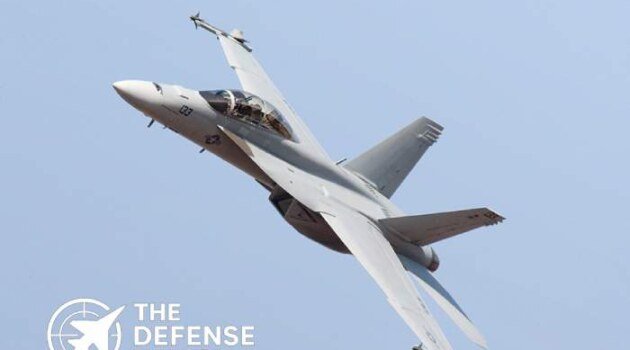
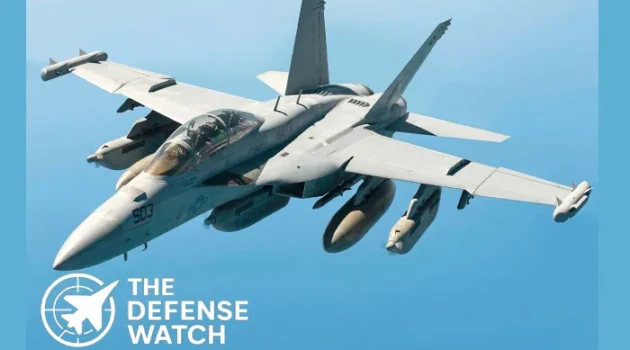
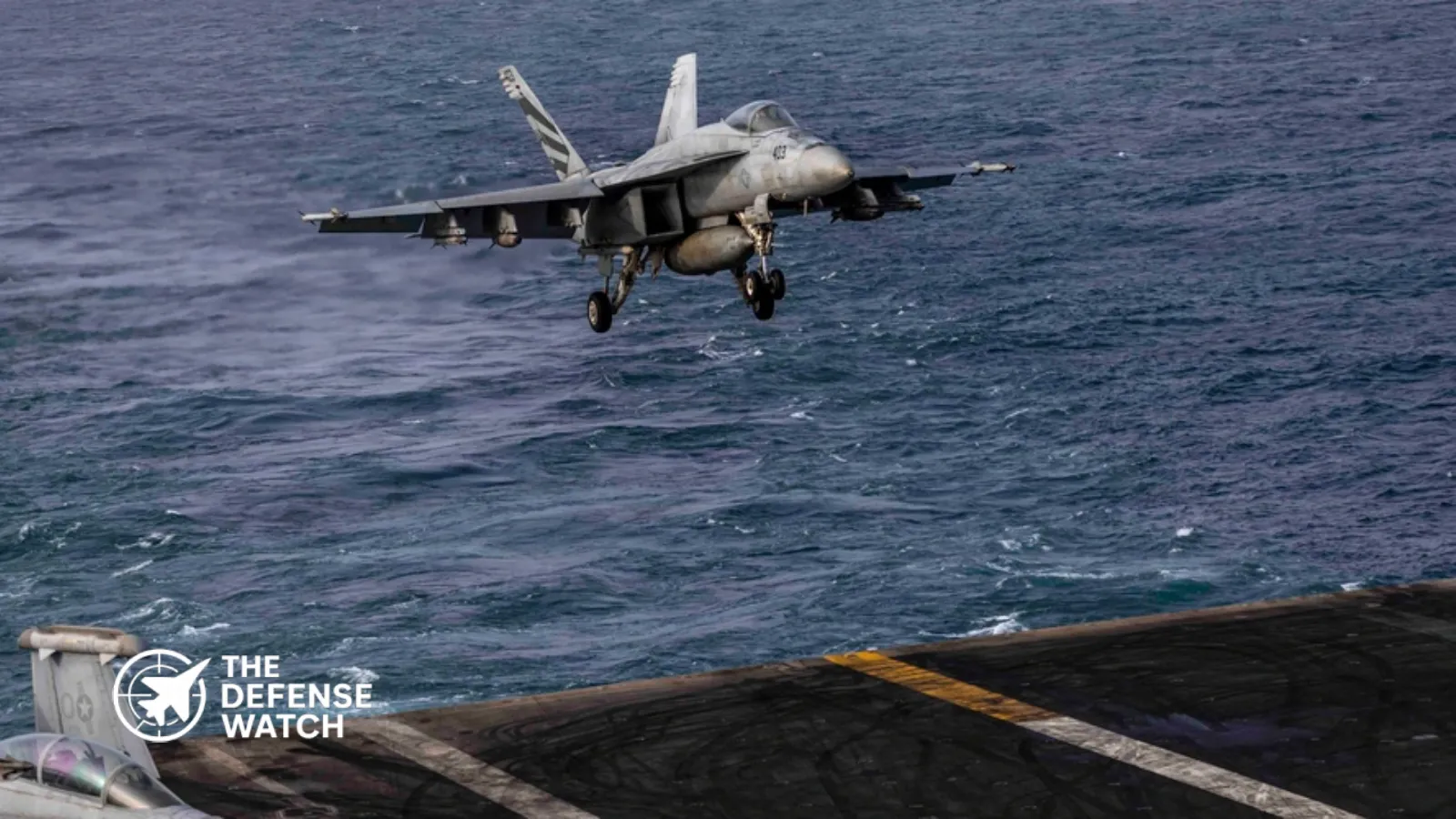
The F414-GE-400 is the powerplant for the Navy’s F/A-18E/F Super Hornet and EA-18G Growler. NAVAIR lists the Super Hornet as a twin-engine aircraft, with each F414 producing approximately 22,000 pounds of static thrust. The aircraft has a maximum takeoff gross weight of 66,000 pounds and a listed maximum speed above Mach 1.8.
The same engine family therefore supports two closely related but operationally distinct aircraft. The Super Hornet provides multirole fighter and strike capabilities, while the Growler is configured for airborne electronic attack missions.
That makes engine availability an important part of overall aircraft readiness. An aircraft cannot contribute to a carrier air wing’s operational capacity if its propulsion system is unavailable, regardless of the status of its radar, weapons or mission systems.
The Navy has previously identified F414 engine availability as a readiness issue. In 2024, NAVSUP reported that the service had worked with industry and other Navy organizations to increase the number of ready-for-issue F414 engines after readiness requirements increased.
Why The Logistics Contract Matters
The new agreement is significant because it places sustainment of 17 F414 components under a structured performance-based logistics arrangement rather than treating individual component requirements as isolated purchases.
Performance-based logistics contracts are generally intended to align contractor support with defined availability and performance objectives. For an engine fleet, that can include the timely availability of components needed to keep engines undergoing maintenance moving through repair and return-to-service processes.
The Navy’s earlier F414 experience illustrates why component availability matters. Fleet Readiness Center Southeast reported that shortages across the F414 supply chain had contributed to engine module constraints, with the Navy working across maintenance organizations, NAVSUP, the Defense Logistics Agency and GE to improve engine readiness.
FRCSE reported in 2024 that improvements to its F414 maintenance processes had helped increase module output by 35%. The command also said changes involving life limits and reliability-centered maintenance were expected to reduce scheduled engine removals over a 10-year period.
The new contract therefore extends an existing sustainment relationship around a propulsion system that the Navy has already identified as important to aircraft readiness.
Sole-Source Award Reflects F414 Industrial Ownership
The Department of War said the requirement was solicited from one source under the authority of 10 U.S. Code 3204(a)(1), and one offer was received. The contract was awarded to GE as a sole-source requirement.
For the F414, GE’s role is deeply established. The company has manufactured the engine for the Super Hornet program since the aircraft’s development, and the Navy has long relied on GE and its industrial base for F414 production and sustainment.
NAVAIR previously awarded GE a $1.9 billion multiyear contract in 2002 covering 480 F414 engines over five years, illustrating the long-running relationship between the Navy and the engine manufacturer.
The current award is different in purpose. Rather than procuring new engines, it focuses on logistics support for specific engine components, making it a sustainment contract intended to support the operational fleet.
Jacksonville Role Connects With Navy Engine Maintenance
Although 90% of the contract work will be performed in Lynn, Massachusetts, 10% is assigned to Jacksonville, Florida.
That location is significant to the Navy’s F414 sustainment network. Fleet Readiness Center Southeast in Jacksonville has played a major role in F414 engine maintenance, repair and overhaul activities and has worked with NAVSUP, the F/A-18 and EA-18G program office, GE and other organizations on engine readiness.
The division of work between GE’s Massachusetts operations and Jacksonville’s Navy aviation maintenance ecosystem gives the contract a direct connection between the original equipment manufacturer and the fleet’s depot-level sustainment infrastructure.
For the Navy, that relationship is important because propulsion readiness depends on more than the availability of complete engines. Individual components can become constraints when maintenance organizations cannot obtain the parts needed to complete repairs and return engines to service.
Contract Supports A Fleet Entering A Long Sustainment Period
The F/A-18E/F Super Hornet remains a major component of the Navy’s carrier air wing. NAVAIR has stated that the platform is expected to remain an important combat aircraft into the 2040s, even as the Navy continues introducing the F-35C and develops its future carrier aviation architecture.
That creates a long sustainment requirement for the Super Hornet’s propulsion system.
The Navy is simultaneously managing a transition in tactical aviation, but that transition does not eliminate the need to maintain existing aircraft. Instead, the service must sustain legacy and current platforms while newer aircraft enter the fleet.
For the F414, this means maintaining a reliable supply of repairable and replacement components over an extended period. A five-year logistics contract running through 2031 provides a defined framework for that effort.
What The $2.87 Billion Ceiling Does And Does Not Mean
The headline contract value should be interpreted carefully.
The $2.8747 billion figure is the maximum or ceiling value of the performance-based logistics contract. It does not mean the Navy is immediately spending that full amount.
The initial funding identified by the award is $198.22 million, with $148.67 million obligated under the first delivery order. Additional orders will be funded later using applicable Navy working capital funds.
This structure allows the Navy to place orders against the contract as requirements develop while maintaining a long-term contractual relationship with the supplier.
The approach also gives the Navy a framework for managing component sustainment over multiple fiscal years instead of relying entirely on separate procurement actions for each requirement.
Broader Implications For Naval Aviation Readiness
The F414 contract highlights a less visible but critical part of military modernization: sustaining the propulsion systems that enable frontline aircraft to generate sorties.
Aircraft availability depends on the entire maintenance chain, including engines, modules, individual components, repair capacity, technical expertise and supply support. A shortage in any one of those areas can reduce the number of aircraft available for training, deployment or combat operations.
The Navy’s previous F414 readiness efforts demonstrate that the service has already faced pressure in this area. The new five-year agreement provides a mechanism to continue addressing component-level logistics while the Super Hornet and Growler remain active parts of naval aviation.
For GE, the award reinforces its long-term position as the F414’s original equipment manufacturer and principal industrial partner for the Navy’s Super Hornet and Growler propulsion systems.
For the Navy, the immediate objective is more straightforward: maintain access to critical F414 components and support the readiness of aircraft that will remain in service well into the next decade.
The contract is expected to run through August 2031, with 90% of the work performed in Lynn and the remaining 10% in Jacksonville.