
- Home
- Defense Systems
- Military Satellites & Space Systems
- China Jilin-1 Satellite
China Jilin-1 Satellite
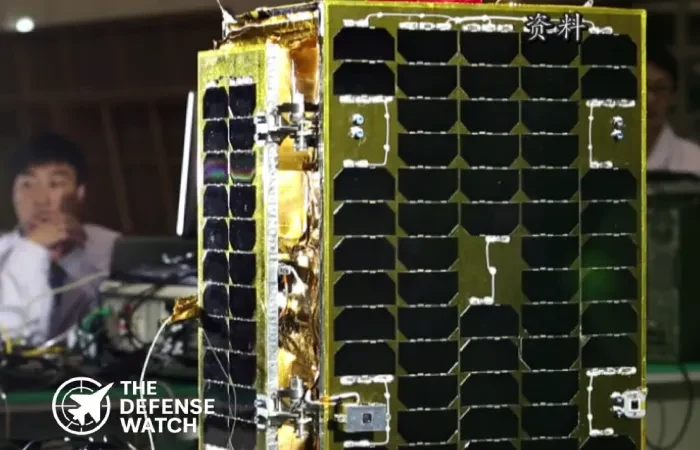
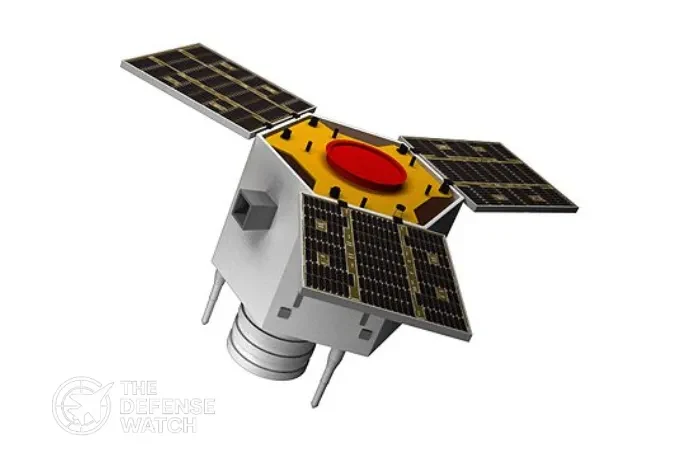
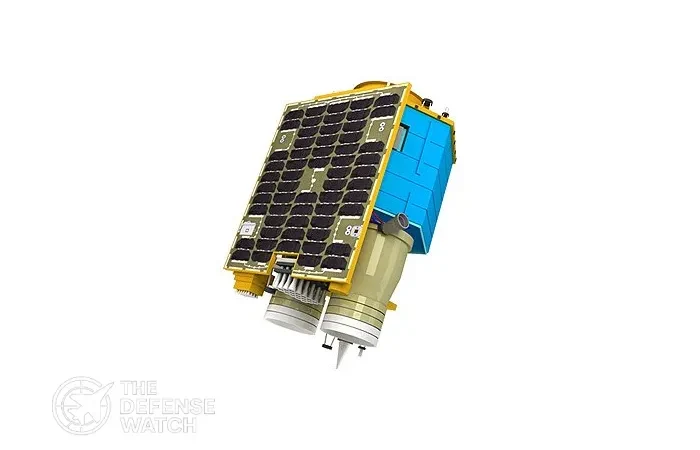
Defense Systems Full Specifications
1. General Information
| System Name | Jilin-1 Earth Observation Satellite Constellation |
| Manufacturer | Chang Guang Satellite Technology |
| Country of Origin | China |
| Type / Role | Earth Observation / ISR Satellite |
| In Service | Yes |
| Year Introduced | 2015 |
| Unit Cost | USD 5–15 Million (Estimated per Satellite) |
2. Performance & Capabilities
| Orbit Type | Low Earth Orbit (LEO) |
| Operational Altitude | 500–650 km |
| Operational Inclination | Sun-Synchronous Orbit |
| Imaging / Sensor Type | Optical / Video Imaging |
| Resolution / Accuracy | Sub-meter resolution (variant dependent) |
| Revisit Time / Coverage | Multiple passes per day with constellation |
| Mission Duration | 5–7 years |
3. Payload & Sensor Specifications
| Primary Sensor | Optical Telescope Imaging System |
| Secondary Sensor | Multi-Spectral Camera |
| Data Transmission | Encrypted Satellite Communication |
| Imaging Capability | Daylight imaging, video observation |
| Payload Weight | 200–400 kg |
| Onboard Power | Solar arrays, approx. 1–2 kW |
4. Guidance, Control & Communication
| Attitude Control System | Reaction Wheels and Star Trackers |
| Orbit Control | Chemical propulsion micro-thrusters |
| Communication Link | X-Band / Ka-Band |
| Data Encryption | Military-grade encryption |
| Telemetry & Command System | Ground station control network |
5. Launch & Deployment
| Launch Vehicle | Long March 2D / Long March 6 |
| Launch Site | Taiyuan Satellite Launch Center |
| Deployment Orbit | Sun-Synchronous LEO |
| Launch Mass | 200–450 kg |
| Deployment Method | Rocket launch with multi-satellite deployment |
6. Operational & Command Use
| Primary Operators | Chang Guang Satellite Technology / China |
| Global Coverage | Yes |
| Combat Proven | Not officially confirmed |
| Typical Missions | Earth observation, maritime monitoring, ISR support |
| Notable Feature | Ability to capture high-definition video from orbit |
7. Future & Experimental Use
| Planned Upgrades | Higher resolution sensors and AI image processing |
| Replacement / Next Gen | Expanded Jilin-1 constellation |
| Experimental Variants | Real-time video satellites |
| International Collaboration | Limited commercial data partnerships |
PROS
- Large constellation improves revisit frequency
- Lower cost compared to traditional ISR satellites
- High resolution optical imaging capability
- Some satellites support video surveillance from orbit
- Useful for both civilian and military monitoring
CONS
- Limited resolution compared to classified military satellites
- Heavy reliance on ground station network
- Weather and cloud cover can affect optical imaging
- Data latency depends on satellite pass and downlink availability
- Vulnerable to electronic warfare or anti-satellite threats
Jilin-1 Satellite Constellation ISR System
The Jilin-1 satellite constellation is one of China’s fastest growing commercial Earth observation networks, designed to provide high-resolution imagery, real-time video, and rapid revisit intelligence from space. Developed to support both civilian and defense applications, the system enables persistent monitoring of global activity from Low Earth Orbit.
Unlike traditional single reconnaissance satellites, Jilin-1 operates as a constellation of dozens of small satellites working together. This approach allows China to capture frequent imagery of strategic locations, maritime routes, and military infrastructure. With hundreds of satellites planned, the constellation aims to deliver near-continuous global coverage.
The satellites can capture detailed optical imagery and video of ground activities, which is useful for intelligence analysis, disaster monitoring, environmental tracking, and maritime surveillance. Analysts note that the system’s growing coverage provides China with a powerful ISR capability that can complement traditional military reconnaissance assets.
Manufacturer
The constellation is developed and operated by Chang Guang Satellite Technology Co., Ltd., a Chinese aerospace company based in Jilin Province. The company is supported by the Chinese Academy of Sciences and partners with national space organizations and commercial launch providers.
Speed and Range
Jilin-1 satellites operate in Low Earth Orbit at roughly 500–650 km altitude. Traveling at orbital speeds of about 7.5 km per second (around 27,000 km/h), each satellite circles Earth approximately every 90 minutes. The constellation design enables frequent revisit times, in some cases several passes per day over the same location.
Cost / Price
Exact pricing remains undisclosed, but industry estimates suggest USD 5–15 million per satellite, depending on sensor type and mission configuration. The lower cost compared to traditional reconnaissance satellites allows rapid expansion of the constellation.
FAQs
What is the Jilin-1 satellite system used for?
It provides high-resolution Earth observation imagery for intelligence, mapping, environmental monitoring, and maritime tracking.
Who operates the Jilin-1 constellation?
The system is operated by Chang Guang Satellite Technology in China.
How many Jilin-1 satellites exist?
China has launched dozens of satellites, with long-term plans for more than 300.
What resolution can Jilin-1 capture?
Some variants provide imagery with resolution better than 1 meter.
Can Jilin-1 record video from space?
Yes. Certain satellites in the constellation are capable of capturing high-definition video of ground activity.
Disclaimer Note
The information provided on TheDefenseWatch.com is for general informational purposes only. While we strive to ensure the accuracy, completeness, and timeliness of our content regarding defense and aerospace products, technologies, and specifications, we cannot guarantee that all information is 100% accurate or up-to-date due to the evolving nature of military technology and classified data.TheDefenseWatch.com does not warrant the reliability, suitability, or availability of the information for any specific purpose. Users are advised to consult official sources, such as manufacturers, government publications, or defense agencies, for precise and verified data before making decisions based on our content.We are not affiliated with any defense manufacturers, governments, or military organizations mentioned. Opinions, reviews, and ratings reflect expert analysis but are subjective and should not be considered endorsements. TheDefenseWatch.com is not responsible for any errors, omissions, or consequences arising from the use of this website’s content.External links are provided for convenience and do not imply endorsement. TheDefenseWatch.com reserves the right to update or modify content without prior notice. By using this website, you agree to our Privacy & Cookies Policy.
New Arrivals



Popular Comparisons
-
 J-10C vs JF-17 Thunder: Which Fighter Is More Capable?
View Comparison →
J-10C vs JF-17 Thunder: Which Fighter Is More Capable?
View Comparison → -
Tejas vs Gripen: Key Differences and Capabilities
View Comparison →
-
Tejas vs MiG-21 Bison: How India Replaced Its Iconic Supersonic Fighter
View Comparison →
-
F-35 vs F-16: Stealth, Sensors and Combat Roles
View Comparison →
-
Tejas Fighter Jet vs F-16 Fighting Falcon: Capability Compared
View Comparison →
-
Rafale Fighter Jet vs F-16 Fighting Falcon : Which Fighter Has the Edge?
View Comparison →
-
Su-57 Fighter Jet vs J-20 Fighter Jet: Stealth and Air Combat Compared
View Comparison →
-
Mirage 2000 vs Tejas Mk1A: Legacy Combat Power vs Indigenous Modernization
View Comparison →
-
Rafale Fighter Jet vs F-22 Raptor: Which Air Dominance Fighter Has the Edge?
View Comparison →
-
Tejas Fighter Jet vs. Rafale Fighter Jet: India’s Indigenous Fighter Meets France’s Proven Multirole Combat Aircraft
View Comparison →


- Pratt & Whitney Begins $100 Million Polish Expansion for F-35 Engine Parts

- Northrop Grumman Wins $43.9 Million Contract for Trident II Rocket Motor Facilities
- Ukraine Drone Strikes Disrupt Russian Data Centers, Raising Questions About AI Infrastructure Security
- Lockheed Martin Wins $114.6 Million Contract to Redesign F-35 Navigation Systems
- Project Agincourt Pushes Pentagon to Speed Up Autonomous Weapons Fielding
- Northrop Grumman Factory Expansion Aims to Increase B-21 Raider Production
- France Orders Four More SAMP/T NG Air Defense Systems
- France and UAE Revive Rafale F5 Fighter Development Partnership
- P-800 Oniks Missile: Range, Speed and BrahMos Comparison
- Ukrainian Drone Unit Caused 70% of Simulated U.S. Brigade Casualties in Germany Exercise

Fighter Jets
-
 F-100 Super Sabre
-
North American F-86 Sabre
-
Northrop YF-23 Fighter
-
Rafale F5 Fighter
-
SU-57 Felon Stealth Fighter
-
Boeing F/A-XX Fighter
-
JF-17 Thunder Fighter Jet
-
F-47 Fighter Jet
-
MIG-31 Fighter Jet
-
J-10CE Fighter Jet
-
Chengdu J-10 Fighter Jet
-
Chengdu J-10C Fighter Jet
-
Gripen E Fighter Jet
-
Tejas Mk1A Fighter Jet
-
Tejas Mk‑2 Fighter Jet
-
F-16V Viper Block 70 Fighter Jet
-
F-15EX Eagle II Fighter
-
F-15E Strike Eagle Fighter
-
F/A-18E/F Super Hornet Fighter Jet
-
Saab Gripen F Fighter Jet
-
JAS 39E/F Gripen Fighter Jet
-
JAS 39 Gripen Fighter Jet
-
F-35A Lightning II Fighter Jet
-
F/A-18F Super Hornet







Recent Compares
-
J-10C vs JF-17 Thunder: Which Fighter Is More Capable?
View Comparison →
-
Tejas vs Gripen: Key Differences and Capabilities
View Comparison →
-
Tejas vs MiG-21 Bison: How India Replaced Its Iconic Supersonic Fighter
View Comparison →
-
F-35 vs F-16: Stealth, Sensors and Combat Roles
View Comparison →
-
Tejas Fighter Jet vs F-16 Fighting Falcon: Capability Compared
View Comparison →
Latest Defense Systems
10 Compares Defense Systems
-
J-10C vs JF-17 Thunder: Which Fighter Is More Capable?
View Comparison →
-
Tejas vs Gripen: Key Differences and Capabilities
View Comparison →
-
Tejas vs MiG-21 Bison: How India Replaced Its Iconic Supersonic Fighter
View Comparison →
-
F-35 vs F-16: Stealth, Sensors and Combat Roles
View Comparison →
-
Tejas Fighter Jet vs F-16 Fighting Falcon: Capability Compared
View Comparison →
-
Rafale Fighter Jet vs F-16 Fighting Falcon : Which Fighter Has the Edge?
View Comparison →
-
Su-57 Fighter Jet vs J-20 Fighter Jet: Stealth and Air Combat Compared
View Comparison →
-
Mirage 2000 vs Tejas Mk1A: Legacy Combat Power vs Indigenous Modernization
View Comparison →
-
Rafale Fighter Jet vs F-22 Raptor: Which Air Dominance Fighter Has the Edge?
View Comparison →
-
Tejas Fighter Jet vs. Rafale Fighter Jet: India’s Indigenous Fighter Meets France’s Proven Multirole Combat Aircraft
View Comparison →
- Pratt & Whitney Begins $100 Million Polish Expansion for F-35 Engine Parts
- Northrop Grumman Wins $43.9 Million Contract for Trident II Rocket Motor Facilities
- Ukraine Drone Strikes Disrupt Russian Data Centers, Raising Questions About AI Infrastructure Security
- Lockheed Martin Wins $114.6 Million Contract to Redesign F-35 Navigation Systems
- Project Agincourt Pushes Pentagon to Speed Up Autonomous Weapons Fielding