

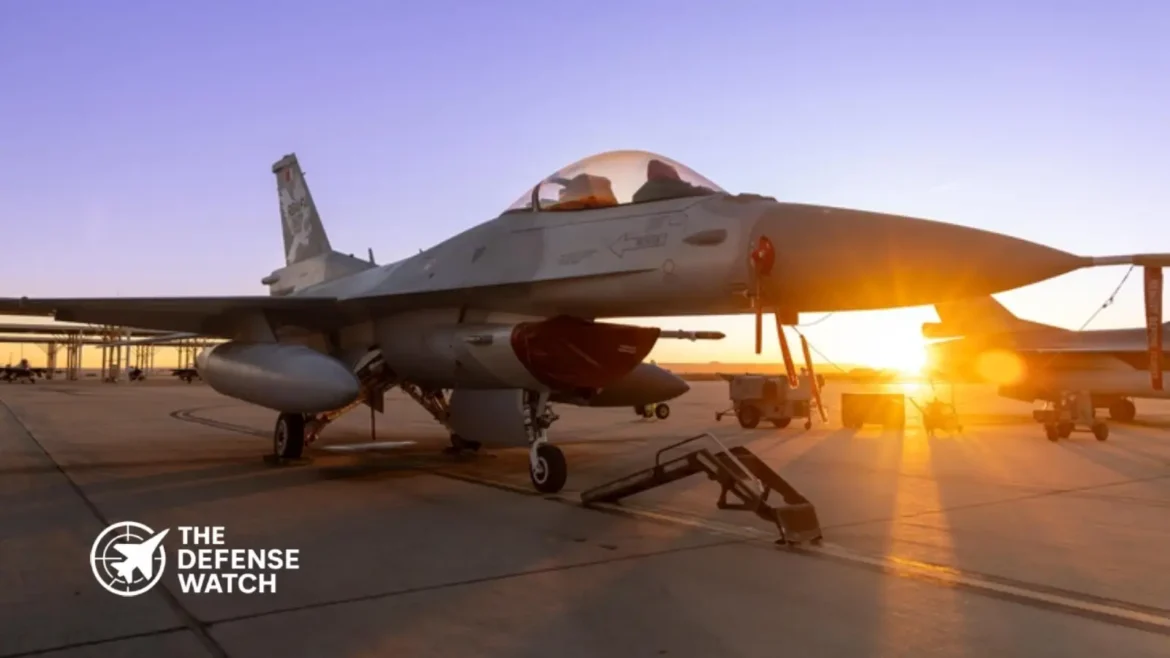
Peru F-16 Block 70 Purchase Signals Major Airpower Shift
Peru F-16 Block 70 acquisition plans could significantly upgrade the country’s air combat capability as Lima explores the purchase of 12 advanced fighter aircraft from Lockheed Martin. The reported proposal would replace aging legacy fleets and give the Peruvian Air Force a modern multirole platform with stronger deterrence value.
- Peru is considering the purchase of 12 F-16 Block 70 multirole fighter aircraft.
- The Block 70 variant includes AESA radar, modern avionics, and extended service life.
- The deal would mark one of Latin America’s most important fighter recapitalization efforts.
- Peru seeks to replace aging Soviet and French-origin combat aircraft fleets.
- A final decision would shape Peru’s airpower posture for decades.
The potential deal reflects a broader trend across Latin America, where several nations are reassessing airpower readiness amid aging fleets, sustainment challenges, and rising operational demands.
The Big Picture
Latin American air forces have long faced delayed modernization due to budget pressure, political turnover, and maintenance costs. Many fleets now rely on aircraft introduced decades ago. That creates readiness gaps in air sovereignty, border patrol, maritime surveillance support, and crisis response.
For Peru, combat aviation remains strategically important. The country has a large territory, Pacific coastline, mountainous geography, and remote regions that require rapid-response air assets. A modern fighter fleet supports both national defense and peacetime security missions.
The proposed Peru F-16 Block 70 move would align Lima with a growing list of nations selecting Western fourth-generation-plus aircraft with lower risk than more expensive fifth-generation options.
What’s Happening
According to reporting cited by Defence Industry Europe, Lockheed Martin outlined Peru’s planned purchase of 12 F-16 Block 70 fighters. No final contract value or delivery schedule has been publicly confirmed.
Peru currently operates mixed legacy fleets including Russian-origin MiG-29 fighters and French Mirage 2000 aircraft. Both types have modernization potential, but long-term sustainment becomes increasingly expensive as fleets age and supply chains tighten.
The F-16 Block 70 package typically includes:
- AN/APG-83 AESA radar
- Advanced mission computer
- Modern cockpit displays
- Precision strike integration
- Improved electronic warfare systems
- Structural life extension up to 12,000 flight hours
Why It Matters
The F-16 remains one of the world’s most widely supported fighter platforms. That matters because aircraft capability alone does not determine readiness. Training pipelines, spare parts access, software upgrades, and weapons integration often decide long-term value.
For Peru, the Peru F-16 Block 70 option could reduce logistical complexity by moving toward a scalable, globally supported platform.
It would also improve interoperability with regional and international partners that already operate the F-16.
Strategic Implications
A successful acquisition would strengthen Peru’s deterrence posture without dramatically altering the regional balance of power. Instead, it would likely be viewed as a normalization step after years of deferred recapitalization.
Modern fighters provide better reaction times, improved sensor range, and stronger survivability. They also allow more effective maritime monitoring over Pacific approaches and faster response to unauthorized air activity.
Competitor View
Regional militaries will likely watch the program through a readiness lens rather than an arms-race lens. Countries operating legacy fleets may see Peru’s move as evidence that sustainment pressure is forcing overdue replacement decisions.
Russia could also view the shift as another example of long-term erosion in legacy Soviet equipment influence within export markets historically open to mixed sourcing.
What To Watch Next
Key indicators now include:
- Government funding approval
- Foreign Military Sales pathway details
- Weapons package selection
- Pilot training arrangements
- Infrastructure upgrades
- Delivery timeline and industrial participation
Capability Gap
Peru needs to close the gap between aging aircraft availability and modern mission demands. Older fleets can remain lethal, but readiness often falls when maintenance hours rise and spare parts become scarce.
The F-16 does not eliminate all challenges. New aircraft require pilot conversion, base upgrades, sustainment funding, and long-term procurement discipline.
The Bottom Line
Peru’s planned F-16 Block 70 purchase would be less about prestige and more about restoring credible, sustainable air combat readiness for the next generation.


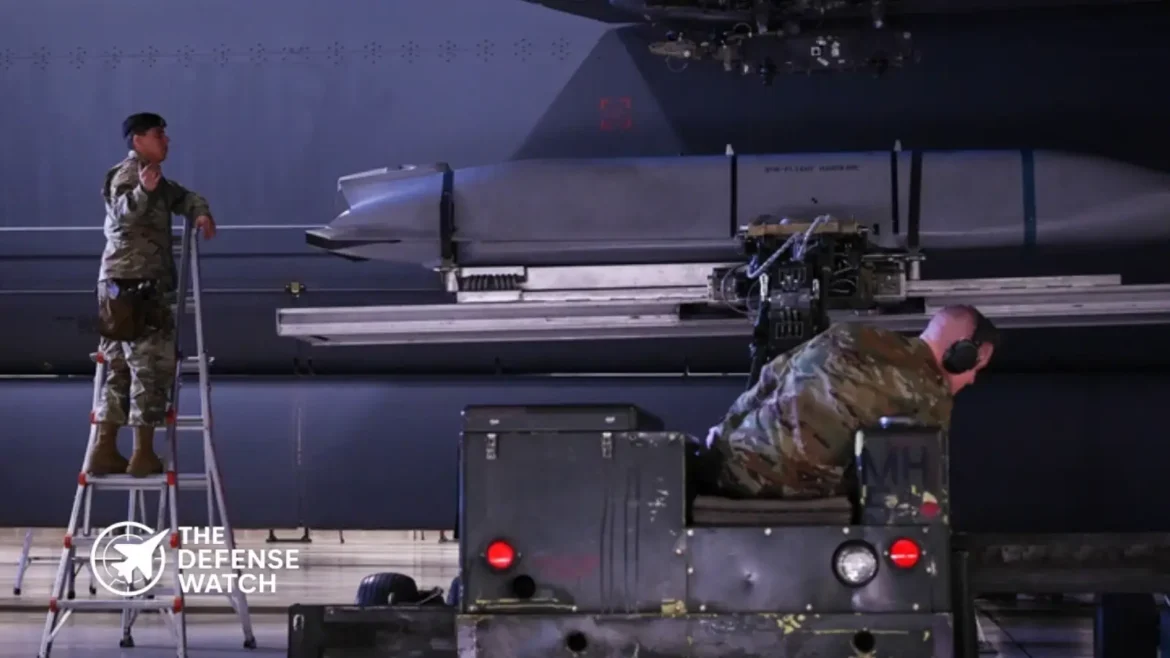
U.S. Air Force Expands JASSM Cruise Missile Procurement
The JASSM cruise missiles program is set for a major expansion after the U.S. Air Force disclosed plans to purchase nearly 4,300 additional weapons through fiscal year 2031, according to budget reporting and defense industry coverage. The move follows recent U.S. combat operations against Iran that reportedly placed heavy demand on long-range precision strike inventories.
- U.S. Air Force plans to acquire nearly 4,300 additional AGM-158 JASSM missiles through fiscal year 2031.
- FY2027 procurement request rises sharply to 821 missiles, up from far lower recent annual levels.
- Program value is projected at roughly $20 billion across the planning period.
- Recent strikes against Iran highlighted how quickly precision munition inventories can be consumed.
- JASSM remains central to U.S. plans for contested theaters including the Indo-Pacific.
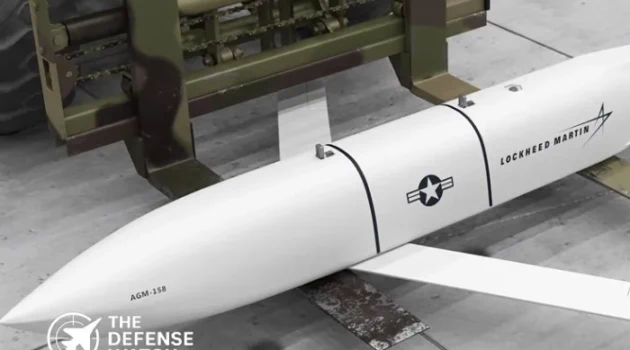
The missile involved is the AGM-158 Joint Air-to-Surface Standoff Missile, commonly known as JASSM. Built by Lockheed Martin, it is designed to strike defended targets from outside enemy air defense range. Its low observable design and precision guidance make it one of the U.S. military’s most important conventional deep-strike weapons.
Why The Pentagon Is Buying More JASSM Missiles Now
The timing matters. Recent reporting indicated the United States drew heavily on JASSM-ER inventories during operations tied to the Iran conflict, including redeployments from other theaters. That raised wider concerns about surge capacity if another crisis emerged in the Indo-Pacific or Europe.
This new procurement plan suggests the Pentagon is shifting from peacetime inventory management toward wartime replenishment logic.
That is strategically significant for three reasons:
- Modern wars consume precision weapons fast
Long-range missiles are often used in opening strikes against radar sites, command centers, air bases, and hardened targets. - Production takes time
Advanced cruise missiles require electronics, propulsion systems, seekers, and skilled labor. Output cannot be doubled overnight. - China contingency planning remains central
U.S. planners continue to view the Pacific as the pacing theater, where standoff strike weapons would be critical.
What Is JASSM And Why It Matters
The baseline AGM-158A has a range of roughly 230 miles, while the extended-range JASSM-ER can exceed 575 miles. The missile carries a 1,000-pound class penetrator warhead and uses GPS, inertial navigation, and terminal seekers for precision attack.
It can be launched by multiple aircraft, including:
That broad integration gives commanders flexible launch options across multiple bases and regions.
Industrial Base Challenge Still Remains
Even with more funding, missile production capacity remains a constraint. Expanding output depends on suppliers of rocket motors, microelectronics, guidance components, and final assembly lines.
This is one of the clearest lessons from the Ukraine war and Middle East operations: stockpiles matter, but so does the ability to replace losses quickly.
For Washington, the 4,300-missile buy is not just a weapons order. It is a signal that sustained conflict planning has returned.
Strategic Outlook
The planned JASSM buildup shows the U.S. Air Force expects future conflicts to require larger inventories of survivable, long-range munitions. Whether aimed at deterring Iran, Russia, or China, the message is clear: precision strike capacity is now a core measure of military readiness.
- Modern wars consume precision weapons fast
L3Harris AERIS X Positioned For Growing Allied Demand
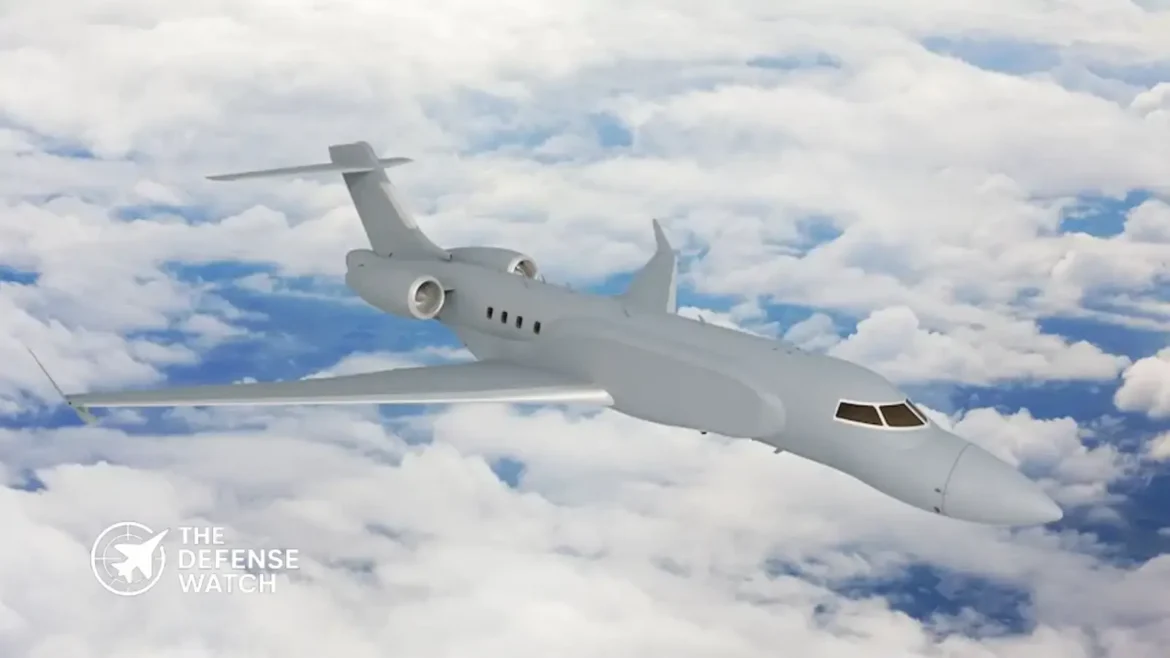
AERIS X aircraft is being highlighted by L3Harris Technologies as allied governments look for faster and more affordable airborne early warning and control capabilities. The company says nations across Europe, the Indo-Pacific, the Middle East, and the Americas are reassessing aging surveillance fleets while regional air threats continue to expand.
- L3Harris is promoting the AERIS X airborne early warning and control aircraft to allied nations.
- The platform is based on the Bombardier Global 6500 business jet airframe.
- Company says the aircraft offers 360-degree AESA radar coverage and lower lifecycle costs.
- Demand is rising as countries seek protection from drones, cruise missiles, and ballistic threats.
- South Korea previously selected an L3Harris AEW&C solution valued above $2.26 billion.
The aircraft is built on the Bombardier Global 6500 business jet platform and is designed to provide airborne surveillance, battle management, and networked command functions. L3Harris argues that smaller missionized business jets can offer quicker delivery timelines and lower sustainment costs than larger legacy warning aircraft.
Why The Market Is Shifting
Many current airborne warning fleets were developed decades ago. Several operators now face maintenance pressure, limited aircraft availability, and expensive modernization programs. That creates an opening for new entrants like AERIS X aircraft.
The company says recent conflicts have shown the need for persistent detection against drones, low-observable threats, cruise missiles, and ballistic missiles. Those lessons are driving renewed interest in aircraft that can remain on station longer while feeding data to fighters, missile defenses, and command centers.
This reflects a broader defense trend. Instead of waiting years for bespoke programs, many governments are now seeking proven systems already near production.
Claimed Capabilities Of AERIS X
According to L3Harris, the platform includes an Active Electronically Scanned Array radar with full 360-degree coverage and improved resistance to jamming. The company also says the jet can operate at higher altitudes and longer ranges than some competing platforms, improving radar horizon and time on mission.
The aircraft is also marketed as suitable for fifth-generation force integration, including data sharing with stealth fighters and coalition assets. For countries investing heavily in advanced combat aircraft, that interoperability pitch is likely central to future sales efforts.
South Korea Selection Boosts Credibility
One of the strongest indicators of market traction came in 2025 when South Korea selected an L3Harris-led AEW&C solution worth more than $2.26 billion. The program will deliver modified Global 6500 aircraft for the Republic of Korea Air Force.
That win matters because South Korea evaluated multiple competitors while facing a demanding regional threat environment. Export customers often view previous international selections as evidence of maturity and reduced program risk.
Strategic Outlook
The push behind AERIS X aircraft highlights how airborne surveillance is evolving. Instead of relying only on large and expensive AWACS-style fleets, more countries may adopt smaller jets with advanced sensors and lower operating costs.
If L3Harris can convert interest into additional contracts, AERIS X could become a serious competitor in the next generation AEW&C market.
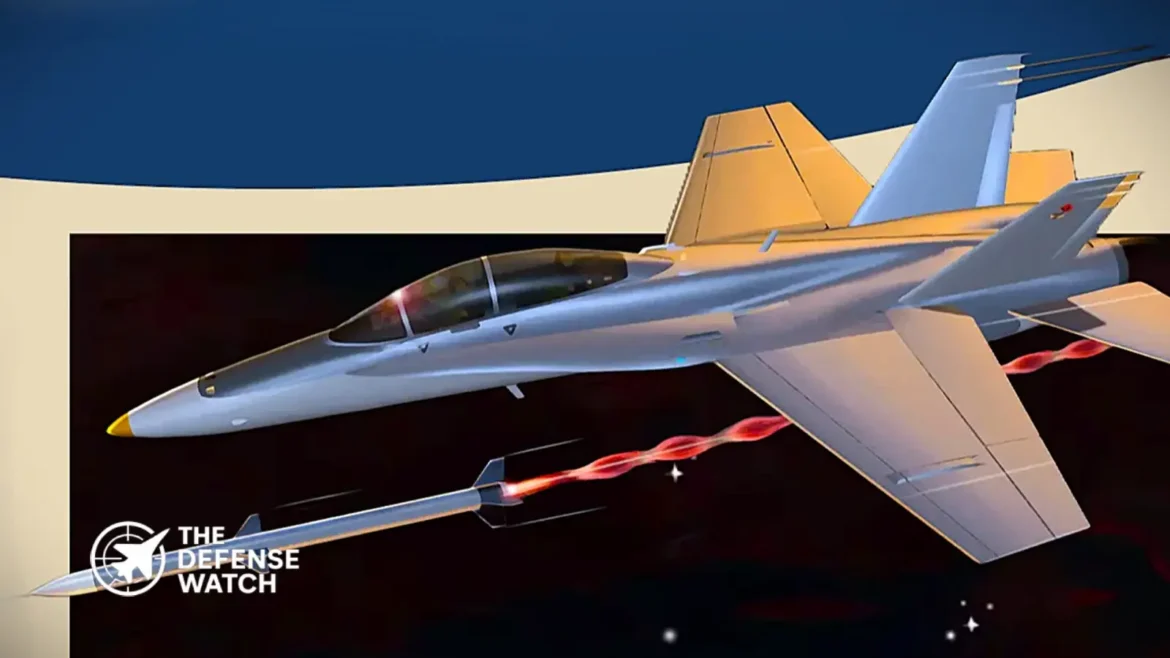
- The U.S. Navy awarded California startup :contentReference[oaicite:0]{index=0} a $105 million contract tied to Blackbeard missile integration on F/A-18 aircraft.
- Blackbeard is designed to exceed Mach 5 and support carrier-based long-range strike missions.
- The program includes flight testing, software and hardware integration, and naval airworthiness certification.
- Pentagon budget documents indicate plans for 4,500 air-launched hypersonic missiles for F/A-18E/F aircraft over five years.
- The move reflects growing U.S. focus on mobile strike options in the Indo-Pacific.
U.S. Navy Blackbeard Hypersonic Missile Program Gains Momentum
The Blackbeard hypersonic missile is moving closer to operational use as the U.S. Navy accelerates integration of the weapon onto Boeing F/A-18E/F Super Hornet aircraft. The effort follows a $105 million award to Castelion to complete the work needed for fleet use, including testing and certification.
The decision matters because it gives the Navy a potential way to place hypersonic strike weapons aboard aircraft carriers rather than relying only on fixed land-based launch systems. A carrier can reposition across wide ocean areas, creating a less predictable launch point and complicating enemy planning.
Why The F/A-18 Platform Matters
Using the Super Hornet offers a faster path to fielding. The aircraft already operates from U.S. carriers, has trained crews, maintenance pipelines, and established weapons handling procedures. That means the Navy may be able to insert new capability without waiting for a future aircraft platform.
For Blackbeard, however, integration is more than attaching a missile to a jet. Carrier weapons must survive catapult launches, arrested landings, vibration, salt exposure, storage constraints, and deck handling procedures. Those demands often delay otherwise promising programs.
Strategic Meaning In The Indo-Pacific
Much of the interest around the Blackbeard hypersonic missile centers on a possible Indo-Pacific scenario. Long distances, dense missile defenses, and mobile maritime targets place a premium on speed and reach.
A weapon launched from an F/A-18 operating from a carrier strike group could threaten radar sites, missile batteries, command nodes, or naval targets faster than conventional cruise missiles. Even limited deployment could force adversaries to dedicate more resources to defense and dispersal.
That strategic pressure can matter as much as actual missile numbers. Deterrence often depends on uncertainty.
Affordability Could Be The Real Breakthrough
Many hypersonic programs have faced criticism for high cost and low production volume. Castelion has publicly emphasized rapid manufacturing and lower-cost components. Reuters reported Pentagon planning documents show an average unit cost near $384,000 for planned buys, unusually low for this class of weapon.
If accurate, that could be the program’s biggest advantage. A missile that can be bought in large numbers changes operational planning far more than a boutique system produced in small batches.
What Comes Next
The next milestones are flight tests, safety certification, and carrier suitability reviews. If successful, the Navy could begin early fielding as soon as next year, according to reporting.
Blackbeard is still an emerging program, but it signals a broader Pentagon shift toward practical, scalable hypersonic weapons that can be deployed on existing combat platforms.
U.S. Funds $4.6 Billion Sentinel ICBM Program
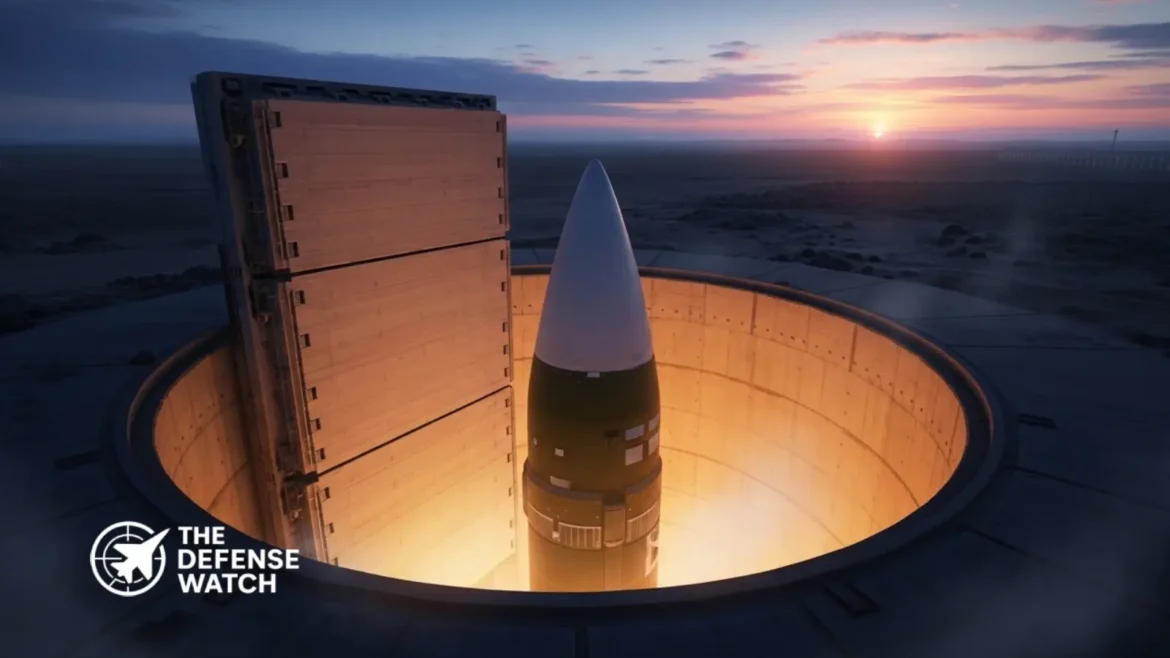
The Sentinel ICBM program has received a new $4.6 billion funding boost, underlining Washington’s commitment to replace the aging LGM-30G Minuteman III missile force with the next-generation LGM-35A Sentinel system.
- The United States is allocating $4.6 billion for the Sentinel ICBM program in the latest defense budget cycle.
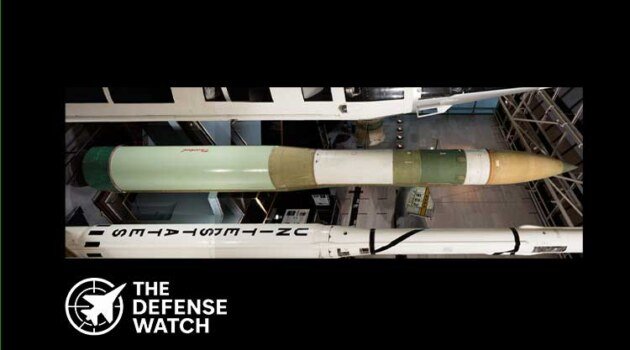
- Sentinel is designed to replace the aging Minuteman III missile force first deployed in 1970.
- The program is led by :contentReference[oaicite:0]{index=0} and includes missile, launch control, and silo infrastructure upgrades.
- Initial operational capability is now expected in the early 2030s after delays and restructuring.
- Sentinel remains central to the land-based leg of the U.S. nuclear triad.
The funding, highlighted in recent defense reporting, comes as the Pentagon works to stabilize one of its most complex modernization efforts. Sentinel is intended to renew the ground-based component of the U.S. nuclear triad, alongside ballistic missile submarines and strategic bombers.
For U.S. planners, replacing Minuteman III is no longer optional. The missile entered service in 1970 and has remained operational through repeated life-extension efforts. Many of its core support systems, launch facilities, and command networks date back decades.
Why Sentinel Matters
Unlike a simple missile swap, Sentinel is a full system rebuild. It includes:
- New solid-fuel intercontinental ballistic missiles
- Modernized launch control centers
- Refreshed underground silos and support sites
- Updated communications and command links
- Cyber-resilient digital architecture
Congressional research notes the existing Minuteman III infrastructure includes facilities originating in the 1960s, which adds urgency to replacement timelines.
That broader scope explains why Sentinel has become one of the Pentagon’s most expensive strategic programs.
Delays And Rising Costs
The Sentinel program has faced schedule pressure and major cost growth. In 2024, the Pentagon acknowledged the effort was significantly over budget, triggering a Nunn-McCurdy review process for troubled acquisition programs. Reuters previously reported total program estimates above $140 billion.
More recently, the U.S. Government Accountability Office said the first missile flight has slipped roughly four years from earlier plans, with testing now expected in 2028.
Still, the Air Force says initial capability is targeted for the early 2030s.
Strategic Analysis
The latest $4.6 billion Sentinel ICBM allocation suggests the U.S. government has chosen continuity over delay despite mounting costs.
That matters for three reasons:
First, Washington sees land-based missiles as a core deterrent against peer nuclear rivals such as Russia and China.
Second, abandoning Sentinel would likely require another expensive life-extension for Minuteman III, itself an aging system with shrinking industrial support.
Third, the program supports a specialized industrial base tied to solid rocket motors, hardened infrastructure, and nuclear command systems.
In short, Sentinel is costly, but cancellation would also carry strategic and financial risks.
What Comes Next
The next milestones to watch include:
- Completion of program restructuring
- New acquisition baseline approval
- First pad launch testing
- 2028 flight test progress
- Infrastructure construction across missile fields
If these steps hold, the Sentinel ICBM could begin replacing Minuteman III during the next decade.

UK Defence Industry Faces Mounting Pressure
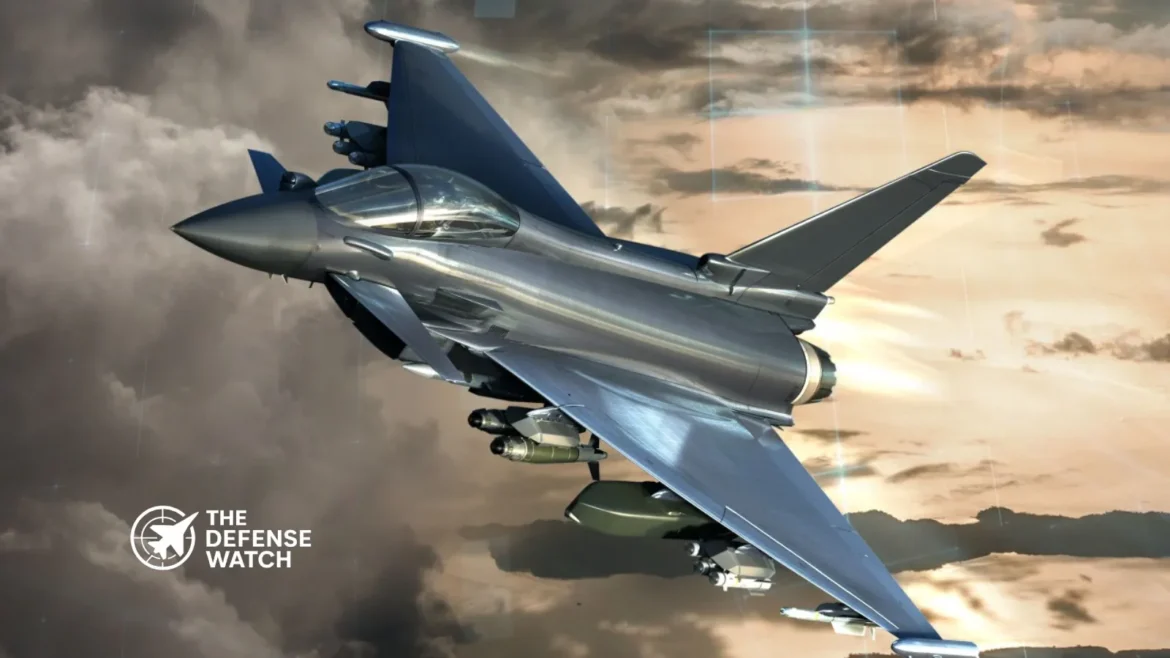
The UK defence industry is warning that continued delays to Britain’s long-promised Defence Investment Plan (DIP) are creating uncertainty across the sector, threatening suppliers, investment flows, and future military readiness.
According to evidence presented to UK lawmakers, industry representatives described the situation as one of growing paralysis, with firms unable to make long-term decisions on hiring, production capacity, and capital spending.
- UK defence firms say delays to the Defence Investment Plan are creating industrial paralysis.
- The plan was originally expected in autumn 2025 but has yet to be released.
- Industry leaders warn smaller suppliers are losing cash and struggling to retain staff.
- Investors may shift capital toward Germany, Poland, and the United States instead.
- The delay could slow modernization of UK armed forces and weaken supply chains.
The Defence Investment Plan is intended to outline how the British government will fund key modernization programs after its Strategic Defence Review. It was originally expected in autumn 2025 but has been repeatedly postponed.
Why The Delay Matters
For defence manufacturers, especially small and mid-sized suppliers, long-term visibility is essential. Aerospace components, naval systems, electronics, and missile production lines often require years of planning and upfront investment.
Without clear procurement schedules, companies face three immediate risks:
- Delayed hiring of engineers and skilled labor
- Postponed factory upgrades and tooling
- Reduced confidence from private investors
Industry witnesses told Parliament that some companies are already bleeding cash while waiting for direction from London.
That matters because the UK defence industrial base depends heavily on specialist small firms that build precision parts, sensors, propulsion systems, and subassemblies for larger prime contractors.
Strategic Impact On Britain
The problem extends beyond economics. Delays in the Defence Investment Plan may slow programs tied to:
- Munitions replenishment
- Air defence modernization
- Shipbuilding schedules
- Uncrewed systems procurement
- Advanced combat aircraft development
- Army equipment recapitalization
At a time when Europe is rearming and NATO members are increasing defence spending, uncertainty can create a competitive disadvantage for Britain.
Industry groups have reportedly warned that global defence firms can choose to invest in Germany, Poland, or the United States instead if the UK cannot provide predictable policy signals.
Analysis: A Signal To Allies And Adversaries
The UK defence industry issue is not only domestic. Parliamentary committee leaders previously warned that prolonged delay in publishing the plan risks sending damaging signals to adversaries and limits public scrutiny of defence spending.
In practical terms, Britain is trying to balance fiscal pressure with rising security demands from Russia, NATO commitments, and global instability. But delayed decisions can become decisions themselves, especially in defence procurement where timelines are measured in years.
If Britain wants sovereign production capacity, export competitiveness, and credible deterrence, industry needs clarity more than slogans.
What Comes Next
The Ministry of Defence has said officials are working to finalize the Defence Investment Plan and will publish it as soon as possible.
Until then, the UK defence industry remains in a holding pattern, waiting for the spending roadmap that could shape British military capability for the next decade.
Global Military Spending Hit $2.89 Trillion in 2025, Led by Record European Rearmament
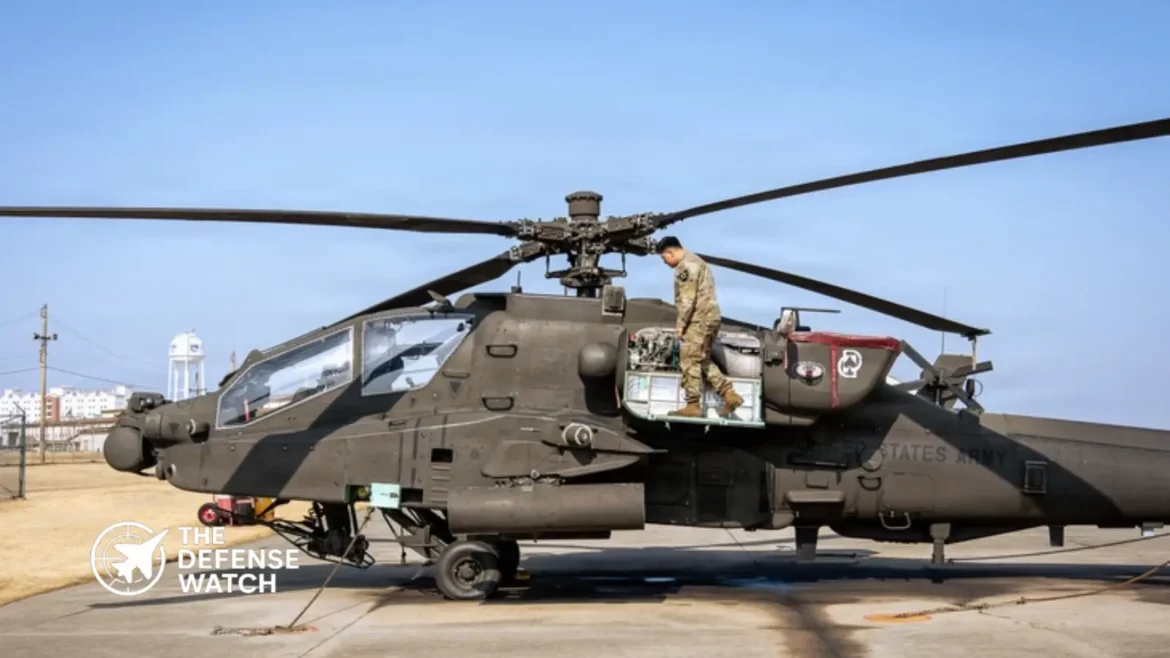
Global military spending climbed to $2.887 trillion in 2025, rising for the 11th straight year despite a significant U.S. drawdown, according to new data published April 27 by the Stockholm International Peace Research Institute (SIPRI). The annual increase of 2.9% was considerably smaller than the 9.7% jump recorded in 2024, but that moderation is almost entirely explained by the drop in U.S. spending — outside the United States, global outlays grew by 9.2%.
- Global military expenditure reached $2.887 trillion in 2025 — the 11th consecutive annual rise — pushing the global military burden to 2.5% of GDP, the highest since 2009.
- U.S. military spending fell 7.5% to $954 billion, primarily because the Trump administration approved no new financial military aid for Ukraine — a sharp reversal from the $127 billion committed over the prior three years.
- European NATO members collectively spent $559 billion, with 22 of 29 members hitting the 2% GDP threshold. Germany surpassed 2% for the first time since 1990; Spain crossed it for the first time since 1994.
- China increased military spending 7.4% to $336 billion — its 31st consecutive annual rise — while Taiwan surged 14% to $18.2 billion amid intensifying PLA exercises.
- U.S. Congress has approved defense funding of over $1 trillion for 2026, with a Trump budget proposal that could push spending to $1.5 trillion by 2027.
The report positions 2025 as a structural inflection point: Washington’s pullback was policy-driven and almost certainly temporary, while Europe’s acceleration reflects a generational shift in how the continent approaches collective defense.
The Big Picture
The world is rearming at a pace unseen since the Cold War’s final decade. Persistent conflict in Ukraine, expanding Chinese military power in the Indo-Pacific, and the Trump administration’s transactional approach to alliance commitments have collectively forced governments across Europe, Asia, and beyond to recalibrate their defense postures.
SIPRI researcher Xiao Liang summarized it plainly: “Global military spending rose again in 2025 as states responded to another year of wars, uncertainty and geopolitical upheaval with large-scale armament drives.” The institute projects that growth will persist through 2026 and beyond, given the breadth and depth of ongoing rearmament programs.
The global military burden now stands at 2.5% of GDP — its highest level since 2009 — a milestone that reflects not just rising nominal expenditures but genuine structural prioritization of defense across dozens of governments simultaneously.
What’s Happening
The United States, China, and Russia combined for $1.48 trillion in military outlays, accounting for 51% of all global defense spending. But the composition of that dominance is shifting in ways that carry long-term implications.
United States: U.S. military spending fell to $954 billion in 2025, primarily because no new financial military assistance for Ukraine was approved. Over the previous three years, Washington had committed $127 billion to Kyiv. Critically, the Pentagon continued investing in nuclear modernization and conventional force improvements targeting the Indo-Pacific, meaning the reduction did not reflect declining core military capacity.
Europe: European military spending rose 14% to $864 billion — the largest single regional driver of global spending growth. Spending by Russia and Ukraine each continued to climb in the fourth year of the war, while European NATO members recorded the sharpest annual spending growth since the Cold War ended.
Germany led European NATO spenders at $114 billion, a 24% year-on-year increase, crossing the 2% of GDP threshold for the first time since 1990. Spain surged 50% to $40.2 billion, also clearing the 2% threshold for the first time since 1994.
Ukraine and Russia: Ukraine, the seventh largest military spender in 2025, increased outlays by 20% to $84.1 billion — equivalent to 40% of GDP. Russia’s spending grew 5.9% to $190 billion, representing 7.5% of GDP. Both countries reached the highest share of government spending ever recorded for their respective militaries.
Asia and Oceania: The region registered 8.1% spending growth to $681 billion — the fastest annual rise since 2009. China’s $336 billion represented a 7.4% increase and its 31st consecutive year-on-year climb. Japan reached $62.2 billion (1.4% of GDP, highest since 1958), and Taiwan surged 14% to $18.2 billion, its largest single-year increase in at least three decades.
Why It Matters
The 2025 data confirms that the post-Cold War “peace dividend” era is definitively over. Defense budgets are no longer calibrated to peacetime baselines; they are being sized against active wars, near-peer competitors, and the erosion of arms control frameworks.
For the U.S. defense industrial base, the data is actually bullish. SIPRI’s Program Director Nan Tian stated: “The decline in US military expenditure in 2025 is likely to be short-lived. Spending approved by the US Congress for 2026 has risen to over $1 trillion, a substantial increase from 2025, and could rise further to $1.5 trillion in 2027 if President Trump’s latest budget proposal is accepted.”
That trajectory — from $954 billion in 2025 to a potential $1.5 trillion by 2027 — would represent one of the fastest two-year increases in U.S. defense outlays in history. For prime contractors and second-tier suppliers, the production ramp-up implications are significant, touching everything from munitions stockpiling to shipbuilding to advanced fighter procurement.
Strategic Implications
The structural meaning of Europe’s 14% spending surge runs deeper than headline budget numbers. SIPRI researcher Jade Guiberteau Ricard noted that “in 2025 military spending by European NATO members rose faster than at any time since 1953, reflecting the ongoing pursuit of European self-reliance alongside increasing pressure from the United States to strengthen burden sharing within the alliance.”
This dual dynamic — the European Union developing independent defense capacity while simultaneously satisfying NATO burden-sharing demands — marks a geopolitical shift that will define transatlantic relations for the next decade. Europe is no longer free-riding; it is building sovereign capability that may reduce its strategic dependence on Washington over time.
The acceleration of Asia-Pacific spending carries equally profound implications. SIPRI Senior Researcher Diego Lopes da Silva assessed that U.S. allies in Asia “are spending more on their militaries, not only due to long-standing regional tensions but also due to growing uncertainty over US support.” Japan, Australia, the Philippines, and Taiwan are each hedging against the possibility of reduced American commitment in a future crisis — a calculus driven directly by the Trump administration’s unpredictability on alliance commitments.
Competitor View
Beijing will read the SIPRI data through two distinct lenses. China’s own 31-year consecutive spending increase — now at $336 billion — continues to validate its military modernization strategy. At the same time, Taiwan’s 14% surge and Japan’s accelerating rearmament confirm a regional balancing dynamic that the PLA must factor into its operational planning, particularly regarding any cross-strait contingency timeline.
Moscow’s position is paradoxical. Russia sustains a war economy at 7.5% of GDP, but its military burden is approaching fiscal stress points. SIPRI researcher Lorenzo Scarazzato noted that “spending is likely to keep growing in 2026 if the war continues, with revenues from Russia’s oil sales increasing and a major European Union loan expected by Ukraine.” A prolonged war sustains Russia’s advantage in absorbing attrition, but the European spending surge is beginning to close the long-term capability gap that Moscow relied upon.
Iran presents a different picture. Despite ongoing regional conflicts, Iran’s spending fell 5.6% in real terms to $7.4 billion due to 42% annual inflation, though SIPRI noted that official figures “almost certainly understate the true level of Iran’s spending,” as Tehran uses off-budget oil revenues to fund missile and drone programs. The regime’s actual military investment in asymmetric tools — drones, precision missiles, proxy forces — substantially exceeds what any budget figure captures.
What To Watch Next
Several near-term developments will determine how the 2025 data translates into actual capability.
The U.S. fiscal year 2026 defense budget — already authorized above $1 trillion — enters execution. Watch for supplemental requests and whether the Trump administration’s proposed $1.5 trillion FY2027 figure survives Congressional negotiation.
Within NATO, the alliance adopted new spending targets in 2025. SIPRI cautioned that “as states strive to meet the new NATO spending targets, there is a risk that the boundaries between military and other ‘defence- and security-related’ expenditures become blurred, reducing transparency and further complicating the assessment of military capabilities.” That warning deserves close attention: inflated headline figures that include civilian infrastructure spending could mask genuine readiness gaps.
In Asia, Taiwan’s procurement pipeline — funded by that 14% spending surge — will be monitored closely by both the Pentagon and the PLA. Japan’s multi-year defense buildup, targeting 2% of GDP, continues to accelerate with new strike capability acquisitions.
Capability Gap
The most operationally consequential gap exposed by the 2025 data is in European munitions production capacity. European governments committed more money in 2025, but the defense industrial base — particularly artillery shell, air defense interceptor, and armored vehicle production — has not yet scaled to meet wartime demand levels. Budget increases take 18 to 36 months to translate into deliverable hardware.
Germany’s 24% spending increase and Spain’s 50% surge reflect political will; they do not yet reflect fielded capability. The gap between authorized budgets and operational readiness remains the central challenge for NATO’s eastern flank.
On the U.S. side, the 7.5% spending reduction in 2025 was largely isolated to Ukraine aid transfers — it did not reduce core readiness funding. However, any multi-year pause in allied resupply creates inventory depletion risks that the 2026 and 2027 budgets must address.
The Bottom Line
The 2025 SIPRI data confirms that the world has entered a sustained global rearmament cycle — one in which U.S. spending is set to surge past $1 trillion, Europe is investing at Cold War-era intensity, and China’s military expansion shows no signs of plateauing, making the structural drivers of global defense spending growth more durable than at any point in the post-Cold War era.

Russian Defence Minister North Korea Visit Highlights Expanding Axis
The Russian defence minister North Korea visit marks another visible step in the rapid expansion of ties between Moscow and Pyongyang. Russian Defence Minister Andrei Belousov arrived in North Korea on Sunday, according to Russia’s defense ministry, becoming the second senior Russian official to travel to Pyongyang within days.
- Russian Defence Minister Andrei Belousov arrived in North Korea on April 26.
- He is the second senior Russian official to visit Pyongyang in recent days.
- Belousov is expected to meet senior North Korean political and military leaders.
- The visit follows the 2024 Russia-North Korea strategic treaty with a mutual defense clause.
- The trip highlights expanding wartime cooperation linked to the Ukraine conflict.
Belousov is scheduled to hold talks with North Korea’s senior leadership and top military officials, while also attending ceremonial events. Reuters reported the trip comes shortly after Russian State Duma Chairman Vyacheslav Volodin visited for the opening of a memorial honoring North Korean troops killed while fighting in the Ukraine war.
Why This Visit Matters Now
The Russian defence minister North Korea trip is more than symbolic diplomacy. It demonstrates how wartime pressure on Russia has accelerated security partnerships outside the Western orbit.
Since 2023, Moscow and Pyongyang have moved from limited engagement to open strategic alignment. That relationship deepened significantly when Russian President Vladimir Putin and North Korean leader Kim Jong Un signed a comprehensive strategic treaty in June 2024 that included a mutual defense pact.
For Moscow, North Korea offers potential access to ammunition stocks, industrial capacity, and political support. For Pyongyang, Russia provides diplomatic backing, economic opportunities, and possible technical cooperation.
Military Implications For Asia And Europe
The Russian defence minister North Korea visit also has consequences beyond the Korean Peninsula.
Western and Asian governments have repeatedly warned that expanding Russia-North Korea military cooperation could affect both the war in Ukraine and regional security in Northeast Asia. If defense technology, missile expertise, satellite support, or industrial exchanges deepen further, neighboring states are likely to respond with stronger deterrence measures.
That means the partnership is no longer a bilateral issue. It increasingly intersects with the security calculations of the United States, South Korea, Japan, and NATO partners.
Memorial Politics And Strategic Messaging
The memorial ceremony for North Korean troops is also strategically significant. Public recognition of North Korean battlefield losses suggests both governments are normalizing a level of military cooperation that previously would have remained opaque.
Russia appears increasingly willing to publicly acknowledge Pyongyang’s support. That can serve two purposes: rewarding North Korea politically and signaling to adversaries that Moscow still has willing security partners.
What To Watch Next
Analysts will watch whether Belousov’s visit produces:
- New defense cooperation agreements
- Expanded logistics or transport links
- Industrial production support
- Additional political declarations
- Follow-on military delegations
Recent Reuters reporting also noted Russia and North Korea are advancing a new road bridge project across the Tumen River, another sign of expanding long-term connectivity.
Bottom Line
The Russian defence minister North Korea visit underscores a relationship that has moved well beyond symbolic diplomacy. What began as political coordination has evolved into a strategic partnership with military, economic, and geopolitical consequences stretching from Eastern Europe to Northeast Asia.
Saab’s Q1 2026 Results Reflect Accelerating European Defense Demand
Saab reported Q1 2026 sales of SEK 19,164 million, representing organic growth of 23.6% compared to SEK 15,792 million in the same period last year. The results confirm the Swedish defense contractor is capitalizing on a historic surge in European defense procurement, driven by persistent security pressures across NATO’s eastern flank and growing urgency among allied governments to expand their military capabilities.
- Saab reported Q1 2026 sales of SEK 19,164 million, up from SEK 15,792 million in Q1 2025 — representing 23.6% organic growth.
- EBIT rose 32% year-over-year to SEK 1,920 million, with an EBIT margin improving to 10.0% from 9.2%.
- All business areas — including Surveillance, Aeronautics, Weapons, and Combitech — posted double-digit sales growth.
- Order bookings reached SEK 18,243 million in Q1 2026, with strong growth in medium-sized orders across NATO and partner nations.
- Operational cash flow turned sharply positive, reaching SEK 1,017 million compared to negative SEK 14 million in Q1 2025.
The Big Picture
European defense spending has entered a structural expansion phase not seen since the Cold War. NATO members collectively pledged to meet and exceed the 2% of GDP defense spending target following Russia’s 2022 invasion of Ukraine, and many are now committing to 3% or higher. This fiscal shift is producing tangible industrial results across the continent’s defense sector — and Saab stands among the clearest beneficiaries.
The company’s product portfolio spans air, land, naval, and security domains, aligning directly with the modernization priorities of both European governments and international partners seeking sovereign defense capabilities. Saab’s Gripen fighter, GlobalEye airborne early warning system, Giraffe radar family, AT4 anti-armor weapons, and Carl-Gustaf recoilless rifles are all in active procurement cycles across multiple NATO and partner nations.
This is not a temporary demand spike — it reflects a structural reorientation of European defense investment that analysts expect to persist through the end of the decade.
What’s Happening
Saab CEO and President Micael Johansson stated that the company delivered strong organic sales growth, a higher operating margin, and solid cash flow in the first quarter, adding that Saab’s product offering is well aligned with the defense priorities of many nations globally.
EBITDA reached SEK 2,731 million in Q1 2026, up from SEK 2,140 million, with the EBITDA margin improving to 14.3% from 13.6%. Net income rose to SEK 1,466 million from SEK 1,277 million, and earnings per share increased to SEK 2.65 from SEK 2.35.
Operational cash flow increased sharply to SEK 1,017 million, compared to negative SEK 14 million in the same quarter of 2025 — a turnaround that signals improved delivery execution and billing cycles across major contracts.
Order bookings in the quarter amounted to SEK 18,243 million, down slightly from SEK 19,144 million in Q1 2025. Saab noted that growth was strong for medium-sized orders, but that fewer large orders were received in the quarter.
Why It Matters
The 23.6% organic sales growth figure is exceptional by any standard in the defense industry. Most Western defense primes operate on multi-year procurement cycles with incremental annual revenue growth. Saab’s acceleration at this pace reflects two converging forces: an expanded backlog built from recent years of order wins, and the company’s deliberate investment in production capacity to actually convert that backlog into delivered revenue.
Saab noted particularly strong development in its Surveillance business area, which includes airborne surveillance systems, ground-based radar, and air traffic management — product lines that are currently among the highest procurement priorities for NATO members filling critical ISR gaps.
The double-digit growth across all business units is strategically significant. It indicates Saab is not dependent on a single platform or contract vehicle, but is generating broad demand across its entire portfolio. That diversification makes the company more resilient to procurement delays or cancellations in any one program.
Strategic Implications
Saab’s financial performance carries direct implications for NATO’s collective defense posture. Sweden’s formal entry into NATO in March 2024 effectively transformed Saab from a Nordic defense supplier into an embedded NATO industrial partner. Allied governments can now structure procurement with greater confidence in interoperability, information sharing, and political alignment.
The strong Surveillance segment performance deserves particular attention. Europe and NATO collectively face persistent gaps in ground-based air defense, early warning radar coverage, and counter-drone capability. Saab recently received an order from the Swedish Defence Materiel Administration (FMV) valued at approximately SEK 2.6 billion for a mobile and modular counter-unmanned aerial system (C-UAS), with deliveries planned for 2027 to 2028. This contract illustrates exactly the kind of capability gap that Saab’s current product roadmap targets.
Saab’s growing U.S. market presence also warrants attention. The company operates a significant footprint in the United States through subsidiaries involved in training systems, combat vehicles, and weapons. As the U.S. Defense Department seeks to diversify its supplier base and deepen allied industrial cooperation, Saab represents an increasingly credible non-domestic source.
Competitor View
Russia will interpret accelerating Western European defense production as confirmation that its strategic gambit in Ukraine has failed to fracture NATO cohesion — and may in fact have strengthened it. Saab’s growth numbers, alongside equivalent expansions at BAE Systems, Rheinmetall, Leonardo, and Thales, illustrate that Europe’s defense industrial base is now genuinely scaling up rather than simply pledging to do so.
China will monitor Saab’s Surveillance and airborne early warning programs closely. The GlobalEye multi-role surveillance aircraft and Giraffe radar family provide persistent, long-range detection capabilities that hold direct relevance to the Indo-Pacific security debate. Several of Saab’s regional customers — including nations in Southeast Asia — operate in areas of active Chinese strategic competition.
What To Watch Next
Saab’s Q2 2026 results will serve as the next key indicator of whether the company can sustain this growth trajectory. Several factors will influence the outcome: the timing and size of new large contract awards, continued execution on existing deliveries, and the trajectory of the Swedish krona against the euro and dollar.
Investors and defense analysts will also track whether Saab announces additional capacity investments. CEO Johansson has consistently noted the need to balance near-term delivery obligations with longer-term capability development — a challenge that every major defense prime is navigating as order books outpace physical production capacity.
The company’s C-UAS order from Sweden, with deliveries running through 2027 and 2028, highlights an emerging product line that could generate significant follow-on revenue as drone threats proliferate across European and NATO operational environments.
Capability Gap
Saab’s surge in Surveillance revenue directly addresses one of NATO’s most persistent operational shortfalls: the lack of scalable, mobile early warning and tracking systems capable of operating across contested electromagnetic environments.
Fixed radar installations remain vulnerable to suppression and precision strike. Saab’s mobile Giraffe radar variants and airborne GlobalEye platform offer survivable, deployable alternatives that aligning with NATO’s emphasis on multi-domain resilience.
The newly ordered C-UAS system addresses a separate but equally urgent gap. Drone proliferation — demonstrated extensively in Ukraine — has exposed the inadequacy of legacy air defense against low-cost, high-volume UAS threats. Saab’s modular C-UAS approach, combining detection, tracking, and effector systems, positions the company at the center of what is becoming one of the highest-priority procurement categories across allied defense ministries.
One realistic limitation: Saab, like all European defense primes, faces a constrained skilled labor market and supply chain bottlenecks in critical components including semiconductors, precision optics, and energetic materials. Sustained 20%-plus growth rates will eventually require continued investment in both workforce and industrial infrastructure to avoid delivery delays that could pressure margins.
The Bottom Line
Saab’s Q1 2026 results confirm that European defense rearmament has moved from political commitment to measurable industrial output, with the Swedish company positioned as one of the primary beneficiaries of NATO’s most significant military buildup in a generation.

Finland Locks In Defense Budget Surge to 3.2% of GDP by 2030, Pairing Military Buildup With Painful Domestic Cuts
Finland’s government finalized its last pre-election spending framework on April 22, 2026, confirming that Finland’s defense spending will climb beyond 3.2% of GDP by 2030 — even as Helsinki implements some of the sharpest domestic austerity measures in years. The decision cements Finland’s position as one of NATO’s most defense-committed members, drawing a clear line between the strategic imperatives driving Scandinavian security policy and the fiscal realities facing one of Europe’s slower-growing economies.
- Finland’s government finalized its 2027–2030 spending framework on April 22, 2026, committing to defense spending exceeding 3.2% of GDP by 2030 — well above NATO’s current 2% baseline.
- Defense allocations will rise by more than €1.1 billion across 2027–2030, with funding directed toward drone defense systems, military readiness, equipment procurement, and €300 million in additional military aid to Ukraine.
- The spending hike comes alongside approximately €540 million in domestic savings, including €240 million cut from health and social care, higher patient fees, and reductions in municipal grants — a direct “guns or butter” trade-off.
- Finland’s defense spending trajectory: 1.4% of GDP in 2021 → 2.4% in 2024 → 3% targeted by 2029 → 3.2% by 2030, with NATO alliance commitments requiring 3.5% directly on defense and 1.5% on defense-related infrastructure by 2035.
- Finland’s Border Guard will receive €18 million — mostly EU-funded — for unmanned aerial and surface systems, signaling a broader push to integrate autonomous capabilities along NATO’s northeastern flank.
The Big Picture: NATO’s Northeastern Flank Demands More
Finland’s geographic reality drives everything. Sharing an 830-mile land border with Russia — the longest of any EU member state — Finland has no strategic depth to fall back on. Since joining NATO in April 2023, Helsinki has moved faster than most allies to align its defense posture with Alliance standards, and it has consistently exceeded NATO’s minimum thresholds.
Finland’s defense spending grew from 1.4% of GDP in 2021 to 2.1% in 2023, and further to 2.4% in 2024, a trajectory that has accelerated sharply since Russia’s invasion of Ukraine. While most European NATO members have spent years debating how to reach even the 2% benchmark, Finland has already surpassed it and is now targeting figures that would place it among the highest defense spenders on the continent.
The April 2026 framework decision arrives in the context of a continent-wide rearmament. The European Commission’s Readiness 2030 plan, presented in March 2025, aims to support the European defense industry, deepen the single defense market, and facilitate increased defense spending through new financial instruments and additional flexibility in fiscal rules. Finland’s accelerated posture aligns with — and in some respects leads — that broader continental shift.
What’s Happening: The April 22 Framework Decision
Finland’s government agreed its final spending framework before the next election, combining cuts to health and social services with housing support, transport projects, and higher defense spending. Prime Minister Petteri Orpo and Finance Minister Riikka Purra said the 2027–2030 plan responds to weak growth, higher fuel costs, war in Europe, and rising debt costs.
Defense spending will rise by more than €1.1 billion across 2027 to 2030. The package includes additional funding for drone defense, military readiness, and equipment. Finland will also provide €300 million in additional military support to Ukraine.
The Border Guard will receive €18 million for unmanned air and surface systems, most of it funded by the European Union.
Transport investment also forms part of the plan, with 18 projects listed and €112 million set aside for infrastructure linked to military mobility. That investment — focused on eastern and northern Finland — reflects NATO’s operational priority of ensuring rapid force movement near the Russian border.
Suggested Internal Link — (Add link to related article on TheDefenseWatch covering Finland’s F-35A procurement and its impact on NATO’s air power posture in northern Europe)
The fiscal context is severe. Purra pointed to projections showing interest payments on state debt rising from €3.2 billion in 2026 to €6.3 billion in 2030. The state budget deficit is forecast at €13.2 billion in 2027, with state debt projected to reach about €264 billion by end of 2030.
To offset the defense surge, the package includes about €540 million in new savings by 2030, with health and social care facing roughly €240 million in reductions. Health center fees will rise by 20 percent, and outpatient clinic charges will increase.
Why It Matters: A Template for Painful Prioritization
Finland’s framework is analytically significant far beyond Helsinki. It demonstrates that a small, fiscally constrained democracy can maintain NATO-aligned defense trajectories even under genuine economic stress — but only by explicitly trading domestic welfare for military capability.
Additional funding will go toward securing critical infrastructure, maintaining existing defense equipment, and reinforcing Finland’s long-term operational readiness, according to Defense Minister Antti Häkkänen. “We will bolster structures that support defense, such as personnel numbers, logistics and infrastructure,” he noted.
The decision also reflects an honest accounting of threat duration. Finland’s Government Defense Report frames the current buildup not as a short-term response but as preparation for potentially protracted conflict. The move aligns with the Government Defence Report, which highlights the need for Finland to counter long-term threats from Russia and to prepare for sustained military conflict.
Finland’s trajectory toward 3.2% of GDP by 2030 also positions it well ahead of NATO’s revised collective target. Finland’s longer-term commitment as part of the NATO alliance is to reach 5% of GDP by 2035, with 3.5% directly on defense and a further 1.5% on defense-related infrastructure. Reaching 3.2% by 2030 puts Helsinki firmly on track for that obligation.
Strategic Implications: Deterrence Architecture at NATO’s Edge
Finland’s sustained investment carries direct operational implications for NATO’s northeastern defense posture. The Finnish Defence Forces field one of Europe’s largest land armies by reserve strength — approximately 280,000 trained reservists with planned surge capacity to 900,000 — meaning additional procurement funding translates quickly into credible warfighting capacity.
Finland spends more than 2.4 percent of GDP on defense and will boost spending to 3 percent by 2029. As Finland finalizes the acquisition of 64 new F-35A fighter aircraft from the United States — the largest national procurement in Finland’s history — the continued increases in defense spending will create new opportunities for U.S. companies to provide technology and equipment, particularly as Finland modernizes its land forces.
The F-35A deal, combined with a four-corvette naval construction program, has already transformed Finnish air and maritime capabilities. The 2026 framework extends that modernization into drone systems, ground force equipment, and logistics infrastructure — the unglamorous but operationally critical “teeth-to-tail” investments that determine sustained combat effectiveness.
The €112 million earmarked for military mobility infrastructure is particularly significant. Under NATO’s Eastern Flank framework, rapid reinforcement timelines depend as much on road, rail, and bridge capacity as on weapons procurement. Finland’s investment in eastern and northern corridors directly supports allied force movement into a potential conflict zone.
The additional €300 million in military aid to Ukraine signals that Helsinki views support for Kyiv as both a moral obligation and a forward defense investment — every capability degraded in Russian forces in Ukraine reduces the threat Finland faces directly.
Competitor View: Moscow’s Calculus
Russia will interpret Finland’s sustained defense buildup through the lens of its existing threat narrative around NATO expansion. Moscow has consistently characterized Finnish and Swedish NATO accession as destabilizing provocations, though its military has been severely degraded by the ongoing Ukraine campaign.
Finland’s new funding decisions are designed to “answer the current security situation in Europe and the military threat posed by Russia,” according to Defense Minister Häkkänen.
From a Russian strategic perspective, the combination of F-35A integration, corvette construction, drone expansion, and mobility infrastructure investment presents a materially more capable adversary along a border Russia cannot simply ignore. Finland’s ability to sustain these investments despite domestic fiscal pressure — cutting social services rather than defense — sends a political signal that may be as important to Moscow as the hardware itself.
What To Watch Next
Several milestones will define whether Finland’s defense trajectory holds through the next electoral cycle.
Finland’s fighter aircraft procurement currently costs approximately €1.5 billion annually, but in the final years 2029 and 2030, this will decline to an annual €400 million — a natural reduction that the government has front-loaded with Army materiel procurement to maintain overall defense investment momentum.
Finland’s 2026 draft budget included procurement authorities of €3 billion for defense material, a sixfold increase from the €0.5 billion authorized in the 2025 budget. The scale of that procurement authorization will be tested by industrial capacity constraints, both domestically and across the European defense supply chain.
The next Finnish parliamentary election will determine whether successor governments maintain the current commitment or attempt to redistribute defense savings back toward welfare spending. Finance Minister Purra warned that the next government will face an adjustment task she estimated at around €10 billion — a fiscal environment that could pressure a future coalition to revisit defense priorities.
Capability Gap: What the Investment Addresses
Finland’s current buildout targets several well-documented gaps. Ground force equipment, particularly armored vehicles and artillery systems, remained underinvested through the 2010s when European defense spending broadly contracted after the 2008 financial crisis. Drone capabilities — now central to modern warfighting doctrine — were identified as a priority gap following operational lessons from Ukraine.
Additional procurement authorities were granted in order to front-load Army materiel projects planned for the 2030s, effectively compressing the timeline on land force modernization to avoid a capability valley when F-35A costs wind down.
The €18 million Border Guard drone investment, while modest in absolute terms, establishes an institutional framework for unmanned surveillance and interdiction along a border that is both extensive and heavily forested — terrain where autonomous systems provide persistent coverage that manned patrols cannot.
The realistic limitation remains fiscal. Without adjustment measures, Finland’s general government debt ratio could surpass 90 percent of GDP by 2029, with a difficult economic outlook and rising interest costs as key contributors. Sustaining 3.2% defense spending into the 2030s while managing debt dynamics of that magnitude will require either stronger GDP growth than current projections suggest or continued cuts elsewhere — a politically difficult equation for any elected government.
The Bottom Line
Finland’s decision to push Finland’s defense spending beyond 3.2% of GDP by 2030 — absorbing genuine domestic sacrifice to do it — is the clearest signal yet that NATO’s newest frontline states have internalized the Alliance’s threat environment and intend to meet it with permanent structural investment, not temporary budget spikes.