Executive Summary:
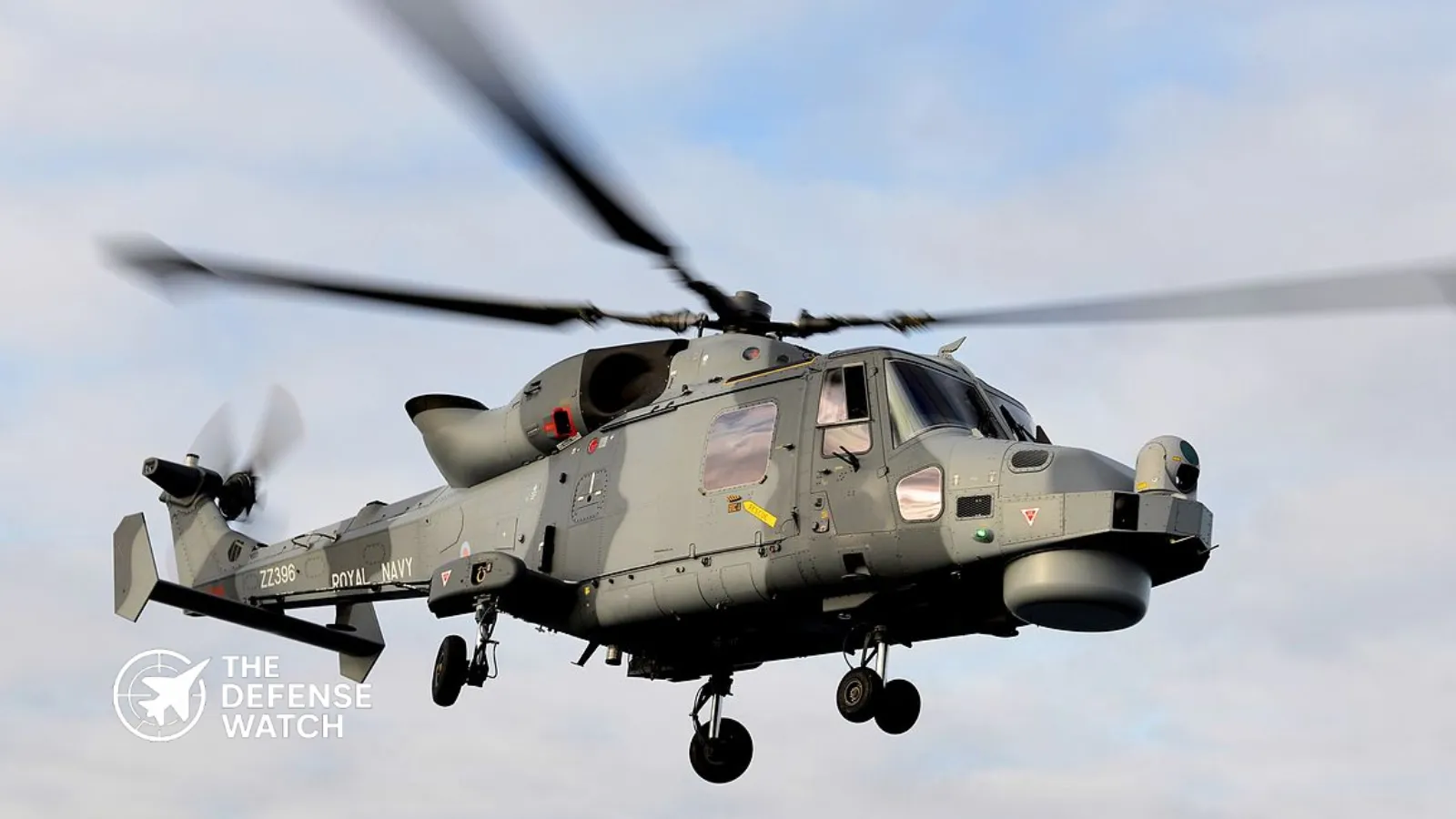
The United Kingdom is preparing to replace Royal Navy Wildcat helicopters with uncrewed aerial systems as part of its 2026 Defence Investment Plan. The move reflects a wider modernization effort that prioritizes autonomous reconnaissance, artificial intaelligence, and distributed sensor networks while reducing risks to aircrews in increasingly contested environments.
Royal Navy Begins Transition From Wildcat Helicopters To Drones
The Royal Navy Wildcat replacement program is moving from concept toward implementation as the UK government reshapes military aviation under its newly released Defence Investment Plan.
According to the Ministry of Defence, the transition will see Wildcat helicopters gradually replaced in reconnaissance missions by uncrewed aerial systems capable of scouting ahead of friendly forces without exposing aircrews to enemy air defenses.
Officials said the decision reflects operational lessons learned from the war in Ukraine, where inexpensive drones have increasingly displaced traditional reconnaissance aircraft in high-threat environments. Rather than sending crewed helicopters deep into contested airspace, autonomous platforms can provide persistent surveillance at significantly lower cost and risk.
Part Of A Much Broader Defense Modernization Strategy
The retirement of Wildcat reconnaissance helicopters is one element of Britain’s broader shift toward autonomous warfare.
The Defence Investment Plan allocates approximately £5 billion to drones and autonomous systems while expanding investment in artificial intelligence, digital targeting networks, electronic warfare, and long-range precision fires.
The strategy also includes:
| Modernization Area | Planned Capability |
|---|---|
| Autonomous systems | Expanded air, surface, and underwater drones |
| AI integration | Digital targeting web connecting sensors and shooters |
| Electronic warfare | Improved battlefield sensing and resilience |
| Long-range fires | Greater strike capability for land forces |
| Naval operations | Hybrid fleets combining crewed and uncrewed platforms |
Together, these investments represent one of the UK’s largest shifts toward autonomous military capabilities in decades.
Wildcat Has Remained An Important Naval Aircraft
The decision does not diminish the operational value the Wildcat has provided.
The Royal Navy’s AW159 Wildcat HMA2 has served in anti-surface warfare, maritime surveillance, force protection, and counter-drone operations. Earlier this year, Wildcats deployed to Cyprus armed with Martlet missiles to strengthen British air defenses against unmanned aerial threats in the Eastern Mediterranean.
The helicopter has also demonstrated growing integration with autonomous systems.
In January, Royal Navy trials successfully linked Wildcat helicopters with multiple drones through a distributed communications network, allowing helicopter crews to receive live targeting data from uncrewed aircraft beyond visual range. The demonstration provided an early example of the UK’s emerging “hybrid air wing” concept.
Those experiments now appear to have laid the technological groundwork for the broader transition outlined in the Defence Investment Plan.
Why Britain Is Choosing Drones
The operational logic behind the move is increasingly difficult for modern militaries to ignore.
Modern battlefields are saturated with:
- Long-range surface-to-air missiles
- Electronic warfare systems
- Counter-air radars
- One-way attack drones
- Precision-guided artillery
These threats make low-flying reconnaissance helicopters significantly more vulnerable than they were during previous decades.
Uncrewed aircraft offer several advantages:
- Longer endurance over target areas
- Lower procurement and operating costs
- Reduced risk to personnel
- Easier deployment in large numbers
- Faster replacement if lost
Military planners increasingly view drones as expendable sensors rather than high-value aviation assets that require extensive protection.
Strategic Analysis
Britain’s decision represents more than a platform replacement.
It signals an institutional shift away from using helicopters as the primary battlefield reconnaissance asset and toward distributed autonomous sensor networks.
That mirrors trends already visible across NATO. The United States, several European allies, and Indo-Pacific partners are investing heavily in crewed and uncrewed teaming rather than relying solely on traditional aviation platforms.
For the Royal Navy, this evolution also supports the government’s wider concept of a hybrid fleet. The Defence Investment Plan calls for new Common Combat Vessels designed to command air, surface, and underwater drones while integrating autonomous systems across maritime operations.
From a U.S. defense perspective, Britain’s approach closely aligns with ongoing efforts across NATO to create resilient, networked forces capable of operating in highly contested environments where traditional reconnaissance aircraft face increasing survivability challenges.
The transition is unlikely to eliminate crewed helicopters entirely. Wildcats will continue performing missions that require human judgment, weapons employment, and maritime aviation flexibility during the transition period. However, reconnaissance, historically one of the helicopter’s defining missions, is expected to become increasingly autonomous over the coming years.
What Comes Next
The British Army’s Wildcat reconnaissance fleet is scheduled to begin retiring from 2027, with uncrewed systems assuming its scouting role. Although the Ministry of Defence has not yet detailed the specific drone platforms that will replace every Wildcat mission, officials have confirmed that future reconnaissance will rely on networked autonomous systems integrated with AI-enabled targeting and electronic warfare capabilities.
The transition marks one of the clearest examples yet of how lessons from recent conflicts are reshaping Western military doctrine, replacing traditional reconnaissance helicopters with autonomous systems designed for contested battlefields.