

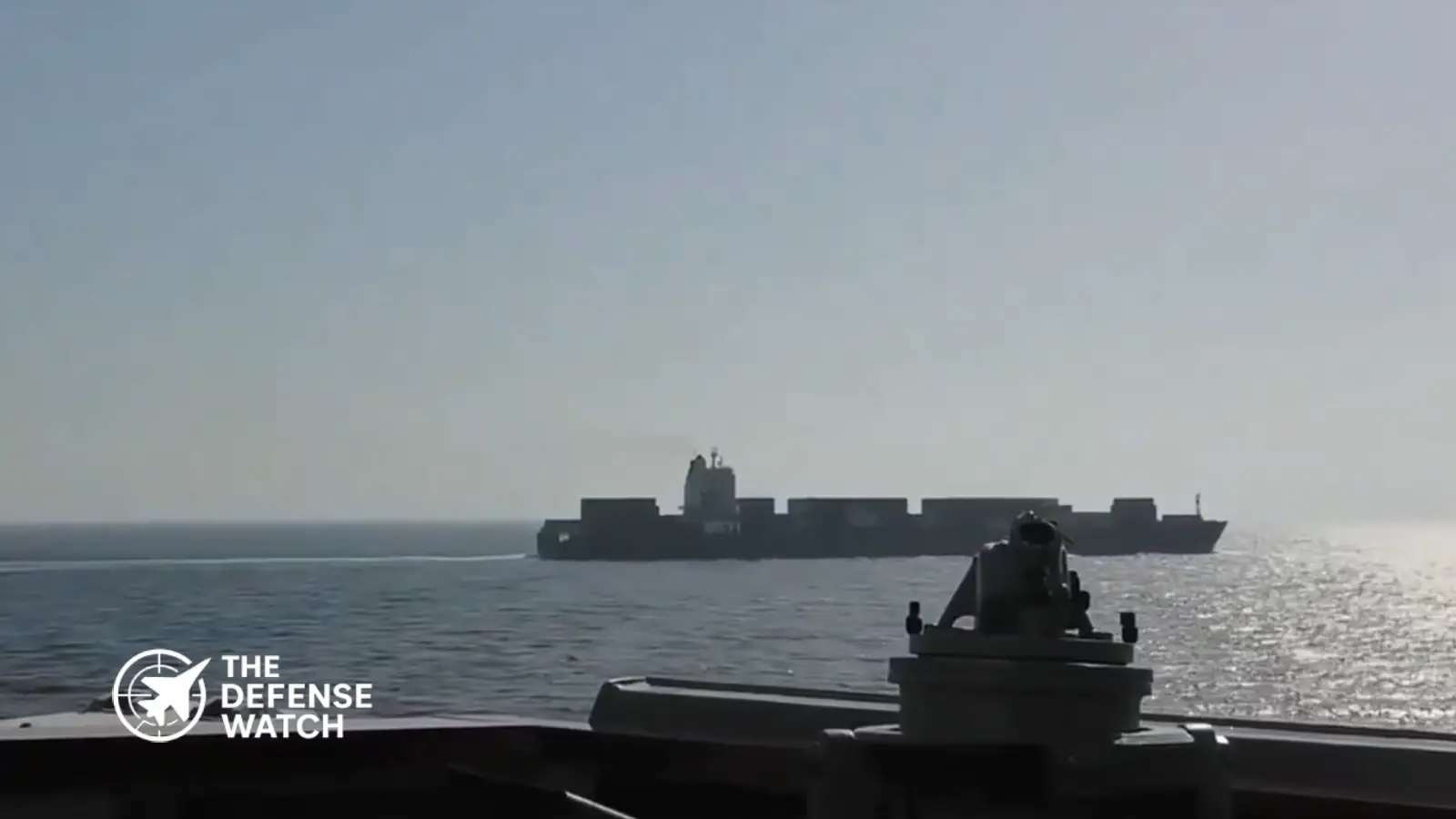
Executive Summary: The United States Central Command (CENTCOM) has officially transferred 22 crew members of the seized Iranian-flagged vessel M/V Touska to Pakistan for repatriation to Iran. This follow-up action comes after the vessel was intercepted and disabled by US naval forces on April 19, 2026, for attempting to breach a standing maritime blockade.
Maritime Interdiction and Transfer Logistics
According to a statement from CENTCOM Spokesperson Captain Tim Hawkins, the transfer of the 22 crew members to Pakistan was completed on May 4, 2026. This follows the prior repatriation of six passengers—identified as family members—to a separate regional country last week.
The M/V Touska, a Panamax-sized container ship operated by the sanctioned Islamic Republic of Iran Shipping Lines (IRISL), was seized in the Gulf of Oman. The operation marked a significant escalation in the 2026 blockade, involving the first documented use of kinetic force to disable a civilian-operated vessel.
Tactical Engagement Timeline
- Interception: The Arleigh Burke-class destroyer USS Spruance tracked the Touska as it transited at 17 knots toward Bandar Abbas.
- Warning Phase: US forces issued multiple warnings over a six-hour period, which the vessel reportedly ignored.
- Kinetic Action: On orders from the administration, the USS Spruance fired several rounds from its 5-inch MK 45 gun into the Touska’s engine room to disable propulsion.
- Boarding: Marines from the 31st Marine Expeditionary Unit (MEU), operating from the USS Tripoli, fast-roped onto the deck to take “full custody” of the vessel.
Platform Profile: M/V Touska vs. Modern Interdiction Assets
The seizure of a Panamax-class vessel presents unique boarding challenges compared to smaller dhows or coastal craft.
| Feature | M/V Touska (Sanctioned Vessel) | Arleigh Burke-Class (Interdiction Asset) |
| Length / Displacement | 295 meters / 66,432 tons | 155 meters / 9,500 tons |
| Primary Propulsion | MAN B&W Diesel (Disabled) | 4 General Electric LM2500 Turbines |
| Top Speed | 20 knots | 30+ knots |
| Status | Seized / Undergoing Transfer | Operational / Blockade Enforcement |
| Key Technology | Standard Commercial AIS | AEGIS Combat System / MK 45 Gun |
Strategic Implications of Repatriation
The decision to use Pakistan as a conduit for repatriation suggests a deliberate effort to manage regional tensions while maintaining the integrity of the blockade.
Technical and Security Findings
Subsequent inspections of the Touska by US personnel have reportedly uncovered “dual-use” materials.
- Cargo Analysis: Sources indicate the presence of high-grade metals, piping, and electronic components potentially intended for ballistic missile or nuclear programs.
- Sanctions Compliance: The vessel was already on the OFAC Specially Designated Nationals list, providing the legal framework for the seizure under current US policy.
- Geopolitical Friction: Tehran has characterized the event as “maritime piracy,” while Washington maintains the action was “deliberate, professional, and proportional.”
The handover of the crew to Pakistan provides a diplomatic “pressure valve,” allowing for the return of personnel while the United States retains custody—or oversight of the transfer—of the hull and its controversial cargo.
