• Home
  • About
  • Defense Systems
  • Manufacturer
  • Comparisons
  • Compare 
  • Tools
TheDefenseWatch.com
  • Aerospace & Aviation
  • Military & Ordnance
  • Naval & Maritime
  • Cyber & Space Defense
  • Policy & Strategy
  • Global News
  • Tools Library
    • Smart Calculator
    • Drone Flight Time Calculator
    • Drone Range Calculator
    • Counter-Drone Jammer Effective Range Calculator
    • Counter-Battery Radar Detection Calculator
    • Artillery Fire Correction Calculator
    • Thermal Camera Detection Range Calculator
    • Missile Range & Time-of-Flight Calculator
    • Radar Detection Range Calculator
    • FPV Strike Drone Payload vs Range Calculator
    • Loitering Munition Endurance Calculator
    • Sniper Ballistic Drop & Windage Calculator
    • Bullet Drop Calculator
    • U.S. Army Combat Fitness Test (ACFT) Calculator
    • Military Pension Calculator
    • Military Retirement Calculator
    • Military Pension Calculator
    • Large Number Calculator
Font ResizerAa

TheDefenseWatch.com

The Defense Watch | U.S. & Global Defense News, Analysis & Military Updates

Search
  • Home
  • About
  • Defense Systems
  • Manufacturer
  • Comparisons
  • Compare 
  • Tools

Stay Updated

Get the latest update

Subscribe

Explore

  • Drone
  • Fighter Jets & Military Aircraft
  • Hypersonic Weapons
  • Aircraft Carriers
  • Strategic History & Missions
  • Tools Library
Home » Iran Claims Attacks On Two US Destroyers After US Strikes Oil Tankers
Global News

Iran Claims Attacks On Two US Destroyers After US Strikes Oil Tankers

Kaleem Sheikh | Regional Defense Correspondent
Last updated: September 9, 2026 6:19 am
Kaleem Sheikh | Regional Defense Correspondent
Share
9 Min Read
Iran attacks US destroyers
SHARE

Iran has claimed a new round of attacks on U.S. naval vessels as the confrontation around the Strait of Hormuz intensifies following U.S. strikes on Iranian oil tankers.

Contents
  • Takeaways
  • Iran Claims Attacks On Two US Destroyers
  • US Strikes Five Iranian Oil Tankers
  • Iran Claims Damage To US Warships
  • Strait Of Hormuz Becomes Central Flashpoint
  • Iran Also Targeted A US Base In Jordan
  • What The Latest Claims Mean For The US Navy
  • The Key Question Is Verification

Takeaways

Iran claims it attacked two U.S. destroyers after Washington struck Iranian oil tankers, but the alleged damage has not been independently confirmed.

1. IRGC Claims Attacks On Two US Vessels

Iran’s IRGC says its naval forces targeted two U.S. vessels and eight oil tankers in retaliation for American attacks on Iranian oil shipping.

2. US Destroyer Damage Has Not Been Confirmed

Iranian media reported significant damage, but the United States has not confirmed that either destroyer was hit or damaged.

3. US Destroyed Five Iranian Oil Tankers

CENTCOM said U.S. forces destroyed five Iranian crude carriers after repeated Iranian ballistic missile attacks against American naval forces.

4. Strait Of Hormuz Remains A Major Flashpoint

Iran’s warnings and attacks around the Strait of Hormuz are increasing risks for commercial shipping and global energy markets.

5. Regional Escalation Continues

Iran’s claims against U.S. naval forces came alongside a ballistic missile attack against U.S. forces in Jordan, adding another layer to the widening conflict.

Iran Claims Attacks On Two US Destroyers

Iran’s Islamic Revolutionary Guard Corps, or IRGC, says it attacked two U.S. naval vessels and eight oil tankers in the Persian Gulf in retaliation for American strikes on Iranian crude carriers. The claims mark another escalation in a rapidly intensifying confrontation around the Strait of Hormuz.

The IRGC said Wednesday that its naval forces targeted two American vessels and eight oil tankers after U.S. forces struck five Iranian oil tankers the previous day. Iranian state media said the attacks caused significant damage, but Tehran did not provide independently verifiable evidence showing that either U.S. warship was hit.

The latest claims come after the U.S. military said Iranian forces had twice attempted to attack a U.S. Navy warship with ballistic missiles over two days. Washington said the attacks failed and that no American personnel were injured.

- Advertisement -

US Strikes Five Iranian Oil Tankers

The immediate trigger for the latest Iranian claims was a major U.S. military operation against Iranian oil shipping.

U.S. Central Command said American forces destroyed five Iranian crude oil carriers on Sept. 8 in the Gulf of Oman and near Iran’s Kharg Island. CENTCOM said the crews were directed to abandon the vessels before the strikes and that the ships were rendered inoperable.

The operation followed what CENTCOM described as repeated ballistic missile attacks by the IRGC against a U.S. Navy warship.

The tanker strikes expanded an earlier U.S. campaign against Iranian oil shipping. On Sept. 5, CENTCOM said it struck three Iranian crude carriers after Iran launched ballistic missiles toward two U.S. Navy warships operating in regional waters.

According to CENTCOM, the U.S. permanently disabled the M/T Downy near Kharg Island and the M/T Stark 1 near Jask. It also destroyed the unladen M/T Kylo, also known as the Noxen, in the Gulf of Oman.

CENTCOM said the three vessels were connected to what it described as a multibillion-dollar network supporting the IRGC and its regional partners.

Iran Claims Damage To US Warships

Iran’s latest statement raises the stakes because it specifically claims attacks against U.S. naval combatants.

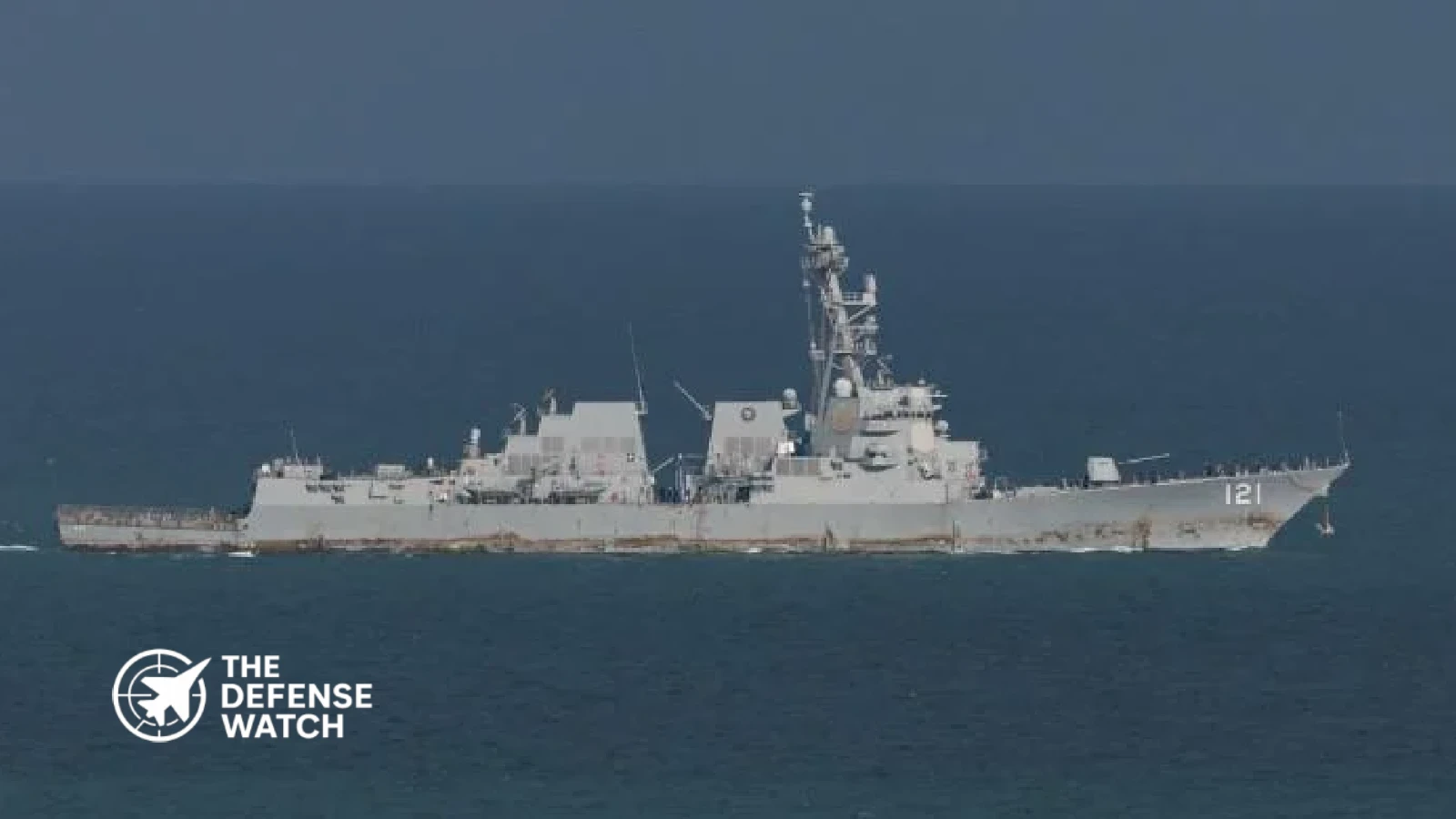
Iranian reporting identified the vessels in some accounts as the guided-missile destroyers DDG-119 and DDG-53. DDG-119 is the Arleigh Burke-class USS Delbert D. Black, while DDG-53 is USS John Paul Jones. However, the identification and alleged damage have not been independently confirmed by the U.S. military.

- Advertisement -

The distinction is important.

Iran has made claims of successful attacks during the current conflict, while U.S. officials have described previous Iranian attacks against American warships as unsuccessful. CENTCOM said its aircraft carrier and guided-missile destroyer evaded multiple Iranian attacks during the Sept. 5 incident.

As of the latest available reporting, there was no U.S. confirmation that two destroyers had been damaged or disabled in the latest Iranian operation.

That makes the IRGC’s claim a reported battlefield assertion rather than an independently established fact.

Strait Of Hormuz Becomes Central Flashpoint

The confrontation is increasingly centered on the Strait of Hormuz and surrounding waters.

Iran has warned commercial vessels about operating in areas it considers restricted or unsafe. The IRGC said it had also targeted 10 other vessels that attempted to enter a restricted area around the strait, accusing them of operating with U.S. military support.

The waterway is one of the world’s most important energy corridors, linking the Persian Gulf with the Gulf of Oman and the Arabian Sea.

The growing military confrontation is already affecting energy markets. Reuters reported that uncertainty over the volume of oil moving through the Strait of Hormuz has increased sharply as competing blockades, attacks and vessel-tracking disruptions make normal shipping estimates difficult.

Brent crude also moved sharply higher as the latest attacks raised concerns about further disruptions to regional energy supplies.

Iran Also Targeted A US Base In Jordan

The maritime claims came alongside an Iranian missile attack against U.S. forces in Jordan.

Iran said it launched ballistic missiles at the Al Azraq area in retaliation for the U.S. strikes on Iranian oil tankers. Jordan said its air defenses intercepted 18 of 20 missiles, with the remaining two falling in unpopulated areas. No casualties were reported from that attack, according to Reuters.

Iranian state media subsequently reported the claims against U.S. naval vessels and commercial tankers, broadening the scope of Tehran’s stated response beyond the immediate maritime confrontation.

The sequence illustrates how quickly the conflict is spreading across multiple domains, including naval operations, ballistic missile attacks and commercial shipping.

What The Latest Claims Mean For The US Navy

The reported attacks on two U.S. destroyers should be treated cautiously until independently confirmed.

U.S. guided-missile destroyers are designed for multiple missions, including air defense, ballistic missile defense, anti-surface warfare and protection of larger naval formations. The ships can operate independently or as part of carrier and expeditionary strike groups.

Their presence in the region is particularly important as Washington attempts to protect maritime traffic while applying military and economic pressure against Iran.

The latest escalation also demonstrates the interaction between military and economic pressure. Washington has targeted Iranian oil shipping after attacks on U.S. naval forces, while Tehran has responded by threatening American vessels and commercial shipping.

That cycle creates a wider risk for merchant traffic operating around the Persian Gulf, Strait of Hormuz and Gulf of Oman.

The Key Question Is Verification

For now, the central unanswered question is whether any U.S. warship sustained damage in the latest Iranian operation.

The IRGC says it attacked two American vessels and eight tankers. Iranian state media has presented the claims as retaliation for U.S. attacks on Iranian oil shipping.

The United States, however, has not publicly confirmed that two destroyers were struck or suffered damage in the reported incident.

That distinction should remain central to coverage of the developing confrontation.

The confirmed sequence is already significant: Iranian ballistic missile attacks on U.S. naval forces, U.S. strikes against Iranian oil tankers, an Iranian missile attack on U.S. forces in Jordan, and new Iranian claims against American warships and commercial vessels.

If the reported attacks on U.S. destroyers are subsequently confirmed, the incident would represent another major escalation in the maritime confrontation. Until then, the claims remain unverified.


TAGGED:IranUS Navy
Share This Article
Facebook Copy Link Print
ByKaleem Sheikh | Regional Defense Correspondent
Follow:
Kaleem Sheikh is a regional defense correspondent at TheDefenseWatch.com covering defense and security developments across Asia and the Middle East, including military operations, procurement, and regional security issues.
Leave a Comment

Leave a Reply Cancel reply

Your email address will not be published. Required fields are marked *

Latest Defense Systems

  • B-25 Mitchell Bomber B-25 Mitchell Bomber
  • F-100 Super Sabre F-100 Super Sabre
  • North American F-86 Sabre North American F-86 Sabre
  • North American XB-70 Valkyrie North American XB-70 Valkyrie
  • Northrop YF-23 Fighter Northrop YF-23 Fighter
  • P-51 Mustang Fighter Aircraft P-51 Mustang Fighter Aircraft
  • Rafale F5 Fighter Rafale F5 Fighter
  • Tomahawk Block V Missile Tomahawk Block V Missile
  • Tomahawk Block IV Missile Tomahawk Block IV Missile

Recent Compares

  • J-10C vs JF-17 Thunder: Which Fighter Is More Capable? J-10C vs JF-17 Thunder: Which Fighter Is More Capable? View Comparison →
  • Tejas vs Gripen: Key Differences and Capabilities Tejas vs Gripen: Key Differences and Capabilities View Comparison →
  • Tejas vs MiG-21 Bison: How India Replaced Its Iconic Supersonic Fighter Tejas vs MiG-21 Bison: How India Replaced Its Iconic Supersonic Fighter View Comparison →
  • F-35 vs F-16: Stealth, Sensors and Combat Roles F-35 vs F-16: Stealth, Sensors and Combat Roles View Comparison →
  • Tejas Fighter Jet vs F-16 Fighting Falcon: Capability Compared Tejas Fighter Jet vs F-16 Fighting Falcon: Capability Compared View Comparison →
  • Rafale Fighter Jet vs F-16 Fighting Falcon : Which Fighter Has the Edge? Rafale Fighter Jet vs F-16 Fighting Falcon : Which Fighter Has the Edge? View Comparison →
  • Su-57 Fighter Jet vs J-20 Fighter Jet: Stealth and Air Combat Compared Su-57 Fighter Jet vs J-20 Fighter Jet: Stealth and Air Combat Compared View Comparison →
  • Mirage 2000 vs Tejas Mk1A: Legacy Combat Power vs Indigenous Modernization Mirage 2000 vs Tejas Mk1A: Legacy Combat Power vs Indigenous Modernization View Comparison →
  • Rafale Fighter Jet vs F-22 Raptor: Which Air Dominance Fighter Has the Edge? Rafale Fighter Jet vs F-22 Raptor: Which Air Dominance Fighter Has the Edge? View Comparison →
  • Tejas Fighter Jet vs. Rafale Fighter Jet: India’s Indigenous Fighter Meets France’s Proven Multirole Combat Aircraft Tejas Fighter Jet vs. Rafale Fighter Jet: India’s Indigenous Fighter Meets France’s Proven Multirole Combat Aircraft View Comparison →

Recent Posts

  • Pratt & Whitney Begins $100 Million Polish Expansion for F-35 Engine Parts
  • Northrop Grumman Wins $43.9 Million Contract for Trident II Rocket Motor Facilities
  • Ukraine Drone Strikes Disrupt Russian Data Centers, Raising Questions About AI Infrastructure Security
  • Lockheed Martin Wins $114.6 Million Contract to Redesign F-35 Navigation Systems
  • Project Agincourt Pushes Pentagon to Speed Up Autonomous Weapons Fielding

You Might Also Like

US Air Force F-15 crash
Global News

US Air Force F-15 Jet Reportedly Crashes In Kuwait Amid Regional Tensions

September 7, 2026
Trump Iran ceasefire agreement
Global News

Trump Moves To Renew US-Iran Talks As Lebanon Ceasefire Begins

April 17, 2026
compact AIM-9X missile
Aerospace & AviationMissile Defense Systems

US Navy Develops Compact AIM 9X Missile Variant For F-35 Jets And Combat Drones

September 12, 2026
Pakistan Saudi JF-17 deal
Global News

Pakistan, Saudi Arabia in Talks on $4B JF-17 Fighter Jet Deal

September 12, 2026

Logo

Copyright © 2026 TheDefenseWatch.com

Helpful Links

  • Home
  • About Us
  • Privacy Policy
  • Terms of Use / Disclaimer
  • U.S. Privacy Notice – CCPA Compliance

Defense Systems

  • Defense Systems
  • Comparisons 
  • Manufacturer
  • Tactical Calculators

Popuplar

Which 5 Air Forces Possess the Costliest Fighter Jet Fleets in the World
Evolving Strategic Value: Carrier Strike Groups in the Indo-Pacific’s Future Security Architecture
Autonomous Weapon Systems Spark U.S. Ethics Debate Amid Rapid Military AI Integration

We report on developments involving military forces, governments, defense companies, research organizations, and security institutions around the world. 

Welcome Back!

Sign in to your account

Username or Email Address
Password

Lost your password?