

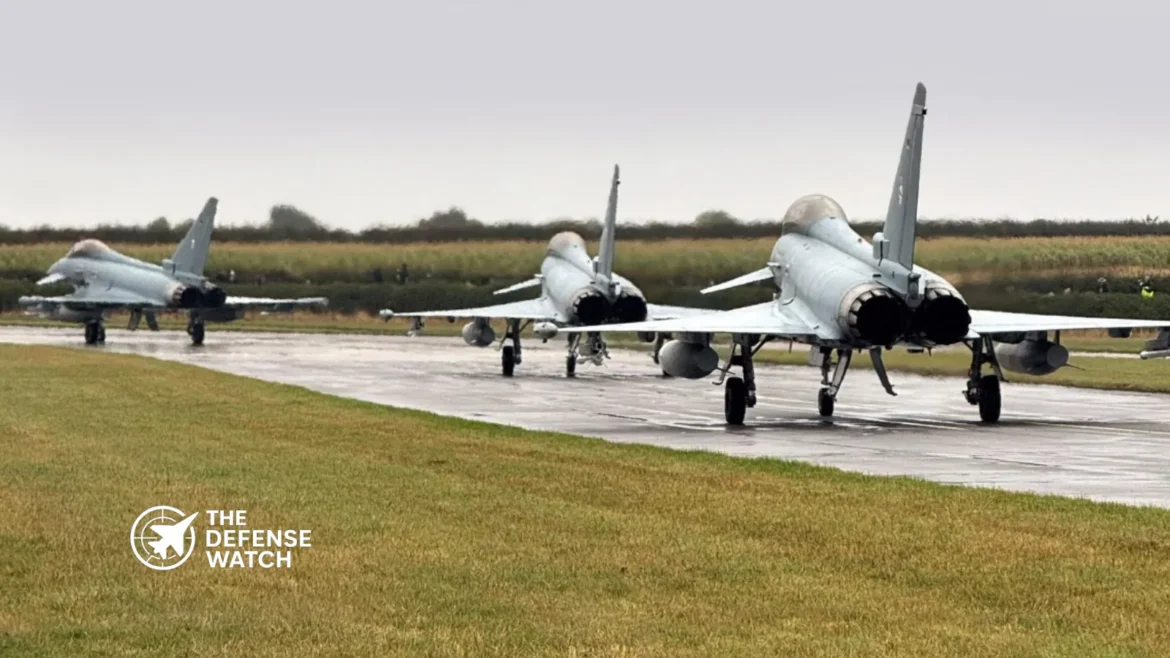
- ► British fighter jets have deployed to Romania as part of NATO’s enhanced air policing mission.
- ► RAF Typhoon aircraft will conduct quick reaction alert duties and joint training operations.
- ► Deployment reinforces NATO’s eastern flank amid continued regional security tensions.
- ► UK forces will operate alongside Romanian and allied air units to improve interoperability.
- ► The mission highlights sustained allied commitment to deterrence and collective defense.
British Fighter Jets Deploy To Romania Under NATO Mission
British fighter jets deploying to Romania mark the latest step in NATO’s effort to strengthen air defense along its eastern flank, as regional security concerns remain elevated.
The United Kingdom has deployed Royal Air Force Typhoon fighter aircraft to Romania to support NATO’s enhanced Air Policing mission. The deployment places advanced multi-role fighters closer to the alliance’s southeastern frontier, enabling faster response times and improved situational awareness.
The mission is part of NATO’s long-standing rotational air policing framework, designed to safeguard the airspace of member states and deter potential incursions.
RAF Typhoons Take On Air Policing And Deterrence Role
The deployed aircraft are Eurofighter Typhoon jets operated by the Royal Air Force, one of NATO’s most capable quick reaction alert platforms.
These jets are tasked with intercepting unidentified aircraft, conducting patrols, and maintaining constant readiness. Operating from Romanian airbases, they will integrate with local and allied air defense networks.
Air policing missions typically involve round-the-clock alert status, ensuring aircraft can scramble within minutes if required. This rapid response capability is central to NATO’s deterrence posture, particularly in regions close to contested airspace.
Strategic Importance Of Romania In NATO’s Eastern Flank
Romania has become a critical hub for NATO operations in Eastern Europe. Its geographic position near the Black Sea places it at the intersection of key strategic corridors.
The deployment of British fighter jets to Romania underscores the growing importance of the region in alliance planning. NATO has steadily increased its presence across Eastern Europe since 2014, with air, land, and maritime forces rotating through frontline states.
From a strategic perspective, Romania offers several advantages:
- Proximity to potential flashpoints
- Established NATO infrastructure
- Access to Black Sea operational areas
This makes it a natural location for forward-deployed air assets.
Interoperability And Joint Training With Allies
Beyond air policing, the deployment also supports joint training with Romanian and other NATO forces. These exercises are designed to improve interoperability, a key requirement for multinational operations.
Pilots and ground crews will operate in integrated environments, sharing data, tactics, and procedures. This ensures that forces from different nations can function seamlessly during real-world contingencies.
Such training also enhances readiness across the alliance, reducing response times and improving coordination in complex scenarios.
Analysis: Reinforcing Deterrence Through Forward Presence
The British fighter jets deployment to Romania reflects a broader shift in NATO’s operational posture toward persistent forward presence.
Rather than relying solely on reinforcement from Western Europe, NATO is positioning high-end capabilities closer to potential areas of concern. This approach shortens decision cycles and strengthens deterrence by demonstrating immediate readiness.
From a military standpoint, deploying Typhoon aircraft provides several advantages:
- High-performance air superiority capability
- Advanced radar and sensor integration
- Flexibility for both defensive and offensive roles
At the same time, the rotational nature of these deployments allows NATO to distribute operational burden among member states while maintaining a continuous presence.
The move also signals political commitment. By deploying frontline assets, the UK reinforces its role as a leading contributor to NATO operations and underscores alliance cohesion.
Broader Geopolitical Context
The deployment comes amid ongoing tensions in Eastern Europe and increased military activity in the Black Sea region. NATO has responded by expanding its air policing missions and increasing the frequency of multinational exercises.
British participation in these missions aligns with broader alliance objectives, including deterrence, reassurance of member states, and maintaining stability in contested regions.
While air policing is defensive in nature, its visibility plays a significant role in signaling resolve. Regular patrols and rapid intercept capabilities serve as a clear message of readiness.
Operational Outlook
The British fighter jets in Romania are expected to remain on rotation for a defined period, during which they will conduct patrols, training sorties, and joint exercises.
Future deployments are likely to continue as part of NATO’s rotational model, ensuring sustained coverage of the alliance’s eastern airspace.
As NATO adapts to evolving threats, forward deployments like this are expected to remain a central component of its defense strategy.


- Two fatalities and three injuries in Abu Dhabi were caused by debris from a ballistic missile interception, UAE authorities confirmed.
- The incident occurred on Sweihan Street after the country’s air defenses engaged an incoming Iranian missile.
- UAE air defense systems have intercepted hundreds of ballistic missiles and drones in recent weeks amid wider regional conflict.
- Falling interceptor fragments have caused collateral damage and civilian casualties across the United Arab Emirates.
- The event underscores the risks of air defense operations in populated areas during high-intensity conflicts.
Conflict Update: Interceptor Debris Kills Civilians in Abu Dhabi
Abu Dhabi witnessed a fatal incident tied to the ongoing Iran-UAE confrontation when debris from an airdefense engagement killed two individuals and wounded three others. The main keyword, Iran missile interception debris Abu Dhabi, reflects the core of this developing story. Local authorities said the casualties resulted from fragments falling on Sweihan Street after UAE air defenses successfully shot down an incoming ballistic missile.
The UAE Ministry of Defence has been actively intercepting missiles and unmanned aerial vehicles launched from Iran over the past weeks. These interceptions aim to defend key infrastructure and populated areas but pose a serious risk when the fragments descend into urban zones.
Shortly before this latest casualty report, the UAE had tracked and engaged scores of airborne threats, including ballistic missiles and drones. Most of these threats were neutralized before reaching critical targets, but fragments and falling debris have repeatedly caused collateral damage.
Officials have urged the public to rely on verified government communications for updates on the situation and to avoid unverified reports circulating on social media. Emergency response teams were deployed quickly to the site of the incident to assist the injured and secure the area.
Air Defense Operations and Civilian Risk
The UAE’s integrated air defense systems are running nearly continuous operations against missile and drone salvos attributed to Iran’s broader military action in the Gulf. These systems have been credited with preventing direct hits on major population centers and critical assets.
However, falling interceptor debris remains a significant hazard. Incidents like the one in Abu Dhabi highlight the difficulty of safeguarding both airspace and civilians on the ground in densely populated areas. Civilian vehicles and pedestrians have been affected in past events, prompting authorities to reiterate risk advisories.
Regional Context and Escalation
This deadly outcome in Abu Dhabi occurs against the backdrop of an intensifying conflict involving Iran, the United States, Israel, and allied Gulf states. Independent tracking data shows hundreds of missiles and drones have been detected over UAE airspace in recent weeks.
International responses continue to shape the conflict’s trajectory, with diplomatic efforts running in parallel to active military engagements. Civilian impact, including injuries and fatalities linked to air defense operations, has drawn heightened attention among regional governments and global observers.
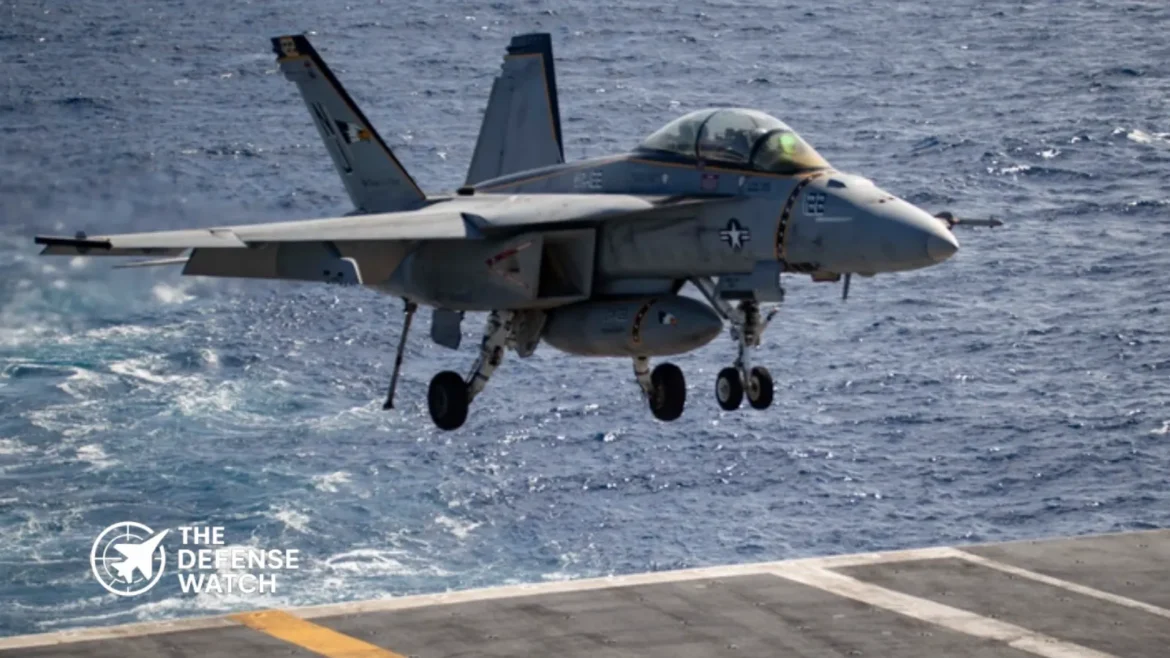
- Iran’s Islamic Revolutionary Guard Corps shared footage claiming to have shot down a US F-18 fighter jet near Chabahar, Iran.
- US Central Command responded on social media saying the Iranian claim is false, asserting no US fighter aircraft was shot down.
- The video shared by Iranian outlets shows an aircraft and explosion but has not been verified by independent or US military sources.
- The claim comes amid heavy conflict in the Middle East involving Iranian forces, US and coalition air operations.
- CENTCOM’s fact check follows similar Iranian claims about downing US aircraft that were denied days earlier.
Iran F-18 Claim Debunked, CENTCOM Says No US Fighter Downed
Iran’s claim that it shot down a US F-18 fighter jet near Chabahar in southeastern Iran was denied by US Central Command on March 26, 2026. According to media reports, Iranian state-affiliated channels shared video and statements asserting a successful hit on an American aircraft. CENTCOM officials responded on social media saying no US fighter aircraft has been shot down by Iranian forces.
The Islamic Revolutionary Guard Corps (IRGC) asserted the strike in social media posts accompanied by video footage. Iran’s Press TV and other state outlets described the visuals as proof of the hit on a Boeing F/A-18 fighter operating over Chabahar. The context of the claim is the wider set of hostilities between Iranian forces and US-led activities in the region.
CENTCOM’s denial was direct and unambiguous, stating that no F-18 or any US fighter had been lost to hostile fire. The fact check by the US military was posted on its official social media channels as videos of the alleged incident circulated widely online.
Analysis Of The Footage And Claims
The video shared by Iranian outlets has not been independently verified by international observers or Western defense analysts. Visuals circulating on social platforms show an aircraft and an explosion sequence, but they do not conclusively demonstrate a downed US fighter. Without clear geolocation, verifiable metadata, and corroboration from neutral sources, the footage remains unconfirmed.
This is not the first time such claims have been made. Similar Iranian assertions about damaging or downing US aircraft earlier in March 2026 were met with official denials. Independent trackers of Middle East conflict incidents list other aviation losses tied to the ongoing Iran-Israel war, including unmanned systems and allied aircraft accidents.
Strategic And Geopolitical Context
The dispute over the F-18 report emerged against the backdrop of intense military operations in the Middle East. Iran has been confronting coalition air activity while also launching its own missile and drone strikes. US forces and their allies have conducted extensive air and missile operations targeting Iranian and proxy assets.
In conflict zones, information can be weaponized for domestic morale and international positioning. Tehran’s broadcast of the claim may serve internal messaging purposes and aims to project capability. Conversely, CENTCOM’s rapid fact check seeks to prevent escalatory misinterpretations and reassure audiences that no pilot losses or aircraft attrition have occurred.
What Is Known And Not Known
At this stage, there is no independent confirmation that an F/A-18 or other US fighter was struck and destroyed by Iranian forces. US Central Command’s official statement remains the most authoritative source on the matter, saying no such shootdown took place.
Without access to verified radar tracks, operational logs, or eyewitness accounts from coalition forces, definitive assessment beyond the official denial is not possible. Analysts will continue to monitor both open-source intelligence and official communiques as the conflict develops.


- Israel claims elimination of senior Iranian figures including Ali Larijani.
- Operations reportedly involve air power, including fighter jets and UAVs.
- Strategy aims to weaken Iran’s internal security apparatus and leadership cohesion.
- Coordination with the United States highlighted by Israeli leadership.
- Signals potential expansion of covert and overt operations beyond traditional conflict zones.
Israel Targeted Killings Strategy Expands Into Iranian Leadership
Israel’s targeted killings strategy took a sharp turn this week after Prime Minister Benjamin Netanyahu claimed the elimination of senior Iranian figures, including Ali Larijani, in a public statement outlining ongoing military operations.
Netanyahu stated that Israeli forces are conducting air operations over Iran using fighter aircraft and unmanned aerial systems, targeting key elements of the country’s security structure, including the Islamic Revolutionary Guard Corps and the Basij militia.
The Big Picture
Israel’s targeted killings strategy has historically focused on disrupting adversary leadership in regional theaters such as Syria and Gaza. Extending this approach into Iran itself, if confirmed, would represent a major escalation in both geographic scope and operational risk.
The shift aligns with Israel’s long standing doctrine of preemptive action against strategic threats, particularly those linked to Iran’s military and nuclear infrastructure. It also reflects growing coordination with the United States, especially in the context of regional deterrence and Gulf security.
What’s Happening
Netanyahu stated that Israeli forces eliminated Larijani and a Basij commander in coordinated operations. He described the targeted individuals as central figures in Iran’s internal security and repression apparatus.
The Israeli leader also confirmed:
- Use of air force jets and UAVs in operations
- Active efforts to weaken the Iranian regime internally
- Military coordination with Donald Trump and U.S. forces
- Continued direct and indirect attacks designed to increase pressure on Tehran
No independent confirmation has been provided by Iranian authorities at the time of writing.
Why It Matters
Targeted killings serve both tactical and strategic purposes. Removing senior leadership can disrupt command structures, slow decision making, and degrade operational effectiveness.
In Iran’s case, the focus on the IRGC and Basij suggests a deliberate effort to undermine internal security control mechanisms rather than conventional military forces alone.
This approach also signals a shift from containment to active destabilization. Instead of limiting Iranian influence abroad, Israel appears to be targeting the regime’s internal cohesion.
Strategic Implications
Israel’s targeted killings strategy could reshape the regional security environment in several ways.
First, it raises the threshold of direct confrontation between Israel and Iran. Strikes inside Iranian territory, especially against high level figures, increase the likelihood of retaliation.
Second, it reinforces the role of air power and long range strike capabilities. The use of UAVs and stand off munitions allows Israel to operate without sustained ground presence, reducing exposure while maintaining pressure.
Third, it strengthens U.S. Israel military coordination. Netanyahu’s reference to joint efforts suggests alignment in operational planning, particularly in the Gulf region where U.S. forces maintain a significant presence.
Competitor View
Iran is likely to interpret these actions as an attempt to trigger internal instability and weaken regime legitimacy.
From Tehran’s perspective, targeting the IRGC and Basij directly challenges the pillars of state control. This could prompt asymmetric responses, including cyber operations, proxy attacks, or maritime disruptions.
Russia and China may view the escalation as a destabilizing factor in global energy markets and regional security, particularly given the Gulf’s role in global flows.
What To Watch Next
Several indicators will shape the next phase of this development:
- Iranian confirmation or denial of leadership losses
- Potential retaliatory actions by Iran or its proxies
- U.S. military posture adjustments in the Gulf
- Increased Israeli air or covert operations beyond current scope
Sustained operations would indicate a long term campaign rather than a limited strike.
Capability Gap
Israel’s targeted killings strategy addresses a key challenge, the difficulty of countering decentralized and ideologically driven security networks.
By focusing on leadership nodes, Israel seeks to create disruption without engaging in large scale conventional warfare.
However, limitations remain. Leadership decapitation does not guarantee systemic collapse. Iran’s security apparatus is layered and resilient, with redundancy built into command structures.
The Bottom Line
Israel’s targeted killings strategy signals a deliberate escalation aimed at weakening Iran’s leadership from within while reshaping the regional balance of power.
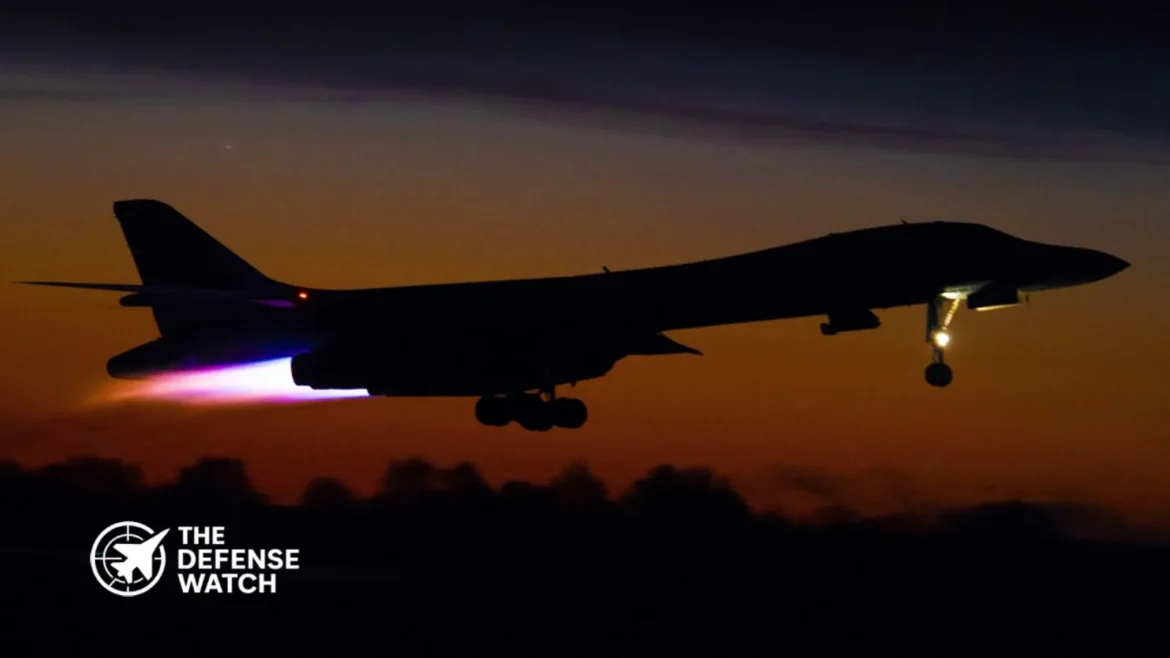
- US bombers avoided European airspace during missions targeting Iran.
- Aircraft used extended flight paths, likely supported by aerial refueling.
- Routing reflects political sensitivities among European allies.
- Missions demonstrate long-range strike capability and operational flexibility.
- Strategic takeaway: route selection is now as critical as strike capability.
US Bombers Avoid European Airspace On Iran Bombing Runs
US bombers avoid European airspace during Iran bombing runs, signaling a deliberate shift in operational routing while maintaining long-range strike capability. The development highlights how geopolitical constraints increasingly shape military flight planning alongside tactical requirements.
The Big Picture
Long-range bomber operations remain central to US global power projection. Platforms such as the B-52 and B-2 allow the United States to strike targets across continents without forward basing, a capability emphasized in recent US Department of Defense posture statements.
Operational routing, however, has become more complex. European airspace access depends on diplomatic clearance, alliance politics, and domestic sensitivities within NATO member states. As tensions in the Middle East persist, Washington appears to be adjusting mission profiles to reduce political friction while preserving operational reach.
This shift reflects a broader trend in US military planning. Commanders increasingly balance kinetic effectiveness with alliance management, especially in regions where partners may not support escalation.
What’s Happening
Recent reporting indicates that US bombers conducting Iran-related strike missions deliberately avoided flying over European airspace. Instead, aircraft used alternative routes that extended flight distances.
These missions likely involved long-range bombers operating from bases outside Europe, supported by aerial refueling assets to sustain extended flight durations. Tanker aircraft remain critical in enabling such missions, allowing bombers to bypass politically sensitive corridors.
The rerouting suggests coordination at the strategic level, where flight paths are chosen not only for efficiency but also for diplomatic acceptability. European nations often require advance approval for overflight, particularly for combat operations tied to active conflict zones.
Why It Matters
Route selection directly affects operational tempo and mission complexity. Avoiding European airspace increases flight time, fuel requirements, and reliance on tanker support. This adds logistical strain but reduces the risk of diplomatic friction with allies.
The decision also reflects sensitivity to domestic politics within NATO countries. Some European governments face public opposition to involvement in Middle East conflicts, even indirectly through airspace access.
From a military perspective, the ability to execute these missions despite longer routes demonstrates resilience in US strike planning. It shows that operational effectiveness does not depend on any single geographic corridor.
Strategic Implications
This development underscores the flexibility of US global strike architecture. By rerouting bombers, the United States preserves freedom of action even when traditional transit routes become politically constrained.
It also highlights the growing importance of distributed basing and tanker fleets. Without robust aerial refueling, extended routes would significantly degrade mission effectiveness.
At the alliance level, the move signals a careful balancing act. Washington appears willing to absorb operational costs to avoid straining relationships with European partners. This approach supports long-term alliance cohesion, even if it complicates short-term mission planning.
Competitor View
Iran likely interprets these operations as evidence of sustained US strike capability despite geographic constraints. The use of indirect routes may also signal caution, suggesting Washington seeks to limit escalation pathways while retaining deterrence.
Russia and China may view the development differently. Both countries have invested in anti-access strategies designed to complicate US operations. The ability of US bombers to adapt routing reinforces the credibility of long-range strike forces even in contested or politically restricted environments.
At the same time, reliance on tankers exposes a known vulnerability. Peer competitors continue to develop capabilities aimed at targeting aerial refueling assets in future conflicts.
What To Watch Next
Future operations will likely continue to reflect a balance between operational efficiency and political considerations. Key indicators include:
Increased tanker deployments supporting long-range missions
Expanded use of alternative basing locations outside Europe
Changes in NATO overflight policies or political alignment
Integration of stealth platforms to reduce exposure along longer routesUS Air Force modernization efforts, including next-generation bomber programs, may also influence how these missions evolve.
Capability Gap
The reliance on extended routing highlights a persistent challenge in US operations. Access denial, whether political or military, can complicate mission planning and increase logistical demands.
Aerial refueling mitigates this gap, but it introduces additional risk. Tankers are high-value assets and may become targets in contested environments. This creates a tradeoff between operational reach and vulnerability.
Additionally, longer routes reduce sortie generation rates, which could affect sustained operations during high-intensity conflict.
The Bottom Line
US bombers avoid European airspace on Iran missions, demonstrating that modern airpower depends as much on geopolitical navigation as it does on technological capability.

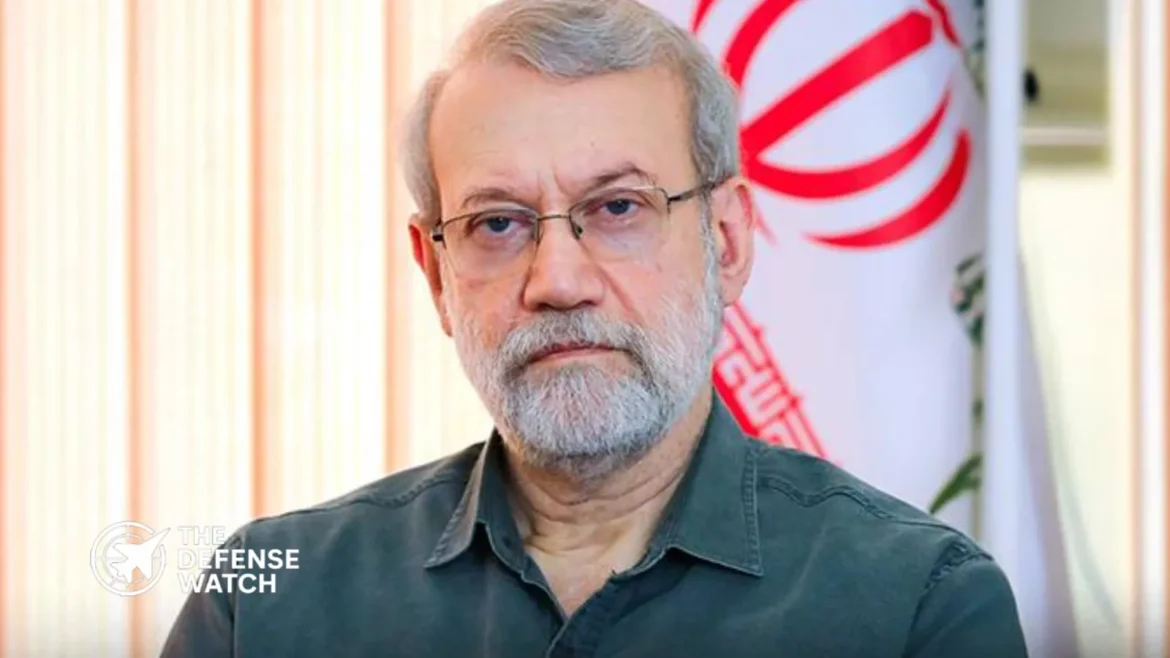
- Iran confirms death of senior security figure Ali Larijani.
- Larijani held key roles across Iran’s political and security apparatus.
- Development comes amid heightened regional military tensions involving Iran.
- Timing coincides with ongoing conflict dynamics affecting Iranian strategic posture.
- Leadership transition may impact Iran’s security coordination and decision making.
Iran Confirms Death Of Ali Larijani
Iran security chief Ali Larijani has died, according to official confirmation from Tehran, marking a significant development within the country’s political and security leadership structure.
The announcement comes at a time of heightened regional tensions, with Iran actively engaged in a complex security environment shaped by military operations, geopolitical rivalries, and internal coordination demands.
The Big Picture
Iran’s security architecture relies on a tightly interconnected network of political leaders, military commanders, and intelligence officials. Figures like Larijani often bridge civilian governance and national security decision making.
The loss of a senior figure at this level is not just symbolic. It affects institutional continuity at a time when Iran faces sustained external pressure, particularly from the United States and regional adversaries.
Iran’s strategic posture in the Middle East has become more assertive in recent years, combining conventional military capabilities with proxy networks and asymmetric warfare strategies. Leadership stability plays a key role in maintaining that posture.
What’s Happening
Iranian authorities confirmed the death of Ali Larijani, a prominent political figure who previously held senior roles including parliamentary leadership and advisory positions tied to national security.
Reports indicate that Larijani served in influential capacities connected to Iran’s broader security and political framework. His experience and access to leadership circles made him a key figure in policy coordination.
The announcement was made on March 18, 2026, though details surrounding the cause and circumstances of his death remain limited in public reporting.
Why It Matters
Leadership continuity is critical in states facing sustained external pressure. Iran’s decision making system depends on experienced figures who understand both domestic politics and strategic military considerations.
Larijani’s death removes a figure with deep institutional knowledge and long standing relationships across Iran’s political and security elite. That creates a potential gap in coordination, especially in crisis conditions.
The development also comes as Iran continues to manage military tensions in the region, including air operations, proxy engagements, and deterrence signaling. Leadership disruptions during such periods can affect response speed and policy alignment.
Strategic Implications
Iran’s military readiness depends on synchronized coordination between political leadership and organizations such as the Islamic Revolutionary Guard Corps. Senior political figures often play a quiet but critical role in aligning strategic objectives.
A leadership loss at this level may temporarily slow decision cycles or shift influence among competing factions within Iran’s power structure. That could affect how Iran calibrates its military posture in the near term.
Regional stability may also feel indirect effects. Allies and adversaries alike monitor leadership changes in Tehran closely, as these shifts can signal changes in policy direction or internal priorities.
Competitor View
The United States and its regional partners will likely assess this development through the lens of Iranian command resilience. Leadership turnover during periods of tension may be viewed as a potential vulnerability.
Russia and China, both of which maintain strategic ties with Iran, may interpret the event as a need for continuity in diplomatic and security coordination with Tehran.
Regional rivals such as Israel and Gulf states will focus on whether the leadership shift alters Iran’s operational tempo or strategic messaging.
What To Watch Next
Iran is expected to move quickly to ensure continuity in advisory and coordination roles tied to national security.
Key indicators to monitor include:
Appointments of replacement figures within Iran’s leadership structure
Changes in public messaging from Iranian officials
Any shifts in military activity or regional engagement patterns
Statements from senior leadership including Ali Khamenei
Capability Gap
Iran’s system is designed to absorb leadership losses through institutional redundancy, but individual experience still matters. Larijani’s long tenure gave him a unique understanding of both domestic politics and international strategy.
The immediate gap is not in military capability but in strategic coordination and advisory depth. Replacing that level of experience takes time, particularly during periods of active tension.
The Bottom Line
Iran confirms the death of Ali Larijani at a sensitive moment, introducing a leadership variable that could influence how Tehran manages regional security challenges.
- The United States has conducted over 6,000 combat sorties against Iran since Operation Epic Fury began.
- Operations involve a mix of strike, ISR, and support missions across multiple domains.
- The scale signals a sustained high intensity air campaign in the Middle East.
- The campaign reflects ongoing escalation following initial strikes earlier in 2026.
- Airpower remains the primary tool for U.S. force projection against Iranian targets.
US Conducts 6,000 Combat Sorties Against Iran
US combat sorties against Iran have surpassed 6,000 under Operation Epic Fury, marking one of the most sustained American air campaigns in the region in recent years. The figure reflects a high operational tempo and signals a prolonged military effort targeting Iranian-linked assets and infrastructure.
The Big Picture
U.S. airpower remains central to Washington’s approach to managing escalation in the Middle East. Operation Epic Fury demonstrates how the Pentagon continues to rely on precision strike capabilities, ISR networks, and rapid deployment forces to maintain operational pressure without committing large ground formations.
This campaign aligns with broader U.S. military priorities, including maintaining regional deterrence, protecting allied forces, and countering state and proxy threats. It also reflects lessons learned from past conflicts in Iraq and Syria, where sustained air operations enabled strategic effects with reduced troop exposure.
What’s Happening
U.S. forces have conducted more than 6,000 combat sorties since the launch of Operation Epic Fury in 2026. These missions include:
- Precision airstrikes on Iranian military and proxy targets
- Intelligence, surveillance, and reconnaissance flights
- Electronic warfare and suppression of enemy air defenses
- Aerial refueling and support operations
The campaign spans multiple operational areas, with aircraft operating from regional bases and carrier strike groups. The scale of sorties indicates continuous operations rather than limited or symbolic strikes.
Why It Matters
The volume of US combat sorties against Iran highlights a shift from episodic strikes to sustained air warfare. This level of activity requires significant logistical coordination, including tanker support, munitions supply chains, and maintenance cycles.
It also underscores the maturity of U.S. joint operations. Modern campaigns integrate air, cyber, and space assets to achieve persistent battlefield awareness and strike precision. This reduces risk to pilots while increasing the effectiveness of each sortie.
From a policy perspective, the campaign shows that Washington is willing to sustain long duration military pressure without rapid escalation to full scale war.
Strategic Implications
The sustained sortie rate strengthens U.S. deterrence by demonstrating both capability and endurance. It signals that American forces can maintain pressure over extended periods, complicating adversary planning and limiting operational freedom.
At the same time, the campaign raises questions about escalation management. Continuous strikes increase the risk of retaliation, miscalculation, or broader regional conflict involving proxy groups or allied states.
The operation also reinforces U.S. commitments to regional partners, particularly those concerned about Iranian missile and drone capabilities.
Competitor View
Iran is likely to interpret the 6,000 sortie milestone as evidence of a long term U.S. campaign rather than a limited response. This may drive Tehran to rely more heavily on asymmetric tactics, including proxy operations and dispersed assets.
China and Russia will view the campaign through a different lens. Both countries monitor U.S. operational patterns to understand force readiness, logistics resilience, and airpower doctrine. The ability to sustain thousands of sorties provides insight into U.S. capacity for prolonged high intensity conflict.
Regional actors will assess whether the campaign enhances stability or increases the risk of wider confrontation.
What To Watch Next
Future developments will focus on whether sortie rates remain consistent or begin to decline. A sustained pace would indicate ongoing operational objectives, while a reduction could signal mission completion or strategic recalibration.
Analysts will also watch for:
- Deployment of additional air assets or carrier groups
- Shifts in targeting priorities
- Integration of new technologies such as autonomous systems
- Diplomatic efforts aimed at de escalation
Capability Gap
Operation Epic Fury addresses a key challenge in modern warfare, the need for persistent, precision strike capability without large ground deployments. Airpower fills this gap by providing rapid response and scalable force.
However, limitations remain. Air campaigns alone rarely achieve decisive political outcomes. They depend on intelligence accuracy, partner coordination, and clear strategic objectives. Sustained operations also strain logistics and maintenance systems over time.
The Bottom Line
The 6,000 US combat sorties against Iran reflect a sustained, high intensity air campaign that underscores Washington’s reliance on airpower to project force and manage regional conflict.

- UK confirms it will not directly join military operations against Iran.
- Strait of Hormuz disruption remains a major operational and economic concern.
- Rising energy and fertilizer prices highlight global economic fallout.
- Over 92,000 British nationals evacuated from the Middle East.
- UK emphasizes post-conflict diplomacy and coordinated allied maritime security.
UK Iran Conflict Policy Signals Strategic Restraint
UK Iran conflict policy has taken a clear direction as Keir Starmer confirmed that Britain will not directly participate in military operations against Iran, while calling for an immediate end to hostilities in the Middle East.
Speaking during a press conference, Starmer stressed that London seeks to avoid escalation in the Gulf, citing both regional security risks and mounting economic pressures linked to the conflict.
The Big Picture
Rising tensions across the Middle East are placing renewed strain on global energy markets and maritime security, particularly around the Strait of Hormuz, a critical artery for global oil and gas shipments.
Western governments, including the United Kingdom, face a dual challenge. They must support regional stability and allied security interests while avoiding a broader war that could disrupt global supply chains and trigger economic shocks.
This approach reflects a broader NATO-aligned posture focused on deterrence without direct escalation, particularly in conflicts involving major regional powers.
What’s Happening
The UK government has formally ruled out direct military involvement in any war against Iran.
Starmer stated that Britain does not want a conflict in the Gulf and emphasized the need for immediate de-escalation. He linked the ongoing war to rising global prices for gas, oil, and fertilizers, underlining the economic dimension of the crisis.
The UK has also conducted a large-scale evacuation effort, bringing approximately 92,000 British nationals back from the region.
At the same time, London is coordinating with allies to restore maritime traffic flows, particularly in contested sea lanes affected by the conflict.
Starmer also indicated that diplomatic engagement with Iran would follow once hostilities subside, suggesting a long-term political track alongside short-term crisis management.
Why It Matters
The UK decision not to engage directly in the conflict reflects a calculated balance between alliance commitments and risk containment.
Direct military involvement could expose British forces to asymmetric threats, including missile attacks, drone strikes, and maritime disruption operations. Avoiding such exposure preserves operational flexibility while limiting escalation risks.
Energy security remains a central concern. Disruptions in the Strait of Hormuz can rapidly impact global oil supply, with downstream effects on industrial production, agriculture, and inflation.
The UK position also aligns with broader Western efforts to prevent a regional conflict from expanding into a multi-theater confrontation.
Strategic Implications
The UK Iran conflict policy reinforces a deterrence-by-presence model rather than direct combat engagement.
By supporting maritime security operations and coordinating with allies, Britain contributes to stabilizing critical sea lanes without becoming a primary combatant.
This approach preserves military readiness while avoiding resource diversion from other strategic priorities, including NATO commitments in Europe.
The emphasis on post-conflict diplomacy also signals that London views the crisis as ultimately requiring a negotiated resolution rather than a purely military outcome.
Competitor View
Russia may interpret Western restraint as an opportunity to expand diplomatic influence in the Middle East, particularly as Vladimir Putin seeks to position Moscow as an alternative mediator.
Iran is likely to view the UK stance as a signal of limited Western appetite for escalation, though continued allied maritime operations will still be seen as pressure on its regional posture.
Ukraine remains part of the broader geopolitical context, with Starmer confirming plans to engage with Volodymyr Zelenskyy, highlighting the interconnected nature of global conflicts and Western strategic priorities.
What To Watch Next
Maritime security operations in the Gulf will be a key indicator of how effectively allied forces can maintain freedom of navigation.
Diplomatic efforts toward a ceasefire or negotiated settlement will likely intensify once immediate hostilities stabilize.
Energy market volatility will continue to serve as a real-time measure of the conflict’s global impact.
Future UK defense posture adjustments may emerge depending on how the situation evolves, particularly if threats to shipping or allied assets increase.
Capability Gap
The crisis highlights a persistent gap in securing global maritime chokepoints against hybrid threats.
While Western navies maintain strong conventional capabilities, non-state and state-backed actors can disrupt shipping through drones, mines, and fast-attack craft.
The UK’s reliance on coalition operations underscores both the strength and limitation of allied maritime frameworks, effective but dependent on coordination and shared rules of engagement.
The Bottom Line
The UK is prioritizing de-escalation and maritime stability over direct intervention, signaling a cautious but strategic approach to the Iran conflict.
- Key fact about the development.
- Important technical or operational detail.
- Strategic or geopolitical implication.
- Timeline, contract value, or capability detail.
- Final key takeaway fact.
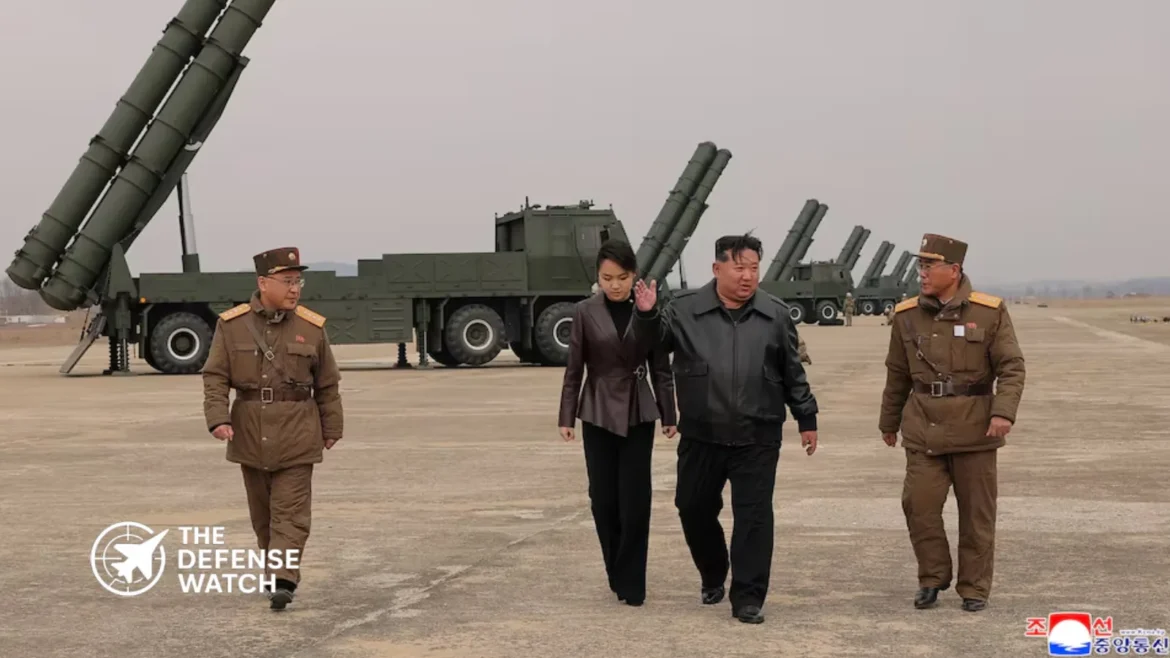
North Korea rocket drills on March 14 placed Supreme Leader Kim Jong Un and his daughter Kim Ju Ae at the center of a live-fire exercise that showcased the country’s newest ultra-precision artillery system.
State media released photographs of the pair walking near olive-green launch vehicles before watching 12 600mm-calibre multiple rocket launchers fire in a concentrated salvo. The rockets struck an island target in the East Sea 364.4 kilometers away.
The Big Picture
North Korea steadily expands its rocket artillery inventory to counter superior U.S. and South Korean air and missile defenses. The regime views joint U.S.-South Korea exercises as rehearsals for invasion and responds with visible demonstrations of nuclear-capable strike systems. This pattern has intensified since the start of the annual Freedom Shield command-post exercise in early March 2026.
What’s Happening
Kim Jong Un personally directed the firepower strike drill that included 12 600mm ultra-precision multiple rocket launchers and supporting artillery units. The systems, known in Western assessments as the KN-25, incorporate AI technology and combined guidance for improved accuracy.
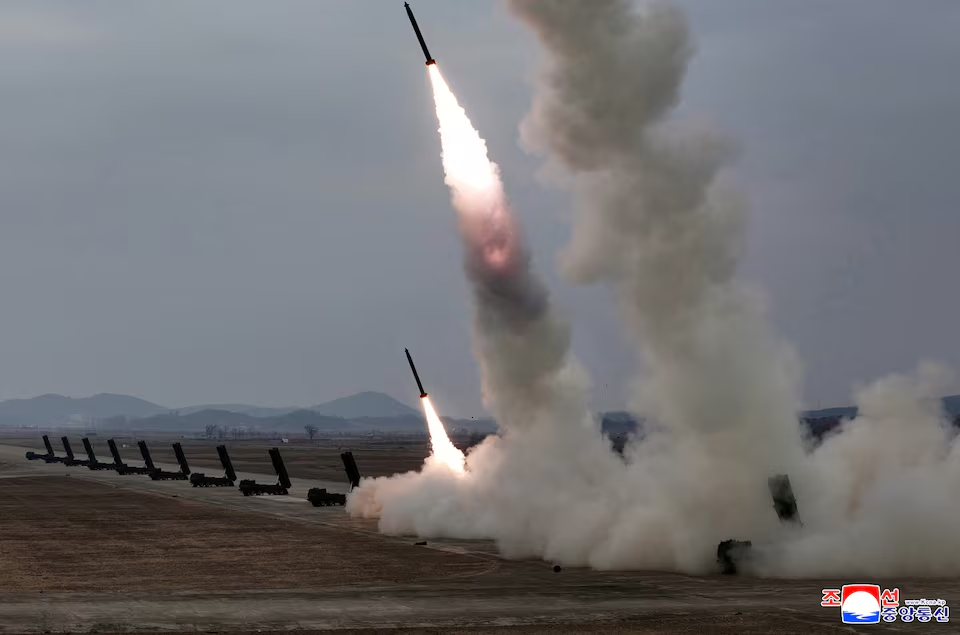
The salvo hit the designated island target with the accuracy Pyongyang claimed reached 100 percent. Kim described the weapons as a “very deadly yet attractive” system that delivers the destructive power of tactical nuclear weapons while maintaining the rapid fire rate of traditional multiple rocket launchers.
South Korea’s military separately confirmed the launch of more than 10 projectiles that flew approximately 350 kilometers eastward.
Why It Matters
The exercise advances North Korea’s force modernization by integrating precision guidance into large-calibre rocket artillery. Traditional unguided systems offered volume fire but lacked the ability to strike specific targets at extended range. The 600mm platform closes that gap and enables rapid saturation attacks against island outposts or forward bases.
This capability directly affects operational planning for U.S. and South Korean forces that rely on layered missile defenses optimized against fewer, higher-value ballistic missiles.
Strategic Implications
North Korea rocket drills of this type strengthen the regime’s deterrence posture by demonstrating reliable delivery of tactical nuclear payloads across 420 kilometers. The system allows concentrated strikes that could overwhelm point defenses through sheer volume and speed of salvo.
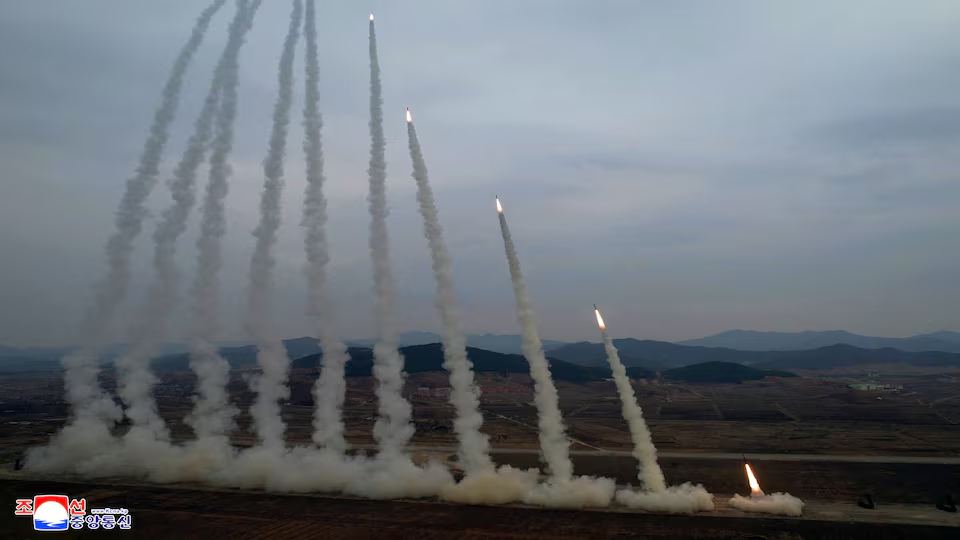
Regional stability faces added pressure because the drills coincide with Freedom Shield and signal Pyongyang’s willingness to escalate rhetoric and testing during allied training periods. The balance of power on the peninsula tilts further toward asymmetric threats that complicate allied air superiority.
Competitor View
China monitors these developments closely because North Korean advances in precision artillery affect stability along its border and could influence Beijing’s calculations on extended deterrence commitments. Russia maintains technical cooperation channels with Pyongyang that have supported missile programs in the past, though public commentary remains limited.
U.S. and South Korean planners treat the system as a credible threat to rear-area targets and island defenses, prompting continued investment in counter-battery radars and rapid-response strike options.
What To Watch Next
North Korea stated it will conduct such drills regularly to verify war deterrence. Future tests may incorporate actual nuclear warhead simulation or expanded salvo sizes. Integration of the 600mm launchers into frontline units will likely appear in subsequent parades or exercises.
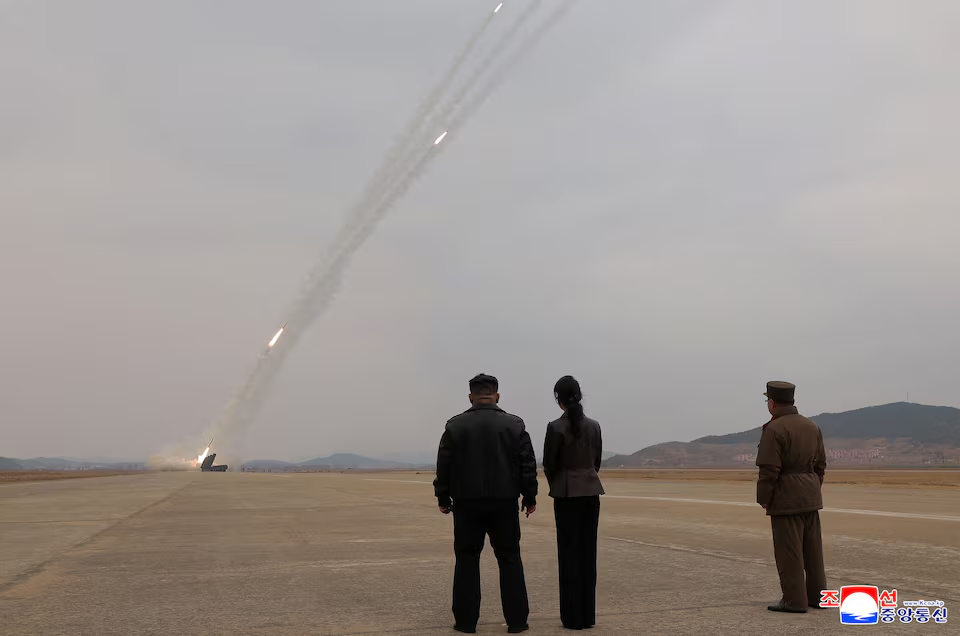
Allied intelligence will track any changes in launcher deployment patterns near the Demilitarized Zone or coastal firing positions.
Capability Gap
The 600mm system addresses North Korea’s previous limitation in delivering precise, massed fires beyond the range of standard artillery while remaining cheaper and faster to reload than ballistic missiles. The combined guidance and AI features reduce circular error probable enough to target fixed island installations reliably.
Realistic limitations persist. Independent verification of the 100 percent accuracy claim is impossible outside the closed test environment, and production numbers remain constrained by sanctions and component access.
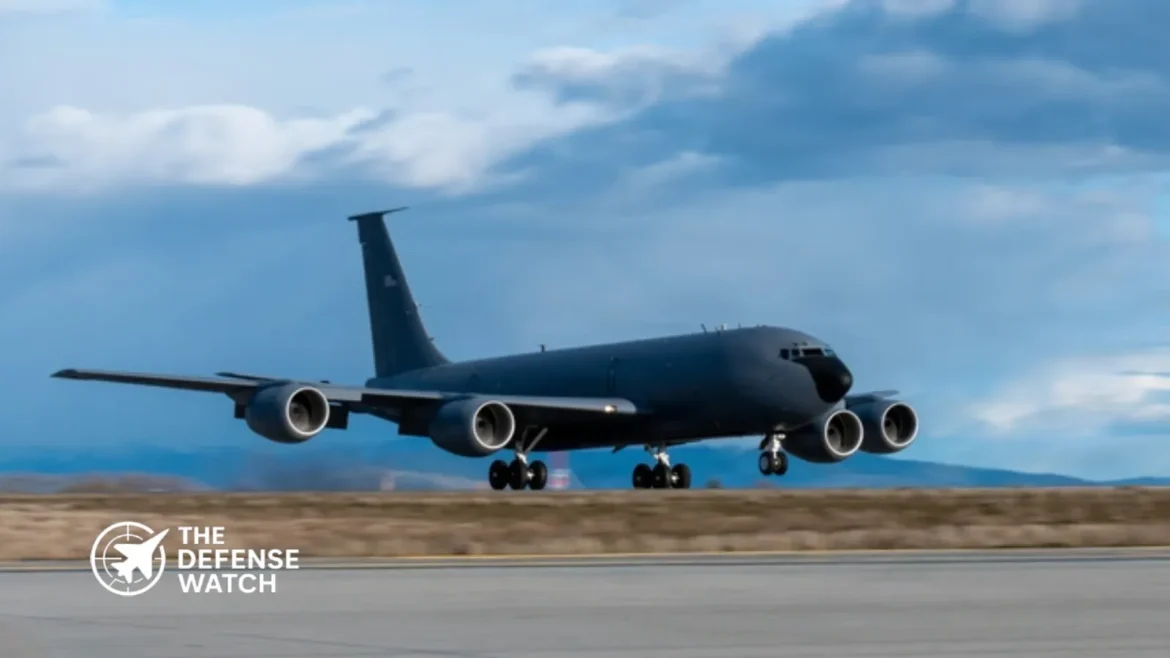
- Six U.S. Air Force Airmen were killed when a KC-135 tanker aircraft crashed in western Iraq on March 12, 2026.
- The crew was supporting Operation Epic Fury, an ongoing U.S. military operation in the region.
- Three Airmen were assigned to the 6th Air Refueling Wing at MacDill Air Force Base in Florida.
- Three others served with the 121st Air Refueling Wing at Rickenbacker Air National Guard Base in Ohio.
- U.S. defense officials say the cause of the KC-135 crash remains under investigation.
Six Airmen Killed In KC-135 Crash During Operation Epic Fury
The United States Department of Defense has confirmed that six Air Force Airmen were killed after a KC-135 Stratotanker crashed in western Iraq while supporting Operation Epic Fury.
According to the Pentagon, the fatal incident occurred on March 12, 2026. The tanker aircraft went down during a mission connected to ongoing U.S. military operations in the region. Officials said the cause of the crash remains under investigation.
The KC-135 crash Iraq incident represents one of the deadliest U.S. Air Force aviation losses in the Middle East in recent years.
Airmen Identified By Defense Department
The Department of Defense identified the six Airmen who died in the crash.
Those assigned to the 6th Air Refueling Wing at MacDill Air Force Base in Florida were:
- John A. Klinner, Major, age 33, Auburn, Alabama
- Ariana G. Savino, Captain, age 31, Covington, Washington
- Ashley B. Pruitt, Technical Sergeant, age 34, Bardstown, Kentucky
Three other Airmen were assigned to the 121st Air Refueling Wing at Rickenbacker Air National Guard Base in Columbus, Ohio:
- Seth R. Koval, Captain, age 38, Mooresville, Indiana
- Curtis J. Angst, Captain, age 30, Wilmington, Ohio
- Tyler H. Simmons, Technical Sergeant, age 28, Columbus, Ohio
Defense officials said all six were deployed in support roles tied to Operation Epic Fury when the KC-135 crash Iraq incident occurred.
Role Of The KC-135 In U.S. Military Operations
The KC-135 Stratotanker remains one of the backbone aircraft in the U.S. Air Force aerial refueling fleet. Introduced in the late 1950s, the tanker enables U.S. and allied aircraft to remain airborne for extended missions by providing midair refueling.
KC-135 aircraft routinely support a wide range of missions including:
- Combat air patrols
- Long range bomber missions
- Intelligence and surveillance flights
- Coalition operations across the Middle East
Aircraft from both the 6th Air Refueling Wing and the 121st Air Refueling Wing frequently deploy to forward operating locations to sustain U.S. and allied aircraft operating over Iraq and Syria.
Air refueling tankers are considered critical enablers of modern air operations. Without them, many strike aircraft would be limited by range, especially in large operational theaters such as the Middle East.
Operation Epic Fury And Regional Operations
Operation Epic Fury has involved U.S. air and support forces operating in the region as part of broader security missions tied to counterterrorism, force protection, and regional stability.
While details of the mission linked to the KC-135 crash Iraq incident have not been publicly released, tanker aircraft often fly high tempo support missions in the region. These include refueling fighter jets, intelligence aircraft, and coalition partners.
Military analysts note that aerial refueling operations often involve complex coordination between multiple aircraft, airspace management authorities, and ground command centers. Tankers frequently operate for long durations and across large distances, which can increase operational strain on both aircraft and crews.
Investigation Underway
The U.S. Air Force has launched a formal investigation into the crash to determine what led to the loss of the aircraft and crew.
Standard procedure following major aviation accidents includes recovery of flight data systems, review of maintenance records, mission planning data, and crew communications. Investigators will also analyze environmental factors such as weather conditions and operational flight parameters.
Officials have not released information about the crash location or whether debris recovery operations are ongoing in western Iraq.
The Air Force typically assigns an accident investigation board to incidents involving military aircraft. Findings can take months to complete depending on the complexity of the crash and recovery conditions.
Strategic Impact Of The Loss
Although aerial refueling tankers are designed with extensive safety systems, accidents involving large military aircraft remain rare but high impact events.
The KC-135 crash Iraq incident highlights the risks faced by aircrews supporting deployed operations, particularly in regions where aircraft must operate continuously to sustain combat and surveillance missions.
For the U.S. Air Force, tanker fleets remain essential to global force projection. The service is gradually modernizing its refueling capability with newer aircraft such as the Boeing KC-46 Pegasus, though hundreds of KC-135 aircraft remain in active service.
The loss of six Airmen underscores the human cost behind sustaining global air operations.
