Executive Summary:
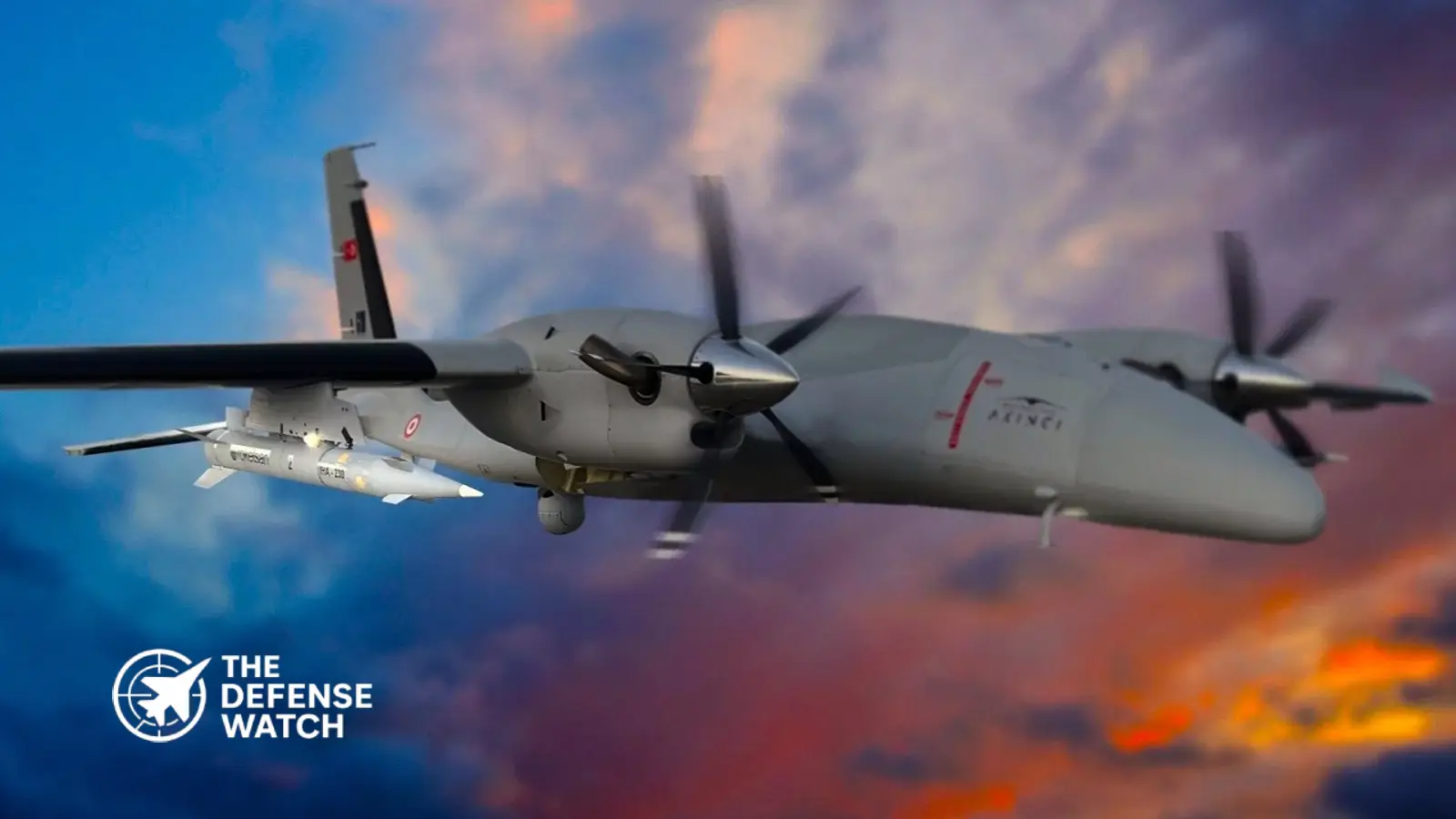
Türkiye has officially inducted the Roketsan IHA-230 air-launched supersonic ballistic missile into service, providing its unmanned combat aircraft with a long-range stand-off strike capability. The development marks a significant evolution in Turkish drone warfare, allowing platforms such as the Bayraktar AKINCI to engage high-value targets from beyond 150 kilometers while remaining outside many air defense engagement zones.
Türkiye Fields IHA-230 Missile On Combat Drones
The IHA-230 missile has entered operational service with the Turkish Land Forces, marking a major step in Türkiye’s effort to expand the combat effectiveness of its unmanned aerial systems. The announcement was made during a Turkish Ministry of National Defence briefing on June 4, confirming that inspection and acceptance procedures had been completed and the missile had been formally inducted into service.
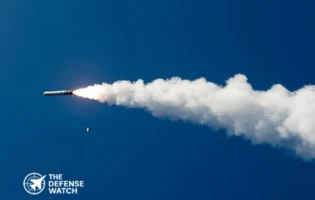
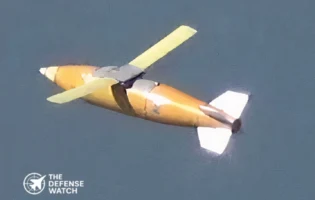
Developed by Roketsan, the IHA-230 is an air-launched derivative of the TRG-230 guided missile family. Unlike the small precision-guided munitions commonly carried by drones, the weapon is designed to deliver long-range, high-speed strikes against critical targets from stand-off distances. According to manufacturer and defense reporting, the missile can engage targets at ranges exceeding 150 kilometers, depending on launch altitude and aircraft speed.
The system is primarily associated with the Bayraktar AKINCI unmanned combat aerial vehicle, though Roketsan has also identified compatibility with the AKSUNGUR and future integration potential for the KIZILELMA unmanned combat aircraft.
Expanding The Role Of Combat Drones
The introduction of the IHA-230 missile reflects a broader shift in how militaries are employing unmanned aircraft.
For more than a decade, armed drones have largely focused on intelligence gathering and precision strikes using relatively lightweight munitions. The addition of a supersonic ballistic missile changes that equation by enabling drones to conduct deeper attacks against command centers, air defense systems, infrastructure, and maritime targets without entering heavily defended airspace.
The missile reportedly combines inertial and satellite navigation systems with anti-jamming features and terminal guidance options, allowing precision engagement of fixed targets. Defense reports indicate the weapon can carry different warhead configurations tailored to mission requirements.
From an operational perspective, the concept offers commanders a faster sensor-to-shooter cycle. A drone can identify a target, launch the missile from stand-off range, and remain on station to assess strike results or support follow-on missions. This capability reduces dependence on manned aircraft for certain strike missions and provides greater operational flexibility.
Why The Capability Matters
The significance of the IHA-230 missile extends beyond the weapon itself.
Türkiye has become one of the world’s leading exporters of armed drones, with systems such as the Bayraktar TB2 and AKINCI seeing widespread international adoption. The integration of a long-range supersonic strike weapon demonstrates the continued maturation of the country’s indigenous defense industry and unmanned warfare doctrine.
For NATO, the development introduces an additional precision-strike capability on the alliance’s southeastern flank. Unmanned platforms equipped with stand-off missiles can contribute to suppression of enemy air defenses, strike operations against high-value targets, and maritime security missions while minimizing risk to aircrews.
The capability also aligns with broader military trends emphasizing distributed operations, networked warfare, and the use of unmanned systems to perform missions traditionally assigned to crewed aircraft.
A New Phase In Turkish Unmanned Warfare
The IHA-230 missile represents more than the addition of a new munition to Türkiye’s arsenal. It signals the emergence of a doctrine in which drones function as long-range strike platforms capable of delivering battlefield effects previously associated with fighter aircraft and ground-based missile forces.
As Türkiye continues integrating advanced weapons across platforms such as AKINCI, AKSUNGUR, and KIZILELMA, its unmanned force structure is evolving into a layered strike network that combines persistence, precision, and stand-off reach.
While operational deployment details remain limited, the induction of the IHA-230 missile demonstrates Ankara’s commitment to expanding indigenous strike capabilities and strengthening its position in the rapidly evolving global unmanned warfare landscape.