

HIMARS Mobility Transforms Indo-Pacific Defense Posture
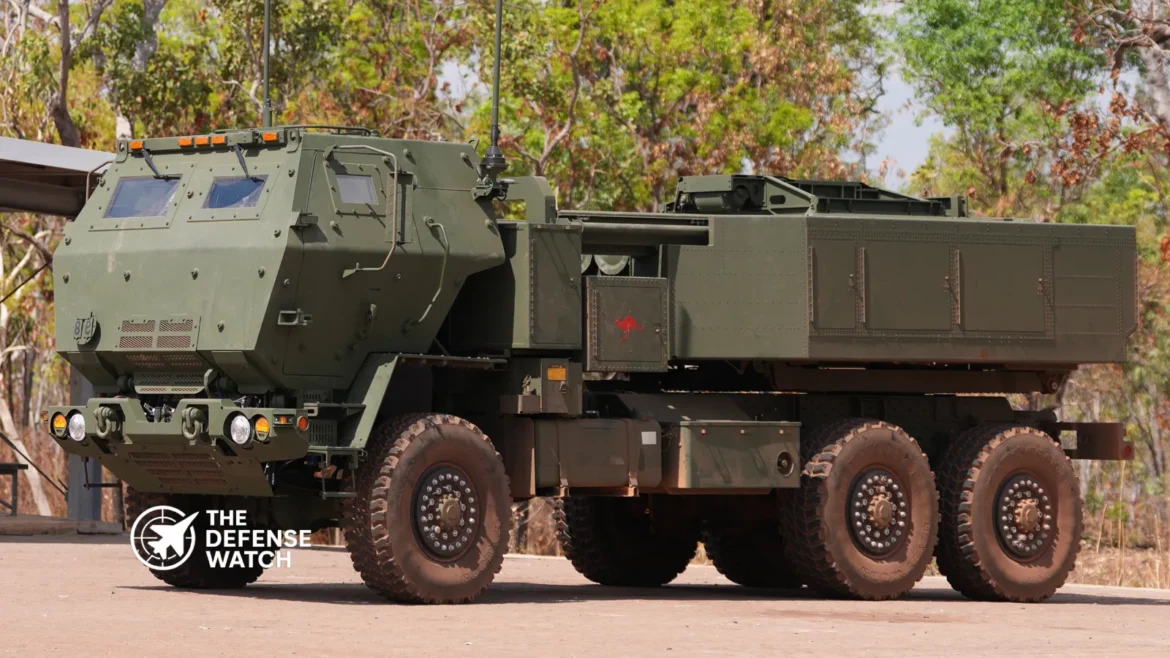
HIMARS mobility Indo-Pacific defense capabilities have emerged as a cornerstone of U.S. military strategy across the Pacific theater, where vast distances and dispersed island chains demand flexible, rapidly deployable fire support systems. Lockheed Martin’s recent analysis underscores how rocket artillery rapid deployment systems like the M142 High Mobility Artillery Rocket System (HIMARS) deliver unique advantages in a region where mobility equals survivability and strategic reach.
(adsbygoogle = window.adsbygoogle || []).push({});The Indo-Pacific’s geographic reality—spanning thousands of miles of ocean dotted with island territories—requires weapon systems that can deploy quickly, strike with precision, and relocate before adversaries can respond. HIMARS-class launchers meet these demands through a combination of strategic mobility, operational flexibility, and lethal firepower.
Strategic Mobility: The Foundation of Expeditionary Firepower
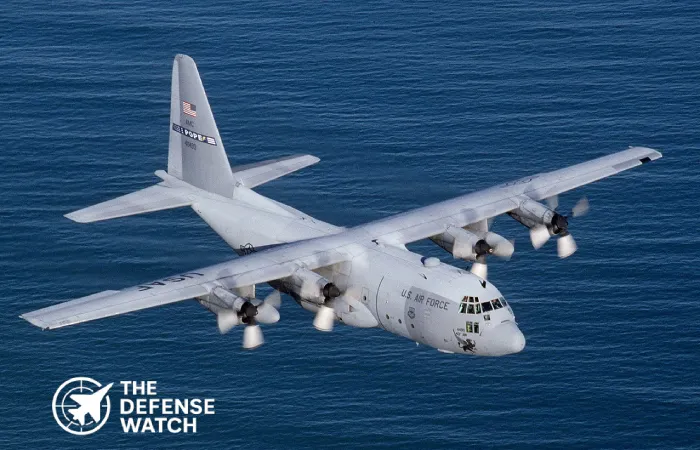
The expeditionary fire support capabilities inherent to HIMARS stem from its fundamental design philosophy: a wheeled launcher system compact enough for rapid airlift yet powerful enough to engage targets at extended ranges. Unlike tracked self-propelled artillery, HIMARS can be transported aboard C-130 aircraft, enabling deployment to austere airfields throughout the Pacific.
This strategic mobility matters in the Indo-Pacific context where U.S. forces must operate across an area larger than the continental United States. The ability to position precision strike assets on short notice—whether to reinforce allies, respond to emerging threats, or support distributed operations—provides commanders with options that heavier systems cannot match.
Lockheed Martin emphasizes that this mobility extends beyond simple transportation. HIMARS crews can conduct shoot-and-scoot operations, firing multiple rockets before relocating to alternate positions. This survivability through movement proves critical when operating within range of adversary counter-battery systems and intelligence, surveillance, and reconnaissance (ISR) platforms.
Reach and Precision: Engaging Targets Across Maritime Domains
The mobile launcher strategic advantage becomes most apparent when examining HIMARS’ engagement envelope. Armed with Guided Multiple Launch Rocket System (GMLRS) munitions, HIMARS can strike targets at ranges exceeding 70 kilometers with precision measured in meters. Future integration of the Precision Strike Missile (PrSM) will extend this reach beyond 500 kilometers.
In the Indo-Pacific’s maritime environment, this range enables HIMARS to engage naval vessels, conduct anti-access/area denial (A2/AD) operations, and support amphibious forces from positions on islands or coastal areas. The system’s precision reduces collateral damage concerns—critical when operating near civilian populations or in allied territory where political sensitivities demand restraint.
(adsbygoogle = window.adsbygoogle || []).push({});The launcher’s compatibility with multiple munition types provides commanders with scalable response options. From engaging individual high-value targets with single GMLRS rockets to conducting area saturation fires with traditional unguided munitions, HIMARS delivers tactical flexibility that adapts to mission requirements.
Operational Flexibility: Supporting Distributed Maritime Operations
U.S. Marine Corps and Army concepts for operating in contested environments increasingly emphasize distributed operations—spreading forces across multiple locations to complicate adversary targeting while maintaining the ability to mass fires when needed. Precision strike mobility platforms like HIMARS serve as enablers for these concepts.
Marine Littoral Regiments, designed specifically for operations in the Indo-Pacific’s island chains, incorporate HIMARS as organic fires capabilities. These units can establish temporary positions on islands within the first island chain, threaten adversary naval movements through key straits, and relocate before enemy forces can respond.
The U.S. Army’s Multi-Domain Operations concept similarly relies on mobile, long-range fires to create windows of opportunity for joint forces. HIMARS batteries positioned on allied territory or expeditionary locations can suppress enemy air defenses, engage command and control nodes, or provide counter-battery fires supporting broader operations.
Alliance Integration: Strengthening Partner Capabilities
Multiple Indo-Pacific allies and partners have acquired or expressed interest in HIMARS, recognizing how the system complements their defensive strategies. Japan, Singapore, and Australia operate HIMARS launchers, while other nations continue evaluating the platform.
This commonality strengthens interoperability during combined exercises and potential contingencies. Shared logistics, training standards, and tactical procedures enable U.S. forces to operate seamlessly alongside allied HIMARS units. The system’s relative ease of operation—requiring smaller crews than traditional artillery batteries—makes it accessible for nations with limited military manpower.

Lockheed Martin’s commercial approach includes training support, sustainment packages, and technology transfer agreements that help partners develop indigenous maintenance capabilities. This support structure proves essential for geographically isolated nations where logistics chains face inherent challenges.
Challenges and Considerations
Despite its advantages, HIMARS faces operational challenges in the Indo-Pacific. The system requires substantial ammunition stockpiles to sustain operations, and resupply across oceanic distances presents logistical hurdles. GMLRS and PrSM munitions represent significant investments, raising questions about magazine depth during extended conflicts.
Counter-battery threats continue evolving, with potential adversaries fielding sophisticated radar systems and long-range strike capabilities designed to eliminate mobile launchers. Survival requires robust tactical deception, electronic warfare support, and continuous movement—demanding highly trained crews and comprehensive support infrastructure.
(adsbygoogle = window.adsbygoogle || []).push({});The Indo-Pacific’s climate presents environmental challenges. Tropical heat and humidity affect both equipment reliability and crew endurance. Typhoon seasons can ground air transport assets critical for rapid deployment, while jungle and mountainous terrain limit road mobility on many islands.
Future Developments: Extended Range and Enhanced Capabilities
Lockheed Martin and the U.S. Army continue developing extended-range munitions and improved launcher variants. The PrSM program will provide HIMARS with strike ranges approaching 500 kilometers in its initial increment, with future versions potentially exceeding 1,000 kilometers.
Integration of anti-ship variants could transform HIMARS into a dedicated coastal defense system capable of threatening major surface combatants. Such capabilities would significantly enhance land-based A2/AD options for both U.S. forces and regional partners.
Emerging technologies including autonomous resupply systems, improved launcher survivability features, and advanced munitions with enhanced guidance packages promise to maintain HIMARS relevance against evolving threats. Digital fire control systems incorporating artificial intelligence may accelerate targeting cycles and improve first-round hit probabilities.
Strategic Implications for Indo-Pacific Security
The proliferation of HIMARS-class launchers across the Indo-Pacific reflects broader trends in military modernization. Nations increasingly prioritize mobile, survivable, long-range strike systems over traditional mass-armor approaches. This shift acknowledges how modern ISR capabilities and precision munitions have transformed conventional warfare.
For the United States, HIMARS represents a cost-effective capability that provides deterrent value disproportionate to its procurement and operating costs. The system’s presence signals commitment to regional defense while offering allies tangible security assurances. In crisis scenarios, rapid HIMARS deployment demonstrates resolve and provides immediate combat capability.
(adsbygoogle = window.adsbygoogle || []).push({});The platform’s success in Ukraine has validated core design concepts while providing operational lessons applicable to Indo-Pacific scenarios. Real-world performance data confirms HIMARS’ effectiveness against sophisticated adversaries employing advanced air defenses and counter-battery systems.
Conclusion
HIMARS mobility Indo-Pacific defense requirements align precisely with the system’s core capabilities: strategic deployability, operational flexibility, and lethal precision. As the United States and regional partners refine strategies for operating in the world’s largest theater, mobile launcher platforms provide essential capabilities for deterrence, crisis response, and warfighting.
The Indo-Pacific’s unique geography—combining vast distances, maritime chokepoints, and dispersed land masses—creates operational challenges that favor mobile, long-range strike systems. HIMARS-class launchers address these challenges through rapid deployment, survivable operations, and precision engagement capabilities that complement air and naval forces.
Continued investment in HIMARS modernization, munitions development, and allied integration will ensure these systems remain relevant against evolving threats. For nations committed to maintaining free and open access throughout the Indo-Pacific, mobile rocket artillery represents not merely a weapons system but a strategic enabler of broader defense concepts.



TOKYO — Japan is shifting from a posture of strategic ambiguity toward a formalized readiness to defend Taiwan in the event of Chinese coercion or military action, according to a recent analysis in the National Security Journal. The development raises a central question: if Japan commits, will the United States step up to parallel that pledge? The stakes are being heightened today amid growing concern over the Taiwan Strait situation and the implications for the Japan–U.S. alliance.
Background
The strategic context for this evolution rests on several pillars. Japan’s defense policy in recent years has recognized that peace and stability in the Taiwan Strait is a “matter of national survival”, with Japan’s 2022 National Security Strategy declaring Taiwan “an extremely important partner and a precious friend” of Tokyo.
Meanwhile, the Self‑Defense Forces (SDF) of Japan have been authorized since 2015 to exercise the right of collective self-defense under certain conditions, marking a shift in legal interpretation from Japan’s pacifist post-war posture.
On the U.S. side, the Center for a New American Security and the Council on Foreign Relations have issued reports emphasizing the urgent need for the U.S.-Japan alliance to prepare contingencies for a Taiwan crisis—including scenarios short of a full invasion, such as a blockade or economic strangulation of Taiwan.
Tokyo’s Shift in Posture
The key argument of the article in National Security Journal is that Japan appears to be moving from vague language toward explicit commitment in the event of Chinese coercion aimed at Taiwan. According to the piece:
- Japan is increasingly treating a Chinese blockade or embargo of Taiwan—not only an amphibious invasion—as a plausible scenario.
- Tokyo’s more pointed rhetoric—highlighting the proximity of Taiwan, the importance of tech supply chains (particularly semiconductors) and the risk to Japan’s own security—signals that Japan may deem interference with Taiwan as having a material impact on its national security.
- The article suggests that such a stance implies prior consultation with Washington and raises the question whether the U.S. would align with Japan in that scenario.
Scenario: Blockade vs Invasion
The journal article breaks down two possible types of Chinese action against Taiwan:
- A full-scale amphibious invasion requiring large cross-strait logistical efforts (often compared to the Allied landings in Sicily/Normandy) — a scenario many analysts view as less likely in the near term.
- A blockade or economic strangulation effort (for instance, sealing sea lanes or logistics) which is operationally easier and might attract less immediate global attention — yet would severely impact Taiwan, and by extension, Japan and global supply chains.
Japan’s new posture appears particularly attentive to the latter scenario, which would place pressure on Tokyo to act even if Taiwan is not physically invaded.
U.S. Alignment: The Crucial Question
While Japan’s shifting stance has drawn attention, the critical uncertainty lies in Washington’s willingness and readiness to respond in parallel. Several analysts and policy studies point to enduring ambiguities:
- The 1960 U.S.-Japan Security Treaty obliges the U.S. to defend Japan if Japanese territory is attacked, but it does not obligate Japan to defend U.S. territory or commit to specific contingencies involving Taiwan.
- In the 2022 CFR report “Enhancing U.S.-Japan Coordination for a Taiwan Conflict”, the authors note that Japan may provide “rear-area support” (logistics, basing) rather than front-line combat unless Tokyo defines a Taiwan contingency as a “survival-threatening situation” for Japan.
- The USNI article “The United States Needs Japan in a Fight for Taiwan” argues that U.S. strategy must ensure Tokyo’s contribution is clearly defined and integrated, including base access, intelligence sharing and joint planning.
In short, while the U.S.-Japan alliance is robust, the mechanics of how and when Tokyo and Washington might act together in a Taiwan emergency remain unresolved.
Expert or Policy Perspective
From a policy-perspective viewpoint, Japan’s move reflects growing strategic compulsion. Analysts argue that Tokyo faces a dual threat: China’s military rise and economic influence, and the potential erosion of U.S. deterrence credibility in the region. By signalling willingness to defend Taiwan, Japan is calibrating its role as both regional stabiliser and key U.S. ally.
At the same time, U.S. policymakers view Japan as indispensable: Washington cannot realistically defend Taiwan without Japanese basing and logistical support due to geography and force posture in the Indo-Pacific. The two countries’ challenge is synchronising legal, operational and political frameworks so that Tokyo’s stated willingness can translate into actual contingency planning.
Yet major hurdles remain: constitutional constraints in Japan (Article 9), domestic political sensitivity about engaging in another country’s defence, and U.S. strategic ambiguity about the thresholds triggering military commitment to Taiwan. These factors combine to produce a scenario where Japan might act first or more visibly, but the U.S. may still hold back depending on political, operational or treaty factors.
Closing: Impact and What’s Next
The implications of Japan signalling readiness to defend Taiwan are profound both regionally and globally. For Japan, it marks a step toward a more active defence role beyond its own territory. For the U.S., it raises the benchmark of allied burden-sharing and complicates strategic calculus in the Indo-Pacific.
The next stage to watch includes:
- whether Tokyo issues a formal policy declaration clarifying when it would intervene in a Taiwan contingency;
- how Tokyo and Washington update bilateral plans, joint exercises and base access protocols to reflect this shift;
- how Beijing responds—both diplomatically and militarily—to Japan’s evolving posture;
- and whether U.S. leadership clarifies its own threshold for engaging in a Taiwan theatre, especially given Japan’s closer involvement.
As Japan narrows the gap between strategic ambiguity and explicit commitment over Taiwan, the U.S.-Japan alliance enters a new phase in which credible planning and coordination will determine whether deterrence holds or a crisis becomes a test of alliance credibility and regional stability.
When the U.S. Navy’s elite Naval Special Warfare operators conduct underwater operations beneath the vast Pacific Ocean, their training—and execution—must mesh flawlessly with submarine platforms, stealth techniques, and high-end contingency warfare. In this article, we explore how navy seals submarine training pacific works in practice, examine underwater operations and submarine insertion techniques, and place this specialized capability into broader naval special warfare strategy.
The Strategic Value of Submarine-Based Insertion
SEALs operating from submarines represent one of the most clandestine forms of force projection. A submarine can covertly carry special operators close to denied coastlines or under contested areas, minimizing exposure to enemy surveillance or anti-access systems. This capability is especially important in the Indo-Pacific, where China’s anti-access / area denial (A2/AD) networks pose serious challenges to traditional naval approaches.
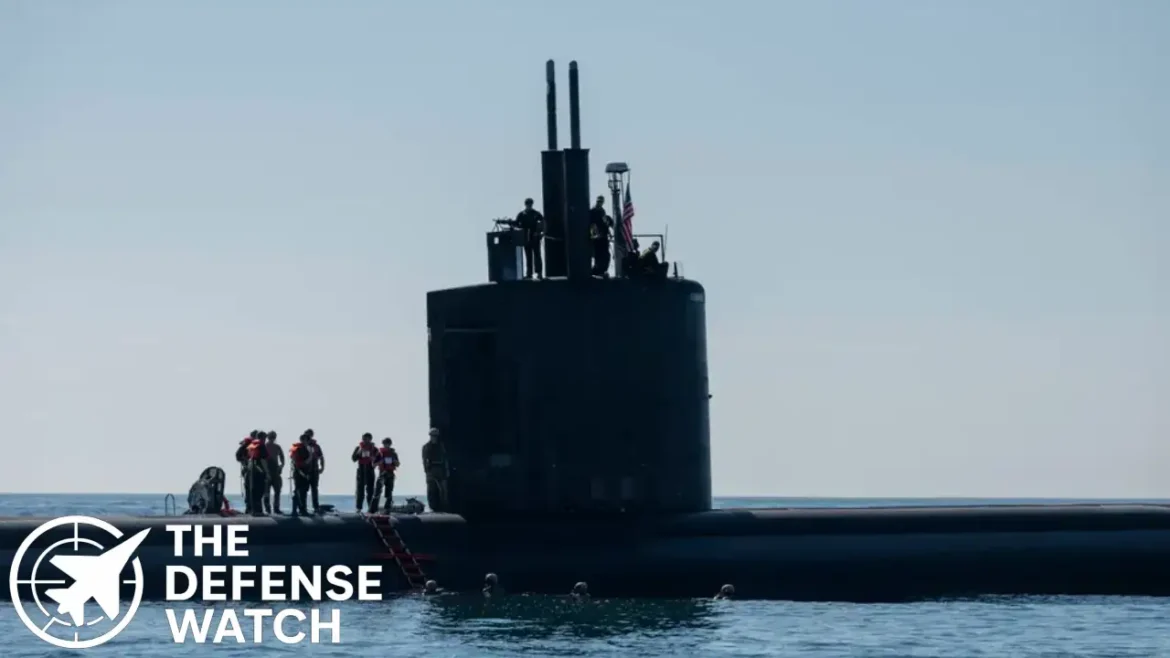
A recent example underscores this trend: SEALs conducted training with the Los Angeles–class attack submarine USS Greeneville in the Pacific. In that exercise, operators parachuted from aircraft into the ocean and then rendezvoused with the submarine via inflatable combat boats—a complex ballet of air, surface, and subsurface elements.
By refining joint interoperability with submarines, Naval Special Warfare (NSW) ensures that special operations remain an integral enabler in future great power contention.
Training Regime: From BUD/S to Submersible Teams
BUD/S: Foundational Training
All SEAL candidates begin with Basic Underwater Demolition/SEAL (BUD/S), a grueling six-month pipeline in Coronado, California. BUD/S emphasizes physical conditioning, mental resilience, water competence, and teamwork. Breakout phases include:
- Phase 1: Physical conditioning, endurance, surf passage, running and calisthenics.
- Phase 2: Dive phase—combat swimming, breath-hold dives, underwater navigation, and long-distance submerged swims.
- Phase 3: Land warfare, small-unit tactics, demolitions, and insertion/extraction techniques.
Those who pass then go through SEAL Qualification Training (SQT) to earn their Trident insignia, before assignment to SEAL teams or SEAL Delivery Vehicle (SDV) squadrons.
SDV / Midget Submersible Teams
Specialized SEAL Delivery Vehicle (SDV) teams train for the specific challenge of submarine-based underwater insertion. The SDV is a wet submersible in which operators ride in flooded compartments using breathing gear.
Historically, SDVs deploy from a host submarine’s Dry Deck Shelter—a pressurized chamber perched exterior to the sub’s hull through which the SDV is launched.
The newer Dry Combat Submersible (DCS) now offers a dry environment, enabling longer mission duration, higher comfort, and enhanced operator readiness. Development reached initial operational capability in 2023. The DCS can lock-in and lock-out operators in pressurized compartments, reducing divers’ exposure to cold or fatigue.
Joint Air-Sea-Sub Integration
The submarine-SEAL coupling demands that NSW operators synchronize with submarine crews, aviation elements, and surface platforms. In the Greeneville exercise, SEALs parachuted into the Pacific, used inflatable raiding crafts to reach prearranged points, and then boarded the sub.
Such integration tests command, control, communications, and timing across domains. Strict procedures govern diver safety, decompression, sub pressure differentials, and emergency aborts—any misstep could be fatal.
Techniques for Underwater Operations & Insertion
Free-Fall Parachute + Sea Swim
One mode of insertion is HALO/HAHO jumps into the open ocean, followed by a swim to rendezvous with a submerged submarine or SDV. This is often used when covert approach by air offers the stealth advantage. In the Greeneville drills, for example, this method was leveraged.
Combat Swimmer Approach
In many scenarios, SEALs physically swim long distances from shore or a mother craft to their objective. This method is used when stealth over short ranges outweighs logistic complexity.
Manned Submersible Transit
The SDV or DCS transports operators covertly under water. At a predetermined point, the sub releases the SEALs via lock-in / lock-out chambers or open-flooded hatches, depending on the platform.
Advantages of submersible transit:
- Reduced exposure to surface surveillance
- Higher speed over distance
- Masking from surface or aerial detection
Challenges:
- Complexity of compatibility between submarine and diver systems
- Decompression risk if transitions are mismanaged
- Communications and coordination with host submarine
Exfiltration & Recovery
SEAL exit may occur via a friendly submarine or surface vessel. The sub might position to accept operator reboarding, or operators may swim to a recovery craft. In all cases, timing and stealth are critical.
Pacific Theater: Unique Operational Considerations
Operating beneath the Pacific imposes distinct environmental and strategic demands:
- Vast distances and deep waters: Missions may span hundreds of nautical miles, requiring endurance, logistics, and support.
- Thermal layers and currents: The Pacific’s thermoclines complicate sonar propagation, diver navigation, and vehicle acoustics.
- Regional surveillance density: Chinese, Russian, or allied A2/AD systems maintain layered detection in key strategic zones. Submarine-SEAL tactics must circumvent sonar, radar, satellite, and UAV coverage.
- Island chains and chokepoints: Places like the First Island Chain, the South China Sea, and Pacific archipelagos offer both insertion opportunities and intense surveillance risk.
- Allied cooperation and basing: Proximity to allied naval infrastructure (e.g. in Australia, Japan, Guam) enables combined drills and prepositioning of assets.
Thus, Pacific submarine insertion training must factor in extended-range logistics, inter-force coordination, and intelligence-driven route planning.
Analysis & Strategic Implications
As the U.S. military pivots back toward peer conflict in the Indo-Pacific, the integration of SEALs with submarine assets is more than a novelty—it’s a necessity. Submarine insertion enables special operations to penetrate heavily surveilled maritime zones where air or surface approaches may be blocked.
Moreover, adversaries are developing countermeasures: unmanned underwater vehicles (UUVs), advanced sonar nets, and acoustic sensor grids. The DCS, in turn, offers greater stealth, endurance, and inertial navigation to stay ahead of detection.
Yet this capability is resource-intensive. Submarine-SEAL teaming demands rigorous training, exacting coordination, and sustained investment—each insertion is a precision choreography of men, machines, and margins.
As regional tensions escalate—Taiwan Strait, South China Sea, Korean Peninsula—the demand for clandestine undersea force projection will likely rise. Mastery of naval special warfare training beneath the waves may well become an asymmetric edge for U.S. and allied navies.
FAQs
An SDV is a wet submersible where operators sit in flooded compartments and use breathing gear. The DCS is a dry, pressurized vehicle allowing operators to remain in a dry environment until exit.
Because the Pacific is the primary theater of strategic competition (e.g., with China), mastering covert submarine insertion there ensures readiness to penetrate contested maritime zones where surface or air may be denied.
They use lock-in / lock-out chambers, gradual pressure normalization, decompression protocols, and dive tables tailored to mission profiles. Meticulous procedures guard against decompression sickness.
No. Only operators assigned to SDV or sub-oriented units train extensively in submarine coupling. General SEAL training covers diving, tactics, and insertion, but not full submarine integration.
Advances may include greater autonomy in UUVs, enhanced communication through acoustics, stealthier submersibles, AI-assisted navigation, and advances in battery / propulsion for longer-duration underwater infiltration.

Strategic Shift: A New Chapter in Indonesia’s Procurement
Indonesia has officially moved to acquire at least 42 Chengdu J-10C multirole fighter jets from China, marking the largest non-Western aircraft purchase in its history. According to Indonesia’s Finance Minister Purbaya Yudhi Sadewa, the procurement—valued at over USD 9 billion—has secured budget approval and is poised to go forward.
Defense Minister Sjafrie Sjamsoeddin confirmed that the decision aligns with Jakarta’s broader military modernization campaign, which has long relied on Western (U.S., European) platforms. This pivot represents a major recalibration of Indonesia’s defense partnerships and procurement strategy.
Current Defense Portfolio & Procurement Landscape
Existing Fleet Challenges
Indonesia’s air force currently fields a mixed fleet of U.S.-made F-16s, Russian Su-27/30s, and British-origin platforms, many of which are aging or nearing modernization limits. The need for fleet renewal—with higher availability, supportability, and regional relevance—has been a pressing concern.
In 2022, Jakarta committed to acquiring 42 Dassault Rafale jets from France (worth ~USD 8.1 billion), with first deliveries expected in early 2026. Indonesia has also weighed U.S. options: it signed a memorandum with Boeing for 24 F-15EX fighters (estimated USD 8 billion).
Meanwhile, Turkey has secured a separate deal to export 48 KAAN fifth-generation fighters to Indonesia (first export sale), including local production and technology transfer clauses.
Why China’s J-10C?
Chinese offers are seen by Jakarta as competitively priced and more flexible in terms of export controls and local-industrial cooperation. Jakarta officials also reportedly view the J-10C as meeting their performance criteria affordably.
Some reports suggest Indonesia may acquire used PLAAF J-10s to accelerate delivery, reducing lead times relative to new-build orders. Sources also suggest first deliveries could begin as early as 2026.
Technical and Operational Considerations
The Chengdu J-10 is a single-engine 4+/4.5-generation multirole fighter widely deployed in China’s air force. Its variants include modern avionics, active electronically scanned array (AESA) radar, and compatibility with China’s domestic weapons.
Integration with Indonesia’s existing systems (e.g., command & control, datalinks, logistics) will require significant investments in interoperability and maintenance infrastructure. Jakarta is reportedly evaluating these compatibility factors alongside long-term support and sustainment.
The inclusion of local content or assembly is also under discussion, which could help Indonesia’s defense industrial base.
Analysis: Implications for U.S. Defense & Global Security
Strategic Realignment in Southeast Asia
Indonesia’s shift toward Chinese aircraft signals a recalibration of regional defense alignments. This move may give Beijing deeper influence over Jakarta’s strategic posture—especially in contested zones like the South China Sea where Indonesia has overlapping maritime interests.
For U.S. defense planners, this development complicates efforts to maintain influence in the Indo-Pacific. Washington has long viewed Indonesia as a critical partner in regional security architectures. A procurement tilt toward China may undermine U.S. leverage and deterrent posture.
Technology & Export Competition
China’s success in selling combat aircraft beyond its traditional markets puts pressure on Western defense exporters. The ability to offer lower cost, fewer restrictions, and more flexible industrial collaboration is a competitive edge in emerging markets.
Meanwhile, U.S. firms may be forced to offer more aggressive offset packages or export concessions to remain competitive in regional arms markets.
Interoperability Risks & Supply Chain Concerns
Indonesia’s mixed fleet—if including Chinese and Western platforms—poses logistics, training, and interoperability challenges. The U.S. may have to negotiate sensitive arrangements or risk information flow restrictions.
Additionally, the Chinese supply chain is tightly controlled by Beijing; Jakarta’s reliance on Chinese parts could give China leverage in critical maintenance or upgrades.
Looking Ahead: What to Watch
- Delivery Timeline & Pilot Training — Will Indonesia meet 2026 delivery targets? Will pilots train in China or locally?
- Interoperability Moves — Will Jakarta invest in bridging datalinks or systems to maintain integration with ASEAN, U.S., or allied platforms?
- Offset & Local Production Clauses — How much transfer of tech will China concede?
- U.S. Response — Will the U.S. counter with new offers (e.g. further F-15EX entice, F-35 options, or defense cooperation incentives)?
- Regional Reactions — Neighboring states will observe closely. If Indonesia shifts further from the U.S., it may spur similar procurement realignments in Southeast Asia.
If implemented successfully, Indonesia’s Chinese procurement could mark a turning point: from being a passive recipient of Western arms to a strategic actor willing to diversify among great-power suppliers. For U.S. defense engagement, it underscores the urgency of refining competitive offers and maintaining diplomatic-on defense presence.
The Strategic Contest in the Indo-Pacific (First Paragraph with Keyword)
The military balance between the U.S. vs China in 2025 across the Indo-Pacific is under growing strain, with Beijing narrowing capability gaps and Washington doubling down on forward posture and alliances. Although the United States retains technological edges and global reach, China’s asymmetric advances, force concentration near its maritime periphery, and rapid production pose new challenges to U.S. dominance in the region.
Rising Chinese Momentum and PLA Modernization
Defense Spending, Force Growth, and Naval Expansion
China continues to invest heavily in military growth. Its official defense budget for 2025 is around 1.78 trillion yuan (≈ US$246 billion), a 7.2 percent increase from the prior year. Independent estimates place China’s real outlays significantly higher—some analysts estimate as much as US$314 billion or more. Over decades, that scaling has enabled wider investment in modernization, maintenance, and training.
In the naval domain, the People’s Liberation Army Navy (PLAN) now fields over 370 surface ships and submarines, supplanting the U.S. Navy in ship count (though not in total tonnage). Chinese shipbuilding capacity has surged, with projections that by 2035 the PLAN may outnumber U.S. battle force ships by a wide margin—forecasting up to 475 battle-force ships against 305–317 for the U.S. Navy. The trend underscores China’s ability to mass-produce naval platforms even if some lack advanced capability or sustainability.
The air and missile forces have also seen modernization. The PLA is gradually retiring older models and fielding newer 4.5-generation and fifth-generation fighters like the J-20, boosting strike, stealth, and long-range capability. CSIS China’s growing inventory of land- and sea-based missiles, anti-surface and anti-ship weapons, and hypersonic research further complicate U.S. deterrence calculations.
Geographical Focus: First and Second Island Chains
China’s military posture is heavily focused on the “first island chain” — Taiwan, Okinawa, the Philippines — where A2/AD (anti-access / area denial) capabilities are concentrated to deny U.S. forces unfettered access. The PLA’s Eastern and Southern Theater Commands are packed with naval, missile, air, and electronic warfare assets oriented toward Taiwan and contested maritime zones.
Beyond that, Chinese ability to project power past the second island chain remains limited but growing, aided by expanded logistics, replenishment, and intermediate staging bases. U.S. assessments characterize that ability as “modest but increasing.”
U.S. Posture, Alliances, and Strategic Levers
Reinforcing Forward Presence
In response to rising challenges, the U.S. has embarked on a path of reinforcement, redistribution, and posture adaptation in the Indo-Pacific. Under the Pacific Deterrence Initiative (PDI), Washington channels billions into infrastructure, readiness, logistics, and resilience of bases west of the International Date Line. The U.S. also maintains over 66 forward-access sites across key allies, and has added new locations to enhance flexibility.
Joint and combined military exercises—such as RIMPAC, Talisman Sabre, and bilateral drills with Japan, Australia, the Philippines, and India—boost interoperability and send deterrent signals. Recent U.S. deployments have even included advanced missile systems (e.g. Typhon) to regional partners.
Moreover, U.S. leadership has emphasized that allies and partners must shoulder more defense burden. At Shangri-La in 2025, Defense Secretary Pete Hegseth warned allies of an “imminent” Chinese threat and encouraged increased spending and capability contributions.
Focus on Escalation, Deterrence, and Industrial Mobilization
While U.S. forces retain superiority in many technical and domain areas, the demands of a protracted Indo-Pacific conflict pose severe strain. Analysts argue the U.S. lacks a fully developed “victory plan” for a sustained war with China, including manpower, production throughput, and logistics for multi-domain combat. The industrial base capacity lag—especially in shipbuilding, munitions, and support systems—is a known vulnerability.
RAND’s U.S.–China Military Scorecard, though dated, still remains instructive: while the U.S. retains advantages in areas like global reach and sustainment, China has closed gaps in air superiority, strike, and power projection inside contested zones.
Finally, U.S. commanders warn that China is outpacing the U.S. in key production metrics. Adm. Samuel Paparo testified that China builds warships at roughly a 3:1 rate versus U.S. output, and fighters at a 1.2:1 pace.
Risk Factors, Strategic Friction, and Regional Dynamics
Escalation Hazards & Flashpoints
The Taiwan Strait remains the most dangerous flashpoint. Any Chinese blockade or pressure campaign could precipitate crisis. Meanwhile, gray-zone coercion in the South China Sea, East China Sea, and maritime fringes continue to test U.S. alliances and norms.
A miscalculation or inadvertent collision between naval or air platforms can rapidly escalate. China’s use of paramilitary, militia, and coast guard forces creates ambiguity below war thresholds.
Regional Hedging & Strategic Ambiguity
Importantly, the Indo-Pacific is not a binary U.S. vs China chessboard. Many states prefer strategic flexibility—not rigid alignment. The 2025 Shangri-La Dialogue emphasized that multiple nations seek “options, not sides.” Middle powers may hedge, cooperating with both Beijing and Washington while preserving autonomy.
This nuance limits U.S. room for coercion and signals that alliances must be responsive to partner capital, perception, and threat calculus.
Signal vs. Substance: Credibility Matters
U.S. capacity to deter depends in part on credible will and communications. Fielding advanced systems (e.g., distributed sensors, undersea unmanned systems) is essential, but so is transparent signaling of resolve. If China doubts U.S. staying power or partner commitment, deterrence erodes.
Analysts also warn that without robust mobilization plans, U.S. deterrence could rest on bluff rather than capability.
Outlook & Strategic Imperatives
In 2025, the U.S. vs China military balance in the Indo-Pacific is entering a phase of narrowing margins. The U.S. retains domain advantages, global reach, and a robust alliance architecture. But China’s aggressive buildup, regional concentration of force, and production scale press the challengers’ edges.
Key imperatives for the U.S. include:
- Deepen alliance integration and burden-sharing.
- Accelerate investment in resilience, logistics, and distributed force design.
- Articulate credible deterrent strategies—especially in Taiwan and maritime choke points.
- Prepare industrial and manpower plans for protracted competition, not just episodic crises.
China, meanwhile, will continue to leverage asymmetric tactics, gray-zone pressure, and infrastructure diplomacy to shift norms without full-blown conflict. The contest is less about sudden war and more about gradual attrition of influence, access, and legitimacy over time.
In sum, the U.S.–China balance in 2025 is not static but highly dynamic. The strategic center of gravity is shifting seaward and eastward. How Washington and its partners adapt—and whether deterrence holds—will define the Indo-Pacific’s security architecture for decades.
FAQs
By ship count (number of hulls), the PLAN exceeds U.S. numbers — over 370 surface ships and submarines versus ~292 U.S. vessels. However, U.S. still leads in total tonnage, capability, carrier groups, and overall power projection.
Yes. The U.S. retains unmatched logistics, replenishment, global support networks, and technological sophistication. But China’s growing reach and anti-access systems complicate extended operations.
Allies and partners (Japan, Australia, Philippines, India, South Korea, ASEAN states) provide basing access, interoperability, local intelligence, and regional legitimacy—critical for scalable deterrence.
Not necessarily. Much of the contest is over escalation control, signaling, deterrence, and influence. But miscalculation or misperception in crises (especially around Taiwan) remains a major danger.
Sustained industrial capacity (shipbuilding, munitions, maintenance), manpower planning for long conflicts, and scalable resilience under attack are often cited as the critical weaknesses.
Pentagon Shifts Focus to the Indo-Pacific as Strategic Priority
In 2025, the Pentagon is explicitly reorienting its defense strategy to make the Indo-Pacific its top theater of strategic focus, citing mounting threats from China. This recalibration reflects a broader shift to counter Beijing’s growing military assertiveness, reestablish deterrence, and bolster regional alliances.
Strategic Rationale Behind the Pivot
At May’s Shangri-La Dialogue in Singapore, Defense Secretary Pete Hegseth reaffirmed that the futures of the U.S. and its Indo-Pacific allies are “bound together,” calling the region the Department’s “priority theater.” He emphasized that as allies invest more in their self-defense, Washington can redeploy resources to strengthen regional deterrence efforts
Concurrently, a Pentagon press secretary confirmed in August that the department is doing “everything … to reorient to that theater and make sure that we’re countering the China threat,” characterizing the Indo-Pacific as “increasingly dangerous”.
This momentum is supported by internal guidance. A leaked interim defense guidance memo—drawing from conservative think-tank influence—directs U.S. forces to emphasize a “denial defense” of Taiwan, expand Indo-Pacific deterrence capabilities, and assume increased homeland defense while reducing commitments in other theaters.
Expanding Military Exercises and Deterrence Platforms
On the ground, the U.S. and allies ramped up joint military activities:
- Balikatan 2025 in the Philippines—a large-scale exercise including air, land, sea, cyber, information, and space domains—involved over 14,000 personnel, reinforcing interoperability and rapid response readiness.
- Super Garuda Shield 2025 in Indonesia mobilized approximately 6,500 troops from 13 nations, reinforcing the collective commitment to regional security.
Additionally, Exercise Ultimate Caduceus 2025 tested mass casualty and medical evacuation capabilities from Indo-Pacific regions—underscoring U.S. transport and humanitarian readiness.
Strengthening Technological Partnerships and Deterrence Economics
The Pentagon’s Defense Innovation Unit (DIU) is embedding liaisons across key Indo-Pacific allies—Taiwan, Japan—to fast-track collaboration on dual-use technologies like drones and space systems.
Meanwhile, as part of the broader Pacific Deterrence Initiative (PDI), the U.S. continues to invest billions in infrastructure and capability development west of the International Date Line—marking it as the largest regional deterrence funding since the Cold War.
Army Modernizes to Counter China
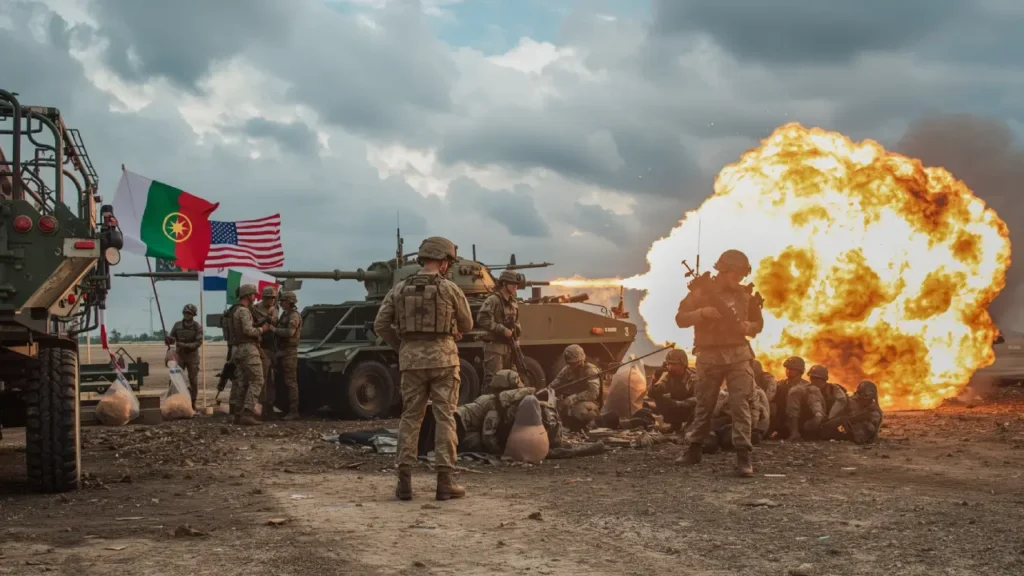
Recognized as the Pentagon’s top strategic challenge, the U.S. Army is undergoing sweeping modernization: deploying uncrewed systems, AI, and autonomous platforms; reforming acquisition; and enhancing lethality with a $36 billion restructuring budget. These efforts aim to present a credible, agile deterrent across the Indo-Pacific.
Allies’ Financial Commitments and Strategic Coordination
Hegseth’s message to allies at Shangri-La was stark: the China threat is “imminent,” and regional partners must increase defense spending to safeguard stability and avoid a “sucker” posture. This sentiment is echoed in internal analyses showing Indo-Pacific allies—Japan, South Korea, Australia, Philippines—are increasingly compelled to align with U.S. defense expectations despite some reservations.
Analysis / Additional Context
- Strategic Refocus Meets Domestic Pressures
The pivot aligns with Washington’s broader “America First” posture, prioritizing Indo-Pacific deterrence while scaling back commitments in Europe, Middle East, and Africa. While this promises enhanced regional focus, it risks overstretching finite resources and uneasy allies recalling U.S. disengagement elsewhere. - Balancing Deterrence and Alliance Sovereignty
The intensifying budget and exercise demands pose political challenges for reluctant allies balancing domestic priorities and rising dependence on U.S. security guarantees. Sustaining a durable coalition under these pressures will test U.S. diplomatic finesse. Recent tensions around defense spending show that commitment must be complemented by equitable partnership and transparent burden-sharing.
FAQs
Growing Chinese military assertiveness—across domains including naval expansion, hypersonic weapons, and regional infrastructure—has elevated the Indo-Pacific as the U.S.’s strategic priority theater.
Key elements include the Pacific Deterrence Initiative, DIU partnerships, expanded large-scale exercises (Balikatan, Super Garuda Shield), and Army modernization. The interim strategic guidance also heavily emphasizes Taiwan deterrence.
Allies are increasing budgets, joining exercises, and deepening cooperation—though some express concerns about over-reliance on U.S. security and economic repercussions.
Fine-tuning alliance expectations, managing budget and resource constraints, and ensuring strategy remains sustainable amid shifting global priorities.