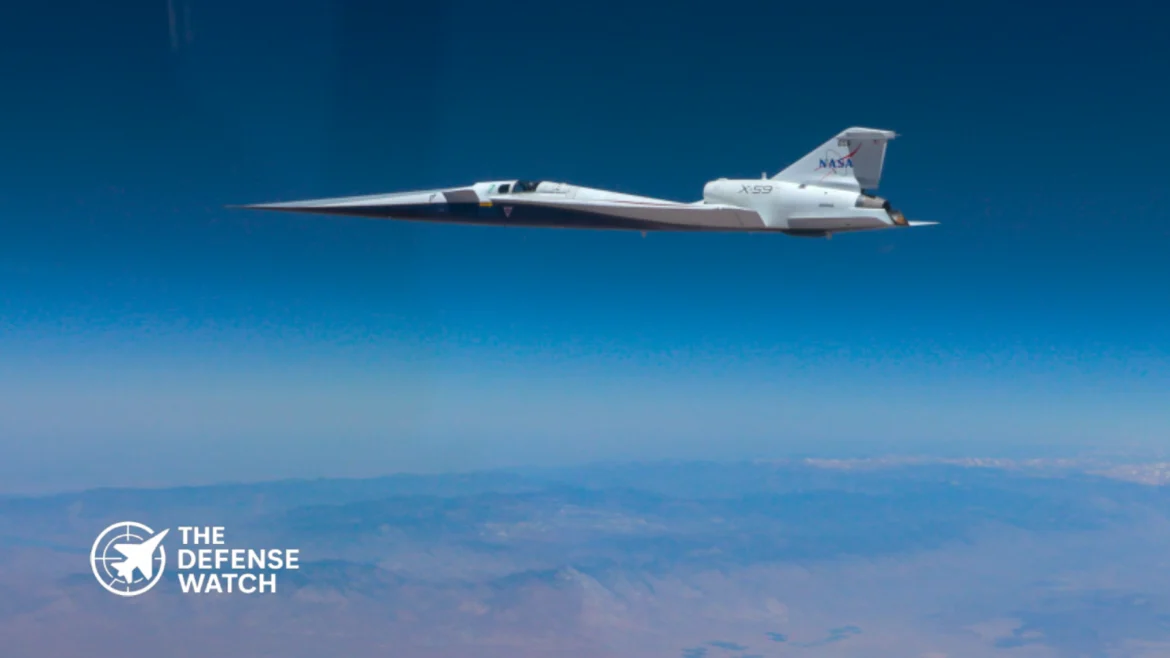
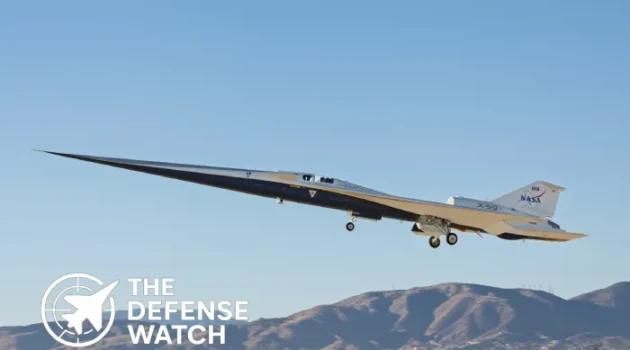
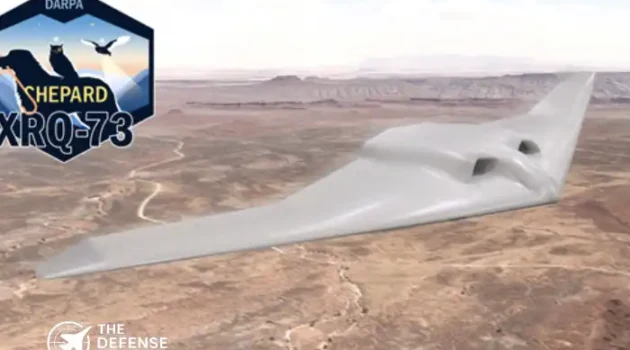
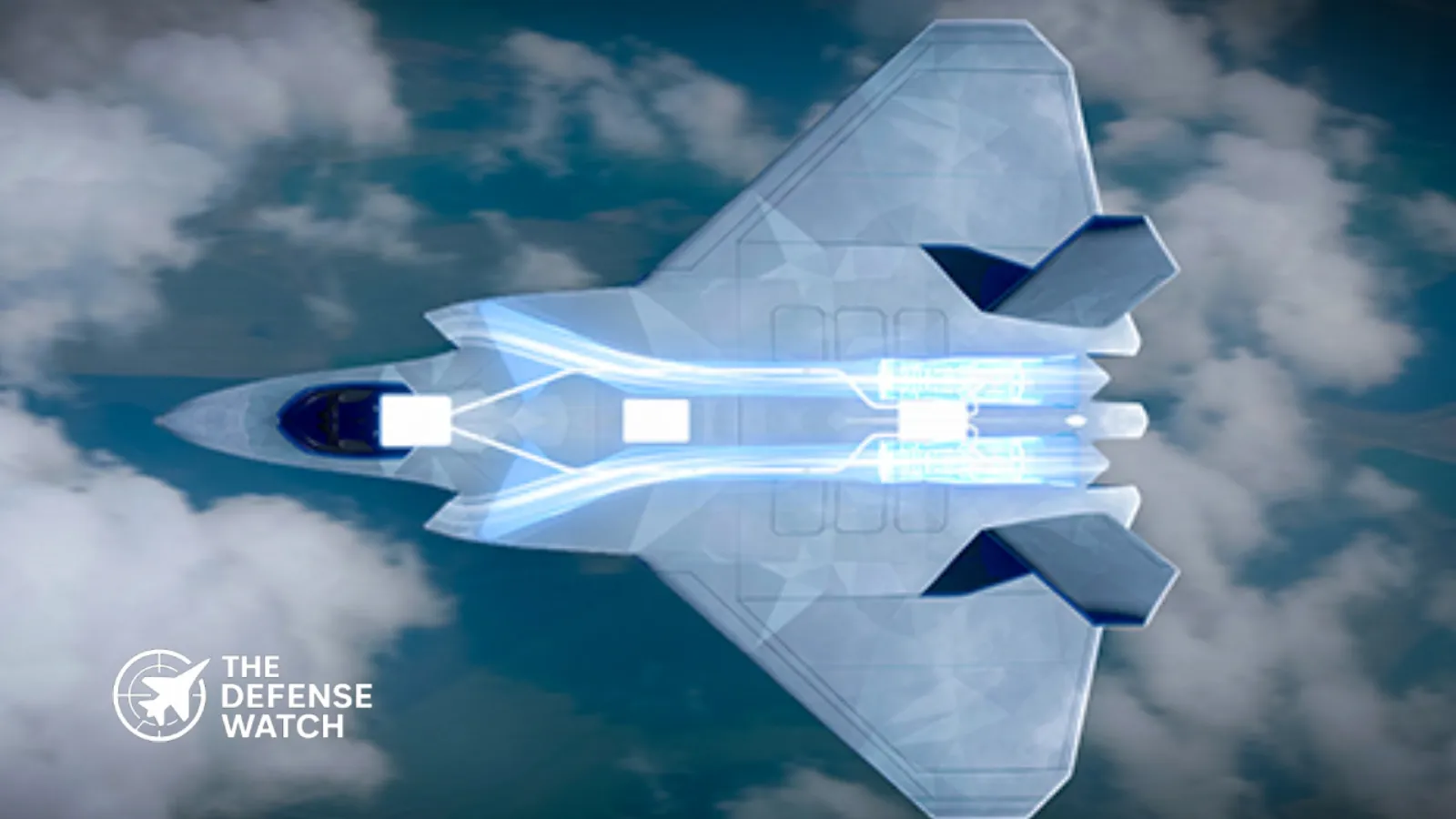
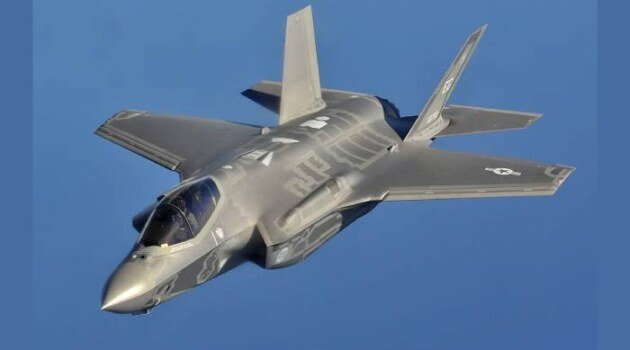
The X-plane concept remains central to aerospace innovation, even as autonomous aircraft and low-cost drones reshape flight testing and military aviation. NASA’s X-59 is demonstrating how specialized experimental aircraft can address challenges that conventional platforms cannot, with the aircraft reaching Mach 1.4 at 55,000 feet in June 2026 during its supersonic flight-test campaign. Its purpose is to validate technologies designed to reduce the intensity of sonic booms and generate data that could support future commercial supersonic flight. At the same time, programs such as DARPA’s XRQ-73 and X-76 SPRINT are applying the X-plane model to hybrid-electric propulsion, autonomous operations, high-speed flight, and distributed aerospace concepts. The United Kingdom’s Combat Air Flying Demonstrator is also using flight testing to mature technologies intended for the future Global Combat Air Programme (GCAP). Together, these programs show that experimental aircraft remain an important bridge between advanced aerospace research and operational capability.
The concept dates to the Bell X-1, which demonstrated controlled supersonic flight in 1947. The later X-15 expanded the envelope dramatically, reaching approximately Mach 6.7 and providing data that contributed to advances in high-speed flight and thermal protection.
The underlying philosophy remains relevant. Instead of attempting to build an operational aircraft containing dozens of immature technologies, engineers can build a focused demonstrator around a smaller number of technical questions.
That approach can reduce development risk because flight data replaces assumptions made solely through computer modeling, wind-tunnel testing and simulation.
X-59: A New Approach to Supersonic Flight
The X-59 is the most visible current example of the X-plane concept.
Unlike a conventional fighter or airliner, its unusual shape exists primarily to control the formation and propagation of supersonic shock waves. Its extremely long nose, carefully shaped fuselage and other aerodynamic features are designed to distribute the shock waves so that people on the ground experience a much quieter sound than the conventional sonic boom.
NASA describes the aircraft as a research vehicle rather than a commercial airliner prototype. Its purpose is to collect flight and community-response data that could help regulators establish future noise standards for supersonic flight over land.
Airframe and Low-Boom Design
The X-59’s approximately 100-foot-long airframe is dominated by its slender forward fuselage. NASA deliberately moved the cockpit rearward because a conventional forward windscreen would interfere with the aircraft’s aerodynamic shape.
Instead, pilots use an eXternal Vision System, which combines cameras, sensors, computers and displays to provide forward and downward views.
The configuration illustrates a broader X-plane principle: an unusual design can be acceptable when the aircraft exists to test one specific technological objective.
The X-59 also places its engine above the fuselage. This configuration helps manage the engine’s acoustic contribution and directs exhaust-related noise away from the ground.
The XVS is particularly important because it replaces the forward cockpit window. High-definition external imagery is processed and presented to the pilot, allowing the aircraft to retain a conventional piloted flight-test approach despite its unusual nose geometry.
This is significant in the wider X-plane debate. A remotely operated aircraft can remove the pilot from the test vehicle, but that does not necessarily make the experiment simpler. Ground control infrastructure, communications, telemetry and additional personnel can introduce their own technical and operational requirements.
For some experiments, keeping a test pilot onboard can therefore remain useful.
Propulsion and Flight Performance
The X-59 is powered by a modified General Electric F414-GE-100 engine producing approximately 22,000 pounds of thrust. NASA selected the engine to provide the performance required for the aircraft’s planned supersonic mission.
The aircraft’s design operating condition is approximately Mach 1.4 at 55,000 feet.
That target became an actual flight-test milestone on June 12, 2026, when the X-59 reached Mach 1.4 and 55,000 feet. NASA said further performance testing was still required before the aircraft moved into community-response flights.
By September 2026, NASA reported that the X-59 had completed its 25th flight and had reached its design cruise condition relatively early in the test campaign. Testing was continuing across the aircraft’s broader flight envelope.
X-Planes and the Rise of Uncrewed Aircraft
The growth of drones has changed the economics of aerospace experimentation, but it has not eliminated the need for purpose-built demonstrators.
Another example is DARPA’s X-76 SPRINT program, which is intended to demonstrate high-speed flight without conventional runway dependence. Bell Textron is building the demonstrator following completion of its critical design review.
DARPA’s ANCILLARY program similarly targets long-endurance, vertical-takeoff-and-landing uncrewed aircraft that could operate from ships and austere locations without conventional launch infrastructure.
These programs show that the X-plane model is adapting rather than disappearing.
From Experimental Aircraft to Future Combat Systems
The same philosophy applies to military aviation.
The UK’s Combat Air Flying Demonstrator is designed to test advanced technologies and manufacturing methods relevant to the future GCAP fighter. BAE Systems says the program involves about 100 UK suppliers, with roughly 1,000 people having worked on the demonstrator.
The historical comparison is significant. Britain’s Experimental Aircraft Programme, or EAP, flew in 1986 and tested technologies that contributed to the development of the Eurofighter Typhoon.
The current demonstrator follows the same basic model: prove difficult technologies in a flying aircraft before committing them to a much larger operational program.
BAE Systems says the demonstrator is intended to help de-risk technologies for GCAP, whose next-generation fighter is being developed by the United Kingdom, Italy and Japan.
Strategic Outlook
The most important change is not that X-planes are becoming obsolete. It is that the definition of an X-plane is expanding.
Future demonstrators are likely to include a mixture of:
The X-planes concept remains relevant because drones and experimental aircraft solve different problems. A drone can provide an inexpensive platform for many missions and experiments, but an X-plane is designed around a specific technical question that may require unusual aerodynamics, propulsion, flight controls, sensors or human involvement.
The X-59 demonstrates why the model still matters. Its June 2026 supersonic milestones moved NASA’s low-boom research from ground testing and subsonic flight toward the critical phase of collecting real-world acoustic data.
At the military end of the spectrum, programs such as XRQ-73, X-76 and Britain’s Combat Air Flying Demonstrator show that experimental aircraft are evolving alongside autonomous systems rather than being displaced by them.
The enduring value of the X-plane is simple: simulation can predict performance, but only flight testing can demonstrate how a new aircraft actually behaves in the atmosphere.
GCAP Electronics Contract Advances Sixth Generation Fighter Development
GCAP Electronics Evolution has received an 18-month contract to further develop the integrated sensing, communications and non-kinetic effects architecture of the Global Combat Air Programme, marking another step in the development of the Japan, Italy and UK sixth generation fighter. The contract was awarded by Edgewing, the industrial joint venture responsible for designing and developing the aircraft.
Takeaways
A new 18-month contract moves GCAP’s integrated electronics architecture into another development phase as Japan, Italy and the UK work toward a 2035 next-generation fighter.
1. G2E Receives An 18-Month Contract
Edgewing has awarded GCAP Electronics Evolution, or G2E, an 18-month contract to further develop the electronics architecture for the Global Combat Air Programme.
2. Integrated Sensing And Communications
The work covers the Integrated Sensing And Non-Kinetic Effects and Integrated Communications Systems, or ISANKE & ICS.
3. Four Companies Form G2E
G2E combines ELT Group, Leonardo, Mitsubishi Electric and Leonardo UK as a strategic electronics partner within the wider GCAP industrial structure.
4. Electronics Are Designed Into The Aircraft
GCAP is being designed around the integrated electronics architecture rather than adding separate sensors and communications systems after the aircraft design is established.
5. Programme Remains On A 2035 Path
Japan, Italy and the UK continue to target 2035 for the next-generation fighter, with the programme now moving through a major development phase under Edgewing and the GCAP Agency.
The agreement covers the Integrated Sensing And Non-Kinetic Effects and Integrated Communications Systems, known as ISANKE & ICS. The architecture is intended to combine information from multiple sensing and communications functions and give the aircraft an integrated view of the battlespace.
The development is important because GCAP is not being designed around an aircraft in which individual avionics systems operate largely as separate functions. The programme’s stated approach is to build sensing, communications and non-kinetic effects into an integrated architecture from the beginning.
Edgewing Awards Contract To GCAP Electronics Evolution
Edgewing is the joint venture established by BAE Systems of the UK, Leonardo of Italy and Japan Aircraft Industrial Enhancement Co. Ltd., or JAIEC, to lead industrial development of the GCAP fighter.
G2E operates as a strategic electronics partner within that wider structure. Its consortium consists of ELT Group and Leonardo in Italy, Mitsubishi Electric in Japan, and Leonardo UK.
The latest award follows the broader government and industry contracting framework established for GCAP. In July 2026, the GCAP International Government Organisation and Edgewing signed a major contract covering work through the end of 2027. Japan’s Ministry of Defense said that agreement was intended to strengthen the programme foundation and accelerate development.
The UK government separately announced a £4.6 billion contract in July for the next stage of GCAP development. That agreement was designed to advance the aircraft’s design and support the programme’s target of bringing the sixth generation fighter into service from 2035.
What ISANKE & ICS Means For GCAP
The central technical feature of the new contract is the integration of sensing, communications and non-kinetic effects.
In a conventional fighter architecture, radar, electronic warfare equipment, communications systems and other sensors can be developed as distinct subsystems. Integration still occurs, but the aircraft’s information architecture can remain constrained by interfaces between those systems.
GCAP is taking a different approach.
The programme describes ISANKE & ICS as an integrated architecture that will combine large volumes of information and provide pilots with the data required to operate in complex and contested airspace.
Area
GCAP Approach
Operational Relevance
Sensing
Integrated sensing architecture
Builds a broader picture of the battlespace
Communications
Integrated communications systems
Supports information exchange across the force
Non-kinetic effects
Included within the wider electronics architecture
Supports operations involving the electromagnetic spectrum
Data integration
Fusion of information from multiple sources
Reduces dependence on isolated sensor displays
System architecture
Designed into the aircraft from the outset
Allows electronics requirements to influence the aircraft design
The significance is less about a single new sensor and more about how the aircraft processes and distributes information.
For a future fighter operating against modern air defenses, the ability to collect information is only one part of the problem. The aircraft also needs to determine what information matters, share relevant information with other assets and operate effectively when communications or sensors are degraded or contested.
Why The Electronics Architecture Matters
Sixth generation combat aircraft are increasingly being designed as nodes within a larger combat network rather than as standalone platforms.
That means the aircraft’s value depends not only on aerodynamic performance, weapons or low observability, but also on its ability to function within a wider system of sensors, communications links, weapons and other aircraft.
The GCAP approach reflects this shift.
The programme’s electronics architecture is intended to make the aircraft a major airborne sensing and information platform. G2E has described its role as delivering information superiority for future congested and contested airspace.
This also creates a demanding engineering problem. Sensor fusion requires common data structures, high-speed processing, carefully managed interfaces and software that can combine information without creating additional workload for the pilot.
Communications introduce another challenge. A future combat aircraft must exchange information with other platforms while dealing with electromagnetic interference, hostile electronic warfare and the possibility that some communication paths may be unavailable.
The inclusion of non-kinetic effects in the same architecture makes the problem more complex because electromagnetic operations can involve both sensing and effects. The aircraft therefore needs an architecture capable of supporting multiple functions without creating unnecessary conflicts between them.
Japan, Italy and the UK established GCAP to develop a common next-generation fighter, with the three governments targeting 2035 for the aircraft. The partners have repeatedly reaffirmed that schedule.
Japan’s defense planning also connects the aircraft to future unmanned capabilities. Its 2026 defense budget documents include funding for GCAP development and separate research into UAVs intended to collaborate with the next-generation fighter.
That broader direction matters for the electronics architecture.
If a future fighter operates alongside uncrewed aircraft, ships, ground-based sensors and other combat aircraft, the value of its sensing and communications systems extends beyond the aircraft itself. The fighter can become part of a distributed network in which information is collected by one platform and used by another.
GCAP’s integrated architecture is therefore closely connected to the programme’s wider concept of a future combat air system.
The programme brings together three major U.S. security partners and creates an independent multinational pathway toward a sixth generation combat aircraft. The UK, Japan and Italy are developing technologies across areas including aircraft design, propulsion, sensors, data systems and digital engineering.
The electronics work is particularly relevant because the same broad operational problem exists across future U.S. combat aircraft programmes: how to maintain an information advantage when adversaries can challenge aircraft sensors, communications and command networks.
The U.S. is pursuing its own sixth generation systems under the Next Generation Air Dominance effort, including the Air Force’s F-47 programme and the Navy’s F/A-XX effort. The parallel development of GCAP means allied nations are also building expertise in advanced sensing, networking and electromagnetic operations.
For Washington, this could create opportunities for closer interoperability with Japan, the UK and Italy, while also highlighting the importance of common data standards, secure communications and cross-domain information sharing.
However, GCAP remains a separate multinational programme, and the details of its classified electronics architecture, sensor performance and communications capabilities have not been publicly disclosed.
The Industrial Challenge Behind GCAP’s Electronics
The formation of G2E is also significant from an industrial perspective.
Rather than leaving the electronics work divided permanently among national companies, the consortium is attempting to operate the participating companies as a single strategic partner. G2E said the latest contract reflects progress in moving from national companies toward a unified international organization.
That model could help reduce duplication and improve integration, but it also requires the partners to align engineering processes, intellectual property arrangements, software development practices and national requirements.
GCAP’s multinational structure makes those issues central to programme execution.
The UK has also updated its export-control framework for GCAP. A new open general licence published in September 2026 reflects the programme’s move into its next phase and allows specified military and dual-use goods, software and technology to move among approved GCAP partner and supply-chain nations under defined conditions.
This is an important supporting element because advanced electronics development depends on the ability to exchange technology, components, software and engineering information across national industrial bases.
What Comes Next
The new G2E contract covers 18 months, making it part of the near-term development cycle rather than a final production agreement.
The immediate focus is further development of ISANKE & ICS and continued integration with the wider GCAP aircraft architecture.
The larger objective remains the same: deliver a sixth generation combat aircraft for Japan, Italy and the UK around 2035.
The key measure of progress will therefore not simply be the maturity of individual sensors or communications components. It will be whether the programme can combine those technologies into a reliable architecture that provides useful information to the pilot, supports other platforms and remains effective in a heavily contested electromagnetic environment.
GCAP’s latest electronics contract represents progress toward that goal, while the difficult work of integrating those capabilities into a production-ready combat aircraft remains ahead.
Rolls-Royce and its international partners have completed a major development milestone for the Global Combat Air Programme (GCAP) propulsion system, clearing the way for ground testing of a next generation fighter engine demonstrator. The achievement marks an important step in delivering the sixth generation combat aircraft that Britain, Italy, and Japan aim to introduce in the mid 2030s while strengthening sovereign propulsion capabilities.
Rolls-Royce has reached a significant milestone in the development of the GCAP combat jet engine, completing a series of consortium design reviews that pave the way for ground testing of the propulsion system demonstrator. The progress was announced by Rolls-Royce alongside consortium partners Avio Aero of Italy and IHI Corporation of Japan during the 2026 Farnborough Airshow.
The engine is being developed for the Global Combat Air Programme (GCAP), the multinational effort to build a sixth generation combat aircraft that will replace the Royal Air Force’s Eurofighter Typhoon while also serving future requirements in Italy and Japan. The propulsion system is considered one of the most technically demanding elements of the overall aircraft program.
According to Rolls-Royce, the successful completion of multiple design reviews demonstrates growing maturity across the engine program and allows development teams to transition toward full scale ground testing of the demonstrator.
International Consortium Deepens Technical Cooperation
The GCAP propulsion effort is jointly led by Rolls-Royce, Avio Aero, and IHI Corporation, combining expertise from three national aerospace industries.
Rolls-Royce stated that the partnership has expanded its collaborative engineering approach over the past year, including the establishment of a dedicated Collaboration Hub in Reading, England. The facility supports integrated engineering work between industry partners, the GCAP Agency, and Edgewing, the organization overseeing aircraft development.
Program officials said recent design reviews validated key aspects of the propulsion architecture while reinforcing the long term industrial partnership required to sustain development over several decades.
Why The Engine Matters
Unlike previous generation fighter engines, the GCAP propulsion system is expected to support substantially greater electrical power generation, advanced thermal management, and higher operating temperatures.
These capabilities are increasingly essential because sixth generation fighters will rely heavily on:
Capability
Operational Importance
Higher electrical output
Supports advanced AESA radar, electronic warfare, sensors, and future directed energy systems
Improved thermal management
Dissipates heat generated by onboard computing and mission systems
Greater fuel efficiency
Extends combat radius while reducing logistical demands
Increased durability
Supports higher readiness and lower lifecycle costs
Although Rolls-Royce has not disclosed detailed engine specifications, officials have consistently described the propulsion system as a generational leap compared with current fighter engines.
Strategic Importance For Britain And Allied Air Power
The engine milestone arrives as GCAP continues gaining political and industrial momentum.
Earlier this week, Canada agreed to join the program as an observer, expanding international cooperation around one of the world’s most ambitious future combat aircraft initiatives. The move reflects broader efforts among allied nations to strengthen defense industrial collaboration while reducing dependence on single suppliers for advanced military technologies.
For Britain, maintaining domestic capability to design and manufacture advanced military engines remains strategically important.
Analysis: Why This Milestone Matters Beyond The Engine
While the announcement does not represent a completed engine or first test run, it marks one of the most meaningful engineering checkpoints in the GCAP timeline.
Engine development typically represents one of the highest technical risks in any advanced fighter program. Validating the design before hardware testing helps reduce integration challenges later in aircraft development, where propulsion, stealth shaping, cooling systems, software, and mission electronics must function as an integrated platform.
From a U.S. defense perspective, the progress also underscores a broader trend among close allies investing in sovereign sixth generation capabilities. As the United States advances the Next Generation Air Dominance (NGAD) family of systems, Europe and Japan are pursuing comparable technologies through GCAP, ensuring allied air forces retain access to advanced combat aircraft tailored to their own operational requirements.
For NATO and Indo Pacific security, successful propulsion development could strengthen industrial resilience by diversifying the global supply base for advanced military aviation technologies while enabling closer technology cooperation among partner nations.
What Comes Next
With consortium design reviews complete, the next major phase is ground testing of the engine demonstrator.
These tests will validate critical performance characteristics before the propulsion system is integrated into the future GCAP aircraft. The multinational program continues targeting entry into service during the mid 2030s, though additional development, flight testing, and systems integration remain ahead.
The UK Ministry of Defence has confirmed that the Tempest Combat Air Flying Demonstrator is expected to begin testing key capabilities by mid 2028. While officials did not provide a firm maiden flight date, the demonstrator remains a central technology risk reduction platform supporting the UK, Italy, and Japan’s Global Combat Air Programme (GCAP) scheduled to deliver an operational sixth generation fighter from 2035.
Tempest Demonstrator Enters Next Phase Of Development
The Tempest demonstrator is expected to begin testing critical technologies by mid 2028, according to a written parliamentary response from the UK Ministry of Defence. The update provides the clearest official indication yet of the next major milestone for Britain’s first domestically developed supersonic combat aircraft in more than four decades.
Responding to a parliamentary question from Shadow Defence Secretary James Cartlidge, Minister for Defence Readiness and Industry Luke Pollard stated:
The Combat Air Flying Demonstrator is expected to begin testing key capabilities by mid 2028. The timing of the first flight will be confirmed closer to the milestone to ensure maximum value is delivered in support of GCAP development.
The ministry stopped short of announcing a specific first flight date, despite previous public statements indicating the demonstrator was expected to fly during 2027.
Flight trials would gradually expand into broader capability demonstrations.
As a result, a late 2027 rollout followed by extensive ground qualification and an early 2028 first flight remains broadly compatible with the government’s latest statement.
First British Supersonic Combat Demonstrator In Four Decades
The Combat Air Flying Demonstrator represents Britain’s first crewed supersonic combat aircraft development program since the Experimental Aircraft Programme (EAP), which helped pave the way for the Eurofighter Typhoon.
The aircraft is not intended to become an operational fighter. Instead, it serves as a technology demonstrator designed to validate critical systems before they are incorporated into the production aircraft under the Global Combat Air Programme.
According to BAE Systems and the Ministry of Defence, planned evaluations include:
The demonstrator is powered by twin Eurojet EJ200 engines and incorporates advanced digital design methods intended to shorten development timelines for future combat aircraft.
Supporting The Global Combat Air Programme
Although the demonstrator is a UK national project, its findings will directly support the Global Combat Air Programme (GCAP), the trilateral effort involving the United Kingdom, Italy, and Japan.
GCAP aims to field a sixth generation combat aircraft beginning in 2035, replacing:
The program recently entered another major phase after the award of a multibillion pound development contract to Edgewing, the industrial joint venture established by BAE Systems, Leonardo, and Japan Aircraft Industrial Enhancement Company.
Why The Demonstrator Matters
Unlike traditional prototype aircraft, the Tempest demonstrator is primarily intended to reduce technical and manufacturing risk before the operational aircraft enters full-scale development.
Engineers are using the platform to validate:
Digital engineering techniques
Advanced flight control software
Composite manufacturing methods
Stealth shaping
Systems integration
Human-machine teaming concepts
The program also allows developers to compare digital simulations with real-world flight data, improving confidence before committing to production designs. This approach reflects a broader shift toward model-based engineering that is increasingly used across advanced aerospace programs.
For GCAP partners, reducing technical uncertainty early is particularly important because the aircraft must integrate next generation sensors, electronic warfare systems, artificial intelligence-enabled mission management, and future weapons while remaining adaptable throughout its planned service life into the 2070s.
GCAP is one of only a handful of sixth generation fighter programs currently under active development worldwide, alongside the U.S. Next Generation Air Dominance effort and Europe’s Future Combat Air System.
Maintaining progress on the demonstrator helps preserve schedule confidence for the broader multinational program while strengthening industrial cooperation between the UK, Italy, and Japan. It also sustains advanced combat aircraft design expertise within the British aerospace sector, an industrial capability not exercised on a wholly new crewed combat aircraft since the Typhoon development era.
Although officials have not confirmed when the demonstrator will conduct its maiden flight, the latest parliamentary statement indicates that capability testing, rather than a single flight milestone, is now the government’s principal benchmark for measuring progress toward GCAP’s 2035 operational objective.
Britain, Italy, and Japan awarded a £4.6 billion ($6.14 billion) contract to the Edgewing joint venture on July 3, 2026, to advance the Global Combat Air Programme (GCAP) fighter jet. The 18-month deal funds the advanced concept, assessment, and detailed design phases following the United Kingdom’s recent commitment of £8.6 billion over four years. The program aims to deliver a sixth-generation stealth fighter for service entry in 2035, enabling the partners to share development costs and maintain sovereign combat air capabilities.
GCAP Program Advances with Major Contract Award
The United Kingdom, Italy, and Japan have taken a significant step forward in their collaborative effort to develop a next-generation combat aircraft. The tri-national Global Combat Air Programme (GCAP) received a £4.6 billion contract to industry joint venture Edgewing, the UK government announced on July 3, 2026.
This contract follows months of budget-related delays in the UK and marks the transition to more substantial detailed design and development work. UK Minister for Defence Readiness Luke Pollard described the award as “a major step forward towards delivery” of a cutting-edge stealth fighter for partner nations’ pilots.
Program Background and Industrial Structure
GCAP merges the UK’s Tempest program with Japan’s F-X initiative and Italian participation. The three nations established the GCAP International Government Organisation (GIGO) to oversee the effort. Edgewing, the prime industrial partner, is a joint venture equally owned by BAE Systems (UK), Leonardo (Italy), and Japan Aircraft Industrial Enhancement Co. Ltd. (linked to Mitsubishi Heavy Industries).
Edgewing will subcontract manufacturing and final assembly to the national champions: BAE Systems, Leonardo, and Mitsubishi Heavy Industries. The joint venture’s headquarters are in the UK, with initial leadership from Italy.
Key Program Milestones (as of 2026):
Demonstrator aircraft first flight targeted for 2027.
Production aircraft service entry: 2035.
Contract scope: 18-month advanced concept, assessment, and detailed design phase.
Technical Ambitions and Capabilities
GCAP is designed as a “system of systems” capable of operating across air, land, sea, space, and cyber domains. The crewed fighter will serve as the core platform, integrated with uncrewed assets through advanced AI, supercomputing, combat cloud architecture, and resilient datalinks.
Anticipated features, based on partner statements and conceptual designs, include:
Significant size increase over the Eurofighter Typhoon (estimated 3-4 meters longer).
Advanced stealth characteristics with internal weapons bays.
Interoperability with existing platforms like the F-35 and Typhoon.
The program emphasizes upgradability and adaptability to evolving threats through modular design and digital engineering approaches.
Strategic and Geopolitical Context
For the United Kingdom, GCAP supports post-Brexit defense industrial strategy and sovereign capability in combat air. Italy seeks to sustain its aerospace expertise alongside participation in other European efforts. Japan views the program as critical for replacing aging fleets while building domestic industrial capacity under its evolving defense posture.
The contract award coincides with the collapse of the rival Franco-German FCAS program, potentially opening doors for additional partners. Italy has highlighted interest from nations including Germany, while Saudi Arabia and Canada have also been linked to discussions. Any expansion requires consensus among the founding three members.
Implications for U.S. Defense Strategy and Industry
From a U.S. perspective, GCAP represents both collaboration opportunity and competitive dynamic in the global fighter market. The program operates independently of U.S. platforms like the F-35 and the Next Generation Air Dominance (NGAD) initiative. However, its emphasis on interoperability suggests potential for future joint operations in NATO or Indo-Pacific theaters.
Comparative Context (High-Level):
GCAP: Trilateral (UK/IT/JP), target 2035 IOC, focus on export potential and sovereign control.
U.S. NGAD/F-47: Domestic focus with Collaborative Combat Aircraft, earlier prototype activity but facing its own budgetary and requirement reviews.
F-35: Established fifth-generation backbone with extensive international participation, providing proven interoperability baseline.
GCAP’s success could influence global supply chains, technology standards, and export markets for advanced combat aircraft. For the U.S., it underscores the value of allied innovation while highlighting the need to maintain technological edges in areas like propulsion, sensors, and manned-unmanned teaming.
Challenges and Path Forward
The program has faced funding hurdles, notably in the UK, where budget constraints delayed progress. The recent £8.6 billion UK commitment over four years addresses immediate needs but represents only a portion of the multi-decade, tens-of-billions cost expected for full development and production.
Technical challenges typical of sixth-generation programs include integrating advanced propulsion, achieving required stealth and range, and managing the complexity of AI-driven systems. Industrial integration across three nations with different procurement cultures and priorities adds another layer of complexity.
Analysis: The contract award stabilizes short-term momentum, but long-term success will depend on sustained political commitment through potential economic cycles and evolving threat environments. For the U.S., monitoring GCAP’s progress offers insights into allied priorities and potential areas for technology exchange or burden-sharing in contested regions like the Indo-Pacific.
The 2035 target remains ambitious. Achieving it while delivering promised capabilities will test the partners’ ability to execute complex multinational development efficiently—lessons that could inform broader transatlantic and Pacific defense cooperation.
The United Kingdom has committed more than £6 billion (over US$8 billion) to the Global Combat Air Programme (GCAP), reinforcing its long term investment in developing a sixth generation combat aircraft alongside Italy and Japan. The funding supports research, technology development, and industrial capacity as the three nations work toward fielding the aircraft by 2035.
UK Commits More Than $8 Billion To Advance GCAP Sixth Generation Fighter
The UK GCAP fighter program received a major financial boost after the British government confirmed it will invest more than £6 billion (approximately US$8 billion) over the next four years to accelerate development of the Global Combat Air Programme (GCAP). The announcement was made as part of the government’s broader defense spending plans and reinforces Britain’s commitment to one of the world’s most ambitious future combat aviation projects.
GCAP is a trilateral initiative involving the United Kingdom, Italy, and Japan. It aims to develop a sixth generation combat aircraft capable of replacing the Royal Air Force’s Eurofighter Typhoon fleet while delivering advanced air superiority capabilities well into the second half of the century.
The funding demonstrates London’s intention to maintain sovereign combat aircraft design expertise while strengthening defense industrial cooperation with key allies in Europe and the Indo Pacific.
Major Investment Supports Long Term Fighter Development
The latest funding package will finance research, engineering, testing, and industrial infrastructure needed to mature technologies required for a sixth generation fighter.
According to the UK government, the investment forms part of a wider defense modernization strategy intended to maintain technological superiority amid increasingly contested security environments.
The program is managed through the GCAP International Government Organisation (GIGO), which coordinates government requirements while industry partners jointly develop the aircraft.
GCAP Brings Together Leading Aerospace Companies
The industrial partnership combines some of the world’s most experienced combat aircraft manufacturers.
Principal industry participants include:
BAE Systems (United Kingdom)
Leonardo (Italy)
Japan Aircraft Industrial Enhancement Company (JAIEC)
The aircraft is expected to function as a command node capable of coordinating unmanned systems, space based assets, and joint force operations simultaneously.
The latest investment underscores Britain’s determination to preserve an independent combat aircraft design capability after decades of participation in multinational fighter programs.
The UK defense industrial base employs tens of thousands of workers across aerospace manufacturing, propulsion systems, avionics, software engineering, and weapons integration. Sustained investment in GCAP helps retain highly specialized engineering skills that might otherwise erode between major aircraft programs.
Government officials have also emphasized the program’s anticipated contribution to economic growth through exports, high value manufacturing, and technological innovation extending beyond defense applications.
Why GCAP Matters For Global Defense
Beyond replacing legacy fighter fleets, GCAP reflects broader shifts in international defense cooperation.
Unlike traditional alliance structures centered primarily on NATO, the program establishes a long term strategic partnership linking Europe with the Indo Pacific. The United Kingdom, Italy, and Japan face increasingly similar challenges involving advanced air defense systems, long range precision weapons, electronic warfare, and rapidly evolving military technologies.
For the United States, GCAP represents an important complementary capability rather than direct competition. While the U.S. Air Force continues development of its Next Generation Air Dominance (NGAD) family of systems, allied sixth generation platforms can improve burden sharing and interoperability across future coalition operations.
The program also diversifies the global market for advanced combat aircraft. Instead of relying exclusively on American or domestic designs, partner nations are pooling technological expertise to create an alternative high end fighter platform capable of supporting allied air forces for decades.
From an industrial perspective, GCAP demonstrates a new model for multinational defense acquisition. Rather than one nation leading development with others joining later, Britain, Italy, and Japan are jointly defining operational requirements, governance, technology development, and industrial participation from the outset. This approach could reduce duplication while improving interoperability among partner militaries.
Development Timeline Remains Focused On 2035
The three governments continue targeting operational service entry by 2035, an ambitious schedule given the technological complexity involved.
Major milestones expected over the coming years include:
Continued digital design validation
Prototype development
Flight testing
Sensor integration
Engine maturation
Mission systems testing
Autonomous systems integration
Maintaining schedule discipline will be critical as participating nations seek to replace aging combat aircraft before capability gaps emerge during the 2030s.
The UK’s commitment of more than £6 billion marks one of the largest investments yet in the Global Combat Air Programme and signals continued political support for sixth generation fighter development.
As GCAP progresses from technology maturation toward prototype production, the program is expected to become a cornerstone of British, Italian, and Japanese airpower modernization. Its success will depend not only on delivering an advanced aircraft, but also on integrating emerging technologies such as artificial intelligence, collaborative autonomous systems, and next generation electronic warfare into a coherent operational capability.
A new UK-Japan partnership worth $24 billion places the GCAP fighter jet program at the center of a broader strategic technology and security alliance.
Executive Summary:
The United Kingdom and Japan have announced a $24 billion investment and technology partnership aimed at strengthening economic security, advanced technology cooperation, and defense collaboration. A central outcome of the agreement is renewed momentum for the Global Combat Air Programme (GCAP), the trilateral next generation fighter aircraft project involving the UK, Japan, and Italy.
UK-Japan Technology Partnership Strengthens GCAP Fighter Jet Program
The UK-Japan technology partnership has emerged as one of the most significant strategic agreements announced by London and Tokyo in 2026. British Prime Minister Keir Starmer and Japanese Prime Minister Sanae Takaichi unveiled a package of investments and cooperation initiatives valued at more than £18 billion ($24 billion), spanning defense, artificial intelligence, cybersecurity, quantum technologies, infrastructure, and energy.
At the heart of the announcement is a commitment to accelerate the Global Combat Air Programme (GCAP), the next generation fighter aircraft initiative jointly pursued by the United Kingdom, Japan, and Italy. According to statements made during the leaders’ meeting in London, both governments agreed to advance development efforts and move toward the next phase of the program, with an international contract expected to be finalized before the end of June.
GCAP Remains Cornerstone Of Defense Cooperation
Prime Minister Takaichi described GCAP as the cornerstone of security cooperation between the two nations. The sixth generation fighter project is intended to replace existing combat aircraft fleets and provide advanced capabilities for future contested environments.
GCAP combines expertise from major defense and aerospace firms, including BAE Systems, Leonardo, and Mitsubishi Heavy Industries. The program aims to deliver a highly connected combat aircraft featuring advanced sensors, artificial intelligence integration, networked warfare capabilities, and enhanced survivability.
From a defense modernization perspective, the renewed political support is significant. Large multinational defense programs often face budget pressures, industrial disagreements, and changing political priorities. Public commitments from both governments indicate continued confidence in GCAP’s strategic value and industrial importance.
Beyond Defense: AI, Cybersecurity, And Quantum Technologies
While defense cooperation attracted considerable attention, the broader UK-Japan technology partnership extends far beyond military programs. The agreement establishes deeper collaboration in several critical and emerging technology sectors, including:
Artificial intelligence
Semiconductors
Quantum computing
Space technologies
Cybersecurity
Digital infrastructure
Officials from both governments emphasized the importance of technological resilience and economic security as global competition intensifies. The partnership builds on previous bilateral initiatives while creating new frameworks for research collaboration, industrial investment, and technology development.
The announcement aligns with growing efforts among allied nations to secure supply chains, protect critical technologies, and reduce vulnerabilities in strategic sectors.
The agreement includes more than £9 billion in planned Japanese investment across UK infrastructure and financial services, alongside potential investments of up to £9 billion in offshore wind projects. British officials estimate the combined initiatives could support tens of thousands of jobs across multiple sectors.
Several major corporations are expected to participate in projects linked to the partnership, including:
Rolls-Royce Holdings
NEC Corporation
Hitachi Energy
Eisai
These initiatives cover manufacturing cooperation, research partnerships, power infrastructure projects, life sciences, and advanced technology development.
The significance of the UK-Japan technology partnership extends beyond economic investment figures.
For the United Kingdom, the agreement reinforces its strategy of strengthening security and technology relationships in the Indo-Pacific region. Japan has increasingly become one of Britain’s most important security partners in Asia, particularly as London seeks to expand defense cooperation beyond Europe.
For Japan, closer ties with the UK support efforts to diversify technology partnerships and strengthen collaboration with like-minded nations on economic security, defense innovation, and advanced manufacturing.
The GCAP program illustrates this convergence. Unlike traditional defense procurement arrangements, GCAP represents a long-term industrial and technological partnership that could shape military aviation capabilities for decades. Successful delivery would enhance domestic aerospace industries in all participating countries while strengthening interoperability among allied forces.
The broader technology agreement also reflects growing recognition that economic security, technological leadership, and national defense are increasingly interconnected. Investments in AI, cybersecurity, semiconductors, and quantum technologies are now viewed as strategic assets with both civilian and military applications.
Outlook
The UK-Japan technology partnership marks a major step in the evolution of bilateral relations, combining economic investment, advanced technology cooperation, and defense modernization under a single strategic framework.
While the £18 billion ($24 billion) investment package will draw attention for its economic impact, the long-term significance may ultimately rest on the success of initiatives such as GCAP and expanded cooperation in emerging technologies. As global competition intensifies across defense and technology sectors, London and Tokyo appear determined to deepen a partnership that increasingly links national security with technological innovation.
UK, Italy, and Japan Award $850M GCAP Contract, Putting Sixth-Generation Fighter Program On a Clear Runway
The Global Combat Air Programme received its most consequential industrial milestone to date when the UK, Italy, and Japan awarded Edgewing a £686 million contract on April 1, 2026, formally designating the trinational joint venture as the program’s unified design and engineering authority. The award marks GCAP’s transition from a politically coordinated national effort into a fully integrated international acquisition program with a single design authority accountable for delivering a sixth-generation combat aircraft by 2035.
¦
KEY FACTS AT A GLANCE
The UK, Italy, and Japan awarded Edgewing a £686 million (~$850M) contract on April 1, 2026, under the Global Combat Air Programme (GCAP) to lead unified design, engineering, and airworthiness oversight.
Edgewing — a joint venture of BAE Systems, Leonardo, and Japan Aircraft Industrial Enhancement Co. Ltd. (JAIEC), each holding 33.3% — will serve as design authority for the aircraft’s entire service life, expected to extend beyond 2070.
GCAP is designed as a “system of systems,” integrating manned-unmanned teaming, advanced sensing with radar delivering 10,000 times more data than current systems, and operations across air, land, sea, space, and cyber domains.
Italy’s parliament approved €8.77 billion for initial GCAP phases through 2037, with total early-phase program costs estimated at €18.6 billion. The fighter is targeted for service entry in 2035.
Canada is being considered as a potential GCAP observer nation by July 2026, signaling expanding allied interest in the trinational program.
The Big Picture: Allied Air Power at a Strategic Crossroads
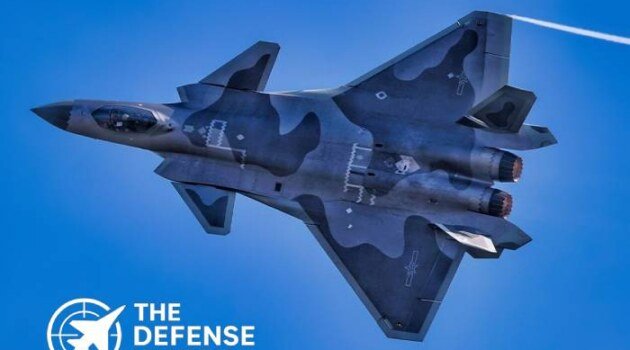
Western air forces face a converging set of threats that their current fifth-generation fleets were not specifically designed to defeat at scale. China has fielded the J-20 stealth fighter and is developing two reported sixth-generation programs; Russia continues advancing air defense systems that challenge even low-observable aircraft. Against that backdrop, the UK, Italy, and Japan identified a shared operational requirement: a survivable, networked, next-generation combat aircraft capable of operating in heavily contested electromagnetic and air defense environments where fifth-generation platforms will face growing risks.
GCAP emerged from that shared threat calculus. The program grew out of Japan’s F-X requirement and the UK-Italy Tempest initiative, formally merging into a trilateral structure in December 2022. Canada has since been identified as a potential observer nation by July 2026, a development that, if confirmed, would further widen the program’s political and industrial footprint.
What’s Happening: A Single Authority Takes the Helm
Awarded on April 1 and running until June 30, 2026, the £686 million package places Edgewing at the center of key design and engineering work under the GCAP Agency, with the stated aim of accelerating delivery for the three partner nations.
Edgewing, formally launched in June 2025, is the UK-based joint venture created specifically for GCAP by BAE Systems, Leonardo, and Japan Aircraft Industrial Enhancement Co. Ltd. (JAIEC), each holding 33.3 percent, and will remain design authority for the aircraft throughout a service life expected to extend beyond 2070.
The practical significance of that structure is considerable. Activities that were previously conducted under three national contracts will now be executed as part of a fully fledged international program, and Edgewing will oversee engineering, airworthiness, and certification across all phases of development.
Edgewing does not absorb all manufacturing into a single plant. It leads design and development while subcontracting manufacturing and final assembly to BAE Systems, Leonardo, Mitsubishi Heavy Industries, and the wider supply chain. That structure preserves sovereign industrial weight in each nation while centralizing the functions that most often derail multinational aircraft programs: configuration control, airworthiness, certification, and system integration.
Why It Matters: More Than a Fighter, a Networked Kill Node
GCAP’s ambitions extend well beyond a conventional air superiority platform. The program is not being sold as a stand-alone fighter but as a “system of systems” operating across air, land, sea, space, and cyber, with the crewed combat aircraft serving as the core platform connected to crewed and uncrewed peripheral systems.
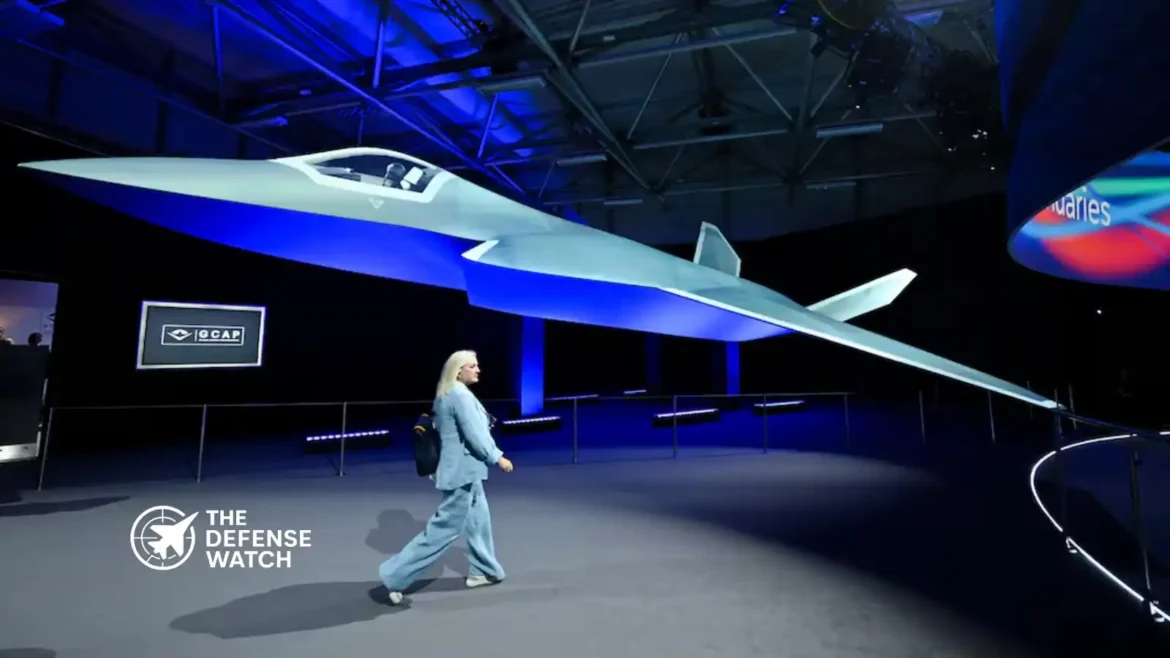
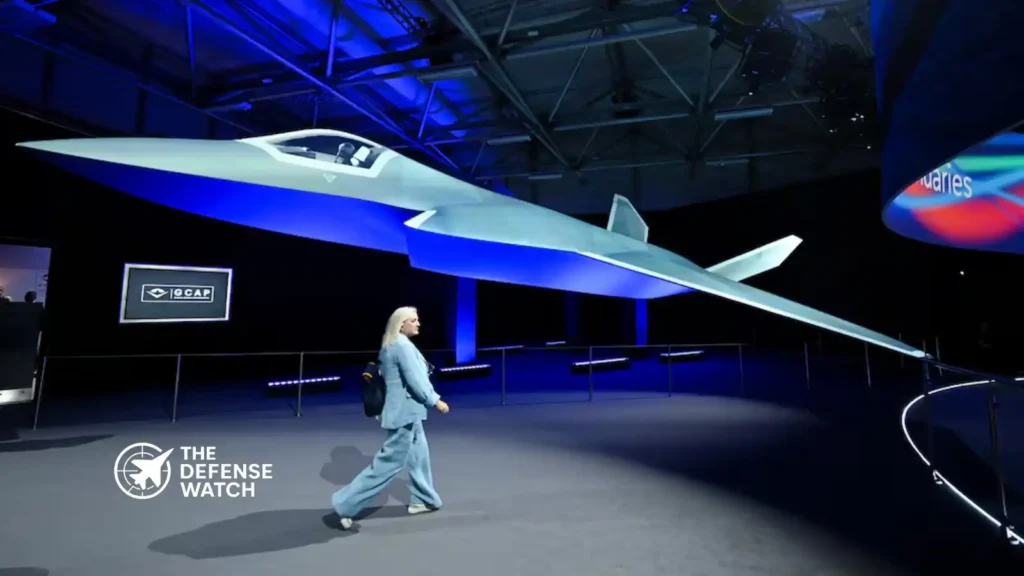
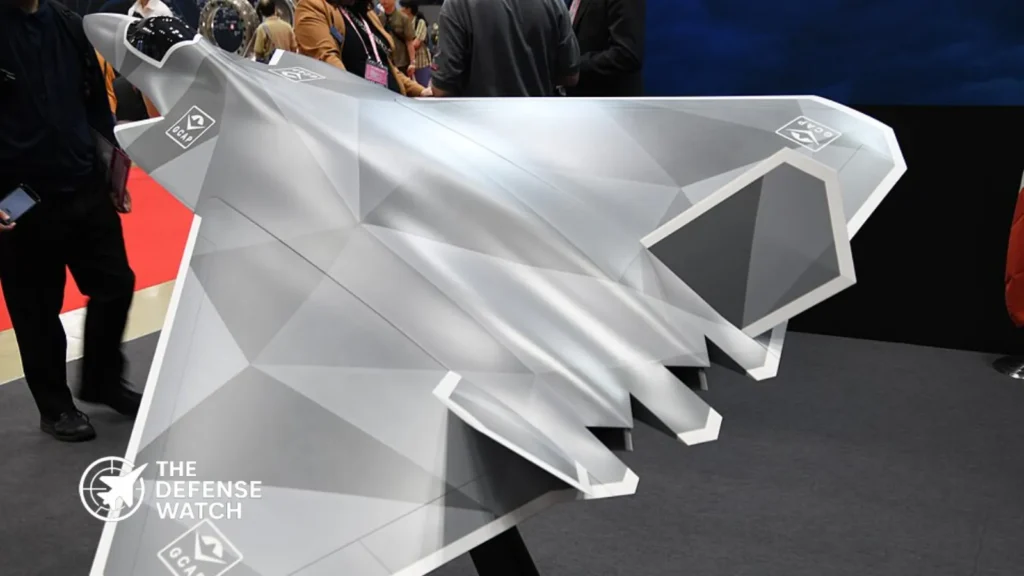
A person walks past the GCAP fighter jet concept design at the 2024 Farnborough International Airshow. (Justin Tallis/AFP via Getty Images)
The sensor architecture behind that concept is striking. The future aircraft’s radar is intended to deliver 10,000 times more data than current systems, while Leonardo UK states that GCAP’s ISANKE and ICS architecture — Integrated Sensing and Non-Kinetic Effects plus Integrated Communications Systems — will provide mission-critical information and advanced self-protection capabilities.
Propulsion carries equal ambition. Rolls-Royce, IHI, and Avio Aero are developing a propulsion architecture designed not only to generate thrust but also to supply the larger electrical loads demanded by next-generation sensors, processors, and onboard systems. Rolls-Royce says the demonstrator engine effort involves roughly 40,000 individual parts.
That combination of sensor fusion, networked operations, and high-power propulsion points toward an aircraft designed to sense first, fuse faster, share securely, and survive inside dense electronic-warfare environments — capabilities that represent a genuine generational step beyond what current fifth-generation platforms offer at scale.
Strategic Implications: Governance Solved Early Is Influence Preserved
The deeper significance of the Edgewing contract lies in industrial governance, not just engineering progress. Multinational fighter programs most commonly derail not from technological failure but from diffused authority — the inability of any single body to force engineering trade-offs when national industrial interests collide. By establishing Edgewing as design authority at the program’s outset rather than years into development, the three partner nations have attempted to solve that problem before it compounds.
GCAP has been described as important for sovereignty in combat air, allied relationships, and export return, while Italy’s parliament approved €8.77 billion for the initial phases through 2037, even as expected early-phase costs rose to €18.6 billion. Those are not discretionary commitments. They signal that the three governments view GCAP as a long-cycle strategic industrial program, not a prestige project subject to cancellation at the next budget cycle.
For the United States, the program carries direct implications. Japan is a cornerstone Indo-Pacific ally, and a Japan operating GCAP alongside U.S. F-35s and future sixth-generation platforms creates interoperability opportunities — and questions. Whether GCAP’s sensor and communications architecture will integrate cleanly with U.S. kill-web concepts, including the Air Force’s Next Generation Air Dominance program, will shape how effectively allied air operations can be coordinated across the Pacific theater.
Competitor View: Beijing and Moscow Are Watching Timelines
China’s military planners will read the Edgewing contract as confirmation that a competitive sixth-generation threat is moving from concept to execution. Beijing’s reported sixth-generation development efforts — reportedly including two parallel programs — are also progressing, meaning the 2035 GCAP service-entry target is, in effect, a race to fielding against a Chinese peer effort. Each program delay carries strategic weight, and the unified design authority structure is in part a hedge against the schedule drift that plagued earlier European consortium programs like the Eurofighter Typhoon.
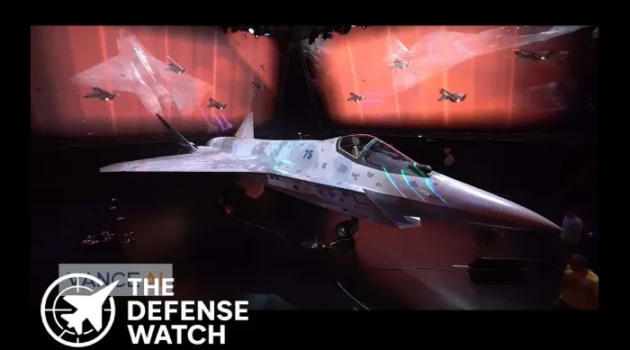
Russia, whose air force is operating under severe attrition from combat losses in Ukraine, faces a more distant sixth-generation threat horizon. Moscow’s Su-75 Checkmate program has stalled, and Russia’s defense-industrial capacity is stretched. Russian planners are unlikely to view GCAP as an immediate threat, but they will note the Japan dimension — a Japan equipped with advanced stealth fighters and manned-unmanned teaming capability substantially alters the balance in Northeast Asia, a region where Russia maintains significant Pacific Fleet and air defense investments.
What To Watch Next: Demonstrators, Decisions, and New Members
Several near-term milestones will test GCAP’s momentum. The contract runs through June 2026, at which point program leadership will likely announce the next phase of design and industrial activity. The UK Combat Air Flying Demonstrator, whose design BAE Systems revealed in July 2025, is expected to advance technology maturation and de-risk propulsion and sensor concepts before the final production configuration is locked.
Canada’s potential observer status by July 2026 is worth monitoring. An observer role could evolve into industrial partnership, and Canada’s combat air procurement requirements — driven by the eventual need to replace its CF-18 fleet — make GCAP an attractive long-term option, particularly given close Five Eyes intelligence-sharing ties with the UK.
Export prospects will increasingly drive program economics. A sixth-generation aircraft backed by the industrial depth of BAE Systems, Leonardo, and Mitsubishi Heavy Industries carries credibility across NATO Europe, the Middle East, and the wider Indo-Pacific. Early export success would distribute costs and sustain production rates, making the per-unit price more competitive against whatever the U.S. offers as an eventual NGAD export variant.
Capability Gap: Filling the Fifth-Generation Ceiling
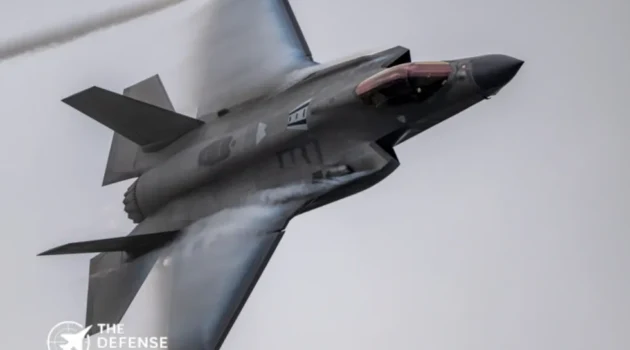
Current fifth-generation platforms — the F-35, F-22, and Eurofighter with enhancements — were designed for threat environments projected a decade or more ago. They remain highly capable, but their sensor fusion, data-link bandwidth, electronic attack capacity, and payload flexibility are increasingly being tested by adversary integrated air defense systems that have evolved specifically to defeat low-observable aircraft.
GCAP targets that gap directly: higher sensor data throughput, manned-unmanned teaming that multiplies effective mass without multiplying pilot risk, and an open systems architecture designed to absorb mid-life upgrades across a service life stretching to 2070-plus. The realistic limitation is time and cost. Sixth-generation development is more technically complex than any previous fighter generation, and industrial supply chains for advanced composites, high-power electronics, and next-generation propulsion components are already strained across multiple simultaneous programs globally.
The Edgewing contract does not eliminate those risks. It does, however, put clear accountability in one place — and in a multinational combat aviation program, that alone is a meaningful achievement.
The Bottom Line
With Edgewing now empowered as the unified design authority and $850 million committed to the next development phase, GCAP has crossed from political ambition to executable program, positioning the UK, Italy, and Japan to field a genuine sixth-generation air combat system at a moment when allied air dominance can no longer be assumed.
The GCAP fighter program is moving forward as the United Kingdom begins unlocking funding to sustain development of its next-generation combat aircraft.
British officials are working through internal budget processes to ensure steady financial support for the Global Combat Air Programme, a trilateral initiative with Japan and Italy aimed at delivering a sixth-generation fighter by 2035.
The funding progress comes at a critical stage, as partner nations transition from early concept work toward more intensive development and industrial alignment.
¦
KEY FACTS AT A GLANCE
The UK is finalizing funding mechanisms to sustain the GCAP sixth-generation fighter program.
GCAP is a trilateral effort between the UK, Japan, and Italy targeting service entry by 2035.
The program aims to replace aging Eurofighter Typhoon fleets and maintain advanced air superiority.
GCAP represents one of the most ambitious multinational combat aircraft programs in Europe.
The Big Picture
Europe is accelerating efforts to field sixth-generation air combat systems as global competition intensifies. The GCAP fighter program reflects a broader shift among U.S. allies to maintain technological parity with emerging threats, particularly in the Indo-Pacific and Euro-Atlantic theaters.
The United States continues to advance its own Next Generation Air Dominance program, while France, Germany, and Spain are pursuing the Future Combat Air System. GCAP positions the UK and its partners as a parallel center of advanced combat aviation development.
The program also reinforces defense industrial cooperation between Europe and Asia, linking British and Italian aerospace capabilities with Japan’s growing defense technology base.
Officials are reportedly refining how funding will be structured over the coming years, ensuring predictable investment for industry partners. This includes major defense contractors responsible for propulsion, avionics, and advanced sensors.
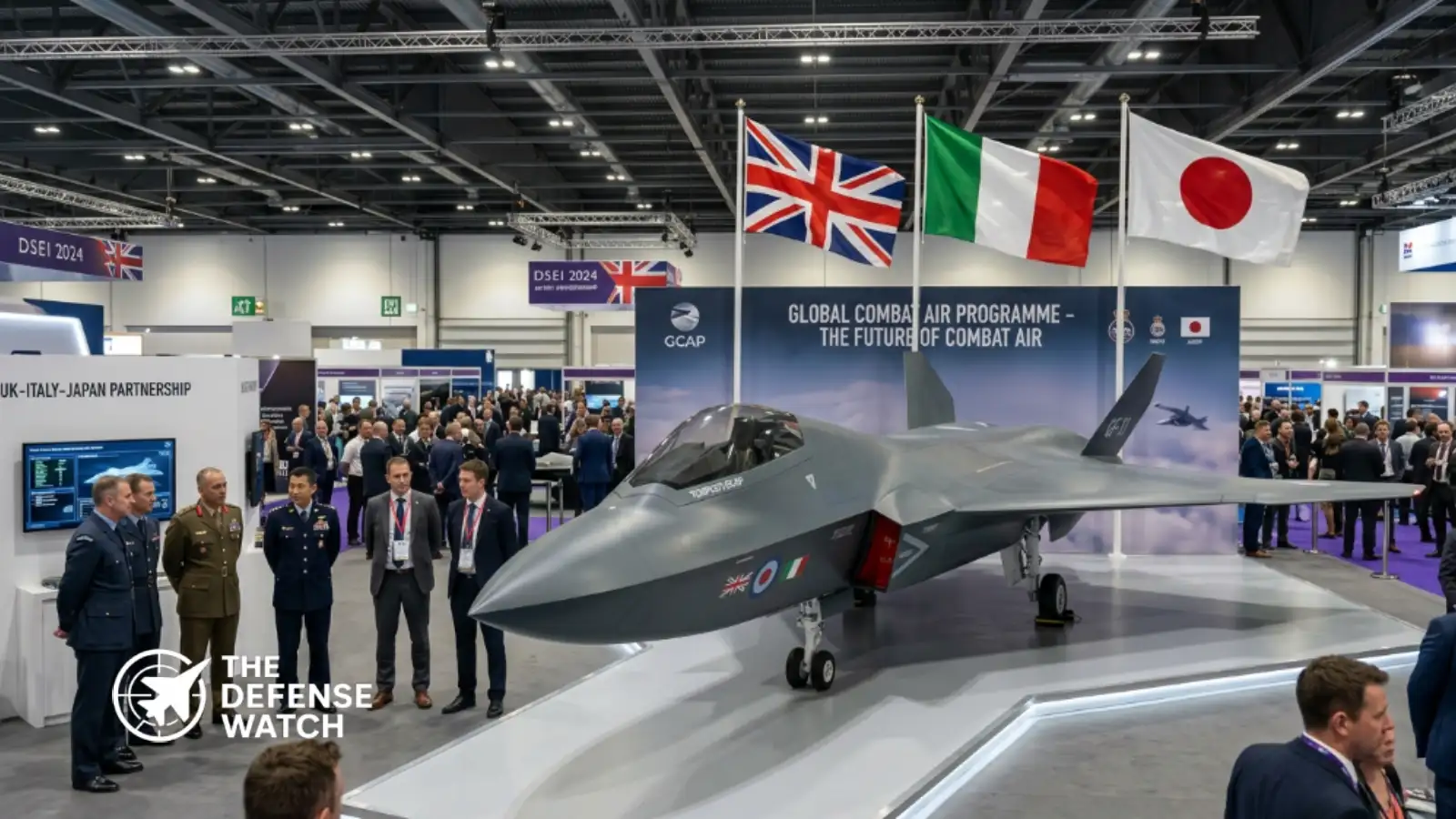
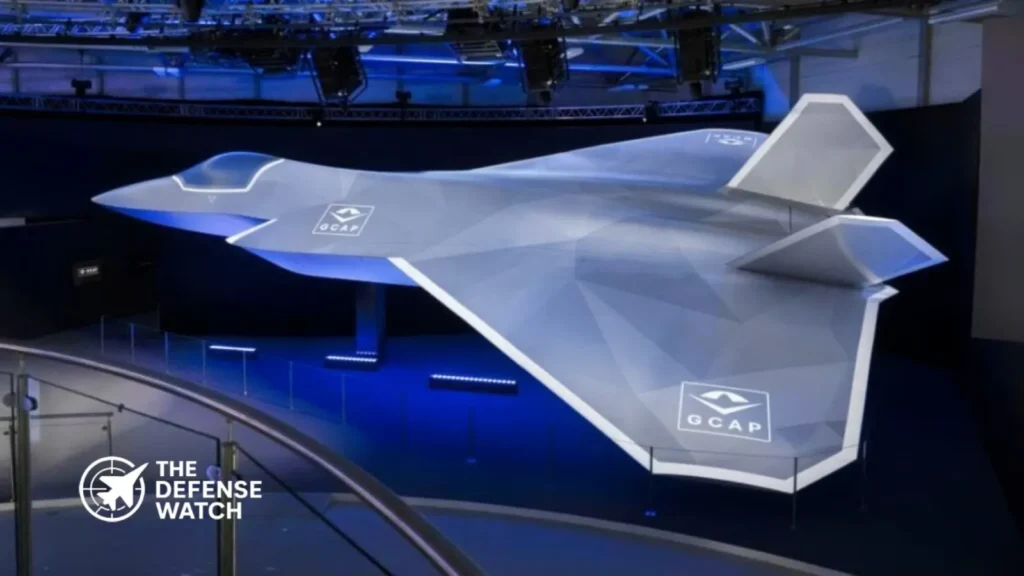
A design model for the Global Combat Air Programme (GCAP) fighter jet is displayed at the Defence and Security Equipment International (DSEI) arms fair in London on Sept. 9, 2025. (Reuters/Toby Melville)
GCAP remains a joint effort between the United Kingdom, Japan, and Italy, formally announced in 2022. The program aims to deliver a stealthy, networked, and highly survivable fighter aircraft capable of operating in contested environments.
The target in-service date remains 2035, a timeline that requires sustained funding discipline across all partner nations.
Why It Matters
Stable funding is the single most critical factor in determining whether the GCAP fighter program meets its timeline.
Sixth-generation fighters require long development cycles, often spanning more than a decade. Any disruption in funding can delay key milestones such as prototype testing, systems integration, and production ramp-up.
The UK’s effort to secure financing signals political commitment to maintaining sovereign and allied airpower capabilities. It also reassures industry partners that the program will not face near-term cancellation risks.
This is particularly important given the scale of investment required, which is expected to reach tens of billions of dollars over the program’s lifecycle.
Strategic Implications
GCAP strengthens NATO-aligned airpower by ensuring that European allies retain access to advanced combat aircraft beyond the current generation.
The program enhances deterrence by signaling that partner nations are willing to invest in high-end capabilities designed for peer conflict scenarios. These include advanced stealth, sensor fusion, artificial intelligence-assisted decision-making, and collaborative combat with unmanned systems.
GCAP also diversifies the global fighter market, reducing reliance on U.S.-built platforms such as the F-35. While interoperability with U.S. systems remains essential, independent development gives allies greater operational flexibility.
China and Russia are likely to view the GCAP fighter program as part of a broader Western effort to sustain technological superiority in air combat.
China is advancing its own next-generation fighter concepts alongside existing fifth-generation platforms like the J-20. Russia continues work on programs such as the Su-57 and future designs, despite industrial and financial constraints.
From Beijing’s perspective, GCAP’s integration with Japan introduces a direct Indo-Pacific dimension, potentially affecting regional military balances.
Program milestones over the next several years will determine whether GCAP stays on track.
Observers should monitor prototype development timelines, engine testing progress, and the establishment of joint industrial structures among the three partner nations.
Funding stability across all partners will remain a key indicator. Any divergence in national priorities could affect the program’s schedule or scope.
Formal contracts, industrial workshare agreements, and technology demonstrations are expected to accelerate as the program moves deeper into development.
Capability Gap
The GCAP fighter program aims to close a growing capability gap in advanced air combat.
Current fourth-generation platforms such as the Eurofighter Typhoon face limitations in contested environments dominated by advanced air defenses and electronic warfare systems.
Fifth-generation aircraft address many of these challenges, but sixth-generation systems are expected to go further by integrating manned-unmanned teaming, enhanced stealth, and real-time data fusion across multiple domains.
However, the program faces inherent risks. These include cost growth, technological complexity, and the challenge of coordinating three national defense industries with differing requirements.
The Bottom Line
The UK’s move to secure funding for the GCAP fighter program signals firm commitment to sixth-generation airpower and reinforces allied efforts to maintain long-term air superiority.
Italy Commits Nearly $11 Billion to Trilateral Fighter Program
Italy’s parliament has approved approximately €8.77 billion in funding for the Global Combat Air Programme’s initial development phases, marking a significant commitment to the trilateral sixth-generation fighter initiative with the United Kingdom and Japan. The Thursday approval comes despite program costs more than tripling since initial 2021 estimates.
The defense committee of Italy’s lower house of parliament authorized the funding proposal, which will be disbursed through annual installments extending to 2037. Under Italian parliamentary procedures, the committee’s vote is final and does not require full chamber approval.
The GCAP funding approval represents one of the most expensive military aviation programs in Italian history, surpassing even the nation’s F-35 acquisition program in total projected development costs.
Program Costs Surge From Original Estimates
Italy now expects its total contribution to GCAP’s early development phases to reach €18.6 billion (approximately $21.8 billion), a dramatic increase from the roughly €6 billion estimated at 2021 prices when the program was initially proposed to parliament. The recently approved €8.77 billion represents the immediate funding authorization, with the remaining €7.8 billion to be arranged through future appropriations.
The Global Combat Air Programme was formally launched in December 2022 when Italy, the United Kingdom, and Japan merged their separate sixth-generation fighter development efforts into a unified program. The initiative aims to deliver an operational next-generation fighter aircraft by 2035, designed to integrate crewed and uncrewed platforms, advanced sensors, and networked data systems into a comprehensive “system of systems” architecture.
According to parliamentary documentation, the cost increases stem from updated estimates for technology maturation, expanded testing and development requirements, and enhanced design specifications. Defense analysts note that sixth-generation fighter programs inherently involve greater complexity and cost than previous aircraft generations due to their integration of artificial intelligence, loyal wingman drones, combat cloud networks, and advanced stealth capabilities.
Political Response and Strategic Context
The funding approval drew immediate criticism from Italy’s opposition Five Star Movement, which questioned the magnitude of the cost increase without detailed parliamentary explanation. Five Star parliamentarians noted that GCAP has become the most expensive program in Italian military history, exceeding the F-35 program’s €18 billion expenditure for 90 aircraft.
Despite domestic political scrutiny, Italian Prime Minister Giorgia Meloni’s governing coalition holds majorities in both parliamentary chambers, making final approval highly probable. The Italian government has consistently reaffirmed its commitment to GCAP at the international level, with Meloni and Japanese Prime Minister Takaichi Sanae expressing satisfaction with program progress during a January 2026 meeting in Tokyo.
GCAP Fighter. Industry Handout Image. (adsbygoogle = window.adsbygoogle || []).push({});
Italian Defense Minister Guido Crosetto has publicly stated that GCAP represents a strategic investment in technological sovereignty and equal partnership, contrasting it with previous programs where Italy played a more subordinate role. During recent parliamentary testimony, Crosetto indicated that additional countries including Germany and Australia have expressed interest in joining the program.
GCAP vs FCAS: Competing European Visions
The Italian parliamentary approval occurs against the backdrop of significant tensions within the rival Franco-German-Spanish Future Combat Air System (FCAS) program. FCAS has experienced prolonged industrial disputes, particularly over workshare allocation and intellectual property rights between Dassault Aviation and Airbus, leading to schedule delays and political friction.
Multiple European defense publications have reported that Germany is actively considering abandoning FCAS in favor of joining GCAP, a development that would fundamentally reshape European combat air cooperation. During a January 2026 summit in Rome, German Chancellor Friedrich Merz reportedly discussed GCAP participation with Prime Minister Meloni, though no formal decisions have been announced.
The contrast between the two programs has become increasingly stark. GCAP partners established a formal international treaty in December 2023, created a joint business venture among BAE Systems, Japan Aircraft Industrial Enhancement Company, and Leonardo, and have maintained consistent program timelines. Meanwhile, FCAS continues to struggle with fundamental governance and industrial participation issues.
(adsbygoogle = window.adsbygoogle || []).push({});GCAP Fighter. Industry Handout Image.
Italian Foreign Minister Antonio Tajani stated in early February 2026 that Italy remains open to expanding GCAP membership if additional nations wish to join, emphasizing that broader participation could reduce per-nation costs while increasing technological capacity and economic returns.
Technical Capabilities and Industrial Organization
GCAP is designed as a comprehensive sixth-generation combat air system, not merely a single aircraft platform. The program encompasses development of a next-generation manned fighter as the core platform, integration with Adjunct Combat Aircraft (loyal wingman drones), establishment of a combat cloud data exchange architecture connecting space-based, airborne, naval, and ground sensors, and incorporation of artificial intelligence for enhanced decision-making and autonomous operations.
The three-nation partnership operates under an explicitly equal framework, with each country holding one-third stakes in the joint industrial venture. BAE Systems serves as the UK industrial lead, responsible for airframe development and overall integration. Leonardo leads Italian participation, with specific responsibilities for flight system integration, weapons integration, and training systems. Mitsubishi Heavy Industries heads Japanese industrial involvement, managing airframe production and systems integration for Japan.
The program structure includes provisions for technology transfer and shared intellectual property rights, addressing concerns that arose in previous collaborative efforts where certain partners retained disproportionate control over critical technologies and capabilities.
Operational Requirements and Timeline
GCAP aims to replace the Eurofighter Typhoon in Royal Air Force and Italian Air Force service, and the Mitsubishi F-2 in Japan Air Self-Defense Force operations. The target in-service date of 2035 positions GCAP to address the obsolescence of current fourth-generation and early fifth-generation platforms as peer competitors field their own advanced systems.
Defense planners envision GCAP aircraft operating in contested environments where communication with traditional support assets may be restricted or denied. The platform’s design emphasizes extended range, potentially enabling transatlantic missions on internal fuel, internal weapons carriage exceeding current fifth-generation fighters to maintain stealth characteristics, and data processing capacity sufficient to coordinate multiple uncrewed wingman aircraft in real-time combat scenarios.
Flight testing of technology demonstrators is scheduled to commence in 2027-2028, with the UK’s Excalibur flight test aircraft program already underway using modified Boeing 757 airframes. Italy and Japan have announced plans to develop their own domestic flight test platforms to accelerate development and reduce risk.
Budget Implications and Future Funding
For fiscal year 2025, Italy has allocated over €600 million to GCAP, placing it among the nation’s largest defense expenditures alongside F-35 procurement and Eurofighter upgrade programs. The approved €8.77 billion will be disbursed in annual increments through 2037, requiring sustained budgetary commitment across multiple government administrations.
Italy currently operates 118 Eurofighter aircraft and plans to acquire 115 F-35s, with combined inventory projected to exceed 180 aircraft through the 2040s. GCAP is expected to initially supplement, then gradually replace the Eurofighter fleet as those aircraft reach end-of-service life.
The Italian government is leveraging defense spending provisions within the European Union’s Stability Pact framework, which allows military expenditures to be temporarily excluded from deficit calculations under certain circumstances. This mechanism provides financial flexibility to sustain major long-term defense programs without immediately impacting fiscal targets.
International Interest and Program Expansion
Beyond Germany’s potential participation, multiple nations have expressed varying levels of interest in GCAP. Australia received an informational briefing from the GCAP consortium during the March 2025 Avalon Airshow, though Royal Australian Air Force officials indicated that significant uncertainties remain before formal consideration.
Saudi Arabia has pursued GCAP membership since 2023, though Japan initially expressed reservations regarding export policy, technology security, and timeline concerns. Recent diplomatic discussions at the 2024 G20 Summit and subsequent ministerial meetings suggest that Saudi participation remains under active consideration, particularly regarding cost-sharing arrangements and technology transfer provisions.
Canada has also examined GCAP as a potential future acquisition to succeed its planned F-35A fleet, according to diplomatic sources. Portugal’s defense minister indicated in 2025 that the country would consider joining either GCAP or FCAS as an observer under broader Portuguese Air Force modernization plans.
The potential expansion of GCAP membership presents both opportunities and challenges. Additional participants would broaden the program’s financial base and industrial capacity while potentially complicating governance structures and technology sharing arrangements. The three founding nations have indicated they are developing formal criteria for new member admission to balance these considerations.
Strategic Implications for European Defense
The approval of major GCAP funding by Italy, combined with potential German participation, carries significant implications for European defense industrial consolidation. Defense market analysts have long argued that Europe cannot sustainably support multiple competing sixth-generation fighter programs given limited procurement budgets and industrial capacity.
If Germany formally joins GCAP, the program would unite four of Europe’s five largest defense economies (UK, Italy, Germany, and potentially Spain if it follows Germany), leaving France pursuing FCAS either independently or with significantly reduced European participation. Such an outcome would represent a fundamental realignment of European combat air development away from traditional Franco-German defense cooperation.
The United Kingdom’s departure from the European Union had initially raised questions about UK-EU defense industrial cooperation, but GCAP demonstrates that substantive partnerships can proceed outside formal EU frameworks. Italy’s full commitment despite being an EU member state and potential German interest suggest that operational requirements and industrial pragmatism may outweigh political preferences for EU-internal programs.
NATO interoperability considerations also favor GCAP expansion, as the program explicitly incorporates data-sharing standards and communications architectures designed for integration with other allied systems. The inclusion of Japan, a major non-NATO ally with increasing security cooperation with European nations, provides additional strategic value in an era of great power competition.
Italy’s parliamentary approval of €8.77 billion in immediate GCAP funding, despite a tripling of estimated total program costs to €18.6 billion, demonstrates the nation’s strategic commitment to sixth-generation combat air capabilities through equal international partnership. The program’s progress contrasts sharply with the troubled FCAS initiative, potentially attracting additional European participants and reshaping the continent’s future combat air landscape.
As GCAP advances toward technology demonstration flights in 2027-2028 and an operational aircraft by 2035, the program represents not merely a weapons acquisition but a comprehensive transformation in how allied nations develop, integrate, and employ air combat capabilities in an increasingly contested operational environment.