Executive Summary:
BAE Systems has received a $535.6 million contract from the U.S. Army for additional M109A7 self-propelled howitzers and related support vehicles. The award supports ongoing artillery modernization efforts aimed at improving battlefield survivability, mobility, and operational readiness for U.S. armored brigade combat teams.
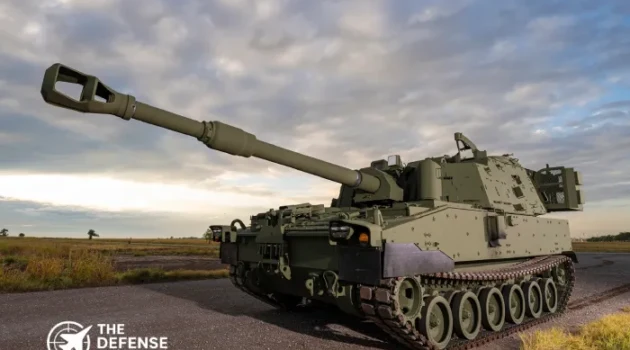
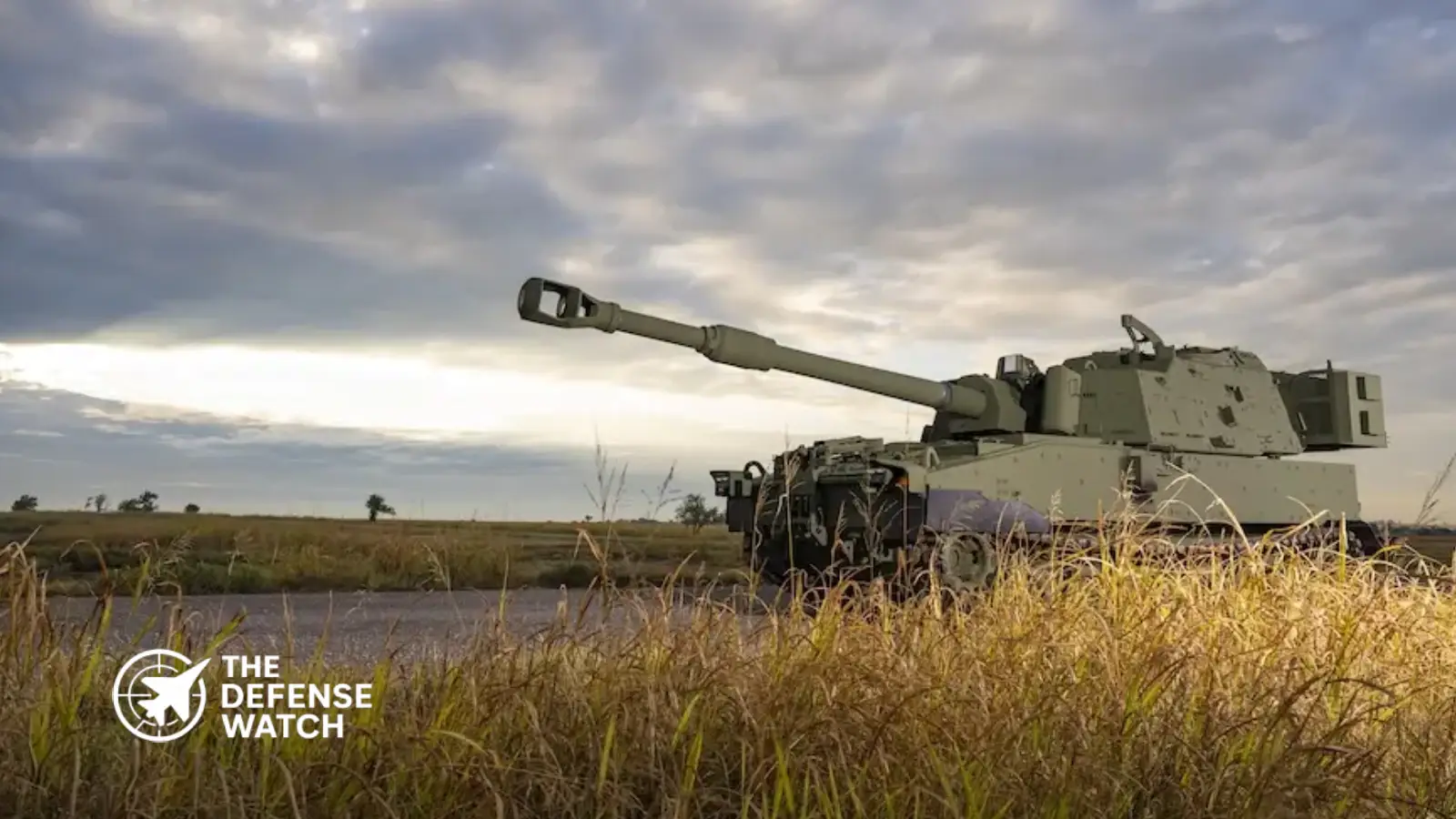
The M109A7 Paladin remains central to the U.S. Army’s long-term artillery modernization strategy, and the latest contract awarded to BAE Systems reinforces that priority. The new $535.6 million award covers the production of additional M109A7 self-propelled howitzers and accompanying field artillery ammunition support vehicles.
According to the contract announcement, the agreement was issued by the U.S. Army as part of its continuing effort to modernize armored combat formations with improved fire support capabilities. The work will be performed at multiple facilities in the United States, with completion expected over the coming years.
The M109A7 program represents the latest evolution of the long-serving Paladin artillery system, integrating upgraded chassis components, improved survivability features, enhanced electrical power generation, and digital networking systems designed to support modern battlefield operations.
U.S. Army Continues Artillery Modernization Push
The latest procurement highlights the Army’s continuing emphasis on maintaining mobile and survivable indirect fire systems capable of supporting high-intensity combat operations.
The M109A7 platform is designed to replace older M109A6 Paladin systems while improving commonality with the M2 Bradley family of armored vehicles. By leveraging Bradley-derived chassis and powertrain components, the Army aims to simplify logistics, reduce sustainment burdens, and improve operational readiness across armored formations.
The M109A7 also introduces upgraded onboard power systems capable of supporting future electronic warfare, communications, and targeting technologies. Defense planners increasingly view power generation and digital integration as critical requirements for modern combat platforms operating in contested environments.
The accompanying ammunition support vehicle, known as the M992A3 Carrier Ammunition Tracked vehicle, is intended to improve resupply efficiency and maintain operational tempo during sustained artillery operations.
Strategic Importance Of Mobile Artillery Systems
The contract comes amid growing global focus on conventional artillery capabilities following lessons observed in recent conflicts, particularly in Europe and the Middle East. Military planners worldwide have increasingly emphasized the importance of long-range fires, survivable artillery platforms, and rapid ammunition resupply capabilities.
Self-propelled artillery systems such as the M109A7 provide armored maneuver units with protected indirect fire support while retaining the mobility needed to reposition quickly after firing missions. That capability has become increasingly important as counter-battery radar systems, drones, and precision-guided munitions continue to evolve.
Compared with towed artillery, tracked self-propelled systems offer greater survivability in high-threat environments and can operate alongside armored formations during fast-moving combat operations. The Army’s investment in upgraded Paladin systems reflects broader NATO interest in strengthening conventional deterrence capabilities.
The M109A7 is not a completely new platform, but rather a substantial modernization effort intended to extend operational relevance while the Army evaluates future long-range artillery concepts.
Production And Industrial Base Impact
For BAE Systems, the award strengthens its position as a major supplier of armored combat systems for the U.S. military. The company has remained deeply involved in tracked combat vehicle production, sustainment, and modernization programs for decades.
The contract also supports the broader U.S. defense industrial base, particularly in armored vehicle manufacturing and artillery system production. Maintaining active production lines is increasingly viewed as strategically important as Western governments seek to replenish inventories and sustain long-term defense readiness.
Industry analysts have noted that steady procurement contracts allow manufacturers to preserve skilled labor, maintain supplier networks, and reduce production disruptions that can occur when major programs experience gaps in funding or procurement schedules.
The Army’s continued investment in the M109A7 may also help sustain future modernization pathways involving advanced fire control systems, automation technologies, and precision-guided artillery integration.
Operational Role In Future Conflicts
The M109A7 self-propelled howitzer is expected to remain a key component of U.S. armored brigade combat teams for years to come. Its modernization package aims to ensure compatibility with evolving battlefield command networks and future sensor-to-shooter systems.
Although newer long-range artillery programs continue to receive attention, conventional tracked howitzers remain essential for sustained combat operations requiring responsive and mobile fire support.
The Army’s broader modernization strategy increasingly focuses on balancing next-generation technologies with upgrades to proven legacy systems that can continue delivering operational value at scale. The M109A7 program reflects that approach by combining existing combat experience with targeted technological improvements.
As global military competition intensifies, artillery modernization programs are expected to remain a major priority across NATO and allied armed forces.