Europe is becoming a larger part of Lockheed Martin’s industrial strategy as NATO allies increase defense spending and seek faster access to U.S.-designed weapons.
- Lockheed Martin NATO Weapons Demand Is Reshaping European Defense Production
- Takeaways
- European Production Becomes a Strategic Priority
- PAC-3 Sustainment Moves Into Europe
- Demand Is Extending Across Multiple Weapon Categories
- Lockheed Martin Is Scaling U.S. Production Too
- Why European Co-Production Matters
- A Broader Transatlantic Industrial Model
Lockheed Martin NATO Weapons Demand Is Reshaping European Defense Production
Lockheed Martin NATO weapons demand is increasingly influencing how the U.S. defense contractor plans production, maintenance and industrial partnerships across Europe. The company is responding to stronger allied requirements by expanding manufacturing capacity, developing European co-production arrangements and establishing regional sustainment infrastructure.
Takeaways
Lockheed Martin is expanding its European industrial footprint as NATO demand increases for missiles, air defense, precision strike and long-term sustainment.
The shift comes as NATO members increase defense investment and seek greater access to critical weapons systems, while governments across Europe are also placing greater emphasis on domestic industrial capacity.
Lockheed Martin Chairman, President and CEO Jim Taiclet discussed the trend during the company’s second-quarter 2026 earnings call, describing allied demand, production scaling and sustainment as important elements of the company’s current business strategy.
The development is significant because European defense procurement is increasingly moving beyond simply purchasing finished systems. Governments are looking for local manufacturing, maintenance, technical expertise and supply-chain participation that can support military readiness over the full life of a weapon system.
European Production Becomes a Strategic Priority
The latest move reflects a broader change in the transatlantic defense industry.
For decades, European NATO members have purchased major U.S. defense systems while relying heavily on American production and sustainment networks. That model is becoming less attractive as European militaries seek greater resilience, faster replenishment and more control over critical supply chains.
NATO’s strategy for industry cooperation, endorsed at the alliance summit in Ankara in July, explicitly calls for increased defense production capacity and stronger industry cooperation. The strategy highlights scalable production facilities, surge capacity, protected supply chains and partnerships involving co-design, co-development, co-production and co-sustainment.
This policy direction aligns closely with Lockheed Martin’s expanding European industrial activities.
The company already has a significant European presence and says it has approximately 7,000 employees in the region. It is also working with European suppliers and defense companies across several programs.
ATACMS Co-Production With Rheinmetall
One of the clearest examples is the planned European production of the Army Tactical Missile System, or ATACMS.
Lockheed Martin and German defense company Rheinmetall signed a memorandum of understanding in July to advance plans for a European center of excellence covering ATACMS manufacturing, integration and distribution.
The initiative is intended to support NATO and allied European forces with locally produced munitions. The agreement was announced during the NATO Summit Defense Industry Forum in Ankara with support from the U.S. and German governments.
NATO Secretary General Mark Rutte also highlighted the broader wave of U.S.-European industrial agreements announced during the forum. NATO said the initiatives are designed to increase production of key American capabilities in Europe and strengthen transatlantic industrial cooperation.
For Lockheed Martin, ATACMS is therefore more than a conventional export program. The European arrangement points toward a model in which manufacturing capacity is distributed across allied countries rather than concentrated entirely in the United States.
PAC-3 Sustainment Moves Into Europe
Missile defense is another major part of the strategy.
The United States, Germany, the Netherlands, Poland and Sweden agreed in July to explore a dedicated PAC-3 missile maintenance facility in Europe. The proposed facility would provide in-region maintenance and sustainment for PAC-3 missiles, helping keep the weapons available for operational use without requiring all maintenance activity to be performed in the United States.
The initiative comes as European governments place greater emphasis on integrated air and missile defense.
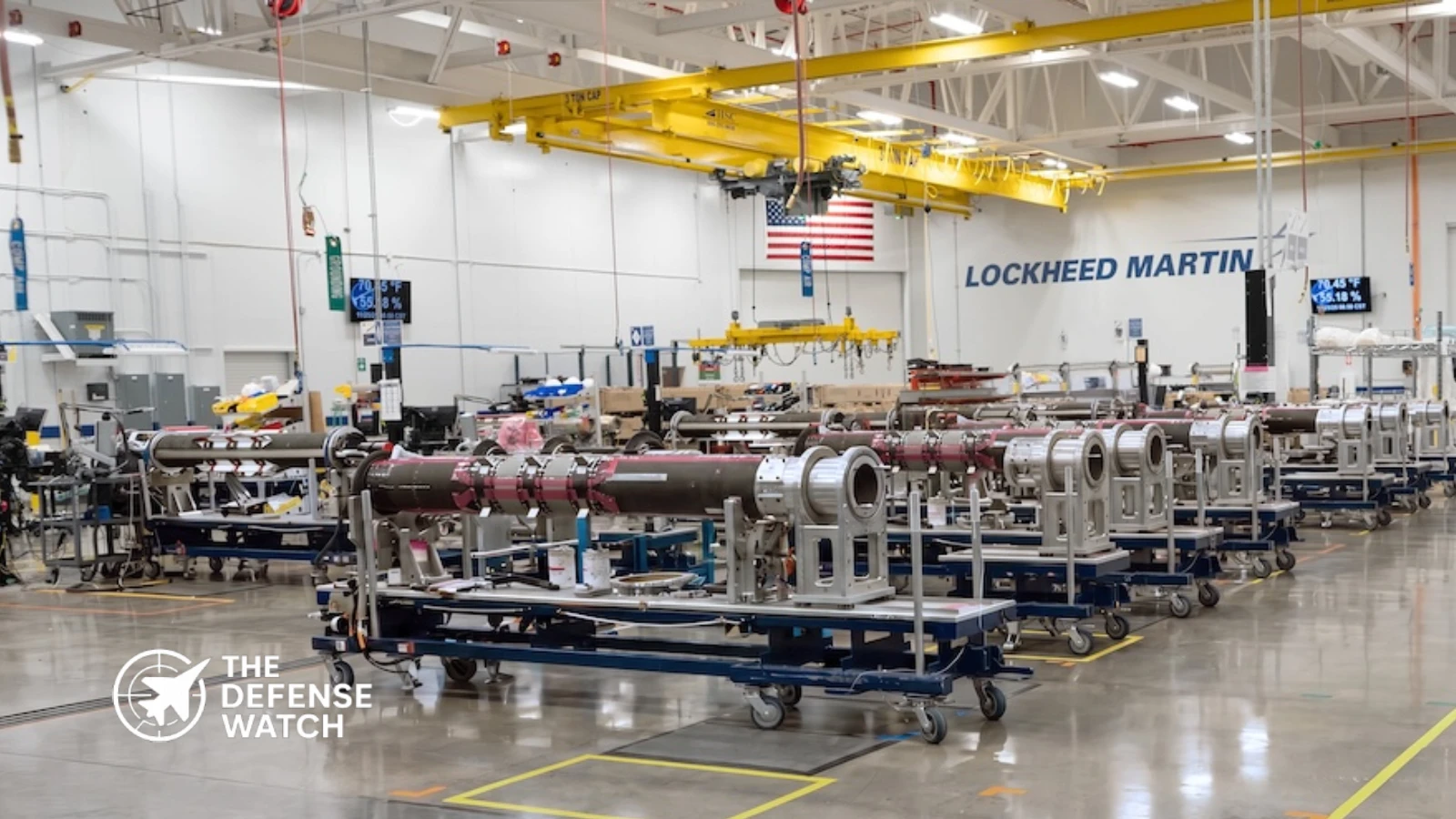
The demand for interceptors has also exposed the importance of production capacity. On Aug. 31, the Pentagon announced seven-year agreements with Lockheed Martin and General Dynamics Ordnance and Tactical Systems intended to expand missile production and accelerate delivery of critical components for the THAAD and PAC-3 MSE programs.
The production push in the United States and sustainment initiatives in Europe address different parts of the same readiness problem. Increasing manufacturing capacity can replenish inventories, while regional maintenance infrastructure can help keep existing weapons operational.
Demand Is Extending Across Multiple Weapon Categories
The Lockheed Martin NATO weapons demand trend is not limited to a single missile program.
The company has identified air and missile defense, tactical missiles and precision strike as areas where allied requirements are increasing. Lockheed Martin said in July that it was expanding production capacity while strengthening European supply-chain participation.
European partnerships include expanded component production in Spain and additional supply-chain capacity in Germany for PAC-3 MSE. The company has also maintained long-standing industrial relationships with Polish defense companies.
In Finland, Lockheed Martin and technology company Insta are establishing a sustainment center for M270A2 and HIMARS systems. The initiative is intended to provide regional support for multiple-launch rocket system capabilities.
Estonia is also working with Lockheed Martin on a HIMARS support center designed to strengthen long-term sustainment in Estonia and the Baltic region.
These developments show that the industrial strategy is expanding beyond factory production. Training, spare parts, maintenance and repair are becoming integral components of the European defense market.
Lockheed Martin Is Scaling U.S. Production Too
The European expansion is occurring alongside a significant increase in Lockheed Martin’s overall manufacturing activity.
The company reported $20.1 billion in second-quarter 2026 sales, up 11 percent from the same quarter in 2025. Its backlog reached a record $230 billion, including a multiyear contract for THAAD interceptors.
Lockheed Martin has also been increasing munitions capacity in anticipation of higher demand. During the second-quarter earnings call, Taiclet pointed to earlier investments in manufacturing capacity and allied industrial partnerships as factors supporting the company’s ability to respond to current requirements.
The company has separately said it is increasing PAC-3 MSE production capacity under a U.S. munitions acceleration effort.
This creates a two-track industrial approach. Production in the United States remains essential for overall capacity, while European manufacturing and sustainment can put selected capabilities closer to the NATO countries that operate them.
Why European Co-Production Matters
The most important change is not simply where weapons are assembled.
European co-production can reduce dependence on long transatlantic supply chains for selected components and systems. It can also provide European governments with a larger industrial role in programs that they are funding through increased defense budgets.
For NATO, the model has another benefit. A broader network of factories, suppliers and maintenance centers can provide additional capacity during periods of high demand.
That matters because modern weapons inventories are affected by more than procurement decisions. A missile system requires components, spare parts, trained technicians, maintenance facilities, testing capacity and a reliable flow of replacement equipment.
NATO’s new industry strategy recognizes this problem by calling for production systems capable of scaling during periods of heightened demand and for measures that improve supply-chain resilience.
The Lockheed Martin NATO weapons demand story therefore reflects a larger transformation in alliance defense planning. Procurement is increasingly being connected directly to industrial capacity.
A Broader Transatlantic Industrial Model
Lockheed Martin’s European strategy is developing at a time when NATO governments are under pressure to translate higher defense spending into deployable military capability.
The alliance announced new multinational procurement and industrial initiatives in July, including arrangements designed to accelerate production of air defense and strike capabilities. NATO said the objective is to aggregate demand, align procurement and increase delivery of urgently needed equipment.
For Lockheed Martin, that environment creates opportunities to expand production and sustainment while strengthening relationships with European industry.
The company’s approach also extends into future programs. Sikorsky, a Lockheed Martin company, confirmed in July that it was pursuing the possibility of establishing a European production line for the Next Generation Rotorcraft program. The company said European production could strengthen regional industrial capacity and NATO readiness.
The overall direction is clear. European allies are seeking more capacity closer to home, while U.S. defense companies are increasingly using European partnerships to meet that requirement.
For Lockheed Martin, the result is a defense industrial strategy in which production, co-production and sustainment are becoming closely connected.
As NATO continues implementing its new defense production policies, the ability to manufacture, maintain and replenish weapons within the alliance will remain a central part of military readiness.
The expansion now underway suggests that European defense procurement is moving toward a more distributed industrial model, with American technology and European manufacturing increasingly operating as parts of the same transatlantic production network.