

Strategic Stakes Beyond Terrestrial Borders
Space has evolved into a critical military domain where the U.S., Russia, and China vie for dominance. Satellites play indispensable roles in communications, reconnaissance, missile warning, navigation, and potential offensive capabilities. Recent events illustrate how planetary defense now hinges on orbital power.
Cyber and Physical Vulnerabilities in Orbit
In August 2025, pro-Russian hackers hijacked a Ukrainian broadcast satellite to beam propaganda during Victory Day — a stark reminder of how easily satellites can become tools of psychological warfare. With over 12,000 in orbit, systems ranging from GPS to military C2 are vulnerable to cyber disruption and outdated software.
U.S. officials also warn of a looming Russian nuclear anti-satellite (ASAT) weapon that could disable hundreds of satellites in low Earth orbit. Experts liken the threat to a new “Cuban Missile Crisis” in space.
U.S. Advancements: X-37B, Blackjack & Artemis Defender Vision
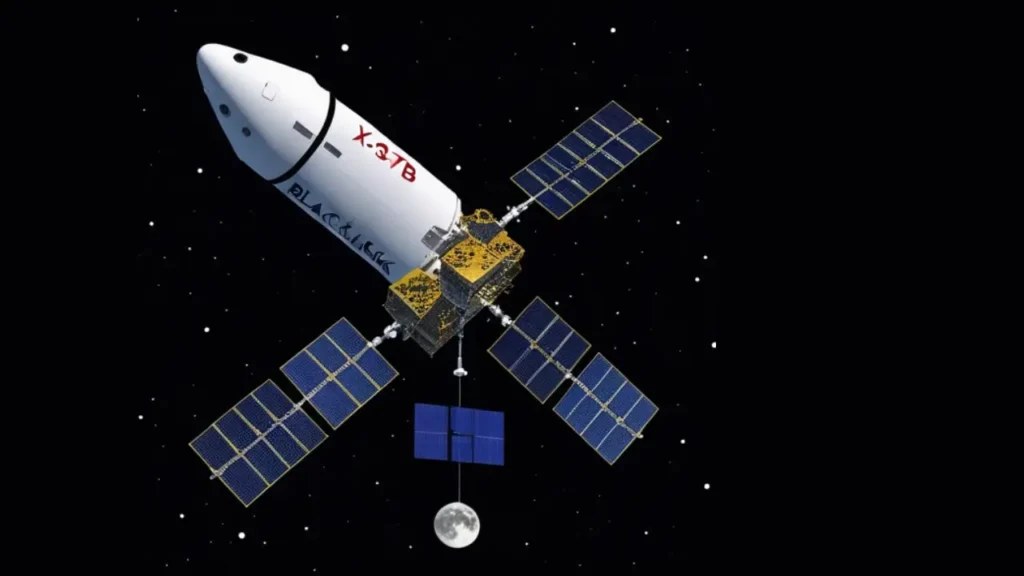
The U.S. continues to expand its military space capabilities. The X-37B reusable spaceplane, launched on its eighth mission, tests critical technologies—from laser communications to quantum inertial navigation—and supports orbital maneuver tactics.
In parallel, DARPA’s Blackjack constellation, a network of low-cost, short-lifespan surveillance satellites, will replace legacy systems like KH-11 and Misty. Launching in 2024, Blackjack aims to increase resilience and reduce vulnerability through dispersed architecture.
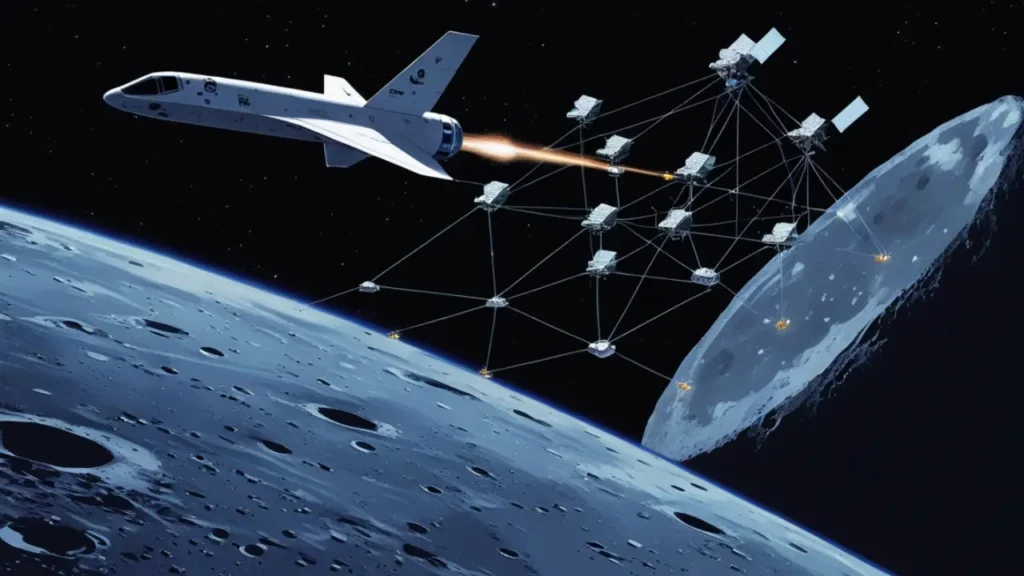
Moreover, proposals such as the controversial Golden Dome space-based missile defense shield envision interceptors in orbit to counter hypersonic and ballistic threats—though concerns remain over cost, feasibility, and escalation risk.
Russia & China: ASAT Ambitions and Lunar Rivalry
Moscow’s Kosmos-2553, part of its Neitron radar system, carries alarming implications—U.S. assessments suggest it may serve as a testing platform for a nuclear ASAT weapon, capable of crippling low-Earth orbit infrastructure.
Meanwhile, China’s Shijian-17, equipped with a robotic arm, performs non-typical orbital maneuvers—operating closely to other geostationary satellites. U.S. officials warn the technology might be used to grapple adversary satellites.
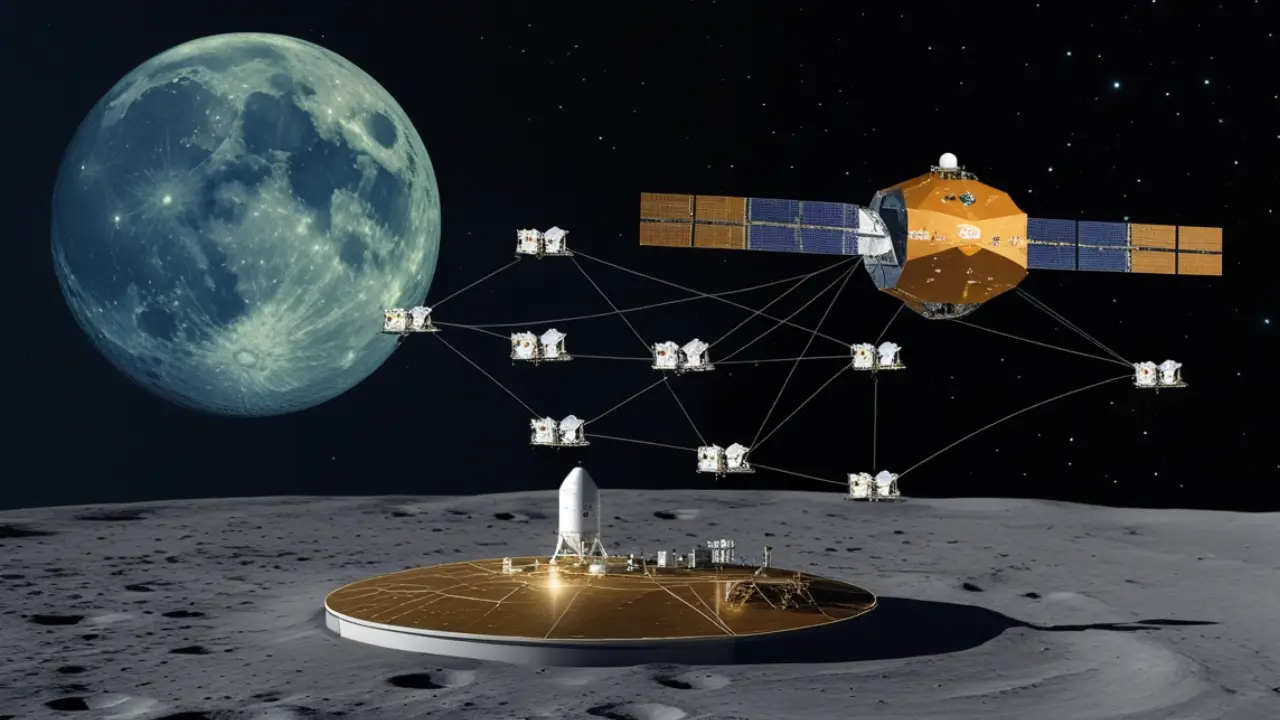
On the lunar front, both China and Russia aim to establish a joint International Lunar Research Station (ILRS) powered by nuclear energy, counterposed by the U.S. Fission Surface Power Project, which plans a 100-kW nuclear reactor on the Moon by 2030 to support Artemis missions.
U.S. Alliances & Civilian Cooperation Persist
Despite military tensions, civilian collaboration endures. In July 2025, NASA Administrator Sean Duffy and Roscosmos chief Dmitry Bakanov met—renewing discussions on ISS operations, lunar exploration, and deep-space cooperation, including extending astronaut exchanges
Strategic thinking in Washington also envisions a U.S.-led “Allied Space Forces,” akin to NATO—uniting space-faring allies like the U.K., Japan, and Australia to deter space threats, enforce norms, and strengthen collective defense.
Context & Analysis
The intensifying competition for satellite superiority highlights space’s transformation into a contested warfighting domain. The U.S. addresses this through resilient constellation architecture (X-37B, Blackjack), forward-leaning defenses (Golden Dome), and cooperative frameworks.
Russia and China, meanwhile, build asymmetric capabilities—testing ASAT weapons, deploying robotic grappling satellites, and expanding into lunar resource exploitation. The U.S.’s civilian cooperation with Russia offers some stability but may not stem momentum toward weaponization.
Looking ahead, success in space will hinge on developing norms, robust allied coalitions, and agile technological adaptation to sustain domain supremacy.
FAQs
Unlike the Apollo-era race focused on symbolic lunar milestones, today’s contest centers on militarization, cyber vulnerabilities, commercial dual-use technologies, and resource control from orbit to lunar surfaces.
DARPA’s Blackjack constellation will deploy dozens of low-cost, networked surveillance satellites in low Earth orbit to enhance resilience and complicate adversarial targeting of U.S. space assets.
U.S. officials warn that Russia may be developing nuclear anti-satellite weapons capable of disabling entire satellite networks—a development considered destabilizing and a potential violation of space treaties.
While cooperative initiatives like the ISS partnership still signal goodwill, they coexist with growing militarization. Norms and civilian ties may soften risk but do not halt strategic competition.
Summary
This evolving “New Space Race” marks not a repeat of Apollo but a strategic battleground: cyber-hacks, ASAT threats, resilient U.S. satellite designs, robotic arms in GEO, lunar reactors—all layer into a complex geopolitical calculus where space determines terrestrial power.

14 comments
[…] Pentagon’s Ammo Crunch: Stockpiles Strained by Global Conflicts Amid Surge in… The New Space Race: Military Satellite Dominance – U.S., Russia &… F-35 Program in 2025: Record Deliveries Expected but Upgrade Delays Cloud… U.S. Army’s 2025 […]
[…] Implications How the U.S. Navy Is Training Sailors to Counter Drone-Ship Threats—and… The New Space Race: Military Satellite Dominance – U.S., Russia &… Key Features of Boeing’s Sixth-Gen F-47 Fighter Jet That Define Next-Gen… Hypersonic Era […]
[…] embrace such a posture, how NATO members respond to increased pressure to contribute, and how Russia reacts—especially in escalation domains such as cyber, nuclear signaling, or hybrid warfare. In the coming months, we may see this rhetorical realignment […]
[…] weapons: Prioritized by major military powers for their ability to penetrate advanced air defenses. The U.S., Russia, and China are investing […]
[…] most mature counterspace portfolios. Reports suggest Moscow may be developing a nuclear space-based anti-satellite weapon capable of radiating or electro-magnetically disrupting multiple satellites at once.Russian satellites have also been seen shadowing Western assets, raising concerns of […]
[…] Anti-satellite (ASAT) weapons capable of shooting down satellites from Earth or space. […]
[…] satellites for Earth observation and maritime […]
[…] sensors, undersea unmanned systems) is essential, but so is transparent signaling of resolve. If China doubts U.S. staying power or partner commitment, deterrence […]
[…] “This is ultimately about survivability and staying ahead of asymmetric threats,” said one space security […]
[…] deployment of Meadowlands and RMT marks the latest step in a broader push to ensure U.S. dominance in electromagnetic operations beyond Earth’s […]
[…] have a base on the Moon, we need energy.” He described the drive as part of a broader “second space […]
[…] think this administration is very open to using military force to accomplish particular objectives,” he […]
[…] Beyond military applications, GPS satellites support essential civilian services including commercial aviation, precision agriculture, financial transaction timing, telecommunications network synchronization, and emergency response coordination. The integration of new GPS III spacecraft ensures continuity of these critical services while introducing enhanced capabilities. […]
[…] mission aligns with broader goals under Pakistan’s space strategy, contributing to socioeconomic development and strategic autonomy in space-based […]