Covenant Missile Production Plan Emerges Near Leipzig
Covenant medium-range missile production is reportedly being planned near Leipzig from 2027, according to Reuters reporting cited by Euronews, as Germany looks for affordable long-range weapons that can be manufactured in significant quantities. The reported production capacity could eventually reach as many as 1,000 missiles annually.
- Covenant Missile Production Plan Emerges Near Leipzig
- Takeaways
- What Is Known About the Planned Missile
- Germany’s Growing Focus on Deep Precision Strike
- Why Production Scale Matters
- European Supply Chains Are Central to the Plan
- Covenant’s Anthem Missile Recently Underwent a Live-Fire Test
- The U.S. Strategic Connection
- Key Technical Questions Remain Unanswered
- Procurement Is Still Not Confirmed
- What the Leipzig Plan Could Mean for European Defense
Takeaways
Covenant is reportedly preparing to manufacture medium-range missiles near Leipzig from 2027 as Germany seeks affordable, scalable deep-strike weapons.
The reported plan comes as Germany works to establish a national and European deep-strike capability. The German Bundeswehr has acknowledged that Berlin intends to acquire weapons capable of striking targets hundreds or more than 1,000 kilometers away, describing this as part of its Deep Precision Strike requirement.
The reported Leipzig project therefore fits into a broader German effort to reduce a longstanding gap in European long-range conventional strike capabilities.
What Is Known About the Planned Missile
Public information about the weapon remains limited.
Reuters reported that the missile is expected to have a range of more than 1,500 kilometers and that the production system could reach up to 1,000 missiles per year. Most components for the proposed German production effort are expected to come from Germany and other European countries, according to sources cited by Reuters.
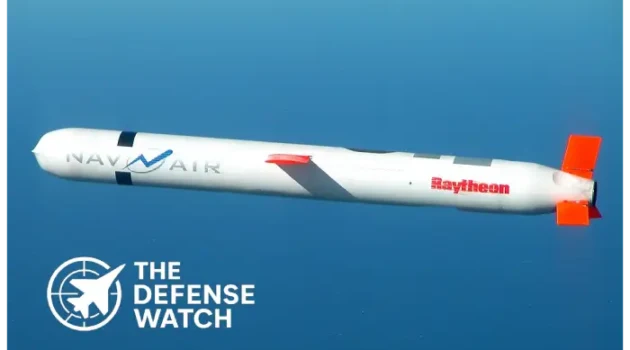
Euronews reported that the missiles could cost a few hundred thousand dollars each, substantially below the approximate cost associated with larger and more expensive cruise missiles such as Tomahawk. However, the exact unit price will depend on the final configuration, production arrangements and procurement terms.
| Reported Parameter | Current Information |
|---|---|
| Manufacturer | Covenant |
| Planned German location | Near Leipzig, Saxony |
| Target production start | 2027 |
| Potential annual output | Up to 1,000 missiles |
| Reported range | More than 1,500 km |
| Expected production base | Germany and wider Europe |
| Missile designation | Not officially confirmed |
| Anthem connection | Not confirmed |
| Procurement status | No confirmed German procurement decision publicly announced |
The absence of a confirmed missile designation is important. Covenant is developing a cruise missile known as Anthem, but available reporting has not established that the system planned for production near Leipzig will definitely be Anthem.
Germany’s Growing Focus on Deep Precision Strike
The proposed production line comes against a significant shift in Germany’s approach to long-range conventional strike.
The Bundeswehr says Germany currently lacks ground-based Deep Precision Strike capabilities and has historically depended heavily on the United States for the ability to engage targets deep inside an adversary’s territory.
Germany has already taken steps toward addressing that gap.
In July, the Bundeswehr confirmed German interest in acquiring U.S. Tomahawk cruise missiles and Typhon launch systems. The German military said the capability could serve as an interim solution while European long-range strike programs are developed.
That requirement is also reflected in Germany’s broader European long-range strike planning. The Bundeswehr has described weapons capable of reaching hundreds or more than 1,000 kilometers as part of its Deep Precision Strike effort.
A locally produced missile with a lower unit cost could address a different part of that requirement than a smaller inventory of premium long-range weapons.
Why Production Scale Matters
The most significant aspect of the Covenant proposal may not be the missile’s reported range. It is the possibility of producing the weapon in large numbers.
Long-range precision weapons are traditionally expensive and difficult to manufacture at scale because they combine propulsion, guidance, navigation, communications, sensors and warhead technologies in a single system.
A production target of up to 1,000 missiles annually would represent a fundamentally different procurement model.
For Germany, a large inventory of comparatively inexpensive precision weapons could provide additional options for sustained conventional strike operations. It could also reduce the pressure to use more expensive missiles for every mission.
The distinction matters because modern missile forces are increasingly judged not only by range and accuracy, but also by magazine depth, replacement rates and the ability of industry to replenish weapons after sustained operations.
European Supply Chains Are Central to the Plan
Reuters reported that although Covenant is an American company, most components for the planned production effort are expected to be sourced from Germany and other European countries.
That approach would give the proposed system a distinctly transatlantic industrial character.
Instead of simply importing finished missiles from the United States, Germany could participate directly in manufacturing and supply-chain development. That could provide greater control over production capacity and potentially shorten replenishment timelines during a prolonged crisis.
It would also align with a wider European defense-industrial trend.
MBDA, for example, reported that its European missile production doubled between 2023 and the end of 2025, with another 40 percent increase planned for 2026. The company also said it had doubled planned European investment for 2026 to 2030 to 5 billion euros.
Covenant’s reported proposal would add another industrial pathway to that expansion.
Covenant’s Anthem Missile Recently Underwent a Live-Fire Test
Covenant’s activities have attracted greater attention after a cruise missile associated with the company was tested in Morocco earlier this month.
U.S. Africa Command confirmed that U.S. and Moroccan forces supported the first live-fire demonstration using the Africa Multidomain Training and Experimentation Center at Tan-Tan from Aug. 3 to Aug. 7. The demonstration involved a U.S. defense industry partner testing long-range precision-strike capabilities.
U.S. military imagery showed a cruise missile being prepared and launched, although the company name and identifying markings were blurred for security reasons.
Independent reporting subsequently identified the weapon as Covenant’s Anthem missile. Moroccan reporting said the missile was fired on Aug. 6 and that Covenant was preparing for production and deliveries beginning in 2027.
That test provides useful context for the Leipzig proposal, but it does not establish that Anthem is the exact missile Germany is considering.
The U.S. Strategic Connection
For Washington, the reported German production proposal is relevant beyond European industrial policy.
Germany is one of the United States’ most important NATO allies, and European allies are under pressure to develop more of their own long-range strike capacity. The U.S. military itself faces competing requirements between the European theater and the Indo-Pacific.
The German Army has explicitly stated that European forces cannot rely indefinitely on limited U.S. deep-strike assets because American forces may need to allocate those weapons across multiple theaters.
A European production line for a relatively low-cost long-range missile could therefore support a more distributed NATO strike architecture.
It could also create additional opportunities for interoperability, common logistics and shared industrial capacity, provided the missile ultimately meets German military requirements and receives the necessary procurement approvals.
Key Technical Questions Remain Unanswered
The reported 1,500-kilometer-plus range is significant, but range alone does not determine the military value of a cruise missile.
Germany would need to assess several factors before selecting a system, including:
- Navigation and guidance architecture
- Accuracy and terminal targeting capability
- Survivability against modern air defenses
- Low-altitude flight performance
- Electronic warfare resilience
- Warhead configuration
- Launch platform compatibility
- Storage and maintenance requirements
- Production reliability
- Life-cycle cost
- Ability to sustain high-volume manufacturing
None of these characteristics has been publicly established in sufficient detail for the reported Leipzig missile.
That makes it premature to describe the system as a direct replacement for Tomahawk or any other operational long-range cruise missile.
Procurement Is Still Not Confirmed
The distinction between an industrial plan and a military procurement decision is critical.
Reuters reported that Germany’s Defense Ministry and Covenant declined to comment on the proposed project. Euronews likewise reported that it remains unclear whether Berlin intends to procure Covenant’s missile or how advanced discussions have become.
Consequently, the reported 2027 production date should be treated as a planned industrial milestone rather than a confirmed German weapons delivery schedule.
The project would still have to pass the normal technical, financial, legal and procurement processes before becoming an operational German capability.
What the Leipzig Plan Could Mean for European Defense
If implemented, the Covenant proposal would represent more than the establishment of another missile factory.
It would illustrate a broader change in European defense procurement toward weapons that combine long range with relatively low acquisition cost and high production volume.
Germany is simultaneously pursuing premium capabilities, including interest in Tomahawk and other long-range strike systems, while examining ways to expand domestic and European industrial capacity.
The resulting force structure could therefore become layered: smaller numbers of highly capable and expensive systems complemented by larger inventories of lower-cost precision weapons.
For NATO, that approach could increase the number of available conventional strike options without placing the entire burden on U.S. inventories.
For Germany, it could also help close a capability gap that the Bundeswehr itself has identified as strategically important.
The immediate question, however, is whether Covenant can translate its recent testing activity and reported production plans into a mature, reliable weapon that meets German military requirements.
Until Berlin confirms a procurement decision and additional technical information becomes available, the Leipzig project remains a significant reported development rather than an established German missile program.