F-35B StormBreaker Test Demonstrates Higher Strike Capacity
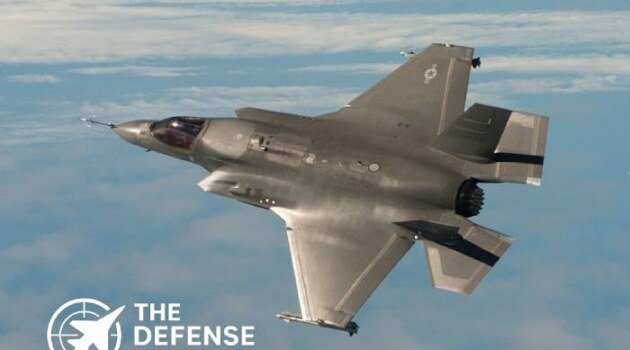
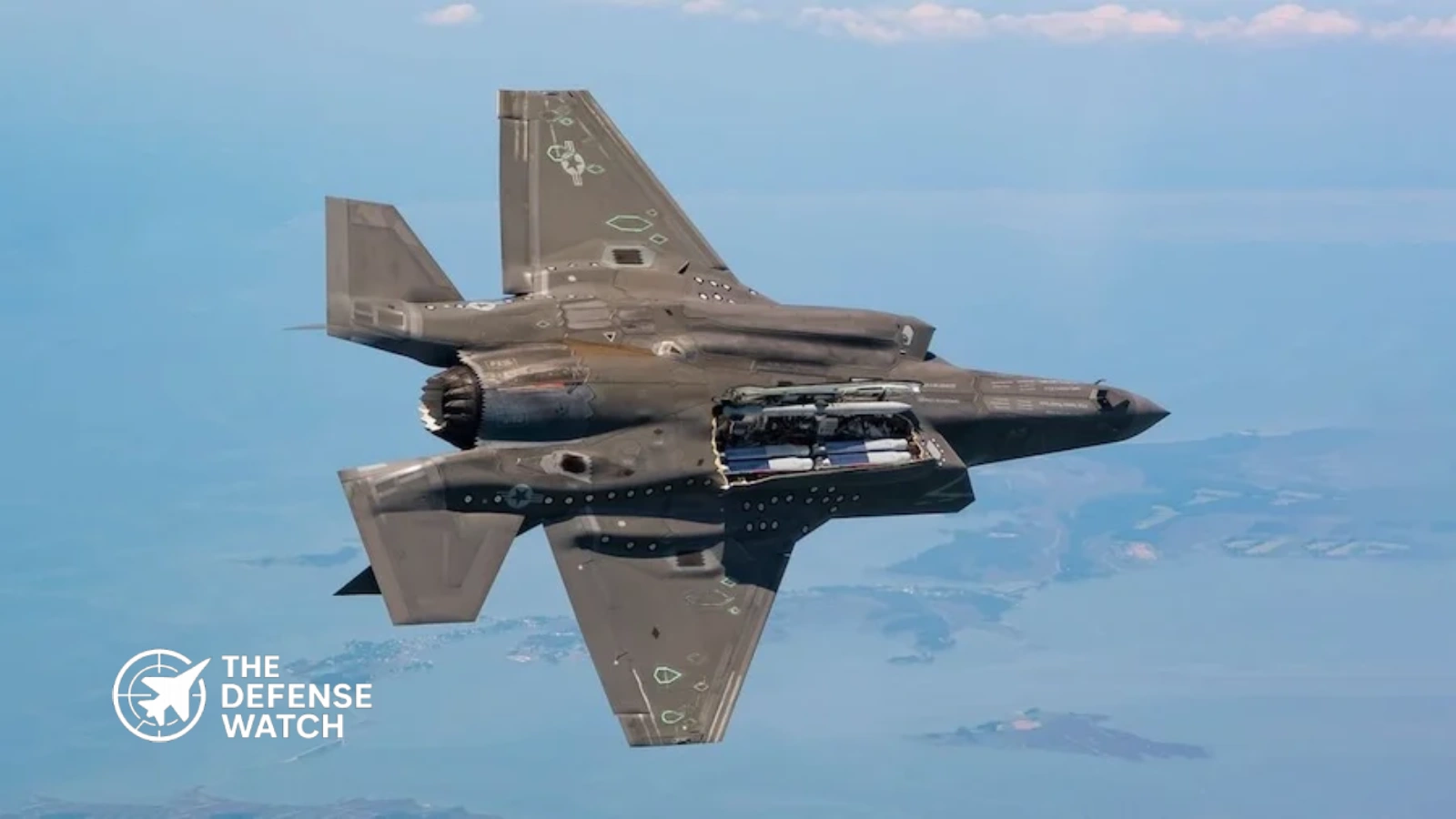
The F-35B StormBreaker weapons integration effort has reached another test milestone, with Raytheon reporting that an F-35B launched eight GBU-53/B StormBreaker smart weapons simultaneously during a recent flight test in Arizona. The company said the demonstration validated the weapon’s ripple eight capability, allowing one aircraft to release eight weapons in a closely coordinated sequence.
Takeaways
Raytheon says an F-35B launched eight StormBreaker weapons simultaneously during an Arizona flight test, demonstrating a higher-volume precision strike capability against moving targets.
The test is significant because StormBreaker is designed specifically for precision engagement of moving and stationary targets under difficult weather and visibility conditions. The U.S. Navy identifies the GBU-53/B as an air-launched precision strike weapon intended to engage moving and fixed targets while using network connectivity to receive updated target information during flight.
The latest demonstration does not by itself establish a new operational deployment date for StormBreaker on the F-35B. Instead, it demonstrates progress in integrating the weapon with the fifth-generation fighter and in expanding the number of weapons that can be employed during a single mission.
What The Eight-Weapon Demonstration Shows
The central feature of the Arizona test is the simultaneous launch of eight StormBreakers from an F-35B.
Raytheon describes this as ripple eight, a capability intended to allow one aircraft to prosecute multiple targets during a single attack sequence. The company said the test was focused on increasing the number of targets an individual aircraft could engage during one mission.
That distinction matters because StormBreaker is not simply a smaller version of a conventional guided bomb. Its design combines a compact airframe with a seeker and network architecture intended to support engagements against targets that can move after weapon release.
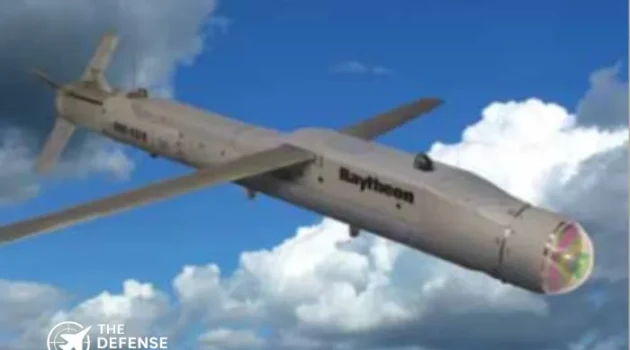
The U.S. Navy lists the GBU-53/B as a 250-pound-class weapon with a listed weight of 208 pounds, a length of 70 inches and a diameter of seven inches. Its compact dimensions are central to the weapon’s value on aircraft with limited internal weapons-bay volume.
StormBreaker GBU-53/B At A Glance
Capability GBU-53/B StormBreaker Weapon designation GBU-53/B Program name Small Diameter Bomb Increment II Manufacturer Raytheon Weight 208 pounds Length 70 inches Diameter 7 inches Primary targets Moving and stationary targets Guidance Imaging infrared, millimeter-wave radar, semi-active laser Navigation GPS-aided inertial navigation Network Link 16 and UHF data links Moving-target range More than 45 miles, according to Raytheon F-35 threshold platforms F-35B and F-35C Source: U.S. Navy, NAVAIR, U.S. Department of Defense and Raytheon.
A Tri-Mode Seeker For Difficult Conditions
One of StormBreaker’s most important characteristics is its tri-mode seeker.
The weapon combines millimeter-wave radar, imaging infrared and digital semi-active laser guidance. These sensing modes allow the weapon to operate across conditions in which conventional electro-optical or laser-guided weapons can face limitations.
Millimeter-wave radar provides the ability to detect and track targets through conditions such as rain and other degraded visibility environments. Imaging infrared provides another method of target detection and discrimination, while the semi-active laser mode allows the weapon to engage a target designated by an aircraft or ground operator.
The combination is particularly relevant to moving targets. A weapon intended to hit a stationary coordinate can rely heavily on precise navigation to a known location. A weapon attacking a moving vehicle must instead locate and track the target as its position changes.
StormBreaker was designed around that problem.
Network Connectivity Adds Another Layer
StormBreaker’s capabilities also extend beyond the seeker itself.
NAVAIR states that the weapon can receive updated target coordinates while in flight through two-way datalink communications. Link 16 and UHF communications can allow airborne or ground controllers to provide updated information, while the weapon also has an abort capability after release.
This network-enabled architecture changes the tactical problem from simply releasing a weapon toward a predetermined coordinate to maintaining a connection between the weapon, aircraft and wider force.
That capability becomes more relevant when targets are mobile, when the target picture changes after launch, or when the original target position is no longer valid.
The F-35’s own sensor and networking architecture provides an important complement. The aircraft is designed to collect information from multiple sensors and distribute relevant targeting information across the force. StormBreaker adds a weapon that can use networked information after release.
Why The F-35B Integration Matters
The F-35B presents a particularly demanding integration challenge because it combines fifth-generation aircraft characteristics with short-takeoff and vertical-landing requirements.
Earlier U.S. Navy testing established that StormBreaker could be integrated into the F-35B’s internal weapons configuration. Navy aviation documentation described the weapon as part of the effort to expand the F-35B and F-35C weapon inventory while preserving the aircraft’s low-observable configuration.
The latest eight-weapon demonstration therefore builds on a longer integration effort rather than representing the beginning of StormBreaker work on the F-35B.
The internal carriage issue is especially important. Carrying weapons internally allows the F-35B to retain the aerodynamic and signature advantages associated with its low-observable configuration.
External weapons carriage can increase available payload, but it also changes the aircraft’s signature and aerodynamic characteristics. Internal carriage is consequently valuable for missions in which survivability against sophisticated air defenses remains a priority.
From F-15E To F/A-18E/F And F-35
StormBreaker has progressed beyond developmental testing on the F-15E.
The U.S. Air Force approved the GBU-53/B for operational flights on the F-15E in 2020, and an Air Force operational unit subsequently employed the weapon during evaluation activities. The F-15E’s larger weapons capacity also highlights the weapon’s small physical footprint.
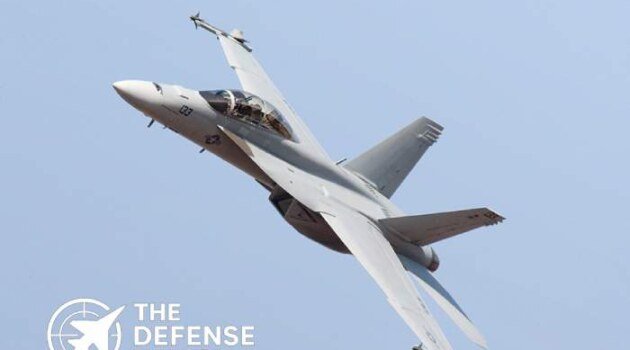
The U.S. Navy has since advanced the weapon on the F/A-18E/F Super Hornet. NAVAIR announced initial operational capability for the SDB II on the Super Hornet in February 2026, following limited early operational use in 2025.
Raytheon also announced in February 2026 that the Navy had approved StormBreaker for operational use on the Super Hornet fleet. The company said the weapon provides the aircraft with a precision-strike capability against moving and stationary targets in both favorable and adverse weather.
The continuing F-35 integration effort therefore extends an existing weapon capability across multiple U.S. tactical aircraft rather than creating an entirely separate weapon ecosystem.
The Operational Value Of More Weapons Per Sortie
The most important implication of the Arizona test is the relationship between aircraft numbers and target capacity.
A fighter can only attack as many targets as its available weapons, targeting information and engagement sequence permit. Increasing the number of precision weapons carried by an aircraft can allow a smaller force package to engage more targets during a mission, assuming sufficient target-quality information and weapon availability.
Raytheon specifically highlights this feature of StormBreaker, stating that its compact design can allow aircraft to carry more weapons and engage a greater number of targets without requiring additional aircraft. The company also states that the weapon can fly more than 45 miles against mobile targets.
The practical value is therefore not simply eight weapons released at once. It is the potential combination of aircraft survivability, weapon quantity, target discrimination, networking and standoff range.
That combination is relevant to contested environments where aircraft may face layered air defenses and where mobile targets can relocate quickly.
What The Test Does Not Establish
The Arizona demonstration should not be interpreted as evidence that every F-35B unit can immediately employ eight StormBreakers operationally under all mission conditions.
Flight testing validates specific aspects of weapon and aircraft integration. Operational fielding also depends on certification, software, tactics development, maintenance procedures, training, logistics and formal authorization.
The U.S. government continues to describe F-35B and F-35C as threshold platforms for the SDB II program, while StormBreaker has already achieved operational status on other aircraft.
The distinction between a successful flight demonstration and full operational availability is important when evaluating defense technology announcements.
A Broader Shift Toward Networked Precision Weapons
StormBreaker represents a broader U.S. shift toward weapons that combine precision guidance with onboard sensing and network connectivity.
Traditional precision weapons can be highly effective against fixed coordinates, but moving targets create a more difficult engagement problem. A mobile target can change position between target identification, weapon release and impact.
StormBreaker’s architecture addresses that challenge through a combination of onboard sensing, navigation and networked updates.
For the F-35B, the value is amplified by the aircraft’s ability to operate from amphibious assault ships and austere locations. A weapon capable of engaging moving targets at standoff distance gives the aircraft another option for precision strike without relying exclusively on larger weapons.
The latest test therefore represents more than a weapons release demonstration. It is a step toward increasing the number of precision engagements a fifth-generation aircraft can conduct during a single mission while maintaining the advantages of a compact, network-enabled weapon.
Outlook
Raytheon’s eight-weapon F-35B demonstration adds another milestone to the StormBreaker integration program and shows how the GBU-53/B is being developed as a multi-platform precision weapon for the U.S. tactical aviation fleet.
The weapon is already operational on the F-15E and has reached initial operational capability on the F/A-18E/F. Continued F-35 integration could extend its combination of moving-target capability, adverse-weather performance and networked targeting to the Joint Strike Fighter fleet.
For U.S. forces, the larger issue is capacity. A precision weapon that can fit in a fighter’s internal weapons bay, identify moving targets and receive updated targeting information can increase the number of useful engagements generated by each aircraft.
The Arizona test indicates that Raytheon and U.S. military test teams are continuing to push that capability toward a more mature F-35 employment option.