

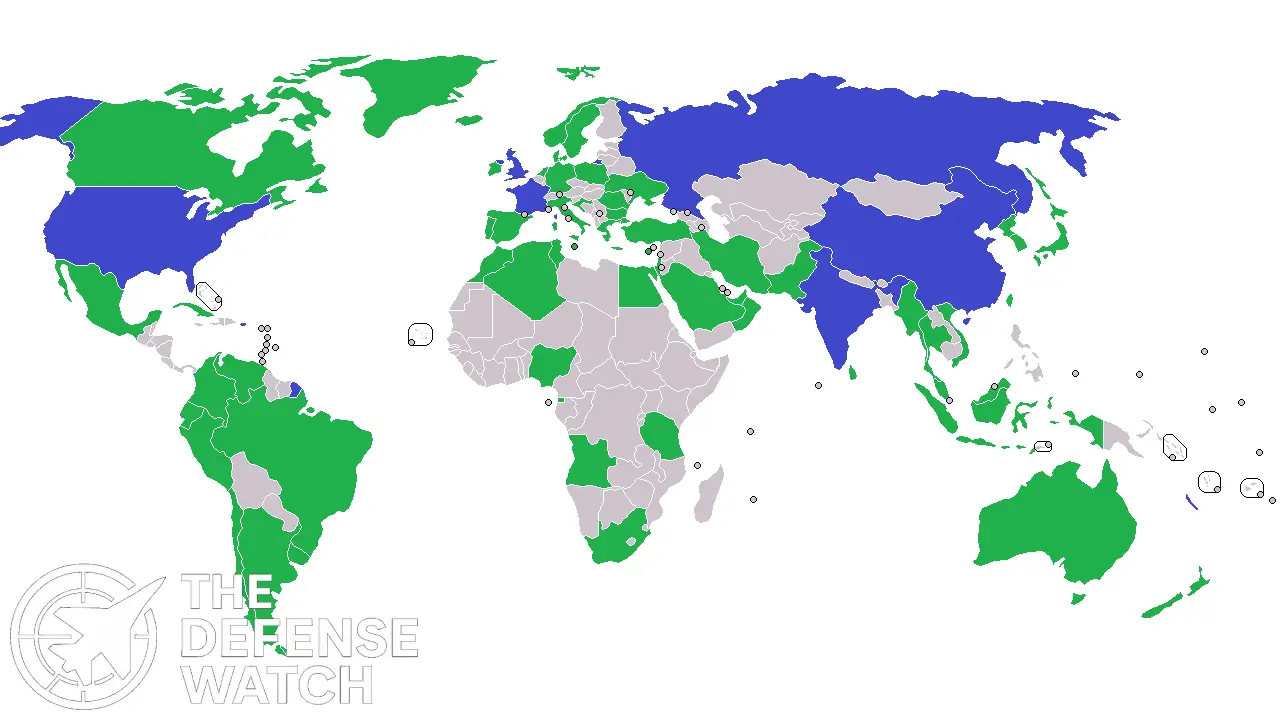
In maritime strategic discourse, “green-water navy” and “blue-water navy” are pivotal terms defining the scale, reach, and operational capabilities of naval forces. In the U.S. Navy’s lexicon and broader defense analysis, these classifications shape how naval power is projected and sustained. This article explores the nuances between these two concepts, placing them in context alongside U.S. naval strategy today.
What Defines a Green-Water Navy?
A green-water navy operates primarily within littoral zones and marginal seas, capable of limited open-ocean missions but reliant on support for extended operations. Originally conceptualized by the U.S. Navy to denote coastal-focused offensive units, the term has since expanded. It now commonly refers to navies that project power near home shores — often equipped with amphibious ships, helicopters, and modest replenishment assets, but lacking full logistical autonomy.
Regional examples include Japan and Brazil. Japan’s Maritime Self-Defense Force (JMSDF) fields helicopter destroyers and replenishment vessels but remains limited relative to global reach. Brazil similarly maintains a greener-water profile.
The Green-Water Zone
Typically spans beyond brown-water (inland and littoral) areas into nearby archipelagos and the outer continental shelf – often within a few hundred nautical miles from coast.
What Constitutes a Blue-Water Navy?
A blue-water navy boasts global operational capacity, with sustained reach into deep oceans and power projection capabilities, enabled by logistics, air assets, and naval support infrastructure. According to U.S. definitions:
- Ability to operate across open oceans
- Robust logistics with replenishment and carrier support
- Multi-theater maritime presence with sustained endurance
Rankings of Naval Reach
Using the Todd & Lindberg scale:
- Rank 1 (Global-reach): U.S. Navy – the only navy in this category
- Ranks 2–4: France, China, India, Brazil, Australia – varying levels of growing capability
- Ranks 5–6: Green-water navies like Canada, Thailand, Indonesia
- Ranks 7–10: Brown-water and limited constabulary forces
U.S. Navy: The Benchmark of Blue-Water Power
The U.S. Navy exemplifies the blue-water standard. It maintains:
- Eleven aircraft carrier strike groups (six deployment-ready within 30 days)
- Nine amphibious expeditionary strike groups embarking Marine units
- The world’s largest Military Sealift Command for rew supply, transport, and sustainment
These capabilities enable global response—from littoral deployments to extended deep-sea presence.
Analysis: Strategic Implications
Why it matters:
A blue-water navy underpins strategic flexibility, deterrence, alliance support, and global trade route security. In contrast, green-water navies focus on regional deterring but lack global endurance.
Emerging trends:
Competition is rising—particularly between the U.S. and China. China’s People’s Liberation Army Navy (PLAN) is expanding into first- and second-island chain coverage—signals of an evolving green-to-blue transition. Yet, many analysts warn tonnage and proximity do not yet equal fully sustained global operations.
Meanwhile, the U.S. continues investing in replenishment ships, unmanned systems, and distributed logistics to preserve its global edge.
FAQs
Green-water navies operate regionally within littoral and marginal seas; blue-water navies sustain operations across deep oceans and long distances.
Not strictly, but carriers dramatically enhance power projection. Essential elements include strong logistics, long-range surface and sub-surface assets, and sustained deployment capacity.
Without robust replenishment (fuel, munitions, maintenance), global and prolonged deployments collapse. Logistics is the backbone of sustained naval presence.
China is expanding into early blue-water capabilities, particularly around the first island chain, but still lacks fully sustained global scale operations without additional logistical infrastructure support
Yes. Countries like Japan, South Korea, India, and Brazil are investing in platforms like helicopter destroyers, replenishment ships, and carrier groups in an evolutionary path toward longer-range capabilities.

2 comments
[…] many European allies lack expeditionary reach or deep strategic depth, U.S. assets often anchor NATO’s response capability. In practice, the U.S. provides the […]
[…] ambisi untuk mengubah Tentara Nasional Indonesia Angkatan Laut (TNI-AL) dari AL perairan hijau (green water navy) menjadi AL perairan biru (blue water navy) merupakan sesuatu yang diperlukan. Perubahan tersebut […]