Russia Arms Shahed-136 With Air-to-Air Missiles
On December 1, 2025, multiple sources—including a detailed report by a defense-technology outlet—confirmed that Russia has deployed a modified version of the Shahed-136 kamikaze drone equipped with a Soviet-era R-60 air-to-air guided missile.
The new configuration was first observed when the drone — known in Russian service as the Geran-2 — was intercepted and shot down by a Ukrainian interceptor loitering munition, marking the first publicly documented case of such a weaponized combination in the conflict.
Context: Evolving Shahed Threat
The Shahed-136, originally an Iranian-designed kamikaze drone, has been a backbone of Russian long-range drone strikes since 2022.
Over time, Russia has significantly upgraded the Shahed, shifting it from a slow, propeller-driven loitering munition — easy to neutralize — into a more formidable threat. Upgrades have included improved warheads, GPS-resistant navigation systems, thermal-imaging cameras, and even jet or turbojet-powered variants.
The adoption of an air-to-air missile appears to represent the next phase of this evolution, broadening the drone’s mission set beyond ground strikes and decoy swarms to aerial threats.
New Air-to-Air Capability: Details & Significance
The R-60 Missile Integration
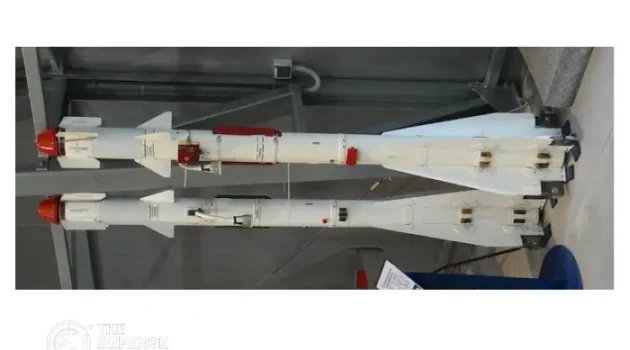
- The missile identified on the downed drone is the Soviet-designed R-60 air-to-air missile (NATO reporting name AA-8 “Aphid”), a compact, infrared-guided missile introduced in the early 1970s.
- The missile was mounted on a launch rail affixed to the nose (or upper fuselage) of the drone — not under the wings as is standard for manned aircraft.
- According to a Ukrainian military analyst, this configuration is “designed to destroy helicopters and tactical aircraft that hunt Shaheds.”
First Recorded Shoot-Down
The missile-armed Shahed — identified as a Geran-2 — was engaged by a Ukrainian interceptor drone, the Sting, developed by the volunteer group Wild Hornets. According to released footage and wreckage photos, the R-60 remained attached after destruction.
This engagement suggests at least two things:
- Ukraine’s air defenses are adapting quickly and fielding low-cost, flexible interceptor solutions.
- Russia is exploring ways to blunt Ukraine’s use of helicopters and light aircraft for drone-hunting roles by repurposing its own UAVs for aerial combat.
Tactical Implications
- Broadened Threat Spectrum — The traditional role of Shaheds as one-way strike drones against ground infrastructure or troop concentrations is now expanding. With air-to-air missiles, they pose a potential threat to helicopters, light aircraft, even fighter jets engaged in air-defense.
- Deterrent Effect — The presence of a missile, even if rarely used, may force Ukrainian aircrews to operate more cautiously, limiting or avoiding helicopter or fixed-wing sorties near frontline or drone-heavy zones.
- Shift in Counter-Drone Strategy — Air defense doctrine may need to evolve: using interceptor drones, radar-guided SAMs, or more robust aerial defenses rather than relying solely on machine guns or small arms.
Broader Context: Shahed’s Rapid Evolution
The new missile-armed Shahed is part of a broader pattern of upgrades and tactical refinements. Over the past two years, Russia has:
- Shifted to mass production of Shahed-type drones (known in Russia as “Geran-2”), reportedly manufacturing thousands per month.
- Added improved warheads — fragmentation, thermobaric, cluster munitions — to maximize damage.
- Developed variants with enhanced navigation (jam-resistant GNSS and INS), optical/thermal cameras, and even jet propulsion to increase speed and survivability.
- Adopted more complex attack tactics, combining Shaheds with decoys and loitering munitions to complicate detection and overwhelm air defenses.
Analysts have called this rapid “mutation” of a relatively cheap UAV into a multi-role aerial munition one of the defining features of the modern drone-powered conflict.
What This Means for the Air War Over Ukraine
- The documented use of air-to-air missiles on Shaheds significantly increases the risks for Ukrainian helicopters, transport aircraft, or other light air assets previously considered safe from drone threats.
- Air defense planners in Ukraine (and other countries observing the conflict) will likely reconsider the viability of manned aircraft for drone-hunting missions, pushing instead for interceptor drones, improved radar/SAM coverage, or layered air defense systems.
- The low cost and modular adaptability of drones like Shahed — combined with legacy missiles like R-60 — reflect a shift toward asymmetric, cost-effective aerial warfare. This could influence future conflict zones where even lower-budget forces can project substantial aerial threat.
- For Russia, success in deploying such drones at scale could degrade Ukraine’s aerial mobility, complicate resupply and medevac operations, and erode air-defense deterrence — though the actual effectiveness of missile-armed drones remains to be fully seen.
What’s Next
Defensive analysts and militaries worldwide must now account for UAVs as potential aerial combatants — not just as kamikaze weapons. Expect efforts to deploy:
- More interceptor drones (like the Sting) or unmanned surface/air vehicles equipped to counter missile-armed UAVs.
- Advanced sensors, IR-guided missile defenses, and radar systems optimized to detect small, low-signature drones carrying heat-seeking weapons.
- Revised air operations doctrine, with stricter risk assessments for helicopter and light aircraft operations where UAV thresholds are high.
Monitoring open-source intelligence (satellite imagery, wreckage photos, battlefield footage) will remain critical — as will documentation of any successful uses of missile-armed drones against aircraft.


The U.S. Department of War (DoW) unveiled a new procurement initiative under the banner Drone Dominance Program (DDP), committing US$1 billion to rapidly acquire hundreds of thousands of low-cost kamikaze drones. The program is designed to order approximately 340,000 small UAS (unmanned aerial systems) for combat units over a two-year period.
The DoW expects an initial order of 30,000 drones to be delivered by July 2026, with aims to purchase over 200,000 drones by 2027, and a total of more than 300,000 by early 2028.
Context: Why the Push for Kamikaze Drones
Small “suicide” or loitering drones — often called kamikaze drones — have emerged as a decisive factor on modern battlefields. Conflicts such as the one in Ukraine have demonstrated how mass-produced, inexpensive drones equipped with explosive payloads can inflict significant damage on armored vehicles, artillery, and infrastructure, even when individually less capable than conventional air-delivered munitions.

This proliferation of drone-based threats has prompted a shift in U.S. military thinking. In a July 2025 memorandum, War Department leadership made clear that small UAS will now be treated more like consumable munitions (akin to grenades or rockets) rather than traditional “aircraft,” facilitating faster procurement.
Accompanying this shift is a broader strategy to revitalize America’s domestic drone manufacturing base — favoring low-cost, mass-production capable firms, including start-ups and non-traditional defense contractors.
Program Details: How Drone Dominance Will Work
According to the publicly released Request for Information (RFI) by the DoW:
- The $1 billion will finance fixed-price orders under existing federal procurement laws (10 U.S.C. 4022).
- Acquisition is organized over four phases across two years. Each phase begins with a “Gauntlet challenge event” and ends in delivery of production-quality small UAS.
- The first phase (Feb–July 2026) will involve roughly 12 vendors producing 30,000 drones at about US$5,000 per unit (totaling roughly $150 million).
- As the phases progress, the number of vendors will be reduced — ultimately down to five vendors by the final phase scheduled between August 2027 and January 2028.
- With scaling and competition, the projected unit cost is expected to drop to ~US$2,300.
- The drones will undergo operational testing by military operators under realistic mission scenarios — including a likely 10 km strike in open terrain and a 1 km strike in simulated urban terrain using a dummy payload of at least 2 kg.
- The program calls for significant improvements in production capacity, supply-chain security, and logistical support to enable rapid scaling.
The Driving Rationale: Speed, Mass, and Deterrence
The rationale for this procurement sprint is rooted in evolving contemporary threats. As laid out in the July 2025 memo accompanying the broader drone policy shift: “Drones are the biggest battlefield innovation in a generation.” According to the memo, U.S. units had lagged behind because of bureaucratic red tape that made small drones hard to deploy at scale — a disadvantage in conflicts where adversaries flood the skies with low-cost, mass-produced drones.
By redefining small UAS as consumables and streamlining procurement to enable direct purchasing and deployment by lower-level commanders, the DoW aims to replicate the “swarming” and asymmetric tactics that have had disruptive battlefield effects recently.
Simultaneously, supporting a stable drumbeat of acquisitions — rather than single, one-off purchases — is intended to incentivize American industry to build enduring manufacturing capacity, reduce costs, and expand supply-chain resiliency.
Expert and Policy Perspective
Defense-industry analysts say the DDP is a marked departure from decades of incremental drone procurement, which favored expensive, high-end UAVs over large numbers of small, expendable drones. The new high-low procurement posture — combining a few expensive, capable systems with large quantities of basic, disposable ones — represents a significant doctrinal shift.
Some observers argue that this shift is driven in part by lessons learned from recent conflicts, especially in Eastern Europe, where relatively unsophisticated drones proved devastatingly effective when deployed en masse.
Still, doubts remain about whether the U.S. industrial base can scale fast enough, or whether funding and contracting bottlenecks could delay deliveries or restrict quantities. The DoW is betting that this stable multi-year procurement plan will draw in investment, expand production capacity, and produce supply-chain security sufficient to meet its ambitious targets.
What This Means — And What Comes Next
If implemented as outlined — 340,000 small, low-cost kamikaze drones in two years — the Drone Dominance Program could drastically change the U.S. military’s tactical options on future battlefields. Infantry units across the services could gain access to one-way offensive drones that can strike enemy armor, fortifications, or personnel from standoff distances — potentially reducing reliance on heavy artillery, air strikes or armored support.
Industry selection begins soon: the first competition under the program is slated to start February 16, 2026, with 25 invited vendors. Meanwhile, success — or failure — of the program will likely influence how the Pentagon invests in small UAS production capacity, supply chain resilience, and procurement policy in years to come.

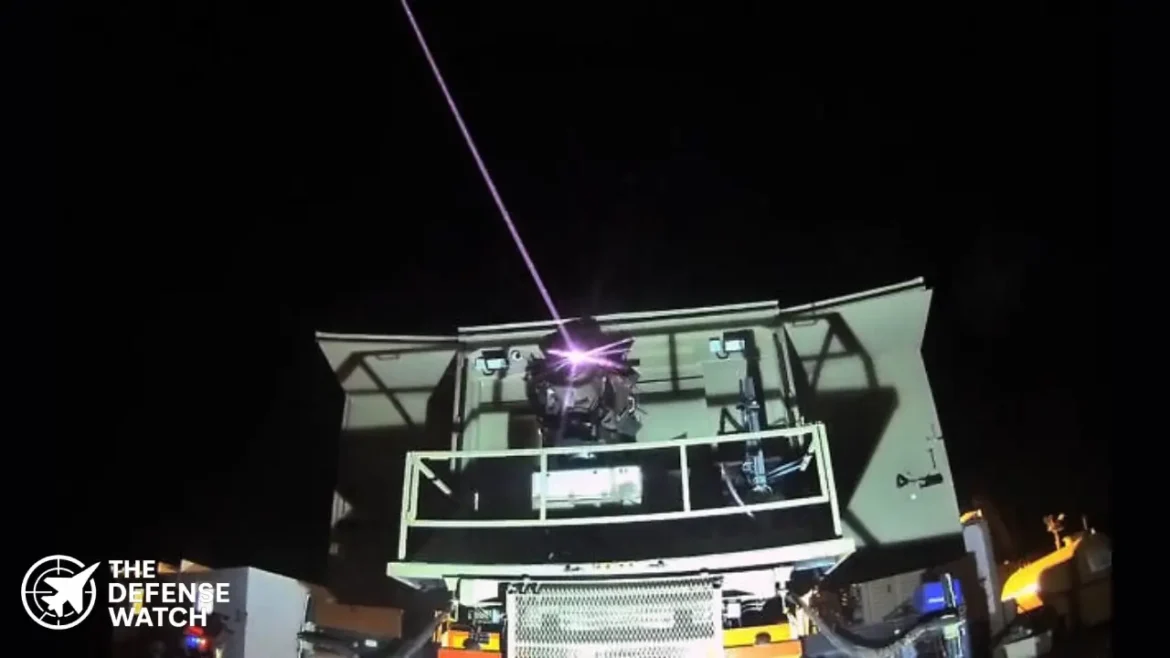
The Israel Defense Forces (IDF) are preparing to receive the Iron Beam laser interceptor system by the end of this month, a key step in advancing the nation’s multi-layered missile defense strategy. The system, developed by Israel Aerospace Industries (IAI), is expected to strengthen Israel’s capability to counter short-range rockets, mortars, and unmanned aerial threats.
Background: The Iron Beam Program
The Iron Beam is a directed-energy air defense system designed to complement Israel’s existing Iron Dome, David’s Sling, and Arrow missile networks. Utilizing high-energy laser technology, it can intercept incoming projectiles at lower altitudes, offering a cost-effective alternative to conventional interceptor missiles. The system has been under development for nearly a decade, with extensive testing demonstrating its potential for precise, rapid-response defense against saturation attacks.
According to IAI, the laser operates in the tens of kilowatts range and is capable of targeting threats at distances up to several kilometers. Unlike traditional interceptors, the Iron Beam does not rely on explosive warheads, significantly reducing collateral damage and operational costs.
Deployment Details and Capabilities
The upcoming deployment marks the first operational rollout of the Iron Beam within IDF units. Israeli defense officials confirm that the system will initially be stationed in high-risk areas prone to short-range rocket fire. While exact locations remain classified, the deployment aligns with Israel’s ongoing efforts to secure its southern and northern borders.
A senior IDF official stated, “Iron Beam adds a crucial layer to our missile defense architecture, providing rapid and precise interception against a wide range of aerial threats.” The system has already undergone multiple live-fire exercises, successfully neutralizing drone targets and short-range rockets.
The Iron Beam’s deployment will be integrated with the IDF’s existing command-and-control infrastructure, allowing seamless coordination with radar networks and other missile defense layers. This integration ensures early threat detection, target tracking, and automated interception, reducing response times significantly.
Strategic and Operational Impact
Analysts highlight that the operational deployment of laser-based interceptors represents a shift in modern air defense philosophy. While traditional missile interceptors remain effective, high-energy lasers provide virtually unlimited “shots” as long as power supply is maintained, reducing reliance on expensive missile stockpiles.
Moreover, the Iron Beam enhances Israel’s defensive posture amid regional instability and growing drone proliferation. The system’s ability to counter swarm attacks is particularly relevant given recent trends in the use of unmanned aerial systems by non-state actors.
Defense experts note that while laser systems have limitations, including weather sensitivity and range constraints, the Iron Beam’s deployment signals Israel’s commitment to maintaining a technological edge in air defense.
Looking Ahead
With the Iron Beam set to become operational by the end of the month, the IDF joins a select group of militaries worldwide exploring directed-energy solutions for missile defense. Continuous testing and eventual full-scale deployment are expected to further refine the system’s capabilities, ensuring reliable protection against a broad spectrum of aerial threats.
The coming months will provide insight into how the Iron Beam complements Israel’s broader missile defense ecosystem and its effectiveness under operational conditions.

UK’s High-Power Laser “DragonFire” Downs Fast Drones in Landmark Trials
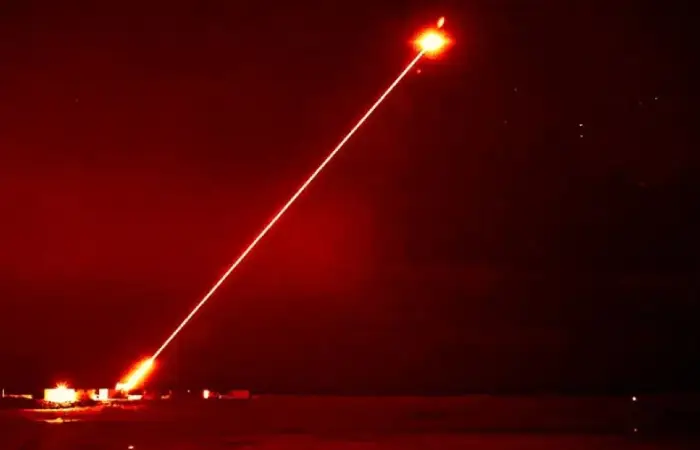
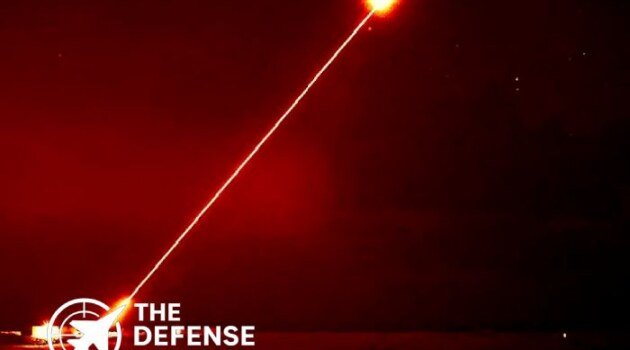
On 20 November 2025, at the Ministry of Defense (MoD) test range in the Hebrides, Scotland, the UK successfully demonstrated that its high-powered laser weapon system DragonFire could destroy drones flying at speeds up to 351 knots (404 mph / 650 km/h).
In light of this success, the government awarded a £316 million contract to MBDA UK to deliver the system to the Royal Navy — accelerating the planned in-service date from 2032 to 2027.
Context: Why DragonFire Matters
Directed-energy weapons like DragonFire are being developed to address evolving aerial threats — notably fast, low-cost drones and swarming unmanned aerial vehicles (UAVs) that challenge traditional missile- and gun-based air defense.
Conventional air-defense systems expend expensive missiles (often costing hundreds of thousands or millions of pounds per shot) to intercept relatively cheap drones. A laser system like DragonFire — with its near-instantaneous “projectile” (light), high precision, and low per-shot cost — offers a fundamentally different and potentially more sustainable approach.
First unveiled as a technology demonstrator in 2017, DragonFire has since matured through a series of tests — ultimately culminating in this high-speed drone interception capability.
Trial Details: What the Tests Showed
- The test on November 20, 2025, saw DragonFire take down drones travelling up to 650 km/h (404 mph), marking the first time a British laser weapon intercepted a target at such speed.
- The system demonstrated an “above-the-horizon” targeting capability, meaning it engaged drones at altitudes and distances where line-of-sight targeting would previously have been impractical or impossible.
- According to the MoD, DragonFire can hit a target the size of a £1 coin (roughly 23 mm in diameter) from one kilometer away.
- The cost per “shot” — i.e., the energy required to fire the laser for the necessary engagement duration — is reportedly about £10.
- The contract awarded to MBDA UK covers development and delivery of systems suitable for installation on Type 45 destroyers beginning in 2027.
In announcing the contract, officials described DragonFire as a major step forward: the system will be “the first high-power laser weapon in service with any European nation.”
The programme brings together UK firms and government science laboratories: MBDA UK, Leonardo UK, QinetiQ, and the government research body Defence Science and Technology Laboratory (Dstl).
Strategic Implications: What This Means for Naval Defence
The accelerated deployment of DragonFire signifies a shift in naval air defence doctrine — from relying solely on conventional missiles and guns to incorporating directed-energy weapons capable of cost-effective, rapid response against emerging threats like swarming drones or high-speed UAVs.
The “above-horizon” targeting capability is particularly significant. Because traditional laser or point-defense systems are constrained by line-of-sight, they can struggle to engage low-signature or distant aerial targets. DragonFire’s ability to integrate with shipborne radar, airborne sensors, or networked detection assets could extend its effective engagement envelope — enhancing a destroyer’s layered defense capacity.
Moreover, with each shot costing only a fraction of a missile or gun round, DragonFire presents a more sustainable and scalable weapon for engaging multiple or repeated drone threats, particularly important in densely contested or high-tempo conflict zones.
Industry & Job Impact
The £316 million contract with MBDA UK is also designed to create or sustain nearly 600 skilled jobs across the UK — with significant allocations in Scotland, the South West, and the East of England — underscoring the government’s framing of defense procurement as an engine for industrial growth.
Officials emphasized the broader aim of meeting the priorities set out in the Strategic Defense Review by rapidly fielding next-generation directed-energy capabilities.
Challenges & Considerations
While the trials demonstrate promise, certain limitations remain inherent to laser-based systems: atmospheric conditions (e.g., rain, fog, sea spray), power generation and thermal management aboard ships, and the requirement for line-of-sight or sensor-linked targeting systems. Several analysts caution that real-world maritime conditions will test the robustness of the system before it can be fully trusted in combat scenarios.
Also, while firing costs are low per shot, the total lifecycle cost — including maintenance, optics degradation, power supply, and integration with combat management systems — remains to be assessed over time.
What’s Next
With the contract now in place, the first DragonFire installation is scheduled for a Type 45 destroyer by 2027 — five years ahead of the original plan.
Over the next two years, MBDA UK, Leonardo, and QinetiQ will refine the system design, complete integration efforts, and prepare the first “deployable capability.”
Observers and defense watchers will be closely monitoring the system’s performance in real-world maritime conditions. Should DragonFire perform reliably, it may mark the beginning of a broader shift toward energy-based air defense across NATO navies and beyond — reshaping how militaries counter drone threats, cruise missiles, and swarming UAV attacks.
According to a new study released on 1 December 2025 by the Stockholm International Peace Research Institute (SIPRI), revenues at China’s major military firms fell by roughly 10 percent in 2024, as widespread corruption purges disrupted arms contracts and procurement schedules.
The revenue decline contrasts starkly with a global arms-industry boom in 2024, driven by conflicts and rising security tensions worldwide.
Background: Corruption Purge Amid Ongoing Military Modernisation
The purge targeting the defense sector is part of a broader anti-corruption campaign launched under Xi Jinping, which began in 2012 and accelerated after 2023.
As part of the crackdown, eight high-ranking officers — including some of the most senior generals in the Central Military Commission (CMC) — were expelled from the ruling Communist Party on graft charges in late 2025. Among them was He Weidong, the country’s number-two general.
That purge extended into the state-owned defense industrial complex, affecting top brass at firms like China North Industries Corporation (Norinco), Aviation Industry Corporation of China (AVIC), and China Aerospace Science and Technology Corporation (CASC).
Despite decades of rising defense budgets and an ambitious push to equip the PLA with cutting-edge hardware — from hypersonic missiles to aircraft carriers — the purges have introduced friction into procurement chains, raising questions over the timeline for delivery of new capabilities.
Details — Where the Impact is Felt
• Revenue Collapse and Firm-Level Declines
SIPRI’s research shows that while global arms-industry revenues for the top 100 firms climbed 5.9% in 2024 to a record US$679 billion, China’s defence sector bucked that trend.
Within China’s defense industrial base, Norinco was hit hardest: its revenue fell 31%, dropping to an estimated US$14 billion.
Both AVIC — the country’s largest military aircraft and aerospace producer — and CASC — key in missile and aerospace systems — also reported notable revenue drops. These declines were attributed to postponed or cancelled contracts after corruption allegations triggered internal investigations and leadership shake-ups.
• Procurement Delays and Program Disruptions
According to SIPRI’s director of Military Expenditure and Arms Production Program, Nan Tian, “a host of corruption allegations in Chinese arms procurement led to major arms contracts being postponed or cancelled in 2024.”
As a result, deliveries of military aircraft by AVIC slowed, land-systems and vehicle procurement under Norinco were delayed, and aerospace and missile programs under CASC saw schedule disruptions.
SIPRI researcher Xiao Liang warned that the timeline for deployment of advanced systems for the PLA’s PLA Rocket Force — which oversees China’s growing arsenal of ballistic, cruise, and hypersonic missiles — may now be uncertain. Cyber and aerospace-related program are also potentially delayed.
• Regional and Global Contrasts Highlight the Drop
While Asia-Oceania — spurred largely by China — was previously a region of growth for defense firms, the region posted a net decline in arms revenues in 2024, per SIPRI.
In the same period, defense firms in Japan saw revenues rise by around 40%, German firms 36%, and U.S. firms about 3.8%.
What Analysts Say — Short-Term Disruptions, Long-Term Commitment
Even as SIPRI warns of “uncertainty around the status of China’s military modernization efforts and when new capabilities will materialize,” it concludes that Beijing’s long-term investment in defense procurement remains intact.
Xiao Liang added that while some projects may face delays and higher costs due to tighter procurement controls, the political will behind modernization remains strong, meaning Chinese defense buildup is unlikely to stall entirely.
However, diplomats and regional observers interviewed by Reuters warned that the purge could have deeper ripple effects across the PLA’s command and procurement chains — potentially undermining confidence in program continuity and prompting allies and rivals to reassess timelines for China’s new capabilities.
What Happens Next — Implications for China’s Military Modernization
The short-term impact of the 2024 revenue slump and procurement freezes is already evident in delayed aircraft deliveries, delayed land-system rollouts, and possible slippages in next-generation missile and aerospace programs.
At the same time, the revenue drop — especially at giants like Norinco, AVIC, and CASC — may reduce China’s ability to capitalise on global demand for conventional arms exports, at least in the near term.
Over the longer term, Beijing faces a critical test: balancing the political imperative of anti-corruption against maintaining momentum in defence modernization. Continued high-level scrutiny and tighter control could introduce inefficiencies.
For regional security watchers — particularly in East and Southeast Asia — the delays may provide a narrow window of strategic breathing room as China recalibrates its procurement and production cycles.
In November 2025, the U.S. Army convened a multi-week counter-drone trial at the coastal training grounds of Truppenübungsplatz Putlos in northern Germany. The event, branded as Project FlyTrap 4.5, saw air defense units from the 52nd Air Defense Artillery Brigade and the 10th Army Air and Missile Defense Command (10th AAMDC) putting next-generation counter-unmanned aerial systems (C-UAS) through realistic field conditions along the Baltic coast. The trials ran roughly from November 10 to November 21, 2025.
Background: Rising Drone Threats and NATO Posture
As hostile drones proliferate across modern conflict zones — from small reconnaissance UAVs to armed loitering munitions — militaries worldwide are scrambling to adapt. In response, NATO and the U.S. Army have prioritized development and deployment of layered counter-UAS architectures. Project FlyTrap 4.5 marks a major milestone in that effort — shifting from conceptual testing to integrated, networked defense drills that mirror real-world operational demands along NATO’s Eastern Flank.
Planning for the exercise began nearly a year earlier, under the direction of Gen. Christopher Donahue, commander of U.S. Army Europe and Africa and NATO Allied Land Command, who tasked the 52nd ADA Brigade to identify viable tools capable of countering emerging airborne threats in contested electromagnetic environments.
What Happened at Putlos: Trials, Testing, and Integration
At Truppenübungsplatz Putlos — a coastal range overlooking the Baltic Sea — the Army deployed a variety of prototype and experimental C-UAS systems under realistic threat scenarios. The exercise brought together tactical air defense operators, acquisition officials, and industry engineers for a holistic assessment of detection, discrimination, and defeat capabilities.
Detection & Discrimination
Vendors employed both active and passive sensors to detect and discriminate drone threats. Active radar provided better tracking accuracy, but at the cost of a stronger electromagnetic signature — making systems more detectable by adversaries. Passive sensors offered stealthier detection, though with reduced precision. This trade-off remains a central challenge for mobile air defense units operating in contested electronic warfare environments.
Defeat Mechanisms: Kinetic and Non-kinetic
The defeat phase of the trials featured a mix of traditional kinetic interceptors alongside modern non-kinetic options. Notably, the Army tested directed-energy and electronic disruption platforms capable of neutralizing rotary-wing UAS swarms without using explosives — a capability especially attractive for minimizing collateral damage in populated or maritime zones. According to a senior acquisition official, at least one low-collateral system demonstrated in Putlos is now under expedited evaluation by NATO.
Additionally, the trials were synchronized with a parallel competition, xTechCounterStrike, which invited vendors to submit breakthrough C-UAS concepts for direct testing. From over 200 initial companies, 15 finalists were chosen; 11 attended the live trials, and 4 emerged as winners — each awarded US$350,000 and a fast-track path into the U.S. Army’s procurement marketplace via the Global Tactical Edge Acquisition Directorate (G-TEAD).
Maj. Joshua McMillion, the G-TEAD capability lead and judging panel member, explained the motivation behind the exercise: “We were tasked specifically to accelerate the Eastern Flank Deterrence Line … one of the easiest ways to accelerate that capability is to partner with existing companies and existing organizations.”
Significance: Live-Network Integration and Alliance Readiness
What distinguishes Project FlyTrap 4.5 from previous demonstration events is the integration of experimental C-UAS systems directly into an operational command-and-control network. Every participating system needed to interface seamlessly with the brigade’s forward air defense C2 structure — the core of NATO’s Eastern Flank Deterrence Line.
Brig. Gen. Curtis King of the 10th AAMDC described FlyTrap 4.5 not as a demonstration, but “a vital rehearsal for future Baltic operations”. The event offered tactical-level commanders — including individual soldiers — a voice in shaping which technologies will become standard equipment for counter-drone defense across NATO.
Several industry insiders who participated in the trials noted the unprecedented closeness between procurement officers, operational commanders, and engineers as systems were tested side-by-side: “no PowerPoint, just performance,” one vendor observed. Early discussions are reportedly underway to combine complementary systems into mixed vendor packages, potentially enhancing overall effectiveness beyond what any single system can achieve.
Strategic Context: Lessons from Ukraine and Eastern Europe
The urgency behind the exercise reflects hard-earned lessons from recent conflicts — notably the widespread use of small drones, loitering munitions, and “saturation” drone attacks observed during the war in Ukraine. These low-cost, commercially available UAVs have inflicted rising casualties and disrupted logistics and command operations, exposing vulnerabilities in traditional air defense setups.
For NATO’s forward-deployed forces along the alliance’s eastern frontiers, mastering the counter-UAS fight is no longer optional — it is an operational imperative. By accelerating acquisition cycles, testing at the tactical edge, and embedding vendor solutions into real-world C2 networks, the U.S. Army is signaling a transition from reactive adaptation to proactive readiness. Project FlyTrap 4.5 represents more than a testbed; it is a preview of how future multi-domain air defense may be structured.
What’s Next: Toward Full-Spectrum Air Defense by 2026
Project FlyTrap 4.5 is a transitional milestone. The next full-spectrum test — expected in spring 2026 — will likely expand both the variety of threats (e.g., drone swarms, fixed-wing UAVs, loitering munitions) and the number of systems under evaluation. Meanwhile, systems selected via xTechCounterStrike could enter expedited procurement and deployment cycles, potentially equipping frontline NATO units before the end of 2026.
In a strategic environment where drone threats evolve quickly and unpredictably, such efforts will be crucial to maintaining air dominance, perimeter security, and force protection across Europe’s eastern flank.
The U.S. Space Force (USSF) awarded the first batch of prototype contracts under the Golden Dome missile-defense initiative. The contracts — structured as “Other Transaction Agreements” (OTAs) — were awarded to multiple firms to develop space-based interceptors (SBIs).
A Space Force spokesperson confirmed the awards but declined to name the recipients, citing “enhanced security measures.” Contract values and performance periods remain undisclosed.
This is the first tangible contracting step toward building a space-layer for Golden Dome since the program was first unveiled in early 2025.
Context — What Is Golden Dome and Why It Matters
Golden Dome is a sweeping vision for a layered U.S. homeland missile-defense architecture — combining terrestrial radars and interceptors, air- and sea-based weapons, and now a space-based layer featuring satellites and interceptors in orbit.
The SBI element is among the most ambitious: it aims to destroy hostile ballistic, cruise, or hypersonic missiles during or shortly after launch, when they ascend through the atmosphere and into space — a phase many analysts consider the most vulnerable for an incoming missile, before it deploys countermeasures or multiples warheads.
If fully realized, Golden Dome would represent the first deployment of space-based offensive interceptors by the United States. Cost estimates vary widely: the administration has cited roughly US$175 billion, while independent analyses have projected as high as US$831 billion over decades.
Officials involved with Golden Dome have emphasized that achieving the goal will require a level of interagency cooperation and national commitment comparable to historic national projects, like the Manhattan Project.
What We Know (And Don’t) — Details of the Prototype Contracts
Award Mechanism: OTAs, Not Traditional Contracts
The Space Force used Other Transaction Agreements (OTAs), which are more flexible than standard federal procurement instruments and — crucially — do not mandate public disclosure under typical contracting thresholds. Because the awards reportedly are under a threshold (historically around US$9 million) they fall outside standard public-release requirements.
No Public Contract Values, Recipients Cloaked
The agencies did not disclose which companies received the awards or the contract amounts. That said, industry and media sources have identified likely candidates.
Unverified reporting suggests that companies such as Northrop Grumman, Lockheed Martin, True Anomaly, and Anduril may be involved. Some estimates cite contracts for certain contractors at about US$10 million each, though no confirmation has been provided.
Scope of Effort: Multiple Interceptor Variants & Fire Control Systems
The awarded prototype contracts are expected to cover multiple classes of space interceptors aimed at handling diverse threats — from rapidly ascending ballistic/hypersonic missiles to slower cruise or ballistic missiles at different stages of flight. The program reportedly asked industry to propose up to four different interceptor variants, though comments from inside the Pentagon suggest this may be reduced to three.
In addition to the interceptors themselves, contracts will likely include design work on fire-control systems capable of integrating data from satellites and directing interceptors toward targets — a critical piece of the Golden Dome kill chain.
What This Means — Strategic and Programmatic Implications
A Shift Toward Orbital Missile Defense
The contract awards mark a concrete shift from ground- and sea-based missile defense — a domain that has dominated U.S. planning since the Cold War — toward embedding defensive weapons in space. If scaled, Golden Dome could complement or even supplant existing systems by enabling intercepts immediately upon missile launch, before adversaries can deploy decoys or countermeasures.
Incentivizing Rapid Industry Innovation
By using OTAs and prize-based competition for prototype development, the Space Force is signaling an intent to speed up innovation and reduce bureaucratic drag. This could help accelerate demonstrations — perhaps even a first orbital intercept test — as early as 2028.
Risk, Cost and Technical Hurdles Remain Significant
Despite optimism, experts remain cautious. While the physics behind space-based intercepts may be proven in theory, challenges include making the system economically viable, building enough interceptors to offer a credible deterrent, and integrating space-based interceptors with the rest of the multilayered architecture.
Further, because the initial contracts are small and shrouded in secrecy, it may take months before the public sees any technical designs, mockups, or other indications of progress.
What Comes Next — What to Watch
- A formal release of a Request for Prototype Proposals (RPP) from the Space Force was expected in early December 2025, potentially followed by more OTA awards.
- Industry watchers and analysts will be watching for on-orbit demonstration timelines — with 2028 often cited as the target year for a first intercept test.
- As development proceeds, congressional oversight is likely to intensify — particularly regarding budget, long-term sustainment costs, and strategic implications of weaponizing space.
Why This Matters Now
The first prototype contracts awarded under Golden Dome represent more than a symbolic step: they mark the transition from concept to execution. As missiles evolve — with hypersonic glide vehicles, near-space missiles, and increasingly stealthy launch platforms — traditional missile defense systems face growing limitations. A space-based layer promises to re-shape the U.S. strategic architecture by hitting threats closer to their origin.
But doing so will require technology, funding, and a level of interagency and industrial coordination not seen since the Cold War’s most ambitious projects. Whether Golden Dome delivers on its promise — or becomes another high-cost program constrained by engineering and political realities — remains to be seen.
President Donald Trump declared that the airspace above and surrounding Venezuela should be treated as “closed in its entirety.” The declaration, made via a public post on his social-media platform, came without formal explanation or corroboration from the Pentagon or the White House.
Trump addressed the message explicitly to “all Airlines, Pilots, Drug Dealers, and Human Traffickers,” urging them to avoid Venezuelan airspace. The suddenness and informality of the announcement left many U.S. officials reportedly surprised, as there was no prior public indication of a coordinated military campaign to enforce such a closure.
Context: Why It Matters
Over the past two months, Washington has significantly ramped up pressure against the government of Nicolás Maduro, whom the U.S. accuses of leading a narcotics network. In this period, the U.S. has expanded its military footprint in the Caribbean, deploying warships, aircraft, and reportedly authorizing covert operations in Venezuelan territory.
In parallel, the Federal Aviation Administration (FAA) issued a warning to airlines earlier in November, advising caution when flying over Venezuelan airspace due to a “worsening security situation” and increased military activity in or around the country.
Following that advisory, several major international carriers suspended flights to or over Venezuela; in response, the Venezuelan government revoked their operating rights. Against this backdrop, Trump’s post appears as a stark public escalation.
Details: What Is Known So Far
What Trump Said
- In his Truth Social post, Trump wrote: “To all Airlines, Pilots, Drug Dealers, and Human Traffickers, please consider THE AIRSPACE ABOVE AND SURROUNDING VENEZUELA TO BE CLOSED IN ITS ENTIRETY.”
- The statement offered no additional details — no mention of when enforcement would begin, what legal authority would underlie the closure, or whether it applied only to U.S.-based carriers or globally.
Preceding Signals: FAA Warning & Airline Suspensions
- On Nov. 21, the FAA issued a caution for pilots and airlines operating in the Maiquetía Flight Information Region (FIR), citing increased risk due to military activity and reported navigation interference.
- Several airlines responded by suspending flights to Venezuela. Subsequently, Caracas revoked the operating licenses of six major international airlines that had complied with the suspensions.
U.S. Military Buildup & Anti-Drug Operations
- Since early September 2025, U.S. forces have carried out multiple airstrikes on vessels in the Caribbean and eastern Pacific, targeting ships the U.S. claims were involved in drug trafficking. At least 80–83 people have reportedly been killed.
- Concurrently, the U.S. has deployed naval assets — including the USS Gerald R. Ford carrier strike group — to the Caribbean, underscoring a significant escalation in military presence near Venezuelan waters.
- Three days prior to the airspace declaration, Trump warned that land-based operations against alleged narcotrafficking networks could begin “very soon.”
Implications: What This Could Mean
Potential Enforcement and Aviation Impacts
Technically, only Venezuelan authorities — through the national airspace regulator and air traffic control — have legal jurisdiction to enforce a no-fly zone over their territory. Trump’s unilateral declaration lacks a formal counterpart in Venezuelan civil aviation regulation or U.S. Department of Defense/Congress-backed mandate. As such, the announcement may function primarily as a political signal designed to discourage flight, rather than establishing a legally enforceable exclusion zone.
Still, the effect is already being felt. With airlines suspending flights out of caution, air connectivity to and over Venezuela has sharply decreased. This implies a de facto air blockade long before any formal no-fly zone—or overt enforcement — is put in place.
Strategic Signaling to Caracas and Allied Observers
The announcement amplifies pressure on the Maduro government, combining military posture, economic isolation, and broader diplomatic signaling. By framing the closure in terms of counter-narco operations, the administration seeks to justify force as part of a broader regional strategy — not just as a show of strength.
Moreover, for regional actors and global air carriers, the unpredictability underscored by the sudden closure raises concerns about flight safety, GNSS (GPS) interference, and civil-military coordination. Airlines will likely continue to reroute or suspend flights, which risks further isolating Venezuela economically.
Legal and Political Risks
- International law: Unilateral closure of foreign airspace without bilateral agreement or UN mandate could be viewed as a violation of international civil aviation conventions.
- Domestic U.S. checks: Congress has historically asserted oversight over military operations abroad, especially those without formal declarations of war. Increased covert operations or land incursions may provoke legal challenges or calls for accountability.
- Humanitarian and economic consequences: Reduced air connectivity could further degrade humanitarian access, disrupt supply chains, and deepen the impact on Venezuelan civilians.
What to Watch Next
- Whether the U.S. Department of Defense or the U.S. Southern Command issues a formal directive or NOTAM (Notice to Air Missions) to enforce the closure.
- Responses or formal countermeasures from the Venezuelan government, including potential air defense posture or appeals to international bodies.
- Actions by major global airlines and insurers — will they treat the closure as a temporary advisory or permanently avoid Venezuelan airspace?
- Congressional or international reactions — possibly involving debates over legality, oversight, and humanitarian impact.
- Broader regional consequences: neighboring countries may face increased migration flows, economic pressure, or security spillover depending on how this standoff evolves.
Formal Delivery of Hızırreis
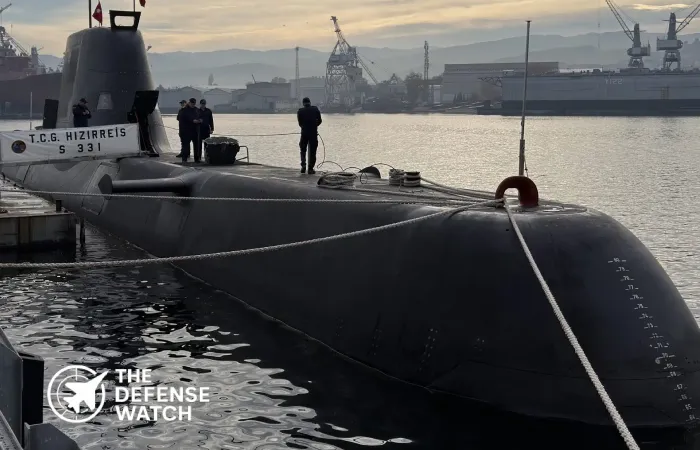
On November 27, 2025, at Gölcük Naval Shipyard in northwestern Türkiye, the submarine TCG Hızırreis (S-331) was formally handed over to the Turkish Navy, becoming the second operational vessel in the Reis-class (Type 214TN) under the New Type Submarine Project (YTDP).
The handover ceremony was attended by representatives of the procurement authority Savunma Sanayii Başkanlığı (SSB), the shipyard Gölcük Naval Shipyard (GNSY), the Turkish Navy, and German builder ThyssenKrupp Marine Systems (TKMS). According to TKMS, Hızırreis completed months of harbour and sea acceptance trials before transfer, confirming the project remains within the expected cost and schedule envelope.
Background: Why the Reis-Class Matters
The induction of Hızırreis builds on Türkiye’s ongoing effort to modernize its submarine fleet, shifting from older Type 209 boats to a modern, AIP-equipped diesel-electric design. The lead boat, TCG Piri Reis (S-330), entered service in August 2024.
Derived from the German Type 214 design, the Type 214TN integrates substantial domestic content — reportedly around 80 percent — incorporating Turkish-built combat systems, sensors, and weapons.
For Ankara, the class is more than a platform upgrade: it underpins a broader maritime strategy aimed at strengthening deterrence and control across the Black Sea, Eastern Mediterranean, and Aegean — regions where undersea capabilities increasingly define strategic advantage.
Hızırreis: Technical Profile & Capabilities
Design and Propulsion
- TCG Hızırreis measures approximately 67–68 meters in length, with a beam of 6.3 meters and a submerged displacement of roughly 2,000 tons.
- The submarine combines a traditional single-hull architecture optimized for low acoustic signature with modern diesel-electric propulsion supplemented by an air-independent propulsion (AIP) system. The AIP uses polymer electrolyte membrane fuel cells and high-capacity batteries, enabling prolonged submerged operations without the need to snorkel.
- Because of this AIP and large battery reserve, Hızırreis can remain submerged for days or even up to weeks, reducing exposure to radar, satellite, and aerial surveillance — a major tactical advantage in contested maritime domains.
Sensors & Combat Systems
- The submarine is equipped with a modern combat management system from TKMS’s ISUS family, integrated with Turkish-made subsystems sourced from national defense firms such as Aselsan, STM, Havelsan, TÜBİTAK BİLGEM and MilSOFT.
- This includes sonar, communications, and sensor suites enabling undersea surveillance, target detection, tracking and engagement — making Hızırreis a critical node in Türkiye’s underwater surveillance and strike architecture.
Armament
- Hızırreis carries eight 533 mm torpedo tubes located in a forward weapons module. Its armament includes heavyweight torpedoes and domestically developed heavy torpedo Akya heavy torpedo, as well as the submarine-launched variant of the anti-ship missile Atmaca anti‑ship missile (often referred to in Turkish sources as “Sub-Atmaca” or AKATA).
- In the longer term, integration of the cruise missile Gezgin cruise missile remains a stated ambition — a capability that would expand the class’s role beyond anti-ship and anti-submarine warfare into deep-strike against coastal or inland targets.
- The submarine can also lay naval mines, adding a sea-denial and area-denial function to its mission set.
Program Timeline & Domestic Industrial Effort
- The YTDP contract dates back to 2009 between Türkiye’s procurement agency SSB and TKMS; the first boat was constructed at Gölcük starting 2015, launched in 2019, and commissioned in 2024 after sea trials starting in late 2022.
- Hızırreis was launched on May 25, 2023, underwent outfitting and sea trials during 2024–2025, and completed acceptance testing prior to handover.
- TKMS remains responsible for design, material supply, and supervising both construction and testing phases. Handover marks the start of an 18-month warranty period as Hızırreis enters front-line service.
- According to publicly available schedules, four more Reis-class submarines remain under construction — with the third boat, TCG Muratreis, already launched in May 2025.
Strategic Impact: What Hızırreis Means for Türkiye and Regional Dynamics
From a strategic standpoint, the entry of Hızırreis into service significantly boosts the underwater combat potential of the Turkish Navy. Combined with Piri Reis already operational, Ankara now fields two stealthy, AIP-equipped submarines — a jump in undersea warfare capability after decades of reliance on older Type 209 boats.
These stealth submarines enhance Türkiye’s ability to conduct intelligence, surveillance and reconnaissance (ISR), covert tracking, area denial, and maritime strike — capabilities especially relevant in contested zones such as the Bosphorus-Dardanelles, Aegean sea lanes, the Eastern Mediterranean, and the Black Sea.
For NATO, the addition of Type 214TN boats reinforces indigenous AIP submarine capability inside the alliance. Given tensions in the Black Sea — where underwater operations are increasingly pivotal — the modernized Turkish undersea fleet could shift regional underwater deterrence dynamics.
Domestically, the project underscores success in localization: major Turkish defense firms now supply combat systems, sensors, and weapons, laying a foundation for future indigenous submarine programs. Indeed, according to remarks by the commander of the Turkish Naval Forces, development of nuclear-powered submarines is planned after completion of the current Reis-class and future national build under the MİLDEN submarine program.
What to Watch Next
- Delivery schedules for the remaining four Reis-class boats: the third submarine, TCG Muratreis, is already launched — sea trials and handover timing will signal whether Türkiye can sustain roughly one new submarine per year, as initially envisaged.
- Integration of Atmaca submarine-launched missiles (and potentially the Gezgin land-attack cruise missile) will markedly raise the class’s strike potential, extending reach beyond sea-control into littoral strike and sea denial.
- Development pace and design path of the upcoming MİLDEN program — including whether nuclear propulsion becomes a long-term goal — will illustrate Ankara’s ambitions for a strategic undersea force.
- Reactions from regional navies and alignment within NATO: increasing submarine numbers and stealth capabilities might trigger counter-ASW investments, increased patrols, and shifts in naval posture across the Black Sea and Eastern Mediterranean.
Closing: A Milestone in Türkiye’s Undersea Strategy
The formal commissioning of TCG Hızırreis marks a tangible step forward for Türkiye’s submarine modernisation efforts. As the second operational vessel in the Reis-class, Hızırreis enhances the Turkish Navy’s underwater stealth, endurance and strike capabilities — offering a potent undersea tool for surveillance, deterrence, and maritime control in key theaters.
More broadly, the handover underscores Türkiye’s growing defense-industry maturity: a largely domestically equipped AIP submarine built through a binational partnership, stepping stones to future fully indigenous and possibly nuclear-powered designs.
With four more submarines on the way — and key weapon integrations pending — Hızırreis is not just a milestone, but a signal: Türkiye is serious about establishing a sustained, modern, and versatile undersea presence across the Black Sea, Eastern Mediterranean, and beyond.
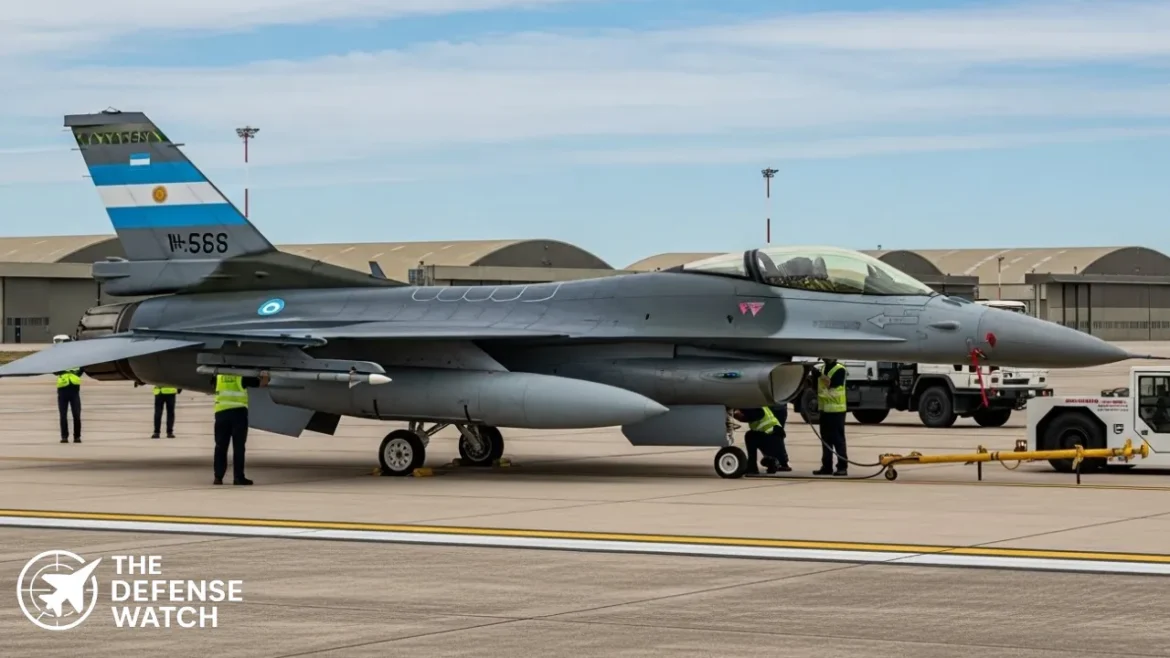
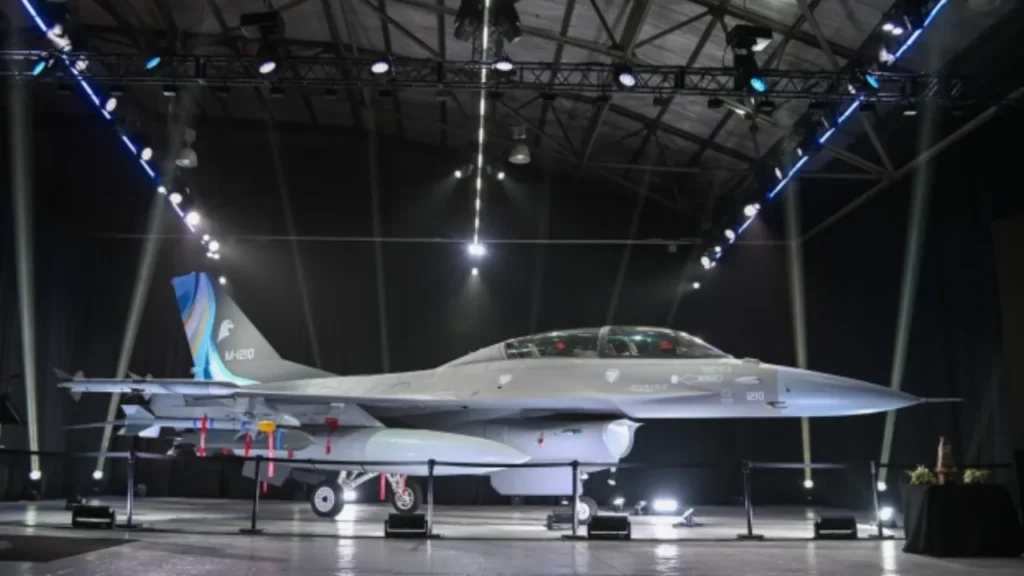
Argentina’s long-awaited F-16 fighter acquisition took a decisive step forward in 2025, as the Argentine Air Force (Fuerza Aérea Argentina, FAA) confirmed timelines for the first operational deliveries and publicly unveiled an ex-Danish F-16B training airframe. Under the U.S.-approved Peace Condor modernization program, Argentina is set to receive the first six operational F-16s by the end of 2025, marking the country’s return to a modern, supersonic-capable fleet after nearly a decade.
The unveiling of the F-16B—delivered earlier as a non-flying training platform—signals Argentina’s growing readiness to induct and sustain the multirole fighters once they arrive from Denmark.

Argentina F-16 Fighter Jet Background: A Strategic Reset for Argentine Air Power
Argentina has been without a frontline supersonic fighter since the retirement of its Mirage III/V and Finger squadrons in 2015. For nearly a decade, the country relied on subsonic A-4AR Fightinghawks with limited modernization potential. The absence of modern fighters created a capability gap in territorial defense, air policing, and regional deterrence.
The selection of 24 former Royal Danish Air Force F-16AM/BM fighters, finalized in 2024 with U.S. government approval, represented a strategic shift. The package includes:
- 24 refurbished fighters (MLU-standard)
- Engines, spare parts, support equipment
- A comprehensive training and logistics program
- U.S. oversight to ensure long-term sustainment
The Peace Condor framework places Argentina among U.S.-aligned F-16 operators in the region, improving interoperability and signaling a deeper defense partnership between Buenos Aires and Washington.
Details: First Six F-16s Scheduled for End-2025 Delivery
Operational Fleet Arrival
According to FAA and government officials, Argentina will receive six operational aircraft—four F-16B two-seat trainers and two F-16A single-seat jets—by December 2025. This initial batch will form the nucleus of the country’s renewed fighter capability, enabling:
- Pilot conversion and operational qualification
- Maintenance training and certification
- Establishment of logistics and supply chains
- Early readiness for air-defense alert duties
The remaining aircraft will be delivered in phases through 2026–2028, depending on refurbishment timelines in Denmark.
Argentina F-16 Fighter Jet Transit and Logistics Preparation
Argentina has already begun preparing infrastructure required for the fleet:
- Runway and hangar upgrades at Tandil Air Base, the future primary F-16 hub
- Establishment of an F-16 maintenance center at Área Material Río Cuarto
- Installation of simulators, classroom systems, and avionics repair stations
The FAA’s logistics and engineering branches have worked closely with Danish and U.S. teams to synchronize delivery schedules with infrastructure readiness.
FAA Unveils First ex-Danish F-16B for Training
In a ceremony earlier this year, the FAA showcased its first F-16B—the initial airframe transferred under the Peace Condor agreement. Unlike the operational jets still in Denmark, this aircraft was delivered as a non-airworthy but fully equipped training asset.
Purpose and Capabilities of the Training Airframe
The ex-Danish F-16B is being used for:
- Pilot cockpit familiarization
- Ground crew instruction
- Weapons loading and safety procedures
- Avionics maintenance training
- Emergency systems practice
The aircraft is fully representative of the MLU configuration, containing modernized:
- Radar and avionics
- Cockpit displays
- Navigation suite
- Ejection systems
- Wiring harnesses and hydraulics
This early transfer has already accelerated Argentina’s training pipeline, ensuring airmen and technicians will be ready when the operational jets arrive.
Expert & Policy Perspective
Defense analysts describe the combined delivery plan—a ground trainer first, followed by the flying fleet—as a best-practice approach commonly used by NATO F-16 operators.
Restoring Deterrence and Air Sovereignty
Argentina’s lack of a modern fighter fleet limited its autonomy in air policing and regional security operations. The F-16—while not the most advanced version—provides a credible, combat-proven multirole platform, significantly enhancing:
- Air-intercept capabilities
- Maritime strike potential
- Border security and airspace control
- Joint operations with allied air forces
Regional Impact
Argentina’s F-16 acquisition stands out in a region with slowly modernizing air forces. With Chile and Colombia also operating advanced fighters, Argentina’s entry into the F-16 ecosystem:
- Rebalances regional parity
- Increases interoperability with U.S. and NATO systems
- May encourage renewed modernization across South America
U.S. Strategic Interests
The United States retains a prominent role through:
- Technology-transfer oversight
- Training and integration support
- Ensuring aligned doctrine and sustainment
The acquisition also prevents Argentine procurement from Russian or Chinese alternatives—an openly stated concern in Washington.
What Comes Next
With the first six operational fighters expected by the end of 2025, Argentina’s immediate priorities include:
- Completing pilot conversion on F-16 simulators
- Finalizing basing upgrades at Tandil
- Receiving the first batches of U.S.-supplied weapons
- Conducting initial operational test flights
- Establishing a long-term sustainment pipeline
By 2026, Argentina is expected to declare Initial Operational Capability (IOC) for at least one F-16 squadron.
Conclusion
The combination of scheduled operational deliveries and the arrival of a dedicated F-16B training airframe marks a turning point for Argentina’s air force modernization. For the first time in a decade, the country is poised to restore a credible, modern, and sustainable combat aviation capability.
The Peace Condor agreement—anchored in U.S. and Danish support—provides Argentina with far more than a fleet of combat aircraft. It offers a foundation for long-term interoperability, regional stability, and renewed deterrent strength across South America.