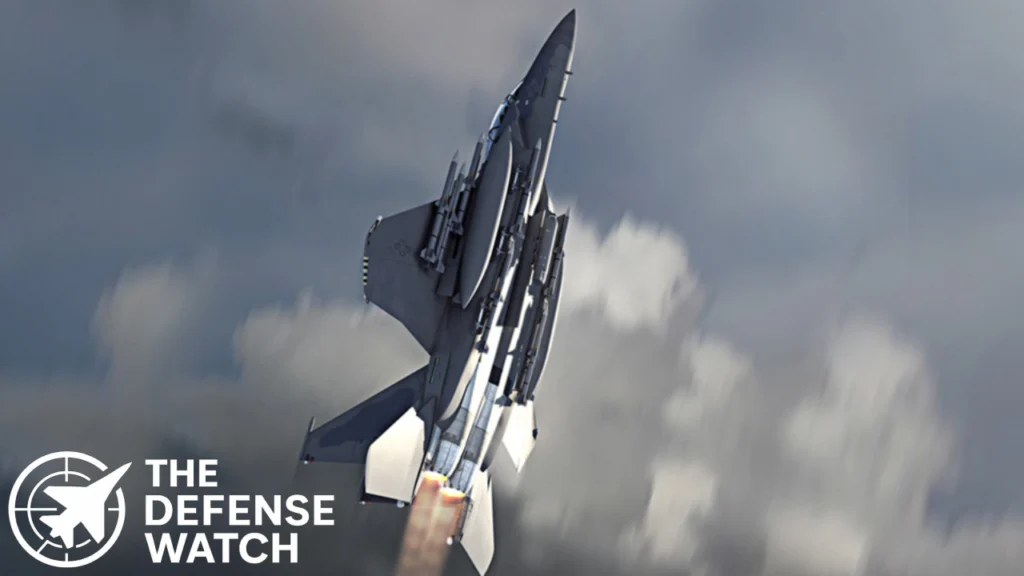
Executive Summary:
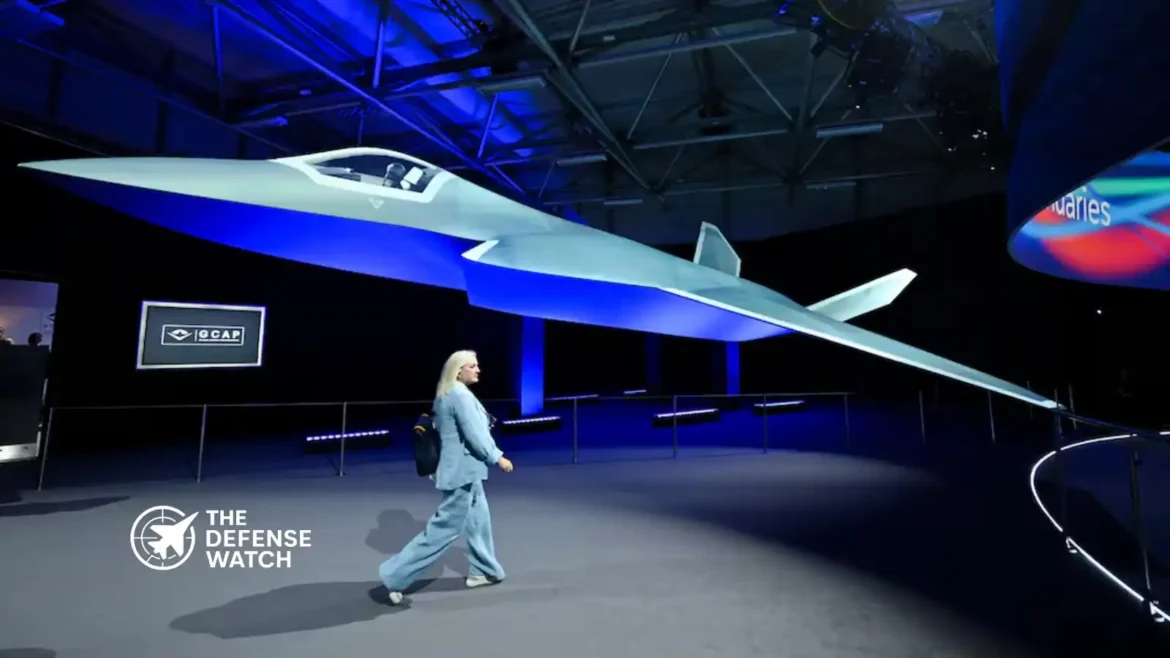
Britain, Italy, and Japan awarded a £4.6 billion ($6.14 billion) contract to the Edgewing joint venture on July 3, 2026, to advance the Global Combat Air Programme (GCAP) fighter jet. The 18-month deal funds the advanced concept, assessment, and detailed design phases following the United Kingdom’s recent commitment of £8.6 billion over four years. The program aims to deliver a sixth-generation stealth fighter for service entry in 2035, enabling the partners to share development costs and maintain sovereign combat air capabilities.
GCAP Program Advances with Major Contract Award
The United Kingdom, Italy, and Japan have taken a significant step forward in their collaborative effort to develop a next-generation combat aircraft. The tri-national Global Combat Air Programme (GCAP) received a £4.6 billion contract to industry joint venture Edgewing, the UK government announced on July 3, 2026.
This contract follows months of budget-related delays in the UK and marks the transition to more substantial detailed design and development work. UK Minister for Defence Readiness Luke Pollard described the award as “a major step forward towards delivery” of a cutting-edge stealth fighter for partner nations’ pilots.
Program Background and Industrial Structure
GCAP merges the UK’s Tempest program with Japan’s F-X initiative and Italian participation. The three nations established the GCAP International Government Organisation (GIGO) to oversee the effort. Edgewing, the prime industrial partner, is a joint venture equally owned by BAE Systems (UK), Leonardo (Italy), and Japan Aircraft Industrial Enhancement Co. Ltd. (linked to Mitsubishi Heavy Industries).
Edgewing will subcontract manufacturing and final assembly to the national champions: BAE Systems, Leonardo, and Mitsubishi Heavy Industries. The joint venture’s headquarters are in the UK, with initial leadership from Italy.
Key Program Milestones (as of 2026):
- Demonstrator aircraft first flight targeted for 2027.
- Production aircraft service entry: 2035.
- Contract scope: 18-month advanced concept, assessment, and detailed design phase.
Technical Ambitions and Capabilities
GCAP is designed as a “system of systems” capable of operating across air, land, sea, space, and cyber domains. The crewed fighter will serve as the core platform, integrated with uncrewed assets through advanced AI, supercomputing, combat cloud architecture, and resilient datalinks.
Anticipated features, based on partner statements and conceptual designs, include:
- Significant size increase over the Eurofighter Typhoon (estimated 3-4 meters longer).
- Advanced stealth characteristics with internal weapons bays.
- Adaptive cycle engines for extended range and performance.
- Sophisticated sensor fusion, electronic warfare capabilities, and potential directed energy weapons integration.
- Interoperability with existing platforms like the F-35 and Typhoon.
The program emphasizes upgradability and adaptability to evolving threats through modular design and digital engineering approaches.
Strategic and Geopolitical Context
For the United Kingdom, GCAP supports post-Brexit defense industrial strategy and sovereign capability in combat air. Italy seeks to sustain its aerospace expertise alongside participation in other European efforts. Japan views the program as critical for replacing aging fleets while building domestic industrial capacity under its evolving defense posture.
The contract award coincides with the collapse of the rival Franco-German FCAS program, potentially opening doors for additional partners. Italy has highlighted interest from nations including Germany, while Saudi Arabia and Canada have also been linked to discussions. Any expansion requires consensus among the founding three members.
Implications for U.S. Defense Strategy and Industry
From a U.S. perspective, GCAP represents both collaboration opportunity and competitive dynamic in the global fighter market. The program operates independently of U.S. platforms like the F-35 and the Next Generation Air Dominance (NGAD) initiative. However, its emphasis on interoperability suggests potential for future joint operations in NATO or Indo-Pacific theaters.
Comparative Context (High-Level):
- GCAP: Trilateral (UK/IT/JP), target 2035 IOC, focus on export potential and sovereign control.
- U.S. NGAD/F-47: Domestic focus with Collaborative Combat Aircraft, earlier prototype activity but facing its own budgetary and requirement reviews.
- F-35: Established fifth-generation backbone with extensive international participation, providing proven interoperability baseline.
GCAP’s success could influence global supply chains, technology standards, and export markets for advanced combat aircraft. For the U.S., it underscores the value of allied innovation while highlighting the need to maintain technological edges in areas like propulsion, sensors, and manned-unmanned teaming.
Challenges and Path Forward
The program has faced funding hurdles, notably in the UK, where budget constraints delayed progress. The recent £8.6 billion UK commitment over four years addresses immediate needs but represents only a portion of the multi-decade, tens-of-billions cost expected for full development and production.
Technical challenges typical of sixth-generation programs include integrating advanced propulsion, achieving required stealth and range, and managing the complexity of AI-driven systems. Industrial integration across three nations with different procurement cultures and priorities adds another layer of complexity.
Analysis: The contract award stabilizes short-term momentum, but long-term success will depend on sustained political commitment through potential economic cycles and evolving threat environments. For the U.S., monitoring GCAP’s progress offers insights into allied priorities and potential areas for technology exchange or burden-sharing in contested regions like the Indo-Pacific.
The 2035 target remains ambitious. Achieving it while delivering promised capabilities will test the partners’ ability to execute complex multinational development efficiently—lessons that could inform broader transatlantic and Pacific defense cooperation.

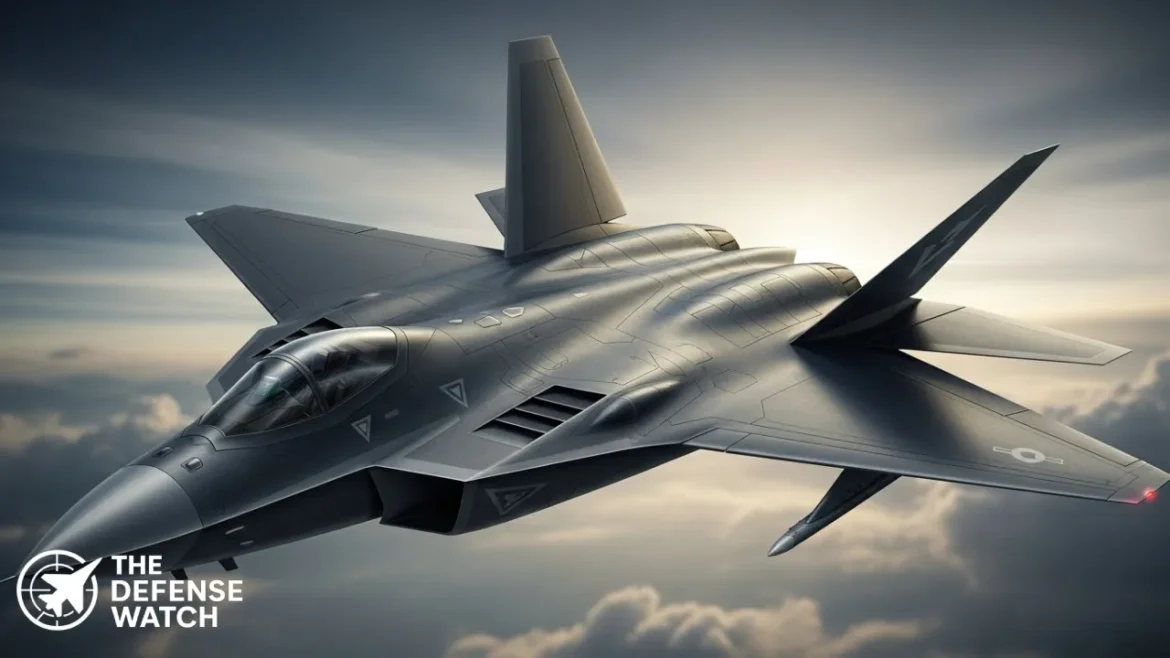
Boeing F-47 Stealth Fighter Jet: Separating Fact from Fiction in Next-Generation Air Dominance
The Boeing F-47 stealth fighter jet has emerged as a topic of significant interest within defense and aerospace communities, yet substantial confusion surrounds this designation. Unlike established platforms such as the F-15, F-16, or F-35, the F-47 designation does not correspond to any officially announced Boeing fighter program in the United States military inventory or development pipeline as of December 2025.
Understanding the distinction between speculative concepts, unofficial designations, and actual defense programs is crucial for accurate defense reporting. This analysis examines the current state of Boeing’s fighter aircraft development, the context of advanced stealth technology, and what the future holds for next-generation air superiority platforms.
The Reality Behind the F-47 Designation
The F 47 fighter jet designation does not appear in official Department of Defense procurement documents, congressional budget justifications, or Boeing’s publicly announced development programs. The U.S. military aircraft designation system, managed by the Department of Defense, follows specific protocols established in 1962 under the tri-service aircraft designation system.
Current Boeing fighter programs include the F-15EX Eagle II, the F/A-18E/F Super Hornet, and the company’s participation in the Next Generation Air Dominance (NGAD) program competition. Boeing has not publicly unveiled any aircraft carrying the F-47 designation, suggesting the term may represent either speculative reporting, conceptual studies, or misinformation circulating within defense enthusiast communities.
Boeing’s Actual Stealth Fighter Development Programs
While Boeing fighter jets F47 may not exist in official capacity, Boeing maintains several legitimate advanced combat aircraft initiatives that incorporate stealth technology and next-generation capabilities.
Next Generation Air Dominance (NGAD) Competition
Boeing is competing for the U.S. Air Force’s NGAD program, which aims to replace the F-22 Raptor with a sixth-generation air superiority fighter. According to reports from Defense News and industry analysts, Boeing has developed and flight-tested demonstrator aircraft as part of this competition, though specific details remain classified.
The NGAD program emphasizes:
- Advanced stealth characteristics beyond current fifth-generation platforms
- Digital engineering and rapid prototyping capabilities
- Manned-unmanned teaming with Collaborative Combat Aircraft (CCA)
- Open systems architecture for technology refresh
- Extended range and persistence for Pacific theater operations
F/A-XX Navy Fighter Program
Boeing is also competing for the Navy’s F/A-XX program, intended to replace the F/A-18E/F Super Hornet. This carrier-based platform would incorporate f-47 fighter jet stealth technology principles, including reduced radar cross-section, advanced sensors, and enhanced survivability in contested environments.
Advanced Stealth Technology in Modern Fighter Development
Understanding F-47 fighter jet stealth technology requires examining the current state-of-the-art in low-observable design, regardless of specific platform designations.
Fifth and Sixth-Generation Stealth Characteristics
Modern stealth fighters incorporate multiple signature reduction techniques:
Radar Cross-Section (RCS) Reduction: Advanced shaping uses computational fluid dynamics and electromagnetic modeling to deflect radar energy away from source emitters. Materials technology includes radar-absorbent materials (RAM) and radar-absorbent structures (RAS) integrated into airframe components.
Infrared Signature Management: Engine exhaust management through serpentine inlet ducts, exhaust cooling systems, and thermal masking reduce infrared detectability from air-to-air and surface-to-air missile seekers.
Electronic Emissions Control: Advanced electronic warfare systems and low probability of intercept (LPI) radar technology minimize detectable electronic emissions while maintaining situational awareness.
Visual Signature Reduction: Specialized coatings and paint schemes reduce visual detection range, while contrail suppression technologies minimize condensation trail formation at operational altitudes.
Fighter Jet Cost Considerations for Advanced Platforms
The fighter jet cost equation for next-generation stealth platforms presents significant challenges for defense budget planners. Current fifth-generation fighters provide context for future platform expenses.
Cost Analysis Framework
The F-35A Lightning II, the most recent American stealth fighter to enter production, currently costs approximately $80-90 million per unit in Lot 18 production, according to Lockheed Martin’s publicly released figures. The F-22 Raptor program, which ended production in 2011, carried a per-unit cost exceeding $150 million when accounting for development expenses.
Sixth-generation platforms like the NGAD program face projected costs between $250-300 million per aircraft, as reported by Air Force officials in congressional testimony. These elevated costs reflect:
- Advanced materials and manufacturing processes
- Sophisticated mission systems and sensor fusion
- Digital engineering development methodologies
- Small initial production quantities
- Integration with unmanned teaming aircraft
The total program lifecycle cost, encompassing development, procurement, operations, sustainment, and eventual disposal, typically runs 3-4 times the initial procurement price for modern fighter aircraft.
Boeing’s Fighter Aircraft Heritage and Future Direction
Boeing’s lineage in fighter development extends from the World War II-era P-26 Peashooter through modern platforms. The company absorbed McDonnell Douglas in 1997, inheriting the F-15 Eagle and F/A-18 Hornet programs that continue generating revenue and technological advancement.
Recent Boeing fighter initiatives include:
F-15EX Eagle II: A fourth-generation-plus platform incorporating modern avionics, electronic warfare systems, and weapons integration while leveraging the proven F-15 airframe. The Air Force has ordered 104 aircraft with deliveries extending through the late 2020s.

F/A-18E/F Block III Super Hornet: Advanced variants featuring enhanced range, reduced radar signature, conformal fuel tanks, and upgraded mission systems for the U.S. Navy and international customers.
MQ-28 Ghost Bat: An unmanned combat air vehicle developed for the Royal Australian Air Force, demonstrating Boeing’s capabilities in autonomous systems that would complement crewed fighters in future operations.
Strategic Analysis: The Need for Advanced Air Superiority
The demand for next-generation stealth fighters, whether designated F-47 or another classification, stems from evolving threat environments in contested airspace.
Peer Competitor Developments
China’s J-20 Mighty Dragon and Russia’s Su-57 Felon represent fifth-generation capabilities that challenge American air superiority assumptions held since the 1991 Gulf War. Both platforms incorporate stealth features, advanced radar systems, and long-range weapons that can engage targets at extended distances.
China has accelerated fighter development with reported work on sixth-generation concepts, including the potentially unmanned capabilities demonstrated in recent flight tests. This rapid advancement compresses the timeline for American responses and elevates urgency for NGAD and F/A-XX programs.
Pacific Theater Requirements
The vast distances across the Indo-Pacific theater demand extended range and persistence characteristics that exceed current platform capabilities. Future fighters must operate from dispersed bases, conduct long-duration missions, and maintain air superiority against sophisticated integrated air defense systems (IADS) while supporting joint force operations.
Technology Integration Challenges
Developing advanced stealth fighters involves numerous technical challenges beyond aerodynamic design and signature reduction.
Software Complexity: Modern fighters contain millions of lines of software code managing flight controls, mission systems, sensor fusion, and weapons integration. The F-35 program encountered significant delays attributed to software development challenges, lessons that inform NGAD approaches emphasizing modular, open architecture systems.
Supply Chain Management: Advanced materials, specialized manufacturing processes, and limited supplier bases create vulnerability in fighter production. The defense industrial base requires sustained investment and long-term planning to maintain production capacity.
Testing and Validation: Stealth characteristics require extensive testing in specialized facilities including radar cross-section measurement ranges, anechoic chambers, and electronic warfare simulation environments. Flight testing spans thousands of hours across multiple years before operational deployment.
International Market Considerations
While the Boeing F-47 stealth fighter jet may not exist as a specific export platform, international demand for advanced fighter capabilities continues growing. American allies face similar threat environments requiring fifth and sixth-generation capabilities.
U.S. export policy balances allied defense requirements against technology security concerns. The F-35 program includes numerous international partners, while more sensitive technologies remain restricted to domestic platforms. Future Boeing fighter developments will navigate these same policy considerations.
Conclusion: The Future of American Fighter Aviation
Whether designated F-47 or another classification, Boeing’s future in advanced fighter development remains robust through NGAD and F/A-XX competitions. The company’s engineering capabilities, production infrastructure, and operational support experience position it as a credible competitor for next-generation air dominance platforms.
The confusion surrounding the Boeing F-47 stealth fighter jet designation underscores the need for careful verification in defense reporting. While no such official program currently exists, Boeing’s actual fighter development efforts represent significant advancements in stealth technology, combat capabilities, and air superiority systems that will shape American military aviation for decades to come.
Defense planners face critical decisions balancing capability requirements against fiscal constraints, with fighter jet cost considerations influencing force structure and procurement strategies. The outcome of NGAD and F/A-XX competitions will determine whether Boeing continues as a prime contractor for American fighter aircraft or transitions to a supporting role in future aviation programs.
FAQs
Is the Boeing F-47 stealth fighter jet a real aircraft?No official U.S. military aircraft carries the F-47 designation. Boeing is developing advanced fighters through the NGAD and F/A-XX programs, but no platform has been publicly designated F-47.
What is Boeing’s current fighter aircraft program?Boeing produces the F-15EX Eagle II and F/A-18E/F Super Hornet while competing for the sixth-generation NGAD and F/A-XX programs. The company also develops unmanned combat aircraft like the MQ-28 Ghost Bat.
How much would a next-generation stealth fighter cost?Sixth-generation fighters like those in the NGAD program are projected to cost $250-300 million per aircraft, significantly higher than current fifth-generation platforms due to advanced technology and capabilities.
What stealth technology features would a new Boeing fighter include?Advanced stealth fighters incorporate radar cross-section reduction, infrared signature management, electronic emissions control, and visual signature reduction through specialized materials and design techniques.
When will Boeing’s next fighter aircraft enter service?The NGAD program timeline remains classified, though Air Force officials have indicated operational capability requirements in the early 2030s. The F/A-XX program follows a similar timeline for Navy requirements.