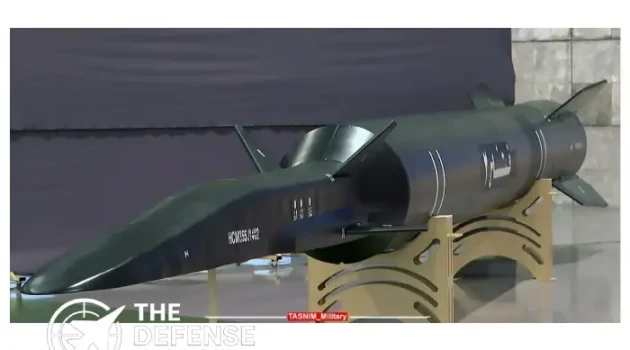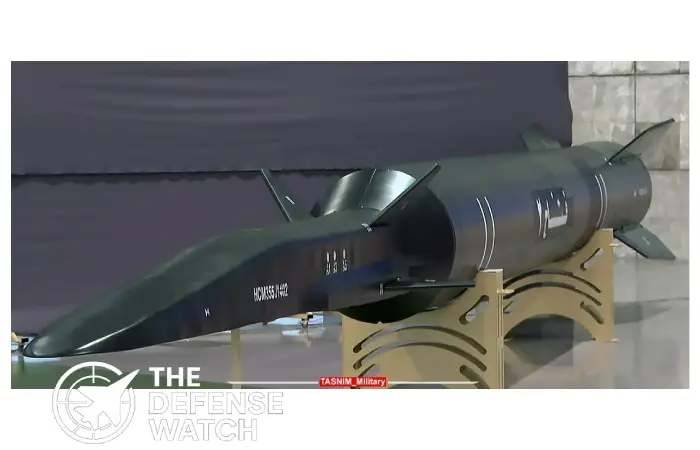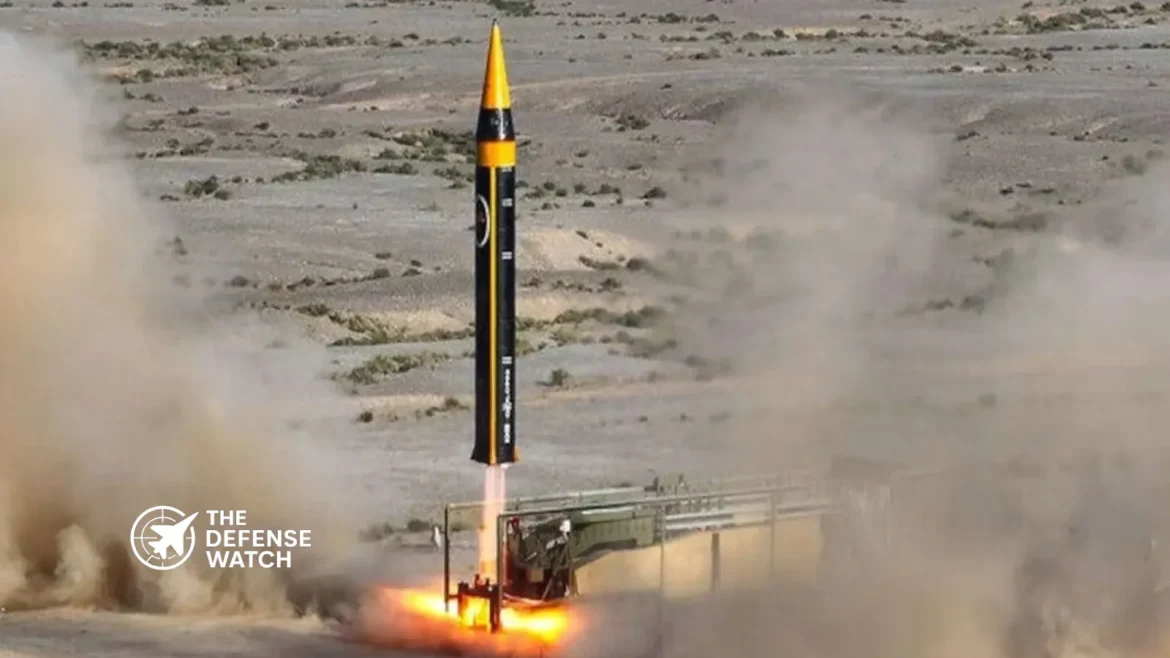
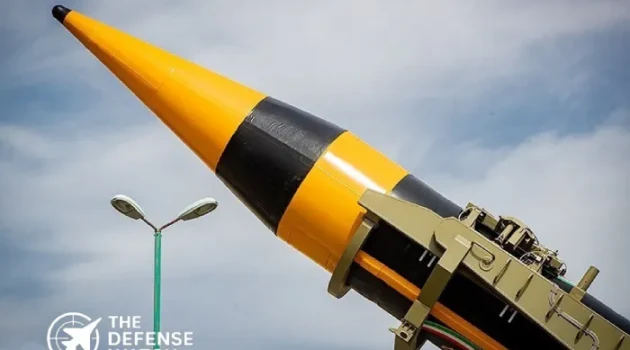
- ► Iran claims launch of hypersonic capable Kheibar missile toward Israeli air defense targets.
- ► Kheibar described as long range ballistic system with enhanced maneuverability.
- ► Israel maintains layered missile defense including Arrow and David’s Sling systems.
- ► No independent confirmation yet of hypersonic glide vehicle capability.
- ► Development underscores growing missile competition across the Middle East.
Iran Hypersonic Capable Kheibar Missile Launch Raises Air Defense Concerns
The Iran hypersonic capable Kheibar missile launch has drawn renewed scrutiny from defense analysts after Tehran claimed the weapon was fired toward Israeli air defense networks during ongoing hostilities.
(adsbygoogle = window.adsbygoogle || []).push({});Iranian authorities stated that the Kheibar missile was launched as part of a broader strike package aimed at overwhelming and penetrating Israeli missile defense systems. The claim, if confirmed, would mark another step in Iran’s effort to showcase longer range and potentially maneuverable ballistic missile capabilities.
Officials in Iran described the Kheibar as hypersonic capable, though no independent verification has yet confirmed whether the missile demonstrated sustained hypersonic glide characteristics or simply traveled at hypersonic speeds typical of ballistic trajectories.
Israel has not publicly confirmed the specific missile type used in the reported attack but has stated in recent briefings that its multi layered air defense architecture remains operational.
What Is The Kheibar Missile?
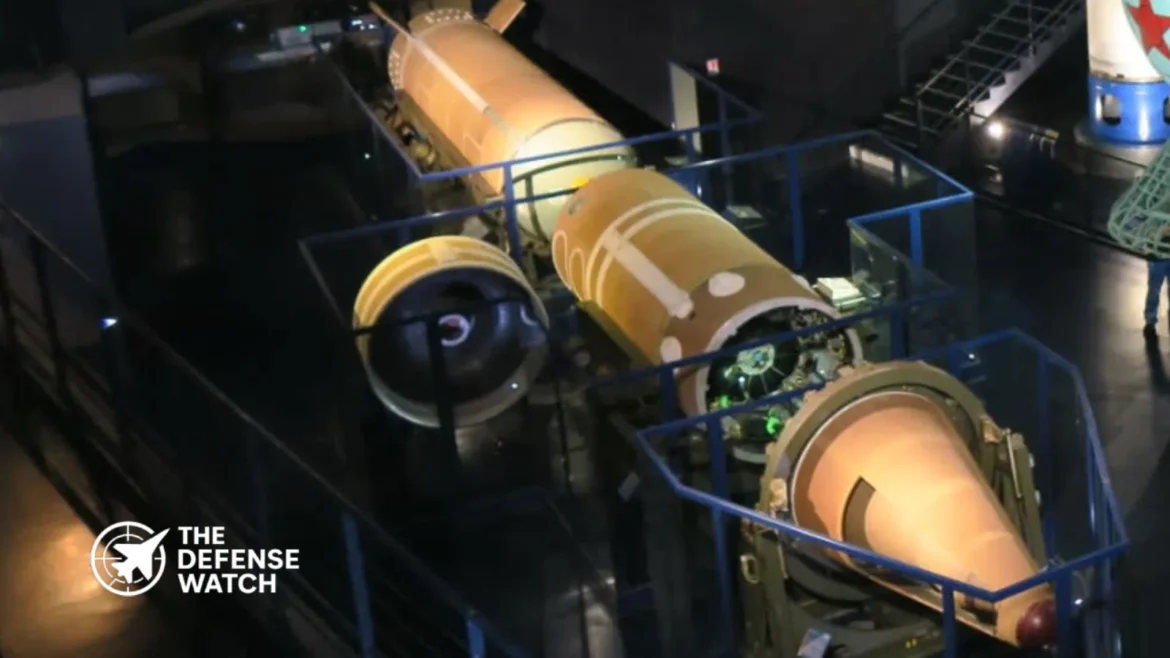
The Kheibar missile, sometimes referred to as Khorramshahr 4 in Iranian media, is part of Tehran’s expanding ballistic missile inventory. It is believed to be derived from earlier liquid fueled systems but reportedly features design refinements to improve range, payload flexibility, and survivability.
Iranian state media has previously claimed the missile can carry a large warhead over distances exceeding 1,000 miles. Analysts note that such range would allow coverage of targets across much of the Middle East.
The Iran hypersonic capable Kheibar missile launch claim centers on speed and maneuverability. All ballistic missiles reach hypersonic velocities during reentry, typically exceeding Mach 5. However, true hypersonic weapons often refer to systems equipped with maneuverable glide vehicles that can adjust trajectory during flight, complicating interception.
There is no open source evidence confirming that the Kheibar employs a hypersonic glide vehicle comparable to programs under development in the United States, China, or Russia. The distinction matters operationally. A maneuverable reentry vehicle presents a greater challenge to radar tracking and interceptor timing than a predictable ballistic arc.
Targeting Israeli Air Defenses
The stated objective of the Iran hypersonic capable Kheibar missile launch was to pressure air defense networks in Israel.
Israel fields a layered missile defense system that includes Arrow for long range ballistic threats, David’s Sling for medium range missiles, and Iron Dome for short range rockets. These systems are supported by advanced radar and battle management networks designed to prioritize high value targets and manage interceptor inventories.
In recent years, Israeli defense officials have emphasized upgrades to counter maneuverable and high speed threats. This includes software improvements and interceptor refinements intended to address emerging missile profiles from regional adversaries.
If the Kheibar demonstrated any terminal maneuvering capability, it would test those defenses. Even absent advanced glide features, a large payload ballistic missile can stress interception systems simply through volume and range.
Strategic Significance
The Iran hypersonic capable Kheibar missile launch reflects Tehran’s broader strategy of deterrence through missile force expansion. Iran continues to invest heavily in ballistic missile development under the oversight of the Islamic Revolutionary Guard Corps.
Ballistic missiles serve multiple purposes in Iranian doctrine. They provide long range strike options without reliance on an air force that faces modernization constraints due to sanctions. They also signal technological progress intended to bolster domestic and regional deterrence messaging.
From a regional security perspective, claims of hypersonic capability raise concerns among Gulf states and Israel alike. Even incremental improvements in accuracy, speed, or maneuverability can shift the balance between offense and defense.
Defense analysts caution, however, that official claims often exceed independently verified performance data. Without telemetry, debris analysis, or confirmation from third party intelligence sources, the true technical characteristics of the Kheibar remain difficult to assess.
Outlook
The Iran hypersonic capable Kheibar missile launch is likely to intensify scrutiny of missile defense readiness across the region. It may also accelerate further investment in early warning systems, interceptor stockpiles, and sensor integration.
For Israel and its partners, the core question is not only whether the Kheibar is genuinely hypersonic in the advanced sense, but whether Iran can produce and deploy it in meaningful numbers.
As missile technology spreads and evolves, the competition between offensive strike systems and defensive interception networks will remain a defining feature of Middle East security dynamics.
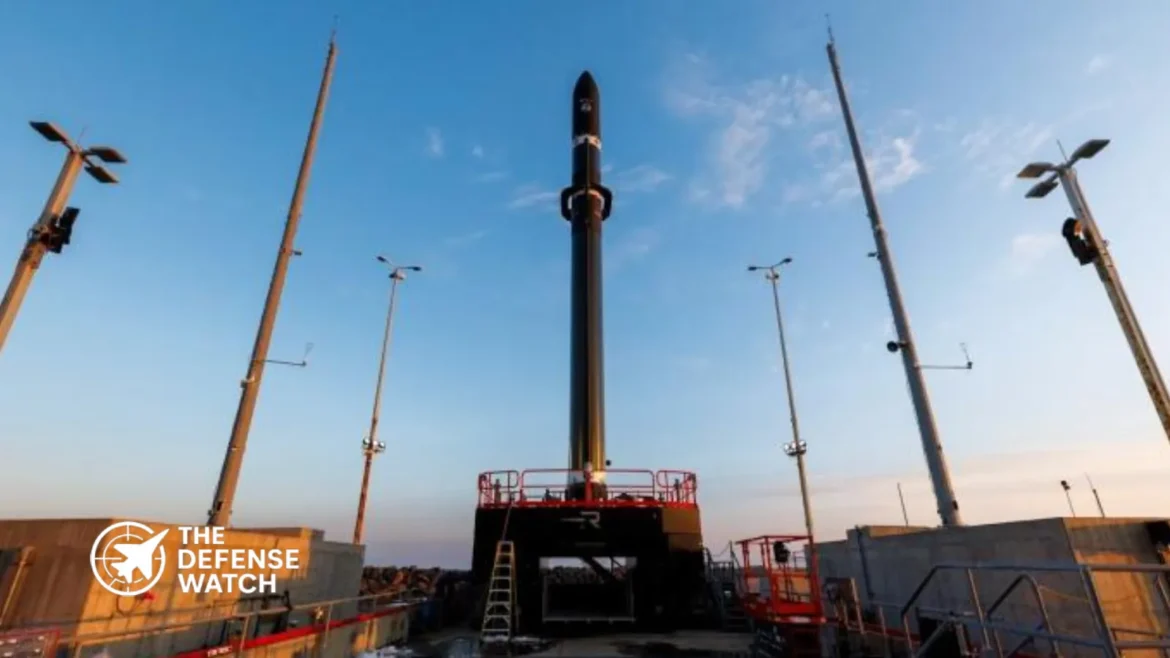
- ► Hypersonix Launch Systems’ DART AE completed its first-ever flight in late February 2025, reaching speeds exceeding Mach 5 after launch from NASA’s Wallops Island facility in Virginia.
- ► The 3.5-meter autonomous vehicle is powered by the SPARTAN scramjet — a fully 3D-printed, hydrogen-fueled engine capable of sustained thrust up to Mach 7 with zero CO₂ emissions.
- ► The mission, named “That’s Not A Knife” by Rocket Lab and “Cassowary Vex” by the U.S. Defense Innovation Unit, was conducted under the Pentagon’s HyCAT hypersonic testing program.
- ► DART AE was boosted into the upper atmosphere by Rocket Lab’s HASTE rocket from Launch Complex 2 at the Mid-Atlantic Regional Spaceport before its SPARTAN engine ignited for hypersonic flight.
- ► The flight followed Hypersonix’s A$46 million Series A funding round backed by Australia’s National Reconstruction Fund Corporation, Saab, High Tor Capital, and other investors.
Australia’s DART AE Completes First Hypersonic Flight In Landmark Test For U.S. Defense Program
Hypersonix Launch Systems has completed the first flight of its DART AE hypersonic aircraft, which reached speeds above Mach 5 after launching from NASA’s Wallops Island facility in Virginia. The achievement marks a pivotal moment not only for the Brisbane-based aerospace firm, but for the broader U.S.-allied hypersonic development ecosystem — and signals that allied industry is increasingly capable of delivering cutting-edge test platforms to American defense programs.
For a sector long dominated by U.S. and Chinese state programs, an Australian startup achieving sustained hypersonic scramjet flight under a Pentagon contract is no small matter.
The Mission: “That’s Not A Knife”
The mission saw DART AE carried into the upper atmosphere aboard Rocket Lab’s HASTE rocket, purpose-built for hypersonic test missions. At the planned deployment point, DART AE separated and the SPARTAN engine ignited, powering the aircraft through its hypersonic flight profile.
The flight was conducted under the U.S. Department of Defense’s Defense Innovation Unit, with Rocket Lab’s HASTE launch vehicle lifting off from Rocket Lab Launch Complex 2 at the Virginia Spaceport Authority’s Mid-Atlantic Regional Spaceport on Wallops Island.
The dual mission names reflect the collaborative nature of the program — “Cassowary Vex” designated by the DIU and “That’s Not A Knife” chosen by Rocket Lab, a nod to the Australian cultural reference that underscores the flight’s national significance.
What Is DART AE?
DART AE is an autonomous 3D-printed, hydrogen-fueled scramjet technology demonstrator and is the world’s first entirely 3D-printed airframe of a hypersonic launch vehicle. Its SPARTAN scramjet engine, powered by green hydrogen, provides the necessary thrust to propel DART at hypersonic speeds. This air-breathing engine emits zero CO₂ during flight.
The DART AE hypersonic system is 3.5 meters long and can travel up to a range of 1,000 kilometers at a speed of Mach 7. It can be launched via an unguided sounding rocket, a guided rocket, or air-launched.
Unlike solid-fuel or liquid-fuel ballistic test vehicles, DART AE’s scramjet design requires the vehicle to be accelerated to Mach 5 before the engine can sustain combustion — a key technical threshold that distinguishes scramjet-powered hypersonics from conventional boost-glide systems. The SPARTAN engine’s ability to self-ignite, throttle, and restart mid-flight represents a meaningful engineering advancement over prior scramjet demonstrators.
Why This Flight Matters For U.S. Defense
The launch is part of the Pentagon’s Defense Innovation Unit HyCAT program, which aims to develop affordable test platforms for hypersonic technologies. Hypersonix was selected for the program in March 2023, beating out more than 60 applicants.
The DIU’s HyCAT initiative reflects a deliberate shift in American defense acquisition strategy: rather than relying exclusively on large prime contractors for expensive, one-of-a-kind hypersonic demonstrators, the program seeks high-cadence, cost-efficient test assets from allied commercial industry. DART AE fits that model precisely.
Three flights are planned under the HyCAT program, with additional orders available without competitive tender once the technology is proven in flight. Kratos has committed to acquiring up to 20 DART AE systems from Hypersonix as part of an agreement following the successful demonstration.
That pipeline — backed by a U.S. defense contractor of Kratos’s stature — suggests DART AE is positioned not merely as a science experiment but as a candidate for operational-scale hypersonic test support in the years ahead.
The Technology Edge: Hydrogen-Fueled Scramjet
What distinguishes DART AE from competing hypersonic demonstrators is its propulsion architecture. The SPARTAN scramjet is 3D-printed and is designed to fly at speeds up to Mach 7. The aircraft will serve as a testbed for emerging and high-performance technologies.
Unlike conventional kerosene-fueled scramjets, SPARTAN is hydrogen-powered and designed to operate without moving parts. The absence of rotating components in the engine simplifies manufacturing, reduces failure points, and lowers the cost-per-flight — a critical consideration for a program designed around high-cadence testing.
The environmental angle also carries strategic weight. As defense establishments across NATO and the Indo-Pacific face increasing scrutiny over carbon footprints, a scramjet that produces only water vapor as exhaust offers both operational and political utility.
Co-founder Dr. Michael Smart, a former NASA research scientist and former Chair of Hypersonic Propulsion at the University of Queensland, emphasized that flight data is irreplaceable at these speeds. “At these speeds and temperatures, there is no substitute for flight data,” Smart said, noting that the flight allowed the team to test propulsion, materials, and control systems in real hypersonic conditions.
Funding and Industrial Scale-Up
The mission followed Hypersonix’s $46 million Series A funding round, backed by Australia’s National Reconstruction Fund Corporation and Queensland Investment Corporation. The round was led by High Tor Capital, a UK investor in national security and frontier technology, with European defense company Saab and Polish family office RKKVC also supporting the raise.
The composition of the investor group is telling. High Tor Capital’s focus on national security technology, Saab’s participation as a defense prime, and Australia’s sovereign manufacturing fund all signal that DART AE is viewed as strategically significant — not simply commercially interesting.
Hypersonix has linked the funding to expansion plans in Queensland and a faster flight-test cadence, and is also developing its next platform, VISR — Velos Intelligence, Surveillance and Reconnaissance. The company employs more than 50 people in Brisbane across aerospace engineering, advanced manufacturing, and testing roles.
What Comes Next: VISR and Delta Velos
Hypersonix is not stopping at DART AE. The company’s plans include developing the VISR and Delta Velos hypersonic vehicles. The 16-meter Delta Velos is designed to reach speeds between Mach 5 and 12 and can be used for satellite launches and low-Earth orbit resupply missions. The 8-meter VISR is designed to fly at speeds between Mach 5 and 10 and can land on a standard runway, intended for multiple applications including long-range military surveillance and high-speed cargo transport.
VISR in particular has direct military relevance. A reusable, runway-landing hypersonic surveillance platform capable of Mach 5–10 flight would address a critical gap in persistent high-speed ISR coverage — a capability that current satellite and subsonic ISR platforms cannot replicate in contested airspace.
Analysis: A Strategic Win for the U.S.-Australia Alliance
The DART AE first flight is more than a technical milestone — it is a data point in the broader strategic realignment of the Indo-Pacific defense industrial base. The AUKUS partnership has placed enormous emphasis on advanced capabilities, including hypersonics, as a pillar of deterrence. Australia’s ability to independently develop, manufacture, and fly hypersonic test vehicles — and do so under a U.S. DoD contract — demonstrates a degree of sovereign capability that strengthens the alliance’s collective deterrence posture.
For U.S. defense planners, access to allied hypersonic test assets diversifies the supply chain for critical test infrastructure. For Australia, it establishes a commercial pathway into the U.S. defense market that could generate significant export revenue and deepen technological interoperability.
The DART AE dataset will inform the design of Hypersonix’s next vehicles, with further flight tests expected as the company expands manufacturing and development in Queensland.
With two more HyCAT flights still on the schedule and a growing order pipeline through Kratos, Hypersonix is now firmly on the map as a credible hypersonic systems developer — one with direct ties to the U.S. defense innovation ecosystem.
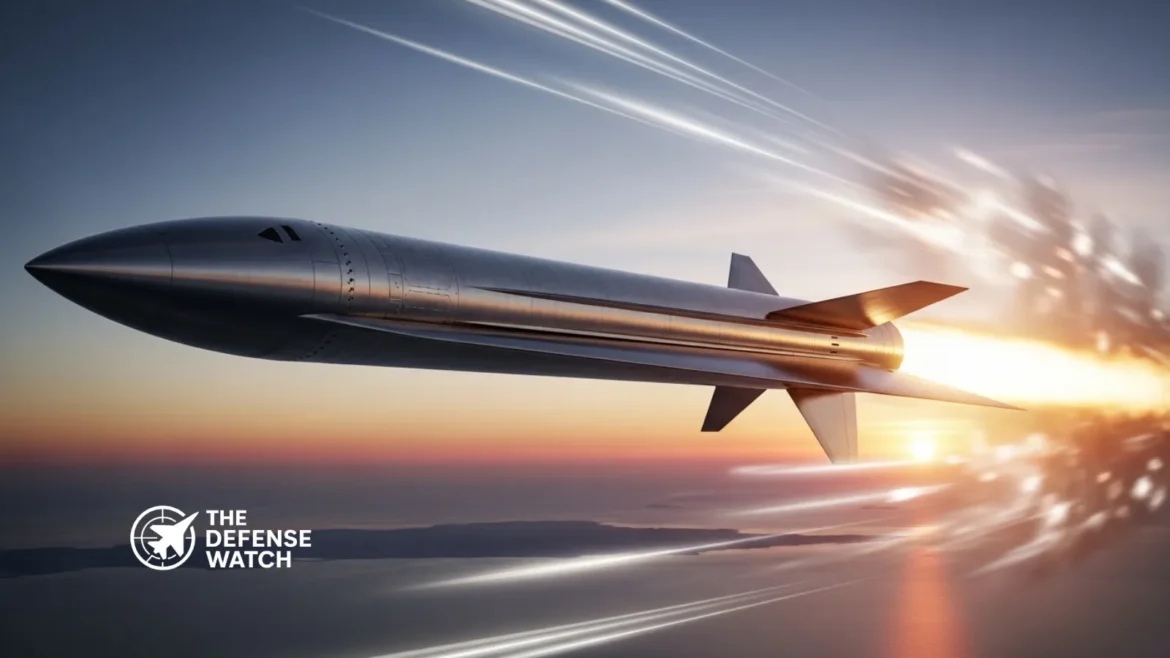
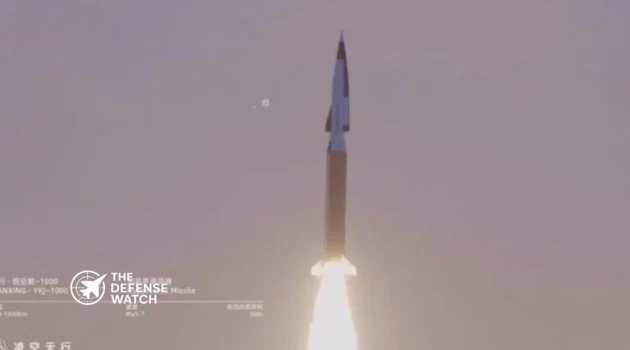
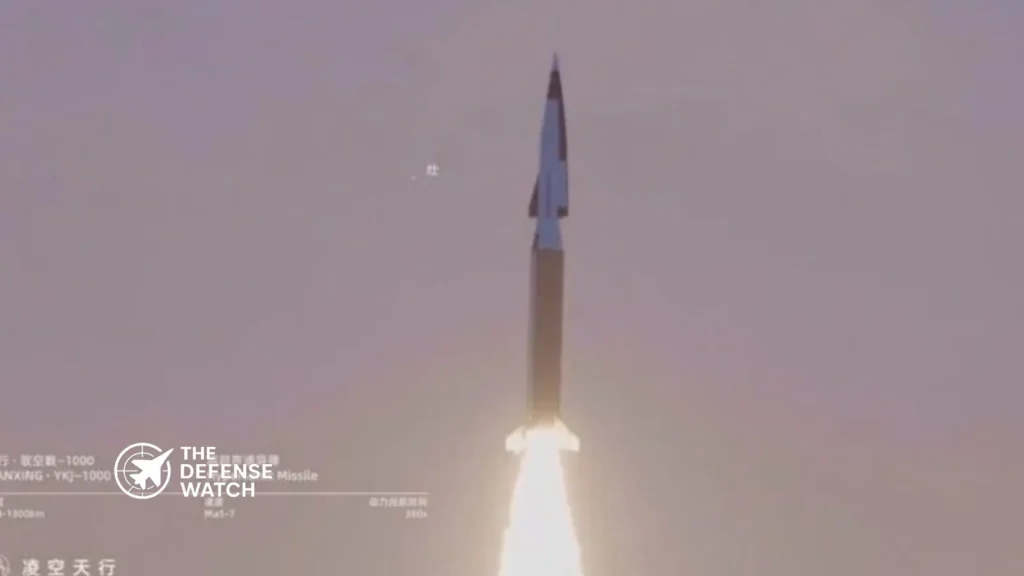
- ► China’s Sichuan Lingkong Tianxing Technology unveiled the YKJ-1000 hypersonic glide missile in late November 2025, advertising a unit cost of approximately $99,000.
- ► The YKJ-1000 is claimed to achieve speeds up to Mach 7 (~8,575 km/h) with a range of 500 to 1,300 kilometers depending on configuration.
- ► A single U.S. Navy SM-6 interceptor costs approximately $4.1 million; THAAD interceptors range from $12 million to $15 million per round.
- ► The missile uses civilian-grade components including consumer drone optics, automotive processors, BeiDou navigation chips, and foamed concrete thermal coatings in place of traditional aerospace-grade materials.
- ► The system is road-mobile and container-launched, enabling rapid concealment and deployment from non-military platforms.
- ► An AI-enabled swarm variant is under development, designed to coordinate multiple YKJ-1000 missiles against single targets simultaneously.
- ► No independent third-party verification of the missile’s performance claims or actual production cost has been published as of February 2026.
China’s YKJ-1000 Doesn’t Have to Be Perfect to Be a Problem
The YKJ-1000 hypersonic missile may be the most strategically consequential weapon system announced in 2025 — not necessarily because it works as advertised, but because of what it signals about the direction of Chinese military development and the economic logic it introduces into modern deterrence.
(adsbygoogle = window.adsbygoogle || []).push({});Developed by Chengdu-based private aerospace firm Sichuan Lingkong Tianxing Technology, the YKJ-1000 is a boost-glide hypersonic missile reportedly capable of Mach 7 flight across a range of 500 to 1,300 kilometers. Its claimed price tag of roughly $99,000 per unit — compared to a $4.1 million SM-6 or a $12–15 million THAAD interceptor — immediately dominated defense discussions when the system was disclosed in late November 2025. Whether or not those numbers hold up under scrutiny, they frame a strategic challenge the U.S. missile defense enterprise cannot afford to ignore.
The Real Story Is the Cost-Exchange Ratio
Western missile defense doctrine has long rested on an uncomfortable but manageable asymmetry: interceptors are expensive, but adversary missiles capable of penetrating them are even more expensive. That equation made layered defense architectures — Patriot, THAAD, SM-6, and eventually NGAD-era directed energy — fiscally painful but strategically viable.
The YKJ-1000 directly attacks that assumption.
If a salvo of even 20 such missiles can be fielded for under $2 million and forces the expenditure of $80 to $300 million in SM-6 or THAAD rounds to defeat it, the attacker wins economically even in a failed strike. The Pentagon’s own Missile Defense Agency has acknowledged in successive budget justifications — including the FY2025 and FY2026 submissions — that the cost-exchange ratio in missile defense is a primary driver of procurement strategy. The YKJ-1000 scenario, however credible, places that entire calculus under pressure.
- (adsbygoogle = window.adsbygoogle || []).push({});
This is not a new concept. Ukraine’s conflict demonstrated it repeatedly: Iranian-origin Shahed-136 drones costing an estimated $20,000–$50,000 each routinely forced Ukrainian forces to expend Patriot or NASAMS rounds worth orders of magnitude more. The YKJ-1000 follows the same logic, but adds hypersonic speed and claimed maneuverability — factors that complicate intercept geometry in ways that slow drones simply do not.
What China’s Military-Civil Fusion Model Actually Produces
Lingkong Tianxing was founded in 2018 and initially focused on reusable launch vehicles and suborbital systems. Its pivot to hypersonic weapons reflects Beijing’s military-civil fusion policy in unusually concrete form: a private company with commercial space DNA, leveraging China’s dominant position in global consumer electronics manufacturing to undercut the cost structure of traditional weapons development.

The YKJ-1000’s use of BeiDou navigation chips — commercially available for a few dollars in smartphone and automotive applications — in place of bespoke military-grade inertial or GPS/INS systems is an instructive example. U.S. and allied defense contractors face regulatory, labor, and supply-chain constraints that prevent equivalent substitution. China does not face those barriers at the same scale, and its dominance in printed circuit board production, optical sensor fabrication, and chip packaging gives Lingkong Tianxing access to economies of scale that no Western hypersonics program can replicate through comparable means.
This structural advantage is more durable than any single weapon system. Even if the YKJ-1000 fails to meet its stated performance parameters, the next iteration — built on the same industrial base — may well close the gap.
Verifying the Claims: Significant Skepticism Is Warranted
Serious technical questions surround the YKJ-1000. No independent test data has been publicly released. Available disclosure material consists of promotional imagery, computer-rendered animations, and static display photographs. The company’s publicity officer has confirmed that the widely cited $99,000 figure is not precisely accurate, while affirming that the design does rely on mass-market industrial components.
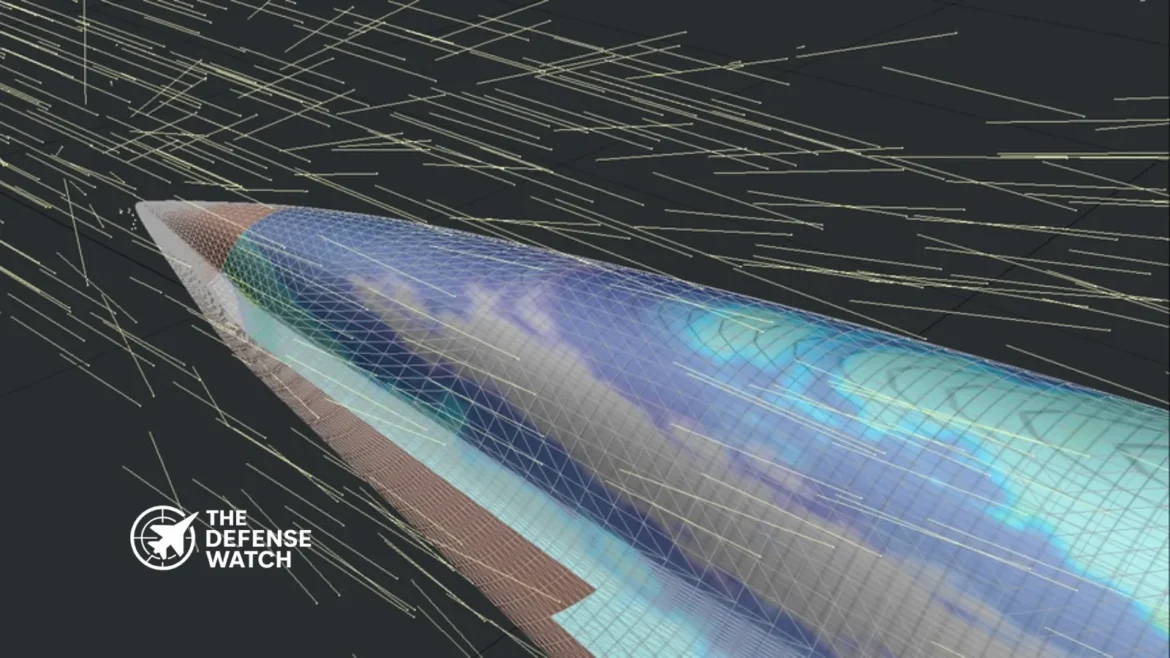
The most significant technical concern involves thermal management. Sustained Mach 7 flight generates surface temperatures exceeding 1,600°C. Traditional hypersonic programs — including the U.S. AGM-183A ARRW and the Russian Kinzhal — rely on purpose-engineered carbon-ceramic or ablative composites specifically rated for those conditions. The YKJ-1000’s reported use of foamed concrete and industrial cement-based coatings raises legitimate questions about whether those materials can survive full-envelope hypersonic flight without structural degradation, loss of maneuverability, or guidance system failure from thermal ingress.
- (adsbygoogle = window.adsbygoogle || []).push({});
Similarly, integrating consumer-grade optical and processor components into a hypersonic terminal guidance system presents non-trivial engineering challenges. Commercial drone cameras and automotive processors are not radiation-hardened, vibration-qualified, or validated for the electromagnetic environment associated with hypersonic plasma sheaths.
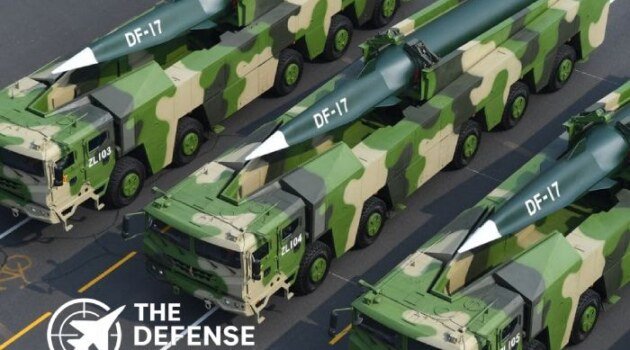
None of this means the program is fraudulent or without merit. China has conducted verified hypersonic tests — the DF-ZF glide vehicle and the DF-17 missile system are real, fielded, and assessed by the Defense Intelligence Agency as operational. Lingkong Tianxing’s principals have credible aerospace backgrounds, and the September 2025 visit by Vice Premier Zhang Guoqing to the company’s facility signals genuine high-level political backing. The question is not whether China can build a functional low-cost hypersonic weapon. The question is whether the YKJ-1000 specifically achieves its stated specifications at its stated price — and that remains unverified.
The Proliferation Risk Is the Most Urgent Concern
Independent of its actual performance, the YKJ-1000’s disclosure introduces a proliferation dynamic that demands immediate policy attention.
If China moves to export this system — even in a degraded or range-limited variant — to aligned states, the strategic landscape in the Middle East, South Asia, and sub-Saharan Africa changes materially. Iran, which already fields Shahed drones and the Abu Mahdi anti-ship missile, would gain a potential first-strike hypersonic capability against Gulf Cooperation Council infrastructure and U.S. naval assets in the Arabian Sea. North Korea, with its established ballistic and hypersonic test programs, could receive design or materials assistance accelerating its own low-cost glide vehicle development. Non-state actors with state backing — Hezbollah, the Houthis — could in theory deploy systems of this class if export controls fail.
(adsbygoogle = window.adsbygoogle || []).push({});China’s own export control regime is more restrictive than its public arms promotion narrative suggests. Beijing has not exported its most capable ballistic missile systems freely, and the YKJ-1000 involves technologies sensitive enough that selective proliferation — calibrated for maximum geopolitical leverage — is a more likely outcome than open market sales. Still, the entry of hypersonic weapons into the export price range of advanced conventional systems is a threshold that, once crossed, is difficult to reverse.
How the U.S. Should Respond: Three Immediate Priorities
The YKJ-1000 disclosure clarifies what U.S. missile defense planners have known but underfunded for years. Three responses are warranted.
First, directed energy. The only sustainable answer to mass-produced low-cost hypersonic saturation attacks is interceptors that are cheaper per shot than the incoming weapon. High Energy Laser with Integrated Optical-dazzler and Surveillance (HELIOS) and the Layered Laser Defense (LLD) programs need accelerated fielding timelines. Congress allocated funding for shipboard laser systems in FY2024 and FY2025, but operational deployment lags development. A $99,000 incoming hypersonic missile defeated by a $1-per-shot laser kill changes the cost-exchange ratio permanently.
Second, distributed defense architecture. Concentrating high-value assets — carriers, large-deck amphibious ships, fixed air bases — in predictable locations within the YKJ-1000’s 1,300-kilometer engagement envelope is a posture problem, not just a missile defense problem. The Navy’s Distributed Maritime Operations concept and the Air Force’s Agile Combat Employment doctrine both address this structurally. They need resourcing that matches the rhetoric.
Third, independent assessment. Congress should direct the Defense Intelligence Agency, in coordination with the Missile Defense Agency, to produce an unclassified assessment of the YKJ-1000’s probable performance parameters, production scalability, and export potential within the next budget cycle. Policy cannot outpace intelligence when the weapons concerned are novel.
Strategic Assessment
The YKJ-1000 represents a convergence of three trends that have been building separately for years: the democratization of precision manufacturing through consumer electronics supply chains, China’s deliberate use of military-civil fusion to compress defense development timelines, and the broader shift toward cost-imposing strategies in peer competition.
Whether or not this specific missile functions as advertised, it reflects a Chinese defense industrial approach that the United States has not yet fully countered at the structural level. American missile defense systems are optimized for quality and reliability at price points that assume adversary systems are equally expensive. That assumption is now actively under challenge.
(adsbygoogle = window.adsbygoogle || []).push({});The deterrence implication is significant. A credible low-cost hypersonic arsenal — even one of uncertain reliability — forces defensive planners to treat every potential engagement as a saturation scenario. That demands more interceptors, more sensors, and more magazine depth than current procurement plans provide. The FY2026 defense budget request, at $849.8 billion, is the largest in nominal terms in U.S. history, but it was structured before the YKJ-1000’s public disclosure and before full assessment of what low-cost hypersonic proliferation means for interceptor inventory requirements.
Regional allies face an even more acute challenge. Japan, Australia, and the Philippines have invested heavily in Aegis-based missile defense. South Korea fields THAAD under political duress. None of these architectures was designed for an environment where a near-peer adversary can field hundreds or thousands of maneuvering hypersonic threats at a unit cost below that of a commercial automobile. The alliance management dimension — specifically, whether partners will sustain missile defense investments if the cost-exchange ratio visibly shifts against them — deserves as much attention as the technical specifications of the missile itself.
- (adsbygoogle = window.adsbygoogle || []).push({});
Finally, the export signal matters more than the current weapon. The narrative that hypersonic weapons can be manufactured and exported at consumer-goods price points — regardless of current technical reality — will shape procurement decisions, threat perceptions, and arms race dynamics across multiple regions for the next decade. That is itself a strategic effect, independent of whether a single YKJ-1000 ever strikes a target.
- (adsbygoogle = window.adsbygoogle || []).push({});

Britain Hypersonic Missile Development Moves Into High Gear
Britain hypersonic missile development is entering a faster phase as the United Kingdom pushes to field next-generation strike capabilities amid intensifying global competition in advanced weapons.
(adsbygoogle = window.adsbygoogle || []).push({});The UK government has confirmed that work on a sovereign hypersonic weapon is being accelerated, with testing activity expected to expand over the coming years. Officials say the effort is part of a broader modernization strategy aimed at maintaining credible deterrence and long-range precision strike options.
According to the UK Ministry of Defence, the program focuses on developing a high-speed missile capable of sustained flight at speeds exceeding Mach 5, with improved survivability against modern air defense systems.
Focus On Speed, Survivability, And Precision
Hypersonic weapons travel at extreme speeds while maneuvering in flight, making them more difficult to track and intercept than traditional ballistic or cruise missiles. Defense planners view the technology as increasingly important in contested environments where integrated air defenses are expanding in range and sophistication.
British officials have emphasized that the hypersonic effort will rely on domestic research and industry partnerships. The program is expected to draw on advances in propulsion systems, thermal protection materials, and guidance technologies.
(adsbygoogle = window.adsbygoogle || []).push({});The UK has already conducted propulsion-related testing, including work on advanced air-breathing engines. These technologies are central to sustained hypersonic cruise capability rather than boost-glide concepts used by some other nations.
While timelines have not been publicly detailed, government statements indicate that operational capability is targeted for the early 2030s.
Strategic Context: A Growing Hypersonic Race
Britain hypersonic missile development comes amid rapid advances by other major powers.
The United States has multiple hypersonic programs underway across the Air Force, Navy, and Army. Meanwhile, Russia has fielded systems such as the Kinzhal and Avangard, and China continues to expand its own hypersonic arsenal.
UK defense leaders have acknowledged that the proliferation of such systems changes the strategic balance. Hypersonic weapons compress decision-making timelines and complicate traditional missile defense architectures.
London’s decision to accelerate development reflects both technological competition and operational necessity. Officials argue that maintaining a credible deterrent requires adapting to new forms of high-speed strike capability.
Integration With Future Air And Maritime Platforms
British planners are evaluating how a future hypersonic weapon could integrate with air and maritime platforms.
The Royal Air Force is expected to play a central role in any air-launched configuration, potentially integrating hypersonic strike into future combat aircraft concepts. The Royal Navy may also consider maritime deployment options as part of its long-range strike portfolio.
(adsbygoogle = window.adsbygoogle || []).push({});The hypersonic initiative aligns with broader UK modernization programs, including next-generation combat air systems and long-range precision weapons development. Officials have stressed that interoperability with allied forces will remain a priority.
Industrial And Allied Collaboration
While the UK is pursuing sovereign capability, collaboration with allies remains part of the broader defense framework.
Under the AUKUS partnership, advanced technologies including undersea systems and cutting-edge capabilities are areas of cooperation between the UK, Australia, and the United States. Although hypersonic development remains primarily national at this stage, shared research and technology exchange could influence future phases.
British industry is expected to benefit from sustained investment in propulsion research, advanced materials, and precision guidance systems. Government officials have framed the program not only as a defense priority but also as a driver of high-technology manufacturing and engineering expertise.
Budget And Policy Alignment
The acceleration of Britain hypersonic missile development follows broader defense spending adjustments aimed at strengthening high-end capabilities.
Recent defense policy reviews have identified long-range precision fires and advanced strike systems as key investment areas. The UK’s Integrated Review refresh emphasized adapting to a more contested global environment, including peer-level competition and emerging technologies.
(adsbygoogle = window.adsbygoogle || []).push({});Although exact program costs have not been disclosed, officials have signaled that funding lines are being protected to ensure sustained progress.
Defense analysts note that hypersonic development programs require long-term investment due to the complexity of propulsion, heat resistance, and testing infrastructure.
Operational Implications
If successfully fielded, a British hypersonic missile would expand the UK’s conventional deterrence options. High-speed, maneuverable strike capability could allow rapid response against time-sensitive targets in contested theaters.
Such systems may also alter force posture planning. With extended range and speed, fewer forward deployments may be required to achieve strategic effects, depending on basing and launch platform decisions.
At the same time, experts caution that hypersonic weapons are not a replacement for existing capabilities. Instead, they are expected to complement cruise missiles, ballistic systems, and air-delivered precision munitions.
Testing And Technology Development
Testing remains a critical phase in Britain hypersonic missile development. Hypersonic flight presents significant engineering challenges, particularly related to thermal loads, structural integrity, and guidance stability at extreme speeds.
The UK has invested in ground-based testing facilities and propulsion trials to mature key components before full-system demonstrations. Expanding testing activity will likely include flight trials in controlled environments.
(adsbygoogle = window.adsbygoogle || []).push({});Defense officials have stated that the goal is to reduce technical risk early in the program cycle to avoid delays later in development.
The Road Ahead
Britain hypersonic missile development signals a long-term commitment to maintaining advanced strike relevance in an increasingly competitive security landscape.
While operational deployment remains years away, the acceleration of research, testing, and industrial engagement reflects the UK’s intent to remain aligned with leading military powers in emerging weapons technology.
As global hypersonic programs continue to advance, the UK’s progress will be closely watched by allies and competitors alike.
ArianeGroup Hypersonic Missile Proposal Targets Germany And France
The ArianeGroup hypersonic missile proposal is gaining attention as the European rocket manufacturer confirms talks with Berlin and Paris to develop a new long range ballistic weapon system.
(adsbygoogle = window.adsbygoogle || []).push({});According to company officials, the proposed missile would carry hypersonic warheads and strike targets between 1,000 and 3,000 kilometers away. The discussions come just days before the 2026 Munich Security Conference, where European defense priorities are expected to feature prominently.
Company Confirms Ongoing Discussions
ArianeGroup, jointly owned by Airbus and Safran, confirmed it is negotiating with both Germany and France on the potential program.
Vincent Pery, the company’s director of defense programs, told journalists that the system would position ArianeGroup as the only European industrial player with comprehensive ballistic missile capabilities. The company is already a prime contractor for France’s sea based nuclear deterrent missiles, including the M51 submarine launched ballistic missile.
(adsbygoogle = window.adsbygoogle || []).push({});The proposed system would reportedly use hypersonic payloads capable of maneuvering at very high speeds, a capability increasingly prioritized by major military powers.
Range And Strategic Positioning
If developed, the ArianeGroup hypersonic missile would cover a range bracket between 1,000 km and 3,000 km. That places it in the medium to intermediate range ballistic missile category.
Such a capability would significantly expand European long range strike options. At present, France maintains nuclear ballistic missile forces, while Germany does not possess indigenous ballistic missile systems.
The timing of the announcement is notable. The 2026 Munich Security Conference opens February 13 and is expected to address European deterrence, defense industrial cooperation, and strategic autonomy. German Chancellor Friedrich Merz is scheduled to deliver opening remarks.
Hypersonic Weapons In Global Context
Hypersonic weapons travel at speeds exceeding Mach 5 and can maneuver during flight, complicating interception. The United States, China, and Russia have all invested heavily in such systems.
(adsbygoogle = window.adsbygoogle || []).push({});Russia has deployed the Kinzhal air launched ballistic missile and Avangard hypersonic glide vehicle, while China fields the DF 17 system, according to open source defense assessments from the U.S. Department of Defense and NATO briefings. The United States is developing multiple hypersonic programs through the Army, Navy, and Air Force.
Europe, by contrast, has lagged in fielding operational hypersonic strike systems. France has tested the V MaX hypersonic glide vehicle demonstrator under the French defense procurement agency, DGA.
ArianeGroup’s proposal would therefore mark a potential shift toward a sovereign European capability in the hypersonic domain.
Industrial And Political Implications
ArianeGroup is best known for developing the Ariane family of space launch vehicles. However, its defense portfolio includes strategic missile systems for France’s nuclear deterrent.
By offering a new European ballistic missile program, the company is positioning itself at the intersection of industrial strategy and defense policy. Germany has recently expanded defense spending and is increasing investments in long range fires and missile defense under NATO commitments.
France has consistently advocated for stronger European defense autonomy. A jointly developed ArianeGroup hypersonic missile could align with broader Franco German defense cooperation efforts, including projects under the European Union’s Permanent Structured Cooperation framework.
No Formal Contract Announced
As of now, no formal development contract has been signed. Company officials characterized the discussions as ongoing negotiations.
Key questions remain regarding funding structure, operational concept, and whether the system would be conventionally armed or integrated into a broader deterrence architecture.
Defense analysts note that any new medium to intermediate range missile system in Europe would carry strategic implications, particularly in the context of NATO posture and relations with Russia.
Strategic Outlook
The ArianeGroup hypersonic missile concept reflects growing European concern over long range strike parity and advanced weapons competition.
While details remain limited, the proposal signals that Europe’s space launch champion intends to expand deeper into advanced missile systems. Whether Germany and France proceed will likely depend on political alignment, budget commitments, and NATO coordination.
The Munich Security Conference may provide further clarity as European leaders outline their defense priorities for the coming year.
Europe hypersonic missile development took a concrete step forward as an Anglo-German defence startup reported a successful first flight of its prototype hypersonic missile. The test occurred in Norway and achieved speeds above Mach 6, with the company calling it a major milestone in building a European hypersonic strike capability.
Test Details and Performance
Hypersonica, based near Munich with a London office, said its prototype missile exceeded Mach 6, roughly 7,400 kilometers per hour, and flew more than 300 kilometers during its first test flight from Andøya Space in Norway. According to the company, all onboard systems operated normally during ascent and descent, and performance data down to the subcomponent level were captured for future analysis.
The firm described this as the first time a privately funded European defence company has achieved hypersonic flight at this performance level. The milestone comes nine months after the design phase began, according to Hypersonica.
Company Goals and Development Path
Hypersonica’s leadership framed the flight as a technical and organizational achievement. The co-founders said the test provides key data to inform future designs and accelerate development of a sovereign European strike weapon.
The company plans further phases of testing to demonstrate advanced flight control at hypersonic speeds, manoeuvrability, and ultimately demonstration of full mission capability. The goal is to field a European hypersonic strike capability by around 2029, aligned with broader NATO and UK timelines for advanced strike systems.
Context Within European and UK Efforts
Europe and the United Kingdom have increased focus on hypersonic weapons as part of broader military modernization efforts. The UK Ministry of Defence has launched a £1 billion hypersonic technologies framework to accelerate domestic hypersonic development, drawing industry and academic partners to build sovereign capabilities.
Bilateral cooperation between the UK and United States on hypersonic propulsion and test programmes has also shown forward momentum in this technology area. Government research and testing of hypersonic engines and components aim to support future operational systems by around 2030.
Hypersonic weapons are of growing interest worldwide because of their high speed and potential to penetrate air defences. NATO and individual European states have stated interest in developing or acquiring such systems to maintain deterrence and strategic capability in the coming decade.
Technical Notes
Hypersonic flight refers to speeds greater than five times the speed of sound, or Mach 5. Reaching and sustaining these speeds through the atmosphere poses complex challenges in propulsion, thermal protection, guidance, and control. Hypersonica’s test recorded successful performance across these areas within prototype limits, although detailed technical specifications on materials, guidance systems, or payload integration remain limited in public statements.
Implications for Defence Modernization
A successful private hypersonic test highlights a shift in defence technology development. Traditionally, hypersonic programmes have been long and funded mainly by state defence agencies. This flight demonstrated that a smaller, commercially oriented firm could achieve key test milestones in a compressed timeline.
If subsequent tests show expanded capability, such platforms could factor into future strike roles for European and allied armed forces. Integration into broader military architectures and adherence to export control and safety regulations will be key as the development continues.
Hypersonica’s hypersonic missile prototype completed a successful test flight at Andoya Space in Norway, reaching speeds above Mach 6 in its first flight, the company announced on February 10, 2026. This marked a notable milestone for a privately funded defence firm in European hypersonic development.
(adsbygoogle = window.adsbygoogle || []).push({});Hypersonic Missile Flight Details
Hypersonica, an Anglo-German defence and aerospace startup, said its prototype hypersonic strike missile flew at speeds greater than six times the speed of sound and covered more than 300 kilometres during the test. All systems performed nominally throughout ascent and descent according to the company’s release.
The firm added that system performance was validated down to the subcomponent level at hypersonic speeds, producing datasets expected to support future design work.
The test was conducted at Andoya Space in northern Norway, where the range supports complex aerospace and defence testing missions thanks to extensive airspace and safety infrastructure.
European Hypersonic Development Context
Hypersonic weapons are defined by sustained flight above Mach 5 and are of growing interest globally because of their potential to evade existing missile defences. Europe’s research and development on hypersonic systems has included government and academic efforts, with France and the United Kingdom pursuing their own programs.
(adsbygoogle = window.adsbygoogle || []).push({});Europe’s investment in counters and defence systems against hypersonic threats is also expanding, with funding lines under the European Defence Fund targeting high-speed missile interception and related technologies.
Startup Approach And Next Steps
Hypersonica said the nine-month timeline from initial design to launchpad reflects its modular development approach, which the company claims can reduce cost and time compared with more traditional defence contracting models.
Co-founders Philipp Kerth and Marc Ewenz said the flight’s results provide valuable data to feed into future test campaigns and eventual operational designs.
(adsbygoogle = window.adsbygoogle || []).push({});The company is aiming to develop what it calls a sovereign European hypersonic strike capability by 2029, signalling ongoing work and further test flights ahead as part of that roadmap.
Andoya Space’s Role
Andoya Space, located on Norway’s Andøya island, operates a test range capable of handling complex aerospace missions including hypersonic weapons trials. The facility’s broad range space and defence support infrastructure has been used previously for other high-speed tests.
Pakistan Introduces Advanced Hypersonic Strike Capability
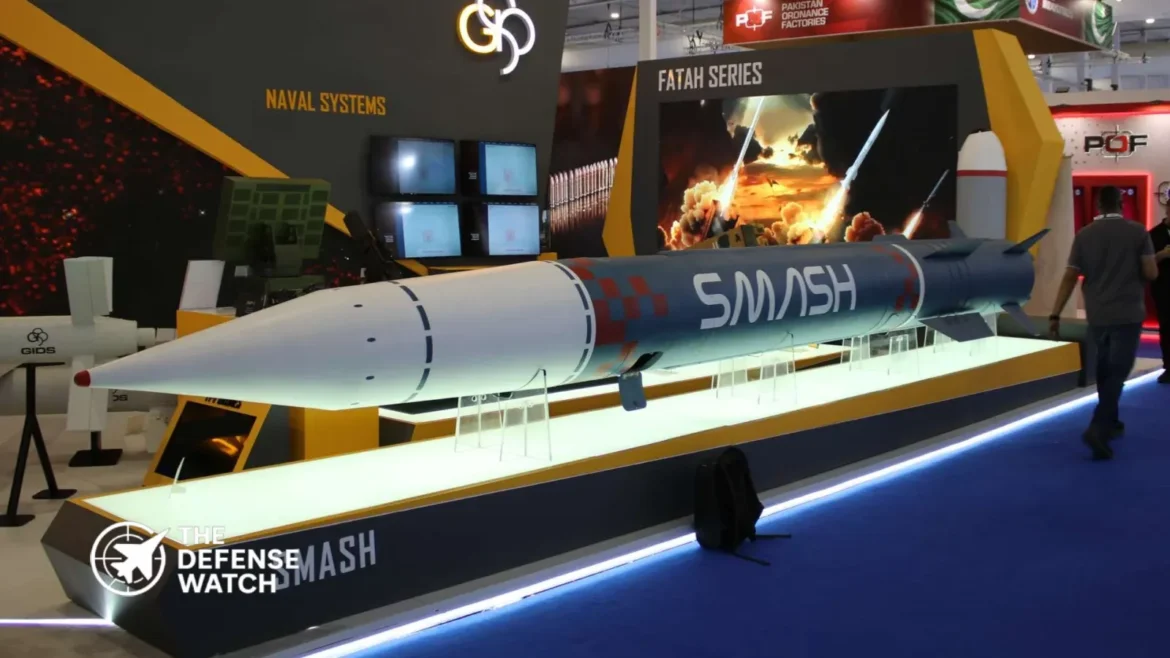
Pakistan’s Global Industrial & Defence Solutions (GIDS) has unveiled the SMASH hypersonic anti-ship ballistic missile at the World Defense Show 2026 in Riyadh, Saudi Arabia, marking a significant advancement in the nation’s precision strike capabilities. The Pakistan SMASH hypersonic missile system represents a dual-role weapon platform designed for both maritime strike and land attack missions, addressing growing regional demand for long-range precision weapons capable of penetrating modern defensive systems.
The introduction of the hypersonic anti-ship ballistic missile Pakistan at one of the Middle East’s premier defense exhibitions positions GIDS as a serious contender in the global market for advanced strike systems. According to company specifications presented at World Defense Show 2026 Pakistan, the SMASH system combines high-speed terminal performance with precision guidance architecture tailored to defeat layered air and missile defenses.
The SMASH missile system employs a modular design philosophy that allows operators to configure the weapon for sea-denial operations or land-attack missions while maintaining common propulsion and core systems. This approach reflects contemporary military procurement priorities that emphasize operational flexibility without multiplying logistical requirements.
Technical Specifications and Performance Parameters
The GIDS maritime strike missile variant features a published range of 290 kilometers and carries a unitary blast and blast-fragmentation warhead weighing 384 kilograms. The weapon achieves terminal velocities exceeding Mach 2 and maintains a circular error probable (CEP) of 10 meters or less, according to manufacturer data presented at the exhibition.
Guidance for the anti-ship configuration relies on HDGNS-assisted inertial navigation integrated with an active radar seeker. This dual-mode approach enables mid-course flight stabilization against electronic warfare while providing terminal discrimination capability in complex maritime environments. The active radar seeker allows target acquisition against maneuvering vessels and reduces susceptibility to coastal clutter that can degrade passive guidance systems.
Propulsion is provided by a single-stage, dual-thrust solid rocket motor that delivers the high acceleration profiles necessary for hypersonic flight regimes. The solid-fuel design eliminates cryogenic handling requirements and supports rapid deployment from dispersed launch positions, key attributes for mobile coastal defense batteries operating under threat of preemptive strikes.
The land-attack variant maintains the 290-kilometer range envelope while increasing payload capacity to 444 kilograms. This configuration substitutes the active radar seeker with pure HDGNS-assisted inertial guidance, optimizing the system for engagement of fixed or semi-hardened infrastructure targets. The stated CEP for land operations is 15 meters or less, maintaining precision adequate for high-value point targets while the increased warhead weight enhances effects against hardened structures.
Strategic Context and Operational Doctrine
The Pakistan dual-role hypersonic weapon system arrives amid intensifying regional focus on long-range precision strike capabilities. Naval forces throughout the Indo-Pacific and Middle East regions face expanding anti-access/area-denial (A2/AD) challenges that require survivable weapons capable of holding surface action groups at risk from standoff distances.
The SMASH system’s steep terminal attack profile complicates intercept solutions for ship-based and land-based air defense systems. High-angle descent trajectories reduce engagement timelines for terminal-phase interceptors while exploiting radar horizon limitations. Combined with terminal velocities exceeding Mach 2, these characteristics potentially stress defensive architectures optimized against subsonic cruise missiles or aircraft-delivered ordnance.
For maritime strike missions, the 290-kilometer range enables launch platforms to remain outside the threat rings of most surface combatant air defense systems while maintaining target coverage across strategically significant sea lanes. The integration of active radar terminal guidance allows autonomous target selection in multi-ship environments, reducing dependence on external targeting networks that may be degraded during high-intensity conflict.
Land-attack applications appear optimized for theater-level strike missions against logistics hubs, command facilities, and critical infrastructure nodes. The increased payload capacity and pure inertial guidance suggest targeting methodologies focused on pre-surveyed coordinates rather than moving or relocatable assets. This mission profile aligns with operational concepts emphasizing destruction of adversary sustainment infrastructure to degrade force projection capabilities.
Defense Industry Analysis and Market Positioning
The unveiling at World Defense Show 2026 represents Pakistan’s broader strategy to position indigenous defense manufacturers as viable alternatives to established Western and Eastern suppliers. GIDS has systematically expanded its portfolio across guided munitions, electronic warfare systems, and precision strike platforms, with SMASH representing the high end of this capability spectrum.
Market analysis suggests strong regional demand for weapons that combine affordability with performance sufficient to challenge adversary defensive investments. The dual-role architecture potentially appeals to procurement authorities seeking to maximize capability returns on limited defense budgets, a consideration particularly relevant for medium-tier military powers throughout the Middle East and South Asia.
Technical comparisons with analogous systems suggest SMASH occupies a performance envelope between traditional supersonic anti-ship missiles and true hypersonic glide vehicles. The Mach 2+ terminal velocity, while impressive, falls short of the Mach 5+ sustained speeds characteristic of hypersonic cruise missiles currently under development by major powers. However, the combination of ballistic trajectory, steep terminal approach, and active guidance may provide adequate penetration capability against contemporary naval air defense systems not optimized for high-angle threats.
The emphasis on solid-propulsion technology offers logistical advantages over liquid-fueled alternatives that require specialized handling infrastructure. Solid motors support extended storage without degradation, enable rapid reaction timelines, and simplify field maintenance requirements—attributes critical for mobile launch platforms operating in austere environments.
Regional Security Implications
The introduction of the Pakistan SMASH hypersonic missile system carries implications for regional deterrence calculations and force posture planning. Naval strategists monitoring Indian Ocean and Arabian Sea developments must now account for land-based anti-ship systems capable of holding surface combatants at risk across extended engagement zones.
For coalition naval operations, the proliferation of long-range precision strike systems complicates freedom-of-navigation missions and necessitates enhanced defensive measures aboard surface vessels operating in littoral waters. The active radar seeker capability specifically challenges traditional naval tactics that rely on emission control and radar cross-section reduction to avoid detection and targeting.
Land-attack capabilities introduce additional complexities for theater air and missile defense architectures. The weapon’s ballistic trajectory and Mach 2+ terminal velocity require layered defensive solutions integrating early-warning radars, fire control systems, and high-performance interceptors. Countries throughout the region may face pressure to invest in upgraded air defense networks capable of engaging high-speed ballistic threats, driving additional defense spending cycles.
Comparative Assessment and Technology Benchmarks
Industry assessments place SMASH within a growing category of medium-range precision strike systems that bridge traditional cruise missile capabilities and emerging hypersonic technologies. The weapon shares conceptual similarities with anti-ship ballistic missiles fielded by other regional powers, though specific performance parameters vary based on propulsion choices, guidance architectures, and warhead optimization.
The stated 10-meter CEP for maritime missions exceeds accuracy requirements for large naval targets but suggests advanced terminal guidance algorithms capable of maintaining lock through ship defensive maneuvers. For comparison, contemporary anti-ship cruise missiles typically achieve CEP values between 5 and 15 meters, placing SMASH within competitive benchmarks for its class.
Terminal velocity specifications indicate performance suitable for complicating point-defense engagement timelines without achieving the extreme speeds associated with scramjet-powered or boost-glide hypersonic weapons. This positioning may reflect pragmatic engineering choices balancing technical risk, development costs, and operational requirements against available industrial capabilities.
The integration of HDGNS (High Differential Global Navigation System) technology suggests incorporation of GPS/GLONASS receivers with inertial navigation for mid-course guidance updates. This hybrid approach provides resilience against navigation satellite jamming while maintaining precision adequate for strategic strike missions. The specific implementation details remain proprietary, though similar systems typically employ Kalman filtering techniques to blend satellite positioning data with inertial measurements.
Export Potential and International Interest
Defense industry observers note that Pakistan’s decision to showcase SMASH at the World Defense Show 2026 signals export ambitions beyond domestic procurement. The Middle East market represents a significant opportunity for weapons systems that combine advanced capabilities with favorable pricing relative to Western alternatives.
Potential customer nations include countries seeking to enhance coastal defense postures against naval threats or to acquire precision strike options for regional contingencies. The dual-role architecture potentially simplifies procurement decisions by addressing both maritime denial and land-attack requirements through a common system, reducing total acquisition costs and training burdens.
However, international sales face regulatory obstacles including missile technology control regime restrictions and geopolitical sensitivities surrounding missile proliferation. Export customers must navigate these frameworks while evaluating whether SMASH’s capabilities align with their specific operational requirements and defense strategies.
Technical support, training, and technology transfer arrangements will likely influence purchasing decisions. GIDS must demonstrate industrial capacity to support multi-year production runs and provide lifecycle sustainment services comparable to established defense exporters. These factors often prove as decisive as raw performance specifications when procurement authorities evaluate competing systems.
Future Development Trajectories
The baseline SMASH configuration provides a foundation for potential evolutionary upgrades as missile technologies mature. Possible enhancement paths include improved propulsion systems for extended range, enhanced guidance packages incorporating infrared or electro-optical sensors, and warhead modifications for specialized target sets.
Industry trends suggest future iterations may explore terminal maneuverability features to further complicate defensive engagement solutions. Thrust-vectoring technologies or aerodynamic control surfaces could enable evasive maneuvers during final approach, though such capabilities would require sophisticated flight control software and potentially increase system complexity.
Integration with networked targeting architectures represents another development vector. Connectivity to intelligence, surveillance, and reconnaissance (ISR) platforms could enable dynamic retargeting during flight, expanding operational flexibility against mobile or relocatable targets. Such capabilities would require secure datalink technologies resistant to jamming and interception.
For land-attack applications, warhead variant development could address bunker penetration or area effects against soft targets. Fragmenting submunitions or enhanced blast designs would diversify the target set addressable by SMASH platforms, increasing overall system utility across mission profiles.
Castelion Project Ranger Hypersonic Campus Takes Shape in New Mexico
Castelion Project Ranger hypersonic campus construction has officially begun in New Mexico, marking a major step in expanding US hypersonic weapons development and testing capacity. The privately funded facility represents a 220 million investment aimed at accelerating design, manufacturing, and flight testing of advanced hypersonic strike systems for the US Department of Defense.
The project reflects growing urgency within the Pentagon to close capability gaps with near peer competitors, particularly China and Russia, both of which have fielded operational hypersonic systems in recent years.
Building a Dedicated Hypersonic Development Hub
The Project Ranger campus is being developed as a fully integrated hypersonic research and production site. According to details released by Castelion, the facility will support the full lifecycle of hypersonic weapon development, from early design and rapid prototyping to ground testing and flight operations.
The campus will include manufacturing halls, propulsion development infrastructure, systems integration labs, and secure test preparation areas. Its location in New Mexico provides access to wide open test corridors and proximity to existing US military test ranges, a critical factor for hypersonic flight programs.
Castelion has positioned Project Ranger as a response to long standing concerns inside the US defense establishment about fragmented hypersonic development pipelines. By consolidating multiple functions at one site, the company aims to shorten development timelines and reduce costs.
Strategic Importance for US Hypersonic Modernization
Hypersonic weapons, typically defined as systems capable of sustained flight above Mach 5 while maintaining maneuverability, are a central pillar of US military modernization plans. These weapons promise the ability to penetrate advanced air and missile defenses and deliver time sensitive effects at long range.
The US Department of Defense has acknowledged that existing acquisition models have struggled to keep pace with the rapid iteration cycles seen in commercial aerospace. Castelion, founded by former SpaceX engineers, is attempting to apply commercial style development methods to military strike systems.
Project Ranger aligns closely with Pentagon initiatives that emphasize speed, iterative testing, and lower cost experimentation. US officials have repeatedly stressed the need for industrial partners that can move beyond traditional prime contractor timelines.
New Mexico Role in Advanced Weapons Testing
New Mexico has long played a key role in US weapons research and testing, hosting major national laboratories and military ranges. The decision to locate the Project Ranger hypersonic campus in the state reinforces its position as a hub for advanced defense technology.
State and local officials have highlighted the economic impact of the project, including high skill engineering jobs and long term infrastructure investment. While Castelion has not disclosed exact employment figures, the scale of the campus suggests a substantial workforce focused on propulsion, guidance systems, materials science, and flight test operations.
The site is expected to support frequent test campaigns, an area where US hypersonic programs have faced setbacks due to limited test availability and range congestion.
Castelion Position in the US Defense Industrial Base
Castelion has emerged as one of several new defense focused startups seeking to challenge established primes in missile and strike system development. The company has secured interest from the Department of Defense for its approach to rapid development of long range precision weapons, including hypersonic glide and boost systems.
By privately funding the Project Ranger hypersonic campus, Castelion is signaling long term commitment to becoming a major supplier within the US missile industrial base. This model reduces early reliance on government infrastructure and allows the company to maintain tighter control over development schedules.
Defense analysts note that such investments reflect broader Pentagon efforts to diversify suppliers and reduce dependency on a small number of legacy contractors.
Implications for Global Hypersonic Competition
The launch of Project Ranger comes amid intensifying global competition in hypersonic weapons. China has conducted extensive testing of hypersonic glide vehicles and fractional orbital systems, while Russia has fielded multiple hypersonic platforms, including air launched and sea based variants.
US officials continue to emphasize that maintaining credible deterrence requires not only fielding hypersonic weapons, but also building a resilient and scalable industrial base. Facilities like the Castelion Project Ranger hypersonic campus are increasingly viewed as critical enablers of that goal.
The campus may also serve as a testbed for future counter hypersonic technologies, an area of growing concern for US and allied forces.
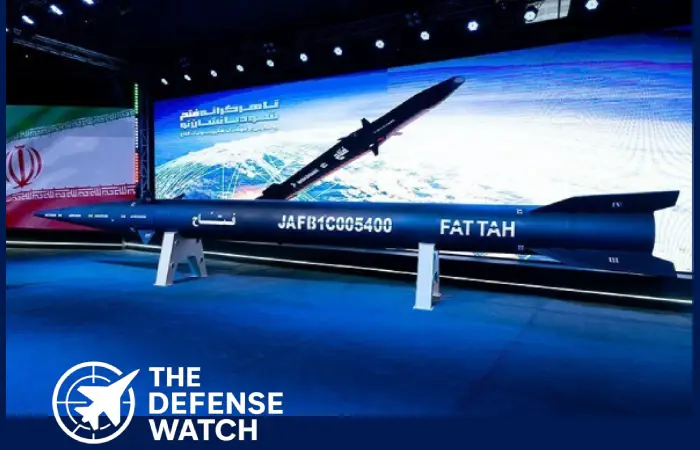
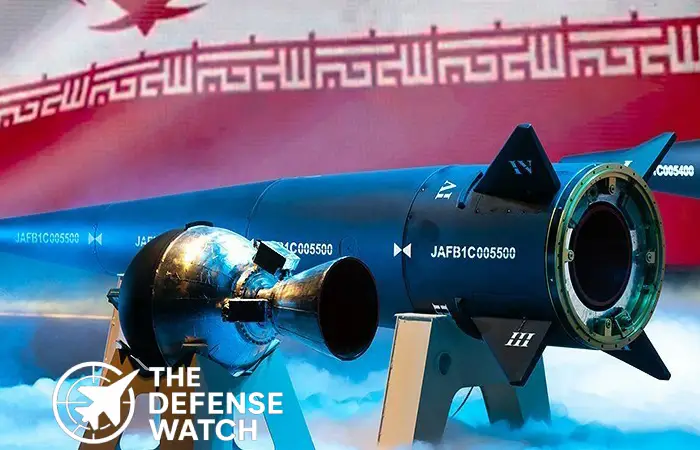
Iran Unveils Fattah-1: A New Chapter in Hypersonic Warfare
Iran unveiled the Fattah-1 hypersonic missile in a ceremony on June 6, 2023, marking what Tehran describes as a transformational advancement in its missile capabilities. Developed by the Islamic Revolutionary Guard Corps Aerospace Force, the Fattah-1 represents Iran’s first entry into the hypersonic weapons category, joining an exclusive technological club previously dominated by major military powers.
(adsbygoogle = window.adsbygoogle || []).push({});The fattah-1 hypersonic missile has already been deployed in combat operations. Researchers from the James Martin Center for Nonproliferation Studies identified Fattah-1 debris from Iranian strikes against Israel in both April and October 2024, demonstrating that Iran has moved beyond testing to operational use of its hypersonic missile technology.

The unveiling of Iran’s hypersonic missile capability represents a significant shift in Middle Eastern military balance. The October 1 deployment of Fattah-1 missiles against Israeli targets demonstrated its effectiveness, with multiple missiles reportedly penetrating Israel’s defense networks, raising questions about the future of missile defense in an era of hypersonic flight.
Understanding Hypersonic Missiles: Beyond Speed Alone
The term “hypersonic” has become a source of both fascination and confusion in defense circles. A hypersonic weapon is defined as one that can travel and maneuver significantly during atmospheric flight at hypersonic speed, which is above Mach 5—five times the speed of sound. However, speed alone does not define a true hypersonic weapon.
(adsbygoogle = window.adsbygoogle || []).push({});Hypersonic weapons typically fall into two main categories: hypersonic glide vehicles (boost-glide weapons) and hypersonic cruise missiles (airbreathing weapons). What distinguishes these systems from conventional ballistic missiles—which also reach hypersonic speeds—is sustained maneuverability throughout their flight path.
In modern warfare, experts say hypersonic weapons must have advanced navigation systems that make them nimble and capable of changing trajectory midflight. This combination of extreme velocity and maneuverability creates a defensive challenge that traditional interceptor systems struggle to address.
The engineering challenges behind hypersonic flight are formidable. At hypersonic speeds, friction and air resistance create an incredible amount of heat, which needs to be managed through tough but lightweight heat shields and thermal protection systems. The materials, guidance systems, and propulsion technologies required represent the cutting edge of aerospace engineering.
(adsbygoogle = window.adsbygoogle || []).push({});Technical Specifications: Inside the Fattah-1 System
The Fattah-1’s design reflects sophisticated engineering tailored specifically for hypersonic warfare. With a range of 1,400 kilometers, the Fattah-1 is classified as a medium-range ballistic missile, capable of targeting Israel from any corner of western Iran. This range encompasses critical strategic targets throughout the Middle East, including Israeli military installations and U.S. bases in the region.
The missile’s speed capabilities are particularly noteworthy. The Fattah-1’s terminal speed is Mach 13 to 15, which translates to 16,000 to 18,500 kilometers per hour—three times faster than the lower limit of hypersonic speed. At these velocities, defenders have mere seconds to detect, track, and engage incoming threats before impact.
The Fattah-1 utilizes a two-stage solid-propellant system and carries a maneuverable re-entry vehicle capable of independent flight and in-flight course correction. This propulsion architecture allows rapid acceleration from launch while maintaining agility during the terminal phase of flight.
Maneuverable Re-Entry Vehicle Technology
The missile’s warhead section represents a departure from traditional ballistic missile design. The warhead measures approximately 3.6 meters long with thrust vector control for midcourse and terminal maneuverability, weighing roughly 1,000 kilograms and containing up to 500 kilograms of high-explosive payload.
The Fattah-1 features movable nozzles that allow the missile to maneuver in all directions both in and out of the Earth’s atmosphere, making it immune to interception by existing anti-missile systems according to Iranian claims. These control surfaces enable the weapon to execute unpredictable flight paths that complicate defensive targeting solutions.
(adsbygoogle = window.adsbygoogle || []).push({});The guidance systems aboard the Fattah-1 remain classified, but the missile’s ability to adjust its course implies sophisticated guidance technology ensuring greater targeting precision essential for hitting high-value targets with accuracy. This combination of speed, maneuverability, and precision represents the core challenge hypersonic weapons pose to modern air defenses.
The Fattah-2: Evolution of Iran’s Hypersonic Arsenal
Iran has not rested on its laurels following the Fattah-1 debut. In November 2023, Iran presented the improved Fattah-2 model, featuring a gliding warhead that creates a new classification: Hypersonic Cruise Glide Vehicle. This represents a technological evolution beyond the original design.
While the Fattah-2’s first stage remains the same as the initial version, the second stage features a different warhead design with a solid fuel booster carrying a gliding warhead. This hybrid approach combines boost-glide technology with cruise capabilities, potentially extending range and enhancing terminal maneuverability.
(adsbygoogle = window.adsbygoogle || []).push({});The progression from Fattah-1 to Fattah-2 demonstrates Iran’s commitment to advancing its hypersonic missile capabilities. The modifications suggest Iranian engineers are working to address limitations in the original design while incorporating lessons learned from testing and operational deployment.
How Hypersonic Flight Challenges Missile Defense Systems
The emergence of iran hypersonic missiles has forced a fundamental reassessment of air defense architectures throughout the Middle East. The Fattah-1 compresses Israel’s response time for interception to mere seconds, far below the time available for slower ballistic missiles. This temporal compression creates cascading challenges for every element of the defensive kill chain.
Traditional ballistic missile defense relies on predictable trajectories. Unlike traditional ballistic missiles which follow a predictable arc, the Fattah-1 is capable of in-flight course adjustments, allowing it to glide and alter its trajectory within the atmosphere. This maneuverability forces defense systems to continuously recalculate intercept solutions, stretching computational resources and reducing engagement opportunities.
Israel’s multilayered air defense network—comprising Iron Dome, David’s Sling, Arrow 2, and Arrow 3 systems—was designed primarily to counter conventional ballistic threats. Yet hypersonic missiles like Iran’s Fattah-1 pose a new and serious challenge due to their extreme speed combined with mid-flight maneuverability, making them far harder to track and intercept even for advanced systems like Arrow.
Radar Detection and Tracking Limitations
The low-altitude flight profile that hypersonic weapons can employ creates additional detection challenges. Hypersonic glide vehicles can fly lower than traditional ballistic missiles, using terrain to hide from radar and reducing response time for defense systems. This terrain masking exploits the geometric limitations of ground-based radar systems, shrinking the engagement envelope available to interceptors.
(adsbygoogle = window.adsbygoogle || []).push({});However, hypersonic weapons are not invisible. The intense heating of a hypersonic vehicle traveling faster than about Mach 6 to 10 produces a very bright infrared signal during its glide phase that can be detected by currently deployed early-warning satellites. This thermal signature provides one potential vulnerability that defensive systems might exploit.
Operational Deployment: Combat Performance Assessment
Iran has moved beyond claims and demonstrations to actual combat employment of its hypersonic missile technology. In October 2024, Iran launched approximately 200 ballistic missiles at targets in Israel in at least two waves, using hypersonic missiles such as the Fattah weapons system. This represented the largest direct Iranian attack on Israel during the ongoing conflict.
The effectiveness of these strikes generated considerable debate. The October 1 deployment demonstrated the Fattah-1’s capacity to bypass Israel’s defense systems, showcasing Iran’s ability to reach high-value or strategic targets deep within Israeli territory. Multiple missiles penetrated Israeli air defenses, striking military bases and causing damage despite the multilayered defensive architecture.
(adsbygoogle = window.adsbygoogle || []).push({});However, Israeli sources present a different assessment. The Fattah-1 has had minimal success according to Israeli officials, with Israel able to intercept more than 95 percent of the missiles because speed is not crucial compared to maneuverability. This discrepancy highlights ongoing debates about the true capabilities of Iran’s hypersonic systems.
The Hypersonic Debate: True Capability or Exaggeration?
Western analysts have expressed skepticism about Iranian claims regarding the Fattah-1’s hypersonic credentials. Iran’s description of the missile as “hypersonic” has been noted as “dubious” by several media outlets and analysts, with questions raised about whether the system meets the technical definition of a maneuverable hypersonic weapon.
Most of the missiles Iran has deployed against Israel travel at hypersonic speed but are barely maneuverable, so are not considered true hypersonic missiles according to Israeli defense researchers. This distinction matters because maneuverability—not just speed—determines how effectively a weapon can evade interception.
The technical reality appears more nuanced than either Iranian promotional materials or complete dismissals suggest. Maneuverable reentry vehicles, such as employed on the Fattah-1, are generally excluded from the hypersonic weapons definition as they maneuver aerodynamically only for short periods during the terminal phase. By this strict definition, the Fattah-1 occupies a middle ground—faster and more capable than conventional ballistic missiles, but perhaps not meeting the full criteria for advanced hypersonic glide vehicles.
Strategic Implications for Regional Security
The introduction of what are hypersonic missiles—or at minimum, highly capable maneuvering ballistic missiles—into Iran’s arsenal carries significant strategic implications. These weapons serve as psychological weapons, forcing Israel and the United States to think twice before pursuing any military action against Iran. Deterrence value exists regardless of technical classification debates.
The missile shortage challenge facing Israeli defenses compounds this strategic shift. Israel is running low on its supply of Arrow missile interceptors just as Iran unleashes hypersonic missiles, with American defense leaders having known for months about the shortfall. This inventory constraint creates operational vulnerabilities that Iran can potentially exploit through saturation attacks.
(adsbygoogle = window.adsbygoogle || []).push({});U.S. military officials have responded by deploying additional assets to the region. The U.S. maintains THAAD (Terminal High Altitude Air Defense) batteries in Israel and Navy destroyers equipped with SM-3 interceptors offshore. However, these reinforcements represent finite resources subject to the same inventory pressures facing Israeli forces.
Production and Proliferation Questions
Critical uncertainties remain regarding Iran’s production capacity. Questions persist about how many hypersonic missiles Iran is able to produce, as these sophisticated systems usually cost significant amounts to produce in great numbers. Serial production capability determines whether Iran possesses a handful of demonstration systems or a sustainable operational force.
Some analysts suspect external assistance in Iran’s rapid development timeline. While analysts question the full extent of Iran’s claimed capabilities and suspect Russian assistance in their rapid development, even partially realized, these hypersonic missiles represent a serious escalation in regional military technology. Technology transfer from Russia or China could accelerate Iranian capabilities significantly.
Comparative Context: Global Hypersonic Race
Iran’s entry into hypersonic weapons development occurs within a broader global competition. Countries including Brazil, Australia, the United Kingdom, France, Germany, Iran, Japan, South Korea and North Korea all have hypersonic weapons programs. This proliferation trend suggests hypersonic technology is gradually becoming more accessible despite its complexity.
The United States, China, and Russia remain at the forefront of hypersonic development. China has demonstrated morphing missile concepts, while Russia claims operational deployment of systems like Avangard and Kinzhal. The Department of Defense has spent more than $8 billion since 2019 on programs to develop hypersonic missiles, reflecting the priority Washington places on matching peer competitors.
(adsbygoogle = window.adsbygoogle || []).push({});However, the technology faces inherent limitations. Hypersonic weapons at theater ranges still experience intense heating for about eight minutes when gliding for a thousand kilometers at low altitude. These thermal management challenges, combined with materials science requirements, create natural barriers to proliferation.
Future Defense Technologies and Countermeasures
Countering the hypersonic threat requires new technological approaches. Israel could accelerate research into directed energy weapons, which offer the rapid engagement necessary for high-speed threats, or explore kinetic interceptors specifically tailored for hypersonic maneuvering targets. Laser systems traveling at the speed of light could theoretically engage hypersonic threats if sufficient power and beam control can be achieved.
Advanced sensor networks represent another critical element. Israel’s defense industry may need to develop advanced radar systems with real-time data fusion capabilities to detect and intercept these missiles at different stages of flight. Earlier detection extends the engagement timeline, partially offsetting the speed advantage hypersonic weapons possess.
(adsbygoogle = window.adsbygoogle || []).push({});Regional cooperation offers strategic advantages in facing distributed threats. U.S. officials have urged Gulf nations to acquire additional interoperable sensors and weapons capable of sharing early warning and employing uniform tactics. An integrated regional defense architecture could provide overlapping coverage and distributed interceptor inventories.
The European Union has recognized the urgency of this challenge. The European Union is studying how to develop an interceptor for hypersonic missiles as it ramps up defense spending to counter threats. This reflects growing global awareness that hypersonic weapons will define next-generation air defense requirements.
Analysis: Reassessing Middle East Military Balance
Iran’s development and deployment of the Fattah-1 hypersonic missile system represents more than an incremental capability upgrade—it signals a potential inflection point in regional military dynamics. Whether or not the Fattah-1 meets strict technical definitions of a hypersonic weapon matters less than its demonstrated ability to complicate Israeli air defenses and penetrate multilayered protection systems.
The strategic calculus has shifted in three key areas. First, interceptor economics now favor the attacker, as relatively inexpensive ballistic missiles force the expenditure of sophisticated, costly interceptors. Second, the compressed engagement timelines associated with high-speed threats stress command-and-control systems, increasing the probability of defensive gaps. Third, the psychological dimension of hypersonic weapons—their perceived invincibility—carries deterrent value independent of actual interception rates.
Iran’s achievement also highlights the democratization of advanced military technology. What was once the exclusive domain of superpowers is now accessible to regional powers with sufficient technical expertise and resources. This proliferation trend will likely continue, forcing defense establishments worldwide to invest heavily in next-generation air defense systems.
(adsbygoogle = window.adsbygoogle || []).push({});The Fattah-1’s operational deployment in 2024 provided real-world performance data that will inform both Iranian refinements and Israeli defensive adaptations. Future variants will likely incorporate lessons learned regarding optimal flight profiles, warhead design, and guidance algorithms. Meanwhile, Israeli and American engineers will analyze intercept data to develop improved tracking and engagement solutions.
Ultimately, the hypersonic era forces a return to fundamental questions about deterrence, first-strike advantages, and strategic stability. If hypersonic missiles can reliably penetrate defenses, does this restore some of the nuclear-age logic of assured retaliation? Or does it incentivize preemptive strikes against mobile launchers before they can be employed? These questions will shape Middle Eastern security dynamics for the coming decade.
FAQs
What makes the Fattah-1 a hypersonic missile?The Fattah-1 achieves speeds between Mach 13-15 (three times faster than the Mach 5 hypersonic threshold) and features maneuverable reentry vehicle technology allowing mid-flight trajectory adjustments. However, some Western analysts debate whether its maneuverability meets strict hypersonic weapon definitions since it operates primarily during terminal phase rather than throughout the entire flight path.
Can Israeli air defenses intercept Iran’s hypersonic missiles?Israeli officials report intercepting over 95 percent of Iranian missile attacks, though some Fattah-1 systems have penetrated defenses and struck targets. The combination of extreme speed, maneuverability, and potential saturation attacks challenges even advanced Arrow and David’s Sling systems, particularly as interceptor inventories become constrained during sustained conflicts.
How does hypersonic flight technology work?Hypersonic flight involves traveling at speeds above Mach 5 while managing extreme temperatures generated by atmospheric friction. Advanced hypersonic weapons use heat-resistant materials, sophisticated guidance systems, and either boost-glide or air-breathing propulsion to maintain both speed and maneuverability throughout their flight profile.
Which countries possess operational hypersonic missiles?The United States, Russia, and China lead hypersonic development with various systems in testing or deployment. Iran, North Korea, India, and several European and Asian nations maintain active development programs. The technology remains challenging, with significant barriers related to materials science, propulsion, and guidance systems.
What countermeasures exist against hypersonic weapons?Potential countermeasures include directed energy weapons (lasers) for speed-of-light engagement, advanced early-warning satellites detecting thermal signatures, improved radar networks for extended tracking, specialized kinetic interceptors designed for hypersonic targets, and regional integrated defense architectures sharing sensor data and coordinating responses.
- (adsbygoogle = window.adsbygoogle || []).push({});