China’s J-35 Stealth Fighter Draws Attention Over Reflective Surface
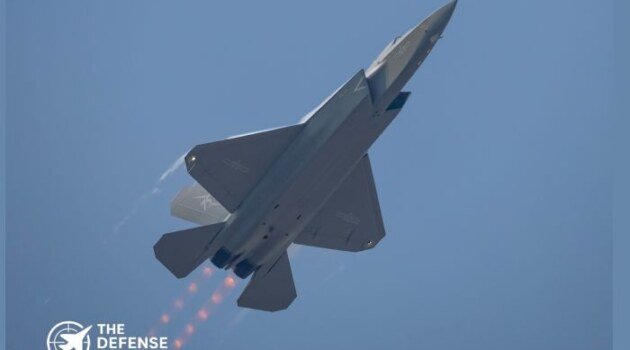
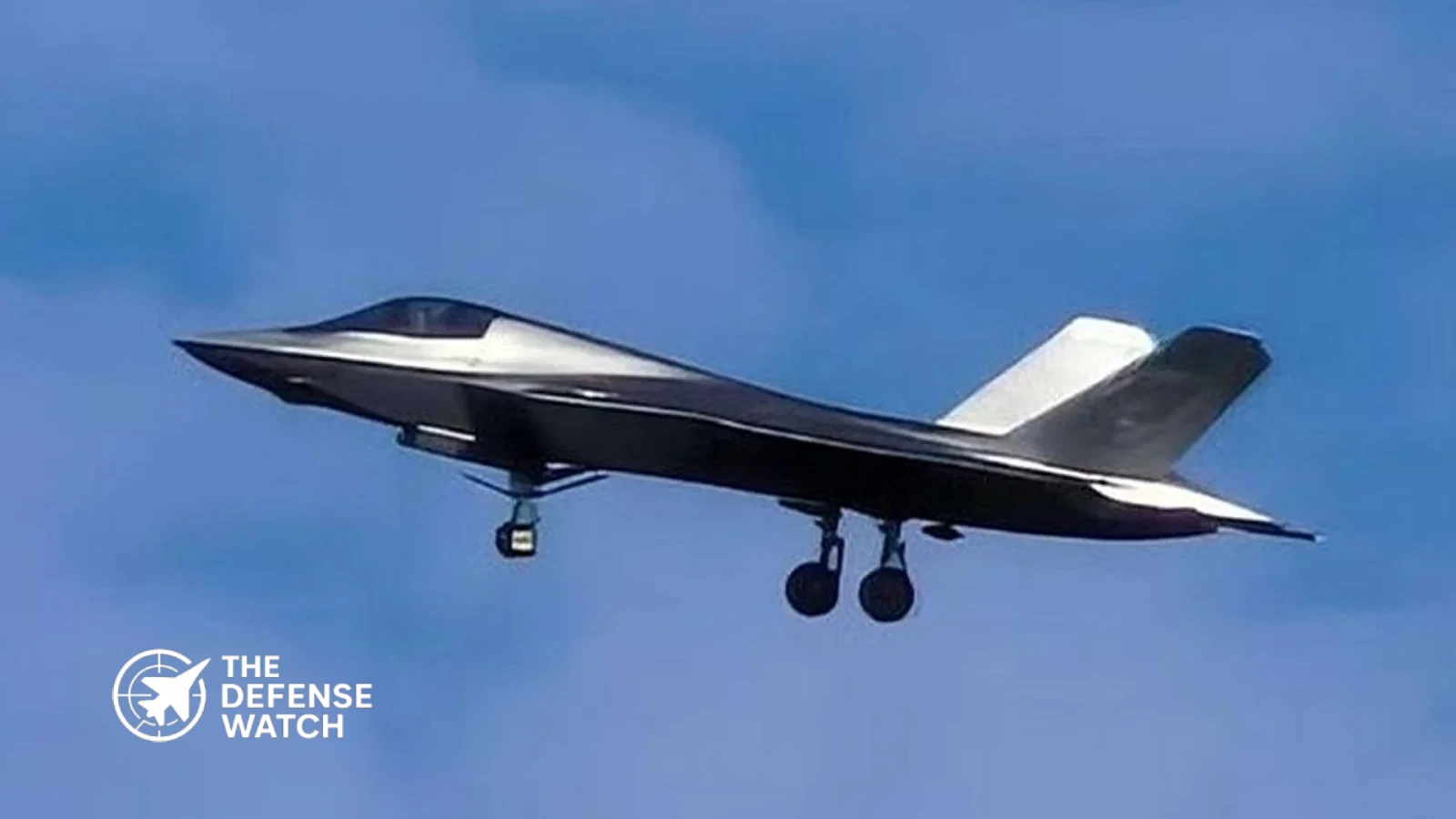
The J-35 stealth fighter has appeared in recent imagery with an unusually bright, mirror-like surface, prompting renewed interest in China’s efforts to develop and sustain low-observable aircraft. The photographs, which circulated during August 2026, show a carrier-based J-35 with a finish that appears significantly more reflective than the subdued gray surfaces normally associated with stealth aircraft.
Takeaways
New imagery highlights an unusual surface treatment on China’s carrier-based stealth fighter
1. Unusual Reflective Surface
Recent photographs appear to show a highly reflective, silver-like surface across portions of a Chinese J-35 carrier-based fighter.
2. Purpose Remains Unconfirmed
Chinese authorities have not publicly identified the material or confirmed that the finish represents a new radar-absorbing or infrared-signature technology.
3. U.S. Test Aircraft Provide A Comparison
Similar mirror-like treatments have previously been observed on U.S. F-22A Raptor and F-35C Lightning II test aircraft, although the objectives of those treatments have not been publicly established.
4. J-35 Is Already A Carrier-Based Stealth Platform
The J-35 has conducted catapult launches and arrested landings aboard China’s Fujian aircraft carrier, demonstrating its integration with the ship’s electromagnetic launch system.
5. Appearance Alone Cannot Prove Stealth Performance
Visible reflectivity does not establish radar cross-section reduction or improved infrared concealment. The material’s electromagnetic and thermal properties would require testing to determine its actual purpose.
The appearance has attracted particular attention because U.S. Air Force F-22A Raptor and U.S. Navy F-35C Lightning II aircraft have previously been photographed with experimental mirror-like treatments. Those American examples were associated with flight-test activity, but their precise purposes have not been publicly disclosed.
For the J-35, however, there is currently no public Chinese statement identifying the material or confirming that it represents a new stealth coating.
What The New J-35 Imagery Shows
Photographs circulating since mid-August appear to show a J-35 with a strongly reflective surface across parts of its fuselage, wings and tail. The aircraft can appear almost metallic when viewed under direct sunlight.
That visual effect is notable, but it should not be treated as proof of a new low-observable technology.
Several factors can affect how an aircraft surface appears in photographs. Sun angle, viewing geometry, camera exposure, image processing and compression can all increase apparent reflectivity. The surface could also represent an experimental treatment, protective film, revised topcoat, manufacturing-stage finish or another temporary application.
The distinction matters because visible appearance and radar signature are not the same thing.
A Mirror-Like Finish Does Not Automatically Mean Better Stealth
The effectiveness of a stealth aircraft depends on far more than what its surface looks like to the human eye.
Radar signature is affected by aircraft geometry, surface continuity, material properties, panel joints, access doors, antennas, sensor apertures and the electromagnetic behavior of coatings. A surface that looks reflective in visible light can interact with electromagnetic energy differently at radar frequencies.
The U.S. Air Force has described the F-22’s low-observable system as a multilayered coating system that requires continuous inspection and maintenance. The service has also noted that low-observable coatings are an important part of maintaining the aircraft’s stealth characteristics.
This provides useful context for interpreting the J-35 photographs. A visible change in the outer surface does not necessarily indicate that the aircraft has received a completely new stealth architecture.
Why The F-22 And F-35C Comparison Matters
The comparison with American aircraft comes from several earlier U.S. test aircraft.
In 2021 and afterward, F-22 Raptors were photographed with highly reflective, chrome-like surface treatments. Similar treatments were later observed on F-35C aircraft operated by the U.S. Navy’s VX-9 test squadron. The F-35C examples displayed distinctive geometric panels across portions of the aircraft.
The Aviationist reported that these treatments were applied around, rather than indiscriminately across, areas such as access panels, weapon bays, sensors and antennas. The exact purpose has not been officially confirmed. Various possibilities have been discussed publicly, including research into infrared signatures and other aspects of signature management.
That history makes the new J-35 imagery worth monitoring, but it does not demonstrate that China is using the same materials or pursuing the same test objectives.
J-35 Already Has A Major Naval Role
The reflective finish is appearing at an important stage in the development of China’s carrier aviation.
China has already demonstrated J-35 operations from the Fujian aircraft carrier. In September 2025, Chinese authorities reported that the J-35, J-15T and KJ-600 had conducted electromagnetic catapult launches and arrested recoveries from the carrier. The Fujian was subsequently commissioned in November 2025.
Janes has also reported that the J-35 has become part of the emerging air wing associated with the Fujian, alongside the J-15T and KJ-600.
That carrier environment creates a particularly demanding materials problem.
A naval stealth fighter must operate in salt-laden air, humidity, ultraviolet exposure and repeated cycles of launch, recovery, maintenance and flight. Surface treatments must also tolerate servicing and environmental stresses without creating excessive maintenance requirements.
For that reason, if the reflective J-35 finish is an experimental material, its long-term durability could be as important as its signature characteristics.
What Analysts Should Watch Next
The most useful evidence will come from repeated observations rather than a single photograph.
If the same treatment appears on multiple J-35 aircraft, particularly with consistent panel shapes and carefully defined areas around sensors, antennas and access points, that would provide stronger evidence of a deliberate engineering program.
Further evidence could also come from photographs after extended flight operations. Wear, peeling, repairs or changes in the treatment could reveal whether the surface is a temporary test application or a more durable material system.
Carrier operations would be particularly informative. Repeated catapult launches, arrested landings and maritime deployments would provide a much better indication of whether the treatment is intended for operational use.
The Larger Stealth Competition
The J-35 development reflects China’s broader effort to expand fifth-generation airpower and carrier aviation. The aircraft is designed around a low-observable configuration and is now associated with China’s increasingly capable carrier force. Chinese official reporting has highlighted its carrier integration and electromagnetic catapult compatibility.
For the United States, the development is relevant because carrier-based stealth aircraft are central to future operations in heavily defended environments. The U.S. Navy’s F-35C provides a mature example of a carrier-capable fifth-generation fighter, while the J-35 represents China’s effort to field a comparable category of naval combat aircraft.
The new reflective finish therefore deserves attention, but it should be viewed as an observation rather than a confirmed technological breakthrough.
At present, the strongest conclusion is straightforward: the J-35 has been photographed with an unusual mirror-like surface, but there is insufficient evidence to determine exactly what the treatment is designed to accomplish.
That distinction is important. The aircraft’s visible appearance can generate useful questions about Chinese signature-management research, but only additional imagery, official disclosures or technical testing can establish whether the treatment changes radar, infrared or other observable signatures.