Qatar Seeks KC-46A Tankers In Potential $4.5 Billion U.S. Sale
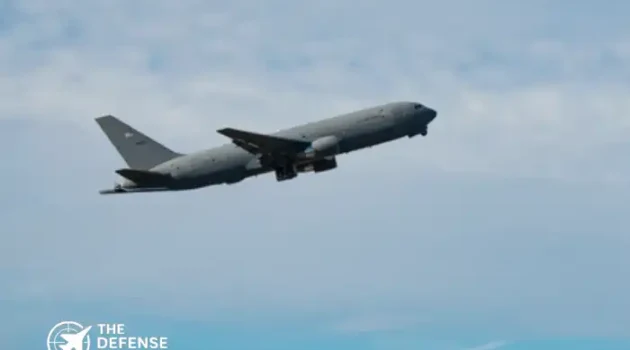
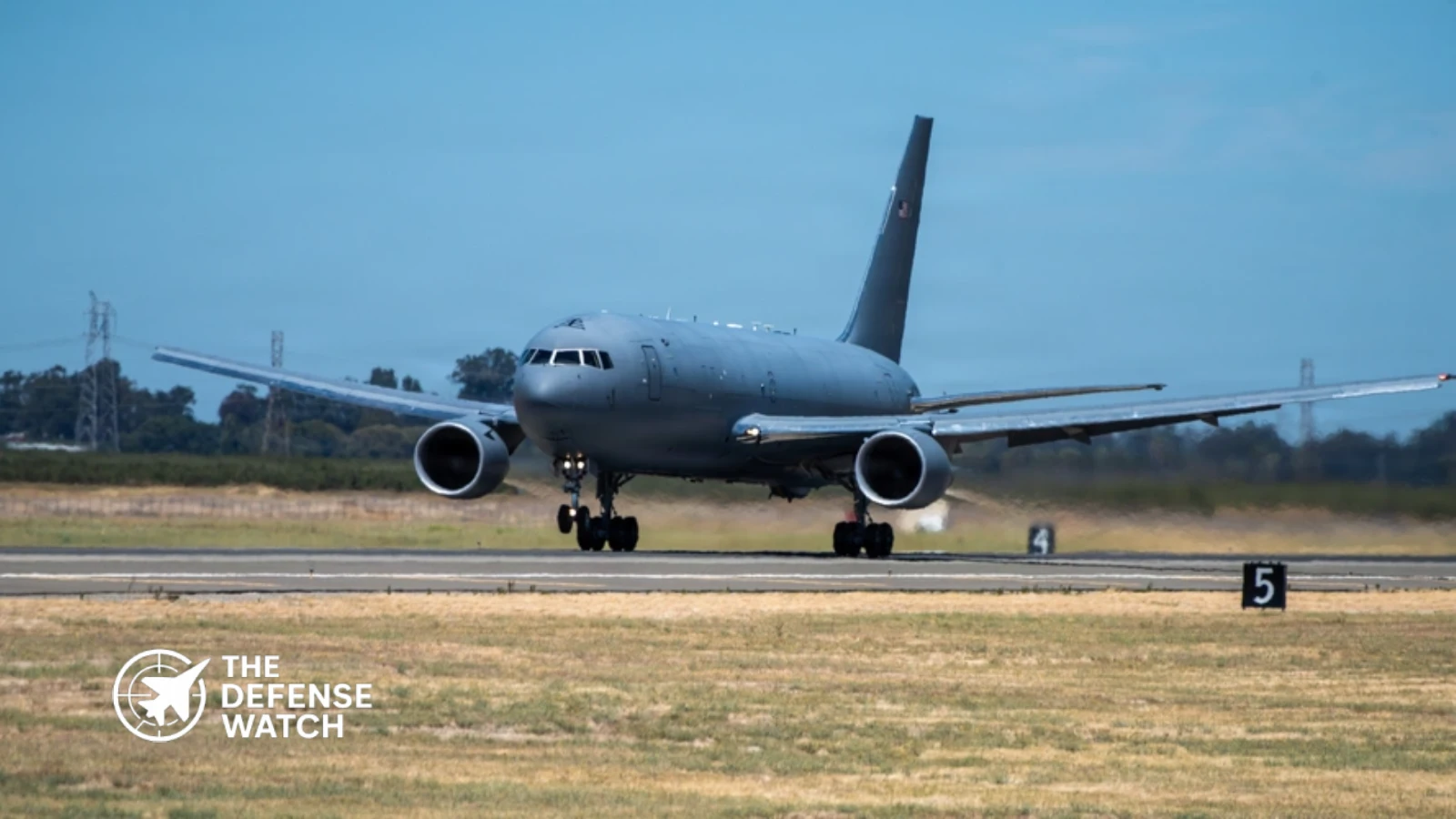
Qatar is seeking up to four Boeing KC-46A Pegasus aerial refueling aircraft under a possible U.S. Foreign Military Sale valued at as much as $4.5 billion, according to the U.S. State Department’s congressional notification. The proposed package includes the tankers, engines, defensive systems, spare parts, training and long-term logistics support.
Takeaways
Qatar’s proposed KC-46A acquisition would add an aerial refueling capability to its growing combat aviation fleet.
1. $4.5 Billion Maximum Package
The U.S. State Department has approved a possible Foreign Military Sale to Qatar valued at up to $4.5 billion, including aircraft, equipment, training and logistics support.
2. Four KC-46A Pegasus Tankers
Qatar has requested four KC-46A aerial refueling aircraft, potentially making it the third international KC-46A customer after Japan and Israel.
3. Defensive Systems Included
The proposed package includes AN/ALR-69A radar warning receivers and Guardian Laser Transmitter Assemblies supporting the KC-46A’s infrared countermeasure systems.
4. Supports Qatar’s Combat Aviation Fleet
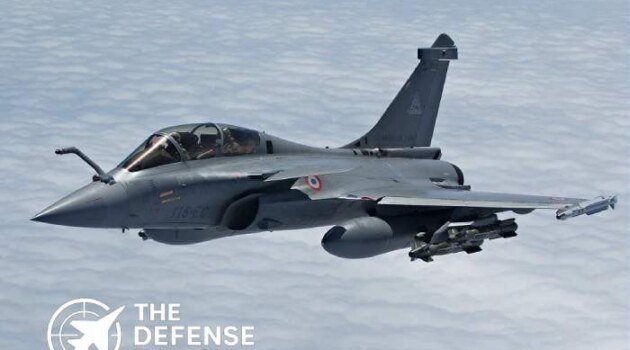
Qatar operates advanced combat aircraft including F-15QA, Rafale and Eurofighter Typhoon fighters, making tanker support relevant to long-range air operations and sustained sortie generation.
5. Sale Is Not Yet a Final Contract
The State Department approval is for a possible Foreign Military Sale. Completion would require an intergovernmental Letter of Offer and Acceptance, meaning the notification does not itself constitute a completed purchase.
The proposed sale would expand Qatar’s military aviation capabilities while giving Boeing another potential international customer for the KC-46A. Qatar already operates a large and increasingly sophisticated fleet of U.S. and European combat aircraft, including the Boeing F-15QA, Dassault Rafale and Eurofighter Typhoon.
The notification remains a potential sale rather than a completed contract. Under the Foreign Military Sales process, the proposed acquisition would still require an intergovernmental Letter of Offer and Acceptance before execution.
What Qatar Is Requesting
The aircraft form only part of the proposed package. Qatar has requested a broad set of equipment intended to establish an operational tanker fleet with associated defensive, support and training infrastructure.
| Item | Quantity |
|---|---|
| KC-46A Pegasus aircraft | Up to 4 |
| Pratt & Whitney PW4062 engines | 8 |
| Installed PW4062 engines | 4 |
| Spare PW4062 engines | 4 |
| AN/ALR-69A radar warning receivers | 10 |
| Guardian Laser Transmitter Assemblies | 15 |
| LAIRCM processor replacements | 8 |
The proposed package also includes missile warning sensors, cryptographic equipment, Identification Friend or Foe systems, precision navigation equipment and electronic warfare database support. Training, software, spare parts, maintenance, technical documentation, transportation and other government and contractor services are also included.
Boeing is expected to be the principal aircraft contractor. Pratt & Whitney, RTX and Northrop Grumman are also identified as principal contractors associated with the proposed sale. The U.S. government said it was not aware of an offset agreement connected to the transaction.
KC-46A Would Add A New Layer To Qatar’s Air Power
The most important operational element of the proposal is not the number of aircraft, but the capability they would add to Qatar’s existing combat aviation structure.
Aerial refueling allows fighter aircraft to remain airborne longer, operate farther from their home bases and conduct missions without relying exclusively on forward airfields. For a country operating multiple advanced fighter types, a dedicated tanker capability can also improve flexibility in managing aircraft range, fuel reserves and sortie planning.
Qatar’s F-15QA fleet is particularly relevant to this equation. The country also operates Rafale and Eurofighter Typhoon fighters, creating a diverse combat aircraft fleet with different weapons, sensors, training pipelines and sustainment requirements. A tanker fleet can support these aircraft by extending their operational reach and reducing some of the range limitations imposed by fuel consumption.
The KC-46A is designed to refuel both boom-equipped and probe-and-drogue aircraft. Boeing states that its boom and hose-and-drogue systems can support U.S., allied and coalition aircraft compatible with international aerial refueling procedures.
That interoperability matters for Qatar because its air force is closely tied to U.S. and allied air operations in the Gulf region.
KC-46A Brings More Than Aerial Refueling
The KC-46A is based on the Boeing 767 platform but was developed as a multirole tanker rather than simply a fuel carrier.
Boeing lists a fuel capacity of about 212,000 pounds and a maximum takeoff weight of 415,000 pounds. The aircraft uses two Pratt & Whitney PW4062 engines, each rated at 62,000 pounds of thrust.
Its aerial refueling system includes an advanced fly-by-wire boom, centerline hose-and-drogue equipment and wing-mounted refueling pods. Boeing lists a maximum boom offload rate of 1,200 gallons per minute and a 400-gallon-per-minute rate for its hose-and-drogue systems.
The aircraft can also perform cargo, passenger and aeromedical evacuation missions. Boeing says the KC-46A can be converted between mission configurations in about two hours, adding flexibility beyond the traditional tanker role.
For Qatar, that multirole design could provide additional utility during periods when dedicated tanker demand is lower. It could also support military mobility and evacuation missions during regional contingencies.
Defensive Systems Reflect The Tanker’s Operating Environment
The proposed Qatar configuration includes a substantial defensive equipment package.
Among the requested systems are AN/ALR-69A radar warning receivers and Guardian Laser Transmitter Assemblies associated with the Large Aircraft Infrared Countermeasure system. The package also includes missile warning sensors and other electronic warfare-related equipment.
This is significant because aerial refueling aircraft are high-value support assets. A tanker normally operates away from the most heavily defended portions of a battlespace, but its size, predictable mission role and importance to combat aviation make survivability a central design consideration.
The KC-46A incorporates defensive countermeasures intended to detect, warn against and help defeat threats. Boeing describes the aircraft as having infrared countermeasures, radio-frequency warning capabilities and other defensive features.
The proposed Qatar package therefore goes beyond simply purchasing four airframes. It seeks to establish the supporting systems required to operate the aircraft as military assets in a contested environment.
A Potential Boost For Boeing’s International KC-46A Campaign
If completed, the Qatar acquisition would further expand the KC-46A’s international customer base.
Japan and Israel are the existing foreign operators identified in current reporting. Japan has ordered six aircraft, while the U.S. State Department previously approved a possible sale of nine additional KC-46As to Japan in 2024. Israel has purchased four aircraft with an option for four more, with its acquisition supported through the U.S. Foreign Military Financing program.
Boeing says more than 100 KC-46 aircraft are currently in service globally, with 168 aircraft under contract. The company also highlights interoperability with allied fleets as a major feature of the platform.
A Qatari order would therefore add another operator within a U.S.-aligned security network and further broaden the platform’s presence outside the U.S. Air Force.
Why The $4.5 Billion Figure Needs Context
The headline value of $4.5 billion should not be interpreted as the expected purchase price of four tanker aircraft alone.
Foreign Military Sale notifications generally describe a maximum potential package. The figure can include aircraft, engines, weapons or defensive systems, spare parts, training, logistics, technical assistance, infrastructure and other services over the life of the proposed case.
In Qatar’s case, the proposed package contains significant equipment beyond the four aircraft, including eight engines, radar warning receivers, infrared countermeasure components, software, support equipment and training.
The final value could therefore differ from the notified maximum if Qatar and the U.S. government complete the acquisition with different quantities or configurations.
Regional Implications For U.S. Airpower
The proposed sale also fits into a wider pattern of Qatar investing heavily in advanced Western military aviation.
Qatar has acquired F-15QA fighters from Boeing, Rafale fighters from France and Eurofighter Typhoons through a European consortium. It also operates U.S.-built C-17 Globemaster III and C-130J Super Hercules transport aircraft.
Adding the KC-46A would connect another major U.S. aviation capability to that broader fleet.
For the United States, the proposed sale could improve interoperability with a strategically important Gulf partner. The State Department said the acquisition would strengthen Qatar’s defense capabilities, interoperability with U.S. and allied forces and its role in regional security.
For Qatar, the tanker capability would provide greater control over how its combat aircraft are employed during extended operations. It would also reduce reliance on external tanker support for missions requiring additional endurance, although the scale of that benefit would depend on the final fleet size, training and operational integration.
The Next Step Is A Government-To-Government Agreement
The proposed transaction is not yet a completed purchase.
The next major step would be negotiation and execution of a Letter of Offer and Acceptance between the United States and Qatar. Only after that process would the procurement move into contractual execution and production planning.
The proposed acquisition nevertheless represents an important development for the KC-46A program. It would give Qatar a dedicated aerial refueling capability built around a U.S. tanker platform and potentially strengthen the ability of its diverse combat aircraft fleet to conduct longer-duration operations.
For Boeing, the proposal would also reinforce the KC-46A’s position as an international tanker platform as the company continues to expand the aircraft’s presence among U.S. allies and partners.