U.S. Navy F/A-XX Fighter Decision Moves Toward Public Announcement
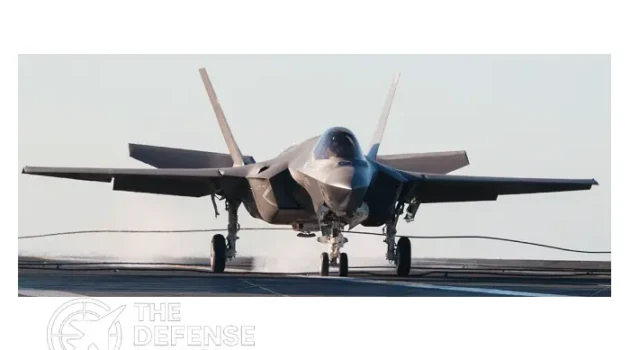
The U.S. Navy F/A-XX fighter program has reached a decisive stage, with the Pentagon having selected a preferred contractor for the next-generation carrier-based stealth aircraft, according to Reuters. The two companies competing for the contract are Boeing and Northrop Grumman, and the Pentagon said it expects to award the program in the near future.
Takeaways
The Pentagon has selected a preferred contractor for the U.S. Navy’s F/A-XX next-generation carrier fighter, according to Reuters, with an announcement expected soon.
Reuters reported Sept. 8 that two people briefed on the matter said the contractor selection had already been made, although the Pentagon has not publicly disclosed the winner. The department said only that it continues to work toward an F/A-XX award in the near future.
The decision is significant because F/A-XX is intended to become the Navy’s principal next-generation carrier fighter and the strike-fighter component of the service’s broader Next Generation Air Dominance architecture.
Boeing And Northrop Grumman Compete For The Program
The final competition has narrowed to Boeing and Northrop Grumman.
Both companies have substantial experience with U.S. military aircraft, but the Navy’s requirement represents a major shift from the design philosophy of the F/A-18E/F Super Hornet. The future aircraft is expected to emphasize survivability, range, endurance, advanced sensors and networking rather than simply improving the performance of an existing airframe.
The Navy’s 2025 aviation planning documents describe F/A-XX as a sixth-generation fighter intended to replace the F/A-18E/F Super Hornet and EA-18G Growler, while incorporating greater range, speed and sensor capability and increased integration with manned and unmanned systems.
The final contract could be worth tens of billions of dollars over the life of the program, according to Reuters. That figure would encompass more than initial engineering and development work, potentially extending into production, sustainment and future modernization.
Why F/A-XX Matters To The Carrier Air Wing
The F/A-XX is not simply a one-for-one replacement for the Super Hornet.
The Navy is designing its future carrier air wing around a wider network of aircraft, weapons and sensors. The F/A-XX is expected to provide a highly survivable crewed platform that can operate alongside uncrewed aircraft and contribute to a distributed combat network.
That approach reflects a central problem facing carrier aviation: modern air-defense systems increasingly allow adversaries to detect, track and engage aircraft at greater distances.
A future carrier fighter therefore needs to do more than carry weapons. It must be able to operate in heavily contested electromagnetic and air-defense environments while exchanging information with other aircraft, ships, satellites and unmanned platforms.
The Navy’s own planning material identifies manned and unmanned integration as an important part of the F/A-XX concept.
Range Is Becoming A More Important Requirement
One of the most important differences between the F/A-XX and the current Super Hornet is expected to be operational reach.
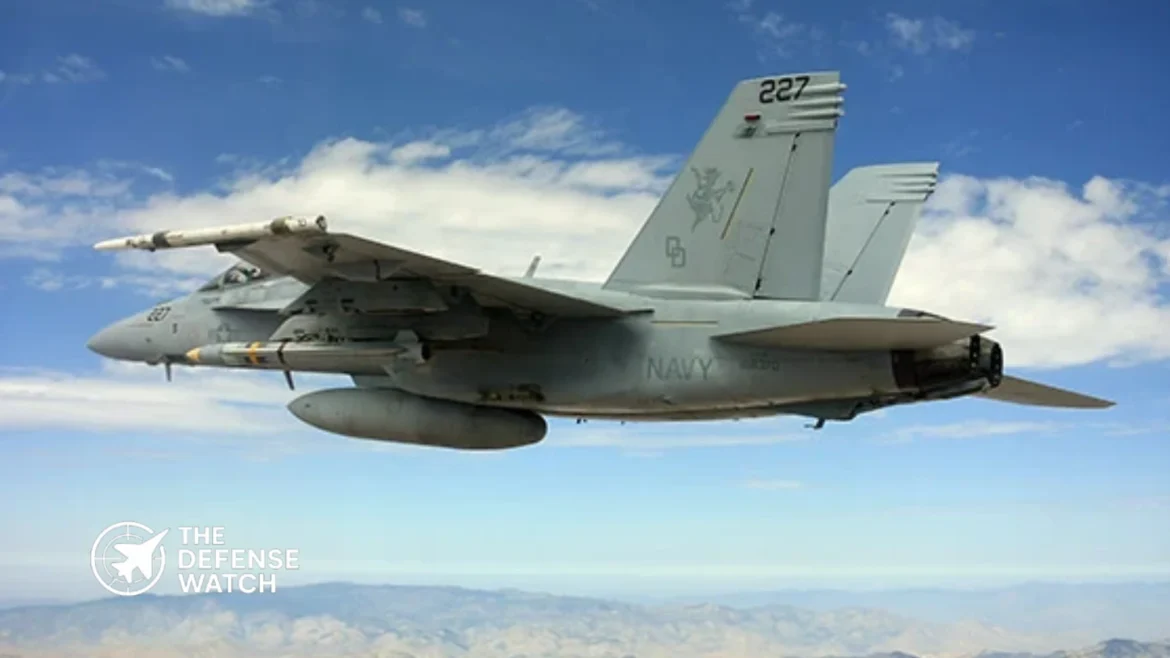
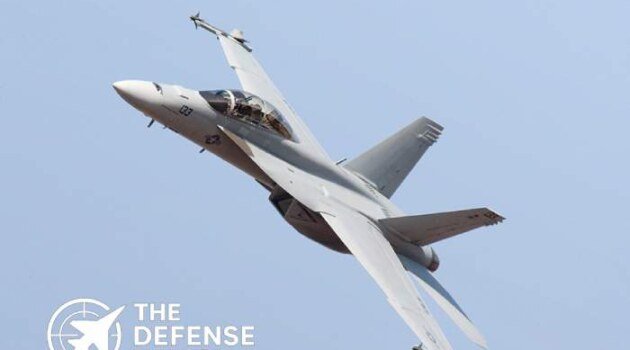
The F/A-18E/F entered fleet service in 1999 and remains a major component of the carrier air wing. The Navy is extending the aircraft’s useful life through Block III modernization, including structural improvements, upgraded systems, networking and an expected 10,000-flight-hour service life.
Those upgrades are intended to keep the Super Hornet relevant while the Navy develops its successor.
The challenge is that extending the life of the existing aircraft does not eliminate the underlying requirement for a new platform. In a high-end conflict, a carrier aircraft may need to operate farther from the carrier because the threat environment makes close access increasingly difficult.
F/A-XX is therefore expected to combine greater range and endurance with low observability and advanced sensing.
Capability Area F/A-XX Requirement Current Super Hornet Primary role Next-generation carrier strike fighter Multirole carrier strike fighter Stealth Advanced stealth expected Reduced radar signature on Block III Range Expected to exceed current fighter requirements Improved through Super Hornet design and upgrades Sensors Advanced integrated sensors expected AESA radar and upgraded avionics Uncrewed integration Core part of future concept Increasingly networked, but not designed around CCA operations Service era Expected operational entry in the 2030s Entered fleet service in 1999 Future role Next-generation carrier air dominance Bridge to future carrier aviation The table separates publicly described program goals from established Super Hornet capabilities. Precise F/A-XX performance specifications remain classified or undisclosed. GAO has previously noted that important details concerning F/A-XX were withheld because of classification.
Program Delays Created A Strategic Problem
The F/A-XX program has faced significant uncertainty.
The Pentagon previously considered slowing the program because of concerns over engineering resources, industrial capacity and competing development priorities. The FY2026 defense budget nevertheless retained funding for F/A-XX design work.
During a 2025 Pentagon budget briefing, a senior defense official said the administration was still considering the future of F/A-XX but requested $74 million to continue design work. The official also said the department was evaluating how to achieve sixth-generation tactical air capability while moving forward with the Air Force’s F-47 program.
Congress subsequently provided stronger financial support for the Navy effort.
Reuters reports that lawmakers allocated $750 million for F/A-XX in the 2025 spending legislation and another $1.4 billion in fiscal 2026.
That funding matters because a lengthy pause would not simply delay an aircraft. It could create a gap between the retirement or reduction of older aircraft and the arrival of their replacement.
F/A-XX And The F-47 Are Related, But Not The Same Aircraft
The Navy and Air Force are pursuing separate sixth-generation fighter programs.
The Air Force’s F-47 is being developed by Boeing as the crewed fighter component of the Air Force’s Next Generation Air Dominance effort. The Navy’s F/A-XX is designed around carrier operations and the requirements of a naval air wing.
The Pentagon has acknowledged that technology sharing and coordination between the services could be useful, while also making clear that the services have different operational requirements. In the FY2026 budget briefing, officials said the department was focused on sixth-generation capability but had not ruled out different approaches to achieving it.
For the Navy, carrier suitability creates requirements that do not apply in the same way to a land-based fighter.
The aircraft must be capable of repeated carrier launches and arrested landings, tolerate the structural stresses associated with carrier operations and fit within the operational and maintenance constraints of a carrier air wing.
That makes simply adapting another sixth-generation aircraft to naval service a difficult proposition.
The Uncrewed Component Could Be Equally Important
F/A-XX is being developed at a time when the Navy is expanding its use of uncrewed aircraft.
The future carrier air wing is expected to combine crewed fighters with autonomous and remotely operated systems that can extend sensing, electronic warfare and strike capacity.
The concept is particularly important because an uncrewed aircraft can potentially be assigned to missions that would expose a human pilot to greater risk. It can also provide additional sensors or weapons without requiring every capability to reside inside a crewed fighter.
The Navy’s published F/A-XX planning material specifically identifies autonomous drones as potential force multipliers and electronic warfare assets.
This means the value of F/A-XX may ultimately depend as much on how well it controls and coordinates other systems as on the aircraft’s own speed or weapons load.
The Super Hornet Will Remain Important During The Transition
The Navy will not replace the Super Hornet overnight.
NAVAIR says the F/A-18E/F entered fleet service in 1999 and remains a major multirole aircraft. Its Block III modernization includes a longer service life, reduced radar signature, improved cockpit systems and enhanced networking.
The Navy also continues to add weapons and capabilities to the aircraft. In February 2026, the service declared initial operational capability for the Small Diameter Bomb II on the Super Hornet, expanding its ability to engage moving and stationary targets in adverse conditions.
Reuters reports that F/A-18 aircraft are expected to remain in service into the 2040s, creating a transition period in which legacy and next-generation systems will operate together.
That transition will allow the Navy to introduce F/A-XX gradually rather than relying on a single procurement cycle to replace the existing carrier fighter fleet.
China Adds Pressure To The Timeline
The strategic backdrop is the rapid modernization of China’s military aviation capabilities.
Reuters reported that China’s development of advanced combat aircraft, including aircraft Beijing describes as sixth-generation systems, has increased the pressure on the United States to maintain a credible next-generation carrier aviation capability.
For the Navy, the issue is particularly important in the Indo-Pacific.
A carrier air wing must be able to generate combat power at increasing distances while operating against sophisticated sensors, long-range missiles, electronic warfare systems and integrated air defenses.
The implication is straightforward: the Navy’s future fighter needs to provide useful combat power without requiring the carrier itself to move unnecessarily close to the threat.
That places range, survivability, sensing and networking at the center of the F/A-XX requirement.
What The Contractor Decision Will Mean
The upcoming award will answer the immediate question of who will lead development of the Navy’s next-generation carrier fighter.
It will not, however, immediately resolve the larger challenge facing naval aviation.
The winning company will have to turn a demanding set of requirements into an aircraft that can be produced in sufficient numbers, maintained aboard carriers and upgraded throughout a service life likely to extend for decades.
The industrial-base question will also remain important. Earlier Pentagon concerns about engineering and supply-chain capacity show that developing the aircraft is only one part of the problem. Building it at the required scale will require sustained access to skilled workers, suppliers, manufacturing capacity and advanced components.
The F/A-XX decision therefore represents the beginning of the most consequential phase of the program rather than its conclusion.
If the Pentagon proceeds with the expected award, the Navy will move from years of concept development and program uncertainty toward detailed engineering, testing and eventual production.
For the carrier air wing, the objective is clear: field a survivable, long-range and networked fighter capable of operating with crewed and uncrewed systems in the contested environments expected during the 2030s and beyond.

- Boeing has secured a $121.2 million U.S. Navy contract to modernize P-8A Poseidon maritime patrol aircraft operated by both the U.S. Navy and the Royal Australian Air Force.
- The award funds nine Increment 3 Block 2 retrofit A-kits, including six for U.S. Navy aircraft and three for Australian P-8A aircraft.
- The contract also includes installation of upgrade kits on three Navy aircraft and engineering work to address component obsolescence and supply chain shortages.
- Increment 3 Block 2 enhancements improve mission systems, sensor integration, data processing, and networked maritime warfare capabilities.
- Work will be performed primarily in Jacksonville, Florida, and is scheduled for completion by May 2029 under Naval Air Systems Command oversight.
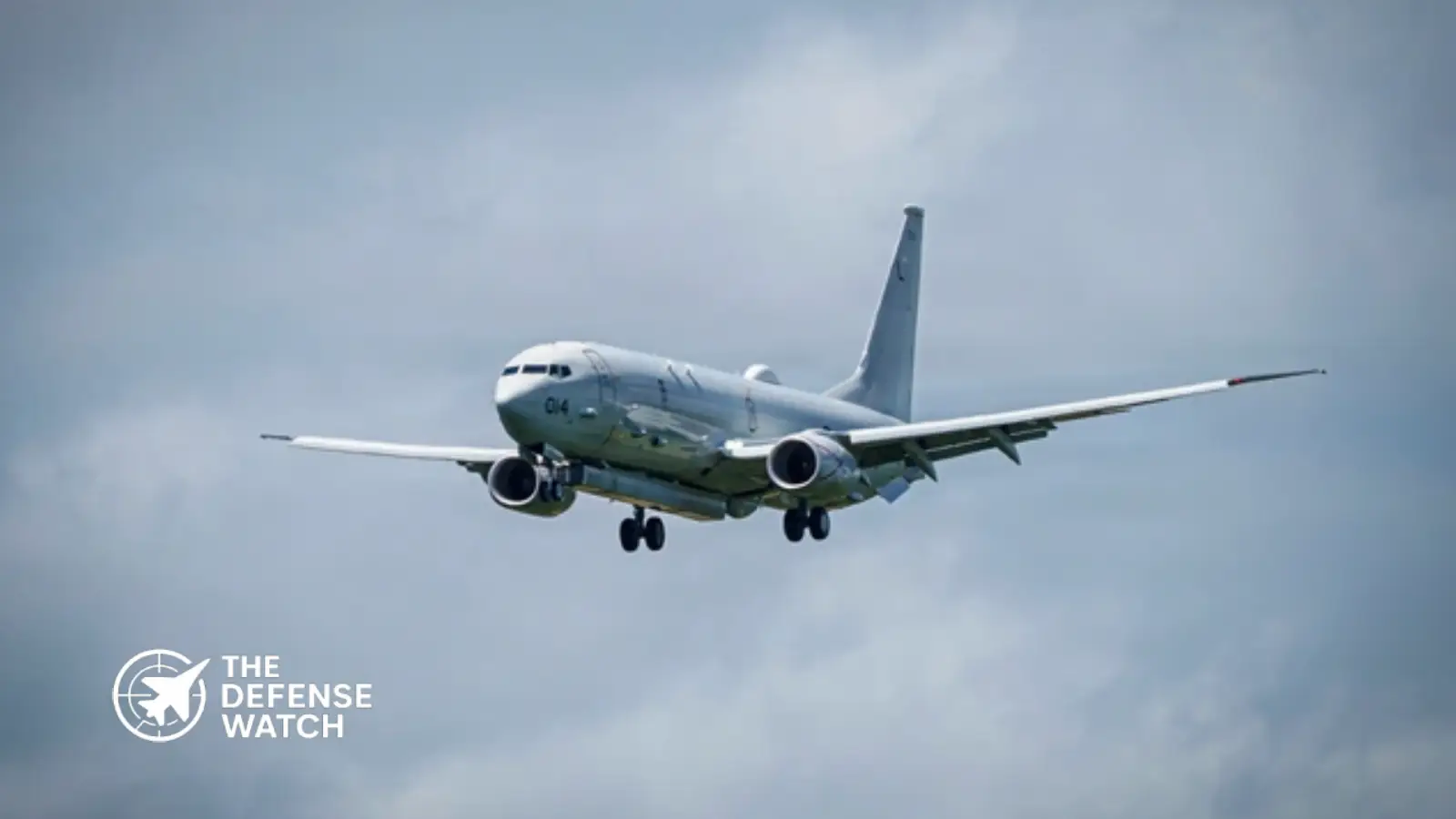
The U.S. Department of Defense announced that The Boeing Company has been awarded a $121.2 million cost-plus-fixed-fee contract order to support continued modernization of the U.S. Navy’s P-8A Poseidon maritime patrol aircraft fleet while extending similar enhancements to aircraft operated by the Royal Australian Air Force (RAAF).
According to the Naval Air Systems Command (NAVAIR), the contract covers the procurement of nine retrofit A-kits equipped with Increment Three Block Two (I3B2) Engineering Change Proposal Six capabilities, aircraft installation work, and engineering efforts intended to mitigate manufacturing source shortages and obsolete components affecting the fleet’s long-term sustainment.
The contract was issued under an existing Boeing-Navy basic ordering agreement and was awarded without competition.
Deep Technical & Strategic Context Analysis
The P-8A Poseidon remains one of the most important maritime patrol and anti-submarine warfare (ASW) aircraft in service today. Derived from the commercial Boeing 737-800ERX airframe, the platform combines long-range surveillance capabilities with advanced sensors, networking systems, sonobuoy processing, anti-ship warfare capabilities, and submarine-hunting functions. The aircraft has become a cornerstone of Western maritime security architecture as naval competition intensifies across the Indo-Pacific, North Atlantic, Arctic, and other strategically significant maritime regions.
The Increment 3 Block 2 modernization effort represents one of the most significant capability enhancements introduced to the P-8A fleet in recent years. The upgrade package improves mission computing architecture, sensor integration, communications, and data-processing capacity, enabling crews to manage larger volumes of intelligence and targeting information while operating in increasingly complex multi-domain environments. These enhancements are particularly relevant as maritime patrol aircraft are expected to operate alongside naval task groups, submarines, unmanned systems, and fifth-generation combat aircraft within highly networked operational frameworks.
From a procurement perspective, the contract’s cost-plus-fixed-fee structure is notable. Under this arrangement, the government reimburses Boeing for allowable program costs while providing a predetermined fee. Such contracts are typically used when engineering risks or technical uncertainties make fixed-price arrangements impractical. In this case, the inclusion of non-recurring engineering work to address diminishing manufacturing sources and material shortages reflects ongoing challenges facing many legacy and long-life defense aviation programs as suppliers discontinue older components and electronics.
The inclusion of Australian aircraft further underscores the growing importance of allied interoperability. The RAAF operates one of the most capable P-8A fleets outside the United States, and maintaining a common configuration across allied operators simplifies logistics, software updates, training, and coalition maritime operations.
Contract Breakdown & Details
Scope of Work
The contract includes:
- Nine retrofit A-kits incorporating Increment 3 Block 2 Engineering Change Proposal Six capabilities.
- Six kits for U.S. Navy P-8A aircraft.
- Three kits for Royal Australian Air Force P-8A aircraft.
- Three aircraft retrofit installations involving:
- Installation of I3B2 retrofit A-kits.
- Integration of government-furnished B-kits on U.S. Navy aircraft.
- Non-recurring engineering activities designed to:
- Resolve diminishing manufacturing source issues.
- Address material shortages.
- Sustain long-term fleet readiness and modernization.
Contract Value
Item Amount Total Contract Value $121,195,041 U.S. Navy FY2026 Aircraft Procurement Funding $92,809,039 U.S. Navy FY2024 Aircraft Procurement Funding $8,272,791 Royal Australian Air Force Funding $20,113,211 Workshare Distribution
Work will be performed across multiple U.S. aerospace and integration facilities:
- Jacksonville, Florida: 80%
- St. Louis, Missouri: 11%
- Mesa, Arizona: 9%
Program Timeline
- Contract Type: Cost-Plus-Fixed-Fee Order
- Contract Number: N0001926F1095
- Parent Agreement: N0001926G1002
- Expected Completion: May 2029
- Contracting Authority: Naval Air Systems Command, Patuxent River, Maryland
Why This Upgrade Matters
The timing of the award aligns with growing demand for persistent maritime surveillance and anti-submarine warfare capabilities among U.S. allies and partners. Modern submarine fleets operated by potential adversaries continue to increase in capability and operational reach, placing greater emphasis on aircraft capable of detecting, tracking, and targeting underwater threats across vast ocean areas.
For the U.S. Navy, maintaining the relevance of the P-8A fleet is critical as the aircraft serves as a primary component of maritime domain awareness and undersea warfare operations. For Australia, the modernization effort supports broader Indo-Pacific security objectives and strengthens interoperability with U.S. naval and air forces.
By combining capability upgrades with engineering work aimed at overcoming supply chain and obsolescence challenges, the contract addresses both near-term operational requirements and the long-term sustainment needs of one of the world’s most important maritime patrol aircraft fleets.
- Nine retrofit A-kits incorporating Increment 3 Block 2 Engineering Change Proposal Six capabilities.
Executive Summary:
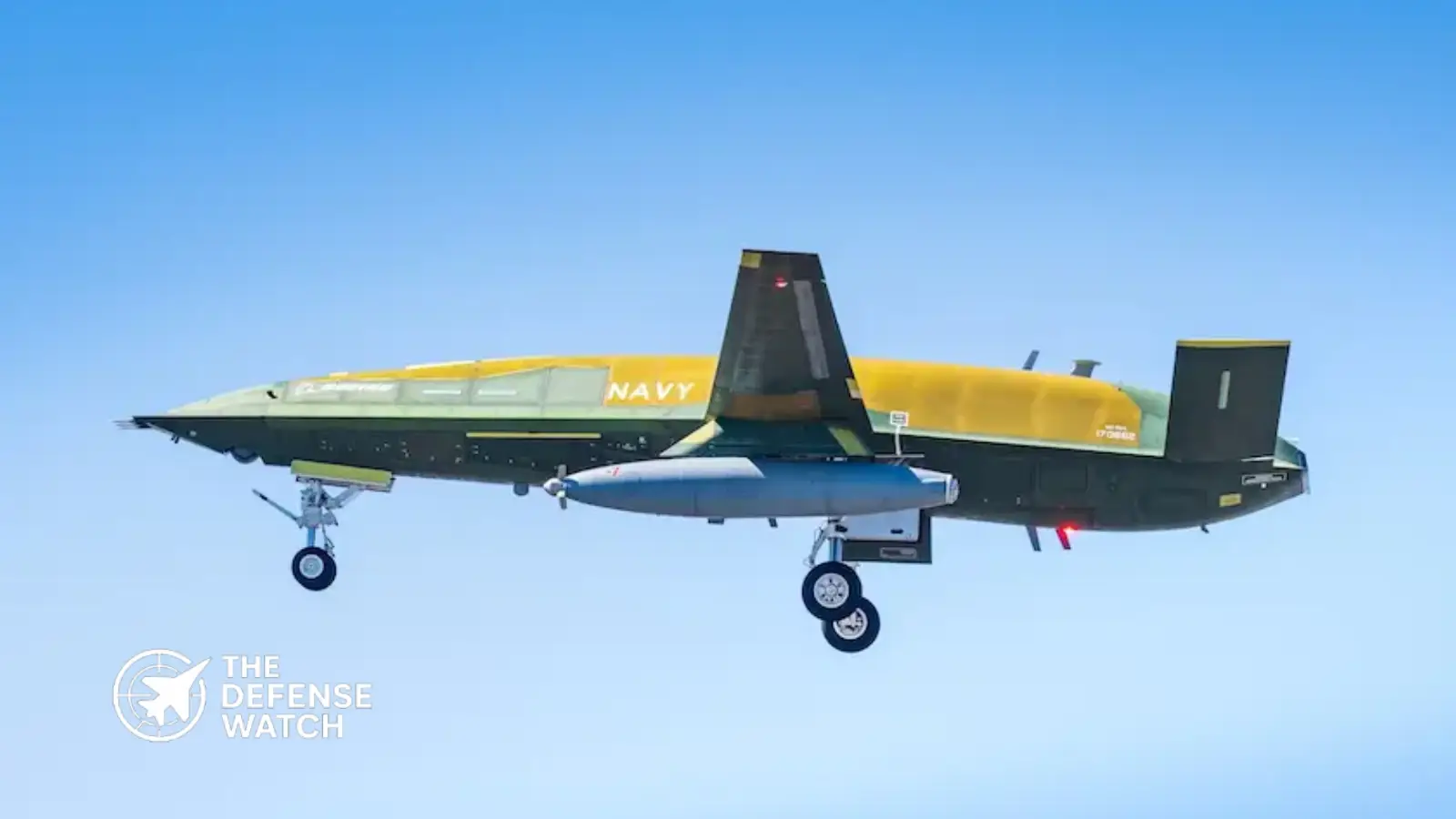
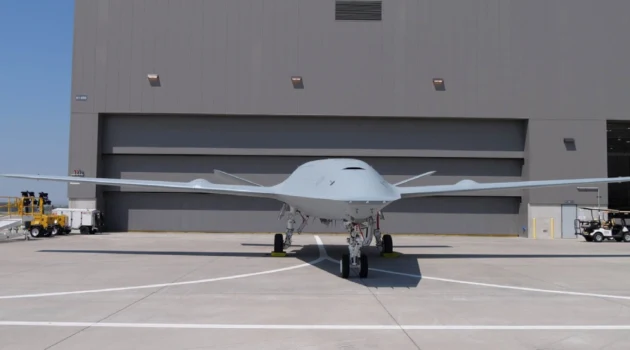
The U.S. Navy has authorized low-rate initial production of the Boeing MQ-25A Stingray following key flight testing milestones. The carrier-based unmanned aircraft is designed to extend the operational range of naval fighter aircraft and reduce strain on manned tanker missions aboard aircraft carriers.
U.S. Navy Advances MQ-25A Stingray Program
The Boeing MQ-25A Stingray program has reached a major milestone after the U.S. Navy approved the unmanned aerial refueling aircraft for low-rate initial production. The decision follows a series of developmental and flight test achievements that move the Navy closer to fielding its first operational carrier-based unmanned tanker aircraft.
Developed by Boeing for the United States Navy, the MQ-25A Stingray is intended to provide aerial refueling support to carrier air wings while extending the operational range of aircraft such as the F/A-18 Super Hornet and the F-35C Lightning II.
The approval for low-rate production marks a transition from development and testing into the early manufacturing phase, allowing the Navy to begin building operational aircraft while continuing evaluation activities.
Carrier Aviation Focus Shifts Toward Range And Endurance
The MQ-25A Stingray addresses one of the most persistent operational challenges facing modern carrier aviation: combat range.
For years, the U.S. Navy has relied heavily on Super Hornets configured as buddy tankers to refuel other aircraft during missions. While effective, that approach reduces the number of fighters available for strike and air defense missions.
The MQ-25A is designed to assume much of that refueling workload. By transferring aerial refueling duties to an unmanned platform, the Navy expects to free additional manned fighters for frontline combat operations.
This shift is particularly important in the Indo-Pacific theater, where long operational distances are increasingly shaping U.S. naval planning. Analysts have frequently noted that carrier air wings require greater reach to operate effectively in contested environments against near-peer adversaries.
The Stingray is expected to provide carrier aircraft with significantly extended mission endurance, improving flexibility for strike, reconnaissance, and maritime security operations.
Flight Testing Supported Production Approval
The production clearance follows extensive testing activities involving Boeing test aircraft and Navy integration teams.
The MQ-25A program previously completed several major milestones, including its first flight, aerial refueling demonstrations, and carrier deck handling tests aboard U.S. Navy aircraft carriers. The aircraft successfully refueled Navy tactical aircraft during testing campaigns, validating one of the program’s core operational requirements.
Testing also focused on integrating the unmanned aircraft into carrier flight deck operations, which remain among the most demanding aviation environments in the world.
Unlike land-based UAV operations, carrier aviation requires precise launch, recovery, taxiing, and deck coordination procedures within limited space and under high operational tempo conditions. The MQ-25A program therefore serves as both a capability platform and a broader stepping stone for future carrier-based autonomous systems.
Boeing Expands Its Role In Naval Unmanned Aviation
For Boeing, the MQ-25A Stingray represents a strategically important defense program as the company continues expanding its unmanned systems portfolio.
The aircraft was selected by the Navy under the Carrier-Based Aerial-Refueling System competition, beating rival industry proposals. Since then, Boeing has continued refining the platform through testing and systems integration work.
The low-rate production authorization enables Boeing to begin manufacturing aircraft intended for operational fleet introduction while supporting continued program maturation.
The program also reinforces growing Pentagon interest in unmanned and semi-autonomous systems across air, land, and maritime domains. Defense planners increasingly view unmanned aircraft as critical force multipliers capable of extending operational reach while reducing risk to pilots in contested environments.
MQ-25A Could Shape Future Carrier Air Wings
The MQ-25A Stingray is more than a refueling aircraft. Defense analysts widely view the program as an early step toward broader integration of autonomous systems aboard U.S. Navy aircraft carriers.
Future naval unmanned aircraft could eventually perform intelligence gathering, electronic warfare, surveillance, strike missions, or logistics support alongside manned aircraft.
By proving that unmanned systems can safely integrate into carrier operations, the MQ-25A program may help establish the operational framework for next-generation naval aviation concepts.
The Navy has consistently emphasized that future carrier air wings will likely combine crewed and uncrewed platforms operating together across long distances and highly contested operational theaters.
As geopolitical competition intensifies in the Indo-Pacific and other strategic regions, extending carrier reach and preserving manned fighter capacity remain central priorities for U.S. naval planners.
India Expands Naval Strike Reach With NASM-SR Helicopter Launch
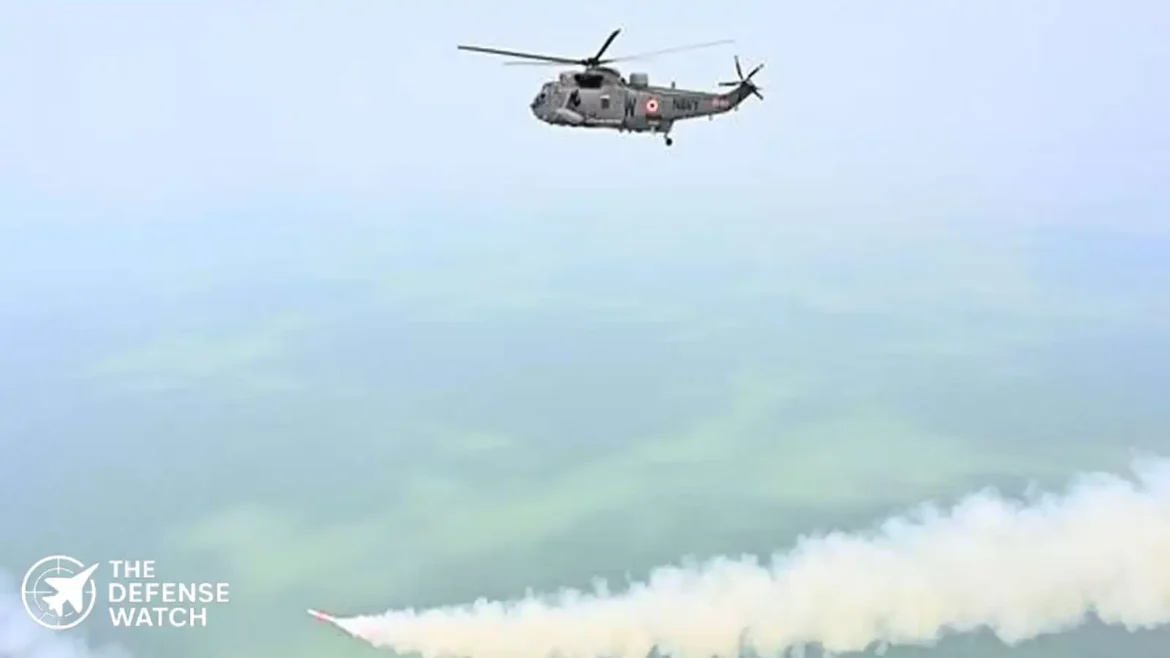
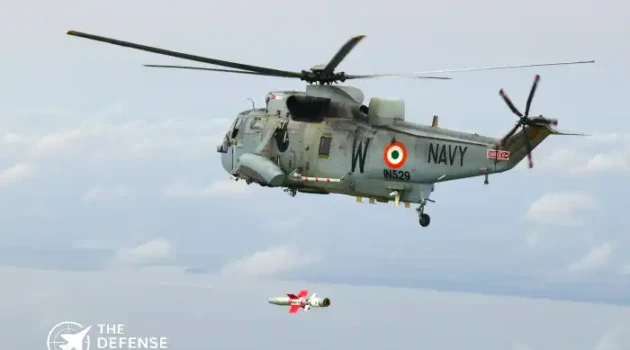
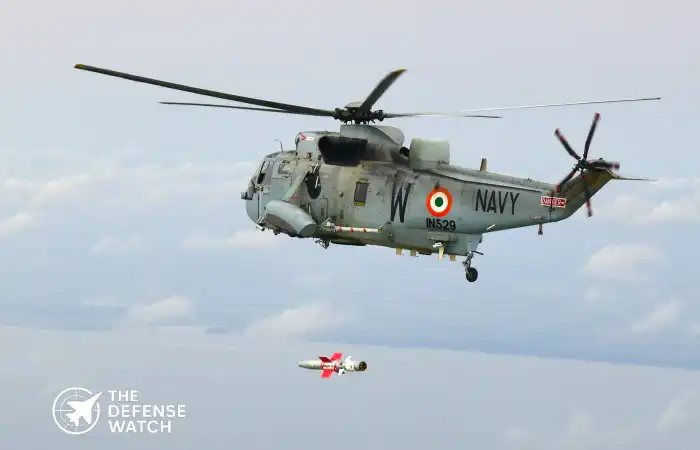
India’s NASM-SR anti-ship missile test marks a significant step in expanding naval strike reach, with the system successfully launched from a helicopter for the first time. The milestone highlights a growing emphasis on flexible, distributed maritime firepower within the Indian Navy.
The test involved a salvo firing of the Naval Anti-Ship Missile Short Range, or NASM-SR, from a rotary-wing platform. This demonstrates the ability to engage surface targets from beyond visual range using airborne assets, a capability increasingly seen as essential in modern naval warfare.
- India conducted its first NASM-SR anti-ship missile salvo from a helicopter platform.
- The test marks a key milestone in integrating indigenous missiles with naval rotary-wing aircraft.
- NASM-SR is a short-range anti-ship missile designed for precision maritime strike missions.
- The system enhances stand-off capability for naval helicopters operating in contested waters.
- The development is led by India’s DRDO as part of broader naval modernization efforts.
Expanding Helicopter-Based Strike Capability
The NASM-SR program is led by Defence Research and Development Organisation (DRDO), which has focused on developing an indigenous, lightweight anti-ship missile tailored for helicopter deployment. Unlike larger ship- or aircraft-launched systems, NASM-SR is designed for short-range engagements with high precision.
Integrating such a missile onto naval helicopters allows forces to extend their reach without relying solely on surface combatants. Platforms such as the Sea King helicopter or future indigenous rotorcraft can operate from ships or forward bases, adding a mobile strike layer to fleet operations.
This approach aligns with global trends where navies are increasingly distributing offensive capabilities across multiple platforms to complicate adversary targeting.
Operational Impact and Tactical Advantages
The NASM-SR anti-ship missile offers several operational advantages. First, it enables stand-off engagement, allowing helicopters to strike enemy vessels while remaining outside the immediate threat envelope of ship-based defenses.
Second, the system improves response time. Helicopters can be rapidly deployed from ships or coastal bases, reducing the delay between detection and engagement.

Third, it supports swarm and saturation tactics. Multiple helicopters armed with NASM-SR missiles can coordinate attacks, increasing the probability of penetrating layered naval defenses.
From a tactical standpoint, this capability strengthens maritime denial operations. In contested regions, even smaller naval units can pose a credible threat to larger surface vessels when supported by armed helicopters.
Strategic Context in the Indo-Pacific
India’s focus on helicopter-launched anti-ship missiles reflects broader strategic pressures in the Indo-Pacific. As naval competition intensifies, the ability to project power across dispersed maritime zones has become critical.
By fielding NASM-SR, India is working to close gaps in short-range maritime strike capability. This is particularly relevant in littoral environments, where larger missile systems may be less practical due to range constraints and reaction times.
The development also complements other indigenous missile programs, reinforcing India’s push for self-reliance in defense technology. Reducing dependence on foreign systems allows for faster upgrades, better integration, and more control over operational use.
Technology and Development Path
While detailed specifications remain limited, NASM-SR is understood to feature advanced guidance and targeting systems optimized for maritime environments. These likely include active radar seekers and resistance to electronic countermeasures.
The missile’s compact design makes it suitable for integration on a range of helicopter platforms without significant structural modification. This flexibility is key for scaling deployment across the fleet.
The recent test indicates progress toward operational readiness, though additional trials are expected before full induction.
Analysis: A Shift Toward Distributed Maritime Firepower
The NASM-SR helicopter launch is more than a technical milestone. It reflects a broader shift in naval doctrine toward distributed lethality. Instead of concentrating firepower on large warships, modern navies are spreading offensive capabilities across smaller, mobile platforms.
This approach increases survivability and complicates adversary planning. A fleet supported by armed helicopters can engage targets from multiple vectors, forcing opponents to defend against a wider range of threats.
For India, this capability also enhances deterrence. Even in scenarios where surface assets are limited, helicopter-based missiles provide a credible strike option.
At the same time, challenges remain. Effective use of NASM-SR will depend on integration with surveillance systems, targeting networks, and command structures. Without accurate real-time data, the advantages of stand-off weapons are reduced.
Still, the successful test suggests that India is moving steadily toward a more flexible and resilient naval strike architecture.
Northrop Grumman F/A-XX Emerges As Navy Decision Nears
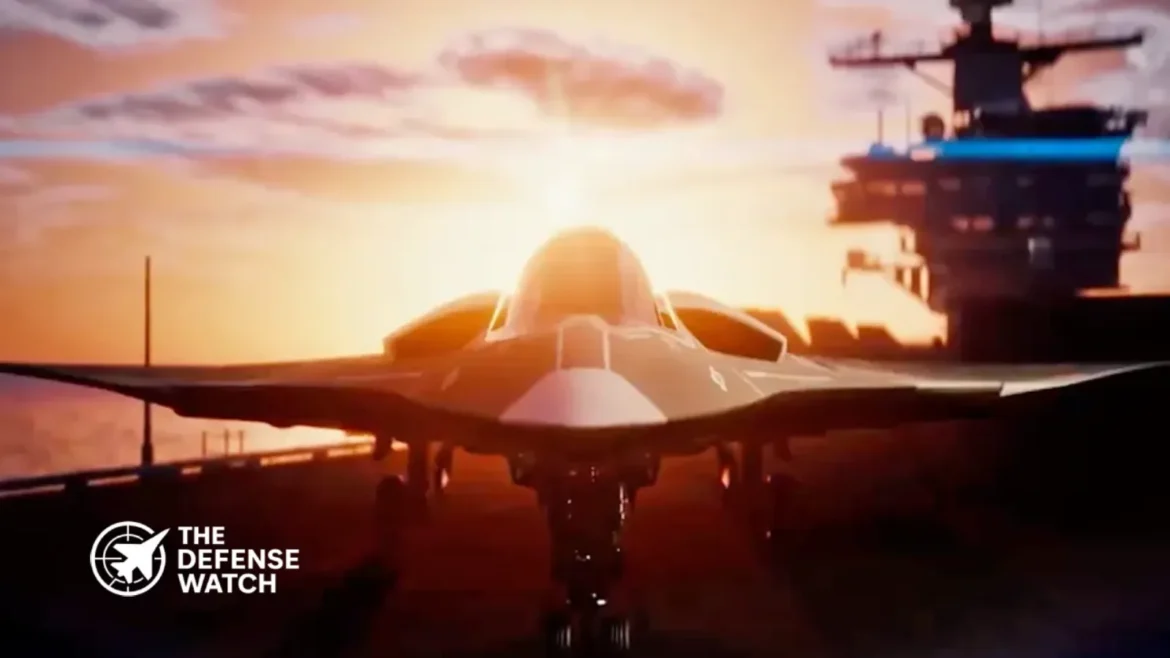
The F/A-XX naval fighter moved back into the spotlight after Northrop Grumman released a short promotional video showing its next-generation carrier fighter concept. The footage offers the most detailed public glimpse so far of the company’s proposed aircraft for the U.S. Navy’s classified F/A-XX competition.
- Northrop Grumman released a new teaser video showing an updated F/A-XX fighter concept.
- The aircraft appears tailless, carrier-capable, and optimized for stealth and long-range operations.
- The U.S. Navy is expected to choose between Northrop Grumman and Boeing for the program.
- F/A-XX is intended to replace portions of the F/A-18E/F Super Hornet fleet in future carrier air wings.
- The platform is expected to operate with drones and advanced networked systems.
The release is notable because it comes as the Navy reportedly approaches a program milestone. According to reporting cited by The War Zone, Navy leadership has indicated a final selection between Northrop Grumman and Boeing could come in the coming months.
What The New F/A-XX Concept Shows
The updated imagery suggests a large, tailless stealth aircraft designed for carrier operations. Visible features include:
- Broad forward fuselage for sensors and radar aperture
- Dorsal or high-mounted engine inlets for reduced radar signature
- Folding wings for carrier deck storage
- Apparent internal weapons bay doors
- Heavy landing gear suited for catapult launches and arrested recoveries
These design cues align with what analysts expect from a sixth-generation naval fighter focused on survivability, reach, and persistence in contested airspace.
While concept art should not be treated as final configuration data, companies often use controlled imagery to signal design direction, maturity, and market confidence. That makes this teaser strategically timed.
Why F/A-XX Matters For The U.S. Navy
The F/A-XX program is expected to become the centerpiece of future carrier air wings, eventually complementing and replacing parts of the Boeing F/A-18E/F Super Hornet fleet. It would also operate alongside the Lockheed Martin F-35C Lightning II and future unmanned systems.
For the Navy, range is one of the most critical requirements. Carrier aircraft must operate farther from enemy missile threats while still striking targets deep inland or defending the fleet. That challenge has become more urgent in the Indo-Pacific, where China’s anti-access systems continue to expand.
A longer-range stealth fighter paired with drones could give carriers more stand-off flexibility than today’s legacy tactical aviation mix.
Northrop Grumman’s Position In The Race
Northrop Grumman brings strong stealth credentials to the contest, including work on the B-2 Spirit and B-21 Raider. The company previously stepped away from the Air Force’s NGAD fighter competition, a move many analysts interpreted as a decision to prioritize naval aviation and bomber programs.
That could give Northrop additional focus if selected for F/A-XX.
Boeing, however, remains a formidable competitor with deep Navy fighter heritage through the F/A-18 Super Hornet and EA-18G Growler families.
Strategic Outlook
The F/A-XX award will shape U.S. naval aviation for decades. Beyond the aircraft itself, the winner could secure a long pipeline of software upgrades, sustainment contracts, and autonomous teaming systems.
This new Northrop Grumman release appears designed to send a clear message: the company is ready, visible, and still firmly in the fight.

Northrop Grumman E-2D Contract Strengthens Navy Airborne Early Warning Fleet
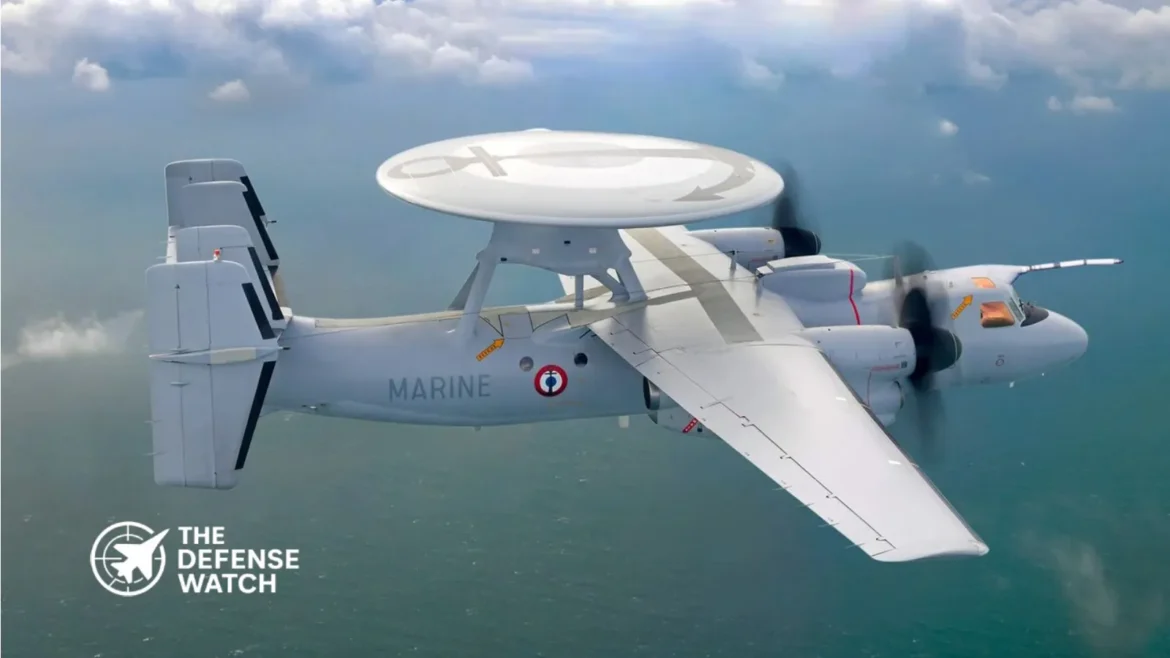
Northrop Grumman E-2D contract activity continues as the U.S. Navy awarded the company a $9,704,396 cost-plus-fixed-fee order to support testing of the E-2D Advanced Hawkeye airborne command and control aircraft.
The award was issued against a previously established basic ordering agreement and will fund personnel required for integrated test and evaluation. According to the Department of Defense contract announcement, work will continue through March 2027.
- Northrop Grumman received a $9.7 million Navy order for E-2D Advanced Hawkeye test support services.
- Work includes aircrew, engineering, maintenance, instrumentation, and test management personnel.
- Contract supports integrated test and evaluation activities for the E-2D Advanced Hawkeye.
- Most work will be performed at Patuxent River, Maryland, with additional work in Florida and New York.
- Performance is scheduled to continue through March 2027.
The contract was awarded by Naval Air Systems Command, headquartered in Patuxent River, Maryland.
What The New Contract Covers
The new order funds a wide range of specialist support functions required to keep the E-2D test program moving forward. These include:
- Aircrew support
- Flight test engineering
- Instrumentation services
- Aircraft maintenance
- Test management personnel
- Test planning and execution
- Reporting and deficiency resolution
This type of contract is often less visible than aircraft production awards, but it is critical. Testing programs validate software upgrades, radar improvements, mission systems integration, and operational readiness before systems move into broader fleet use.
For a platform as complex as the E-2D Advanced Hawkeye, sustained testing directly affects mission availability and modernization pace.
Why The E-2D Advanced Hawkeye Matters
The E-2D Advanced Hawkeye testing program supports one of the Navy’s most important airborne battle management platforms. Built by Northrop Grumman, the E-2D provides:
- Long-range airborne surveillance
- Command and control coordination
- Air and missile defense battle management
- Maritime domain awareness
- Networked targeting support for carrier strike groups
The aircraft’s AN/APY-9 radar gives the Navy the ability to detect and track aircraft, cruise missiles, and surface threats over large areas. It also serves as an airborne node linking ships, fighters, and joint force assets.
In practical terms, the Hawkeye helps carrier groups see farther, react faster, and coordinate combat power more effectively.
Why Test Support Contracts Matter More Than They Appear
While production contracts draw headlines, sustainment and testing awards often reveal where the Pentagon is focusing future capability upgrades.
This Northrop Grumman E-2D contract suggests the Navy remains committed to refining and expanding the Hawkeye’s mission systems. That can include software refreshes, sensor tuning, interoperability with newer fighters such as the F-35C Lightning II, and evolving missile defense roles.
As threats become more complex, especially in the Indo-Pacific and other contested maritime regions, airborne early warning aircraft remain essential force multipliers.
Where The Work Will Be Performed
The Navy said contract work will be split across three locations:
- Patuxent River, Maryland, 83%
- Melbourne, Florida, 14.2%
- Liverpool, New York, 2.8%
Patuxent River remains the center of U.S. naval aviation testing, making it a logical hub for E-2D program activity.
Funding Details
Fiscal Year 2026 Navy research, development, test, and evaluation funds totaling $9,704,396 were obligated at the time of award. The Pentagon noted that none of the funds will expire at the end of the current fiscal year.
That funding structure indicates planned continuity rather than emergency spending, another sign of steady long-term modernization planning.
Strategic Outlook
The E-2D Advanced Hawkeye testing pipeline is likely to remain active as the Navy pushes for more integrated carrier air wings and stronger distributed maritime operations.
In any future high-end conflict, the side that detects, tracks, and coordinates first gains a major advantage. The E-2D was designed for exactly that mission.

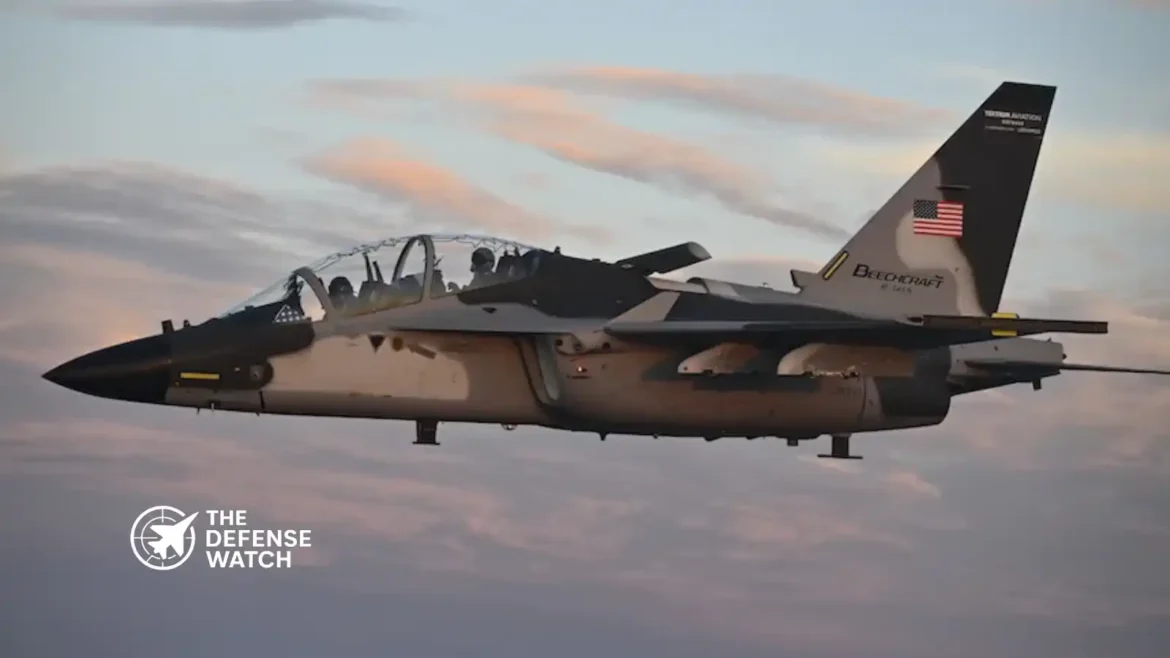
Textron Positions Beechcraft M-346N For U.S. Navy Training Modernization
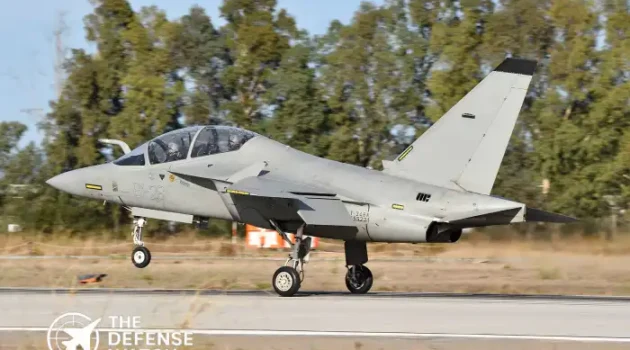
The Beechcraft M-346N trainer is being positioned by Textron Aviation Defense as a next-generation solution for U.S. Navy pilot training, targeting the service’s evolving requirements for carrier-based aviation. The company unveiled the aircraft at Sea-Air-Space 2026, highlighting its role in the Navy’s Undergraduate Jet Training System program.
The M-346N is a navalized variant of the proven M-346 advanced jet trainer, adapted to meet the demanding conditions of carrier operations. According to Textron Aviation Defense, the platform is designed to bridge the gap between basic flight training and frontline carrier aviation, an area the Navy has been seeking to modernize.
- Textron Aviation Defense is showcasing the Beechcraft M-346N trainer for U.S. Navy pilot training requirements.
- The aircraft is designed for carrier-based training operations with advanced avionics and performance features.
- It is based on the M-346 platform, widely used for advanced jet pilot training globally.
- The proposal aligns with the U.S. Navy’s Undergraduate Jet Training System (UJTS) program.
- The unveiling took place at Sea-Air-Space 2026, a major U.S. naval defense exhibition.
Industry observers note that the Navy’s current training fleet, including legacy systems, faces growing pressure to replicate the complexity of modern combat aircraft such as the F-35C and advanced F/A-18 variants.
Designed For Carrier-Based Training Operations
A key differentiator of the Beechcraft M-346N trainer is its focus on carrier suitability. Textron emphasized that the aircraft incorporates structural and avionics enhancements tailored for naval aviation, including features necessary for carrier landing practice and high-performance maneuvering.
The baseline M-346 platform, developed originally by Leonardo, is already in service with multiple air forces worldwide. It is recognized for its advanced flight control system, embedded simulation capabilities, and ability to replicate the handling characteristics of frontline fighters.
By adapting this platform into the M-346N configuration, Textron aims to provide the U.S. Navy with a cost-effective yet high-fidelity training solution. The aircraft is expected to offer improved training realism without the operational costs associated with using combat aircraft for instruction.
Addressing The Navy’s Training Gap
The U.S. Navy’s Undergraduate Jet Training System program seeks to replace or augment existing trainer aircraft with a more capable platform. The goal is to prepare pilots for increasingly complex operational environments, including carrier strike group operations and multi-domain warfare.
The Beechcraft M-346N trainer directly targets this requirement by offering advanced avionics, digital cockpit architecture, and embedded simulation systems. These features allow pilots to train in scenarios that closely mirror real-world missions, including air-to-air combat and strike operations.
From an operational perspective, this represents a shift in training philosophy. Instead of relying heavily on live training in frontline aircraft, the Navy is moving toward integrated training systems that combine live, virtual, and constructive environments.
This approach reduces costs, increases training efficiency, and accelerates pilot readiness, all critical factors as the Navy faces increasing operational tempo and pilot demand.
Strategic Timing Amid Naval Aviation Demands
Textron’s unveiling of the Beechcraft M-346N trainer comes at a time when the U.S. Navy is under pressure to maintain pilot readiness while managing aging training infrastructure.
Sea-Air-Space 2026 provided a strategic platform for the company to present its solution directly to Navy stakeholders and defense decision-makers. The timing aligns with ongoing evaluations and discussions around the future of naval pilot training.
Analysts suggest that competition for the UJTS program is likely to intensify, with multiple defense firms offering solutions. However, Textron’s partnership approach and reliance on a proven airframe could provide an advantage in terms of risk reduction and development timeline.
Leveraging Proven Technology With U.S. Integration
One of the strengths of the Beechcraft M-346N trainer lies in its hybrid approach. By combining an existing, operationally validated platform with U.S.-based integration and support, Textron aims to meet both performance and regulatory requirements.
This model reflects a broader trend in defense procurement, where militaries increasingly favor mature systems with lower development risk. It also aligns with U.S. industrial priorities, including domestic production, sustainment, and supply chain security.
Textron Aviation Defense has emphasized its ability to support the aircraft through its established infrastructure, which could play a critical role in long-term sustainment contracts.
Implications For Naval Aviation Training
If selected, the Beechcraft M-346N trainer could significantly reshape how U.S. Navy pilots are trained. The aircraft’s advanced simulation capabilities and performance characteristics would allow for more comprehensive training earlier in a pilot’s career.
This could reduce the transition burden to frontline aircraft, improving overall readiness and potentially lowering operational costs.
At a strategic level, the move reflects the Navy’s broader modernization efforts, which include integrating new technologies, improving training pipelines, and ensuring readiness in a rapidly evolving threat environment.
- South Korea has begun deploying MH-60R Seahawk helicopters to strengthen anti-submarine warfare operations.
- The helicopters are designed to detect, track, and engage submarines using advanced sensors and weapons.
- The move targets growing concerns over North Korea’s expanding submarine and underwater capabilities.
- MH-60R platforms integrate sonar systems, radar, and torpedoes for multi-mission maritime operations.
- Deployment reflects deeper interoperability with U.S. naval forces and regional deterrence efforts.
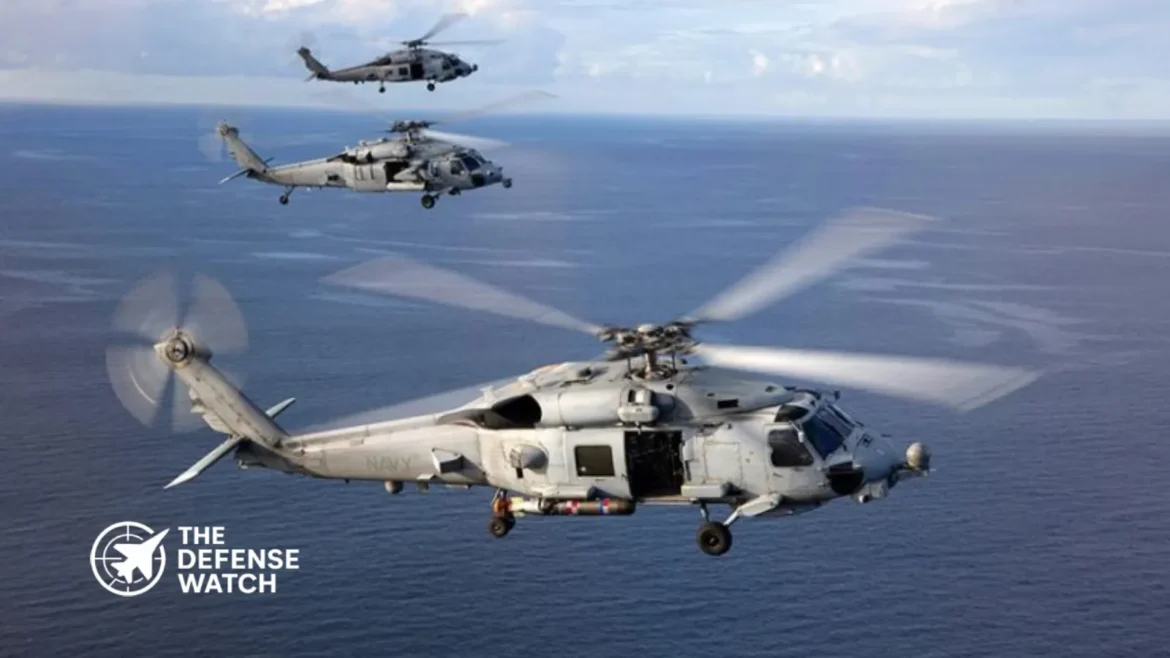
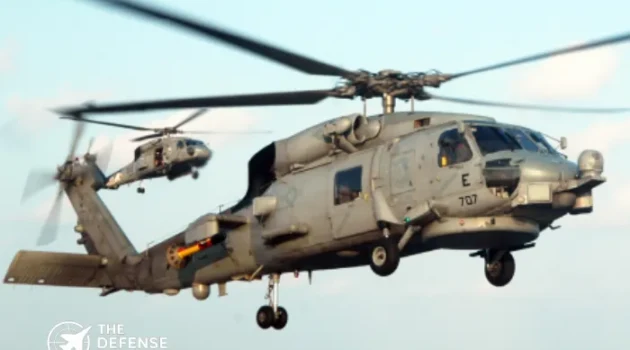
South Korea MH-60R Seahawk Deployment Strengthens Anti-Submarine Warfare
South Korea MH-60R Seahawk deployment marks a significant step in enhancing the Republic of Korea Navy’s anti-submarine warfare capability amid rising undersea threats from North Korea.
According to reporting by Army Recognition, Seoul has begun fielding its first batch of MH-60R Seahawk maritime helicopters, a U.S.-built platform widely regarded as one of the most advanced naval helicopters for anti-submarine and anti-surface warfare missions. The deployment comes as North Korea continues to invest in submarine-launched ballistic missile programs and quieter diesel-electric submarines.
The introduction of the MH-60R provides South Korea with a modern, networked system capable of detecting, tracking, and engaging hostile submarines across complex maritime environments.
Advanced Sensors And Weapons Enhance Maritime Awareness
The MH-60R Seahawk is equipped with a suite of advanced sensors that significantly improve situational awareness in contested waters. These include dipping sonar systems, sonobuoys, maritime surveillance radar, and electro-optical targeting systems.
This combination allows operators to detect submerged threats at extended ranges while maintaining real-time data links with surface combatants. The helicopter can deploy Mk 54 lightweight torpedoes and anti-ship missiles, giving it both defensive and offensive capabilities.
From an operational standpoint, the platform enables layered anti-submarine warfare. Surface ships can rely on airborne assets to extend their detection range, reducing response time against fast-moving or stealthy underwater threats.
This capability is particularly relevant in the Korean Peninsula, where shallow waters and dense maritime traffic complicate submarine detection.
Strategic Context: Rising North Korean Submarine Threat
The South Korea MH-60R Seahawk deployment is closely tied to evolving threats from North Korea’s naval forces. Pyongyang has prioritized the development of submarine-based deterrents, including experimental ballistic missile submarines and new classes of conventional attack submarines.
While North Korea’s submarine fleet is not as technologically advanced as those of major naval powers, its focus on asymmetrical warfare poses persistent risks. Smaller, quieter submarines operating in coastal environments can challenge traditional detection methods.
By integrating the MH-60R into its fleet, South Korea is addressing a critical capability gap in airborne anti-submarine warfare. The helicopter’s ability to operate from destroyers and frigates adds flexibility, allowing rapid deployment across multiple maritime zones.
This shift reflects a broader trend in regional naval modernization, where airborne assets are increasingly central to undersea warfare.
Interoperability With U.S. Forces And Regional Allies
Another key aspect of the MH-60R Seahawk deployment is interoperability. The platform is already widely used by the U.S. Navy and several allied nations, including Australia and India.
For South Korea, this means seamless integration into joint operations, particularly in scenarios involving combined maritime task forces. Shared systems, communication protocols, and training frameworks allow for coordinated anti-submarine operations.
This interoperability enhances deterrence by signaling a unified response capability to potential adversaries. It also improves operational efficiency during joint exercises and real-world contingencies.
In practical terms, South Korean MH-60R units can operate alongside U.S. naval forces with minimal adaptation, strengthening alliance-based maritime security in Northeast Asia.
Operational Impact On Korean Peninsula Maritime Security
The deployment of MH-60R helicopters is expected to significantly expand South Korea’s maritime surveillance and response capabilities. By extending the detection range of surface fleets, the helicopters provide early warning against submarine incursions.
They also improve response speed. Instead of relying solely on ship-based sensors, commanders can deploy helicopters to investigate contacts, track targets, and engage if necessary.
This layered approach reduces vulnerabilities in coastal defense and strengthens protection of key sea lines of communication. Given the strategic importance of maritime trade routes to South Korea’s economy, enhanced naval aviation capability plays a critical role in national security.
From a broader perspective, the deployment underscores the increasing importance of anti-submarine warfare in modern naval strategy. As submarine technologies evolve, so too must the tools used to counter them.
Analysis: A Targeted Capability Upgrade With Strategic Implications
The South Korea MH-60R Seahawk deployment is not just a platform upgrade, it represents a focused investment in undersea warfare dominance.
While surface ships and submarines remain central to naval power, airborne assets like the MH-60R are becoming indispensable in detecting and neutralizing underwater threats. The ability to rapidly deploy sensors and weapons from the air adds a critical dimension to maritime operations.
In the context of the Korean Peninsula, where geographic and operational constraints complicate traditional naval engagements, this capability is especially valuable. It allows South Korea to counter North Korea’s submarine strategy more effectively without relying solely on expensive or time-intensive ship deployments.
At the same time, the move aligns with broader U.S.-allied efforts to strengthen maritime security across the Indo-Pacific. By adopting a widely used platform, South Korea enhances both its independent defense posture and its role within allied frameworks.
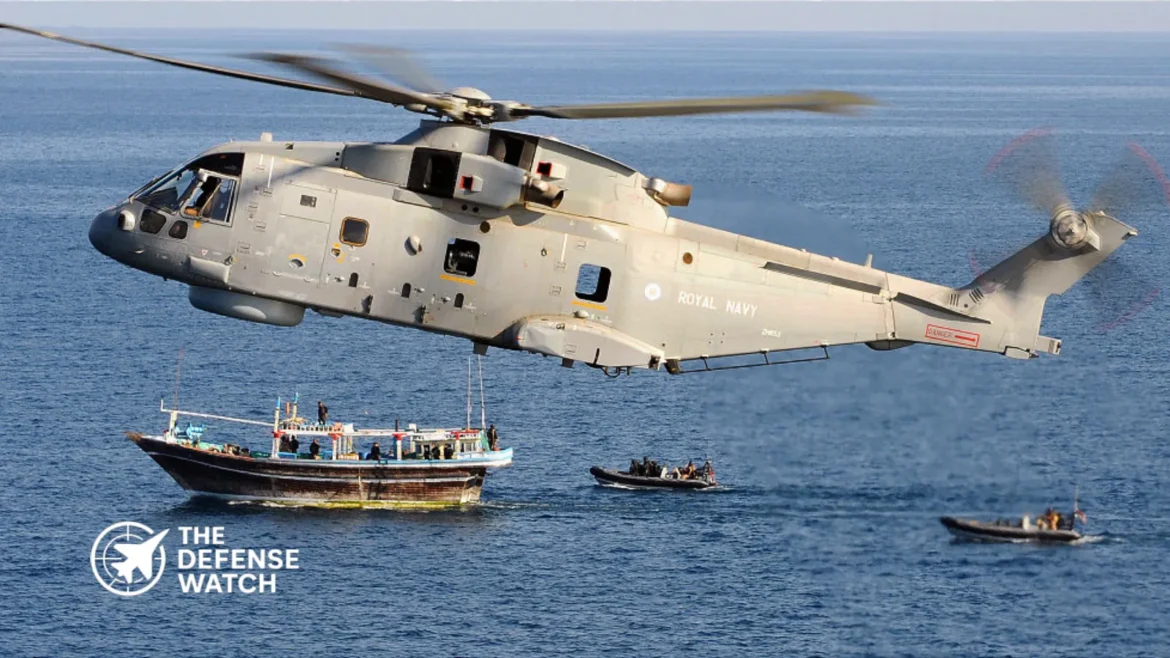
- ► The UK and Norway signed a new naval helicopter cooperation agreement focused on support, training, and sustainment.
- ► The pact strengthens collaboration between the Royal Navy and the Royal Norwegian Navy.
- ► Cooperation includes maritime helicopter training, maintenance, and logistics support.
- ► The agreement supports NATO operations in the North Atlantic and High North.
- ► The move reflects broader UK Norway defense cooperation amid rising regional tensions.
UK And Norway Sign Naval Helicopter Pact To Expand Maritime Cooperation
The UK and Norway naval helicopter pact marks a new step in deepening maritime defense cooperation between London and Oslo, reinforcing operational ties across the North Atlantic and High North.
Under the agreement, both governments will enhance collaboration on naval helicopter operations, training, maintenance, and long term sustainment. The deal reflects growing alignment between the two NATO allies as security concerns intensify in Northern Europe.
Cting official statements from the UK Ministry of Defence and Norwegian authorities.
Expanding Maritime Aviation Cooperation
The UK and Norway naval helicopter pact builds on an already close defense relationship between the two countries. Both operate advanced maritime helicopters and share similar operational environments, particularly in cold weather and high latitude conditions.
The UK’s Royal Navy and Norway’s Royal Norwegian Navy routinely conduct joint exercises across the North Atlantic. Helicopters play a central role in anti submarine warfare, surface surveillance, search and rescue, and fleet protection.
While specific platform details were not fully outlined in the initial announcement, cooperation is expected to involve maritime rotorcraft used for anti submarine and anti surface missions. For the UK, this includes aircraft such as the AgustaWestland AW101 Merlin, which serves as a backbone of Royal Navy carrier and frigate operations.
Norway also operates maritime helicopter platforms designed to support frigate and coastal defense missions. Shared sustainment and training frameworks can reduce costs, improve availability, and standardize procedures.
Strategic Context: The High North And NATO
The timing of the UK and Norway naval helicopter pact is significant. The High North has become an increasingly sensitive operational theater following Russia’s expanded military activity and the broader shift in European security after the invasion of Ukraine.
The United Kingdom has steadily increased its focus on northern maritime security. British forces regularly deploy to Norway for cold weather training, and London has committed to strengthening its presence in the Arctic and North Atlantic regions.
From a NATO perspective, helicopter interoperability is more than a technical issue. Maritime helicopters extend the sensor and strike range of surface combatants. They are often the first line of detection against submarines operating in contested waters.
By aligning training and maintenance standards, the UK and Norway reduce friction during joint operations. That matters in crisis scenarios where rapid integration can determine operational effectiveness.
Sustainment And Industrial Implications
Defense cooperation agreements of this type often have industrial consequences. Shared sustainment may open opportunities for cross support arrangements, spare parts pooling, and joint maintenance hubs.
Although no major procurement announcement accompanied the pact, closer collaboration can shape future acquisition decisions. When two allies operate similar systems and share infrastructure, lifecycle costs tend to decline.
For Norway, working closely with the UK provides access to one of Europe’s most experienced naval aviation communities. For the UK, deeper ties with Norway strengthen its northern flank strategy and reinforce its credibility as a leading European naval power.
Building Long Term Defense Alignment
The UK and Norway naval helicopter pact should be seen as part of a wider pattern of bilateral and multilateral defense integration across Europe.
Both nations are active contributors to NATO maritime groups and regularly participate in allied exercises in the North Atlantic. Naval helicopters are central to these missions, especially in anti submarine warfare and maritime domain awareness.
In practical terms, joint training ensures crews can operate from each other’s ships when required. Shared maintenance practices improve aircraft readiness rates. Common doctrine reduces risk during complex operations.
These incremental steps often receive less attention than major weapons purchases. Yet they are foundational to credible deterrence. Modern maritime operations depend not just on platforms, but on sustained readiness and seamless cooperation.
Why This Pact Matters
At first glance, the UK and Norway naval helicopter pact may appear technical. In reality, it reinforces three strategic objectives.
First, it strengthens NATO’s northern maritime posture at a time of heightened tension.
Second, it improves fleet readiness through shared logistics and training.
Third, it signals long term political alignment between two key maritime nations.
As Europe continues to adapt to a more contested security environment, agreements focused on operational integration will likely become more common.
For London and Oslo, the message is clear. Maritime security in the North Atlantic and High North remains a shared priority, and naval aviation is central to that mission.
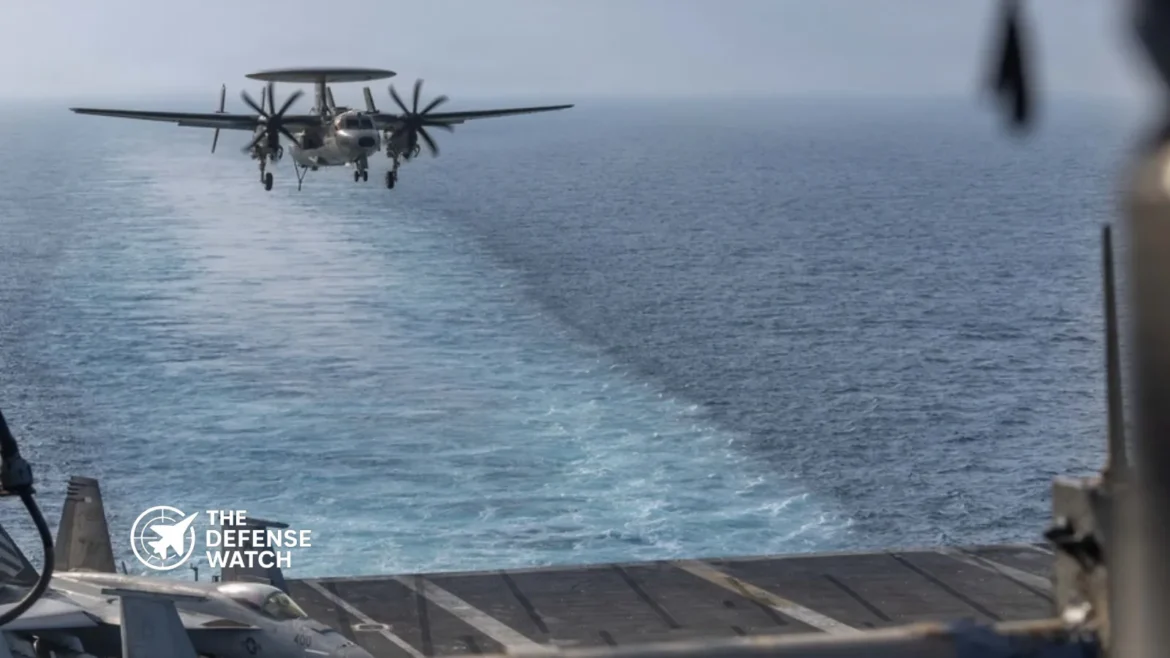
- ► US Navy awards approximately 10 million contract for 123 E 2D Hawkeye intercom systems.
- ► Upgrade supports carrier based airborne early warning and battle management missions.
- ► Enhances crew coordination and communications resilience inside the E 2D cockpit.
- ► Part of broader Navy effort to sustain and modernize the Advanced Hawkeye fleet.
- ► Reinforces carrier air defense posture amid evolving aerial and missile threats.
US Navy Orders 123 E 2D Hawkeye Intercom Systems To Reinforce Carrier Air Defense
The US Navy E 2D Hawkeye intercom systems upgrade marks a focused investment in the survivability and effectiveness of the carrier air wing’s airborne command and control aircraft.
(adsbygoogle = window.adsbygoogle || []).push({});According to reporting by Army Recognition, the US Navy has awarded a contract valued at roughly 10 million dollars for the procurement of 123 intercommunication systems for the E-2D Advanced Hawkeye fleet. The E 2D serves as the Navy’s primary airborne early warning and battle management platform, operating from nuclear powered aircraft carriers across the globe.
While the contract amount may appear modest compared to major airframe or radar upgrades, the operational role of these systems is significant. In high tempo carrier strike group operations, secure and reliable internal communications are essential for mission execution.
Why The Intercom Upgrade Matters
The E 2D Advanced Hawkeye acts as the airborne nerve center of the carrier strike group. It detects and tracks aircraft, cruise missiles, and surface contacts at extended ranges using its AN APY 9 radar and advanced mission systems. It also manages air defense assets and coordinates with fighter aircraft, including the F-35C Lightning II and F/A-18E/F Super Hornet.
In this environment, cockpit and cabin communication clarity is not a secondary issue. It directly affects mission success. The four to five crew members onboard the E 2D must process large volumes of sensor data while coordinating with surface ships, fighters, and joint forces.
Modern intercom systems provide improved audio clarity, reduced interference, and stronger resilience against electromagnetic disruption. As carrier groups face more advanced electronic warfare threats, hardened internal communication systems reduce vulnerabilities.
(adsbygoogle = window.adsbygoogle || []).push({});This contract therefore supports the integrity of the entire air defense network centered around the Hawkeye.
Supporting Carrier Air Wing Readiness
The US Navy E 2D Hawkeye intercom systems purchase also reflects a broader sustainment strategy. The Navy continues to expand and modernize its Advanced Hawkeye fleet, which replaced older E 2C variants over the past decade.
The E 2D’s enhanced radar and mission systems enable Cooperative Engagement Capability operations, allowing sensor data sharing across ships and aircraft. According to the U.S. Navy, the platform is central to integrated air and missile defense and distributed maritime operations.
Upgrading avionics subsystems such as intercom units ensures that legacy components do not become single points of failure. In carrier aviation, reliability rates are closely tied to sortie generation and deployment cycles. Even relatively small subsystems can ground aircraft if not modernized in time.
The contract for 123 units suggests fleet wide distribution, potentially covering both operational squadrons and training aircraft.
Strategic Context: Carrier Defense In A High Threat Era
Carrier strike groups are operating in increasingly contested environments. Peer competitors have invested heavily in long range anti ship cruise missiles, ballistic missiles, and electronic warfare systems designed to disrupt command and control.
In this context, the E 2D is not just a surveillance aircraft. It is the airborne command node that links sensors, shooters, and commanders. Its ability to maintain uninterrupted communications inside the aircraft and across networks is critical.
The US Navy E 2D Hawkeye intercom systems upgrade therefore supports layered defense against complex threats. Improved internal coordination enhances reaction times during saturation attacks or high density airspace operations.
From a doctrinal perspective, the Navy’s Distributed Maritime Operations concept depends on resilient communication architectures. While much attention focuses on satellite links and tactical data networks, internal aircraft systems remain foundational.
Industrial And Contracting Implications
Although Army Recognition reported the award, the Navy routinely issues such avionics contracts through established defense suppliers specializing in aerospace communication systems.
(adsbygoogle = window.adsbygoogle || []).push({});Smaller targeted contracts often receive less public attention than major aircraft procurement deals. However, they represent steady investment in readiness and life cycle management.
Given the E 2D’s projected service life into the 2040s, incremental upgrades will continue to play a key role in keeping the fleet relevant. Sustainment spending ensures that high end assets remain mission capable without requiring costly structural overhauls.
Operational Outlook
The E 2D Advanced Hawkeye currently deploys aboard Nimitz class and Ford class aircraft carriers. As the Navy integrates next generation systems, including advanced networks and unmanned platforms, the Hawkeye’s battle management role is expected to expand.
(adsbygoogle = window.adsbygoogle || []).push({});Ensuring robust onboard communications is a practical but essential step in that evolution.
The US Navy E 2D Hawkeye intercom systems order may not reshape the fleet overnight. But it strengthens the backbone of carrier air defense at a time when operational margins are tightening.
Newer Posts