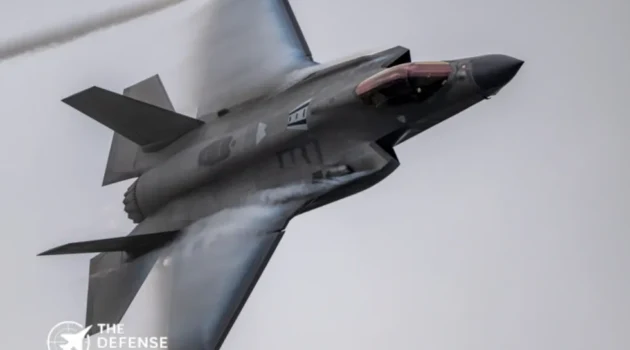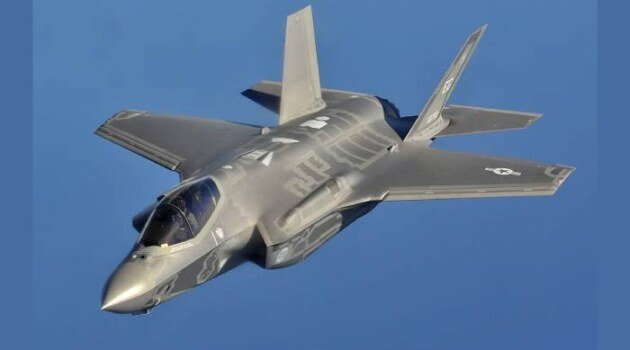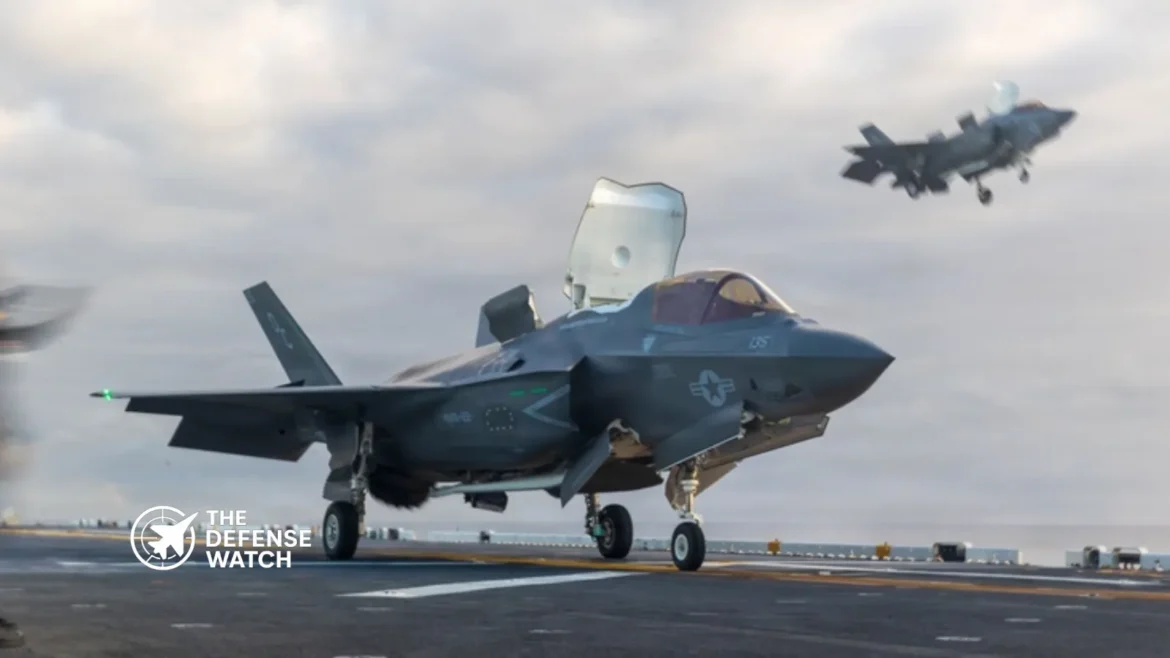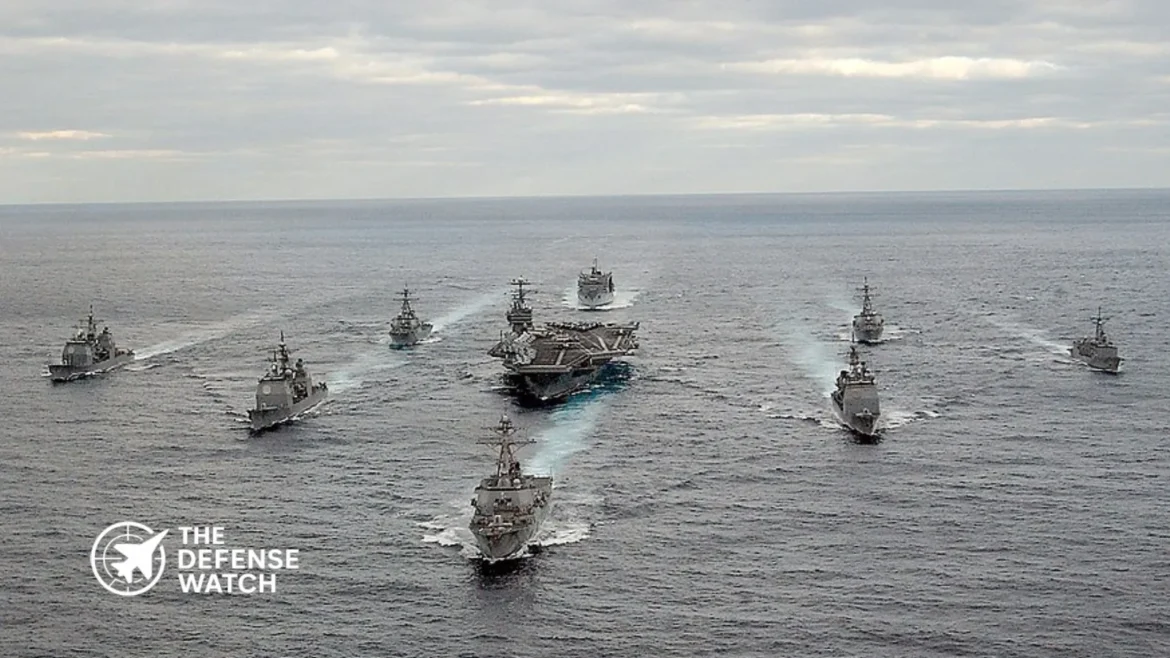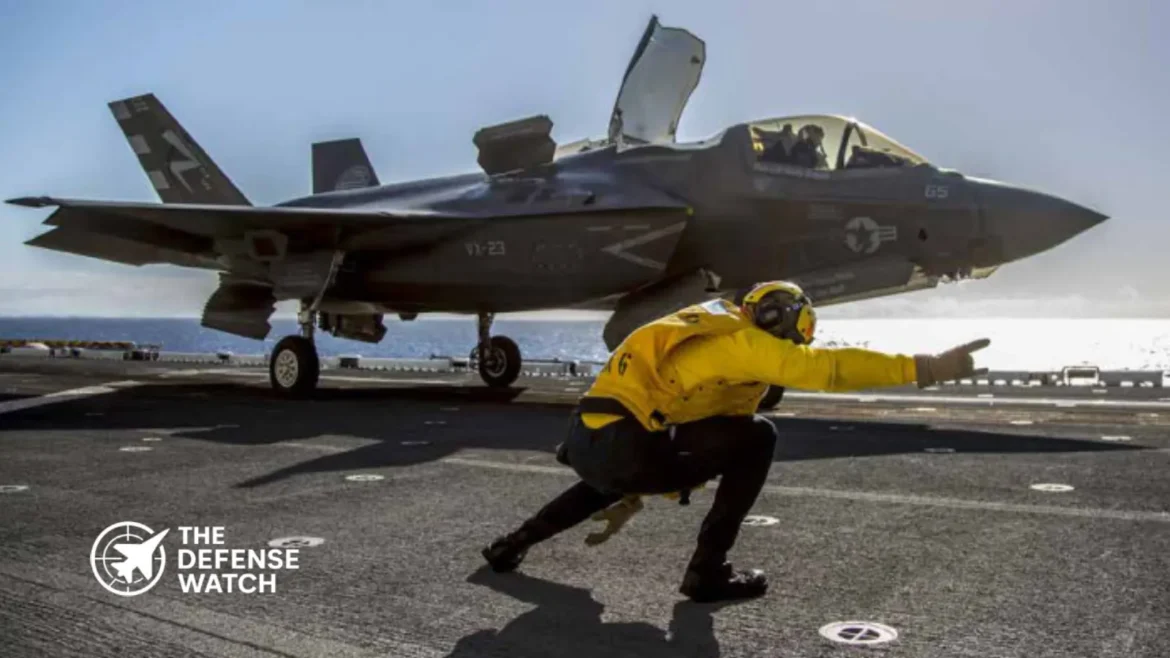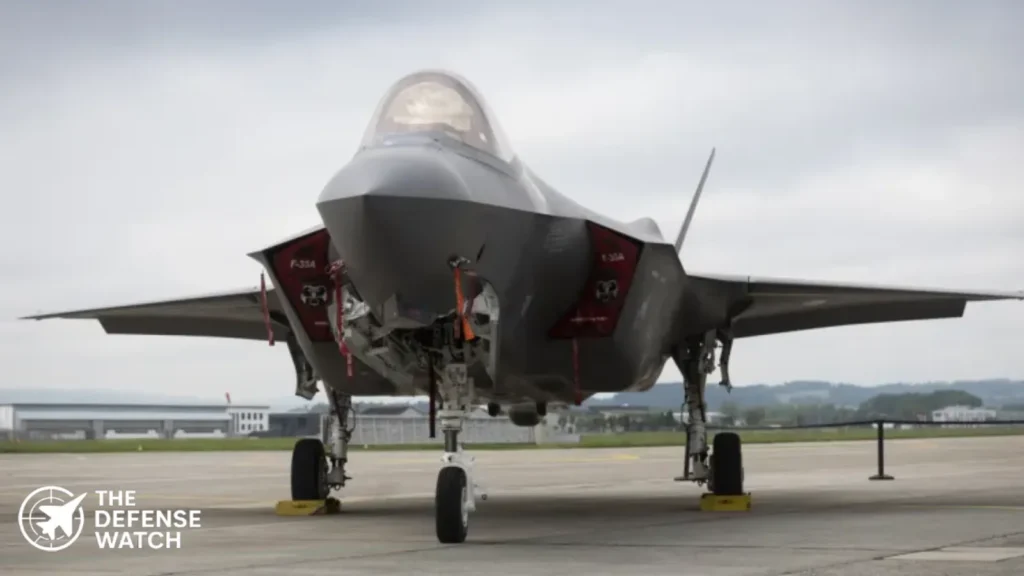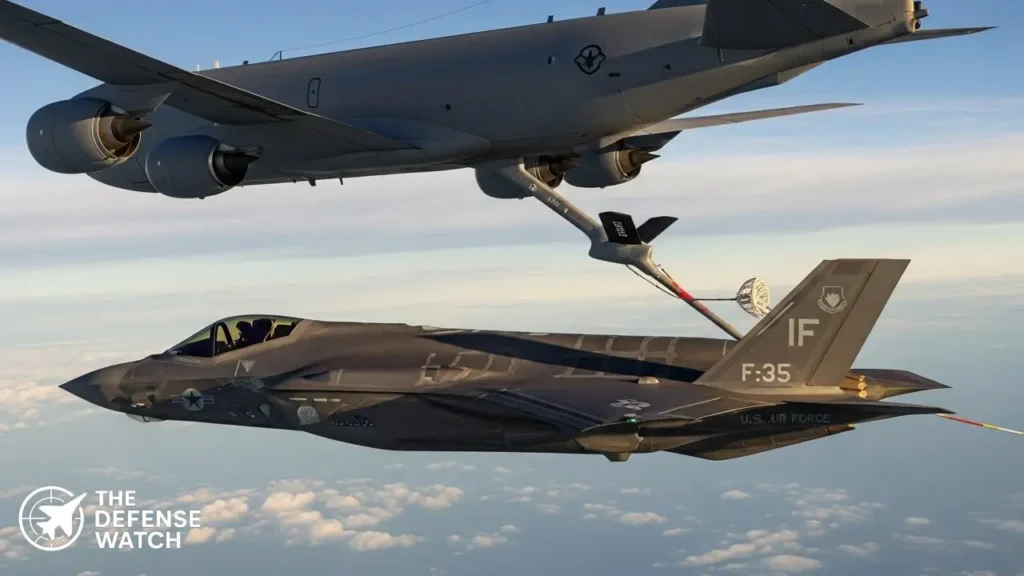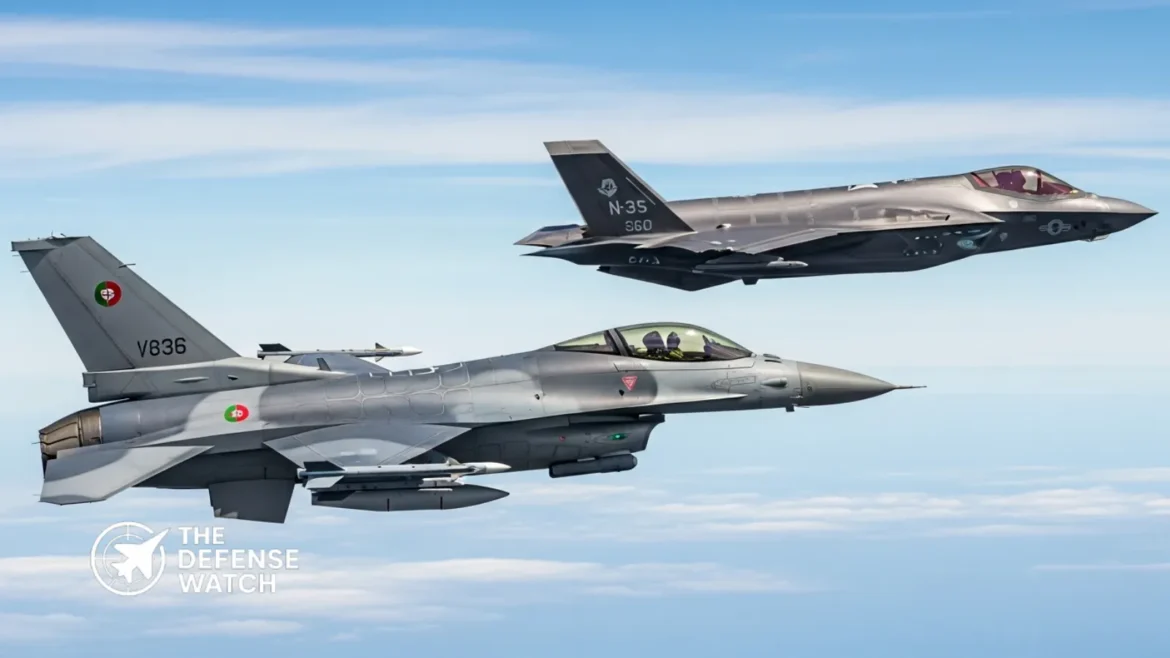
- ► The US ambassador to Portugal publicly urged Lisbon to consider acquiring F-35 fighter jets.
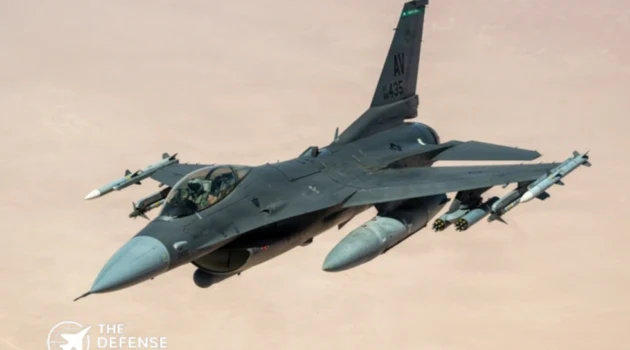
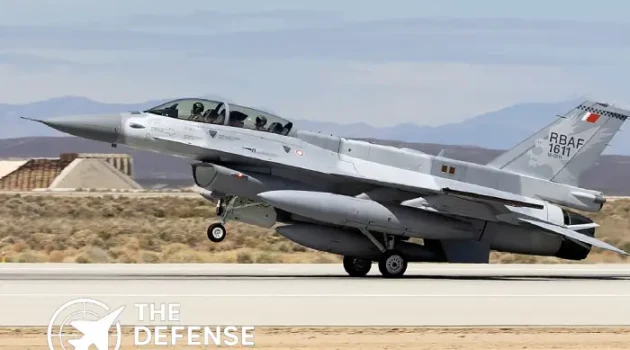
- ► Portugal currently operates F-16 aircraft that are approaching long term replacement planning.
- ► The F-35 is operated by multiple NATO allies across Europe, including Italy, the Netherlands, and the UK.
- ► Washington framed the proposal as strengthening NATO interoperability and airpower integration.
- ► Lisbon has not announced a formal fighter replacement decision.
US Ambassador Urges Portugal To Buy F-35 Fighter Jets
The F-35 fighter jets are at the center of renewed defense discussions between Washington and Lisbon, after the US ambassador to Portugal publicly encouraged the country to consider joining what he described as the top tier of allied air forces.
(adsbygoogle = window.adsbygoogle || []).push({});According to a report by Reuters, the ambassador said Portugal should look at acquiring the F-35 Lightning II as it evaluates the future of its combat aviation fleet. The remarks come as Portugal continues to operate upgraded F-16 Fighting Falcon aircraft, which will eventually require replacement or deep modernization.
While no formal procurement decision has been announced, the public nature of the comments underscores Washington’s interest in aligning Portuguese airpower with the broader NATO shift toward fifth generation platforms.
Strategic Context Behind The F-35 Fighter Jets Push
The F-35 fighter jets have become the backbone of NATO’s next generation airpower strategy. European operators now include Italy, the Netherlands, Norway, Denmark, Poland, Belgium, Finland, Germany, Switzerland, and the United Kingdom. Many of these countries are either replacing legacy F-16 fleets or supplementing Eurofighter and other fourth generation aircraft.
From a US perspective, expanding F-35 adoption enhances interoperability. The aircraft’s sensor fusion, secure data links, and low observable design enable joint operations across air, land, sea, cyber, and space domains. For smaller NATO air forces such as Portugal’s, integration into this network could offer operational advantages that go beyond basic air policing.
(adsbygoogle = window.adsbygoogle || []).push({});Portugal’s air force has relied on F-16s since the 1990s. Though upgraded under Mid Life Update programs, the aircraft will face structural and capability limits over the coming decade. Any replacement program would require long term financial planning and parliamentary approval.
Budget Realities And Political Considerations
Defense spending remains a central factor. Portugal, like several southern European allies, has faced pressure to meet NATO’s two percent of GDP defense spending benchmark. A fleet of F-35 fighter jets would represent one of the largest defense investments in the country’s recent history.
Acquisition costs, sustainment expenses, infrastructure upgrades, pilot training, and industrial participation agreements would all shape the debate. The F-35 program also involves strict security and data handling requirements, which may influence national policy discussions.
Lisbon could also examine European alternatives, such as advanced Eurofighter variants or participation in future European sixth generation fighter programs. However, those programs remain years from operational deployment, while the F-35 is already fielded at scale.
(adsbygoogle = window.adsbygoogle || []).push({});NATO Interoperability And Operational Impact
The core argument advanced by US officials centers on interoperability. F-35 fighter jets are designed to operate as information nodes within a coalition network. In a NATO scenario, Portuguese F-35s could seamlessly share targeting data with allied aircraft, naval vessels, and ground based air defense systems.
This network centric capability has been tested in multinational exercises across Europe. According to NATO officials, fifth generation aircraft have played increasing roles in Baltic Air Policing missions and joint exercises aimed at deterring Russian aggression.
(adsbygoogle = window.adsbygoogle || []).push({});For Portugal, whose strategic location includes Atlantic sea lanes and proximity to Africa, modern airpower also supports maritime security and expeditionary commitments.
What Happens Next
There is no confirmed procurement timeline. The Reuters report indicates the ambassador’s remarks were advisory rather than linked to an active contract negotiation. Any move toward F-35 fighter jets would require a structured defense review, cost analysis, and formal request through the US Foreign Military Sales process.
Still, the public endorsement reflects broader geopolitical dynamics. As NATO modernizes in response to the war in Ukraine and evolving security threats, alliance members are under increasing pressure to align capabilities.
Whether Portugal ultimately selects the F-35 or another platform, the discussion signals that Lisbon’s next fighter decision will carry strategic weight well beyond national borders.
 ■ KEY FACTS AT A GLANCE
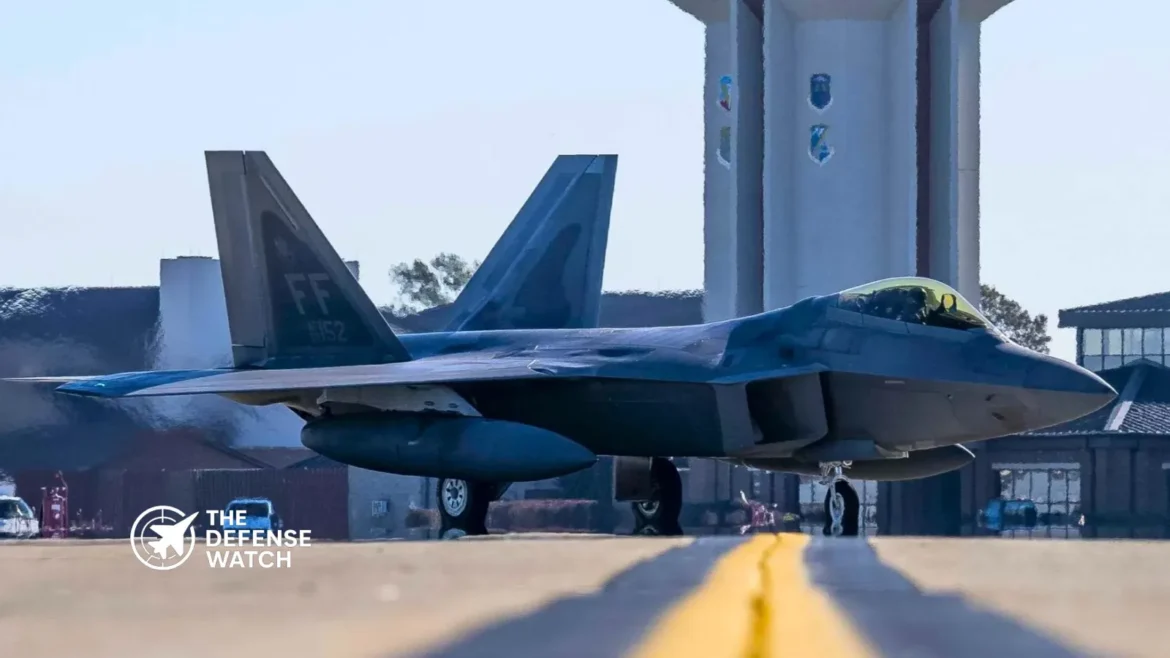
- ► US F-22 Raptors were recently sighted operating from RAF Lakenheath in the United Kingdom.
- ► The deployment comes amid ongoing U.S. force posture adjustments linked to Middle East security concerns.
- ► F-22 Raptors provide air dominance, stealth penetration, and advanced sensor fusion capabilities.
- ► The United Kingdom remains a critical forward operating hub for U.S. Air Force deployments into Europe and beyond.
- ► Movement underscores Washington’s emphasis on flexible, rapid-response airpower positioning.
US F-22 Raptors Sighted In UK Amid Middle East Force Posture Review
US F-22 Raptors operating from the United Kingdom are drawing attention as Washington reviews its Middle East airpower posture.
Recent imagery and reporting indicate that F-22 aircraft have been sighted at RAF Lakenheath, a long-standing U.S. Air Force hub in Britain. While U.S. officials have not publicly detailed the mission profile, the timing aligns with broader Pentagon adjustments to regional force deployments.
(adsbygoogle = window.adsbygoogle || []).push({});The presence of the aircraft may signal preparations for reinforcement or contingency options tied to Middle East security dynamics. The U.S. Department of Defense has repeatedly emphasized that it retains the ability to surge advanced air assets where needed.
Strategic Value Of The F-22 Raptor
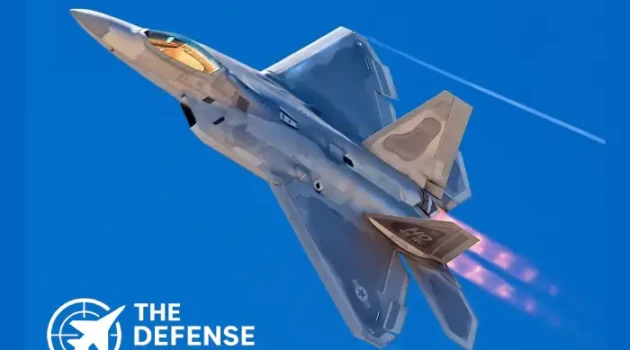
The F-22 Raptor remains the U.S. Air Force’s premier air superiority fighter. Developed by Lockheed Martin, the platform combines low observability, supercruise capability, and advanced avionics.
Unlike multirole fighters, the F-22 is optimized for air dominance missions. It can penetrate contested airspace, conduct beyond-visual-range engagements, and coordinate targeting data across joint forces. Its AN APG-77 radar and sensor fusion architecture allow pilots to detect and track threats at extended distances.
Although the aircraft is not permanently based in Europe, RAF Lakenheath frequently hosts rotational deployments. The base also supports the F-35A fleet assigned to U.S. Air Forces in Europe, making it a logical staging point for advanced fighter operations.
(adsbygoogle = window.adsbygoogle || []).push({});From a force posture standpoint, forward positioning F-22 Raptors in the UK provides geographic flexibility. Aircraft can rapidly deploy eastward toward the Middle East or operate across the European theater in support of NATO commitments.
Middle East Airpower Context
The Middle East remains a priority theater for U.S. Central Command. In recent months, Washington has adjusted air and naval deployments in response to regional tensions, threats to maritime traffic, and risks to U.S. personnel.
The U.S. Department of Defense has not formally confirmed that the F-22 Raptors sighted in the UK are earmarked specifically for Middle East operations. However, such deployments are consistent with established U.S. practice of maintaining strategic ambiguity while ensuring credible deterrence.
Historically, the F-22 has been deployed to the Middle East to counter advanced air defense systems and provide air superiority coverage. Its presence serves both operational and signaling purposes. The aircraft’s stealth profile complicates adversary planning and reinforces U.S. escalation control options.
Why The UK Matters In U.S. Force Projection
RAF Lakenheath plays a central role in U.S. transatlantic air operations. The base offers hardened infrastructure, munitions storage, and established logistics pipelines.
In practical terms, stationing F-22 Raptors in the UK reduces transit time to multiple theaters. Aircraft can move south toward the Middle East, east toward Eastern Europe, or remain in the North Atlantic area.
(adsbygoogle = window.adsbygoogle || []).push({});This flexibility aligns with the Pentagon’s shift toward dynamic force employment. Rather than maintaining large, static footprints, the U.S. military increasingly relies on rotational deployments and rapid repositioning.
For allies, visible F-22 operations reinforce collective defense commitments. For potential adversaries, they signal readiness without requiring permanent basing changes.
Operational And Strategic Implications
The sighting of US F-22 Raptors in the UK should be viewed within a broader pattern of calibrated force adjustments. It does not automatically indicate imminent military action.
Instead, it reflects layered deterrence. By moving high-end assets closer to potential flashpoints, the U.S. preserves response options while maintaining strategic depth.
There is also an interoperability dimension. Operating from the UK allows F-22 units to integrate with NATO air forces and conduct joint training. Such coordination improves readiness for both European and Middle Eastern contingencies.
(adsbygoogle = window.adsbygoogle || []).push({});At the same time, the limited fleet size of the F-22 makes each deployment notable. With fewer than 200 aircraft built and a smaller number mission-capable at any given time, any forward positioning signals deliberate planning.
Looking Ahead
As of now, U.S. officials have not announced a permanent redeployment. The situation underscores how quickly airpower assets can shift in response to evolving security conditions.
The presence of US F-22 Raptors in the UK reinforces Washington’s emphasis on flexibility, deterrence, and alliance coordination. Whether tied directly to Middle East contingencies or broader NATO considerations, the move reflects a force posture designed for rapid adaptation.
- (adsbygoogle = window.adsbygoogle || []).push({});
For defense planners, the key takeaway is clear. Advanced air dominance assets remain central to U.S. strategy, and their movement often speaks as loudly as formal policy statements.
- (adsbygoogle = window.adsbygoogle || []).push({});
■ KEY FACTS AT A GLANCE- ► United Kingdom joins European initiative focused on low cost air defence weapons.
- ► Effort aims to counter mass drone attacks and cheaper cruise missile threats.
- ► Focus on scalable, affordable interceptors rather than high cost missile systems.
- ► Supports NATO wide efforts to strengthen layered air and missile defense.
- ► Reflects lessons from Ukraine conflict on cost imbalance in modern air warfare.
UK Low Cost Air Defence Weapons Initiative Gains Momentum
The UK low cost air defence weapons initiative is moving forward as London joins a wider European effort to develop affordable interceptors against drones and missile threats.
(adsbygoogle = window.adsbygoogle || []).push({});The United Kingdom has aligned itself with a European push to accelerate development of lower cost air defense systems designed to counter mass drone swarms and saturation attacks. The move reflects growing concern across NATO about the rising use of inexpensive unmanned systems in modern conflicts.
European governments are increasingly focused on closing what defense planners describe as a cost imbalance. In recent conflicts, including the war in Ukraine, relatively cheap drones and loitering munitions have forced defenders to rely on high cost surface to air missiles to intercept them. That exchange ratio is not sustainable over time.
The UK decision signals recognition that future air defense architecture must include scalable and affordable options.
Lessons From Ukraine Drive Policy Shift
The conflict in Ukraine has reshaped air and missile defense thinking across Europe. Both Russia and Ukraine have used large numbers of drones and cruise missiles in repeated strikes against infrastructure and military targets.
Intercepting a low cost drone with a multi million dollar missile presents an obvious economic challenge. Senior NATO officials have repeatedly warned that allies need more cost effective intercept solutions to handle persistent drone campaigns.
(adsbygoogle = window.adsbygoogle || []).push({});The UK low cost air defence weapons effort is directly tied to these lessons. Rather than relying solely on advanced systems such as long range missile batteries, the focus is on adding cheaper interceptors and complementary technologies that can engage slower, smaller aerial threats.
This does not replace high end systems. Instead, it reinforces a layered defense model.
Strengthening NATO’s Layered Air Defense
NATO’s integrated air and missile defense concept depends on multiple layers. High altitude ballistic missile defense, medium range systems, and short range air defense must work together.
The European initiative aims to strengthen the lower and middle tiers of that structure. These layers are critical for countering drones, loitering munitions, and certain cruise missiles.
The UK low cost air defence weapons participation suggests closer coordination with European partners on procurement and industrial development. Shared development could reduce unit costs, increase production capacity, and improve interoperability across allied forces.
(adsbygoogle = window.adsbygoogle || []).push({});Interoperability remains central. NATO air defense systems rely on shared data links and integrated command and control networks. Any new system must plug into existing architecture.
Industrial And Strategic Implications
For the United Kingdom, joining this push carries both military and industrial significance.
The UK defense sector has deep experience in missile development and air defense technologies. Expanding into affordable intercept solutions offers opportunities for domestic industry while supporting broader alliance needs.
It also aligns with ongoing UK modernization plans. London has committed to strengthening homeland defense and supporting NATO’s eastern flank. Affordable air defense capabilities could be deployed to protect bases, critical infrastructure, and expeditionary forces.
(adsbygoogle = window.adsbygoogle || []).push({});From a strategic standpoint, this move reflects a wider European reassessment of air defense priorities. For years, many European states reduced short range air defense inventories after the Cold War. The return of high intensity conflict in Europe has reversed that trend.
Addressing The Cost Imbalance
At its core, the UK low cost air defence weapons initiative seeks to solve a simple problem. Modern warfare has made it easier and cheaper to launch aerial attacks than to stop them.
Commercially derived drones can be adapted for military use at relatively low cost. State actors can also produce cruise missiles at scale. Defenders must respond without exhausting high value missile stocks.
Affordable interceptors, rapid production lines, and complementary systems such as electronic warfare and directed energy weapons are now central to air defense planning.
(adsbygoogle = window.adsbygoogle || []).push({});The UK’s decision to join this European effort signals that London sees the issue as long term rather than temporary.
Broader European Security Context
The initiative comes amid heightened security concerns across Europe. NATO members have increased defense spending and accelerated procurement programs since 2022.
European Union efforts such as joint procurement frameworks and collaborative defense projects have aimed to streamline acquisitions and reduce duplication. Although the UK is no longer an EU member, it continues to cooperate closely with European partners on defense.
Participation in a shared low cost air defense initiative strengthens that cooperation. It also reinforces NATO’s collective deterrence posture.
Outlook
Details on specific systems, funding levels, or timelines remain limited in public reporting. However, the policy direction is clear.
(adsbygoogle = window.adsbygoogle || []).push({});The UK low cost air defence weapons effort reflects a shift toward sustainable air defense models built around layered, affordable, and scalable capabilities.
If successfully implemented, it could help address one of the most pressing operational challenges facing NATO forces today: defending against large numbers of relatively cheap aerial threats without depleting strategic missile inventories.
■ KEY FACTS AT A GLANCE- ► Italy is considering adding up to 100,000 personnel to its armed forces, according to a government document reported by Reuters.
- ► The proposal would significantly raise troop levels above current authorized strength across land, air, and naval services.
- ► The move reflects broader European efforts to reinforce deterrence amid heightened security concerns.
- ► Italy remains a key NATO member with responsibilities on the alliance’s southern flank and Mediterranean theater.
- ► Any expansion would require political approval and sustained funding under Italy’s defense budget framework.
Italy Armed Forces Expansion Under Review
Italy armed forces expansion plans are under consideration following a government document that outlines a potential increase of up to 100,000 personnel, according to a report by Reuters.
(adsbygoogle = window.adsbygoogle || []).push({});The document signals a possible shift in Rome’s defense posture at a time when European security dynamics remain strained. While no final decision has been announced, the scale of the proposed increase would mark one of the most significant manpower adjustments in recent Italian military history.
Italy’s current authorized force structure, which has undergone reductions over the past decade, was designed around leaner, professional units. Expanding by 100,000 troops would require structural reforms, recruitment drives, and sustained financial commitments.
Strategic Context: NATO And European Security
Italy is a founding member of NATO and plays a central role in alliance operations across Southern Europe and the Mediterranean. It contributes to air policing missions, naval deployments, and multinational battlegroups.
In recent years, NATO has emphasized readiness, force generation, and high availability formations in response to Russia’s war in Ukraine and broader instability along Europe’s periphery. Several European states have already announced increases in defense spending and personnel levels.
Within this context, Italy armed forces expansion discussions align with a broader continental trend toward strengthening conventional deterrence.
Manpower, Readiness, And Operational Gaps
Italy’s armed forces currently consist of the Army, Navy, Air Force, and Carabinieri. Over the past decade, reforms aimed at professionalization reduced overall troop numbers while prioritizing deployable units.
(adsbygoogle = window.adsbygoogle || []).push({});However, force reductions have at times strained readiness cycles. High operational tempo in overseas missions, maritime security patrols, and NATO commitments has placed pressure on available manpower.
If implemented, the proposed 100,000 troop increase could address several structural gaps:
- Reinforcing territorial defense capabilities
- Expanding rapid reaction units
- Supporting logistics and sustainment formations
- Strengthening cyber and support roles
From a planning perspective, manpower expansion is only one element. Equipment modernization, infrastructure upgrades, and training capacity would also need parallel investment.
Budgetary Considerations
Italy has gradually increased defense spending in line with NATO’s 2 percent of GDP guideline, though it has historically spent below that threshold. Expanding personnel numbers on the scale outlined would have long term fiscal implications.
Personnel costs account for a significant share of Italy’s defense budget. Salaries, pensions, healthcare, housing, and training all contribute to recurring expenditures.
Any meaningful Italy armed forces expansion would therefore require parliamentary backing and multi year financial planning. Without sustained funding, force growth risks becoming structurally imbalanced, with personnel levels rising faster than equipment modernization.
Mediterranean Focus And Southern Flank
Italy’s geostrategic position places it at the center of Mediterranean security dynamics. Maritime routes, migration flows, and instability in North Africa all shape Rome’s defense planning.
(adsbygoogle = window.adsbygoogle || []).push({});An expanded force structure could strengthen Italy’s capacity to respond to crises along NATO’s southern flank. Naval and amphibious units in particular play a central role in projecting stability and supporting alliance operations.
Rome also maintains expeditionary capabilities and has contributed to missions in the Balkans, the Middle East, and Africa. Increasing manpower may offer greater rotational flexibility and reduce operational strain on existing units.
Political And Institutional Path Ahead
At this stage, the Italy armed forces expansion proposal remains part of a government document and has not been enacted into law. Parliamentary debate and interministerial coordination would be required before implementation.
Defense reform in Italy has historically involved careful negotiation between the Ministry of Defense, the Treasury, and political stakeholders. Force structure changes often unfold over multi year timelines.
According to Reuters, the document reflects internal planning considerations rather than an immediate deployment order. The final outcome will depend on fiscal constraints, political consensus, and evolving security assessments.
Analysis: Structural Shift Or Strategic Adjustment
The scale of the proposed increase suggests more than a routine adjustment. Adding up to 100,000 personnel would significantly reshape Italy’s defense profile.
Yet manpower alone does not define combat effectiveness. Modern military power depends on integrated capabilities, including advanced aircraft, naval platforms, cyber defense, and command networks.
(adsbygoogle = window.adsbygoogle || []).push({});If aligned with modernization programs, Italy armed forces expansion could enhance deterrence credibility within NATO. If not matched by equipment and readiness investment, the initiative could face structural inefficiencies.
Ultimately, the proposal underscores a broader European recalibration of defense policy. As security challenges evolve, force size is once again becoming central to strategic debate.
For Italy, the question is not only how many troops it fields, but how effectively they are trained, equipped, and integrated into alliance operations.
■ KEY FACTS AT A GLANCE- ► US defense cybersecurity rules under CMMC will soon be mandatory for most Pentagon contracts.
- ► Small contractors warn compliance audits and system upgrades could drive up costs and limit participation.
- ► The Pentagon says tighter standards are needed to protect sensitive defense data from cyber threats.
- ► Industry groups are seeking phased implementation and financial support for smaller suppliers.
- ► The move could reshape the defense industrial base by consolidating work among larger firms.
US Defense Cybersecurity Rules Tighten Grip On Defense Industrial Base
US defense cybersecurity rules are entering a stricter enforcement phase as the Department of Defense prepares to fully implement the Cybersecurity Maturity Model Certification, or CMMC, across its contracting system.
(adsbygoogle = window.adsbygoogle || []).push({});According to reporting by Reuters, the new framework is expected to create significant compliance burdens for some small and mid sized defense suppliers, many of whom operate on thin margins and limited IT budgets.
The Pentagon argues the tougher requirements are essential. Defense networks and contractor systems remain frequent targets for espionage and intellectual property theft, particularly from state backed actors. Officials have repeatedly warned that vulnerabilities in smaller subcontractors can provide entry points into larger weapons programs.
Under CMMC, contractors must meet specific cybersecurity controls and, in many cases, undergo third party audits before bidding on certain contracts. Requirements scale depending on the sensitivity of the information handled, but even baseline standards demand structured policies, technical safeguards, and documented procedures.
Why The Pentagon Is Tightening Enforcement
The Department of Defense has faced years of criticism for inconsistent cybersecurity enforcement across its supply chain. While large primes have invested heavily in cyber defenses, smaller firms often relied on self attestation.
The updated US defense cybersecurity rules aim to close that gap.
Pentagon officials have stated that controlled unclassified information and other sensitive data must be protected at every tier of the supply chain. That includes engineering drawings, maintenance data, and program specific documentation linked to advanced aircraft, missile systems, and naval platforms.
(adsbygoogle = window.adsbygoogle || []).push({});The department maintains that without mandatory certification, adversaries can exploit weaker vendors to access high value programs. In recent years, US officials have attributed cyber intrusions targeting defense contractors to foreign intelligence services seeking advanced weapons data.
By standardizing requirements and linking compliance to contract eligibility, the Pentagon is attempting to raise the cybersecurity baseline across the entire defense industrial base.
Impact On Small Defense Contractors
The concern raised in the Reuters report centers on cost and administrative burden.
Small businesses often lack dedicated cybersecurity teams. Meeting CMMC standards may require new hardware, software, external consultants, and formal audits. For firms that supply niche components or specialized services, the return on investment is not always clear.
Industry associations have warned that some small contractors could exit the defense market rather than absorb the added compliance costs. That outcome would reduce competition and potentially concentrate work among larger, well resourced primes.
There is also concern about timing. If implementation moves too quickly, smaller vendors may struggle to complete certification before contract deadlines.
However, some analysts argue that long term resilience may outweigh short term disruption. Cyber vulnerabilities in even minor suppliers can jeopardize entire programs. In that sense, US defense cybersecurity rules function as both a risk mitigation tool and a gatekeeping mechanism.
(adsbygoogle = window.adsbygoogle || []).push({});Strategic Implications For The Defense Industrial Base
The enforcement of CMMC is more than a regulatory update. It represents a structural shift in how the Pentagon manages supply chain risk.
If smaller firms consolidate, merge, or withdraw, the composition of the defense industrial base could change. That may affect innovation, particularly in emerging technology sectors where startups often play a critical role.
At the same time, higher cybersecurity standards could improve trust among allied partners. Many US programs involve international collaboration. Stronger cyber controls help reassure partners that shared data remains protected.
From a policy perspective, the move aligns with broader federal efforts to strengthen critical infrastructure cybersecurity. Defense contractors, by definition, sit at the center of national security.
Balancing Security And Access
The central tension in the US defense cybersecurity rules debate is balance.
On one side is the clear need to protect sensitive data from persistent cyber threats. On the other is the risk that compliance costs narrow the supplier base and reduce agility.
Some lawmakers and industry groups have called for financial assistance, grants, or phased implementation for small businesses. Others have urged clearer guidance to avoid confusion during audits.
(adsbygoogle = window.adsbygoogle || []).push({});Ultimately, CMMC enforcement will test whether the Pentagon can strengthen cyber defenses without undermining the diversity and competitiveness of its supplier ecosystem.
For defense firms, the message is direct. Cybersecurity is no longer an optional investment. It is a prerequisite for participation in the US defense market.
■ KEY FACTS AT A GLANCE- ► The United Kingdom has formally joined NATO ballistic missile defence, integrating national capabilities into the alliance framework.
- ► The move strengthens NATO integrated air and missile defence amid rising concerns over long range missile threats in Europe.
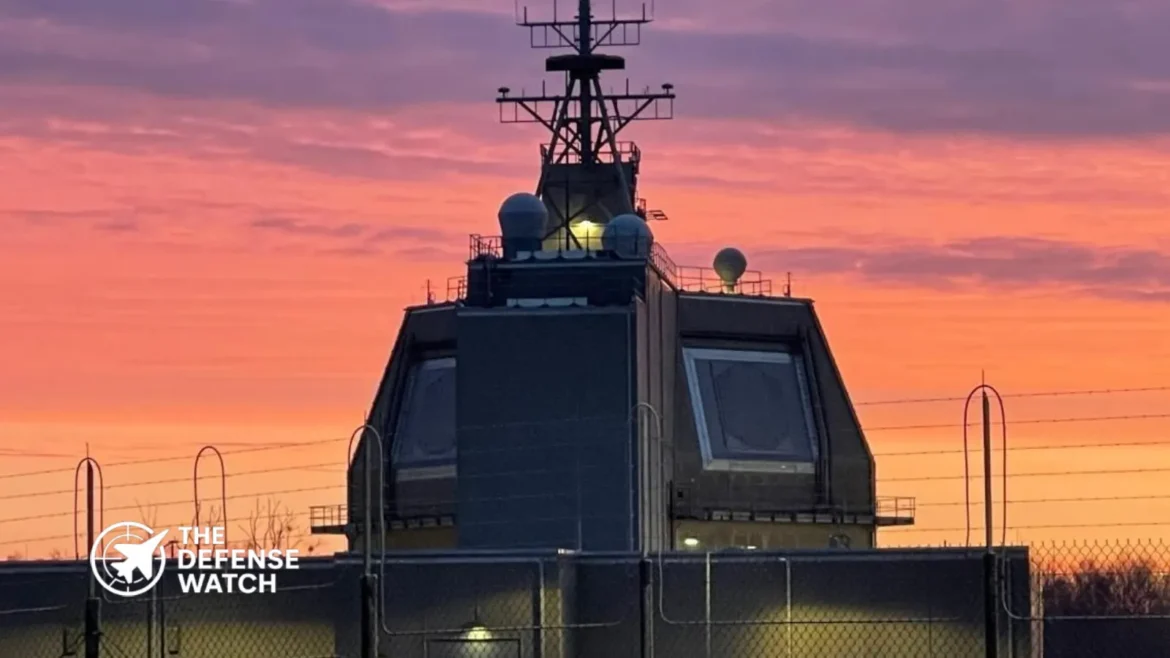
- ► NATO missile defence architecture includes Aegis Ashore sites, advanced radar systems, and US Navy Aegis destroyers.
- ► The decision enhances interoperability, data sharing, and collective deterrence under NATO Article 5 commitments.
- ► UK participation signals deeper alliance cohesion as Europe adapts to evolving ballistic missile and air defence challenges.
UK Joins NATO Ballistic Missile Defence Effort
The UK joins NATO ballistic missile defence effort in a significant move that formally integrates British capabilities into the alliance’s collective missile shield.
(adsbygoogle = window.adsbygoogle || []).push({});The decision positions the United Kingdom more deeply within NATO’s evolving missile defence architecture at a time of heightened concern over long range missile threats across Europe.
The step reinforces NATO’s integrated air and missile defence network, which is designed to detect, track, and intercept ballistic missile attacks against allied territory.
Strengthening NATO’s Missile Shield
NATO’s ballistic missile defence system, developed over more than a decade, is built to counter threats originating outside the Euro Atlantic area. The framework was formally agreed at the 2010 Lisbon Summit and has since expanded through a series of capability upgrades.
Key components of NATO’s missile defence architecture include:
- Aegis Ashore sites in Romania and Poland
- US Navy Aegis equipped destroyers forward deployed to Europe
- Advanced early warning radar systems
- NATO command and control networks
By joining NATO ballistic missile defence more directly, the UK aligns its national capabilities with this broader defensive structure. This integration enhances collective situational awareness and strengthens the alliance’s ability to respond to ballistic missile threats.
The move reflects NATO’s ongoing adaptation to an increasingly complex threat environment.
The Broader Strategic Context
NATO Secretary General Mark Rutte has repeatedly emphasized the need to strengthen integrated air and missile defence across the alliance. Following Russia’s full scale invasion of Ukraine in 2022, European allies accelerated investments in air defence, including systems such as Patriot and SAMP T.
(adsbygoogle = window.adsbygoogle || []).push({});The UK’s decision to join NATO ballistic missile defence should be viewed within this broader modernization trend.
The alliance is moving toward a layered defence model that combines:
- Short range air defence
- Medium and long range interceptors
- Ballistic missile tracking radars
- Space based surveillance
This layered approach reflects lessons learned from recent conflicts, particularly the scale and frequency of missile and drone attacks.
By embedding more fully within NATO’s missile defence network, the UK strengthens both national and allied resilience.
Implications For European Security
The integration of the UK into NATO ballistic missile defence carries both operational and political weight.
Operationally, it improves command and control integration, data sharing, and response coordination across allied forces. Missile defence requires near real time data fusion from multiple sensors. Expanding participation increases the reliability and coverage of that network.
Politically, the move underscores the UK’s continued central role in European security despite its departure from the European Union. London remains one of NATO’s leading military powers and a top defence spender within the alliance.
It also sends a clear signal of unity at a time when NATO is reinforcing deterrence along its eastern flank.
Analysis: A Measured But Significant Step
While this announcement does not represent the deployment of a new standalone British missile shield, it marks a structural shift in how the UK aligns its capabilities within NATO’s ballistic missile defence framework.
Missile defence is not a single system. It is an interconnected network of sensors, interceptors, command systems, and allied contributions.
(adsbygoogle = window.adsbygoogle || []).push({});By joining NATO ballistic missile defence more formally, the UK enhances alliance cohesion and reduces gaps in coverage. In practical terms, this contributes to deterrence by denial, making it harder for adversaries to calculate a successful missile strike against NATO territory.
Given the rapid evolution of missile technologies, including maneuverable reentry vehicles and hypersonic glide systems, NATO’s missile defence architecture will likely continue evolving.
The UK’s integration signals recognition that collective defence in the missile domain requires deeper coordination, not parallel national efforts.
■ KEY FACTS AT A GLANCE- ► Germany confirmed there are no plans for additional F-35 jets beyond its current order.
- ► Berlin ordered 35 F-35A aircraft in 2022 to replace Tornado jets.
- ► The F-35A will support Germany’s NATO nuclear sharing role.
- ► Aircraft will be based at Büchel Air Base with infrastructure upgrades underway.
- ► Germany remains a partner in the FCAS next generation fighter program.
Germany Says No Plans For Additional F-35 Jets
Germany has no plans for additional F-35 jets beyond its existing order, according to a government spokesperson, pushing back on recent media reports that Berlin was considering expanding its fleet.
The clarification follows reporting that suggested Germany might seek more of the U.S.-built stealth fighters. Speaking on February 19, a German government spokesperson said there are currently no plans to procure additional aircraft beyond those already approved.
Germany in 2022 committed to acquiring 35 F-35A aircraft from Lockheed Martin to replace its aging Tornado fleet. The jets are intended primarily for NATO’s nuclear sharing mission, allowing Germany to continue carrying U.S. nuclear weapons stationed in Europe under alliance arrangements.
The F-35A, the conventional takeoff and landing variant of the F-35 Lightning II family, is produced in the United States and operated by several NATO allies.
Background On Germany’s F-35 Decision
Berlin’s initial F-35 procurement marked a significant shift in German defense policy. The decision came shortly after Russia’s invasion of Ukraine in 2022, when Chancellor Olaf Scholz announced a major defense spending increase and a 100 billion euro special fund to modernize the armed forces.
At the time, Germany selected the F-35A over other options to ensure certification for the nuclear sharing role. The aircraft’s stealth characteristics and interoperability within NATO were central to the decision.
The German Air Force, or Luftwaffe, plans to base the F-35A fleet at Büchel Air Base, where infrastructure upgrades are underway to support the new aircraft.
Government Pushes Back On Expansion Reports
Recent reports suggested Berlin could consider expanding its F-35 fleet, potentially deepening defense ties with Washington. However, the government’s statement makes clear that no such expansion is currently under consideration.
The clarification comes as Germany also participates in the Future Combat Air System, or FCAS, a joint next generation fighter program with France and Spain. That effort, led by companies including Airbus and Dassault Aviation, aims to field a new combat aircraft in the 2040 timeframe.
Balancing near term capability needs with long term European industrial goals remains a key issue for Berlin. Expanding the F-35 fleet could raise political and industrial questions about Europe’s strategic autonomy and domestic aerospace priorities.
Strategic And Industrial Implications
For now, Germany’s position signals continuity rather than expansion. The existing 35 aircraft order already represents a major investment in U.S. technology and long term sustainment commitments.
Any future decision to purchase additional F-35 jets would likely require parliamentary approval and alignment with broader defense planning cycles. It would also intersect with NATO force planning targets and Germany’s evolving defense budget trajectory.
The government’s statement underscores that, despite speculation, Berlin is maintaining its current procurement plan.
■ KEY FACTS AT A GLANCE- ► Trump was briefed on multiple U.S. military options in Iran, according to The Wall Street Journal.
- ► One option reportedly targets senior political and military leaders in an effort to destabilize the regime.
- ► A limited strike alternative focuses on Iran’s nuclear and ballistic missile programs.
- ► The U.S. is assembling its largest regional force posture since the 2003 Iraq invasion.
- ► The buildup signals heightened deterrence and contingency planning across the Middle East.
Trump Briefed On U.S. Military Options In Iran, WSJ Reports
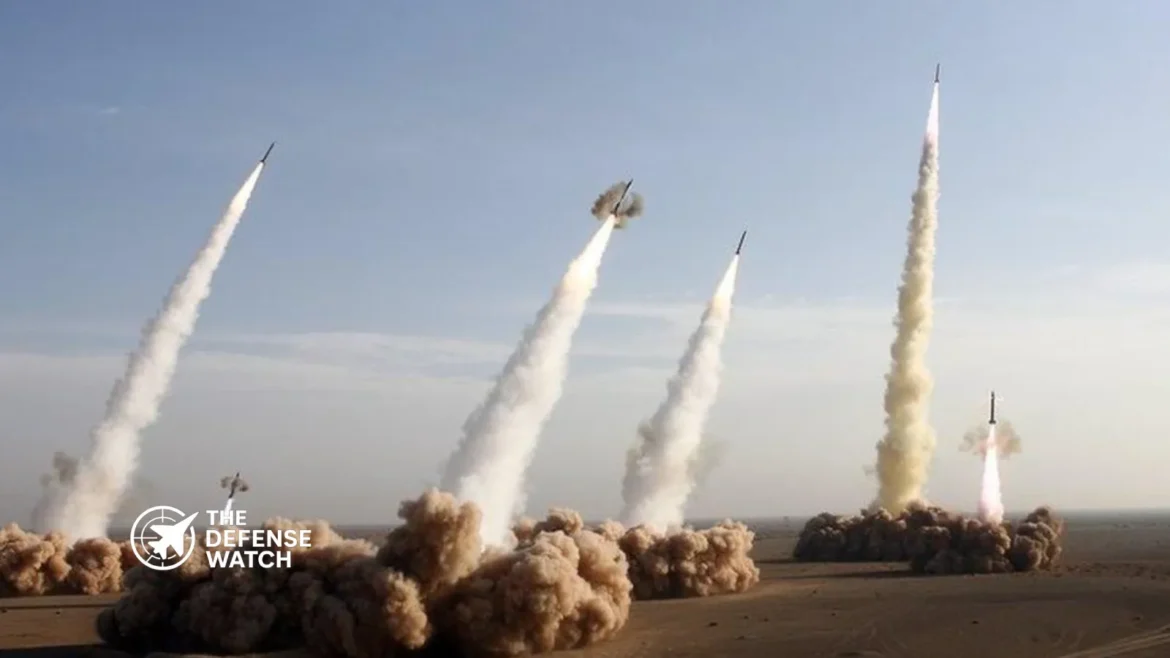
U.S. military options in Iran were presented to former President Donald Trump in a detailed briefing outlining potential operations designed to inflict maximum damage on Tehran’s leadership and regional network, according to a report by The Wall Street Journal.
The report states that the proposed courses of action range from a broad campaign aimed at eliminating key political and military leaders to a more limited strike package focused on Iran’s nuclear and ballistic missile infrastructure.
At the same time, the United States is concentrating what the Journal describes as its largest military force in the Middle East since the 2003 invasion of Iraq, signaling a significant shift in regional posture.
A Spectrum Of Strike Options
According to the Journal, the most expansive proposal involves a coordinated campaign to eliminate numerous Iranian political and military leaders. Such a course of action would likely resemble a decapitation strategy designed to disrupt command and control structures.
Historically, similar approaches have been used in counterterrorism campaigns against non state actors. Applying that model to a sovereign state such as Iran would represent a far more complex and escalatory step.
A more limited option focuses on infrastructure linked to Iran’s nuclear enrichment and ballistic missile programs. That could include strikes on hardened facilities, missile production sites, and command nodes tied to the Islamic Revolutionary Guard Corps.
The distinction between the two paths is significant. One is regime focused. The other is capability focused. Each carries different operational demands and escalation risks.
Largest U.S. Force Concentration Since 2003
The reported buildup marks the largest U.S. military concentration in the Middle East since the Iraq invasion in 2003, a campaign launched under President George W. Bush.
While specific force elements were not detailed in the report, such deployments typically involve carrier strike groups, long range bomber task forces, air defense assets, and additional ground based support units.
In recent years, U.S. Central Command has maintained a rotational presence across Gulf states, along with air and naval patrols intended to deter Iranian activity. Expanding that posture to 2003 levels suggests a contingency planning environment rather than routine deterrence.
From a strategic standpoint, force concentration serves two purposes. It enhances operational readiness. It also sends a political signal to both adversaries and regional partners.
Strategic And Regional Implications
Any execution of the outlined U.S. military options in Iran would have immediate regional consequences.
Iran maintains a network of allied groups and proxy forces across Iraq, Syria, Lebanon, and Yemen. A broad strike campaign could trigger retaliatory actions against U.S. forces or partner nations.
A limited strike on nuclear and missile facilities might aim to constrain escalation. However, even a targeted operation could prompt asymmetric responses, including cyber operations or missile launches.
For Gulf allies, the expanded U.S. presence may provide reassurance. At the same time, regional capitals are likely assessing the risk of becoming staging grounds or potential targets.
Energy markets would also be sensitive to any disruption in the Strait of Hormuz, a critical maritime chokepoint for global oil shipments.
Military Planning Versus Political Decision
It is important to distinguish between military planning and policy execution.
The Pentagon routinely develops a range of contingency options for potential crises. Briefing national leadership on those options does not equate to a decision to act.
The Journal report indicates that the courses of action are designed to maximize pressure on the Iranian regime. Whether such plans move beyond the planning stage depends on political direction, alliance coordination, and evolving regional dynamics.
In the current environment, the scale of U.S. deployments suggests that deterrence and preparedness are central objectives. Still, the presence of detailed strike options underscores how rapidly tensions could escalate if diplomatic channels fail.
■ KEY FACTS AT A GLANCE- ► Germany is weighing an additional order of F-35 Lightning II fighter jets, according to Bloomberg.
- ► Berlin previously ordered 35 F-35A aircraft to replace Tornado jets in the NATO nuclear sharing role.
- ► The F-35 is built by Lockheed Martin and is certified for the B61 nuclear mission within NATO.
- ► Germany is a partner in the FCAS program with France and Spain, aimed at delivering a sixth generation fighter.
- ► An expanded F-35 fleet would deepen Germany’s operational integration with NATO allies already flying the platform.
Germany Weighs Additional F-35 Lightning II Order
Germany is weighing an additional order of the F-35 Lightning II, according to a report by Bloomberg, a move that would further anchor Berlin’s airpower modernization to the United States.
(adsbygoogle = window.adsbygoogle || []).push({});The potential expansion of Germany’s F-35 Lightning II fleet comes as the country’s joint next generation fighter project with France faces growing technical and industrial tensions. While no formal decision has been announced, the deliberations signal that Berlin may seek greater near term certainty in its combat aviation roadmap.
Germany previously committed to acquiring 35 F-35A aircraft in 2022 to replace its aging Tornado fleet in the nuclear sharing role within NATO. The aircraft, built by Lockheed Martin, will be operated by the German Air Force, or Luftwaffe, with deliveries expected later this decade.
An additional order would significantly expand Germany’s reliance on the U.S. built fifth generation platform.
Strategic Context Behind The Move
Germany’s initial F-35 procurement marked a major policy shift following Russia’s invasion of Ukraine in 2022. Under Chancellor Olaf Scholz’s Zeitenwende policy, Berlin launched a 100 billion euro special defense fund aimed at rapidly modernizing its armed forces.
The F-35 Lightning II was selected over alternative options due to its certified role in NATO’s nuclear sharing mission and its advanced stealth and sensor fusion capabilities. The platform remains the only fifth generation aircraft currently certified to carry the U.S. B61 nuclear gravity bomb within the alliance framework.

At the same time, Germany remains a core partner in the Future Combat Air System, or FCAS, alongside France and Spain. The program is led industrially by Dassault Aviation and Airbus Defence and Space. FCAS is intended to deliver a sixth generation fighter and a family of connected systems in the 2040 timeframe.
(adsbygoogle = window.adsbygoogle || []).push({});However, the FCAS program has faced recurring disagreements over workshare, intellectual property rights, and system architecture. German consideration of more F-35 Lightning II aircraft may reflect concern over potential schedule delays or capability gaps before FCAS becomes operational.
Industrial And Political Implications
An expanded F-35 Lightning II order would have broad implications for European defense industrial strategy.
France has consistently argued that European nations should prioritize indigenous platforms to preserve strategic autonomy. A larger German F-35 fleet could deepen friction within the FCAS partnership, especially if Berlin is perceived as shifting long term investment away from the European project.
From a military standpoint, however, additional F-35 aircraft would provide the Luftwaffe with enhanced interoperability across NATO. Several European allies, including the United Kingdom, Italy, the Netherlands, Norway, Denmark, Poland, and Finland, already operate or have ordered the F-35.
Interoperability benefits include shared logistics networks, common software baselines, and integrated data link capabilities. For NATO planners, a larger European F-35 footprint strengthens collective airpower integration.
Operational Considerations
The F-35 Lightning II combines low observable design, advanced electronic warfare systems, and sensor fusion that provides pilots with a comprehensive battlespace picture. Germany’s Tornado fleet, first introduced in the 1980s, lacks these survivability and networking features.
Expanding the F-35 fleet could allow Germany to consolidate roles beyond nuclear sharing, potentially including suppression of enemy air defenses, deep strike, and intelligence, surveillance, and reconnaissance missions.
(adsbygoogle = window.adsbygoogle || []).push({});That said, reliance on a U.S. platform raises questions about supply chain sovereignty, software updates, and long term sustainment costs. The F-35 program operates under a global support framework managed in coordination with the U.S. government and Lockheed Martin.
Berlin would need to balance operational effectiveness with industrial and political considerations inside the European Union.
Broader Geopolitical Signal
Germany’s potential move carries weight beyond procurement numbers.
A larger F-35 Lightning II order would underscore Berlin’s strategic alignment with Washington at a time of heightened transatlantic security cooperation. It would also signal confidence in U.S. security guarantees and in NATO’s collective defense framework.
(adsbygoogle = window.adsbygoogle || []).push({});Conversely, it may intensify debate within Europe over defense industrial autonomy versus transatlantic integration. The outcome of Germany’s internal deliberations will likely influence future investment decisions across the continent.
As of now, German officials have not publicly confirmed a final decision. If approved, the order would further cement the F-35 Lightning II as the backbone of European fifth generation airpower well into the 2030s and beyond.
■ KEY FACTS AT A GLANCE- ► Poland has banned Chinese made vehicles from entering military facilities.
- ► The Polish Army cited concerns that onboard sensors could collect sensitive data.
- ► Limited access may be granted if certain vehicle functions are disabled.
- ► Security protocols at military facilities will apply in all approved cases.
- ► Warsaw described the move as a precaution consistent with NATO members and allies.
Poland Bans Chinese Made Vehicles From Military Facilities
Poland bans Chinese made vehicles from military facilities over concerns that onboard sensors could collect sensitive data, according to statements from the Polish Army and government officials.
The restriction applies to Chinese manufactured civilian vehicles seeking access to military bases and other restricted defense sites. Authorities said the decision is precautionary and focused on protecting classified information and operational security.
The Polish Army stated that modern vehicles often contain advanced sensors, cameras, GPS systems, and wireless connectivity modules. Officials warned that such systems could potentially record or transmit sensitive information if not properly controlled.
Warsaw emphasized that the measure is consistent with security practices adopted by NATO members and close allies.
Data Security At The Center Of The Decision
The Polish Army said its primary concern involves data collection capabilities embedded in modern vehicles. Many electric and connected cars rely on multiple cameras, radar systems, microphones, and telematics units to support driver assistance and remote diagnostics.
Defense officials expressed concern that these components could gather imagery or geolocation data from inside military facilities.
While no specific incident was cited publicly, the decision reflects broader European and transatlantic debates about supply chain security and foreign manufactured connected technologies.
Poland is a frontline NATO state bordering Belarus and the Russian exclave of Kaliningrad. It hosts allied forces and serves as a major logistics hub for NATO operations in Eastern Europe.
Given that role, protection of sensitive sites has become a priority within the Ministry of National Defence.
Conditional Access Under Strict Controls
According to the Polish Army, limited access to military facilities may still be granted in certain cases. However, this would require specific vehicle functions to be disabled and additional security procedures to be applied.
Officials did not detail which systems must be deactivated. Such measures could involve disabling cameras, wireless connectivity, or remote access functions before entering restricted zones.
Security personnel would oversee compliance at entry points.
The Polish government described the policy as a preventive step rather than a response to a specific intelligence finding.
Broader NATO Context
Poland’s decision comes amid wider scrutiny of Chinese manufactured technology across NATO countries. Several allies have introduced tighter rules on telecommunications infrastructure, critical infrastructure equipment, and connected systems.
The issue often centers on concerns about data sovereignty and potential remote access risks.
Under NATO security doctrine, member states are responsible for protecting classified information and sensitive facilities. National policies can vary, but alignment on threat perception has increased since Russia’s full scale invasion of Ukraine in 2022.
Poland has significantly expanded its defense posture in recent years. It has increased defense spending, accelerated modernization programs, and strengthened cooperation with the United States and other allies.
Growing Focus On Connected Vehicle Risks
The Polish Army’s move highlights a growing focus on the cybersecurity risks of connected vehicles.
Modern vehicles function as mobile data platforms. They generate large volumes of telemetry data, including location history, video recordings, and system diagnostics. In a military environment, even routine background data collection could expose patterns of movement or infrastructure layouts.
Western security agencies have increasingly warned about risks linked to internet connected devices in sensitive environments.
While Chinese automotive brands have expanded rapidly in European markets, particularly in the electric vehicle segment, Poland’s restriction applies specifically to access to military facilities rather than a nationwide consumer ban.
Strategic Significance For Poland
Poland plays a central role in NATO’s eastern defense architecture. The country hosts rotational US forces, prepositioned equipment, and multinational battlegroups.
Military bases in Poland support logistics flows to Ukraine and allied exercises across the region.
As a result, protection of base perimeters and internal data environments is considered critical.
The Warsaw administration said the decision reflects standard risk mitigation practices.
Officials stressed that the policy is not directed at private consumers or commercial use outside restricted military areas.
Industry And Diplomatic Implications
The move could add to tensions between European governments and Beijing over technology access and trade policy.
European Union institutions have also examined the role of Chinese electric vehicles in the European market, particularly regarding subsidies and market competition.
However, Poland’s measure is framed narrowly around defense security rather than trade policy.
No immediate response from Chinese authorities was reported at the time of publication.
What Comes Next
It remains unclear whether other NATO members will adopt similar restrictions specific to vehicle access at military sites.
Some countries already enforce strict electronic device controls in sensitive areas, including limits on smartphones and personal electronics.
Poland’s decision signals that connected vehicle systems are now part of that broader security conversation.
As modern vehicles integrate more autonomous and networked features, defense planners are increasingly assessing how civilian technologies intersect with military security.
For Poland, the ban on Chinese made vehicles from military facilities represents a preventive step aimed at reducing potential vulnerabilities in an evolving threat environment.