Executive Summary:
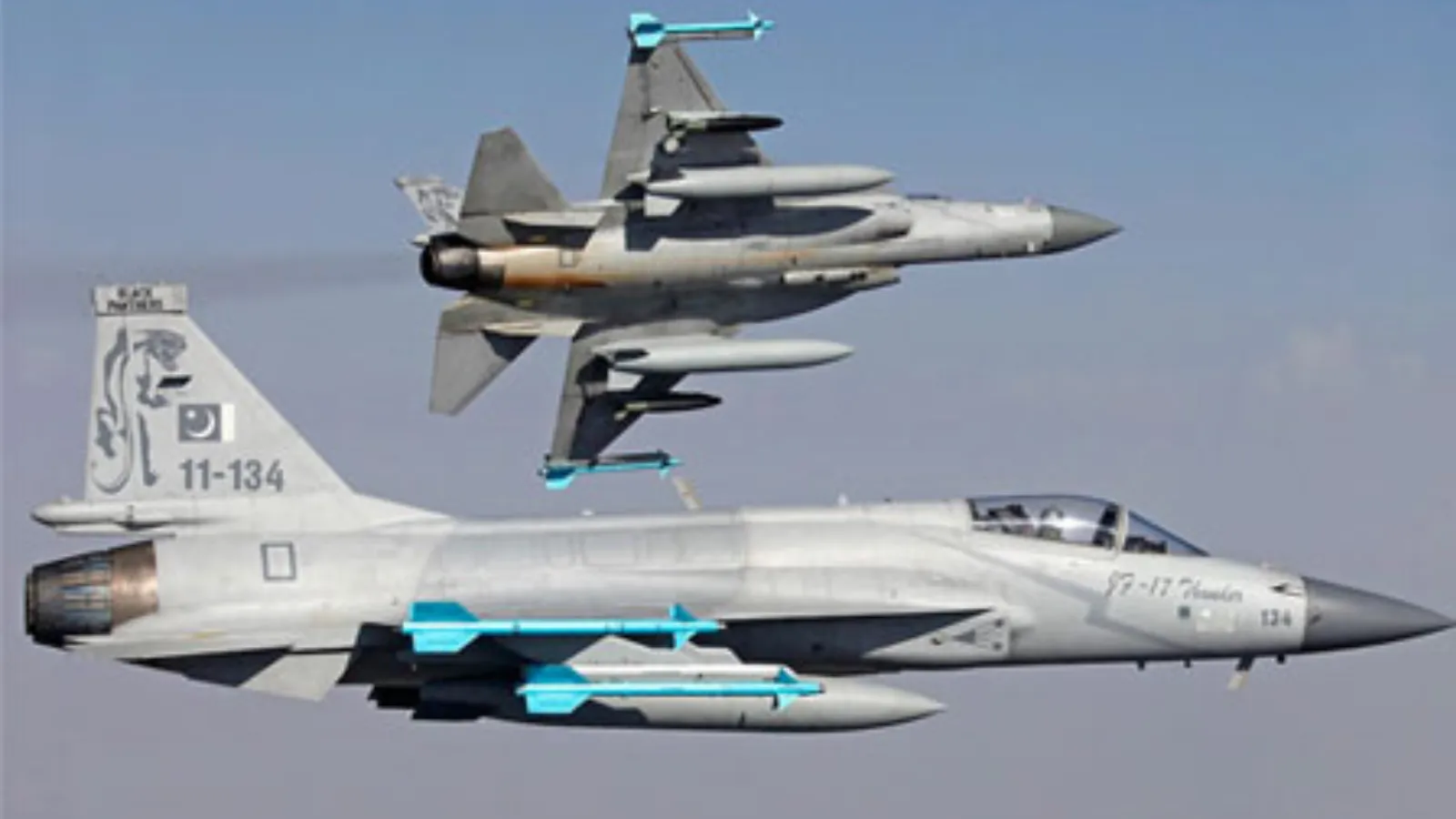
The JF-17 Thunder, co-produced by Pakistan and China, has grown from a Cold-War-era stopgap into a genuine export success story, with Azerbaijan alone signing a $4.6 billion deal for 40 Block 3 jets. Priced at roughly a tenth of a Rafale, the JF-17 is proving that “good enough, cheap, and unrestricted” can out-compete Western jets in the arms bazaar that actually matters — the developing world’s.
A Rafale costs roughly ten times what Pakistan charges for a combat-ready JF-17 Thunder Block 3. That single fact explains why Azerbaijan just signed a $4.6 billion order for 40 of them.
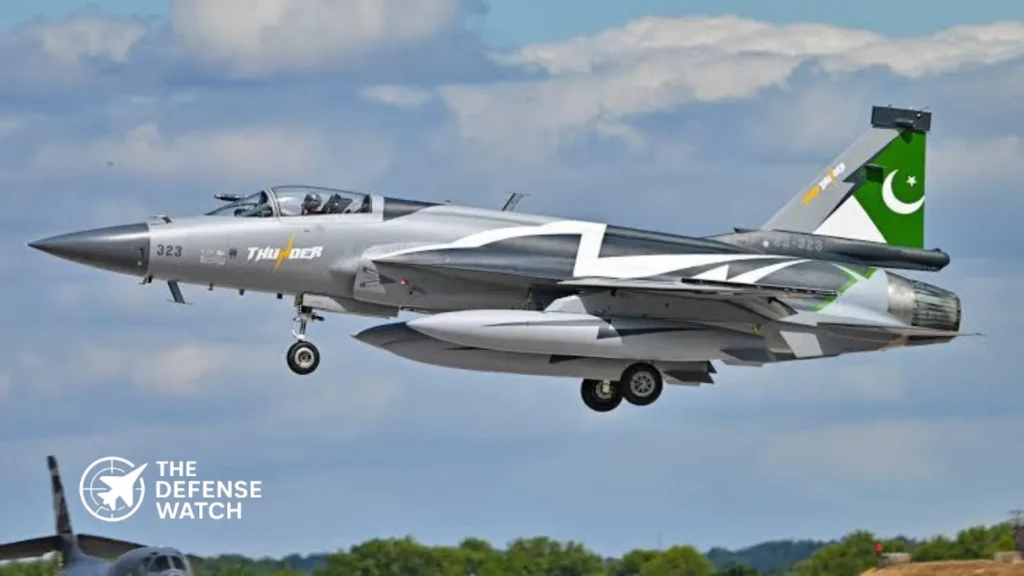
No Western manufacturer can touch that price point on a fourth-generation multirole airframe. The JF-17 was never meant to be the best fighter in the sky — it was built to be the fighter a cash-strapped air force could actually afford, buy without political strings, and keep flying for decades.
That formula is now working better than anyone in Islamabad or Chengdu predicted.
Technical Analysis: The Deep Dive Into The Thunder’s Design
The JF-17 traces back to 1998-99 agreements between Pakistan and China, drawn up after the US Pressler Amendment blocked delivery of 28 already-paid-for F-16s. The first prototype flew in August 2003, and the jet entered Pakistan Air Force service in 2007, becoming fully operational with No. 26 Squadron in 2010.
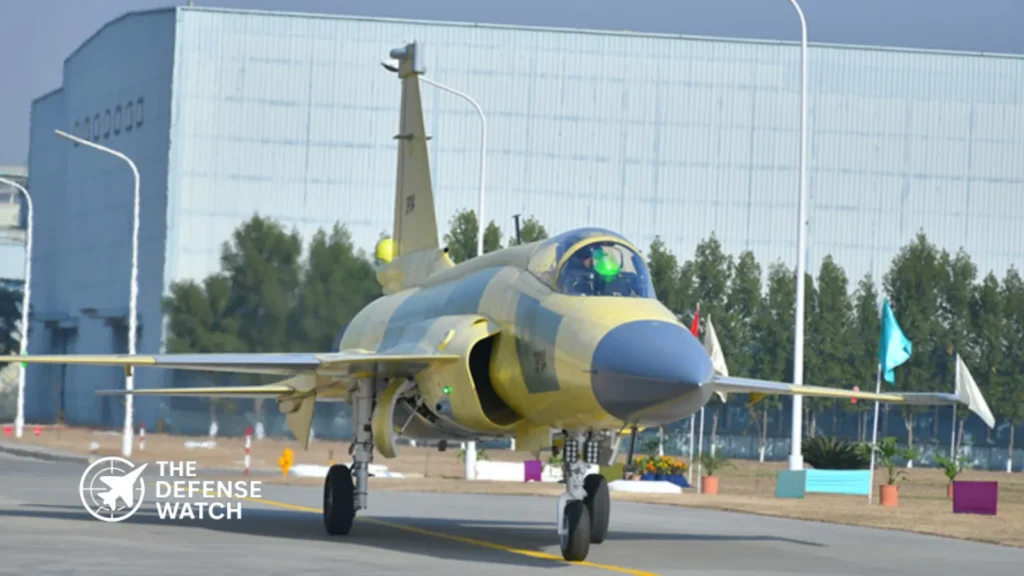
Three production blocks tell the story of steady, deliberate escalation. Block I was the initial 2007 variant with basic avionics and no aerial refueling; Block II arrived in 2013 with refueling capability, improved avionics, and greater payload; Block III added an AESA radar and a modernized cockpit.

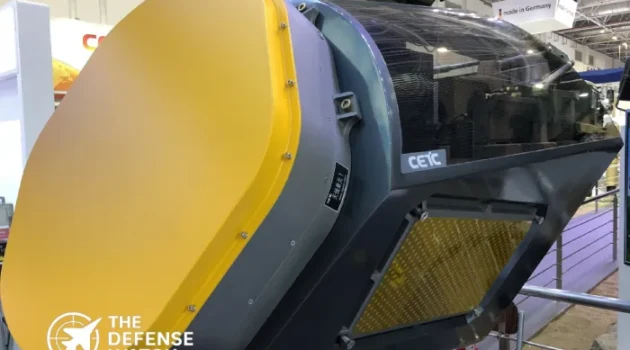
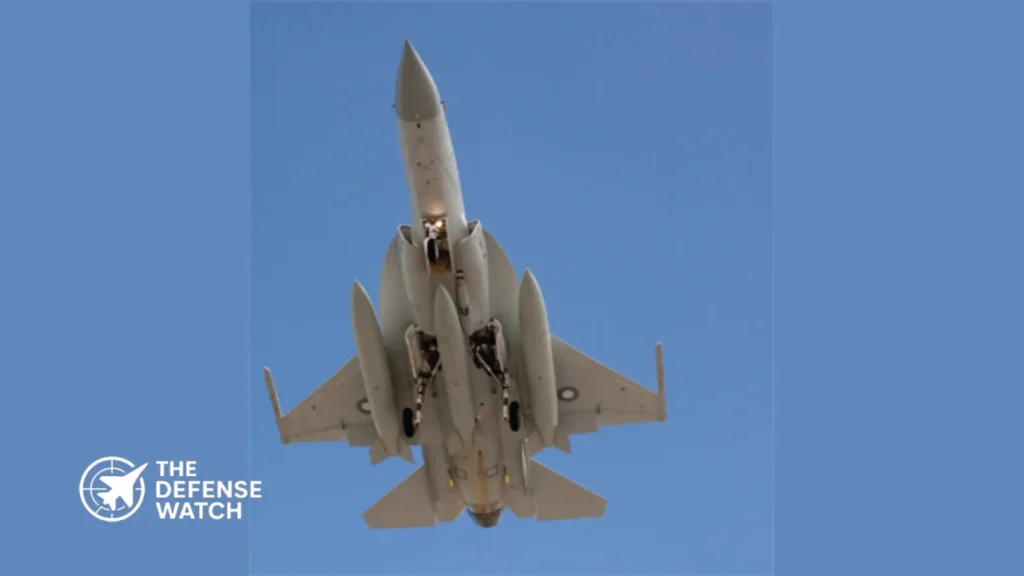
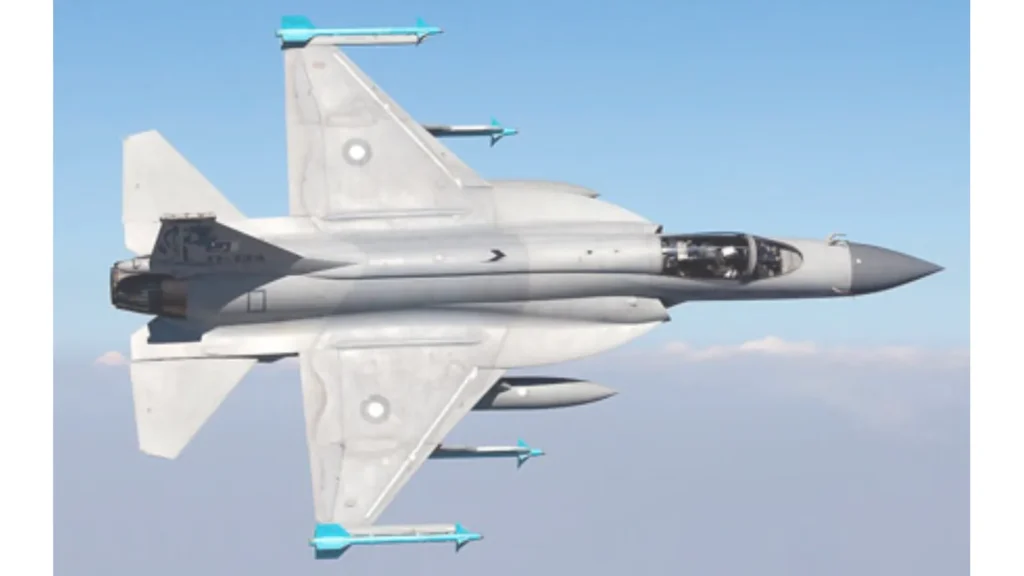
Image : PAC Block III specifically brings the KLJ-7A active electronically scanned array radar, a helmet-mounted display and sight, three-axis fly-by-wire controls, upgraded electronic warfare gear, and infrared search-and-track compatibility. That’s a genuine sensor-fusion cockpit, not a patched-up 1990s jet.
Power comes from a Russian-origin turbofan. The Block III variant runs on the RD-93MA afterburning turbofan, producing about 91 kilonewtons (19,000 lbs) of thrust under full authority digital engine control. That gets the airframe to Mach 1.6, roughly 1,960 km/h.
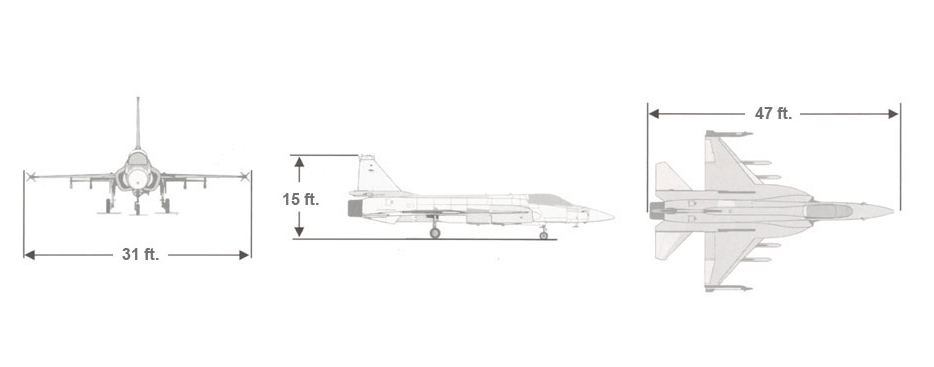
Airframe numbers stay lean by design. The jet measures about 14.3 meters long with a 9.5-meter wingspan, an empty weight near 7,965 kg, and a maximum takeoff weight around 13,500 kg, with a listed service life of roughly 4,000 flight hours or 25 years. Lightweight airframe, single engine, minimal parts inventory — every design choice traces back to keeping the sustainment bill low for the buyer.

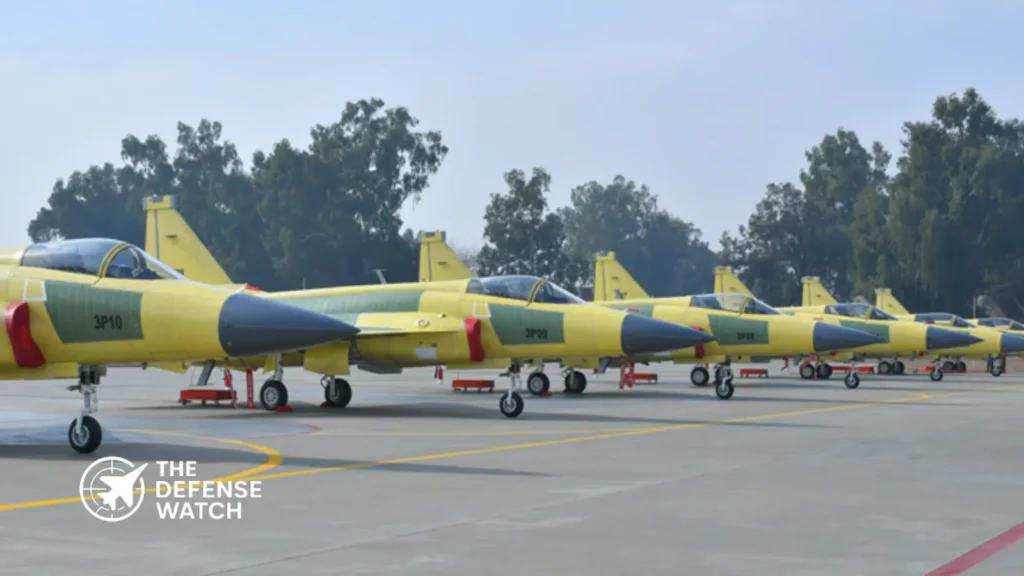
Image : PAC Pricing is where the jet actually wins wars — the budget kind. Early Block I units cost around $15 million, Block II pushed closer to $25 million with its added capability, and Block III — now the primary export configuration — is being quoted between $25 million and $50 million depending on package. Pakistan’s Kamra production facility currently runs an annual output of 20-25 aircraft, enough to cover both PAF needs and the growing export backlog.
JF-17 Thunder: Variant-By-Variant Snapshot
Variant Service Entry Key Upgrade Approx. Unit Cost Block I 2007 Baseline avionics, no A2A refueling ~$15M Block II 2013 A2A refueling, composite structure, EW suite ~$25M JF-17B 2017 Twin-seat trainer/combat variant Comparable to Block II Block III 2019 onward KLJ-7A AESA radar, HMD/S, fly-by-wire $25M–$50M The Export Boom: From Baku To Mogadishu
Numbers tell the adoption story better than any press release. By October 2025, 177 JF-17s had rolled off the line, a meaningful share of them Block 3 units built for export customers rather than the PAF.
Azerbaijan is the headline deal. Baku’s acquisition is Pakistan’s largest-ever defense export contract, valued at $4.6 billion for 40 aircraft, building on an earlier 2024 agreement worth $1.6 billion and bundling training, munitions, and full logistics support. The first three jets landed in Baku in October 2025, a geopolitical marker as Azerbaijan modernizes its fleet amid persistent tension with Armenia.
Image : PAC Somalia is the newest name on the list. In February 2026, reports emerged that Somalia is negotiating for up to 24 Block III jets in a package worth roughly $900 million — a deal that would mark the country’s largest defense investment since 1991 and rebuild an air force that currently has no fighter aircraft at all, only light utility planes and helicopters.
Islamabad isn’t stopping at the airframe sale. Pakistan is now pitching the JF-17 in active talks with 13 countries at once, and industrial plans on the table include additional assembly lines, a faster production tempo, and deeper Chinese involvement in component manufacturing. This isn’t a one-off sale — it’s Pakistan building an aerospace export industry around a single airframe family, the same way Sweden built one around the Gripen.
The Insight: Why JF-17 Doctrine Looks Like A Rush-Strategy In Competitive Shooters
Strip away the hardware and the JF-17 program is executing a strategy competitive gamers would recognize instantly: win on tempo and economy, not on raw individual power.
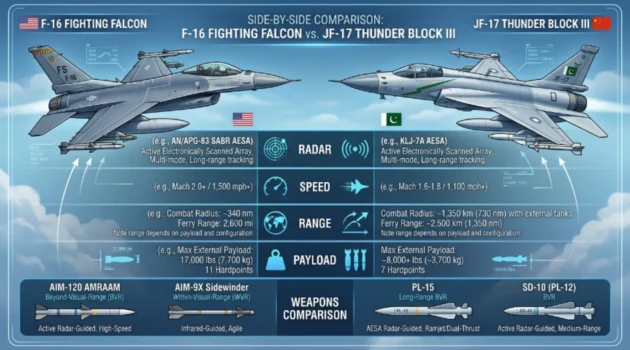
In games like Counter-Strike or Call of Duty, a team with a cheaper loadout that buys more often, contests more angles, and never lets the round economy stall will consistently out-tempo an opponent sitting on a handful of maxed-out weapons. The JF-17 is that strategy in airframe form — Pakistan isn’t trying to out-spec the F-35 one-for-one, it’s trying to field three or four jets, sensors, and pilots for the sustainment cost of one exquisite Western platform.
Image : PAC That’s also the logic behind “econ rounds” in esports: sometimes the correct play isn’t the best gun, it’s the gun you can afford to lose without losing the game. Somalia and Azerbaijan aren’t buying the most capable jet on the market — they’re buying the jet whose loss, in combat or in the balance sheet, doesn’t end their air force.
The JF-17 doesn’t have to beat an F-16 in a dogfight. It has to be affordable enough that a country can field a real squadron instead of a symbolic one — and networked well enough that numbers start doing the work individual capability used to do.”
Conclusion: The Real Threat Isn’t The Jet, It’s The Price Tag
The JF-17 Thunder was born out of an arms embargo and grew into Pakistan’s most consequential defense export product. Its technology is respectable, not revolutionary — the real disruption is economic.
Image : PAC Every Azerbaijan-style deal signed at a tenth of a Rafale’s price puts pressure on Dassault, Lockheed, and Saab to justify their margins to budget-constrained air forces from Africa to the Caucasus. In a market where most buyers are counting dollars per airframe rather than chasing absolute stealth or range, “cheap, capable, and unrestricted” is turning out to be a formula the West doesn’t have a ready answer for.
Frequently Asked Questions
How much does a JF-17 Thunder cost?Early Block I units ran about $15 million, Block II rose to roughly $25 million, and the current Block III export configuration is quoted between $25 million and $50 million depending on the support package.
Who makes the JF-17 Thunder?It’s a joint program between Pakistan Aeronautical Complex (PAC) and China’s Chengdu Aircraft Corporation (CAC), assembled at PAC’s Kamra facility.
Which countries operate or have ordered the JF-17?Pakistan is the primary operator. Azerbaijan has ordered 40 Block 3 jets in a $4.6 billion deal, Myanmar ordered 16 Block 2 aircraft for $560 million in 2015, and Somalia is in negotiations for up to 24 Block III jets worth roughly $900 million. Nigeria has also acquired the type.
What radar does the JF-17 Block III use?The Block III carries the KLJ-7A active electronically scanned array (AESA) radar, giving it a genuine sensor-fusion edge over earlier mechanically-scanned Block I/II variants.

(adsbygoogle = window.adsbygoogle || []).push({});Executive Summary:
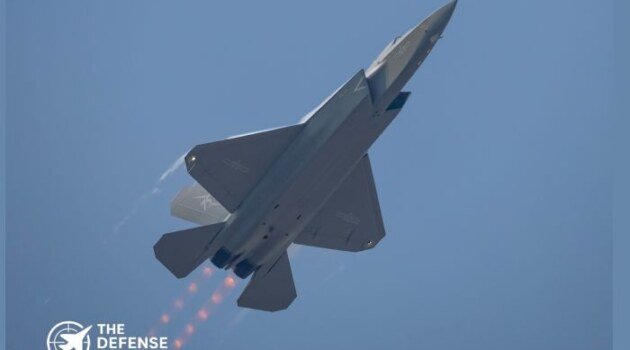
Pakistan is poised to become the first foreign customer of China’s J-35 stealth fighter, according to multiple defense reports and recent government statements. The move would provide the Pakistan Air Force with access to fifth-generation combat aircraft while highlighting China’s growing role as an exporter of advanced military aviation technology.
Pakistan J-35 Stealth Fighter Program Signals Major Air Power Upgrade
Pakistan’s reported acquisition of the J-35 stealth fighter represents one of the most significant military aviation developments in South Asia in recent years.
Multiple defense publications and regional media reports indicate that Islamabad is moving forward with plans to acquire up to 40 Chinese-built J-35 fighter aircraft, potentially making Pakistan the first overseas operator of China’s latest fifth-generation stealth platform. Recent statements linked to Pakistani government channels have also referenced the proposed transfer of J-35 fighters alongside other advanced Chinese defense systems.
While detailed contract terms and delivery schedules have not been publicly disclosed by either Beijing or Islamabad, the growing volume of official and semi-official reporting suggests that discussions have progressed beyond early speculation.
(adsbygoogle = window.adsbygoogle || []).push({});What Is The J-35 Stealth Fighter?
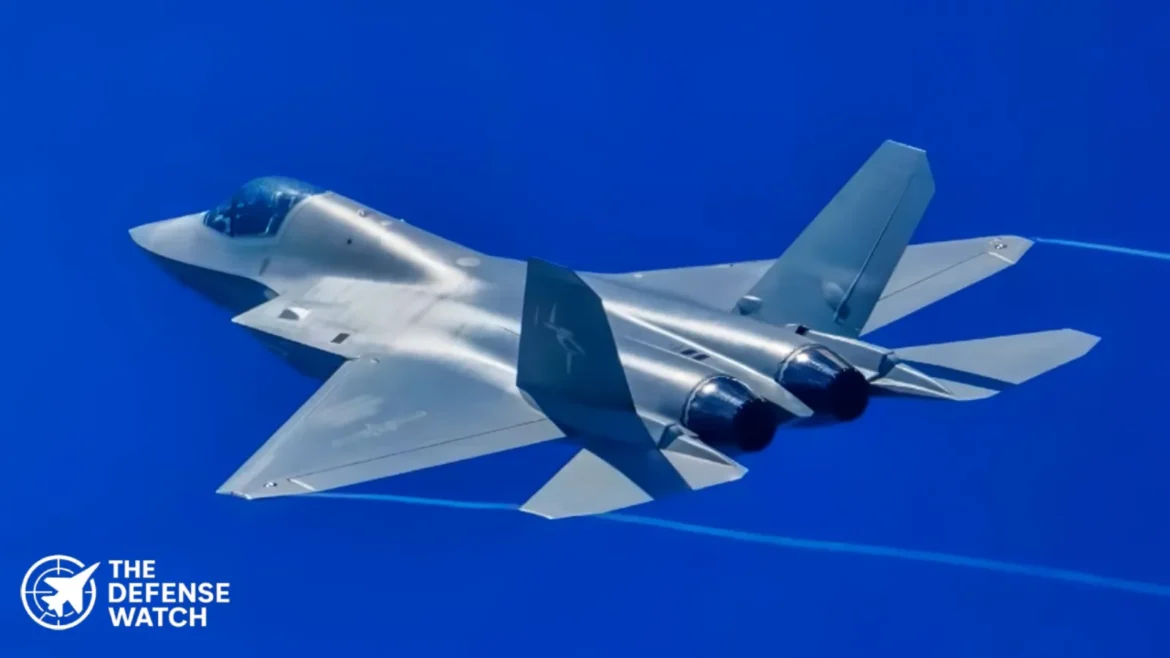
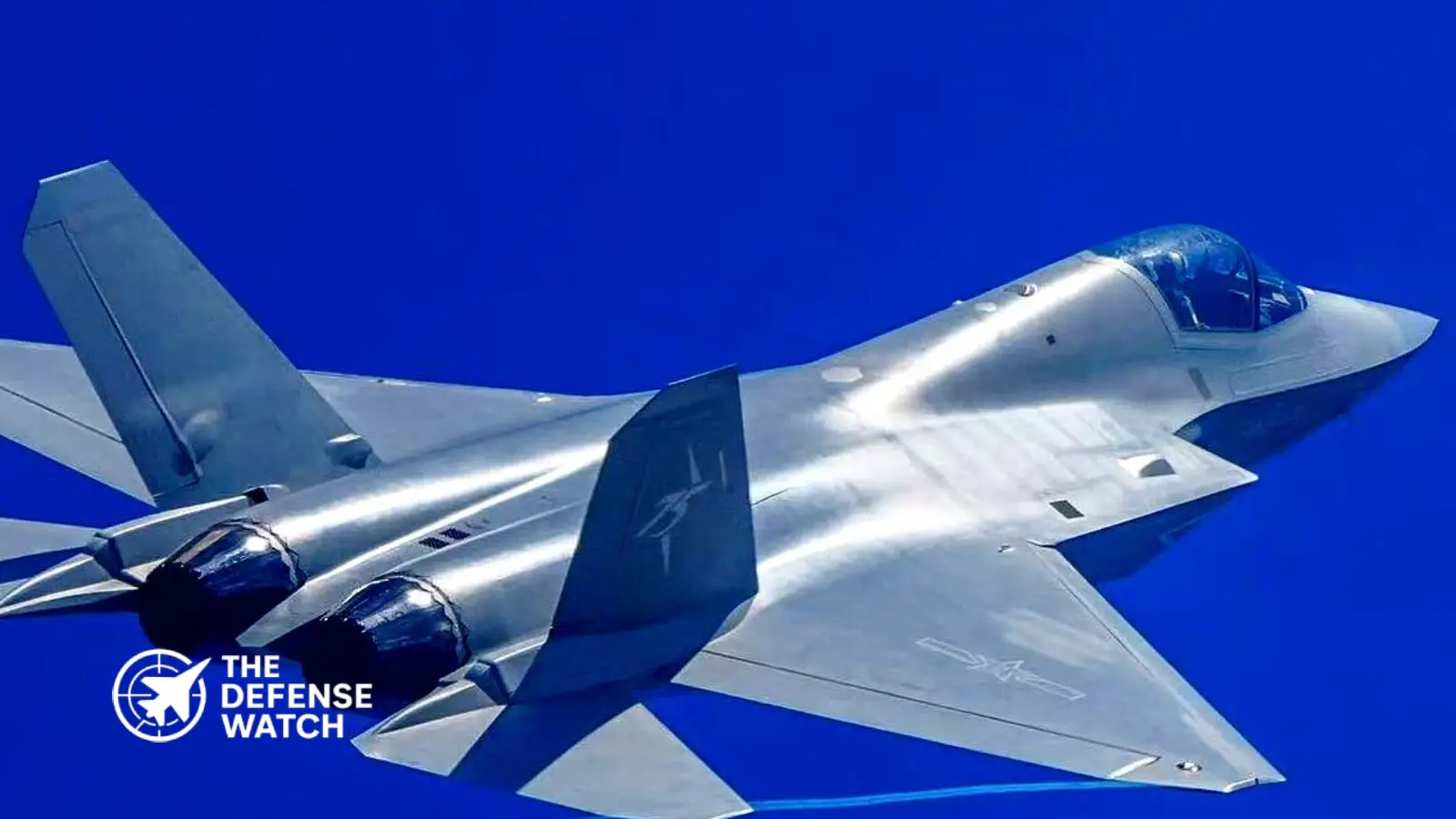
The J-35 is a twin-engine, fifth-generation multirole combat aircraft developed by China’s Shenyang Aircraft Corporation.
Designed with low-observable characteristics, internal weapons bays, advanced sensors, and networked combat capabilities, the aircraft is intended to perform both air superiority and
strike missions. The platform is widely viewed as China’s second operational stealth fighter family after the J-20.
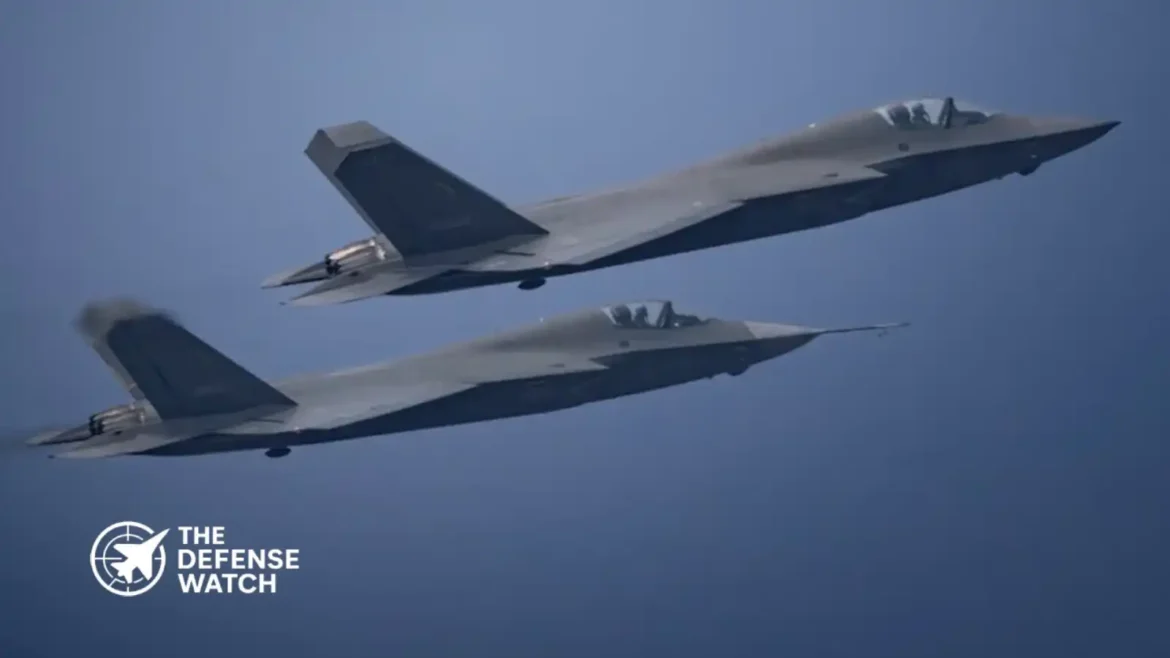
Recent footage aired by Chinese state media showed what analysts identified as the export-oriented J-35AE variant carrying Aviation Industry Corporation of China (AVIC) markings rather than People’s Liberation Army Air Force insignia. Defense analysts interpreted the appearance as a signal that Beijing is actively preparing the aircraft for foreign customers.
The emergence of the J-35AE is particularly noteworthy because it demonstrates China’s intention to compete in the global market for advanced combat aircraft, a sector traditionally dominated by the United States and, to a lesser extent, European manufacturers.
(adsbygoogle = window.adsbygoogle || []).push({});Why Pakistan Matters As The First Export Customer
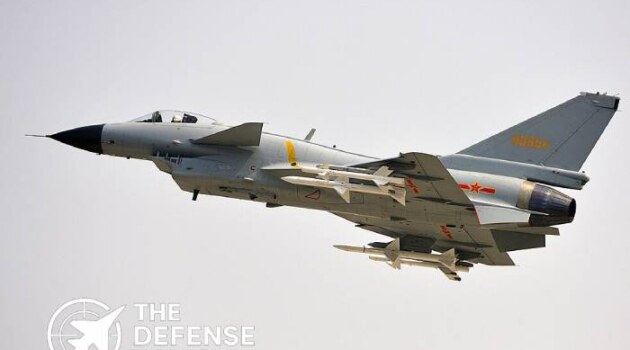
Pakistan has long been China’s most important defense partner and already operates several major Chinese-built systems, including the JF-17 Thunder and J-10CE fighter aircraft.
The reported J-35 acquisition would represent the next phase of that partnership. From an operational perspective, the aircraft would provide the Pakistan Air Force with access to stealth capabilities that have not previously existed within its inventory.
Becoming the first foreign operator is also strategically significant for China.
Defense exports serve as both an economic and geopolitical tool. Successfully delivering a fifth-generation fighter to an overseas customer would demonstrate confidence in China’s aerospace industry and could help open additional export opportunities across Asia, the Middle East, and Africa.
This aspect of the deal may ultimately prove as important as the aircraft itself.
(adsbygoogle = window.adsbygoogle || []).push({});Regional Implications For South Asia
The potential introduction of the Pakistan J-35 stealth fighter would inevitably draw attention across South Asia.
India continues to modernize its fighter fleet through a combination of imported and indigenous programs, including the Rafale and the Advanced Medium Combat Aircraft (AMCA) project. The arrival of a fifth-generation Chinese-built fighter in Pakistan would add a new dimension to the region’s evolving air power balance.
However, it is important to separate confirmed facts from speculation.
Although reports have referenced possible aircraft numbers and delivery timelines, neither China nor Pakistan has publicly released a comprehensive acquisition roadmap. Some earlier claims regarding deliveries were later challenged due to a lack of official evidence, highlighting the need for caution when assessing timelines and operational readiness.
China’s Growing Defense Export Ambitions
The J-35 program also reflects a broader trend within China’s defense industry.
Over the past decade, Beijing has steadily expanded exports of military aircraft, drones, missile systems, and air defense platforms. The reported J-35 export effort represents the highest-profile example yet of China’s attempt to enter the elite market for stealth combat aircraft.
(adsbygoogle = window.adsbygoogle || []).push({});If Pakistan formally receives the aircraft, China would achieve a milestone that few nations have reached: exporting an operational fifth-generation fighter to a foreign military customer.
For global defense markets, that development could reshape future competition in advanced military aviation.
Outlook
Although questions remain regarding contract details, financing, production schedules, and delivery timelines, the available reporting points toward a significant expansion of China-Pakistan defense cooperation centered on the J-35 stealth fighter.
Should the acquisition proceed as reported, Pakistan would become the first foreign customer for China’s fifth-generation fighter program, while Beijing would secure a landmark export success for one of its most advanced aerospace platforms.
The coming months will likely provide greater clarity on procurement milestones, training arrangements, and the timeline for the aircraft’s eventual entry into Pakistan Air Force service.

Executive Summary:
Pakistan’s planned acquisition of China’s J-35AE stealth fighter marks a major shift in regional airpower dynamics. Analysts warn the platform could compress decision timelines in a crisis with India, increasing escalation risks.
The Pakistan J-35AE stealth fighter program is emerging as a pivotal development in South Asia’s evolving military balance, with potential implications for nuclear stability between Pakistan and India. As Islamabad moves toward acquiring China’s export-oriented fifth-generation fighter, defense analysts are raising concerns about how advanced stealth capabilities could alter crisis dynamics in a region already marked by high tensions.
Recent reporting highlights that the aircraft’s introduction may not only enhance Pakistan’s air combat capabilities but also increase the speed and ambiguity of military engagements, factors closely linked to escalation risks in nuclear-armed rivalries.
China’s J-35AE: A Fifth-Generation Export Platform
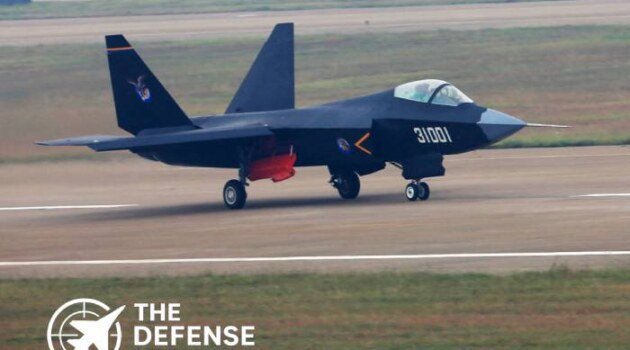
The J-35AE is widely understood to be the export variant of China’s FC-31 stealth fighter, developed for international customers seeking fifth-generation capabilities without access to Western platforms like the F-35.
Key features expected in the Pakistan J-35AE stealth fighter include:
- Low observable stealth design for reduced radar signature
- Advanced avionics and sensor fusion
- Beyond-visual-range (BVR) air-to-air combat capability
- Network-centric warfare integration
While official specifications remain limited, defense analysts assess that the aircraft is designed to compete with modern Western and Russian fighters in contested environments.
For Pakistan, the platform represents a potential leap beyond its current fleet, which includes F-16s and JF-17 variants.
Strategic Implications For South Asia
The introduction of the Pakistan J-35AE stealth fighter could significantly impact the regional balance of power, particularly in relation to India’s air force modernization efforts.
India is currently advancing multiple programs, including:
- Rafale multirole fighters
- Indigenous Advanced Medium Combat Aircraft (AMCA) development
- Upgrades to Su-30MKI fleet
The addition of a stealth fighter to Pakistan’s inventory may narrow qualitative gaps in certain operational scenarios, particularly in contested airspace where radar evasion is critical.
More importantly, stealth platforms can complicate early warning systems. Reduced detection times can lead to compressed decision-making windows during crises, increasing the likelihood of miscalculation.
Nuclear Escalation Risks And Crisis Stability
One of the most significant concerns tied to the Pakistan J-35AE stealth fighter is its potential impact on nuclear escalation dynamics.
South Asia operates under a fragile deterrence framework, where both India and Pakistan maintain nuclear arsenals and delivery systems. Stability often depends on:
- Clear signaling
- Predictable force postures
- Sufficient warning time
Stealth aircraft challenge these assumptions by introducing ambiguity. In a crisis, the inability to detect or track incoming aircraft could lead to worst-case scenario planning.
Analysts note several escalation risks:
- Misinterpretation of conventional strikes as nuclear delivery attempts
- Reduced confidence in air defense systems
- Pressure for rapid retaliation
These dynamics could shorten the decision cycle for political and military leaders, increasing the chance of escalation beyond conventional conflict.
Operational Advantages And Limitations
From an operational standpoint, the Pakistan J-35AE stealth fighter would offer clear advantages:
- Enhanced survivability in contested airspace
- Improved strike capability against high-value targets
- Greater flexibility in offensive and defensive missions
However, several limitations remain:
- Integration challenges with existing command and control systems
- Training and maintenance requirements for advanced stealth platforms
- Dependence on Chinese logistics and support infrastructure
Additionally, stealth effectiveness depends on tactics, electronic warfare support, and pilot proficiency, not just aircraft design.
China’s Expanding Defense Exports Strategy
The J-35AE also reflects China’s broader push to expand its presence in the global defense market. By offering a fifth-generation fighter for export, Beijing is positioning itself as an alternative to Western suppliers.
Pakistan is a key partner in this strategy, with longstanding cooperation in:
- Joint fighter development (JF-17 program)
- Air defense systems
- Military technology transfer
The Pakistan J-35AE stealth fighter deal would deepen this relationship and reinforce China’s role as Islamabad’s primary defense partner.
Regional And Global Reactions
While official responses remain limited, the development is likely to draw attention from:
- India, which may accelerate its own stealth fighter programs
- The United States, given its strategic interests in the Indo-Pacific
- Regional actors monitoring shifts in military balance
The introduction of stealth technology into South Asia’s already complex security environment underscores the need for confidence-building measures and crisis management mechanisms.
Analysis: A Shift In Airpower And Deterrence
At its core, the Pakistan J-35AE stealth fighter program represents more than a procurement decision. It signals a shift toward next-generation warfare capabilities in a region where technological parity has often influenced strategic stability.
The key issue is not just capability, but perception. In nuclear-armed rivalries, uncertainty can be as destabilizing as actual military imbalance.
If stealth platforms reduce transparency in military operations, they may weaken existing deterrence frameworks that rely on visibility and predictability.
This raises broader questions:
- Can existing confidence-building measures adapt to stealth-era warfare?
- Will both sides invest in counter-stealth technologies?
- How will crisis communication evolve under reduced situational awareness?
These factors will shape the long-term impact of the Pakistan J-35AE stealth fighter on regional security.
Conclusion
The planned introduction of the Pakistan J-35AE stealth fighter marks a significant milestone in South Asia’s military evolution. While the platform promises enhanced operational capability for Pakistan, it also introduces new complexities into an already sensitive strategic environment.
As both Pakistan and India continue to modernize their forces, the balance between deterrence and escalation will depend increasingly on how advanced technologies are integrated into doctrine, communication, and crisis management frameworks.
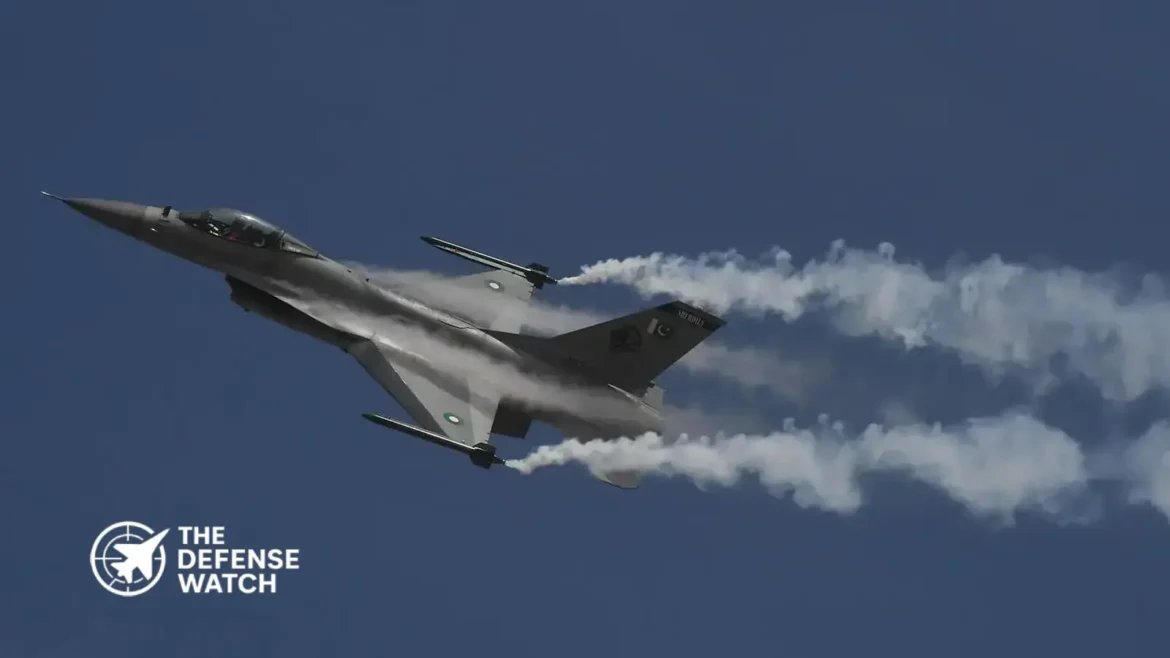
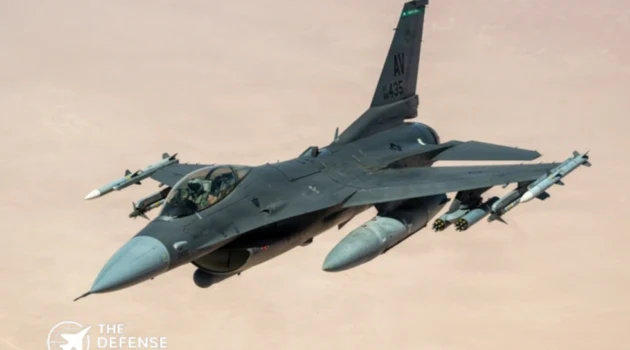
Executive Summary: The United States has authorized a comprehensive dual-track support and upgrade framework for Pakistan’s F-16 fleet, totaling approximately $1.17 billion. The package focuses on long-term radar sustainment and the integration of Link-16 tactical data links to ensure operational safety and regional interoperability through 2040.
Technical Modernization Overview
The modernization effort is divided into two distinct Foreign Military Sales (FMS) segments. The first, a $488 million contract awarded to Northrop Grumman, provides indefinite-delivery/indefinite-quantity (IDIQ) engineering and technical support for the AN/APG-66 and AN/APG-68 radar sets. This ensures the reliability of the fleet’s primary fire-control sensors.
The second phase, valued at $686 million, introduces advanced digital capabilities, most notably the Link-16 tactical data link system. This upgrade allows for secure, jam-resistant communication and real-time data sharing between aircraft and command centers, a critical requirement for modern multi-domain operations.
Comparative Capabilities: Legacy vs. Modernized Fleet
Feature Legacy F-16 (Block 15/MLU) Modernized F-16 (Post-Upgrade) Key Technology Mechanical Radar / Voice-only Link-16 / AN/APG-68(V)9 Support Range (Detection) ~40-60 nmi (Standard) Enhanced signal processing and MTBF Status Approaching End-of-Life Validated for service through 2040 Payload Interoperability Analog/Basic Digital Advanced precision-guided munitions (PGM) Precision Avionics and Secure Communications
The $686 million package notified to Congress by the Defense Security Cooperation Agency (DSCA) includes a robust suite of hardware and software enhancements:
- Tactical Data Exchange: Procurement of 92 Link-16 terminals to facilitate “silent” situational awareness.
- Cryptographic Security: Integration of KY-58M and KIV-78 cryptographic modules for secure, NSA-certified voice and data transmissions.
- Precision Navigation: Upgraded embedded Global Positioning Systems (GPS) and Inertial Navigation Systems (INS).
- Flight Safety: Structural and software modifications to the Operational Flight Program (OFP) to mitigate fatigue-related safety concerns.
Strategic Context and Regional Balance
While the upgrades significantly enhance the Pakistan Air Force (PAF) capability, the DSCA stated that the sale “will not alter the basic military balance in the region.” Instead, the focus is squarely on counterterrorism (CT) operations and maintaining a baseline of interoperability with US and coalition forces.
The timing of the authorization is critical. As regional threats evolve, the ability of the PAF to maintain a high mission-capable (MC) rate for its premier fighter platform is a pillar of Pakistan’s defensive posture. By refurbishing the Block-52 and Mid-Life Upgrade (MLU) airframes, Pakistan effectively bridges the gap until its next-generation platforms reach full operational maturity.
Logistics and Implementation
The primary contractors for these efforts are Lockheed Martin (Fort Worth, TX) and Northrop Grumman (Linthicum Heights, MD). Notably, the US government has confirmed that the implementation of these packages will not require the permanent stationing of additional US personnel in Pakistan. All support will be managed through existing technical coordination groups and long-term engineering contracts scheduled to run through March 31, 2036.
Pakistan Fighter Jets Saudi Arabia Deployment Expands Strategic Air Cooperation
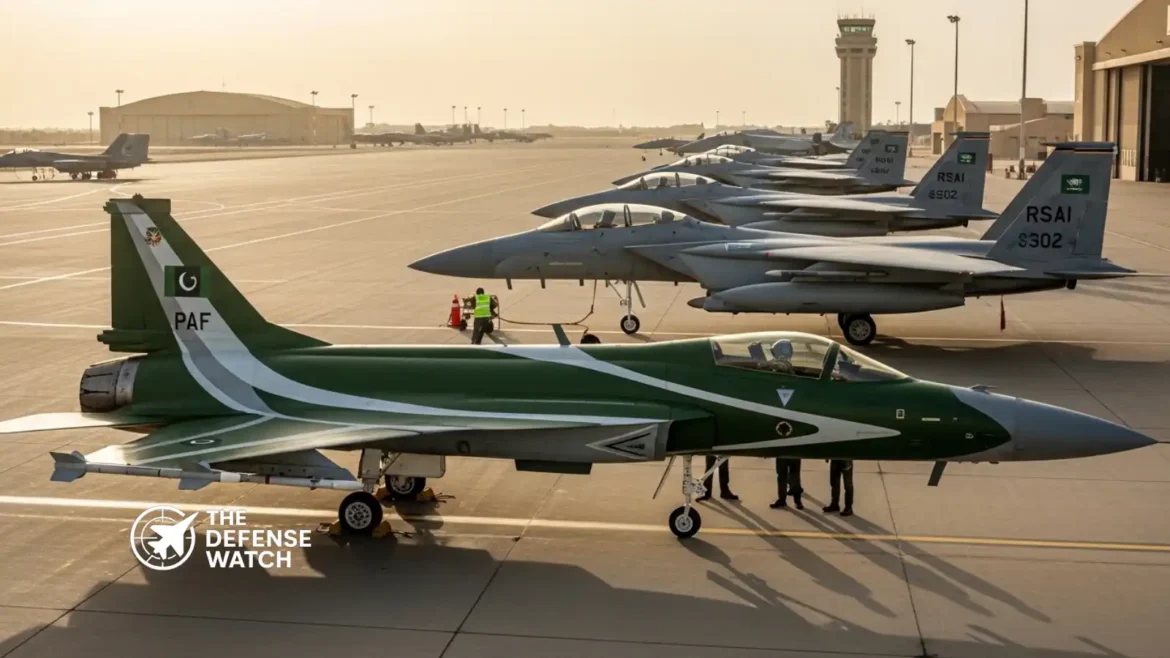
Pakistan fighter jets Saudi Arabia deployment marks a renewed phase in long-standing defense cooperation between Islamabad and Riyadh, with both sides emphasizing continuity rather than escalation.
Saudi Arabia confirmed that Pakistan has sent fighter aircraft along with air force personnel to the kingdom under an existing bilateral defense agreement. The deployment underscores a pattern of military collaboration that has historically included training missions, advisory roles, and joint exercises.
- Saudi Arabia confirmed Pakistan has deployed fighter jets to the kingdom under an existing bilateral defense pact.
- The deployment includes Pakistan Air Force personnel to support operational and training roles.
- The move comes amid heightened regional security concerns in the Middle East.
- Pakistan and Saudi Arabia have a decades-long defense cooperation framework, including training and advisory missions.
- Officials framed the deployment as routine cooperation rather than a response to a specific conflict.
Saudi officials described the move as part of routine cooperation, aimed at enhancing operational readiness and interoperability between the two air forces.
Longstanding Defense Ties Between Islamabad And Riyadh
Pakistan and Saudi Arabia have maintained close military relations for decades, particularly in the domain of air power. The Pakistan Air Force has previously deployed personnel to the kingdom for pilot training, technical support, and advisory roles.
This latest Pakistan fighter jets Saudi Arabia deployment reflects continuity rather than a departure from established policy. Analysts note that such arrangements often remain low-profile but play a critical role in maintaining readiness and strengthening bilateral trust.
Historically, Pakistan has supported Saudi defense infrastructure by providing experienced pilots and maintenance crews. These deployments have helped the kingdom sustain operational capabilities during periods of regional tension.
Operational And Strategic Implications
While officials stress that the deployment is routine, the timing aligns with a complex regional security environment. The Middle East continues to face evolving threats, including missile proliferation, drone warfare, and shifting geopolitical alignments.
From an operational perspective, the presence of Pakistan fighter jets in Saudi Arabia could enhance:
- Air defense coverage and rapid response capability
- Joint training and tactical integration
- Maintenance and operational support for existing fleets
The Pakistan fighter jets Saudi Arabia deployment may also provide valuable real-world experience for Pakistani personnel operating in a different strategic theater.
Air Power Cooperation In A Volatile Region
The Middle East remains one of the most contested air defense environments globally, with increasing emphasis on integrated air and missile defense systems. Saudi Arabia has invested heavily in advanced platforms, including U.S.-supplied fighter aircraft and missile defense systems.
Pakistan’s contribution, while limited in scale, adds a layer of operational flexibility. It also reflects Islamabad’s ability to project air power expertise beyond its immediate region.
Defense analysts point out that such deployments can serve dual purposes. They enhance host nation capabilities while also allowing the contributing country to strengthen diplomatic and military ties.
Political And Strategic Signaling
Although both governments have downplayed any direct link to ongoing conflicts, the Pakistan fighter jets Saudi Arabia deployment carries strategic signaling value.
For Riyadh, it reinforces partnerships with trusted allies at a time of regional uncertainty. For Islamabad, it demonstrates its role as a security partner in the broader Islamic world while maintaining balanced relations across competing regional actors.
Importantly, officials have avoided framing the move as a response to any specific threat. This suggests an effort to maintain stability and avoid escalating tensions in an already sensitive environment.
Continuity Over Escalation
The framing of the deployment as routine cooperation is consistent with past practice. Pakistan has periodically contributed military support to Saudi Arabia without direct involvement in combat operations.
This approach allows both countries to deepen defense ties while minimizing the risk of entanglement in regional conflicts.
The Pakistan fighter jets Saudi Arabia deployment, therefore, should be viewed as part of an enduring security relationship rather than a short-term tactical response.
Outlook For Bilateral Defense Cooperation
Looking ahead, Pakistan-Saudi defense cooperation is expected to remain focused on:
- Training and capacity building
- Air force interoperability
- Strategic consultation on regional security
As regional threats evolve, such partnerships are likely to gain importance, particularly in areas like air defense integration and counter-drone operations.
The Pakistan fighter jets Saudi Arabia deployment highlights how established defense relationships continue to adapt to changing geopolitical realities without fundamentally altering their core structure.
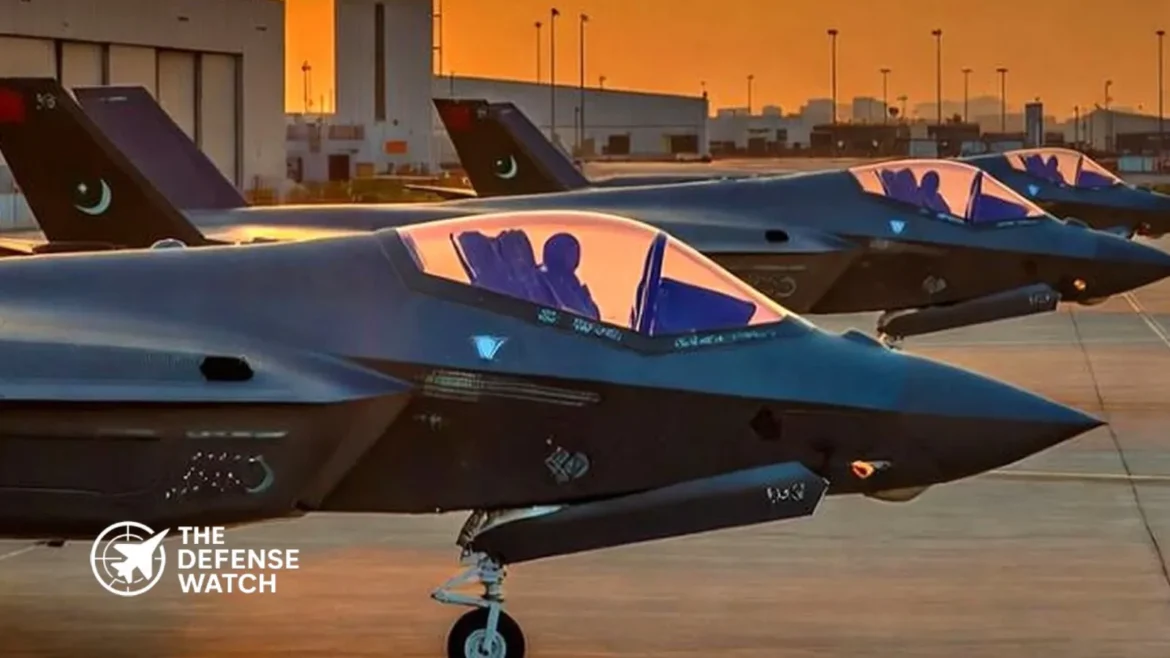
- Viral social media claims in late March 2026 alleged that the Pakistan Air Force (PAF) received its first batch of six J-35 stealth fighters from China.
- Defense sources and senior officials have categorically rejected the reports, stating no official announcement, photographs, or supporting airfield activity exists.
- The earliest possible delivery window for J-35 aircraft to Pakistan remains 2027, according to officials familiar with the program.
- Pakistan signed a framework agreement in principle for up to 40 J-35A export variants following talks in Beijing in June 2025, potentially making Islamabad the first export customer.
- Pakistan’s Defence Minister Khawaja Asif previously dismissed similar speculation as “only in the media.”
Pakistan J-35 Stealth Jet Claims Remain Unverified
The Pakistan Air Force has not taken delivery of any J-35 stealth fighter jets from China, according to defense sources familiar with the program.
Reports circulating on social media in late March 2026 claimed that the PAF had received an initial batch of six aircraft. These assertions, amplified by some regional media outlets, included unverified videos and posts but lacked any official confirmation from PAF headquarters or Pakistan’s Ministry of Defence.
Senior officials told local defense correspondents that the earliest realistic delivery timeline for the J-35 remains 2027 at best. The Shenyang J-35, a twin-engine fifth-generation platform developed from the FC-31/J-31 program, entered limited series production for China’s People’s Liberation Army Air Force and Navy in late 2025.
Background on the Proposed Acquisition
Pakistan and China have maintained close defense ties for decades, with collaborative projects including the JF-17 Thunder multirole fighter. In June 2025, following high-level talks in Beijing, Pakistan’s government referenced an offer that included up to 40 J-35A export-variant stealth aircraft, alongside other systems such as the KJ-500 airborne early warning and control platform and HQ-19 air defense systems.
Defence Minister Khawaja Asif addressed similar speculation in mid-2025, describing it as “only in the media” during an interview. No formal contract signing has been publicly confirmed by either government, though preparatory activities—including potential pilot training—have been reported in defense circles.
If realized, the acquisition would mark Pakistan’s entry into fifth-generation fighter operations and position Islamabad as the first export customer for the J-35 platform. The aircraft is designed for low-observable penetration of contested airspace, equipped with advanced avionics, internal weapons bays, and multirole capabilities.
Current PAF Fleet Context
The Pakistan Air Force operates approximately 450 combat aircraft. Key assets include around 76 F-16 fighters in multiple variants, more than 180 JF-17 Thunder aircraft co-produced with China, a growing number of J-10CE multirole fighters inducted since 2022, and aging Mirage III and V platforms approaching the end of their service lives.
Introduction of a stealth platform would represent a significant qualitative upgrade, enabling improved survivability against advanced integrated air defense systems in the region. However, operational integration would require substantial investments in infrastructure, training, maintenance, and logistics.
Strategic Implications for Regional Air Power
A successful J-35 induction would contribute to evolving air power dynamics in South Asia. India has expanded its own capabilities with Rafale fighters and continues development of indigenous platforms, including the Advanced Medium Combat Aircraft program.
For Pakistan, the J-35 would complement existing Chinese-origin systems and address requirements for deep-strike and contested-environment operations. Analysts note that any such capability would form part of a broader layered approach potentially including improved airborne early warning and surface-to-air defenses.
However, challenges remain. Engine reliability concerns have surfaced in testing of carrier-based J-35 variants for the Chinese Navy. Export versions may incorporate modifications, but performance data for the specific configuration offered to Pakistan is limited in open sources.
Analysis: Tempering Expectations Amid Ongoing Modernization
The repeated pattern of unverified claims followed by official denials underscores the need for caution in assessing defense procurement timelines. Pakistan’s air force modernization proceeds steadily through proven platforms like the JF-17 Block III and J-10CE, while fifth-generation ambitions face technical, financial, and industrial hurdles common to new platforms.
At present, no evidence supports claims of operational J-35 aircraft in PAF service. Delivery expectations cited by officials align with realistic production and integration schedules for a complex stealth fighter. Future developments will likely depend on final contract terms, funding arrangements, and progress in China’s own J-35 production ramp-up.
TheDefenseWatch will continue monitoring authoritative statements from Islamabad and Beijing for confirmed milestones.

China Nears First Export Sale of J‑35 Stealth Fighter Jets to Pakistan
China appears close to finalizing its first overseas sale of the Shenyang J‑35 fifth‑generation stealth fighter jet, with Pakistan positioned as the likely initial customer and deliveries expected to begin as early as 2026, according to reporting on Beijing’s defense export efforts.
According to Source, Beijing has offered Islamabad a package that includes up to 40 J‑35 aircraft, forming a central part of a broader proposed arms cooperation that also encompasses airborne early warning aircraft and advanced air defenses.
Export Push for China’s J‑35
The Shenyang J‑35 is China’s newest fifth‑generation fighter, developed as a carrier‑capable stealth platform alongside the J‑20 and tied to export variants often linked with the FC‑31 designation.
China’s government and the Aviation Industry Corporation of China (AVIC) have been positioning the J‑35 for export after advancing production and testing, including recent first flights in 2026 as part of ongoing development.
Pakistan’s government publicly acknowledged an offer from China that included 40 J‑35 fighters alongside a Shaanxi KJ‑500 airborne early warning and control aircraft and HQ‑19 surface‑to‑air missile systems. The announcement appeared on official social channels in June 2025, though it was later removed.
If concluded, this would be the first confirmed export of the J‑35 family to a foreign air force.
Pakistan’s Position and Orders
Reports from late 2025 and early 2026 suggest Pakistan remains the front‑runner for the J‑35 export order, in line with earlier statements that the country planned to acquire up to 40 jets by 2030.
Past reporting indicated that Pakistan Air Force pilots were already training on the platform in China and that initial deliveries could begin within months of a contract signing.
The deal reflects Islamabad’s broader effort to modernize its air combat fleet alongside other acquisitions such as Chinese‑built J‑10 multirole fighters.
Regional and Strategic Context
The possible J‑35 sale to Pakistan marks a notable moment in China’s efforts to expand its defense export footprint. Until now, China’s foreign customers have focused on legacy and fourth‑generation platforms like the JF‑17 Thunder or the J‑10 series.
For Pakistan, acquiring a fifth‑generation fighter would represent a significant leap in capability, even as analysts caution timelines and costs could shift over the longer term.
The deal is unfolding amid broader shifts in South Asian defense relationships, including Pakistan’s engagement with Western suppliers and regional tensions that have influenced procurement priorities.
What Comes Next
Industry watchers will be looking for formal contract announcements and export clearance from Beijing’s government. Final signatures and financing arrangements could determine whether initial aircraft enter service with the Pakistan Air Force in 2026, or if timelines extend into the late 2020s.
China’s bid to export a fifth‑generation stealth fighter highlights both its growing aerospace industry and the strategic partnerships Beijing is building beyond its borders. Delivery and sustainment contracts in the years ahead will shape how the J‑35 competes in a crowded global fighter market.
AESA radar, updated avionics, and new air-to-air weapons define the latest JF-17 upgrade
The Pakistan Air Force has begun inducting the JF-17C Block III, the most advanced iteration of the JF-17 Thunder multirole fighter, marking a significant step in the service’s ongoing modernization program.
Developed by Pakistan Aeronautical Complex in collaboration with China’s Aviation Industry Corporation of China, the JF-17C Block III introduces a wide range of avionics, sensor, and weapons upgrades over the earlier Block II configuration.
Radar and Sensor Enhancements
A central feature of the JF-17C Block III is the integration of the KLJ-7A active electronically scanned array radar. According to open source defense reporting, the radar employs more than 1,000 transmit receive modules and is assessed to offer detection ranges between 150 and 220 kilometers against fighter sized targets, depending on operational conditions.
The aircraft also features a new wide area cockpit display derived from systems used on China’s J-20 fighter, alongside a modern helmet mounted display and cueing system. These additions are intended to improve pilot situational awareness and enable high off boresight missile engagements.
An expanded electronic warfare and electronic support measures suite is paired with infrared and ultraviolet missile approach warning sensors, enhancing survivability against radar guided and infrared threats.
Weapons Integration and Performance
The JF-17C Block III is configured to employ advanced Chinese air-to-air missiles, including the PL-10 short range missile and the PL-15 very long range air-to-air missile. These weapons are integrated with the aircraft’s radar, helmet mounted display, and onboard sensor fusion architecture.
Manufacturer specifications list a maximum takeoff weight of approximately 30,000 pounds and an external weapons payload of up to 10,700 pounds across multiple hardpoints. Reported performance figures include a maximum speed exceeding Mach 1.7, a service ceiling of around 56,000 feet, and a combat radius of roughly 1,450 kilometers.
Structural updates include greater use of composite materials and refinements to the three axis fly by wire flight control system.
Production and Operational Context
Pakistan Aeronautical Complex continues to assemble the JF-17 domestically, a factor Pakistani officials have emphasized as supporting fleet sustainability and operational independence. The Block III variant is expected to operate alongside earlier JF-17 models as well as higher end fighter types within the Pakistan Air Force inventory.
Defense analysts note that while the JF-17C Block III narrows the capability gap with newer generation fighters, its operational impact will depend on pilot training, network integration, and employment concepts.
Bangladesh Explores JF-17 Fighter Jet Acquisition After Pakistan Air Force Talks
Bangladesh is considering an acquisition of JF-17 fighter jets following high-level talks with the Pakistan Air Force, according to official military sources and recent reporting.
The discussion took place on January 6, 2026, in Islamabad between Bangladesh Air Force Chief Air Chief Marshal Hasan Mahmood Khan and Pakistan Air Force Chief Air Chief Marshal Zaheer Ahmed Baber Sidhu.
Pakistan’s Inter-Services Public Relations (ISPR) said the talks covered potential procurement of JF-17 Thunder multirole combat aircraft, along with broader cooperation in training, support, and aerospace capabilities.
Officials described the JF-17 as a multirole, fourth-generation fighter jet jointly developed by Pakistan and China.
Talks Focus on Aircraft, Training, and Support
The meetings addressed operational cooperation and capacity building, including pilot training, maintenance support for Bangladesh’s aging fleet, and integration of air defense radar systems.
Pakistan offered a structured training framework, from basic flying instruction to advanced courses, along with support for Bangladesh Air Force sustainment needs.
Pakistan also reaffirmed plans to expedite delivery of Super Mushshak trainer aircraft as part of expanded cooperation.
Context for Bangladesh Air Force Modernization
Bangladesh has been pursuing upgrades to its air combat fleet as older Chinese-built F-7 fighters and Russian MiG-29s near obsolescence. Multiple procurement paths, including European and Chinese aircraft, have been explored.
The JF-17 discussions come amid broader defense outreach and renewed engagement with Pakistan after regional political shifts.
New evidence on Indian Rafales and Meteor missiles
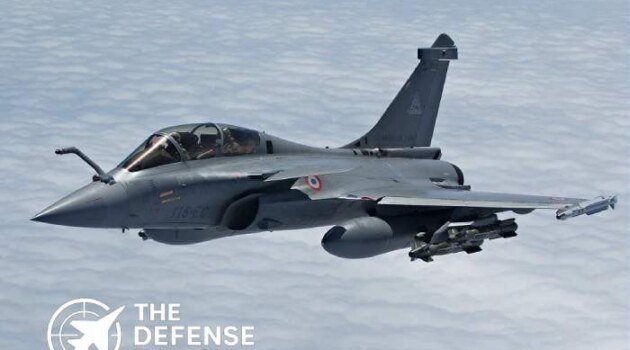
New footage circulating from Indian television coverage has provided fresh insight into the Indian Rafales shot down by the Pakistan Air Force, indicating that the aircraft were carrying Meteor missiles but were unable to fire them effectively.
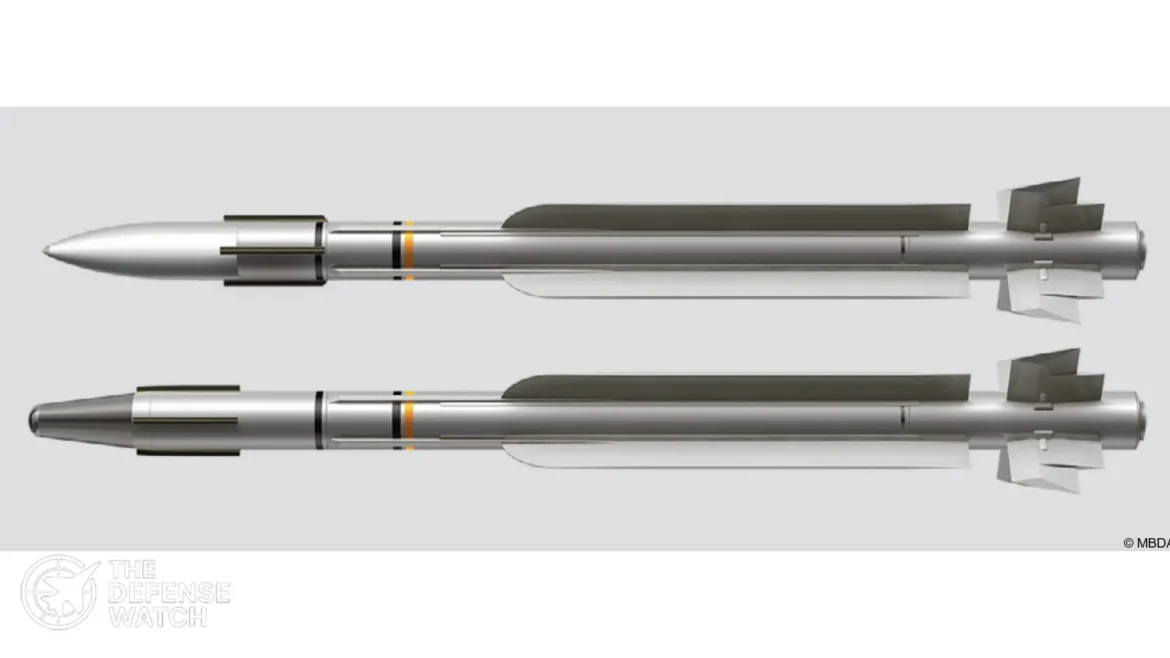
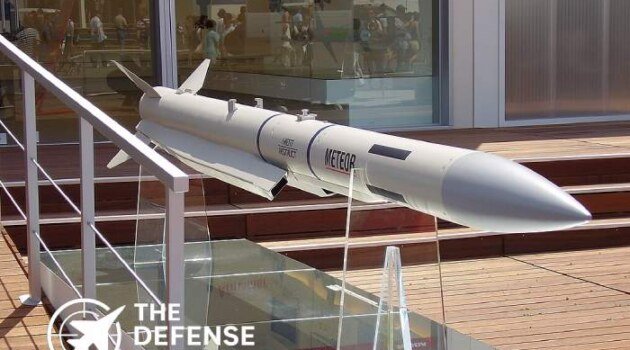
(adsbygoogle = window.adsbygoogle || []).push({});The clip, reportedly filmed on location on the night of the engagement, shows burning wreckage in agricultural fields alongside a clearly visible fin section from an air to air missile. Independent visual comparison shows the fin geometry matches the MBDA Meteor missile and does not align with control surfaces used on the MICA family.
The footage was broadcast by Indian news outlets during initial reporting from the crash site and has since resurfaced as analysts review frame by frame details of the debris.
Missile debris linked to MBDA Meteor
Defense analysts familiar with European missile designs note that the recovered fin section closely matches the distinctive fixed fin layout of the Meteor. The shape, size, and mounting angle are considered incompatible with the smaller and differently configured fins used on the MICA missile carried by Rafale fighters.
MBDA documentation and publicly available imagery of Meteor missiles show a near identical fin profile, strengthening the assessment that Indian Rafales were equipped with Meteor missiles during the mission.
No evidence in the footage suggests the missile was launched. Instead, the debris appears to originate from an unexpended weapon destroyed with the aircraft.
Implications for electronic warfare and air combat
The presence of Meteor missiles indicates that Indian Rafales entered the engagement with long range air to air capability. However, the lack of launch evidence supports earlier assessments that effective Pakistan Air Force electronic attack and jamming prevented Indian pilots from achieving viable firing solutions or radar locks.
Pakistan has previously stated that electronic warfare and networked air defense played a central role in neutralizing Indian aircraft during the encounter. Western air combat doctrine emphasizes that even advanced missiles rely heavily on sensor performance and data link integrity.
(adsbygoogle = window.adsbygoogle || []).push({});Official silence and ongoing debate
Neither the Indian Air Force nor MBDA has issued official statements addressing the missile debris shown in the footage. Defense ministries on both sides have largely avoided technical discussion of the engagement.
As additional imagery and open source analysis continue to surface, the incident remains a key case study in modern beyond visual range combat and electronic warfare effectiveness.
Newer Posts