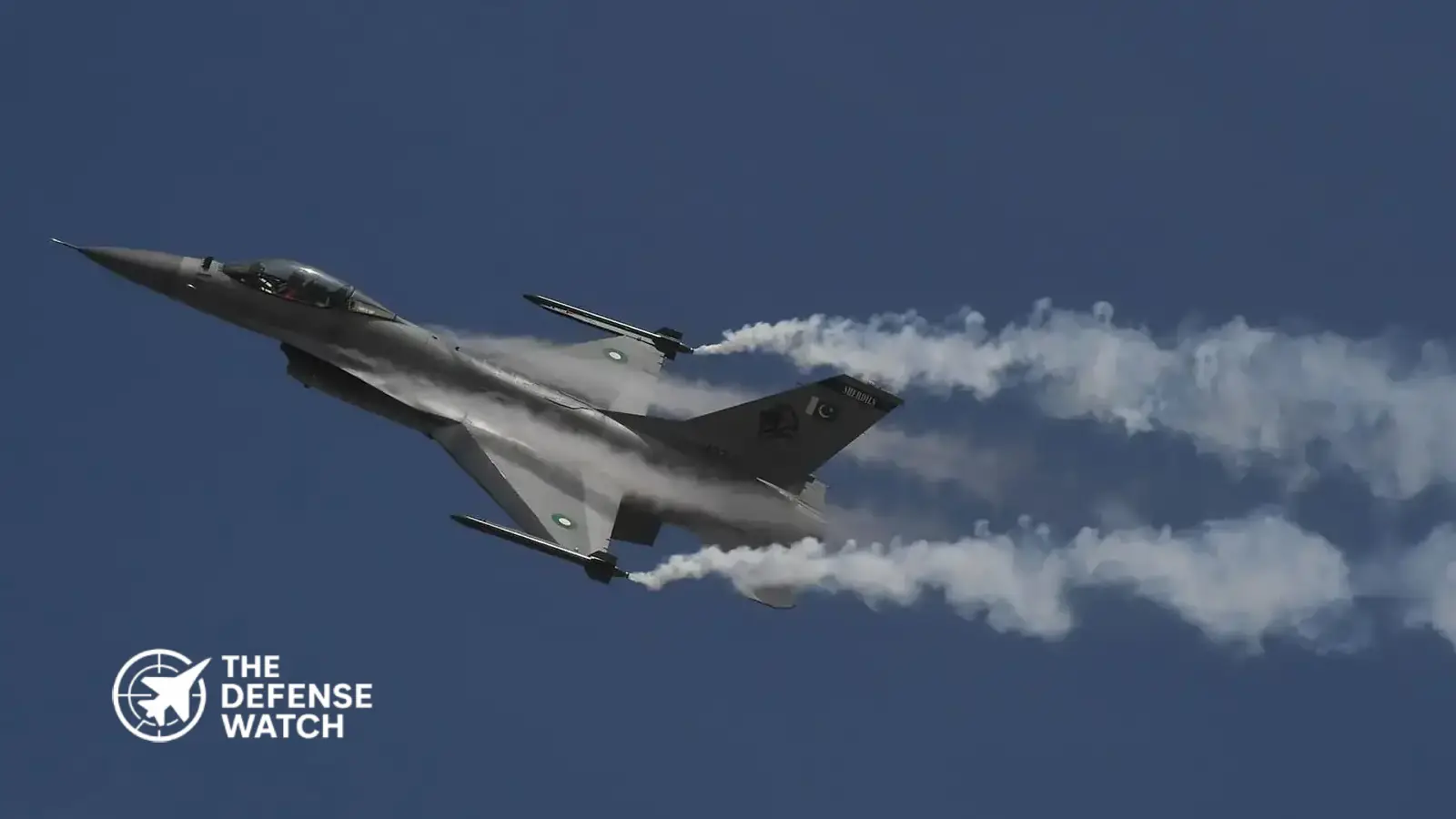
Executive Summary: The United States has authorized a comprehensive dual-track support and upgrade framework for Pakistan’s F-16 fleet, totaling approximately $1.17 billion. The package focuses on long-term radar sustainment and the integration of Link-16 tactical data links to ensure operational safety and regional interoperability through 2040.
Technical Modernization Overview
The modernization effort is divided into two distinct Foreign Military Sales (FMS) segments. The first, a $488 million contract awarded to Northrop Grumman, provides indefinite-delivery/indefinite-quantity (IDIQ) engineering and technical support for the AN/APG-66 and AN/APG-68 radar sets. This ensures the reliability of the fleet’s primary fire-control sensors.
The second phase, valued at $686 million, introduces advanced digital capabilities, most notably the Link-16 tactical data link system. This upgrade allows for secure, jam-resistant communication and real-time data sharing between aircraft and command centers, a critical requirement for modern multi-domain operations.
Comparative Capabilities: Legacy vs. Modernized Fleet
Feature Legacy F-16 (Block 15/MLU) Modernized F-16 (Post-Upgrade) Key Technology Mechanical Radar / Voice-only Link-16 / AN/APG-68(V)9 Support Range (Detection) ~40-60 nmi (Standard) Enhanced signal processing and MTBF Status Approaching End-of-Life Validated for service through 2040 Payload Interoperability Analog/Basic Digital Advanced precision-guided munitions (PGM) Precision Avionics and Secure Communications
The $686 million package notified to Congress by the Defense Security Cooperation Agency (DSCA) includes a robust suite of hardware and software enhancements:
- Tactical Data Exchange: Procurement of 92 Link-16 terminals to facilitate “silent” situational awareness.
- Cryptographic Security: Integration of KY-58M and KIV-78 cryptographic modules for secure, NSA-certified voice and data transmissions.
- Precision Navigation: Upgraded embedded Global Positioning Systems (GPS) and Inertial Navigation Systems (INS).
- Flight Safety: Structural and software modifications to the Operational Flight Program (OFP) to mitigate fatigue-related safety concerns.
Strategic Context and Regional Balance
While the upgrades significantly enhance the Pakistan Air Force (PAF) capability, the DSCA stated that the sale “will not alter the basic military balance in the region.” Instead, the focus is squarely on counterterrorism (CT) operations and maintaining a baseline of interoperability with US and coalition forces.
The timing of the authorization is critical. As regional threats evolve, the ability of the PAF to maintain a high mission-capable (MC) rate for its premier fighter platform is a pillar of Pakistan’s defensive posture. By refurbishing the Block-52 and Mid-Life Upgrade (MLU) airframes, Pakistan effectively bridges the gap until its next-generation platforms reach full operational maturity.
Logistics and Implementation
The primary contractors for these efforts are Lockheed Martin (Fort Worth, TX) and Northrop Grumman (Linthicum Heights, MD). Notably, the US government has confirmed that the implementation of these packages will not require the permanent stationing of additional US personnel in Pakistan. All support will be managed through existing technical coordination groups and long-term engineering contracts scheduled to run through March 31, 2036.
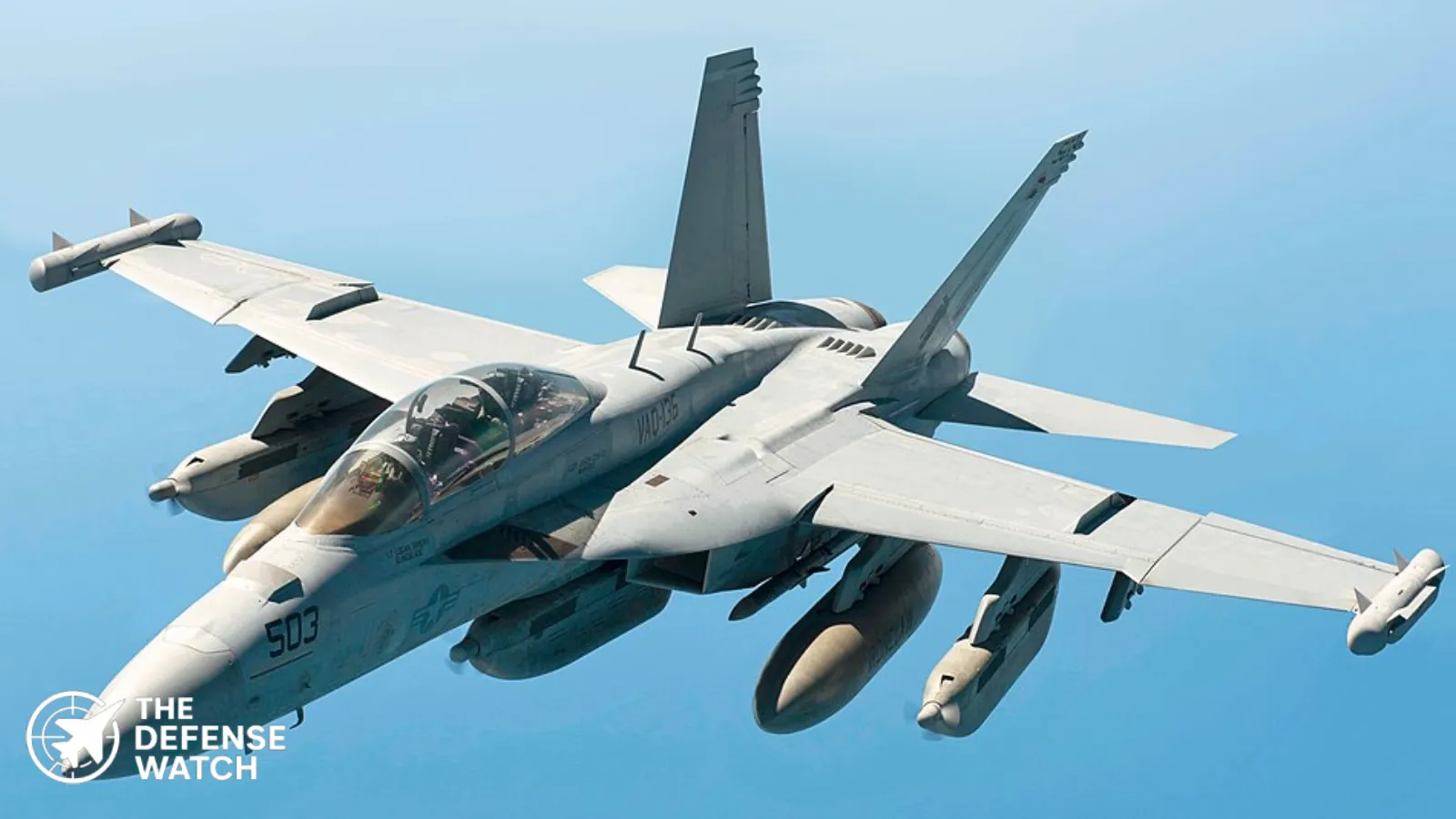
L3Harris Navy contract activity continues with a new $9.57 million award to support U.S. Navy F/A-18 aircraft, reinforcing sustainment of the Super Hornet and Growler fleets.
L3Harris Technologies Inc., based in Clifton, New Jersey, has been awarded a firm-fixed-price contract valued at $9,571,947 for the procurement of 74 radio frequency amplifiers. The equipment will support Navy F/A-18E, F, and G aircraft operated across carrier air wings and expeditionary squadrons.
Contract Details and Scope
The contract covers the production and delivery of radio frequency amplifiers used in mission-critical avionics and electronic warfare systems aboard the F/A-18E F Super Hornet and EA-18G Growler. These components play a key role in signal strength, radar performance, and electronic attack capabilities.
All work under the L3Harris Navy contract will be performed in Clifton, New Jersey. Completion is scheduled for April 2027. The agreement does not include option provisions, indicating a defined production scope tied to current fleet requirements.
Fiscal 2026 Navy working capital funds will fully cover the contract value at the time of award. According to the Navy, the funds will not expire at the end of the current fiscal year.
Acquisition Strategy and Oversight
The Navy pursued the procurement as a sole-source requirement under the authority of Title 10 U.S. Code 3204(a)(1). One source was solicited, and one offer was received. Naval Supply Systems Command Weapon Systems Support in Philadelphia, Pennsylvania, is serving as the contracting activity.
Sole-source awards of this type are common for specialized avionics tied to proprietary designs or certified aircraft configurations, particularly for mature platforms like the F/A-18 family.
Platform Sustainment Context
The F/A-18E F Super Hornet and EA-18G Growler remain central to U.S. Navy carrier aviation and airborne electronic warfare. Ongoing investments in avionics, sensors, and electronic systems are intended to maintain readiness as the Navy transitions toward next-generation platforms.
What It Is
South Korea’s Hanwha Systems has been selected by Boeing to supply the Eagle Large Area Display (ELAD) for South Korea’s F-15K and the U.S. Air Force’s F-15EX Eagle II fighters. This marks Hanwha’s first export of digital avionics and highlights growing defense collaboration between the U.S. and South Korea.
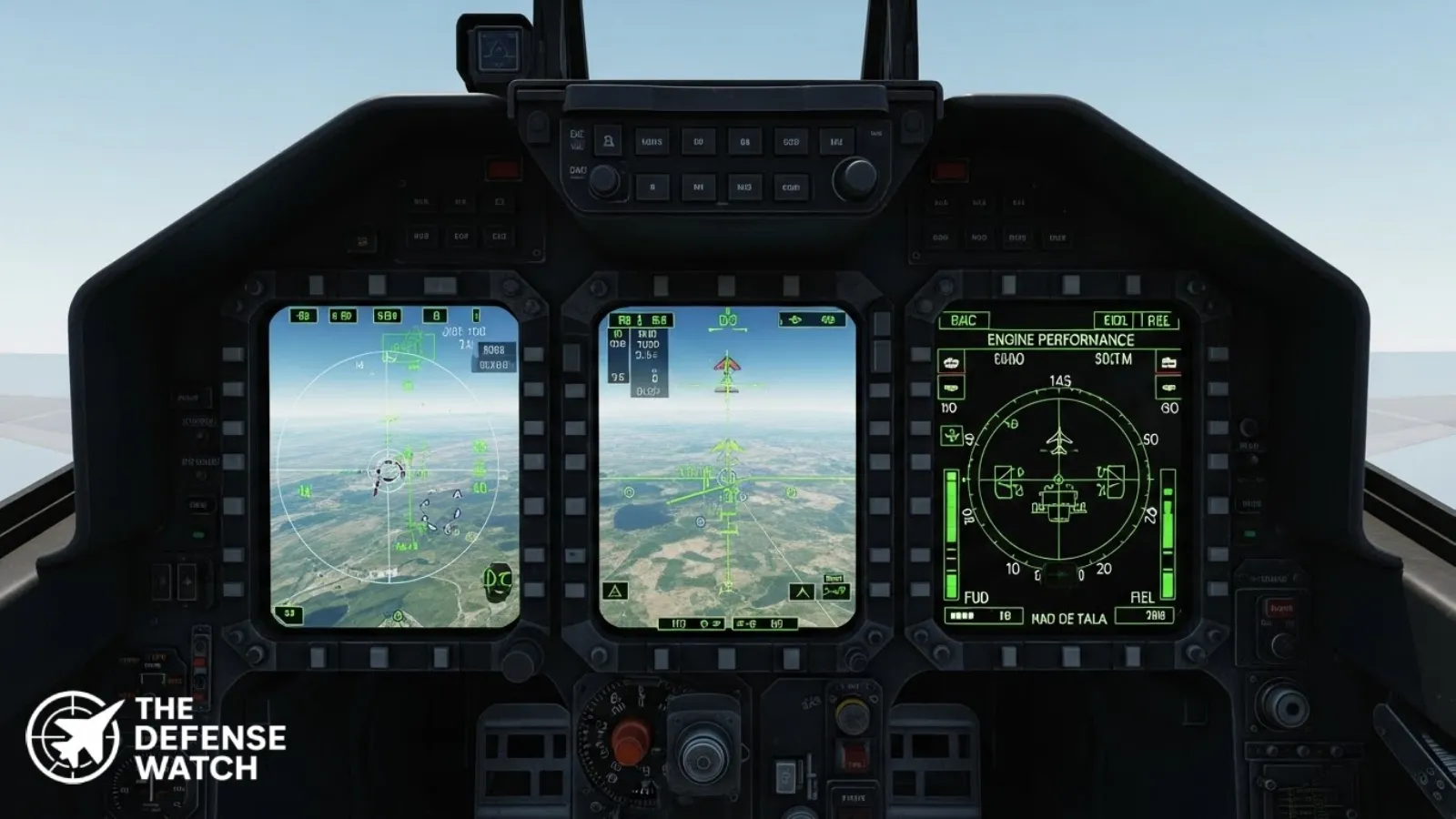
The ELAD integrates multiple cockpit screens into a single, large, touch-sensitive display. Pilots can access critical flight and mission information more intuitively, streamlining command inputs to the mission computer.
How It Works
The ELAD combines data from different avionics systems, presenting it on one interface. Pilots can control mission systems through touch inputs, reducing reliance on multiple smaller screens and physical controls. The concept mirrors similar large-area displays used in modern fighter jets, including the F-35’s touchscreen interfaces, which improve situational awareness and reduce pilot workload.
Why It Matters
Upgrading F-15 cockpits with modern digital displays enhances operational efficiency and interoperability between allied forces. For the U.S., sourcing the ELAD from Hanwha signals a diversification of supply chains in strategic sectors like fighter avionics. For South Korea, it represents a step toward becoming a recognized supplier of advanced military electronics on the global stage.
Strategically, this move strengthens the U.S.-South Korea defense partnership amid regional tensions in East Asia. Competitors like China and Russia continue to advance fighter avionics, making collaboration on next-generation systems critical for maintaining air superiority and technological edge.
Strategic Impact
By equipping F-15K and F-15EX fighters with advanced displays, both countries enhance pilot effectiveness in complex mission environments. Hanwha’s entry into the U.S. defense supply chain may encourage further South Korean participation in international aerospace projects. Long term, this contributes to a more resilient and diversified defense industrial base while reinforcing U.S. alliances in the Indo-Pacific.
New Photos Shed Light on China’s J-50 Design
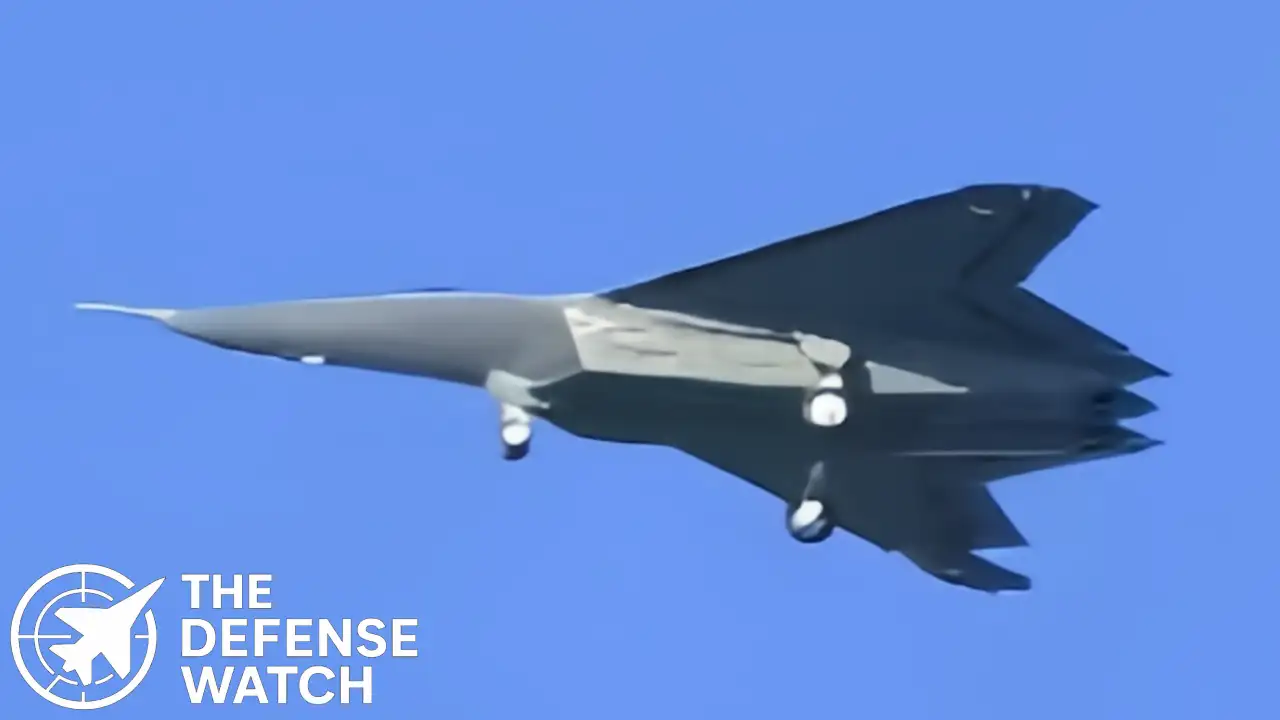
Recent images emerging from Chinese social media and aviation watchers offer a clearer view of Shenyang Aircraft Corporation’s mysterious next‐generation stealth prototype, unofficially dubbed the J-50. First seen in flight on December 26, 2024, the J-50 (also referred to as J-XDS or J-XD in some reports) is one of two tailless heavy fighter designs with stealth features that China is believed to be developing.
These new photos, released in early April 2025, show the J-50 from clearer side and three-quarter angles than previously available. The details revealed provide fresh insights into its aerodynamic layout, stealth considerations, and mission role.
Key Design Features
Lambda Wing & Tailless Configuration
The J-50 continues to exhibit a lambda wing planform—a sharply swept leading edge wing shape that joins with a broken trailing edge forming a triangular extension toward the fuselage. This type of wing, combined with a tailless layout (i.e. no vertical stabilisers or traditional tails), suggests China is pursuing lower radar cross-section and advanced aerodynamic efficiency.
Canopy and Cockpit
Earlier ambiguity over whether the J-50 was crewed has now been largely resolved: the new imagery shows a streamlined, bubble-like canopy blending into the fuselage. It remains difficult to determine from the photos whether the cockpit is for a single pilot or tandem crews, but the presence of a distinct canopy suggests a manned aircraft.
Inlets, Engine Layout, & Movable Features
- The photos show side inlets that appear to use diverterless supersonic inlet (DSI) design, similar to that seen on other modern Chinese stealth platforms.
- Also visible are articulating wing tips, which might be movable to aid maneuverability or control at different flight regimes.
- The engine exhausts appear to have 2-dimensional (possibly vectored) nozzles, which may help with agility and control while preserving stealth characteristics.
Weapons Bays & Sensor Bulges
New imagery confirms what appear to be side weapons bays—internal storage space for armaments to reduce radar signature and drag. There is also a pronounced bulge under the nose that likely houses an electro-optical targeting or sensor system, comparable to systems seen under the J-20 and F-35.
Landing Gear & Physical Size
The landing gear visible in the photos includes a twin-wheel nose gear and single wheels on the main gear. This contrasts with heavier “very large” designs (like the J-36) that have more robust gear configurations. From comparison, the J-50 appears smaller than the J-36, more medium-weight in scale.
Analysis: What Implications Does the J-50 Project Carry?
China’s unveiling of the J-50 (or at least its details via imagery) sends several signals to both observers and potential rivals:
- Stealth & Advanced Airpower Race: The combination of tailless design, internal weapons bays, DSI intakes, EOTS-type sensors, and possible thrust vectoring places the J-50 solidly in the stealth / low observability category. These are not just show features; they align with what many analysts consider hallmarks of “sixth-generation” fighter expectations.
- Prototype Versus Operational Reality: While what is visible in the photos is impressive, many critical performance parameters remain unknown—range, service ceiling, stealth effectiveness, avionics, pilot systems, integration into force structure, maintainability, etc. It is still early in the test flight / prototype phase. As with many advanced aircraft programs globally, scaling up from prototype to production is challenging.
- Comparative Strategy with the J-36 & Other Projects: The J-50 seems configured for medium weight roles; possibly more agile, with roles in air superiority or multi-role missions where stealth is primary. The larger J-36 – heavier, trijet, perhaps more heavy strike or regional power projection – may be filling a complementary niche. China may be aiming for a family of stealth platforms rather than a single solution.
Context & Strategic Implications
- The J-50’s development underscores China’s accelerating aerospace industry efforts. It is increasingly clear that China is not merely iterating existing fighter designs, but experimenting with novel aerodynamic forms.
- For regional security dynamics, neighbors and rival air forces will be paying close attention. Effective stealth or low-observability capability can shift balance in contested airspaces, especially over the Taiwan Strait or in contested islands.
- In global terms, the J-50 adds to discussions around how China’s sixth-generation aircraft efforts compare to U.S. Next Generation Air Dominance (NGAD) / F-47, European Future Combat Air System (FCAS), and other advanced programs. Image reveals don’t give full performance, but they demonstrate rapid progress.
What Remains Unknown
- Engine performance, reliability, and how thrust vectoring will be integrated.
- Precise avionics suite, sensor fusion, radar cross-section (RCS) values, IR signature, and stealth in operational conditions.
- Whether the aircraft will enter serial production, how many units, when, and what roles it’ll perform (air superiority, interceptor, multi-role, etc.).
- How it will integrate with AI, unmanned wingman systems, networked sensors, and Chinese doctrine.
FAQs
It’s not officially confirmed, but many in the defense analysis community treat it as part of China’s sixth-generation development efforts due to its stealth features, tailless design, advanced sensors, and novel aerodynamic features.
The new photos confirm the presence of a canopy, strongly indicating it is a crewed aircraft. That said, the possibility of optionally manned or unmanned variants cannot be ruled out in the future.
J-36 is larger, heavier, and believed to have three engines with a different air intake layout. The J-50 seems smaller, twin-engine, possibly more agile, and focusing on a medium-weight class of missions.
No firm timeline is available. The aircraft is in prototype / flight-test stage. Production, testing of systems, certification, and integration into service could still take several years.
Based on its design, possible roles include air superiority, interception, stealth strike or suppression roles, and possibly escort for larger stealth or unmanned platforms.