

Executive Summary:
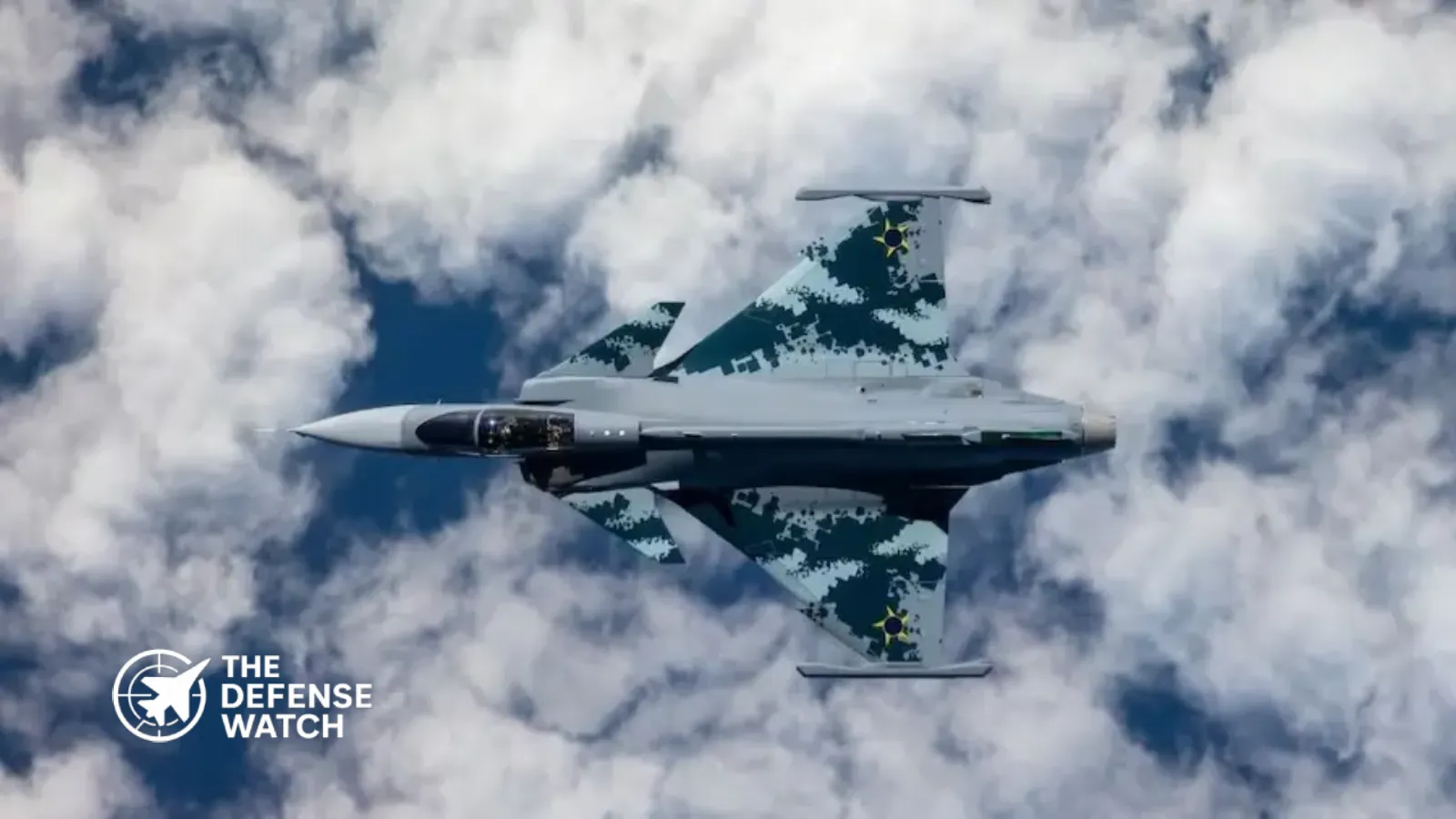
Saab and Embraer have signed a Heads of Agreement establishing a framework to expand Gripen fighter production in Brazil through the potential manufacture of 20 additional aircraft. The agreement strengthens Brazil’s aerospace industrial base, deepens technology transfer between the two companies, and positions the country as a future regional production and support hub for the Gripen program.
Saab And Embraer Expand Gripen Production In Brazil Through New Industrial Framework
Saab and Embraer have taken another step toward expanding Gripen production in Brazil, signing a Heads of Agreement (HoA) that establishes the framework for the potential manufacture of 20 additional Gripen fighter aircraft. The announcement was made jointly by the two companies as they continue to deepen their long-standing industrial partnership built around Brazil’s Gripen E/F fighter program.
While the agreement is not yet a production contract, it creates the commercial and industrial foundation for negotiations toward a definitive agreement expected in 2026. If finalized, the expansion would significantly increase Brazil’s role within Saab’s global Gripen production network.
Agreement Builds On A Decade Of Industrial Cooperation
The latest framework extends cooperation that began when Brazil selected the Gripen E/F under its FX-2 fighter acquisition program.
Since then, Saab has transferred manufacturing technologies, engineering expertise, and production processes to Brazilian industry. Embraer has become Saab’s principal industrial partner in Brazil, while numerous Brazilian suppliers now participate in the Gripen supply chain.
The new agreement would allow Embraer to manufacture up to 20 additional Gripen aircraft domestically, reinforcing Brazil’s ability to assemble, integrate, test, and support advanced combat aircraft.
According to Saab, the companies intend to conclude a final production agreement during 2026.
Strengthening Brazil’s Aerospace Manufacturing Base
The proposed production expansion reflects Brazil’s broader strategy of developing sovereign aerospace capabilities rather than relying solely on imported military equipment.
Through the Gripen program, Brazilian engineers have gained experience in areas including:
Capability Industrial Benefit Aircraft final assembly Domestic production capability Systems integration Advanced aerospace engineering expertise Flight testing Independent certification capability Software development Mission system customization Maintenance and support Long-term sustainment independence Supply chain development Growth of local aerospace companies These capabilities extend beyond military aviation and can support Brazil’s broader commercial aerospace sector.
Gripen E Offers Modern Multirole Capability
The Gripen E represents Saab’s latest generation multirole fighter designed for air defense, precision strike, reconnaissance, and network-centric operations.
Key characteristics include:
Specification Gripen E Role Multirole fighter Engine General Electric F414G Radar Leonardo ES-05 Raven AESA Infrared Search and Track Skyward-G IRST Electronic Warfare Integrated self-protection suite Data Links NATO-compatible tactical networking Mission Design Open architecture avionics Weapons Air-to-air, air-to-ground, anti-ship and reconnaissance payloads The aircraft emphasizes relatively low operating costs while maintaining advanced sensor fusion and electronic warfare capabilities.
Embraer’s Role Continues To Expand
Embraer’s participation has evolved beyond final assembly into engineering development, structural manufacturing, flight testing, logistics support, and systems integration.
The company has also contributed to establishing Brazilian infrastructure capable of supporting the Gripen fleet throughout its operational life.
Expanding production would further increase domestic industrial content while creating additional opportunities for Brazilian aerospace suppliers.
Strategic Importance Beyond Brazil
Although the agreement focuses on Brazilian production, it also carries broader strategic implications.
Saab has increasingly adopted a distributed manufacturing model that allows trusted industrial partners to participate in aircraft production outside Sweden. Such arrangements improve production resilience while expanding support capacity for existing and prospective export customers.
Brazil’s mature aerospace industry makes it a logical regional production center capable of supporting future Gripen operators throughout Latin America.
For Saab, expanding manufacturing capacity also reduces dependence on a single production location as defense demand continues to grow worldwide.
Analysis: Why The Expansion Matters
Beyond the immediate industrial announcement, the agreement highlights several broader trends shaping today’s defense aerospace market.
First, modern fighter acquisition increasingly includes technology transfer and domestic production rather than simple aircraft purchases. Governments now expect procurement programs to generate skilled jobs, industrial investment, and long-term sovereign maintenance capabilities.
Second, distributed production networks have become strategically important. Global defense manufacturers are seeking additional manufacturing capacity as military modernization accelerates across Europe, Asia, and Latin America. Establishing qualified production facilities outside the original manufacturing country improves resilience against supply chain disruptions while providing flexibility for future export campaigns.
For Brazil, continued Gripen production supports the development of high-value aerospace engineering skills that can benefit both military and civilian aviation sectors. The experience gained through advanced fighter manufacturing enhances national expertise in systems integration, avionics, composite structures, software engineering, and flight testing.
From a U.S. and allied defense perspective, the agreement reflects a broader shift toward strengthening regional industrial bases among partner nations. As governments seek faster production of advanced defense systems, partnerships that combine technology transfer with local manufacturing are becoming increasingly common across NATO members and other allied countries.
Although the framework does not guarantee production of the additional aircraft, it signals confidence in the long-term future of the Gripen program and demonstrates Saab’s commitment to maintaining Brazil as a central industrial partner.
Next Steps
The Heads of Agreement establishes the framework for detailed negotiations between Saab and Embraer.
Both companies expect to finalize the corresponding production agreement during 2026. Once completed, the expansion would increase Brazilian manufacturing capacity while reinforcing the country’s position within Saab’s global fighter aircraft production ecosystem.
The initiative also supports continued industrial cooperation between Sweden and Brazil as both nations invest in advanced aerospace manufacturing and long-term defense industrial collaboration.

