- Home
- Catalog
- Radar Systems
- KLJ-7 Radar
KLJ-7 Radar
Full Specifications
1. General Information
| Name / Designation | KLJ-7 Multimode Radar |
| Manufacturer | NRIET (Nanjing Research Institute of Electronics Technology) |
| Country of Origin | China |
| Type / Role | Fighter Fire-Control Radar |
| Operational Domain | Airborne |
| Status | In service |
2. Technical Specifications
| Frequency Band | X-Band |
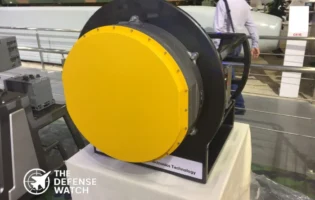
| Antenna Type | Mechanically Scanned Planar Array |
| Antenna Aperture / Size | ~600–650 mm class |
| Power Output | Approx. 3–5 kW (estimated) |
| Detection Range | 75–85 km (fighter target) |
| Tracking Range | ~50–60 km |
| Target Tracking Capacity | 10 targets |
| Elevation Coverage | ±55° |
| Azimuth Coverage | ±60° |
| Beam Steering | Mechanical + electronic shaping |
| Pulse Repetition Frequency (PRF) | Variable |
| Resolution | SAR-capable |
| Update Rate | 5–10 Hz (mode dependent) |
| Clutter Rejection / ECCM | Frequency agility, sidelobe blanking |
3. Functional Capabilities
| Primary Functions | Air-to-air, air-to-ground, maritime |
| Target Types | Aircraft, ships, vehicles |
| Integration / Networking | JF-17 mission computer |
| IFF Capability | Compatible with Chinese IFF |
| Data Link / Networking | Platform-specific |
| Weather & Terrain Resistance | All-weather |
| Mobility / Mounting | Fighter nose-mounted |
4. Physical & Operational Characteristics
| Dimensions | Classified; fighter-radar class |
| Weight | ~120–145 kg (est.) |
| Power Requirement | Aircraft onboard supply |
| Cooling System | Liquid/air cooling |
| Operating Temperature Range | Standard avionics range |
| Deployment Platform | JF-17 Thunder |
| Crew Requirement | 1 (pilot) |
5. Software & Processing
| Signal Processor Type | Digital Signal Processor (DSP) |
| Processing Speed | Classified |
| AI / Automation Features | Limited (mechanical radar) |
| Data Output / Interface | Compatible with JF-17 avionics bus |
| Software Upgradeability | Yes |
6. Operational History
| Year Introduced | Mid-2000s |
| Users / Operators | Pakistan, Myanmar, Nigeria (via JF-17) |
| Notable Deployments | Operational patrols and air defense missions |
| Successor / Predecessor | Successor: KLJ-7A AESA |
7. Export / Compliance Data
| Export Availability | Limited (via JF-17 program) |
| ITAR / MTCR Status | Not subject to U.S. ITAR; China-controlled |
| Cost Estimate | Not publicly available |
PROS
- Affordable compared to Western counterparts
- Supports BVR missile guidance
- SAR and sea-search modes available
- Reliable in varied weather conditions
- Easy integration into lightweight fighters
CONS
- Not AESA; limited vs modern Western radars
- Lower range than advanced mechanically scanned radars
- ECCM performance less proven
- Limited export support
- Requires platform-specific integration (JF-17 only in practice)
KLJ-7 Multirole Fighter Radar: Specs, Features & Analysis
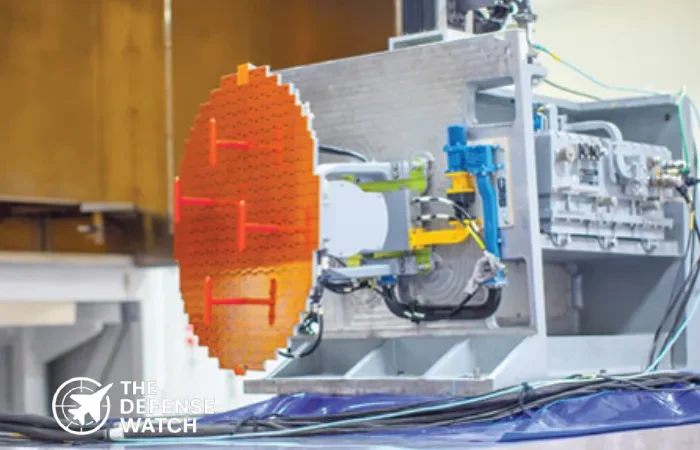
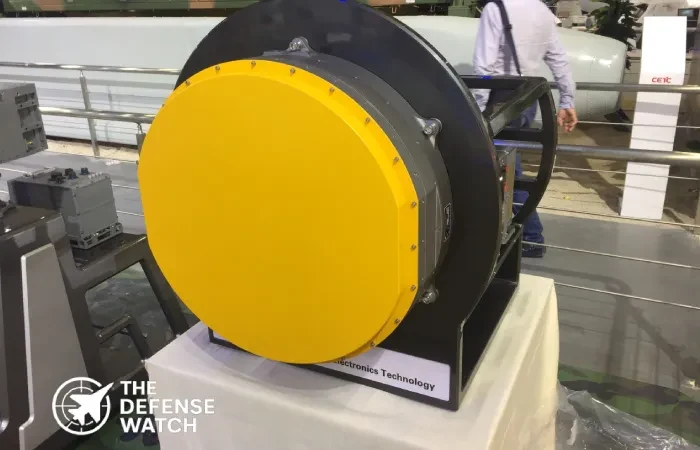
The KLJ-7 is a Chinese-designed multimode fire-control radar developed for lightweight multirole fighters, most notably the JF-17 Thunder, jointly produced by China and Pakistan. Designed by the Nanjing Research Institute of Electronics Technology (NRIET), the KLJ-7 provides cost-effective situational awareness and target engagement capabilities for nations seeking modern combat avionics without the price tag of Western systems.
Performance & Technology
Operating in the X-band, the KLJ-7 employs a mechanically scanned planar array, delivering reliable air-to-air, air-to-ground, and maritime detection capabilities. It can detect fighter-sized targets at up to 75–85 km, depending on configuration, with the ability to track 10 targets simultaneously while engaging two.
The radar supports look-down/shoot-down, sea-search, synthetic aperture radar (SAR) mapping, and air-combat modes such as RWS, TWS, ACM, and raid assessment. Its ECCM package includes frequency agility, sidelobe blanking, and digital signal processing to counter jamming—a crucial feature for modern contested airspace.
Operational Use
The KLJ-7 has been integrated primarily into the JF-17 Block I and II, giving the lightweight fighter a balanced combat avionics suite. It enables the aircraft to employ beyond-visual-range (BVR) missiles, precision-guided munitions, and anti-ship weapons. The design prioritizes maintainability and simplicity, allowing operators to field a BVR-capable aircraft with modest logistical demand.
Why It Matters
For U.S. defense analysts and global observers, the KLJ-7 represents China’s effort to expand affordable radar technology to international clients competing with Western systems like APG-66 or Grifo-S7. Its operational record—especially in Pakistan—continues to evolve through regional deployments and real-world patrol missions.
KLJ-7 Radar Price in United State
The KLJ-7 radar is not commercially sold in the United States. As a foreign military product subject to Chinese export controls, its price varies by customer, configuration, and package, typically disclosed only through government-to-government negotiations.
FAQs
Primarily the JF-17 Thunder Blocks I and II.
Approximately 75–85 km against fighter-size targets.
No. It is a mechanically scanned radar (AESA is available on later variants like KLJ-7A).
Yes, it supports active-radar BVR missiles.
Nanjing Research Institute of Electronics Technology (NRIET), China.
Get real time update about this post category directly on your device, subscribe now.
Reviews
Disclaimer Note
The information provided on TheDefenseWatch.com is for general informational purposes only. While we strive to ensure the accuracy, completeness, and timeliness of our content regarding defense and aerospace products, technologies, and specifications, we cannot guarantee that all information is 100% accurate or up-to-date due to the evolving nature of military technology and classified data.TheDefenseWatch.com does not warrant the reliability, suitability, or availability of the information for any specific purpose. Users are advised to consult official sources, such as manufacturers, government publications, or defense agencies, for precise and verified data before making decisions based on our content.We are not affiliated with any defense manufacturers, governments, or military organizations mentioned. Opinions, reviews, and ratings reflect expert analysis but are subjective and should not be considered endorsements. TheDefenseWatch.com is not responsible for any errors, omissions, or consequences arising from the use of this website’s content.External links are provided for convenience and do not imply endorsement. TheDefenseWatch.com reserves the right to update or modify content without prior notice. By using this website, you agree to our Privacy & Cookies Policy.
New Arrivals

Popular Comparisons
-
 SIG XM7 Rifle vs M4: Key Differences and Performance Comparison
View Comparison →
SIG XM7 Rifle vs M4: Key Differences and Performance Comparison
View Comparison → -
Eurofighter Typhoon vs Rafale vs F-35: Fighter Jet Comparison
View Comparison →
-
J-20 vs F-22: Stealth Fighter Showdown Explained
View Comparison →
-
F-14 Tomcat vs Su-57: Can a Legend Challenge Russia’s Stealth Fighter?
View Comparison →
-
Su-35 vs Su-57: Russia’s Top Fighter Jets Compared
View Comparison →
-
Eurofighter Typhoon vs Su-57: Ultimate Fighter Jet Comparison
View Comparison →
-
Rafale vs Su-57: 4.5 Gen vs 5th Gen Fighter Jet Comparison
View Comparison →
-
Su-57 vs F-16 Fighting Falcon: Stealth vs Speed
View Comparison →
-
China vs Russia: J-20 Mighty Dragon vs Su-57 Felon Comparison
View Comparison →
-
Su-57 Felon vs F-22 Raptor: Stealth Air Superiority Face-Off
View Comparison →


- Japan Prepares New Electronic Warfare Aircraft For Testing Amid Rising Indo Pacific Tensions

- Raytheon Completes Alabama Missile Integration Facility Expansion To Boost U.S. Missile Production
- Trump Threatens Strike On Iran Kharg Island Oil Network As Strait Of Hormuz Crisis Escalates
- US Army And Lockheed Martin Successfully Test PrSM Increment 2 Missile With Moving And Maritime Strike Capability
- Belgium Trials F-16s With Laser-Guided Rockets For Counter-UAS Defense
- South Korea Completes Cheongeom Missile Final Certification For Light Armed Helicopters
- Raytheon Secures $1.36B Contract To Restart SM-3 Block IB Missile Production
- US Air Force Awards Boeing $2.33 Billion Contract Modification For E-7A Rapid Prototype Airborne Mission Segment
- USAF Says Boeing Must Fix KC-46 Tanker Problems Before New 75 Aircraft Order
- US KC-135 Tanker Crash In Iraq During Operation Epic Fury Raises Questions About Air Campaign Tempo