India Expands Naval Strike Reach With NASM-SR Helicopter Launch
India’s NASM-SR anti-ship missile test marks a significant step in expanding naval strike reach, with the system successfully launched from a helicopter for the first time. The milestone highlights a growing emphasis on flexible, distributed maritime firepower within the Indian Navy.
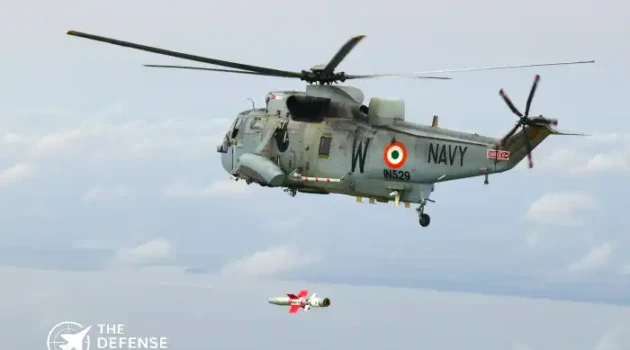
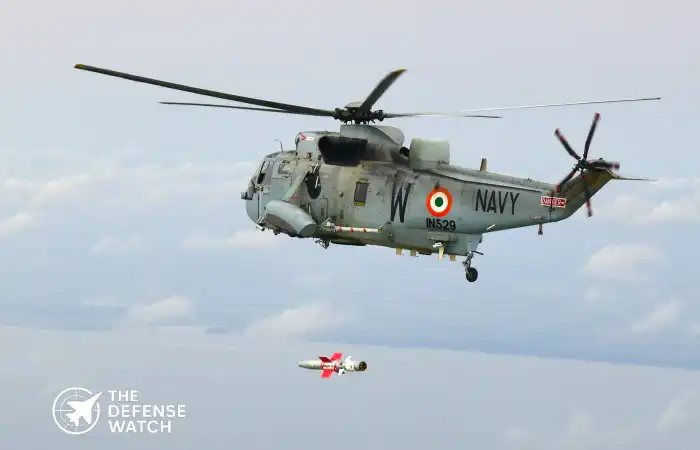
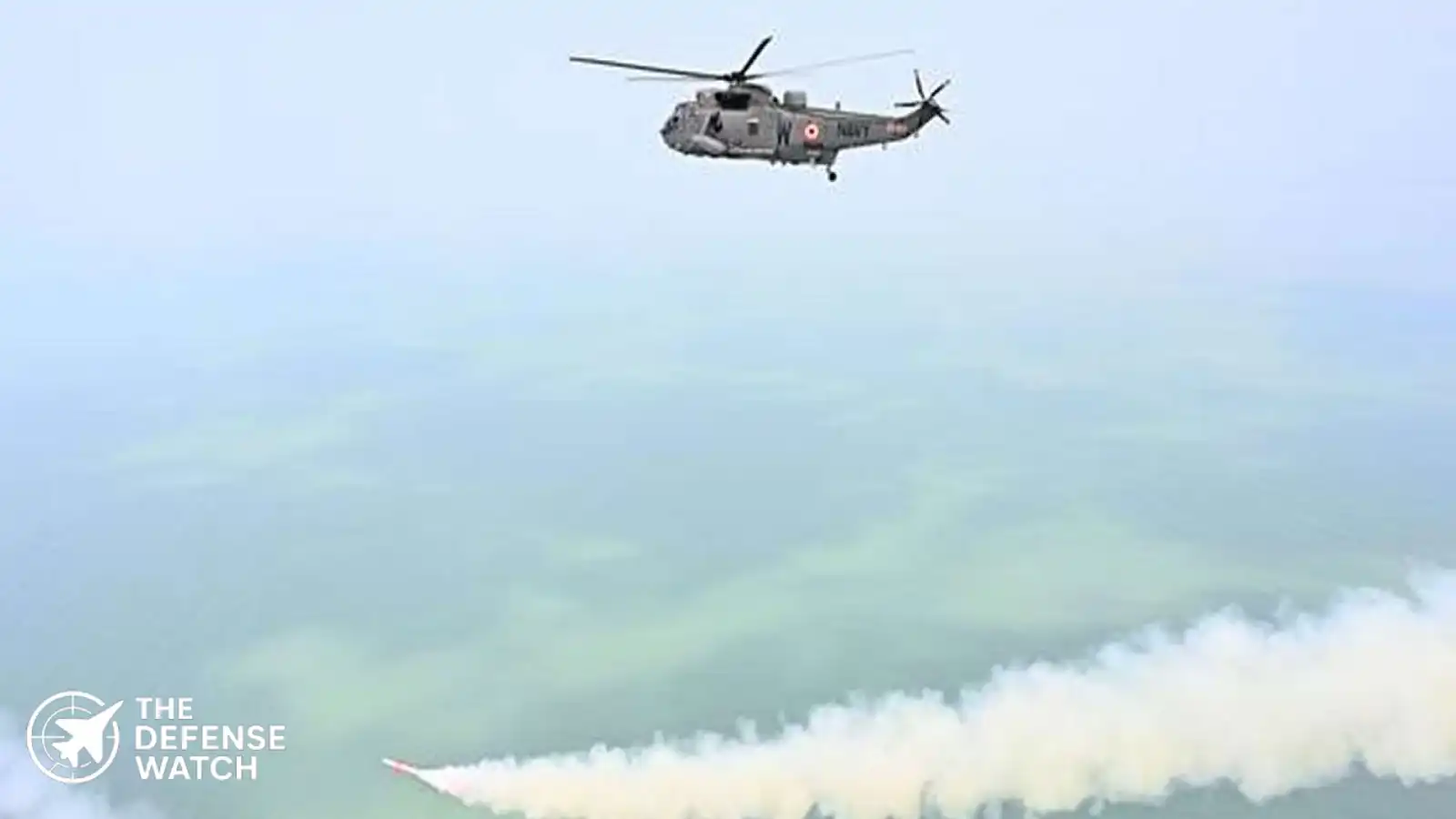
The test involved a salvo firing of the Naval Anti-Ship Missile Short Range, or NASM-SR, from a rotary-wing platform. This demonstrates the ability to engage surface targets from beyond visual range using airborne assets, a capability increasingly seen as essential in modern naval warfare.
- India conducted its first NASM-SR anti-ship missile salvo from a helicopter platform.
- The test marks a key milestone in integrating indigenous missiles with naval rotary-wing aircraft.
- NASM-SR is a short-range anti-ship missile designed for precision maritime strike missions.
- The system enhances stand-off capability for naval helicopters operating in contested waters.
- The development is led by India’s DRDO as part of broader naval modernization efforts.
Expanding Helicopter-Based Strike Capability
The NASM-SR program is led by Defence Research and Development Organisation (DRDO), which has focused on developing an indigenous, lightweight anti-ship missile tailored for helicopter deployment. Unlike larger ship- or aircraft-launched systems, NASM-SR is designed for short-range engagements with high precision.
Integrating such a missile onto naval helicopters allows forces to extend their reach without relying solely on surface combatants. Platforms such as the Sea King helicopter or future indigenous rotorcraft can operate from ships or forward bases, adding a mobile strike layer to fleet operations.
This approach aligns with global trends where navies are increasingly distributing offensive capabilities across multiple platforms to complicate adversary targeting.
Operational Impact and Tactical Advantages
The NASM-SR anti-ship missile offers several operational advantages. First, it enables stand-off engagement, allowing helicopters to strike enemy vessels while remaining outside the immediate threat envelope of ship-based defenses.
Second, the system improves response time. Helicopters can be rapidly deployed from ships or coastal bases, reducing the delay between detection and engagement.

Third, it supports swarm and saturation tactics. Multiple helicopters armed with NASM-SR missiles can coordinate attacks, increasing the probability of penetrating layered naval defenses.
From a tactical standpoint, this capability strengthens maritime denial operations. In contested regions, even smaller naval units can pose a credible threat to larger surface vessels when supported by armed helicopters.
Strategic Context in the Indo-Pacific
India’s focus on helicopter-launched anti-ship missiles reflects broader strategic pressures in the Indo-Pacific. As naval competition intensifies, the ability to project power across dispersed maritime zones has become critical.
By fielding NASM-SR, India is working to close gaps in short-range maritime strike capability. This is particularly relevant in littoral environments, where larger missile systems may be less practical due to range constraints and reaction times.
The development also complements other indigenous missile programs, reinforcing India’s push for self-reliance in defense technology. Reducing dependence on foreign systems allows for faster upgrades, better integration, and more control over operational use.
Technology and Development Path
While detailed specifications remain limited, NASM-SR is understood to feature advanced guidance and targeting systems optimized for maritime environments. These likely include active radar seekers and resistance to electronic countermeasures.
The missile’s compact design makes it suitable for integration on a range of helicopter platforms without significant structural modification. This flexibility is key for scaling deployment across the fleet.
The recent test indicates progress toward operational readiness, though additional trials are expected before full induction.
Analysis: A Shift Toward Distributed Maritime Firepower
The NASM-SR helicopter launch is more than a technical milestone. It reflects a broader shift in naval doctrine toward distributed lethality. Instead of concentrating firepower on large warships, modern navies are spreading offensive capabilities across smaller, mobile platforms.
This approach increases survivability and complicates adversary planning. A fleet supported by armed helicopters can engage targets from multiple vectors, forcing opponents to defend against a wider range of threats.
For India, this capability also enhances deterrence. Even in scenarios where surface assets are limited, helicopter-based missiles provide a credible strike option.
At the same time, challenges remain. Effective use of NASM-SR will depend on integration with surveillance systems, targeting networks, and command structures. Without accurate real-time data, the advantages of stand-off weapons are reduced.
Still, the successful test suggests that India is moving steadily toward a more flexible and resilient naval strike architecture.