Executive Summary: South Korea’s Hanwha Group has offered between $1.05 billion and $1.2 billion to acquire Austal’s U.S. operations, Reuters reported August 10, 2026. The proposed transaction would give Hanwha control of a major American shipbuilder involved in U.S. Navy and Coast Guard programs, while leaving Austal’s Australian, Philippine and Vietnamese operations outside the deal.
Hanwha Targets Austal’s U.S. Operations
Hanwha Group has offered up to $1.2 billion for the U.S. operations of Austal Limited, in a transaction that would significantly expand the South Korean conglomerate’s position in the American maritime defense sector. Reuters reported that the offer values the U.S. business at between $1.05 billion and $1.2 billion.
Austal has granted Hanwha a four-week period to conduct due diligence before the proposal can advance. The offer covers Austal’s U.S. business rather than the Australian parent company as a whole. Austal’s operations in Australia, the Philippines and Vietnam, along with its ASX-listed shares, would remain outside the proposed transaction.
The development comes as Washington seeks to expand U.S. shipbuilding capacity and reduce constraints across the naval industrial base. Austal USA operates a major shipbuilding complex in Mobile, Alabama, where it has built vessels for both the U.S. Navy and U.S. Coast Guard.
Austal USA Has A Significant U.S. Defense Portfolio
Austal USA is already involved in several programs that support U.S. maritime operations.
The company completed construction of the Independence-variant Littoral Combat Ship program in 2025, delivering the final vessel, LCS 38, to the Navy. Its Mobile operations have also been involved in Expeditionary Fast Transport vessels and steel-hulled programs for the Navy and Coast Guard.
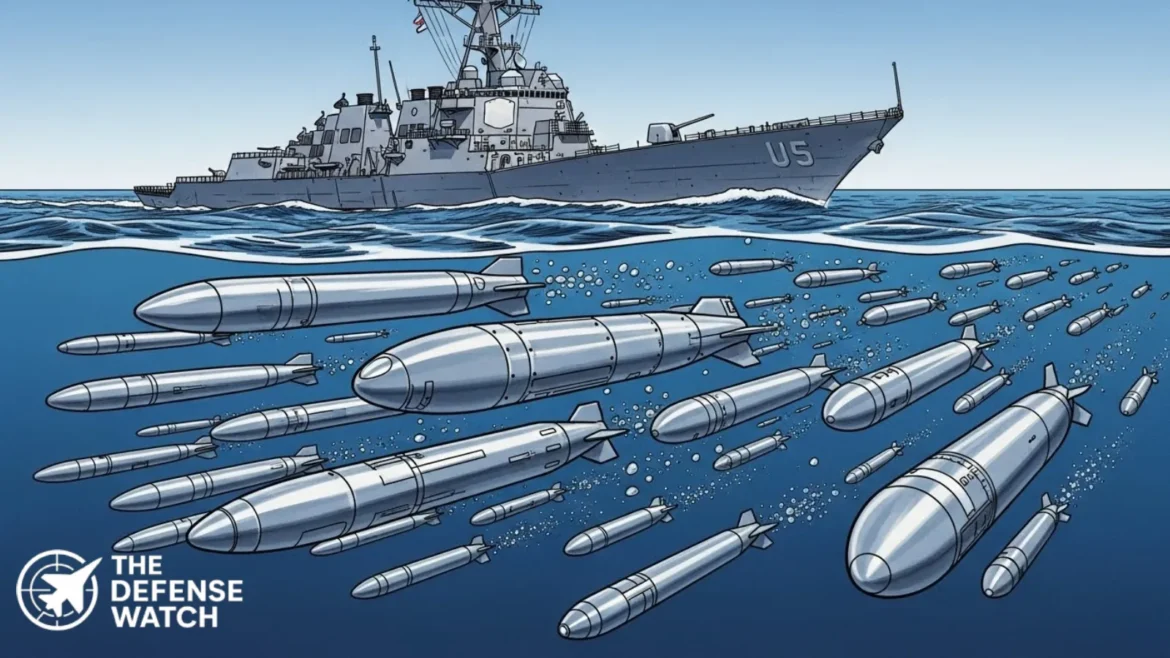
One of the most strategically important programs is the Navy’s T-AGOS 25 ocean surveillance ship. Austal USA received a contract in 2023 for detailed design and options covering up to seven vessels, with a potential cumulative value of approximately $3.2 billion.
The T-AGOS ships are designed to support anti-submarine warfare by collecting underwater acoustic information. The planned 110-meter vessels use a steel small-waterplane-area twin-hull design and are equipped to support the Navy’s Integrated Undersea Surveillance System.
The Navy’s May 2026 shipbuilding plan identifies the T-AGOS 25 program as a 10-ship class currently in design, with construction expected to begin in 2027. The document says the program is intended to replace aging surveillance ships and improve the Navy’s ability to conduct undersea surveillance.
Key Austal USA Programs
| Program | Customer | Role |
|---|---|---|
| T-AGOS 25 | U.S. Navy | Ocean surveillance and anti-submarine warfare support |
| Offshore Patrol Cutter | U.S. Coast Guard | Offshore maritime security |
| LCU 1700 | U.S. Navy | Ship-to-shore logistics |
| T-ATS | U.S. Navy | Towing, salvage and rescue |
| Expeditionary Medical Ship | U.S. Navy | Expeditionary medical support |
| Independence-variant LCS | U.S. Navy | Littoral combat and maritime security |
Austal also operates infrastructure supporting the broader U.S. submarine industrial base. The company has been expanding facilities in Mobile to manufacture modules for General Dynamics Electric Boat in support of the Virginia-class submarine program.
That means the proposed acquisition would involve more than a conventional commercial shipbuilding business. It would place Hanwha inside an American industrial network connected to surface ships, Coast Guard cutters, auxiliary vessels and submarine-related manufacturing.
Hanwha Already Has A Growing U.S. Shipbuilding Footprint
The proposed Austal transaction would build on Hanwha’s existing American shipbuilding investments.
In 2024, Hanwha Systems and Hanwha Ocean acquired Philly Shipyard for $100 million. The Philadelphia facility builds commercial vessels and has also become part of Hanwha’s strategy for developing U.S. maritime and naval capabilities.
Hanwha has subsequently invested more than $200 million in upgrading the Philadelphia shipyard’s workforce, capabilities and capacity, according to the company. In March 2026, Hanwha Defense USA and Hanwha Philly Shipyard received their first U.S. Navy subcontract, supporting concept design work for the Next Generation Logistics Ship program.
Hanwha has also obtained a U.S. Navy Master Ship Repair Agreement, allowing Hanwha Ocean to compete for Navy maintenance, repair and overhaul work.
The combination of Philly Shipyard and Austal USA would therefore give Hanwha two separate U.S. industrial locations with different capabilities.
Philadelphia provides an established commercial shipbuilding facility with ambitions for modernization and expansion. Mobile adds an existing defense shipbuilding operation with active Navy and Coast Guard programs.
Why The Mobile Shipyard Matters To Washington
The strategic importance of the transaction is tied to the U.S. Navy’s longstanding shipbuilding capacity problem.
The Navy is attempting to expand fleet capacity while the U.S. industrial base faces constraints involving skilled labor, facilities, production throughput, supplier capacity and the cost of complex ship programs.
Austal USA has already invested heavily in expanding its Mobile manufacturing infrastructure. Its Final Assembly 2 facility is intended to support larger vessels, while another facility is being developed to expand submarine module production.
For Hanwha, acquiring the U.S. business could provide an established workforce, facilities, supplier relationships and program experience rather than requiring the company to build a new American defense shipyard from the ground up.
For the United States, foreign investment in a U.S.-based shipyard can potentially bring additional capital and industrial expertise while keeping production inside the American industrial base.
That distinction is important. U.S. law generally restricts construction of vessels for the armed forces in foreign shipyards, subject to national security waivers. The relevant statute also covers major hull and superstructure components.
Consequently, an acquisition of an established U.S. shipbuilding operation would not simply give Hanwha an overseas production outlet for U.S. military vessels. The value of the transaction is tied to maintaining and expanding manufacturing capacity located within the United States.
The Financial Picture Is More Complicated
The acquisition comes despite strong strategic value in Austal USA, because the U.S. business has also faced financial pressure.
Reuters reported that Austal’s U.S. operation generated about 90% of the company’s A$108.5 million pretax profit in fiscal 2025. However, the business is expected to record an operating loss of about A$175 million in 2026, contributing to a group-wide operating loss of approximately A$113 million.
Austal’s own financial reporting shows that U.S. revenue increased substantially in the first half of fiscal 2026, but profitability declined. The company attributed pressure in part to cost issues associated with the T-ATS and Auxiliary Floating Dock Medium programs.
This makes the proposed acquisition significant from an industrial-management perspective. Hanwha would not simply be purchasing an established stream of profitable defense contracts. It would be acquiring a large production operation while taking on the challenge of improving cost performance and managing multiple concurrent shipbuilding programs.
Austal USA Financial And Industrial Context
| Indicator | Current position |
|---|---|
| Proposed acquisition value | $1.05 billion to $1.2 billion |
| FY2025 U.S. contribution | About 90% of Austal pretax profit |
| FY2026 expected U.S. operating result | About A$175 million loss |
| Major location | Mobile, Alabama |
| Key customers | U.S. Navy and U.S. Coast Guard |
| Major current capability | Aluminum and steel naval shipbuilding |
| Strategic expansion | Surface vessels and submarine-related manufacturing |
Hanwha’s Existing Stake Reduces The Strategic Surprise
Hanwha’s interest in Austal is not new.
The South Korean company previously acquired a 9.9% stake in Austal and received U.S. clearance in 2025 for a potential increase in its investment. Hanwha said the Committee on Foreign Investment in the United States found no unresolved national security concerns regarding its investment.
Australia subsequently approved an increase in Hanwha’s direct stake to 19.9%, subject to restrictions designed to protect sensitive information and limit Hanwha’s influence.
The proposed purchase of Austal’s U.S. operations is therefore a substantially different step from Hanwha’s earlier minority investment.
Instead of holding a minority position in a global Australian shipbuilder, Hanwha would acquire direct control of a major U.S.-based defense manufacturing operation if the transaction is completed.
The Four-Week Due Diligence Period Is The Next Key Step
The immediate issue is whether Hanwha’s offer survives due diligence and proceeds to a formal transaction.
Reuters reported that Austal has provided Hanwha with four weeks to examine the U.S. business. The final structure would also have to account for the regulatory and contractual requirements associated with sensitive U.S. defense programs.
The proposed deal does not affect Austal’s agreement with the Australian government, according to Reuters. The separation of the U.S. business from Austal’s Australian operations is particularly important because Austal remains involved in Australia’s strategic defense programs.
If completed, the transaction would mark another major step in Hanwha’s effort to establish itself as a U.S.-based maritime defense industrial player.
More broadly, it would illustrate how foreign capital and shipbuilding expertise are increasingly being used to expand American maritime manufacturing capacity without moving military ship production outside the United States.
For the U.S. Navy, the most important question will not simply be ownership. It will be whether new investment can translate into higher production capacity, stronger program execution and improved cost performance at a time when additional shipbuilding capacity is becoming increasingly important.