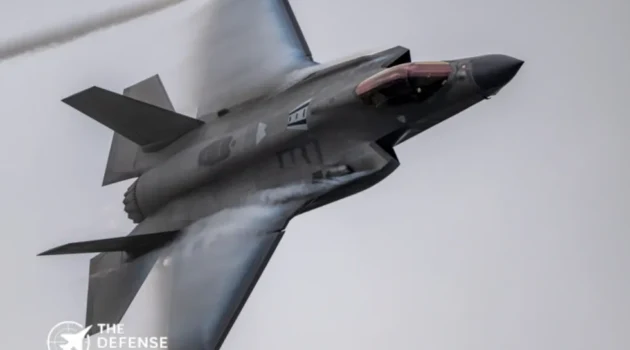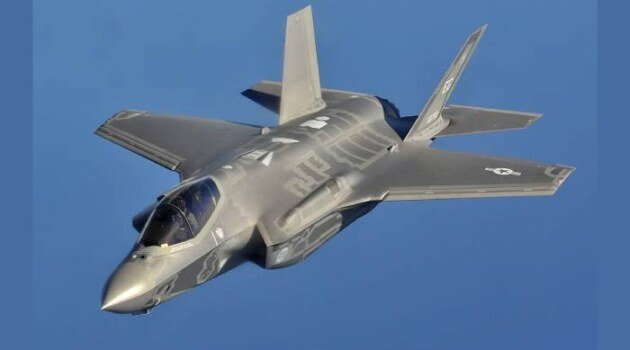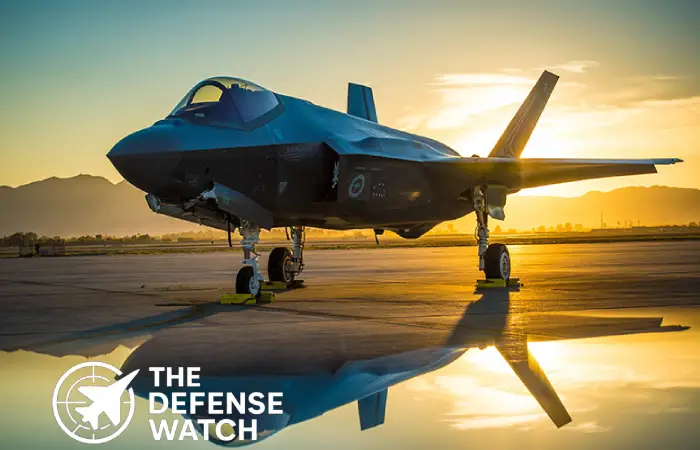
Executive Summary: The U.S. Navy has awarded Lockheed Martin an $879 million contract to produce critical F-35 aircraft armament equipment for U.S. military branches and international operators.
The award supports Lot 18 and Lot 19 production aircraft and covers missile launchers, bomb racks, gun systems, pylons, and adapters required to maintain delivery schedules and combat readiness through 2030.
The U.S. Department of Defense announced that Naval Air Systems Command awarded the firm-fixed-price order to Lockheed Martin Aeronautics under a previously established basic ordering agreement tied to the F-35 Lightning II program.
Valued at approximately $879.1 million, the award funds production and delivery of aircraft armament equipment for F-35 variants operated by the U.S. Air Force, U.S. Navy, U.S. Marine Corps, Foreign Military Sales customers, and non-U.S. program partners.
The contract work will be performed primarily in Fort Worth, Texas, with completion expected by February 2030.
Deep Technical & Strategic Context Analysis
The contract centers on one of the least publicly discussed but operationally essential portions of the F-35 enterprise: the aircraft’s integrated weapons carriage and release architecture. While much attention surrounding the F-35 program focuses on stealth coatings, sensors, and mission systems, the combat effectiveness of the platform ultimately depends on the reliability of its armament equipment suite.
These systems include pneumatic and electro-mechanical bomb racks, internal and external pylons, missile launch rails, gun assemblies, and adapters that allow the aircraft to employ a wide range of precision-guided munitions. The equipment is engineered to preserve low observable characteristics while enabling rapid weapon deployment across multiple mission profiles, including air superiority, suppression of enemy air defenses, maritime strike, and close air support.
The timing of the award is strategically significant. F-35 production rates remain elevated as NATO allies and Indo-Pacific operators continue fleet expansion programs amid heightened global security competition. Several nations, including Poland, Finland, Germany, Switzerland, Singapore, and additional Middle Eastern operators, are either preparing to receive new aircraft or expanding existing procurement plans through the latter half of the decade.
Lot 18 and Lot 19 aircraft are expected to incorporate incremental hardware refinements aligned with the F-35’s Block 4 modernization roadmap. That upgrade effort is intended to expand weapons compatibility, increase onboard processing capacity, and improve operational flexibility for future munitions integration. Reliable production of armament subsystems is therefore critical not only for aircraft deliveries, but also for sustaining the broader modernization trajectory of the global F-35 fleet.
The Pentagon’s use of a firm-fixed-price structure is also notable. Under this contract model, the contractor assumes greater responsibility for controlling production costs and schedule execution. This differs from cost-reimbursement structures often used during early development programs, where governments absorb a larger share of technical and financial risk. In mature production phases such as the F-35’s current stage, fixed-price contracting is intended to stabilize procurement predictability and reduce long-term acquisition volatility.
Contract Breakdown & Details
Scope of Work
The order covers production and delivery of:
- Missile launchers
- Bomb racks
- Gun systems
- Aircraft pylons
- Weapons adapters
- Associated armament integration equipment
These components support F-35 aircraft deliveries across multiple operators and service branches.
Supported Operators
The contract supports:
- U.S. Air Force
- U.S. Navy
- U.S. Marine Corps
- Foreign Military Sales customers
- Non-U.S. F-35 program participants
Contract Structure
- Contract Value: $879,098,832
- Contract Type: Firm-fixed-price order
- Parent Agreement: Basic Ordering Agreement N0001924G0010
- Award Number: N0001926F0233
- Contracting Authority: Naval Air Systems Command
- Performance Location: Fort Worth, Texas
- Completion Date: February 2030
- Competition Status: Not competitively awarded
Funding Breakdown
The Pentagon stated that funding obligated at the time of award includes:
- Fiscal 2026 Air Force aircraft procurement: $83.6 million
- Fiscal 2026 Navy aircraft procurement: $53.1 million
- Fiscal 2025 Navy aircraft procurement: $74.9 million
- Fiscal 2025 Air Force aircraft procurement: $37.3 million
- Fiscal 2024 Navy aircraft procurement: $79.2 million
- Fiscal 2024 Air Force aircraft procurement: $78.2 million
- Foreign Military Sales funding: $333.6 million
- Non-U.S. participant funding: $139.2 million
The Department of Defense added that approximately $157.4 million in obligated funding will expire at the end of the current fiscal year.
F-35 Global Sustainment Pressure Continues to Grow
The award also underscores the increasing logistical burden associated with sustaining the world’s largest fifth-generation fighter fleet. More than 1,100 F-35 aircraft have now been delivered globally, creating growing demand for replacement components, weapons integration hardware, and depot-level sustainment infrastructure.
Armament equipment production has become especially important as operators accelerate live-fire certification programs and integrate newer stand-off weapons. Upcoming Block 4 capabilities are expected to expand compatibility with systems such as the AIM-260 Joint Advanced Tactical Missile, SPEAR 3, and additional long-range precision strike weapons tailored for Indo-Pacific and European operational requirements.
For Lockheed Martin, the contract reinforces the long-term industrial stability of the F-35 production ecosystem at a time when allied demand continues to outpace many earlier Pentagon projections.