

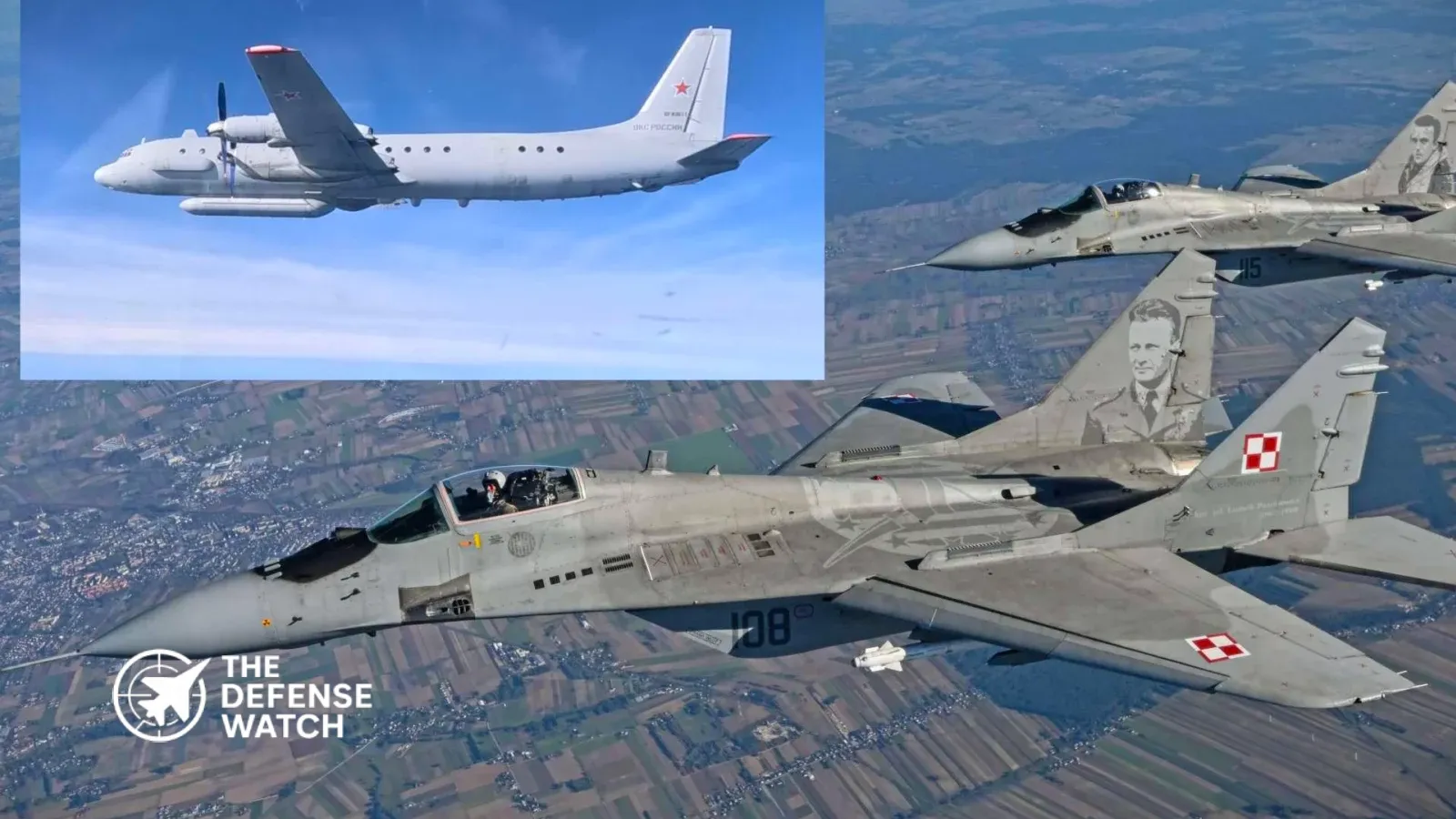
- Polish Air Force MiG-29 fighters intercepted a Russian Il-20 reconnaissance aircraft over the Baltic region.
- The Il-20 is a signals intelligence platform designed for electronic surveillance and battlefield awareness.
- The intercept reflects increasing NATO-Russia intelligence competition near allied airspace.
- Incident occurred amid ongoing NATO air policing missions and heightened regional alert levels in 2026.
- The encounter underscores persistent ISR activity shaping the Baltic security environment.
Polish MiG-29 Intercept Russian Il-20 Highlights Rising Baltic Tensions
The Polish MiG-29 intercept Russian Il-20 incident underscores growing intelligence competition over the Baltic Sea, as NATO air policing forces respond to increased Russian surveillance activity near allied airspace.
The Big Picture
NATO’s eastern flank has become a focal point for persistent air and electronic surveillance operations since the escalation of tensions with Russia following the Ukraine war.
Baltic airspace now serves as a contested intelligence environment. NATO allies routinely scramble fighters to monitor Russian aircraft operating near or along alliance boundaries. These missions are part of a broader deterrence posture designed to maintain situational awareness and signal readiness.
Poland plays a central role in this effort. Its air force supports NATO’s Baltic Air Policing mission while also defending national airspace. The continued use of legacy Soviet-era platforms such as the MiG-29 alongside newer Western systems reflects a transitional force structure adapting to evolving threats.
What’s Happening
Polish Air Force MiG-29 fighters intercepted a Russian Il-20 reconnaissance aircraft during a recent mission over the Baltic region.
The Russian Il-20, a modified electronic intelligence aircraft, conducted a flight pattern consistent with signals collection near NATO airspace. Polish authorities scrambled their aircraft in response, in line with standard NATO quick reaction alert procedures.
The intercept occurred in international airspace but close enough to NATO territory to trigger monitoring and escort actions. Such encounters remain routine but carry operational significance due to the sensitive nature of ISR activity.
The Il-20 platform is equipped with radar and electronic surveillance systems designed to collect communications and emissions data. These capabilities allow Russia to map NATO radar coverage, track aircraft movements, and assess response times.
Why It Matters
The Polish MiG-29 intercept Russian Il-20 event highlights the central role of intelligence gathering in modern military competition.
ISR missions like those conducted by the Il-20 provide critical data that can shape future operations. By probing NATO air defenses, Russia can identify vulnerabilities and refine electronic warfare tactics.
For NATO, intercepting these aircraft ensures transparency and control. It prevents unmonitored surveillance near sensitive areas and reinforces the credibility of allied air defense systems.
The encounter also reflects the normalization of close military interactions in contested airspace. While professional and controlled, these operations increase the risk of miscalculation if procedures are not strictly followed.
Strategic Implications
Persistent ISR activity over the Baltic region strengthens Russia’s situational awareness while testing NATO readiness.
NATO’s response, including rapid interception by Polish MiG-29 fighters, demonstrates operational discipline and alliance cohesion. It sends a clear signal that allied airspace remains actively defended.
The interaction also contributes to a broader pattern of strategic signaling. Russia uses reconnaissance flights to assert presence and gather intelligence. NATO uses intercepts to reinforce deterrence without escalation.
This dynamic creates a continuous cycle of observation and response, shaping the regional balance of power.
Competitor View
Russia likely views these missions as essential for maintaining visibility into NATO force posture and movements.
From Moscow’s perspective, the Il-20 provides a relatively low-risk method of collecting valuable intelligence without crossing into NATO airspace. The presence of intercepting fighters is expected and factored into mission planning.
At the same time, Russia may interpret frequent NATO intercepts as confirmation of heightened alert levels and defensive sensitivity along the alliance’s eastern flank.
Other actors, including China, observe these interactions as part of broader lessons on ISR competition and airspace management between major military blocs.
What To Watch Next
NATO will likely continue to increase the tempo of air policing missions across the Baltic region.
Poland is also advancing modernization efforts, including transitioning from MiG-29 fighters to more advanced platforms such as the F-35. This shift will enhance detection, tracking, and response capabilities against ISR aircraft.
Future encounters may involve more advanced aircraft and electronic warfare measures, reflecting the evolving nature of aerial surveillance competition.
Monitoring changes in flight frequency, routes, and escort behavior will provide insight into shifting operational patterns.
Capability Gap
The continued reliance on MiG-29 aircraft highlights a capability gap in legacy platform survivability and sensor integration.
While effective for interception, the MiG-29 lacks the advanced sensor fusion and networked warfare capabilities of fifth-generation fighters. This limits its ability to fully exploit or counter sophisticated ISR platforms like the Il-20.
Poland’s ongoing modernization aims to close this gap by integrating stealth aircraft and advanced command and control systems.
However, until the transition is complete, NATO operations will depend on a mix of legacy and modern assets.
The Bottom Line
The Polish MiG-29 intercept Russian Il-20 incident reflects a sustained and intensifying intelligence contest over the Baltic that is shaping NATO’s deterrence posture.


