American And Italian Forces Strengthen Allied Partnerships Through German Military Qualification
U.S. and Italian soldiers successfully completed the German Armed Forces Proficiency Badge assessment during a comprehensive five-day evaluation conducted at Caserma Del Din, Italy, from February 2-6, 2026, according to official reports from the U.S. Department of War.
The German Armed Forces Proficiency Badge represents one of the few foreign military awards authorized for wear on formal U.S. service uniforms, making this multinational training event particularly significant for participating American troops.
Record Participation In Joint Military Assessment
More than 110 candidates from American and Italian armed forces participated in the rigorous qualification challenge. The U.S. contingent included 99 soldiers representing multiple commands: the 173rd Airborne Brigade, 207th Military Intelligence Brigade, 517th Geospatial Planning Cell, 79th Theater Sustainment Command (Forward), 21st Theater Sustainment Command, and U.S. Army Southern European Task Force, Africa. They were joined by Italian paratroopers in pursuing the prestigious qualification.
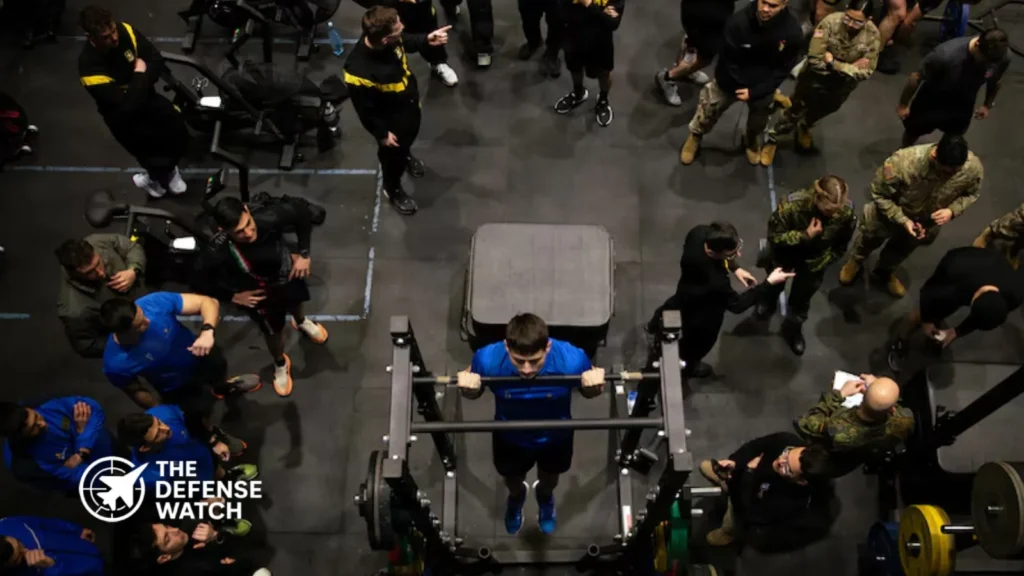
German soldiers assigned to Support Battalion 8, 10th Panzer Division, administered the comprehensive assessment. Evaluators determined whether candidates met standards for one of three qualification levels: gold, silver, or bronze.
Comprehensive Military Skills Testing
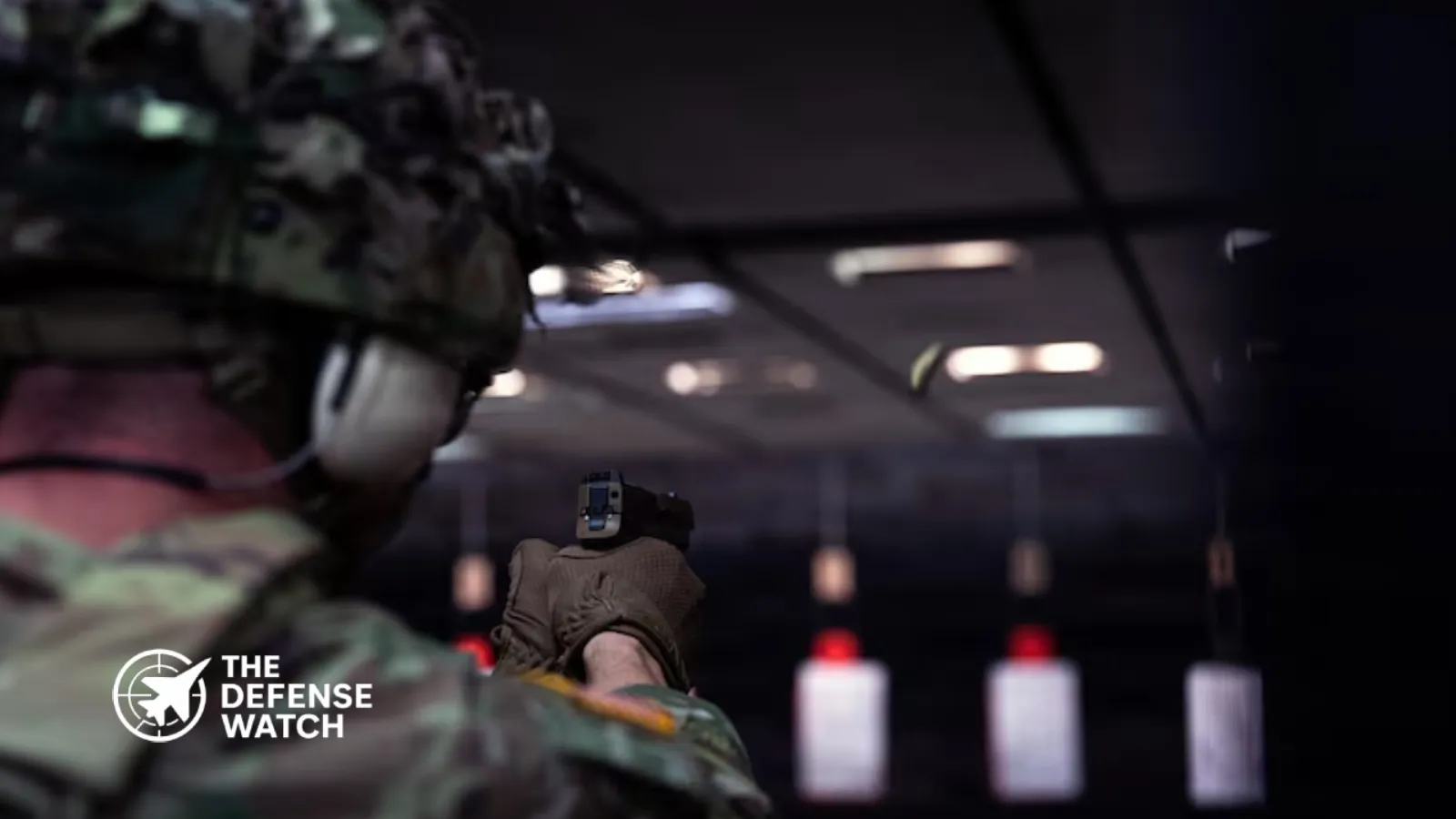
The multi-day assessment challenged participants across physical fitness, military proficiency, and academic competencies. Candidates completed the German armed forces’ basic fitness test, swimming evaluations, pistol marksmanship assessments, and road marches ranging from three to seven miles while carrying 35-pound packs.
Academic requirements tested competency in chemical, biological, radioactive, and nuclear first-aid procedures, ensuring candidates demonstrated comprehensive military readiness beyond physical capabilities.
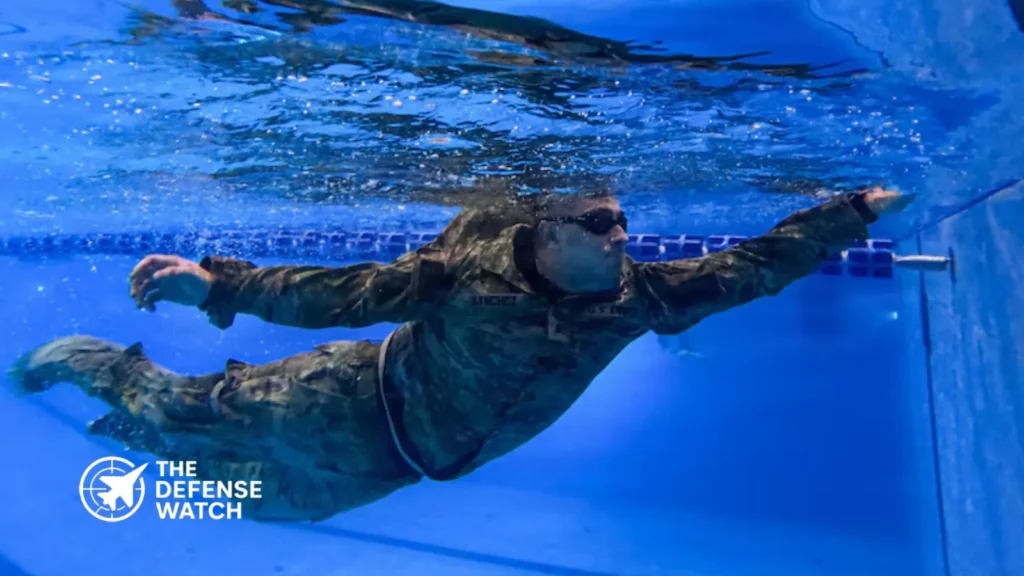
According to U.S. Army 1st Lt. Mitchell Hansen, executive officer for the U.S. Army Southern European Task Force Africa’s intelligence and sustainment company, the 100-meter swim proved particularly challenging. The event required candidates to swim the full distance in complete military uniform before removing their blouses and trousers and throwing them out of the pool.
“It builds trust and camaraderie working with our German partners so we can complete our mission both in Europe and in Africa,” Hansen stated. “This training has really opened my eyes, working with our Italian and German partners, because they each have different processes for completing the mission.”
Building Allied Military Cooperation
U.S. Army Staff Sgt. Michelle Alvarado, an all-source intelligence analyst assigned to the 17th Military Intelligence Company, 173rd Mobile Brigade Combat Team, emphasized the value of cross-national training. Having previously earned her U.S. Army Expert Soldier Badge, Alvarado noted the swim assessment presented a unique challenge outside typical occupational requirements.
Training with allied forces teaches us how differently they operate in different environments, what they’re proficient in and what we can learn from them,” Alvarado explained.
German Army Capt. Stefanie Mayer, executive officer for 2nd Company, Support Battalion 8, led the team administering the assessment. Mayer noted both American and Italian candidates demonstrated exceptional fitness and training levels throughout the evaluation period.
(adsbygoogle = window.adsbygoogle || []).push({});“Especially notable was the camaraderie between the candidates,” Mayer observed. “They were cheering each other on and having fun with these disciplines. We are looking forward to repeating this event again, maybe forming a lasting partnership, and hopefully having the opportunity to come back or have a team do something with an American proficiency badge for German soldiers.”
Strategic Objectives Achieved
The assessment fulfilled multiple strategic objectives for U.S. European Command operations. Event organizers identified three primary goals: strengthening bonds between U.S. service members, building partner-nation military relationships, and promoting esprit de corps while showcasing military and physical preparedness.
These objectives align with broader NATO interoperability initiatives and U.S. strategic priorities in the European theater, where multinational cooperation remains essential for collective defense postures.
Final Results And Recognition
The weeklong assessment concluded with an awards ceremony on February 6, where candidates received formal recognition for their achievements. Final score calculations determined U.S. recipients earned 11 gold badges, 30 silver badges, and 19 bronze badges. The Italian cohort received six gold and six silver badges.
The high success rate among participants reflects the professional caliber of troops assigned to European theater operations and underscores the effectiveness of current U.S. military training programs in preparing personnel for multinational challenges.
NATO Interoperability Implications
This joint assessment demonstrates practical implementation of NATO standardization agreements and interoperability protocols. The ability of American, Italian, and German forces to conduct seamless multinational evaluations reflects years of alliance-building efforts and shared military standards.
(adsbygoogle = window.adsbygoogle || []).push({});Such exercises prove particularly valuable as NATO continues adapting to evolving security challenges in Europe. The personal relationships and professional respect developed through shared military challenges contribute to operational effectiveness during actual coalition operations.
U.S. Forces Europe Operations
The U.S. Army maintains robust forward presence in Europe through units like the 173rd Airborne Brigade, known as the “Sky Soldiers,” which serves as the U.S. Army’s Contingency Response Force in Europe. The brigade’s participation in this German proficiency badge assessment aligns with its mission to provide rapid-response capabilities while building partnerships across the continent.
U.S. Army Southern European Task Force, Africa, which co-hosted the event, coordinates U.S. Army activities across Southern Europe and Africa, making multinational cooperation essential to mission success.
Future Allied Training Initiatives
The successful completion of this assessment may establish framework for recurring multinational qualification events. German officials expressed interest in developing lasting partnerships, potentially including reciprocal opportunities for German soldiers to earn U.S. military qualifications.
Such bilateral training exchanges strengthen military-to-military relationships that prove invaluable during combined operations, crisis response scenarios, and routine NATO activities.