Executive Summary:
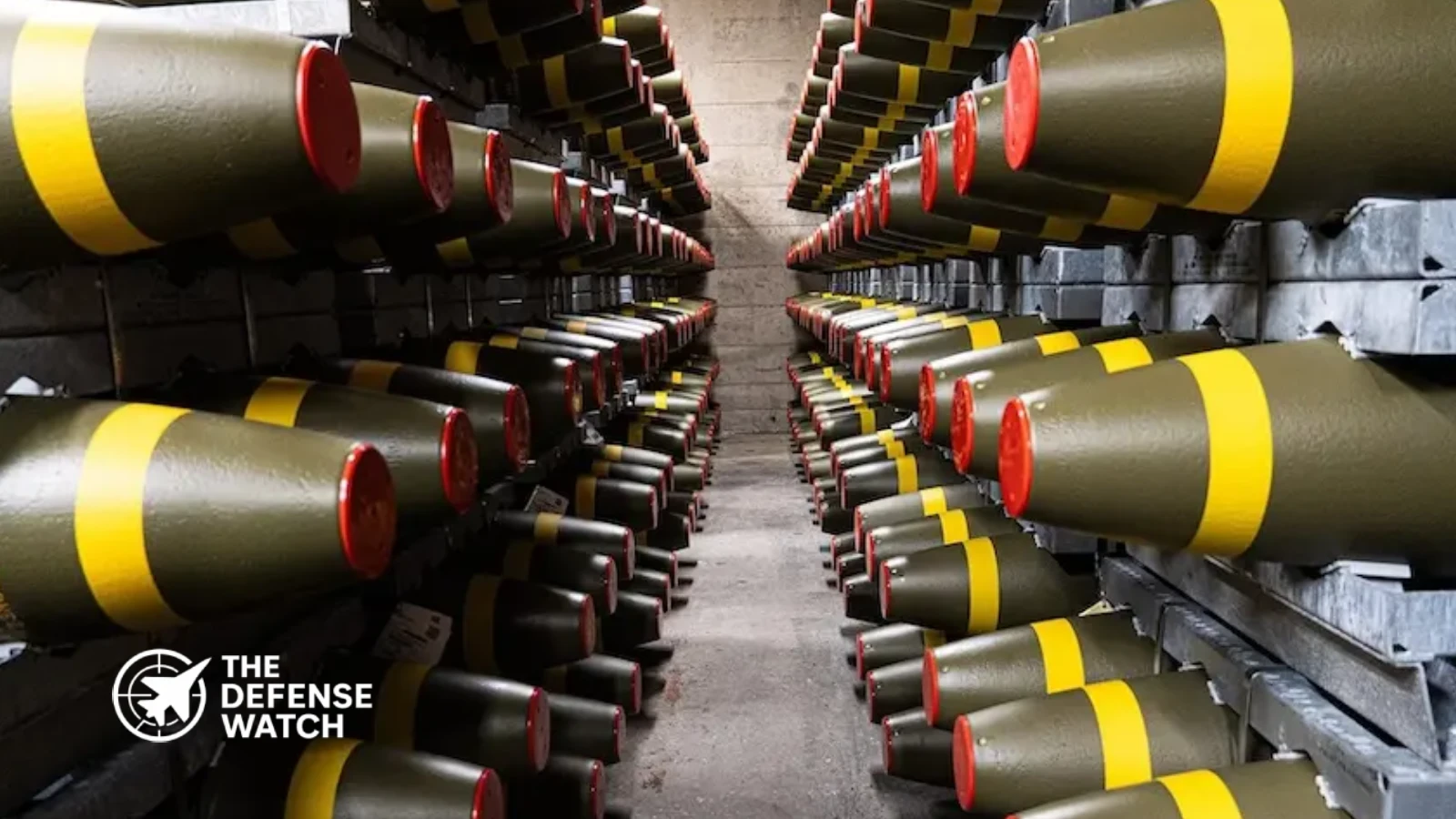
Rheinmetall took delivery of about €6.2 billion in supplies during the second quarter of 2026 as it builds inventory to support a rapid expansion of defense production. The German defense company says the investment in materials is necessary to keep new production lines supplied as its order backlog rises to about €80.4 billion.
Rheinmetall Builds Inventory to Support Defense Production
Rheinmetall is accelerating its defense production expansion after taking delivery of roughly €6.2 billion in supplies during the second quarter of 2026, according to company statements reported following its latest earnings update. The material buildup is intended to keep production lines supplied as Rheinmetall works through a rapidly expanding order book.
The scale of the inventory build highlights a central challenge facing Western defense manufacturers: securing raw materials and intermediate components quickly enough to match newly ordered production capacity.
Rheinmetall Chief Executive Armin Papperger said the company needs the materials in stock to maintain production growth. The buildup contributed to operating free cash flow falling to negative €1.33 billion during the quarter, although management expects advance payments and higher production volumes to improve cash conversion as contracts move into execution.
Rheinmetall Order Backlog Reaches €80.4 Billion
The inventory increase comes as Rheinmetall’s order position continues to expand.
New nominations reached approximately €11.37 billion in the second quarter, a 476 percent increase, while the company’s overall backlog climbed to about €80.4 billion. The backlog provides a substantial forward workload for production facilities but also increases pressure on Rheinmetall to convert orders into physical deliveries.
| Metric | Latest reported figure |
|---|---|
| Supplies received in Q2 2026 | About €6.2 billion |
| Q2 2026 sales | €3.29 billion |
| Q2 operating result | €562 million |
| Q2 new nominations | €11.37 billion |
| Backlog | About €80.4 billion |
| 2026 capital expenditure target | About 8% to 9% of sales |
| Planned annual hiring | About 10,000 employees |
Rheinmetall’s second-quarter sales increased by almost 70 percent to €3.29 billion, while operating profit rose to €562 million. First-half revenue reached approximately €5.5 billion, representing growth of 39 percent compared with the same period a year earlier.
Factory Expansion Extends Beyond Ammunition
The current expansion is not limited to final assembly of artillery ammunition. Rheinmetall is investing across several parts of the defense industrial supply chain, including explosives, propellants, rocket production and missile components.
That approach matters because ammunition output depends on a network of specialized industrial processes. Increasing shell assembly capacity alone does not necessarily produce a corresponding increase in finished ammunition if propellant, explosives, energetics or other critical components remain constrained.
Rheinmetall’s Project Firepower is intended to address several of these bottlenecks.
At its Aschau site in Bavaria, the company is constructing a major powder production facility. Rheinmetall said production at the expanded facilities will begin gradually from 2027, with maximum capacity expected in 2028.
The Aschau expansion is designed to more than double production of powder and propellant charge modules over the following 24 months. Rheinmetall currently produces about 1,700 metric tons of powder and 300,000 propellant charge modules annually at the site. The expansion is expected to add approximately 2,500 metric tons of powder and more than one million modular propellant charge modules.
The company has also set a longer-term target of reaching 20,000 metric tons of annual propellant powder production across the group by 2030.
Rocket and Missile Capacity Also Expanding
Rheinmetall is expanding rocket manufacturing as part of the same industrial buildup.
The company operates a rocket production facility in Burgos, Spain, while a new rocket motor facility at Unterlüß in Germany is expected to become operational during the first quarter of 2027.
The expansion is particularly relevant to the broader European effort to increase domestic production of precision weapons and other munitions.
Rheinmetall has also announced cooperation with Lockheed Martin on production of ATACMS missiles in Germany. Reuters reported in August that the production ramp will take time, illustrating the broader problem facing Western militaries: industrial capacity cannot be expanded at the same speed as operational demand.
Romania Contract Adds Pressure to Production Network
One of the largest recent additions to Rheinmetall’s workload came from Romania.
In May 2026, Romania awarded Rheinmetall contracts worth €5.7 billion covering Lynx combat vehicles, Skyranger air defense systems, ammunition and naval vessels. The program is being carried out under the European Union’s Security Action for Europe framework, with deliveries scheduled to begin in 2028 and continue through 2030.
The package includes 298 Lynx vehicles and multiple air defense capabilities. Rheinmetall also plans to expand its industrial presence in Romania, with more than 200 subcontractors expected to participate in the supply network.
The Romanian program demonstrates how European rearmament is increasingly translating into long-term industrial commitments rather than isolated equipment purchases.
For Rheinmetall, that creates a production planning problem that extends several years into the future. Materials must be purchased well before final systems are delivered, production facilities must be expanded ahead of demand, and skilled workers must be recruited and trained before new lines reach full output.
Why the Inventory Buildup Matters
The €6.2 billion supply figure is significant because it shows that defense production expansion requires substantial working capital before additional weapons can leave a factory.
A defense company can receive large contracts without immediately generating equivalent cash flow. It may need to purchase steel, chemicals, energetics, electronics, propulsion components and other materials months or years before the customer receives the final product.
That creates a financial tension between production growth and cash generation.
Rheinmetall’s second-quarter results illustrate that tension. Sales and operating profit increased sharply, but the company simultaneously absorbed a major cash requirement to build inventory.
This is an important distinction for defense industrial analysis. Higher order backlogs do not automatically mean higher near-term deliveries. The industrial base must have sufficient production equipment, workers, suppliers, energy capacity and working capital to convert contracts into completed systems.
Capacity Expansion Is Becoming a Strategic Requirement
The European defense sector has been under pressure to rebuild industrial capacity following decades in which many production lines were optimized for comparatively low peacetime demand.
The war in Ukraine, increased NATO procurement and rising European defense budgets have changed that environment. Rheinmetall’s financial results show how rapidly demand can translate into manufacturing requirements.
The company reported a €63.8 billion backlog at the end of 2025, up from €46.9 billion a year earlier. Its weapons and ammunition business alone ended 2025 with a backlog of €24 billion.
By the first quarter of 2026, Rheinmetall’s overall backlog had increased further to €73 billion.
The latest €80.4 billion figure therefore represents another step upward.
Rheinmetall Says Factory Plans Remain on Track
Despite the pressure on cash flow, Rheinmetall says it is not reducing the planned capacity expansion.
Management expects capital expenditure to represent about 8 percent to 9 percent of sales in 2026. The company has attributed part of the reduction in projected capital spending to purchasing savings and synergies rather than cuts to planned production capacity.
That distinction is important.
Lower capital expenditure can sometimes indicate weaker demand or delayed investment. In Rheinmetall’s case, the company says the objective is to reduce the cost of adding capacity while maintaining the planned production lines and factory expansion schedule.
The company is also targeting roughly 10,000 new hires annually to support its expansion. Rheinmetall said it received more than 160,000 job applications, giving it a large potential recruitment pool.
Implications for the U.S. and NATO Defense Industrial Base
Rheinmetall’s expansion has implications beyond Germany because NATO’s ammunition requirements increasingly depend on multinational industrial networks.
For the United States, European production growth can provide additional allied capacity for ammunition, land systems and selected missile programs. At the same time, European demand competes for some of the same industrial inputs, machinery, energetics and specialized manufacturing resources needed by U.S. defense programs.
The emerging model is therefore less about individual factories and more about resilient allied production networks.
Rheinmetall’s investments in Germany, Spain, Switzerland and Romania illustrate that approach. Production is being distributed across multiple countries while companies seek greater control over critical inputs such as propellant powder, explosives and rocket components.
That can reduce dependence on individual suppliers, but it does not eliminate industrial bottlenecks. New facilities still require environmental approvals, specialized equipment, skilled workers, qualified suppliers and time to reach full production rates.
The timeline at Aschau is a clear example. Construction began in 2026, production is scheduled to ramp from 2027, and maximum capacity is expected in 2028.
What to Watch Next
The key measure for Rheinmetall will be the conversion of its exceptionally large backlog into sustained deliveries.
Three indicators will be particularly important:
- Production throughput: Whether newly expanded factories reach planned output levels on schedule.
- Cash conversion: Whether advance customer payments and higher deliveries reduce the working-capital burden created by inventory expansion.
- Supply-chain resilience: Whether Rheinmetall can secure sufficient propellant, explosives, rocket motors and other critical components as production increases.
The company’s recent results suggest that demand is no longer the primary constraint. The harder challenge is converting that demand into scalable industrial output.
Rheinmetall’s €6.2 billion inventory buildup is therefore more than a financial figure. It is an indication of the amount of material and working capital required to rebuild a defense manufacturing base capable of supporting sustained high production rates.
For NATO countries seeking to expand ammunition and weapons inventories, that industrial conversion will be just as important as signing new procurement contracts.