

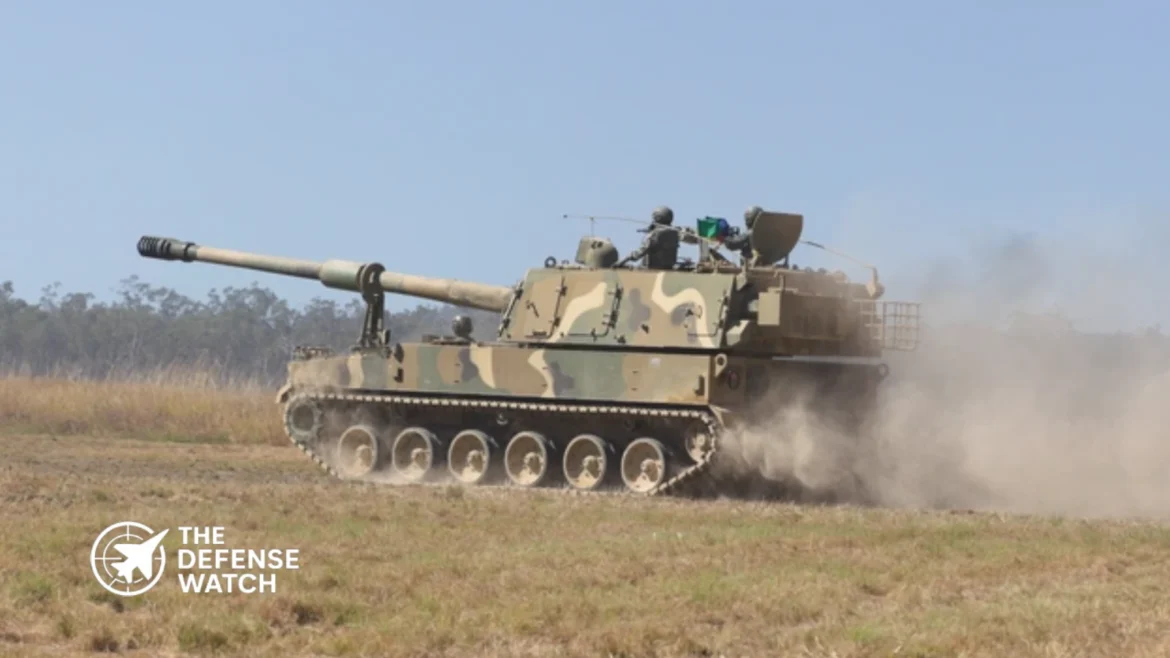
U.S. Army Moves K9MH Into Mobile Tactical Cannon Testing
Hanwha’s K9 Mobile Howitzer has entered the U.S. Army’s Mobile Tactical Cannon evaluation after Hanwha Defense USA secured an agreement to provide prototype systems for testing and Soldier experimentation. The Army effort is focused on finding a more mobile 155mm cannon system for formations currently equipped with M777 towed howitzers.
Takeaways
Hanwha’s K9MH moves into U.S. Army prototype testing under the Mobile Tactical Cannon program.
1. $100.3 Million Initial Award
Hanwha Defense USA received an initial firm-fixed-price agreement valued at $100.3 million, with a reported cumulative face value of $262.9 million if options are exercised.
2. Six K9MH Prototypes
The Army is initially set to receive six K9 Mobile Howitzer systems, with options that could increase the prototype fleet to as many as 18 systems.
3. Potential M777 Replacement
If selected after testing, the Mobile Tactical Cannon is intended to replace M777 towed howitzers in selected Army formations with a more mobile self-propelled artillery capability.
4. Four-Year Prototype Effort
The agreement covers prototyping, testing and Soldier experimentation over an estimated four-year period before a decision on future fielding.
5. U.S. Industrial Base Is Part of the Bid
Hanwha is establishing an integration and test facility in Opelika, Alabama, as part of a broader plan to localize K9 production and sustainment in the United States.
The initial agreement is valued at $100.3 million, with a reported cumulative face value of $262.9 million if available options are exercised. The arrangement covers up to 18 systems for prototyping, testing and experimentation over an estimated four years.
The award does not represent a production decision for the Army. Instead, it puts the K9MH into the hands of the service for a structured evaluation intended to determine whether the system can meet operational, technical and sustainment requirements.
Mobile Tactical Cannon Targets a Mobility Gap
The Army’s Mobile Tactical Cannon program reflects a broader reassessment of cannon artillery after years of relying heavily on towed systems for light and medium formations.
The M777A2 remains a highly mobile 155mm system by traditional artillery standards. The Army lists its weight at less than 10,000 pounds, and its digital fire control system supports faster emplacement and displacement while enabling precision munitions such as Excalibur. Two M777 systems can also be transported inside a C-130 aircraft.
The limitation is that the M777 requires a separate prime mover and crew to tow, position and relocate the weapon. A self-propelled cannon integrates the gun, mobility platform, fire-control equipment and protected crew compartment into one vehicle.
That difference becomes important when artillery units operate under persistent surveillance and counterbattery threats. The Army has highlighted the need for cannon artillery that can move rapidly between firing positions while maintaining command and control during dispersed operations.
The Mobile Tactical Cannon concept therefore is not simply about replacing one artillery piece with another. It is about changing how selected Army formations generate and sustain cannon fires.
K9MH Brings a Wheeled Approach to the K9 Family
The K9MH is a wheeled member of Hanwha’s K9 artillery family. Hanwha has positioned the system as a 155mm self-propelled artillery platform intended to combine the established K9 weapon system with the road mobility and operational flexibility of an 8×8 vehicle.
The K9 family has extensive international operating experience, with more than 2,500 systems fielded globally according to Hanwha. The platform is already operated or ordered by numerous countries, including several NATO members.
That existing user base matters for the U.S. Army because the Mobile Tactical Cannon program is explicitly focused on mature systems rather than requiring the service to begin with a completely new artillery design.
The Army’s fiscal 2026 research and development budget identifies competitive evaluation of Mobile Tactical Cannon systems during 2026, Soldier experimentation and integration testing during 2027, and a planned senior leader downselect in the fourth quarter of 2027.
Key Program Details
Item Current information Program Mobile Tactical Cannon System Hanwha K9 Mobile Howitzer Initial prototypes 6 systems Potential prototype total Up to 18 systems Initial award value $100.3 million Cumulative face value $262.9 million Evaluation period Estimated four years Main caliber 155mm Intended role Mobile self-propelled cannon artillery Potential replacement M777 in selected Army formations U.S. integration site Opelika, Alabama Why the K9MH Matters for U.S. Army Artillery
The central operational question is survivability.
Modern artillery units increasingly operate in environments where drones, electronic surveillance, counterbattery radars and long-range fires can rapidly expose firing positions. The ability to complete a fire mission and relocate before an enemy can respond has therefore become an increasingly important part of artillery effectiveness.
A self-propelled system can reduce the number of steps required to transition between movement and firing. The vehicle carries its own gun, fire-control equipment and ammunition, while its automotive mobility allows the crew to relocate without waiting for a separate towing vehicle to reposition the weapon.
The Army’s own 2026 discussion of cannon artillery development emphasizes continuous movement and the need to improve survivability during distributed operations.
For M777-equipped units, a transition to a self-propelled system could therefore affect more than tactical mobility. It could change battery organization, logistics requirements, ammunition handling, maintenance, crew procedures and the way artillery integrates with maneuver formations.
Automation and Fire-Control Integration Will Be Critical
The K9 family has evolved around automation and digital fire control, but the U.S. Army will still have to validate the specific K9MH configuration against its own network, ammunition, maintenance and operational requirements.
Compatibility with U.S. 155mm ammunition is particularly important. The Army operates a large ecosystem of 155mm projectiles and propelling charges, and any future Mobile Tactical Cannon must function within that broader fires architecture rather than operate as an isolated weapon.
The Army is also developing improvements to cannon artillery ammunition and propulsion systems alongside the Mobile Tactical Cannon effort. Its fiscal 2026 budget documents show component engineering, propelling charge development and integration testing extending into 2028.
This means the K9MH evaluation will ultimately involve more than measuring range and rate of fire. Reliability, ammunition compatibility, digital integration, crew workload, maintenance burden and the ability to operate with Army formations will all influence the final assessment.
Hanwha Is Building a U.S. Production Footprint
Hanwha’s approach to the program also includes an industrial component.
Hanwha Defense USA announced in April that it would establish an integration and test facility in Opelika, Alabama. The company signed a three-year lease and said it planned to invest more than $2 million in the U.S. artillery system supply chain during the initial phase.
The Alabama facility is intended to support integration and testing of the K9 family while Hanwha develops a broader U.S. production and sustainment network.
That matters because any eventual Army procurement would require a reliable domestic industrial base capable of producing vehicles, supporting spare parts, maintaining systems and sustaining the fleet over decades.
Hanwha has already used localized production models for K9 programs in other countries, including Australia, Poland and Romania. The company says it intends to apply similar industrial experience to its U.S. expansion.
The Award Is a Test of More Than the Gun
The K9MH now faces the part of the competition that cannot be resolved through specifications alone.
The Army will need to establish whether the system can maintain performance during realistic field conditions, including repeated movement, firing, resupply and maintenance cycles. Soldier experimentation will provide direct evidence on whether the platform is practical for the units expected to operate it.
That distinction is important. A technically capable artillery system can still struggle if its maintenance footprint is excessive, its logistics chain is complicated, or its integration with Army command and control systems requires major changes.
The prototype phase gives the Army an opportunity to identify those issues before committing to large-scale production.
M777 Replacement Would Represent a Major Organizational Change
If the Mobile Tactical Cannon ultimately replaces M777 systems in selected formations, the effect would extend beyond artillery battalions.
The M777’s low weight has made it attractive for light formations and air transport. A self-propelled 8×8 system offers greater onboard mobility and protection but introduces a substantially different vehicle and logistics profile.
The Army will therefore have to balance tactical mobility against strategic mobility, road and off-road performance, transport requirements, fuel consumption, maintenance and sustainment capacity.
That tradeoff is central to the program. The objective is not simply to find a heavier version of the M777. It is to determine whether a self-propelled cannon provides enough additional survivability, responsiveness and operational flexibility to justify the change.
A Wider Shift Toward Mobile Fires
The K9MH award comes as the Army is reassessing how it develops and fields cannon artillery.
The service’s current approach places greater emphasis on mature technology, faster experimentation and systems that can be adapted as operational requirements change. The Mobile Tactical Cannon program fits that model by testing commercially available or mature artillery designs before making a final fielding decision.
For Hanwha, the prototype award is also strategically significant. It gives the company an opportunity to demonstrate its K9 family directly to the U.S. Army while developing a domestic manufacturing and support base.
For the Army, the value of the program will ultimately be measured by whether the tested systems can provide dependable cannon fires while surviving in a battlefield where detection and counterfire happen faster than in previous conflicts.
The K9MH is now entering that evaluation process. The eventual decision will depend on Soldier feedback, technical testing, operational performance and the Army’s assessment of long-term cost and sustainment.
At this stage, the award should therefore be viewed as the beginning of a competitive evaluation, not the selection of a final M777 replacement.
Takeaways
Lockheed Martin receives a $29.6 million order for F-35 pilot flight equipment.
1. $29.6 Million F-35 Order
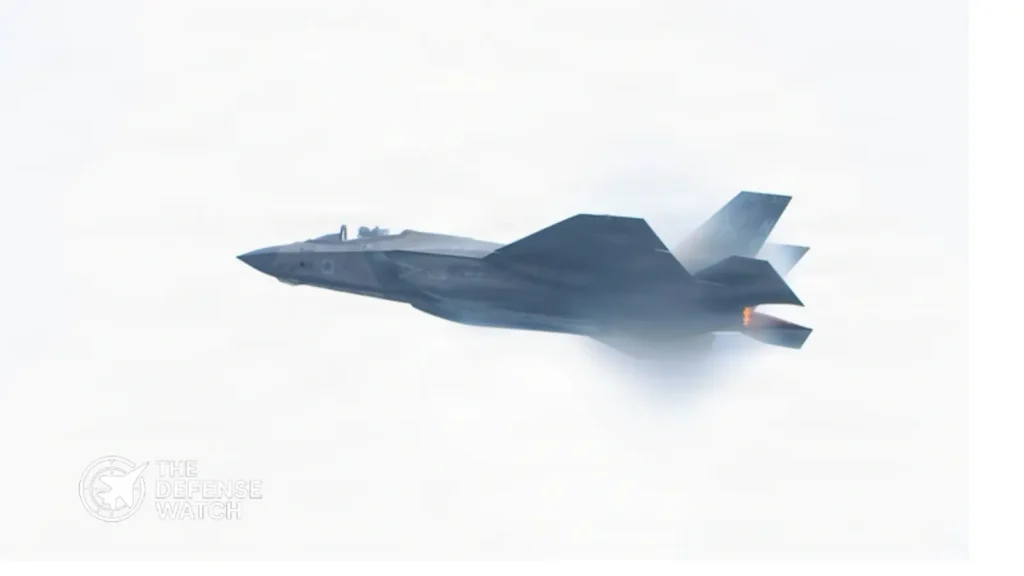
Lockheed Martin Aeronautics has received a $29.6 million firm-fixed-price order for F-35 pilot flight equipment under NAVAIR order N0001926F0236.
2. Supports Lot 18-19 Aircraft
The equipment will support Lot 18 and Lot 19 F-35 aircraft deliveries as well as operational aircraft already entering service.
3. Covers U.S. and International Users
The order supports the Air Force, Marine Corps, Navy, Foreign Military Sales customers and non-U.S. Department of War participants.
4. Work Runs Through July 2029
Work will be performed primarily in London, United Kingdom, with additional work in Greenville, Texas, and Grand Rapids, Michigan, and is scheduled for completion in July 2029.
5. International Funding Is Significant
The award includes $4.04 million in FMS funding and $5.29 million from non-U.S. Department of War participants, highlighting the international scale of the F-35 fleet.
Lockheed Martin Wins $29.6 Million F-35 Pilot Equipment Order
Lockheed Martin has received a $29.6 million U.S. Navy order to procure F-35 pilot flight equipment supporting Lot 18 and Lot 19 aircraft deliveries and operational aircraft across the U.S. military and international F-35 community.
The firm-fixed-price order, N0001926F0236, was issued against basic ordering agreement N0001924G0010. Naval Air Systems Command, Patuxent River, Maryland, is the contracting activity. The order was not competed.
The award provides another example of how F-35 procurement extends beyond the aircraft itself. Pilot equipment is a necessary part of bringing new fighters into operational service and maintaining the equipment needed by pilots already flying the aircraft.
Contract Details And Funding
The $29.6 million award is funded through several procurement accounts, reflecting the multinational customer base supported by the F-35 program.
Contract element Details Contractor Lockheed Martin Aeronautics Co. Award value $29.6 million Contract type Firm-fixed-price Order number N0001926F0236 Basic ordering agreement N0001924G0010 Aircraft supported F-35 Lot 18-19 and operational aircraft Contracting activity Naval Air Systems Command Completion July 2029 Competition Not competed 
The largest funding share comes from U.S. aircraft procurement accounts. The Air Force contribution is $11.20 million, while Navy aircraft procurement provides approximately $9.07 million.
FMS customers are providing $4.04 million, while non-U.S. Department of War participants account for approximately $5.29 million.
The combined international funding represents about 31.5 percent of the total order. That distribution underscores the extent to which F-35 equipment procurement is tied to a multinational fleet rather than exclusively to U.S. aircraft.
London Accounts For Most Of The Work
The contract has a notably international workshare profile.
Approximately 96.15 percent of the work will be performed in London, United Kingdom. Greenville, Texas, accounts for 3.81 percent, while Grand Rapids, Michigan, represents the remaining 0.04 percent.
The concentration of work in the United Kingdom is consistent with the broader industrial structure of the F-35 program, which relies on partner-country industrial participation alongside U.S. production and support activities.
NAVAIR’s F-35 program overview identifies Lockheed Martin as the F-35 prime contractor and notes the participation of major international and U.S. industrial partners in manufacturing the aircraft.
Why Pilot Equipment Matters To F-35 Readiness
Pilot flight equipment can appear secondary compared with major aircraft components, engines, weapons or sensors. Operationally, however, it is directly connected to the ability to put trained pilots into aircraft and conduct missions safely.
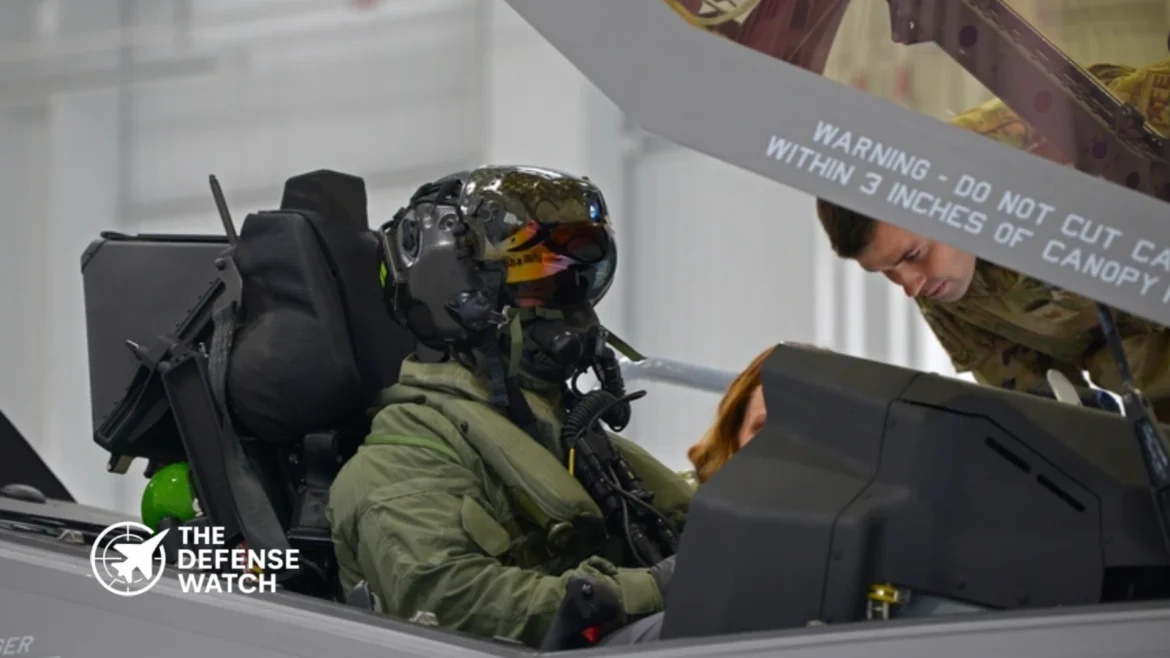
The F-35 is designed around a tightly integrated pilot-machine interface. Its helmet-mounted display system provides flight and tactical information while integrating imagery from the aircraft’s sensors.
The F-35 program’s official technical overview states that the aircraft’s sensor suite includes the AN/APG-81 active electronically scanned array radar, Distributed Aperture System, Electro-Optical Targeting System and electronic warfare capabilities. The helmet-mounted display forms an important part of how that information reaches the pilot.
The Distributed Aperture System uses infrared cameras positioned around the aircraft to generate imagery that can be displayed through the pilot’s helmet. This allows the pilot to access information that would traditionally require separate aircraft displays or visual references.
That makes pilot equipment more than conventional protective clothing. It is part of the operational interface between the pilot and the F-35’s mission systems.

The Helmet Is Part Of The Aircraft’s Sensor Interface
The F-35’s Gen III Helmet Mounted Display System is particularly important to this relationship.
Lockheed Martin’s F-35 partner information identifies Collins Aerospace as the provider of the Gen III Helmet Mounted Display System. The system is designed to provide pilots with information from the aircraft’s sensors while supporting situational awareness during flight.
The system also removes some of the traditional separation between cockpit displays and the pilot’s direct view of the battlespace.
That matters because the F-35 was designed around sensor fusion rather than simply giving the pilot access to individual sensors. Information from radar, electro-optical systems, infrared cameras and electronic warfare systems is processed into a common operational picture.
As a result, maintaining the availability and compatibility of pilot equipment is part of maintaining the aircraft’s intended mission capability.
Lot 18 And Lot 19 Support A Continuing Production Pipeline
The new order is tied specifically to Lot 18 and Lot 19 aircraft deliveries.
F-35 production is organized through successive procurement lots, with equipment and support contracts covering the systems needed to deliver and operate aircraft in each production group. Pilot equipment therefore has to remain synchronized with aircraft deliveries, training pipelines and operational fleet requirements.
The contract also covers operational aircraft, meaning the requirement is not limited to newly delivered fighters.
This distinction is important for a growing fleet. As more F-35s enter service, demand for pilot equipment expands beyond initial aircraft deliveries to include replacements, additional equipment and support for active operational units.
Lockheed Martin’s published F-35 data has previously highlighted the scale of the training and operational enterprise surrounding the aircraft. In June 2024, the company reported more than 2,460 trained maintainers, more than 16,290 trained pilots and more than 860,000 F-35 flight hours at that point in the program.
Those figures illustrate why equipment procurement must scale alongside aircraft production.
International Fleet Growth Increases Equipment Requirements
The award also demonstrates the multinational character of the F-35 fleet.
The order supports FMS customers and non-U.S. participants in addition to U.S. Air Force, Marine Corps and Navy requirements. The F-35 program’s official data lists numerous international operators and program participants, creating a large and geographically distributed user base.
For the United States, this has operational implications beyond aircraft sales.
A common aircraft platform operated by multiple allied countries creates opportunities for shared training, logistics, maintenance knowledge and interoperability. Standardized pilot equipment can contribute to that common operating framework by ensuring personnel operating the same aircraft family use equipment designed around the same cockpit and mission-system architecture.
The multinational structure also places greater importance on supply-chain coordination. Equipment must be available where aircraft and pilots are based, while replacement and support requirements must be managed across different national procurement systems.

Production And Support Extend Into 2029
The contract is scheduled for completion in July 2029, giving Lockheed Martin several years to deliver the equipment associated with the order.
The extended performance period reflects the continuing nature of the F-35 production and sustainment cycle. Aircraft delivered during the period will require trained pilots, operational equipment and support infrastructure to reach and maintain mission readiness.
The order therefore fits into a broader series of F-35 procurement actions involving aircraft equipment, spares, modifications and sustainment.
Recent F-35 procurement activity has included large orders for aircraft spares and other equipment under the same N0001924G0010 basic ordering agreement. For example, a July 2026 order valued at more than $1.6 billion procured initial spares for F-35 production aircraft supporting U.S., FMS and program-partner fleets.
The pattern shows that aircraft procurement is increasingly accompanied by a large supporting ecosystem of components, equipment and sustainment resources.
What The Award Means For F-35 Readiness
The immediate purpose of the $29.6 million order is straightforward: provide pilot flight equipment for aircraft entering delivery pipelines and for operational F-35 fleets.
Its broader significance lies in the relationship between aircraft availability and the personnel and equipment required to use those aircraft.
An F-35 cannot generate operational capacity simply because an airframe has been delivered. Pilots must be trained, equipped and supported, while maintenance personnel, spare parts, software and mission systems must also be available.
The Navy has separately emphasized the importance of F-35 component readiness as part of keeping aircraft available for training and operational missions. NAVAIR has described efforts to establish repair capabilities for an expanding range of F-35 components and to reduce dependence on outside sources for selected maintenance workloads.
The new pilot equipment order fits within that same readiness equation.
For the U.S. services and F-35 international community, ensuring that pilots have the required flight equipment as aircraft deliveries accelerate helps prevent a gap between receiving aircraft and having the personnel and equipment needed to operate them.
Bottom Line
Lockheed Martin’s $29.6 million F-35 pilot flight equipment order is a relatively small contract compared with major aircraft procurement awards, but it addresses a requirement directly connected to operational readiness.
The order supports Lot 18 and Lot 19 aircraft as well as operational F-35 fleets, with funding from U.S. services, FMS customers and non-U.S. Department of War participants.
With most of the work centered in London and completion scheduled for July 2029, the award also highlights the international industrial and operational structure behind the F-35 program.
As F-35 fleets continue to expand, procurement of pilot equipment, spares and other support items will remain an essential part of converting aircraft production into usable combat capability.
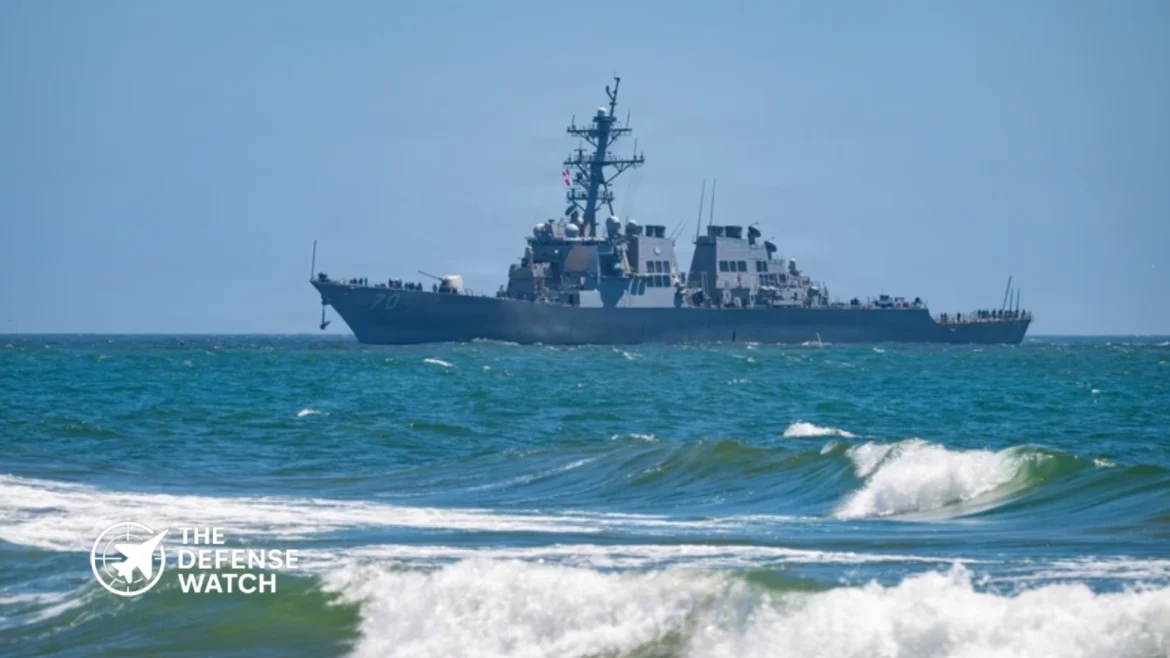
BAE Systems Land & Armaments L.P. has received a $169,216,659 firm-fixed-price contract modification to produce MK 41 Vertical Launching System canisters and ancillary equipment for the U.S. Navy and the governments of Australia, Japan and the Netherlands. The award was issued by Naval Sea Systems Command, Washington, D.C., under previously awarded contract N00024-24-C-5324.
The procurement allocates 53 percent of the purchase to U.S. requirements and the remaining 47 percent to Foreign Military Sales requirements for the three allied customers. Work will be performed 90 percent in Aberdeen, South Dakota, and 10 percent in Minneapolis, Minnesota, with completion scheduled for April 2031.
Takeaways
BAE Systems expands MK 41 Vertical Launching System canister production for four naval customers.
1. $169.2 Million Contract Modification
BAE Systems Land & Armaments has received a $169.2 million firm-fixed-price modification for additional MK 41 Vertical Launching System canisters and ancillary equipment.
2. Four Naval Customers
The award combines U.S. procurement with Foreign Military Sales requirements for Australia, Japan and the Netherlands, with the U.S. accounting for 53 percent of the purchase.
3. MK 41 Supports Multiple Missiles
The MK 41 VLS provides a common shipboard launch architecture for weapons including SM-2, SM-3, SM-6, Tomahawk, ESSM and Vertical Launch ASROC.
4. Production Runs Through April 2031
Work will be performed primarily in Aberdeen, South Dakota, with additional activity in Minneapolis, Minnesota, and is scheduled for completion in April 2031.
5. Nearly Half of Funding Comes From Allies
Foreign Military Sales funding represents 47 percent of the award, underscoring the MK 41 VLS role as a common missile-launching architecture across allied fleets.
MK 41 VLS Remains A Core Naval Weapons Architecture
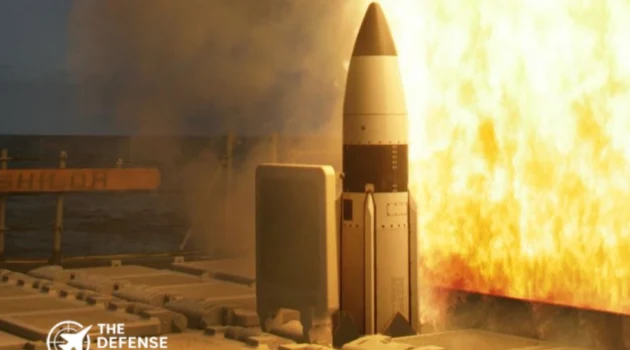
The MK 41 is more than a missile launcher. It is a below-deck storage, handling and launch architecture that provides surface combatants with a common interface for multiple missile families. The U.S. Navy describes the system as a fixed vertical multi-missile storage and firing system that improves firing rate by eliminating the need to train a launcher toward an incoming or outgoing threat.
BAE Systems has served as the MK 41 mechanical design agent and canister designer and producer for more than three decades. The company’s MK 41 canisters provide sealed storage, transportation and launch containers, with individual canister configurations tailored to different missile types and interfaces.
The architecture is particularly important because the launcher can accommodate weapons serving different mission sets. Depending on configuration, MK 41 supports Standard Missile variants including SM-2, SM-3 and SM-6, Tomahawk, Evolved Sea Sparrow Missile and Vertical Launch ASROC. That common architecture allows a ship’s available launch cells to support air defense, ballistic missile defense, strike and anti-submarine missions without requiring separate launcher families for each weapon class.
That flexibility has become increasingly important as surface combatants face a wider range of threats, including aircraft, cruise missiles, ballistic missiles, unmanned systems and surface targets. The ability to configure a common vertical launch system around different missile loads also gives fleet planners greater flexibility when balancing magazine depth, air defense requirements and long-range strike capacity.
Contract Breakdown And Financial Allocation
$169.2 Million Firm-Fixed-Price Modification
The contract modification is valued at $169,216,659 and exercises options under the existing N00024-24-C-5324 contract.
A firm-fixed-price structure establishes a negotiated price for the contracted work rather than reimbursing the contractor for actual costs. This generally places greater cost and performance risk on the contractor if production costs exceed the agreed price, although the government remains exposed to risks associated with changes in requirements, contract scope and other circumstances covered by the agreement.
U.S. And Allied Procurement Shares
The award combines U.S. requirements with FMS purchases:
- United States: 53 percent
- Australia: 23 percent
- Japan: 13 percent
- Netherlands: 11 percent
The combined 47 percent FMS share is significant because it links U.S. and allied procurement through a common naval weapons architecture.
Australia, Japan and the Netherlands operate modern surface combatants built around advanced air defense and missile-launching capabilities. Continued MK 41 procurement therefore supports not only individual ship readiness but also greater weapons-system commonality among U.S. and allied maritime forces.
Funding Allocation
The announced funding is divided across multiple U.S. appropriations and FMS accounts:
- FY2025 Weapons Procurement, Navy: $43,003,506, or 25 percent
- FMS Australia: $38,206,496, or 23 percent
- FMS Japan: $21,191,242, or 13 percent
- FY2026 Defense-Wide Procurement: $20,531,146, or 12 percent
- FMS Netherlands: $18,687,960, or 11 percent
- FY2025 Defense-Wide Procurement: $17,442,096, or 10 percent
- FY2026 Weapons Procurement, Navy: $4,963,113, or 3 percent
- FY2024 Defense-Wide Procurement: $4,152,880, or 2 percent
- FY2026 Missile Procurement, Army: $1,038,220, or 1 percent
All listed funding is obligated at the time of award. Of that amount, $4,152,880 from FY2024 Defense-Wide Procurement funds will expire at the end of the current fiscal year.
U.S. Production Footprint
Production will be concentrated in South Dakota:
- Aberdeen, South Dakota: 90 percent
- Minneapolis, Minnesota: 10 percent
- Scheduled completion: April 2031
The Aberdeen facility is central to BAE Systems’ MK 41 canister production activity. The company’s published MK 41 material identifies Aberdeen as its dedicated canister production location, reinforcing the site’s role in sustaining this long-running naval weapons supply chain.
Industry Impact And Acquisition Insight
The modification extends an established production relationship rather than introducing a new launcher design. That matters for the Navy because sustaining an existing production line can reduce technical and integration risk compared with developing a new canister architecture.
The procurement also illustrates the industrial value of the MK 41’s international installed base. BAE Systems has previously received major U.S. Navy contracts covering MK 41 canister production, including a 2024 award for FY2024 through FY2028 requirements with options extending production into 2030.
The latest award further demonstrates how Foreign Military Sales can be integrated with U.S. procurement within a shared production program. Instead of maintaining completely separate supply chains, the four customers are drawing on the same industrial base for a common launcher architecture.
For the U.S. Navy, the arrangement supports continued availability of a critical component of its surface combatant weapons architecture. For Australia, Japan and the Netherlands, participation in the same production ecosystem reinforces interoperability with U.S. naval forces and helps sustain access to a mature missile-launching system.
The long completion timeline through April 2031 also reflects the continuing demand for MK 41 capacity as navies expand missile inventories and modernize surface fleets. The launcher itself is mature, but its importance continues to grow because new and upgraded missiles can exploit an established shipboard launch architecture.
RTX Tomahawk Deal Marks Major U.S. Production Push
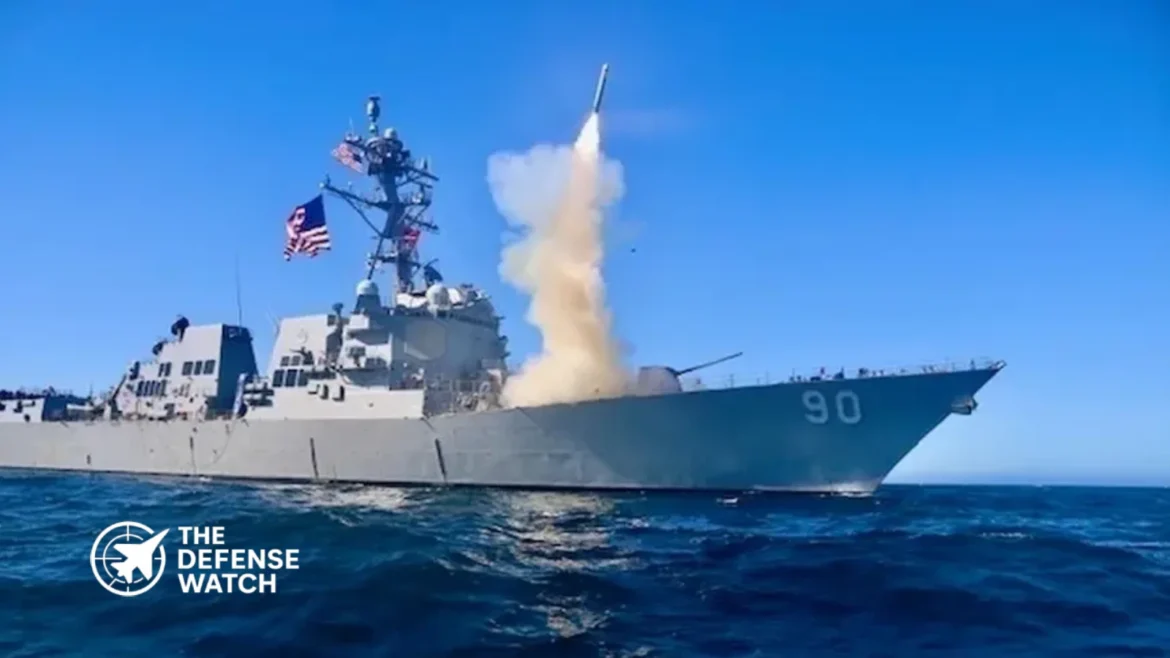
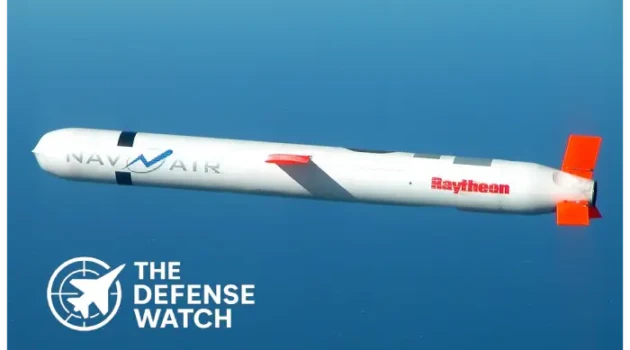
RTX has secured a $22.9 billion, seven-year agreement with the U.S. Navy to accelerate production of Tomahawk cruise missiles, according to the Navy and reporting by Reuters. The agreement is intended to increase annual Tomahawk production to more than 1,000 missiles, a major expansion from the current production rate of about 60 missiles per year.
Takeaways
The U.S. is committing major resources to expand Tomahawk production and strengthen its long range strike inventory.
1. $22.9 Billion, Seven-Year Agreement
The U.S. Navy awarded Raytheon, an RTX business, a $22.9 billion contract covering accelerated production of Tomahawk missiles.
2. Production To Exceed 1,000 Missiles Annually
The agreement is designed to increase Tomahawk output from roughly 60 missiles per year to more than 1,000 annually.
3. Long-Range Strike Capacity Is The Focus
Tomahawk provides the Navy with a ship and submarine launched long range precision strike capability and remains a major part of the U.S. conventional strike inventory.
4. Industrial Capacity Is Central To The Deal
The production expansion builds on investments by RTX in manufacturing facilities, workforce capacity and the wider supply chain supporting critical missile programs.
5. Part Of A Wider Munitions Expansion
The Tomahawk agreement follows broader U.S. efforts to accelerate production of critical munitions, including Patriot, THAAD, AMRAAM, SM-3 and SM-6 systems.
The contract formalizes a production expansion framework established between Raytheon and the Department of War in February 2026. That earlier agreement called for annual Tomahawk production to rise above 1,000 missiles as part of a broader effort to increase output of critical U.S. precision weapons.
The scale of the new agreement reflects a shift in U.S. defense acquisition priorities. Rather than focusing only on individual missile purchases, Washington is committing to longer production horizons intended to give industry greater certainty to expand factories, hire workers and strengthen suppliers.
What The $22.9 Billion Contract Covers
The Navy identifies Tomahawk as a critical long-range strike capability. The weapon can be launched from surface ships and submarines and has been used extensively by U.S. forces in operational environments.
RTX said earlier in 2026 that the company was investing in Tomahawk manufacturing capacity in Tucson, Arizona. The expansion is part of a broader $2.6 billion capital investment announced by RTX in 2025 to increase production capacity across several missile programs.
Metric Current or Announced Position Contractor Raytheon, an RTX business Customer U.S. Navy Contract value $22.9 billion Contract duration Seven years Current annual Tomahawk production About 60 missiles Target annual production More than 1,000 missiles Launch platforms U.S. Navy surface ships and submarines Production expansion Tucson, Arizona and supporting industrial base Earlier production framework Announced February 2026 The contract value should not be interpreted simply as the price of a fixed number of missiles. The seven-year arrangement is tied to a broader effort to expand production capacity and accelerate deliveries, making the industrial base itself a central part of the investment.
Why The Navy Wants More Tomahawks
Tomahawk gives the U.S. Navy a long-range strike option that can be carried by surface combatants and submarines. This allows the Navy to generate strike effects without relying exclusively on tactical aircraft operating close to defended airspace.
That distinction matters in a conflict involving sophisticated air defenses. A submarine or surface ship equipped with Tomahawks can launch weapons from considerable standoff distances, allowing the attacking force to distribute strike capacity across multiple platforms.
RTX says the Tomahawk can strike targets more than 1,000 miles away and has been used operationally more than 2,300 times.
The missile therefore occupies a different role from shorter-range weapons carried by aircraft and ships. Its value is tied not only to the performance of an individual missile but also to the number of weapons available when a campaign requires repeated strikes.
Production Capacity Has Become A Strategic Issue
The most important aspect of the agreement may be the change in production scale.
Moving from roughly 60 Tomahawks annually to more than 1,000 represents an increase of more than 16 times the previous production rate. Achieving that level requires considerably more than expanding a final assembly line.
Missile production depends on a network of specialized suppliers producing propulsion components, electronics, guidance equipment, structures, warheads and other controlled components. Bottlenecks in any one of these areas can limit total output.
The U.S. Navy has responded to this wider challenge by establishing a Portfolio Acquisition Executive for Munitions in May 2026. The organization was created to develop enterprise-level acquisition strategies and accelerate the delivery of munitions while expanding production capacity.
That approach is significant because modern missile inventories can be consumed much faster than they can be replaced. A production line designed around peacetime demand may not provide enough capacity during a sustained high-intensity conflict.
Tomahawk Expansion Fits A Broader Missile Surge
The RTX agreement is not an isolated procurement effort.
In February, Raytheon announced five framework agreements covering Tomahawk, AMRAAM, SM-3 Block IB, SM-3 Block IIA and SM-6. The company said those agreements would increase annual production of Tomahawk to more than 1,000 missiles, AMRAAM to at least 1,900 and SM-6 to more than 500.
The Pentagon has also pursued separate efforts to expand production of Patriot and THAAD missile components. Reuters reported in August that a deal involving Lockheed Martin and Northrop Grumman was designed to substantially increase production capacity for those air and missile defense systems.
Taken together, these programs show that U.S. munitions policy is increasingly focused on production depth. The objective is not simply to maintain enough weapons for existing requirements, but to create industrial capacity capable of replenishing inventories while continuing to support ongoing operations.
The Industrial Base Is Now Part Of Combat Power
For the U.S. Navy, the ability to launch Tomahawks is only one part of the equation. The Navy also needs sufficient stocks, trained personnel, mission planning infrastructure, launch systems and maintenance support to sustain the capability.
This creates a direct relationship between industrial capacity and operational endurance.
A ship may have the launch system and the crew required to fire a missile, but those capabilities provide limited value if available missile stocks cannot be replenished at an adequate rate. Increasing production therefore strengthens the Navy’s ability to sustain long-range strike operations over extended periods.
The issue is particularly important for the U.S. because the Navy operates a large global fleet and must preserve credible strike capacity across multiple theaters.
Tomahawk And The Indo-Pacific Requirement
The production expansion also has implications for long-term U.S. planning in the Indo-Pacific.
The geography of the region places a premium on long-range weapons. U.S. forces may have to operate across large distances while facing increasingly capable surveillance, missile and air defense networks.
Tomahawk does not solve every operational problem associated with a highly contested maritime environment. However, a larger inventory gives commanders more options for distributing strike capacity among ships and submarines.
The Navy’s ability to generate long-range fires from dispersed platforms is particularly relevant to concepts that seek to complicate an adversary’s targeting process. More available missiles can support a larger number of firing opportunities without requiring every strike to originate from aircraft operating close to hostile defenses.
The Production Challenge Is Bigger Than The Missile Factory
Reaching more than 1,000 Tomahawks annually will require sustained industrial performance.
The first challenge is supply chain capacity. Specialized components may require long lead times, limited production sources or highly qualified suppliers. Increasing final assembly without expanding those upstream sources could create bottlenecks elsewhere in the production process.
The second challenge is workforce expansion. High-end missile manufacturing depends on skilled engineers, technicians, machinists, quality personnel and other specialized workers. Building that workforce takes time, particularly where security requirements and specialized training are involved.
The third challenge is quality control. Higher production rates cannot come at the expense of reliability. Missile programs require extensive testing and inspection because failures in operational weapons carry significant consequences.
The fourth challenge is sustaining production over several years. A short production surge can be achieved through overtime and existing capacity. Maintaining output above 1,000 missiles annually requires a more durable manufacturing model.
RTX Had Already Increased Missile Output
RTX entered the new agreement after increasing production across its missile portfolio.
The company said in February that its investments included facility expansions and manufacturing improvements intended to support faster deliveries. A $115 million expansion in Alabama had been completed for missile production, while Tomahawk manufacturing investment was focused on facilities in Tucson.
The company also reported increased deliveries across its broader Raytheon portfolio during 2026. That matters because the same industrial base is supporting multiple high-demand weapons programs at the same time.
This creates a balancing problem for the defense industry. Expanding one missile production line may compete for labor, electronics, machine tools and supplier capacity with other programs that are also being accelerated.
A Seven-Year Commitment Changes The Acquisition Model
The seven-year structure gives Raytheon a longer planning horizon than a sequence of short-term production orders.
For industry, longer commitments can support capital investment because factories and suppliers have greater visibility into future demand. That can make it easier to justify equipment purchases, facility expansion and workforce increases.
For the government, the benefit is potentially faster and more predictable replenishment. The tradeoff is that long-term contracts require careful management to ensure production targets, costs and performance remain aligned with military requirements.
The February framework agreements already represented a move in this direction. The August contract turns that policy into a much larger financial commitment centered on Tomahawk production.
What The Deal Means For U.S. Long-Range Strike
The immediate effect of the contract is straightforward: the United States intends to build substantially more Tomahawk missiles and deliver them faster.
The broader significance is industrial.
Recent U.S. weapons procurement has demonstrated that stockpile size alone is not enough. The ability to replace weapons after they are expended is equally important, particularly when several conflicts or security commitments place simultaneous demands on the same production base.
For the Navy, the Tomahawk expansion strengthens one of its established long-range strike capabilities. For the wider U.S. defense establishment, it is another major step toward rebuilding the manufacturing capacity required to sustain precision munitions at wartime consumption rates.
The $22.9 billion agreement therefore represents more than an increase in missile orders. It is a long-term commitment to expand the industrial base behind one of the U.S. military’s most established conventional strike weapons.
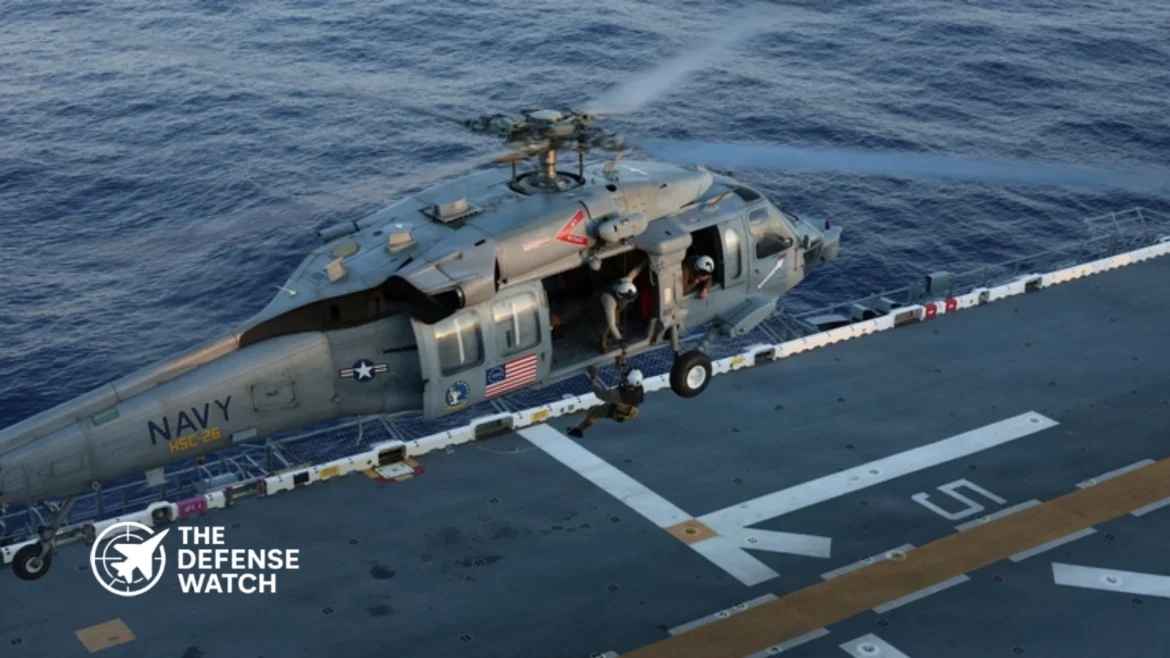
Lockheed Martin Corp. has received a $73.86 million contract modification to procure, test and deliver Indra Rigel radar electronic countermeasures systems for four Multi-Mission Surface Combatant ships being built for Saudi Arabia. The award, announced Aug. 12, 2026, is being executed under the existing N00024-18-C-2301 contract, with the Supervisor of Shipbuilding, Conversion, and Repair, Bath, Maine, serving as the contracting activity.
The modification is funded entirely through the U.S. Foreign Military Sales program for the Kingdom of Saudi Arabia. Work will be performed primarily in Madrid, Spain, accounting for 96% of the effort, while 4% will be performed in Moorestown, New Jersey. Completion is scheduled for February 2031.
Takeaways
Lockheed Martin receives a major Saudi MMSC electronic warfare modification
1. $73.9 Million Contract Modification
Lockheed Martin has received a $73.86 million modification to contract N00024-18-C-2301 for procurement, testing and delivery of Indra Rigel radar electronic countermeasures systems.
2. Four Saudi MMSC Ships
The systems are intended for MMSC 1 through MMSC 4, the four Multi-Mission Surface Combatants being delivered to the Royal Saudi Naval Forces under the U.S. Foreign Military Sales program.
3. Electronic Warfare Focus
Indra’s Rigel family is designed to monitor the electromagnetic environment, detect radar emissions and support identification and classification of potential threats, strengthening a ship’s electronic situational awareness.
4. Work Runs Through February 2031
The modification allocates 96% of the work to Madrid, Spain, with the remaining 4% performed in Moorestown, New Jersey. Completion is expected in February 2031.
5. Saudi FMS Funding
The full $73.86 million obligation comes from Foreign Military Sales funding for Saudi Arabia and does not expire at the end of the current fiscal year.
Electronic Warfare Adds a Critical Layer to Saudi MMSC Survivability
The Indra Rigel system is part of the electromagnetic warfare architecture intended for the Saudi MMSC fleet. Indra announced in 2024 that its Rigel electronic support system would be installed aboard the four Saudi MMSCs to detect and analyze radar signals, identify emitting platforms and classify threats. The company describes the system as providing information that can improve situational awareness and ship survivability in contested environments.
This capability is particularly important for a surface combatant operating in an increasingly dense electromagnetic environment. Modern naval forces rely heavily on radar for surveillance, targeting and fire control, meaning radar emissions can also provide valuable information about the location and activity of other platforms. An electronic support system can passively collect those emissions without requiring the ship to transmit its own signal, helping commanders build an electronic picture of the surrounding battlespace.
Indra’s Rigel family combines radar electronic support measures and radar electronic countermeasures capabilities. The company’s published material on Rigel describes broadband digital reception, high sensitivity, detection and classification of radar emissions, direction finding, and electronic attack functions capable of disrupting or deceiving hostile systems.
The distinction between electronic support and electronic countermeasures is important. Electronic support measures primarily provide detection, identification, classification and direction-finding information. Electronic countermeasures add the ability to interfere with or otherwise degrade an adversary’s electromagnetic systems. Public documentation concerning the Saudi MMSC program has described the broader Indra EW architecture in terms of electronic surveillance, electronic protection and electronic attack, while congressional records have also noted limitations on integration with the ship’s combat management system and access to U.S. threat-library information.
The MMSC itself is derived from the Freedom-variant Littoral Combat Ship design and was selected by Saudi Arabia for a four-ship program. Lockheed Martin identifies the MMSC as a highly maneuverable surface combatant designed for both littoral and open-ocean operations.
Contract Breakdown & Financial Allocation
$73.86 Million Modification
- Contractor: Lockheed Martin Corp., Baltimore, Maryland
- Contract: N00024-18-C-2301
- Modification value: $73,864,423
- Contract structure: Firm-fixed-price and cost-plus-fixed-fee
- Award date: Aug. 12, 2026
- Customer: Kingdom of Saudi Arabia through the U.S. Foreign Military Sales program
- Platforms: MMSC 1 through MMSC 4
- Scope: Procurement, testing and delivery of Indra Rigel radar electronic countermeasures systems
- Expected completion: February 2031
Workshare
- Madrid, Spain: 96%
- Moorestown, New Jersey: 4%
The geographic split reflects the industrial structure of the system. Indra is headquartered in Spain and is responsible for the principal Rigel electronic warfare work, while Lockheed Martin’s Moorestown operation provides a U.S. integration and program role.
Indra previously confirmed that it was working with Lockheed Martin and Saudi industry partner SAMI-AEC on the Saudi naval program. The company also has experience supplying Rigel electronic warfare equipment to other naval customers, including Germany’s K130 corvettes.
Foreign Military Sales Funding
The entire $73.86 million obligation is funded through the Foreign Military Sales program for Saudi Arabia. The funds are obligated at the time of award and do not expire at the end of the current fiscal year.
The modification is part of the much larger MMSC acquisition effort. The underlying N00024-18-C-2301 contract covers design and construction of four Saudi MMSC ships and has received multiple modifications since its original award. Earlier contract actions included long-lead material, detail design and construction, engineering support and propulsion-system sparing.
Industry Impact & Acquisition Insight
The contract structure divides financial risk between the two pricing mechanisms. The firm-fixed-price portion generally places greater cost risk on the contractor because the government agrees to a set price for defined deliverables. The cost-plus-fixed-fee portion reimburses allowable costs and provides a negotiated fixed fee, giving the contractor more protection against uncertain engineering or support costs while retaining government oversight of expenditures.
For Lockheed Martin, the modification reinforces its position as the U.S. prime responsible for integrating major systems across the Saudi MMSC program. For Indra, it expands the company’s role as a naval electronic warfare supplier within a U.S.-led Foreign Military Sales program and builds on its earlier work with Saudi naval platforms. Indra has previously supplied Rigel equipment for Saudi Arabia’s Avante 2200 corvettes.
The timing also reflects a broader shift in naval survivability requirements. Surface combatants increasingly must operate while exposed to persistent radar surveillance, electronic intelligence collection, anti-ship missile threats, unmanned systems and long-range precision weapons. In that environment, electromagnetic awareness is not simply a supporting function. It is part of the ship’s ability to understand the threat environment, manage its own emissions and respond to hostile sensors.
For Saudi Arabia, the Rigel installation adds another layer to the combat-system architecture of its four MMSC ships as the Royal Saudi Naval Forces continue modernizing their surface fleet. The four vessels are designed for coastal and open-ocean operations and measure approximately 118 meters in length, with a stated range of about 5,000 nautical miles.
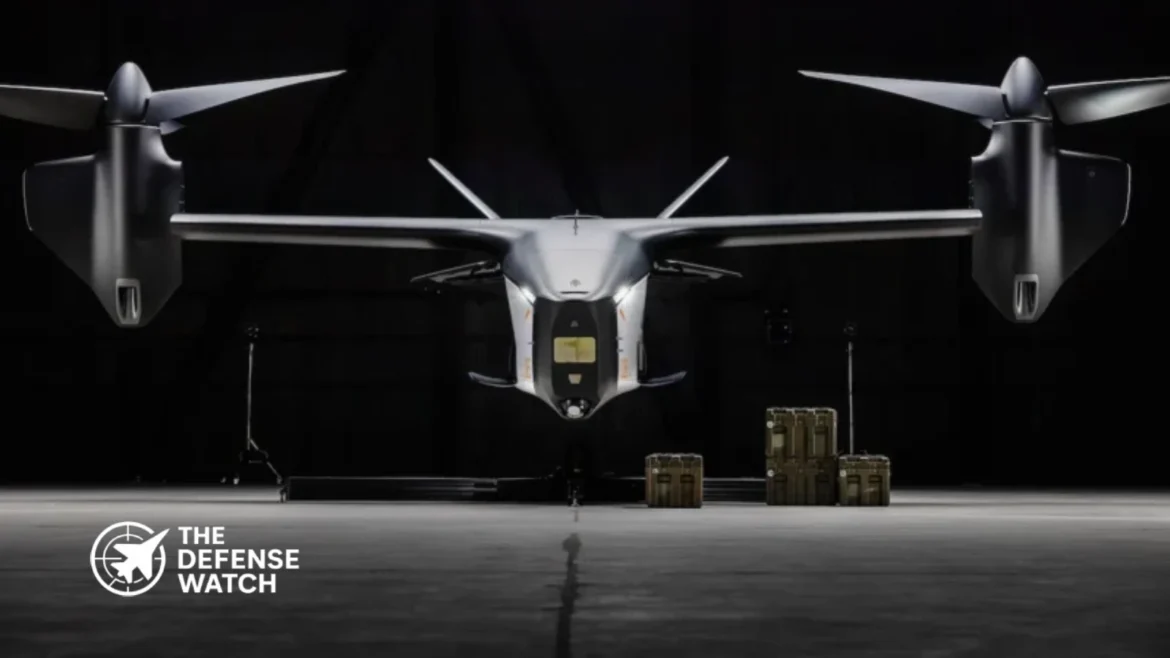
Elroy Air Inc. has received a $46.06 million firm-fixed-price Phase III Small Business Innovation Research contract from the U.S. Army to develop an autonomous Group IV hybrid vertical takeoff and landing unmanned aircraft system for modular multi-mission payload delivery. Army Contracting Command, Aberdeen Proving Ground, Maryland, is the contracting activity under contract W911QX-26-C-A016.
Takeaways
Elroy Air receives a major Army development award for autonomous heavy cargo operations
1. $46 Million Phase III Award
Elroy Air has received a $46.06 million firm-fixed-price Phase III SBIR contract from the U.S. Army for autonomous Group IV UAS development.
2. Autonomous Hybrid VTOL Aircraft
The program targets a hybrid-electric vertical takeoff and landing aircraft capable of delivering modular payloads with limited operator intervention.
3. $5.14 Million Initially Obligated
The Army obligated $5.135 million in FY2026 research, development, test and evaluation funding at award, about 11.2% of the contract’s total value.
4. Work Runs Through February 2029
All identified contract work will be performed in South San Francisco, California, with completion scheduled for Feb. 18, 2029.
5. Designed For Distributed Logistics
The aircraft’s VTOL architecture and modular payload concept are suited to logistics missions where conventional runways, crewed aircraft and exposed ground routes can create operational constraints.
The award runs through Feb. 18, 2029, with work to be performed in South San Francisco, California. The Army obligated $5.135 million in fiscal 2026 research, development, test and evaluation funding when the contract was awarded. The procurement notice states that the Army solicited bids through the internet and received one proposal.
The award represents a significant step for Elroy Air because Phase III SBIR work is intended to advance technology developed through earlier SBIR efforts toward government use and broader acquisition. Under Defense Federal Acquisition Regulation Supplement guidance, Phase III work derives from, extends or completes earlier SBIR or STTR efforts and is funded outside the traditional SBIR program structure.
Hybrid VTOL Design Targets Distributed Military Logistics
The Army’s interest centers on a class of unmanned aircraft substantially larger than the small tactical drones commonly used for reconnaissance and short-range missions. Under the Department of Defense UAS classification system, Group IV aircraft weigh more than 1,320 pounds and normally operate below 18,000 feet, although the classification is based on multiple operating characteristics rather than payload alone.
That distinction is important. A Group IV autonomous cargo aircraft is intended to move meaningful quantities of equipment rather than simply provide sensing or targeting data. The combination of vertical takeoff and landing, autonomous flight and modular payload handling can allow military units to establish aerial logistics links without building or relying on conventional runways at every destination.
Elroy Air’s Chaparral is the company’s principal autonomous cargo platform and closely matches the capabilities described in the Army award. The company describes Chaparral as a hybrid-electric VTOL aircraft designed for military resupply, with eight vertical-lift propellers and four forward-flight propellers. Current company specifications list a 500-plus-pound payload, 450-mile maximum range and 132 mph cruise speed.
The platform uses separate vertical and forward-flight propulsion arrangements. During takeoff and landing, the vertical rotors provide lift, while the aircraft transitions to wingborne flight for more efficient cruise operations. Elroy Air demonstrated autonomous transition from vertical flight to forward flight in 2025, reaching a reported 70 mph during those tests.
The modular payload concept is equally important for military use. Earlier Army SBIR work identified cargo pods that could carry supplies, sensors and fuel, with the aircraft autonomously locating and handling assigned pods using LiDAR-based perception and ultra-wideband identification technology.
That architecture gives the Army a potential logistics aircraft that can be configured around the mission rather than requiring a separate airframe for every payload category.
Contract Breakdown & Financial Allocation
$46.06 Million Total Contract Value
- Contract value: $46,058,871
- Contract type: Firm-fixed-price
- Acquisition pathway: Phase III Small Business Innovation Research
- Solicitation: Internet-based solicitation
- Proposals received: One
- Contract number: W911QX-26-C-A016
A firm-fixed-price contract places substantial cost and performance risk on the contractor. The government generally agrees to pay the established price for the defined work, while the contractor must manage its labor, materials and execution costs within that price.
$5.14 Million Initial Obligation
- FY2026 RDT&E obligation: $5,135,354
- Initial obligation as share of total contract value: approximately 11.2%
- Remaining contract value not initially obligated: approximately $40.92 million
The relatively small initial obligation compared with the contract ceiling indicates that the Army is not committing the full $46.06 million as an immediate cash outlay. Instead, funding is being obligated as authorized work progresses.
The funding is classified as research, development, test and evaluation, reinforcing that this award is centered on development and maturation rather than a straightforward production purchase.
South San Francisco Work Location
- Primary work location: South San Francisco, California
- Geographic allocation: 100% of identified contract work
- Estimated completion: Feb. 18, 2029
No foreign military sales funding, overseas work locations or separate international funding streams are identified in the award information.
From Earlier Army SBIR Work To Phase III
The new award follows a series of Army-supported development efforts involving Elroy Air’s Chaparral architecture.
In 2024, an Army Phase I SBIR award examined improvements to the aircraft’s lift capacity and utility, including skid landing gear for austere landing areas. That effort described a hybrid-electric autonomous VTOL aircraft capable of carrying approximately 300 to 400 pounds over more than 300 miles and using modular cargo pods.
A subsequent $1.9 million Army Phase II SBIR award, announced for Chaparral airdrop capability development, focused on integrating an airworthy cargo pod capable of delivering mission-relevant payloads. The effort included planned design and fabrication work followed by testing and validation of airdrop functions.
The timing of the new Phase III award is therefore significant. It comes after several years of technology maturation, including autonomous flight testing, cargo-pod integration and flight demonstrations. Elroy Air reported its first point-to-point cargo delivery with Chaparral in December 2025.
Industry Impact & Acquisition Insight
The Army’s award strengthens Elroy Air’s position in the emerging market for autonomous heavy-cargo aircraft. The company has also been pursuing commercial and dual-use applications, while expanding its manufacturing strategy with Kratos Defense & Security Solutions. In 2026, Elroy Air announced a proposed transaction that would provide capital for scaled Chaparral production, subject to closing conditions.
For the Army, the more important issue is whether the technology can transition from a technically successful aircraft into a repeatable logistics capability. Autonomous cargo aircraft have to solve more than flight autonomy. They must demonstrate reliable navigation, communications, cargo handling, maintenance, airspace integration, cyber resilience and safe operations around deployed forces.
The modular architecture could also prove important in contested logistics environments. A single aircraft capable of carrying different payload modules could support resupply, specialized equipment delivery, sensor carriage or other missions without requiring an entirely new air vehicle for each role. Earlier Army SBIR work specifically examined the use of modular pods for supplies, sensors and fuel.
The award also reflects a broader shift in military aviation toward autonomous logistics. The Army does not necessarily need unmanned cargo aircraft to replace every crewed transport or helicopter. Their value may instead come from performing repetitive or hazardous resupply missions while reducing exposure of pilots and ground convoys.
For Elroy Air, the next challenge is translating an established prototype into a system that can meet military reliability, maintainability and operational test requirements. The Phase III award gives the company a multi-year pathway to do that, with the program now scheduled to run into 2029.
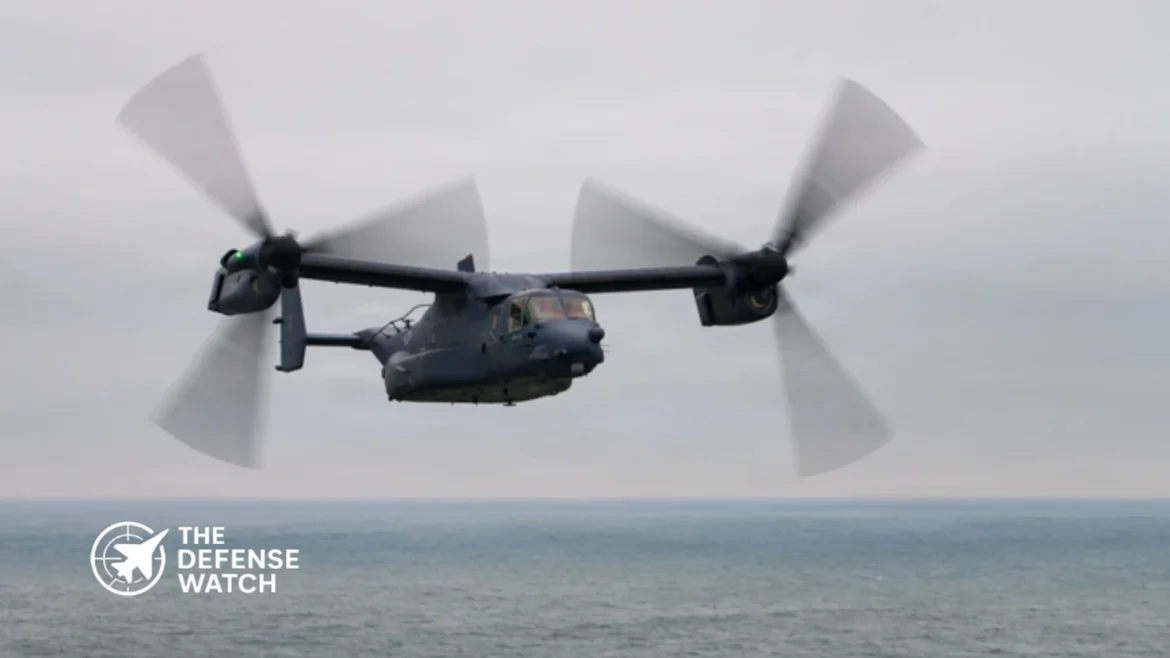
Lockheed Martin Rotary and Mission Systems, Orlando, Florida, has received a $24.25 million U.S. Air Force contract to provide continued sustainment and support for Air Force Special Operations Command training devices used by fixed-wing and tiltrotor aircrews. The award, made Aug. 6, 2026, was issued by Wright-Patterson Air Force Base, Ohio, under contract FA8621-26-C-B006 and is expected to run through Jan. 31, 2027.
Takeaways
Lockheed Martin secures continued Air Commando training support for AFSOC
1. $24.2 Million Training Contract
Lockheed Martin Rotary and Mission Systems received a $24.25 million contract to continue Air Commando training support.
2. Fixed-Wing And Tiltrotor Training
The award sustains training devices supporting Air Force Special Operations Command fixed-wing and tiltrotor aircraft, including platforms central to specialized mobility missions.
3. Work Across 10 U.S. Locations
Lockheed Martin will provide support at 10 continental U.S. locations, as well as locations outside the continental United States.
4. Funding Extends Into FY2026
$12.18 million is obligated at award, including $2.79 million in FY2025 operations and maintenance funds and $9.39 million in FY2026 funds.
5. Sustainment Through January 2027
The contract is expected to run through Jan. 31, 2027, maintaining training infrastructure that supports AFSOC readiness and aircrew proficiency.
The sole-source award provides continued support for training infrastructure distributed across 10 continental U.S. locations and additional locations outside the continental United States. The contracting activity is Wright-Patterson AFB, placing the work within the Air Force’s broader life-cycle management structure for specialized training systems.
Why AFSOC Training Device Sustainment Matters
The contract is focused on training infrastructure rather than procurement of new aircraft. That distinction is important because simulator and training-device availability directly affects how often aircrews can rehearse complex missions without consuming aircraft flight hours.
AFSOC operates a diverse fleet of fixed-wing, rotary-wing and tiltrotor aircraft. Its inventory includes the MC-130J Commando II, AC-130 variants, CV-22B Osprey, MQ-9 and other specialized platforms. The command’s missions include infiltration, exfiltration, resupply, air refueling, precision strike, command and control and intelligence, surveillance and reconnaissance.
The MC-130J illustrates why high-fidelity training infrastructure is particularly important. The aircraft performs low-visibility infiltration and exfiltration, special operations resupply and aerial refueling for helicopters and tiltrotor aircraft. It incorporates digital avionics, advanced navigation and systems designed for austere operations.
The CV-22 presents a different training challenge. As a tiltrotor, it combines vertical takeoff and landing with the speed and range characteristics of a turboprop aircraft. AFSOC uses the aircraft for long-range infiltration, exfiltration and resupply missions, making simulator-based preparation useful for complex mission planning and crew coordination.
AFSOC’s formal training structure also places significant emphasis on modeling and simulation. Its training guidance assigns responsibility for procurement, sustainment, contractor logistics support and certification of live, virtual and constructive training devices, including augmented, virtual, mixed and extended-reality systems.
Contract Breakdown & Financial Allocation
Contract Value And Performance Period
- Total contract value: $24,247,257
- Award date: Aug. 6, 2026
- Expected completion: Jan. 31, 2027
- Contract number: FA8621-26-C-B006
- Contracting activity: Wright-Patterson Air Force Base, Ohio
- Acquisition method: Sole source
The $24.25 million ceiling represents the value of the awarded contract, while the amount immediately obligated is lower.
Initial Funding
The Air Force is obligating $12,181,833 at the time of award, or about 50.2% of the total contract value.
The initial obligation consists of:
- FY2025 operations and maintenance: $2,794,000
- FY2026 operations and maintenance: $9,387,833
- Total initial obligation: $12,181,833
The funding profile indicates that the award is structured around ongoing operational sustainment rather than a one-time hardware acquisition.
Geographic Support
The contract covers 10 continental U.S. locations, along with additional locations outside the continental United States.
The announcement does not provide the individual site names or the dollar allocation assigned to each location. Consequently, a reliable percentage breakdown by geographic site cannot be calculated from the available contract data.
The distributed structure reflects the geographic footprint of AFSOC training. Training devices supporting different aircraft and mission specialties can require site-specific maintenance, software support, technical assistance and system certification.
Industry Impact & Acquisition Insight
The sole-source acquisition is significant because training systems often depend on proprietary software, interfaces, device configurations and technical data. Moving sustainment to a different supplier can introduce transition costs, certification requirements and potential interruptions to training availability. Keeping the incumbent contractor in place can therefore reduce technical and operational transition risk, particularly where specialized devices are already integrated into formal training pipelines.
The Air Force has previously identified Lockheed Martin as the current contractor associated with its AFSOC Air Commando Training Systems program. Program documentation describes the capability as supporting realistic simulated scenarios through training aids, devices, simulators and simulations across multiple mission design series and locations.
The award also fits a wider AFSOC emphasis on developing mission-ready personnel through formal training and institutional capability. The Air Commando Development Center, established as AFSOC’s formal training unit, is responsible for developing mission-ready Airmen and advancing training capabilities across the command.
For Lockheed Martin, the contract extends its role beyond aircraft production and into the training ecosystem required to operate specialized airpower. The company delivered AFSOC’s final MC-130J Commando II in December 2024, with the aircraft subsequently assigned to the 58th Special Operations Wing for formal training.

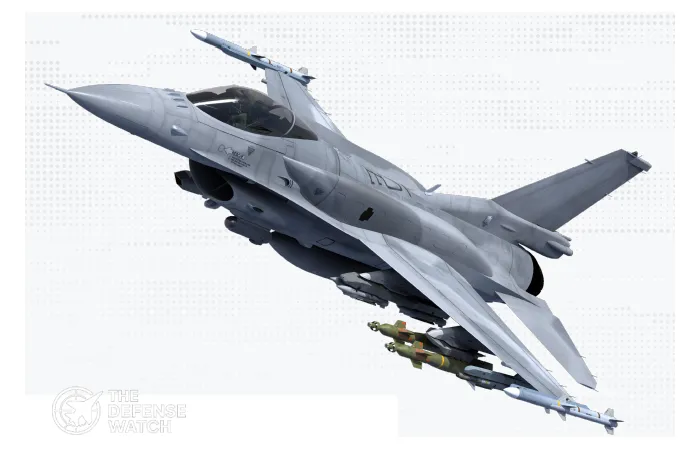
Lockheed Martin Corp., Fort Worth, Texas, has received a $31.29 million indefinite-delivery/indefinite-quantity contract from the U.S. Air Force for contractor engineering and technical services, extending engineering support to a network of foreign F-16 operators through June 30, 2029. The Air Force Life Cycle Management Center at Wright-Patterson Air Force Base, Ohio, is the contracting activity.
Takeaways
Lockheed Martin receives multiyear engineering support award for F-16 operators
1. $31.3 Million IDIQ Contract
Lockheed Martin has received a $31.29 million indefinite-delivery/indefinite-quantity contract for contractor engineering and technical services supporting F-16-related requirements.
2. Support Runs Through June 2029
The award is scheduled to continue through June 30, 2029, providing engineering assistance while participating operators develop greater organic technical capability.
3. 11 Foreign Locations
Work will be performed at Hill Air Force Base and in Argentina, Bahrain, Chile, Egypt, Indonesia, Jordan, Morocco, Oman, Taiwan, Thailand and Turkey.
4. FMS Support Spans 10 Countries
The contract identifies Foreign Military Sales support for Bahrain, Chile, Egypt, Indonesia, Jordan, Morocco, Oman, Taiwan, Thailand and Turkey.
5. Initial Funding Is Less Than 1%
$297,008 in FMS funding is obligated at award, equal to about 0.95% of the contract’s $31.29 million ceiling, leaving most potential value for future task orders.
The award will support work at Hill Air Force Base and in Argentina, Bahrain, Chile, Egypt, Indonesia, Jordan, Morocco, Oman, Taiwan, Thailand and Turkey. The contract includes Foreign Military Sales support for 10 of those countries. The award is a sole-source acquisition, and $297,008 in FMS funds is being obligated initially.
Engineering Support Sustains a Global F-16 Fleet
Although the award announcement does not explicitly identify the aircraft in its description, the structure of the requirement closely matches the Air Force’s established Contractor Engineering and Technical Services model for the F-16 Fighting Falcon. Previous Air Force awards under the same CETS framework have provided engineering support for F-16 operators, including Bahrain and other international customers.
The purpose of this type of support is broader than conventional aircraft maintenance. Contractor engineers can provide technical advice, configuration assistance, engineering analysis and other specialized expertise needed to keep aircraft and associated systems operational. This becomes particularly important for foreign operators managing aircraft configurations that can differ by production block, modernization package, weapons integration and national requirements.
The arrangement also reflects a common sustainment challenge for mature combat aircraft. As operators develop their own engineering organizations, the original equipment manufacturer can provide technical reach-back while national personnel build the expertise needed to assume more responsibility. The contract language specifically states that Lockheed Martin will provide advisory engineering and technical services until organic engineering capability is developed.
That model has precedent in the F-16 fleet. A 2023 Air Force award to Lockheed Martin for F-16 engineering support similarly focused on raising the technical skills of personnel responsible for operating and maintaining Lockheed Martin equipment and systems toward self-sufficiency.
The requirement is strategically relevant because the F-16 remains one of the world’s most widely operated Western combat aircraft. Its multinational fleet creates a continuing demand for engineering support as operators introduce upgrades, manage aging components and integrate new weapons, avionics and mission systems.
Contract Breakdown & Financial Allocation
$31.29 Million IDIQ Ceiling
- Contract value: $31,291,904
- Contract type: Indefinite-delivery/indefinite-quantity
- Contractor: Lockheed Martin Corp., Fort Worth, Texas
- Contracting activity: Air Force Life Cycle Management Center, Wright-Patterson AFB, Ohio
- Acquisition method: Sole source
- Completion date: June 30, 2029
- Initial obligation: $297,008 in FMS funds
An IDIQ contract establishes a framework under which the government can issue individual orders for qualifying work during the contract period. The $31.29 million figure therefore represents the contract’s stated potential value, rather than money that has already been obligated.
The initial $297,008 obligation represents approximately 0.95% of the total contract value. Future obligations will depend on individual requirements and orders issued under the contract.
Global Work Locations
The announced places of performance include:
- United States: Hill Air Force Base
- South America: Argentina, Chile
- Middle East: Bahrain, Egypt, Jordan, Morocco, Oman
- Asia-Pacific: Indonesia, Taiwan, Thailand
- Eastern Mediterranean: Turkey
By location count, one of the 12 listed work locations is in the United States and 11 are overseas. That equates to approximately 8.3% domestic and 91.7% overseas locations by count, although the contract does not provide a corresponding percentage breakdown of funding or labor.
Foreign Military Sales Coverage
The FMS portion covers:
- Bahrain
- Chile
- Egypt
- Indonesia
- Jordan
- Morocco
- Oman
- Taiwan
- Thailand
- Turkey
Argentina is listed as a place of performance but is not identified in the announcement as an FMS customer under this award.
The geographic spread is consistent with the global nature of the F-16 sustainment enterprise. Previous Air Force F-16 engineering awards have covered many of the same operators and have included technical support, configuration management and sustainment activities.
Industry Impact & Acquisition Insight
The sole-source structure reflects Lockheed Martin’s position as the F-16’s original equipment manufacturer and the technical authority for much of the aircraft’s design data, configuration knowledge and engineering baseline. That does not mean every future sustainment activity must remain contractor-led. Instead, the stated objective of transitioning toward organic engineering capability indicates a model in which OEM expertise fills technical gaps while customer organizations develop greater independence.
The approach also separates engineering support from aircraft procurement. Rather than purchasing new aircraft, the award helps maintain the technical foundation needed to operate existing and upgraded fleets. This is increasingly important as F-16 operators combine legacy airframes with modernized avionics, sensors, weapons and mission computers.
The Air Force has used similar F-16 engineering arrangements for years. In March 2024, Lockheed Martin received a $33.79 million IDIQ order for F-16 CORE Sustainment covering engineering and technical services, support and sustainment, configuration management and programmatic support. That earlier award involved FMS customers across Europe, the Middle East and Asia.
The new contract therefore represents another layer of long-term sustainment infrastructure around the global F-16 fleet. Its multiyear structure gives the Air Force a mechanism to respond to technical requirements as they arise while supporting foreign operators that continue to depend on Lockheed Martin engineering expertise.
U.S. Air Force Awards $920 Million Contract For Next-Generation Aerospace Ground Equipment
The U.S. Air Force has awarded a multiple-award indefinite-delivery, indefinite-quantity contract with a ceiling of $920 million to 24 companies for next-generation aerospace and ground equipment and vehicles. The award is being managed by the Air Force Materiel Command’s Air Force Life Cycle Management Center, Support Equipment and Vehicles organization at Robins Air Force Base, Georgia, with work expected to continue through 2036.
Takeaways
U.S. Air Force expands access to next-generation aerospace and ground support equipment
1. $920 Million Contract Ceiling
The U.S. Air Force has established a $920 million ceiling for modern aerospace and ground support equipment and vehicles under a multiple-award IDIQ contract.
2. 24 Companies Selected
Twenty-four contractors, including Lockheed Martin, Booz Allen and Oshkosh, received awards under the competitive acquisition, which attracted 66 offers.
3. Equipment Supports Aircraft Generation
The program is intended to modernize the equipment used to generate and sustain aircraft sorties, spanning aerospace ground equipment, vehicles and related support capabilities.
4. Work Runs Through 2036
The contract has an expected completion date in 2036, providing the Air Force with a long-term vehicle for acquiring and modernizing support equipment.
5. Supports Agile Combat Operations
The award aligns with Air Force efforts to improve combat support and aircraft generation capacity as distributed operations place greater demands on mobile, adaptable ground equipment.
The award includes Aero Specialties, ATAP, ATEC, Aviation Ground Equipment, Booz Allen, Chase Defense, Coherent Technical, CVI, Defense Engineering Services, DEVAL, ES3, GS Engineering, HDT, Intuitive, Knight Aerospace, Lockheed Martin, MCT Industries, Newton Corp., Oshkosh, P2 Mission Solutions, PCI Aviation, Suntest Systems, TLD and Torch Technologies.
The competitive acquisition drew 66 offers, giving the Air Force a broad industrial base from which to place future orders. The initial award obligates only $15,000 in fiscal 2026 research, development, test and evaluation funding, meaning the $920 million figure represents the contract ceiling rather than money committed to the contractors at award.
Why Aerospace Ground Equipment Matters To Airpower
Aerospace ground equipment is often less visible than aircraft, weapons and sensors, but it is fundamental to sortie generation. Aircraft require specialized equipment for towing, power generation, maintenance, servicing, loading, handling and other activities before they can return to flight.
The Air Force’s Support Equipment and Vehicles organization identifies its mission as acquiring and sustaining war-ready support equipment and vehicles. Its portfolio includes vehicles, materiel handling equipment and expeditionary airfield resources.
That role becomes more important as the Air Force prepares for operations in which aircraft may need to operate from dispersed or austere locations. A modern fighter, bomber, tanker, transport aircraft or unmanned system cannot generate combat power simply because the aircraft itself is available. The supporting equipment has to move with the force, operate reliably and be compatible with the aircraft and maintenance architecture.
The broader acquisition effort behind this award is the Next Generation Aerospace Ground Equipment, or NGAGE, program. The Air Force solicitation describes a 10-year multiple-award IDIQ designed to modernize and acquire aerospace ground equipment for the warfighter. The program is intended to cover both commercial and non-commercial requirements and to maintain a diverse industrial base of large and small businesses.
The NGAGE objectives also emphasize innovative and multi-capable equipment, digital engineering and Model-Based Systems Engineering. That approach is significant because it moves ground equipment away from being treated solely as a collection of individual support items and toward a more adaptable support architecture.
Contract Breakdown & Financial Allocation
$920 Million Ceiling
- Contract ceiling: $920 million
- Contract type: Indefinite-delivery, indefinite-quantity, multiple-award contract
- Expected completion: 2036
- Competition: 66 offers received
- Initial obligation: $15,000 in FY2026 RDT&E funding
- Contracting activity: Air Force Materiel Command, Air Force Life Cycle Management Center, Support Equipment and Vehicles, Robins Air Force Base, Georgia
An IDIQ contract does not mean that the government immediately spends the full ceiling. Instead, it establishes a contracting vehicle through which individual delivery orders or task orders can be placed as specific requirements emerge.
This structure gives the Air Force a pool of prequalified suppliers rather than requiring a completely new competition for every future requirement. The NGAGE solicitation called for a two-year base period followed by four two-year options, producing a potential 10-year ordering period.
24 Awardees
The awardee base covers a wide range of industrial capabilities:
- Aerospace equipment: Aero Specialties, Aviation Ground Equipment, TLD and PCI Aviation
- Engineering and technical services: ATEC, Coherent Technical, Defense Engineering Services, DEVAL, GS Engineering and Torch Technologies
- Defense and systems integration: Lockheed Martin, Knight Aerospace, Intuitive and HDT
- Vehicles and specialized equipment: Oshkosh and MCT Industries
- Technical and mission support: Booz Allen, Chase Defense, ES3, P2 Mission Solutions and others
The presence of both large defense companies and specialized smaller firms is consistent with the Air Force’s stated objective of maintaining a diverse awardee base capable of addressing commercial and non-commercial requirements.
Geographic Work Allocation
The contract announcement states that performance will occur at various locations. It does not provide a dollar allocation by state or contractor.
Accordingly, no reliable percentage of the $920 million ceiling can be assigned to Idaho, Alabama, Texas, Florida or other states based on the award announcement alone. The listed locations are contractor headquarters or principal locations associated with the awards, not necessarily the eventual distribution of contract obligations.
Initial Funding
The Air Force is obligating $15,000 in FY2026 RDT&E funds at award.
That amount is only about 0.0016% of the $920 million ceiling, underscoring the distinction between an IDIQ ceiling and actual obligations. Future orders can carry their own funding based on the equipment, development, integration or support requirement being procured.
No foreign military sales funding stream is identified in the award information provided.
Industry Impact & Acquisition Insight
The acquisition gives the Air Force a long-duration mechanism for refreshing equipment that directly affects aircraft availability and sortie generation. AFLCMC is responsible for life-cycle management across Air Force weapon systems and supporting capabilities, while its Combat Readiness organization specifically oversees Support Equipment and Vehicles.
The multiple-award structure also distributes future opportunities across a competitive industrial base. Rather than committing the entire ceiling to one supplier, the Air Force can select among 24 awardees as individual requirements arise. That can shorten procurement timelines, encourage competition at the order level and give the service access to specialized capabilities.
The strategic value is particularly relevant to distributed operations. Air Force planning increasingly requires support systems that can function across multiple locations instead of relying exclusively on large, fixed installations. Ground equipment that can be rapidly transported, adapted and integrated with different aircraft and mission sets can therefore become an important part of operational resilience.
The acquisition also illustrates why sustainment modernization extends beyond aircraft upgrades. Advanced aircraft can still face sortie-generation constraints if the supporting power, handling, maintenance, servicing and transportation equipment remains outdated or difficult to deploy. AFLCMC’s Support Equipment and Vehicles organization has explicitly framed its mission around providing common support equipment and vehicles to the warfighter.

Taiwan’s Legislative Yuan has approved FY2026 funding for a government program designed to expand the island’s unmanned systems industry, giving Taipei additional resources to develop domestic drone technologies, testing infrastructure and supply-chain capacity. Taiwan’s Ministry of Economic Affairs (MOEA) said the allocation forms part of a broader NT$63.4 billion, approximately US$2 billion, drone-related funding package that combines industrial-development spending with unmanned systems procurement across government agencies.
Takeaways
Taiwan expands state-backed investment in unmanned systems and domestic drone production
1. NT$63.4 Billion Drone Funding Package
Taiwan’s FY2026 budget includes a broader NT$63.4 billion package connected to drones and unmanned systems across government programs and procurement activities.
2. NT$8.3 Billion For Industry Development
About NT$8.3 billion has been approved for FY2026 under the six-year Unmanned Vehicle Industry Development Integrated Plan, which runs from 2025 through 2030.
3. Focus On Domestic Technology
The program supports unmanned platforms and key subsystems, including research and development, testing, electromagnetic compatibility and industrial infrastructure.
4. Testing Infrastructure Expands
Taiwan plans an electromagnetic compatibility and comprehensive testing laboratory in Taichung, while the Asia UAV AI Innovation Application R&D Center in Chiayi is also being developed.
5. Defense And Industrial Policy Converge
The strategy links military demand with Taiwan’s wider ICT, semiconductor and precision-manufacturing base to create a more resilient non-Chinese, or democratic, drone supply chain.
The approval comes as Taiwan increasingly treats unmanned systems as both a military capability and an industrial-security requirement. The MOEA’s six-year Unmanned Vehicle Industry Development Integrated Plan runs from 2025 through 2030 and carries a planned budget of about NT$44.2 billion. Approximately NT$8.3 billion has been approved for FY2026, with funding for later years subject to Taiwan’s normal annual budget process.
Strategic Context: Building A Drone Ecosystem, Not Just Buying Aircraft
The significance of the funding extends beyond the number of aircraft Taiwan may ultimately procure. The industrial plan is structured around market development, technology advancement, operating environments and regulatory frameworks. That approach addresses a central weakness exposed by recent conflicts: an effective unmanned warfare capability depends on the availability of complete ecosystems, including airframes, flight-control systems, communications, navigation, sensors, batteries, software, maintenance and testing capacity.
Taiwan’s geography and military posture make this particularly important. A large-scale contingency in the Taiwan Strait would place pressure on conventional platforms and could create sustained demand for relatively inexpensive unmanned systems performing surveillance, targeting, communications relay, logistics and strike missions. Taiwan’s ability to replenish those systems domestically would reduce dependence on vulnerable external supply lines and allow production to continue even if access to imported equipment became constrained.
The policy also reflects lessons from Ukraine, where inexpensive drones have become central to reconnaissance, artillery targeting, electronic warfare and precision attack. Taiwan’s objective is not simply to replicate individual Ukrainian systems, but to establish an industrial base capable of rapidly adapting designs and producing large quantities of platforms and subsystems.
Taiwan’s broader industrial base gives the program a foundation that differs from many emerging drone producers. The island already has extensive capabilities in electronics manufacturing, semiconductors, communications equipment and precision manufacturing. The government is attempting to connect those sectors with aerospace companies, research institutions and defense requirements.
Contract Breakdown & Financial Allocation
FY2026 Industry Development Funding
The principal industrial-development allocation is approximately NT$8.3 billion for FY2026 under the Unmanned Vehicle Industry Development Integrated Plan.
Key characteristics include:
- Program duration: 2025 to 2030
- Planned program budget: Approximately NT$44.2 billion
- FY2026 approved allocation: Approximately NT$8.3 billion
- Broader FY2026 drone-related package: Approximately NT$63.4 billion
- Primary coordinating authority: Taiwan Ministry of Economic Affairs
- Core objectives: Industrial development, defense self-reliance, technology advancement and supply-chain resilience
The NT$63.4 billion figure should not be treated as a single defense procurement contract. It combines different government funding streams, including industrial-development activities and unmanned systems procurement across ministries.
Industrial Technology And Testing
The program supports research and development by domestic companies working on unmanned platforms and critical subsystems. The MOEA has identified companies including Aerospace Industrial Development Corporation, Thunder Tiger, Tianwu and Ability Enterprise as participants receiving research and development support.
Taiwan is also investing in infrastructure required to turn prototype systems into repeatable production and certifiable military equipment.
Planned and existing infrastructure includes:
- Taichung: An unmanned aircraft electromagnetic compatibility, or EMC, and comprehensive testing laboratory.
- Chiayi: The Asia UAV AI Innovation Application R&D Center.
- Testing and validation: Facilities intended to support technical evaluation and system development.
- Industrial support: Research assistance for unmanned platforms and key subsystems.
EMC testing is particularly relevant for military UAV development because densely packed avionics, radios, navigation equipment, electronic warfare systems and payloads must operate without unacceptable electromagnetic interference. Formal testing also helps companies move from prototype development toward repeatable production and international certification.
Geographic Allocation
Publicly available information does not provide a percentage breakdown of the NT$44.2 billion program by Taiwanese region. However, the government’s industrial strategy identifies multiple geographic nodes, including Chiayi for unmanned systems development and Taichung for testing infrastructure. Separate government-supported infrastructure has also been associated with southern Taiwan.
The geographic approach is significant because it spreads unmanned-system capabilities across industrial, research and testing centers rather than concentrating the entire ecosystem around a single production site.
Defense Procurement Is A Separate Funding Stream
Taiwan’s industrial development program should also be distinguished from the separate special-budget effort proposed for indigenous defense unmanned systems.
In June, the Executive Yuan proposed up to NT$210 billion, approximately US$6.7 billion, from August 2026 through December 2031 for indigenous unmanned defense systems. That proposal covered coastal surveillance drones, coastal attack drones and small unmanned surface vessels.
The distinction matters because the NT$210 billion initiative is primarily a defense procurement mechanism, while the NT$44.2 billion integrated industrial plan is designed to develop the wider industrial ecosystem.
Recent reporting also indicates that Taiwan’s legislature approved a broader NT$63.4 billion drone-related package in the FY2026 budget. The figures therefore represent overlapping but distinct policy and procurement streams rather than a single NT$63.4 billion contract awarded to one contractor.
Industry Impact & Acquisition Insight
Taiwan is effectively using government demand as an anchor customer for an emerging unmanned systems sector. Rather than relying exclusively on conventional defense procurement, the model combines industrial research subsidies, government purchases, testing infrastructure and international certification. This can reduce the technology gap between civilian commercial drones and military-qualified systems, while giving domestic companies a pathway into allied markets. The MOEA has reported that Taiwan’s drone industry generated approximately NT$12.9 billion in output in 2025, more than 2.5 times the previous year’s level, while finished-drone exports reached about NT$2.95 billion. The government has set a 2030 output target above NT$40 billion.
The acquisition model also places greater emphasis on supply-chain security. Taiwan’s government has described the objective as building a democratic or non-Chinese supply chain, while recent policy initiatives have focused on international certification and cooperation with the United States and other partners. Taiwan has also expanded cooperation with U.S. and Japanese organizations to improve market access and technical validation.
For defense planners, the most important measure of success will therefore not be the number of drones purchased in FY2026. It will be whether Taiwan can establish a production system capable of rapidly replacing combat losses, introduce new designs without lengthy procurement cycles, secure critical electronic components and maintain communications and navigation capabilities under contested conditions.
That requirement is especially important in a Taiwan Strait contingency, where the ability to replenish attritable systems could become as important as the performance of individual platforms.