

Executive Summary:
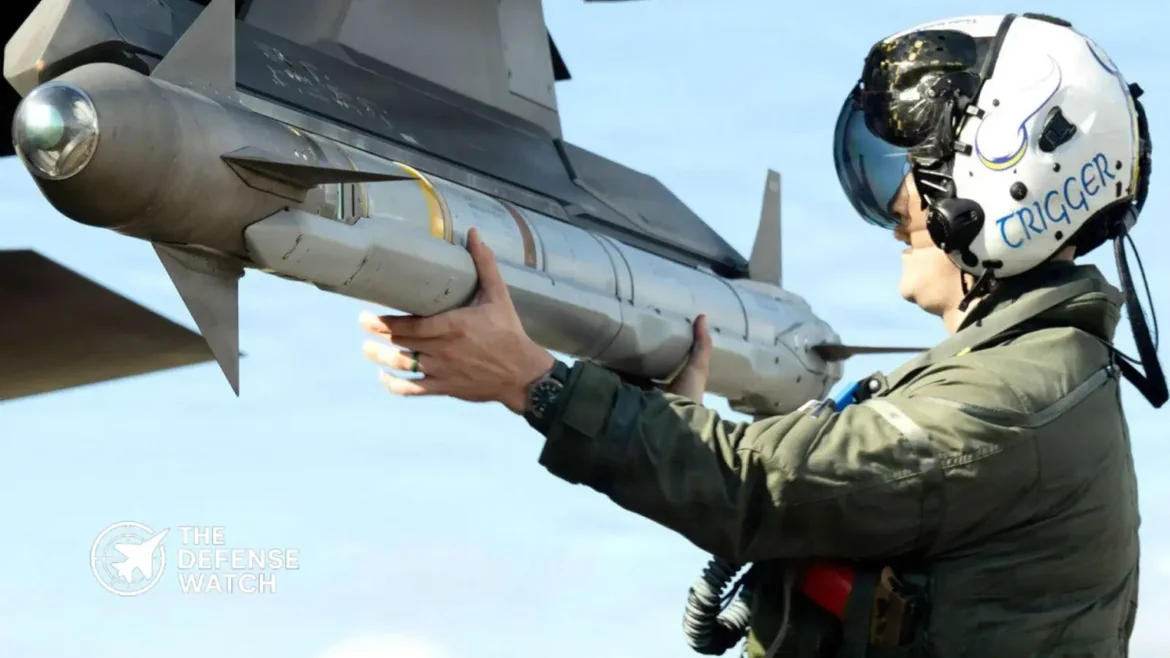
The US Navy is developing a compact version of the AIM 9X missile designed for integration on F-35 fighter jets and advanced combat drones. The effort focuses on increasing internal and external weapons carriage options while preserving air to air performance. The move reflects growing demand for scalable missile systems across manned and unmanned platforms.
US Navy development of the compact AIM-9X missile marks a significant shift in how short range air to air weapons are being adapted for modern multi domain operations. The program focuses on improving compatibility with F-35 fighters and emerging combat drone platforms.
(adsbygoogle = window.adsbygoogle || []).push({});The main keyword compact AIM-9X missile reflects a broader modernization trend across US air combat systems, where size, integration flexibility, and multi platform use are becoming as important as raw performance.
Smaller Missile for Broader Integration
The compact AIM-9X missile concept is aimed at reducing physical constraints that limit weapon carriage on stealth aircraft and unmanned systems. By shrinking key components while maintaining guidance capability, the Navy seeks to improve loadout efficiency on platforms like the F-35.
A major driver behind this development is internal weapons bay limitations. The F-35 relies on stealth optimized storage, which restricts the size and number of air to air missiles it can carry without external pylons. A more compact missile allows greater flexibility without compromising radar signature.
This approach also supports distributed air operations where drones may operate alongside crewed fighters in contested environments.
Expanding Role of F-35 Weapon Systems
The F-35 continues to evolve as a central node in US and allied air combat strategy. The integration of a compact AIM 9X missile would allow the aircraft to carry more short range weapons while preserving space for other mission systems or fuel.
The AIM 9X family is already a cornerstone of US close range air combat capability, known for high off boresight targeting and infrared tracking performance. A compact variant would extend these strengths while improving payload efficiency.
This is particularly relevant in scenarios involving high intensity air combat where missile inventory per sortie can directly impact mission endurance.
Drone Integration and Networked Air Combat
One of the most notable aspects of the compact AIM 9X missile effort is its potential use on combat drones. The US military has been expanding experimentation with unmanned systems that can operate alongside manned aircraft in coordinated strike and defense roles.
Integrating short range air to air missiles on drones introduces new tactical options. These platforms could potentially engage threats independently or act as forward positioned interceptors under pilot control.
The Navy and broader US defense community are increasingly focused on distributed lethality, where smaller platforms contribute directly to air superiority missions rather than serving only reconnaissance roles.
Strategic Context and Air Superiority Competition
The development comes at a time when air forces globally are investing heavily in advanced missile systems and counter air capabilities. Short range infrared guided missiles remain a key component of close combat engagements, even as beyond visual range weapons dominate longer distance scenarios.
The compact AIM 9X missile effort aligns with broader US strategies to maintain flexibility across both high end fighter fleets and emerging unmanned combat systems. It also reflects concerns about platform saturation, where aircraft must carry a wider variety of weapons without sacrificing stealth or range.
Industrial and Program Implications
While detailed specifications remain limited, the program indicates continued investment in modular missile design. The AIM 9X lineage has undergone multiple upgrades since its introduction, and this compact variant represents an adaptation to modern airframe constraints rather than a full replacement.
Defense industry sources cited in reporting suggest that future air combat systems will increasingly prioritize adaptability across platforms rather than platform specific weapon designs.
Analysis
The compact AIM 9X missile reflects a broader shift in US air combat philosophy. Instead of building entirely new missile families for every platform, the focus is moving toward scalable designs that can be resized or adapted depending on mission requirements.
This approach reduces logistical burden and improves interoperability across the F-35 fleet, legacy fighters, and unmanned systems. It also suggests that future air dominance will depend as much on weapons integration efficiency as on platform performance.
If successful, this concept could influence other missile programs, particularly in short range air defense and naval aviation systems where space and weight constraints are critical.
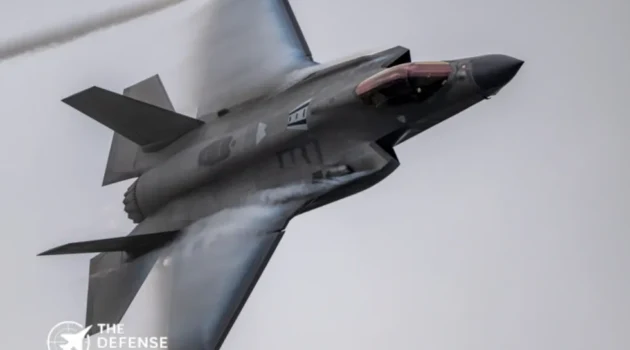

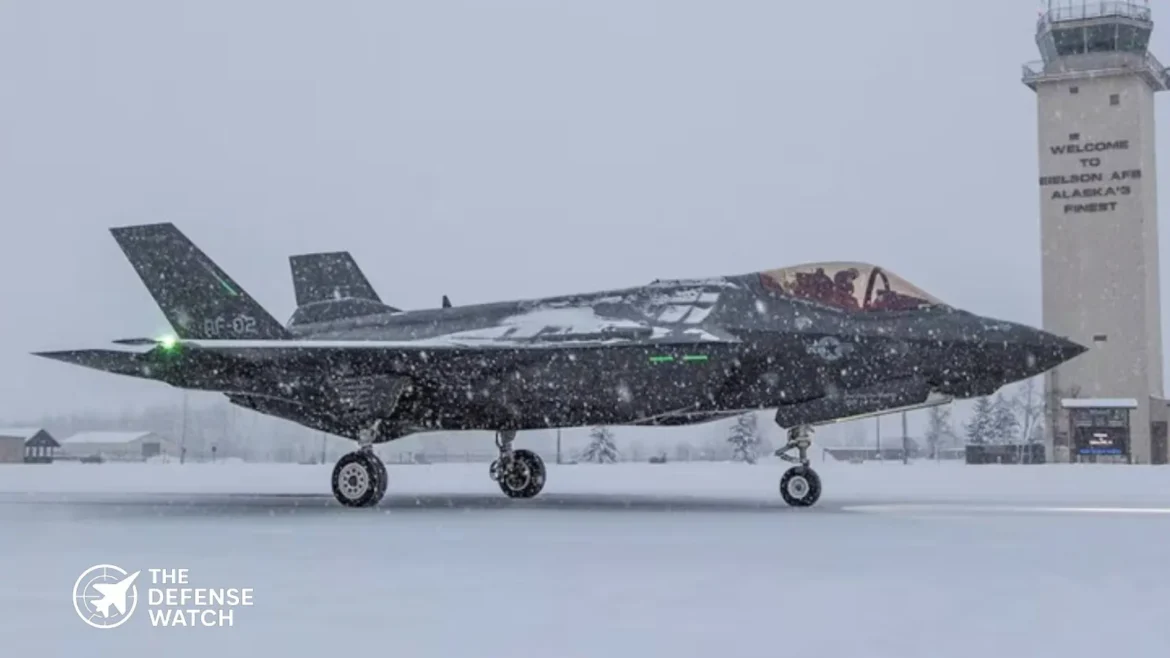
Canadian Air Defense Commander Lieutenant General Jamie Speiser Blanchet has described the F 35 as vital to Canada’s future air defense mission, tying the fighter directly to NORAD operations and continental security. Speaking in recent remarks reported by Military Watch Magazine, the commander emphasized that the aircraft is not just a replacement fighter, but a core sensor and command node for joint US Canadian defense.
The statement comes as Canada moves forward with its planned purchase of 88 F 35 aircraft to replace the aging CF 18 fleet, with initial deliveries expected later this decade.
Background: Why the F 35 Matters to Canada
Canada’s air defense mission is closely linked to the North American Aerospace Defense Command, the binational US Canada framework responsible for detecting and responding to air and missile threats. Much of this mission focuses on long range surveillance of the Arctic, where geography, distance, and harsh weather place unique demands on aircraft and sensors.
The CF 18 fleet has performed this role for decades, but officials have warned that it is reaching the limits of its service life and combat relevance. New threats, including long range cruise missiles, hypersonic weapons, and advanced Russian bomber patrols, have pushed Canada to seek a platform with stronger sensors, data fusion, and survivability.
In this context, the Canadian Air Force selected the F 35 as its next generation fighter, citing interoperability with the United States, advanced stealth features, and its ability to operate as part of a wider air defense network.
Details: What the Commander Said
According to Military Watch Magazine, Lieutenant General Speiser Blanchet stated that the F 35 is essential to how Canada will defend its airspace alongside the United States. She highlighted that modern air defense is no longer just about intercepting aircraft, but about detecting, tracking, and sharing data across domains.

The F 35’s sensor suite, including its active electronically scanned array radar and distributed infrared sensors, allows it to detect threats at long range and pass that information to other aircraft, ships, and ground based systems. For NORAD, this means faster warning times and a clearer picture of potential threats approaching North America.
Canadian officials have also stressed that the F 35’s secure data links allow it to integrate seamlessly with US Air Force and US Navy assets, a key requirement for joint operations under NORAD and NATO.
Arctic Operations and Long Range Defense
One of the most demanding aspects of Canada’s air defense mission is the Arctic. Vast distances, limited basing, and extreme weather conditions challenge both aircraft and crews. Canadian defense planners argue that the F 35’s advanced sensors help offset these challenges by reducing reliance on forward deployed radar and increasing situational awareness.
While the F 35 is often discussed in terms of stealth strike missions, Canadian leaders have framed its role more broadly. In Arctic operations, the aircraft is expected to act as an early warning platform, cueing interceptors and supporting ground based air defense systems.
This aligns with broader NORAD modernization efforts, which include upgrades to radar networks and command systems across northern Canada.
Expert and Policy Perspective
Defense analysts note that Canada’s emphasis on the F 35 as an air defense asset reflects a shift in how fighter aircraft are viewed. Rather than operating alone, modern fighters increasingly function as part of a sensor network.
Justin Bronk of the Royal United Services Institute has previously argued that the F 35’s value lies as much in its data fusion as in its weapons load. For Canada, this makes the aircraft particularly relevant to NORAD, where shared awareness between partners is critical.
At the policy level, the F 35 program also reinforces defense ties with the United States. Canada is a long standing industrial partner in the F 35 program, with Canadian firms contributing components to the global supply chain.
Costs, Criticism, and Political Debate
Despite strong support from military leadership, the F 35 purchase has faced political scrutiny in Canada. Critics have raised concerns about acquisition and sustainment costs, as well as the aircraft’s suitability for Canada’s climate and basing infrastructure.
The Canadian government has responded by stating that the F 35 was selected after a competitive evaluation and that long term interoperability and capability outweighed cost concerns. Officials have also pointed to planned investments in infrastructure upgrades to support Arctic and northern operations.
Closing: What to Watch Next
As Canada prepares for the arrival of its first F 35 aircraft, attention will turn to how quickly the Royal Canadian Air Force can integrate the platform into NORAD operations. Training, basing decisions, and data sharing arrangements with the United States will shape how effectively the aircraft supports continental defense.
For Canadian air defense leaders, the message is clear. The F 35 is seen not as an optional upgrade, but as a central element of how Canada plans to defend its airspace in an era of evolving threats.
