Executive Summary:
The X-plane concept remains central to aerospace innovation, even as autonomous aircraft and low-cost drones reshape flight testing and military aviation. NASA’s X-59 is demonstrating how specialized experimental aircraft can address challenges that conventional platforms cannot, with the aircraft reaching Mach 1.4 at 55,000 feet in June 2026 during its supersonic flight-test campaign. Its purpose is to validate technologies designed to reduce the intensity of sonic booms and generate data that could support future commercial supersonic flight. At the same time, programs such as DARPA’s XRQ-73 and X-76 SPRINT are applying the X-plane model to hybrid-electric propulsion, autonomous operations, high-speed flight, and distributed aerospace concepts. The United Kingdom’s Combat Air Flying Demonstrator is also using flight testing to mature technologies intended for the future Global Combat Air Programme (GCAP). Together, these programs show that experimental aircraft remain an important bridge between advanced aerospace research and operational capability.
What Are X-Planes?
X-planes are experimental aircraft developed to prove specific technologies, aerodynamic concepts or operational ideas through flight testing.
The concept dates to the Bell X-1, which demonstrated controlled supersonic flight in 1947. The later X-15 expanded the envelope dramatically, reaching approximately Mach 6.7 and providing data that contributed to advances in high-speed flight and thermal protection.
The underlying philosophy remains relevant. Instead of attempting to build an operational aircraft containing dozens of immature technologies, engineers can build a focused demonstrator around a smaller number of technical questions.
That approach can reduce development risk because flight data replaces assumptions made solely through computer modeling, wind-tunnel testing and simulation.
X-59: A New Approach to Supersonic Flight
The X-59 is the most visible current example of the X-plane concept.
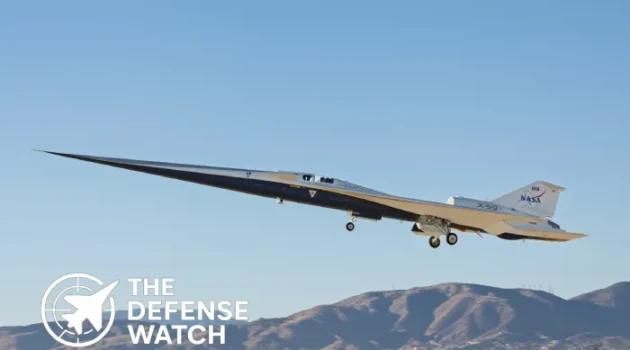
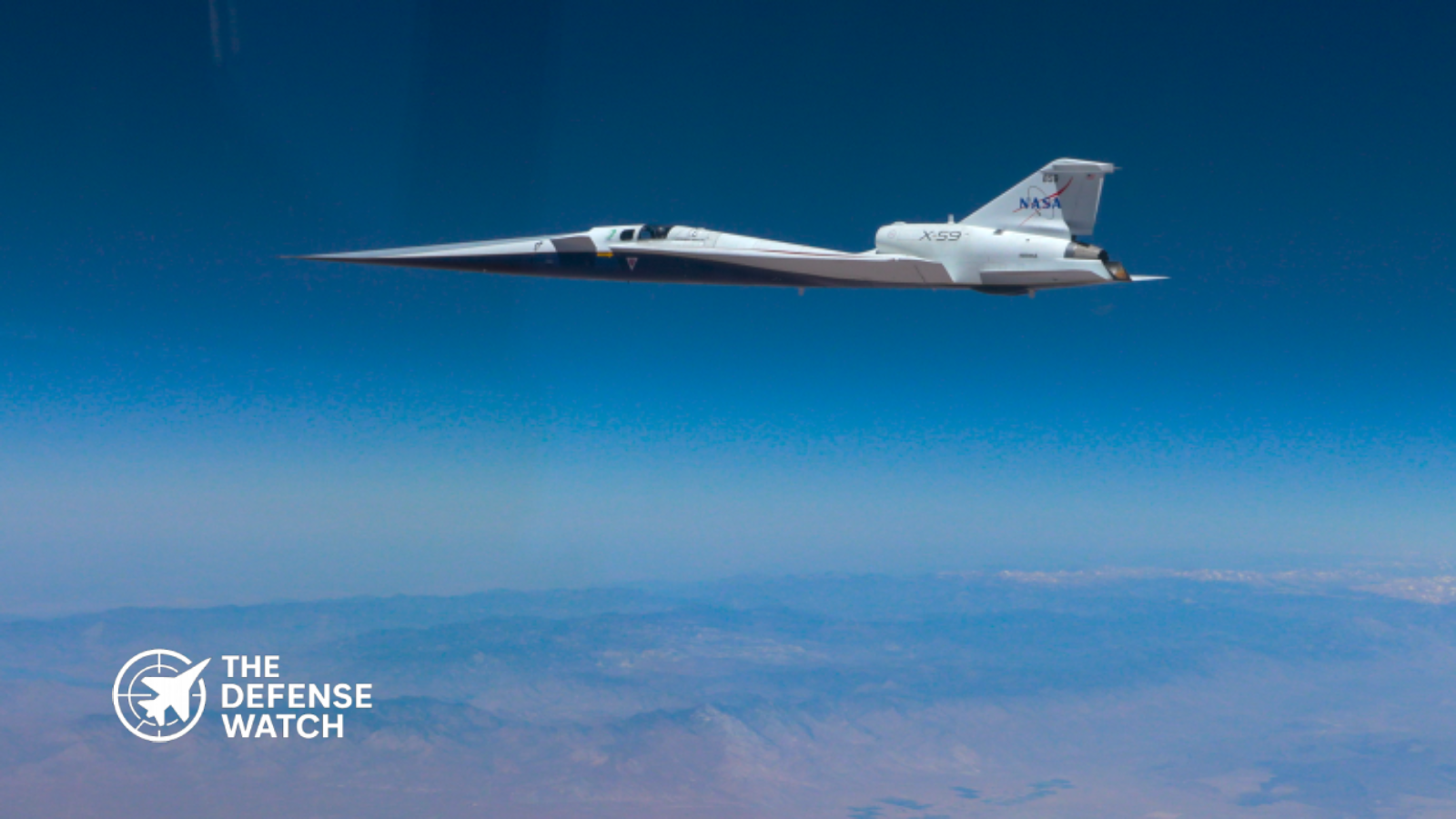
Unlike a conventional fighter or airliner, its unusual shape exists primarily to control the formation and propagation of supersonic shock waves. Its extremely long nose, carefully shaped fuselage and other aerodynamic features are designed to distribute the shock waves so that people on the ground experience a much quieter sound than the conventional sonic boom.
NASA describes the aircraft as a research vehicle rather than a commercial airliner prototype. Its purpose is to collect flight and community-response data that could help regulators establish future noise standards for supersonic flight over land.
Airframe and Low-Boom Design
The X-59’s approximately 100-foot-long airframe is dominated by its slender forward fuselage. NASA deliberately moved the cockpit rearward because a conventional forward windscreen would interfere with the aircraft’s aerodynamic shape.
Instead, pilots use an eXternal Vision System, which combines cameras, sensors, computers and displays to provide forward and downward views.
The configuration illustrates a broader X-plane principle: an unusual design can be acceptable when the aircraft exists to test one specific technological objective.
The X-59 also places its engine above the fuselage. This configuration helps manage the engine’s acoustic contribution and directs exhaust-related noise away from the ground.
Avionics and Sensor Architecture
The X-59 does not carry a combat sensor suite. Its principal sensing challenge is safe operation and measurement of the aircraft’s aerodynamic and acoustic behavior.
The XVS is particularly important because it replaces the forward cockpit window. High-definition external imagery is processed and presented to the pilot, allowing the aircraft to retain a conventional piloted flight-test approach despite its unusual nose geometry.
This is significant in the wider X-plane debate. A remotely operated aircraft can remove the pilot from the test vehicle, but that does not necessarily make the experiment simpler. Ground control infrastructure, communications, telemetry and additional personnel can introduce their own technical and operational requirements.
For some experiments, keeping a test pilot onboard can therefore remain useful.
Propulsion and Flight Performance
The X-59 is powered by a modified General Electric F414-GE-100 engine producing approximately 22,000 pounds of thrust. NASA selected the engine to provide the performance required for the aircraft’s planned supersonic mission.
The aircraft’s design operating condition is approximately Mach 1.4 at 55,000 feet.
That target became an actual flight-test milestone on June 12, 2026, when the X-59 reached Mach 1.4 and 55,000 feet. NASA said further performance testing was still required before the aircraft moved into community-response flights.
By September 2026, NASA reported that the X-59 had completed its 25th flight and had reached its design cruise condition relatively early in the test campaign. Testing was continuing across the aircraft’s broader flight envelope.
X-Planes and the Rise of Uncrewed Aircraft
The growth of drones has changed the economics of aerospace experimentation, but it has not eliminated the need for purpose-built demonstrators.
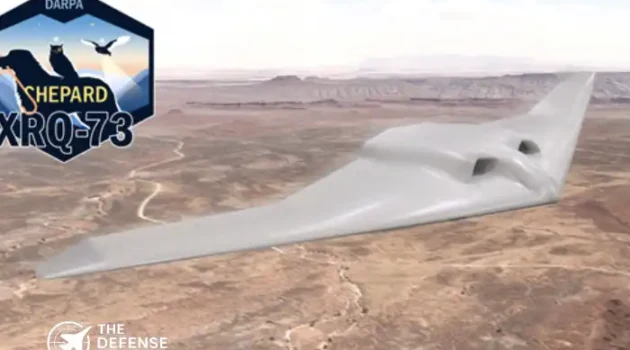
DARPA’s XRQ-73 SHEPARD illustrates the shift. The aircraft is an uncrewed experimental platform intended to demonstrate a hybrid-electric propulsion architecture. DARPA and the Air Force Research Laboratory flew the aircraft in April 2026 at Edwards Air Force Base.
Another example is DARPA’s X-76 SPRINT program, which is intended to demonstrate high-speed flight without conventional runway dependence. Bell Textron is building the demonstrator following completion of its critical design review.
DARPA’s ANCILLARY program similarly targets long-endurance, vertical-takeoff-and-landing uncrewed aircraft that could operate from ships and austere locations without conventional launch infrastructure.
These programs show that the X-plane model is adapting rather than disappearing.
From Experimental Aircraft to Future Combat Systems
The same philosophy applies to military aviation.
The UK’s Combat Air Flying Demonstrator is designed to test advanced technologies and manufacturing methods relevant to the future GCAP fighter. BAE Systems says the program involves about 100 UK suppliers, with roughly 1,000 people having worked on the demonstrator.
The historical comparison is significant. Britain’s Experimental Aircraft Programme, or EAP, flew in 1986 and tested technologies that contributed to the development of the Eurofighter Typhoon.
The current demonstrator follows the same basic model: prove difficult technologies in a flying aircraft before committing them to a much larger operational program.
BAE Systems says the demonstrator is intended to help de-risk technologies for GCAP, whose next-generation fighter is being developed by the United Kingdom, Italy and Japan.
Strategic Outlook
The most important change is not that X-planes are becoming obsolete. It is that the definition of an X-plane is expanding.
Future demonstrators are likely to include a mixture of:
- Crewed aircraft for experiments where pilot feedback is important.
- Uncrewed aircraft for high-risk or long-duration testing.
- Hybrid-electric propulsion demonstrators.
- Autonomous flight systems.
- Low-observable and aerodynamic demonstrators.
- Advanced sensors and electronic warfare systems.
- Manned-unmanned teaming technologies.
- New manufacturing and digital-engineering methods.
The X-plane therefore remains a bridge between laboratory research and operational aviation.
KEY FACTS AT A GLANCE
Specification X-59 Quesst Manufacturer Lockheed Martin Skunk Works for NASA Type Experimental supersonic research aircraft Generation Experimental technology demonstrator Max design speed Mach 1.4 Target operating altitude 55,000 ft Propulsion 1 × General Electric F414-GE-100 Engine thrust 22,000 lb Primary sensor system eXternal Vision System (XVS) Primary mission Low-boom supersonic flight research Armament None Combat radius Not applicable Conclusion
The X-planes concept remains relevant because drones and experimental aircraft solve different problems. A drone can provide an inexpensive platform for many missions and experiments, but an X-plane is designed around a specific technical question that may require unusual aerodynamics, propulsion, flight controls, sensors or human involvement.
The X-59 demonstrates why the model still matters. Its June 2026 supersonic milestones moved NASA’s low-boom research from ground testing and subsonic flight toward the critical phase of collecting real-world acoustic data.
At the military end of the spectrum, programs such as XRQ-73, X-76 and Britain’s Combat Air Flying Demonstrator show that experimental aircraft are evolving alongside autonomous systems rather than being displaced by them.
The enduring value of the X-plane is simple: simulation can predict performance, but only flight testing can demonstrate how a new aircraft actually behaves in the atmosphere.