- ► NASA’s X-59 quiet supersonic aircraft completed engine run testing on March 12, 2026, at Armstrong Flight Research Center, Edwards, California — a critical final ground check before its second flight.
- ► Test pilot Jim “Clue” Less will fly the X-59 for its second flight, accompanied by NASA pilot Nils Larson in a chase F/A-18.
- ► The aircraft’s first flight took place on October 28, 2025 — followed by removal and reinstallation of the engine, lower empennage, cockpit seat, and more than 70 inspection panels.
- ► Second flight will begin envelope expansion, gradually progressing from 230 mph at 12,000 feet toward the X-59’s mission target of Mach 1.4 at 55,000 feet.
- ► The X-59 is the centerpiece of NASA’s Quesst mission, which aims to replace the traditional sonic boom with a quieter sonic “thump” and eventually open U.S. skies to commercial overland supersonic travel.
NASA’s X-59 Quiet Supersonic Aircraft Prepares for Second Flight, Targeting Mach 1.4
NASA’s X-59 quiet supersonic research aircraft is moving to its next major milestone: a second test flight that will launch the program into its critical envelope expansion phase. According to a NASA announcement published March 17, 2026, ground crews at Armstrong Flight Research Center in Edwards, California, completed engine run testing on March 12 — one of the final verification steps before the aircraft takes to the skies again.
The X-59, NASA’s flagship experimental platform under the agency’s Quesst mission, is designed to fly faster than the speed of sound while generating only a low-level sonic thump rather than a disruptive boom. If successful, the program could fundamentally reshape commercial aviation regulations, potentially reopening the door to overland supersonic passenger travel in the United States for the first time since the Concorde era.
A New Pilot Takes the Controls
NASA test pilot Jim “Clue” Less is set to fly the X-59 for its second sortie, marking his first time at the controls of an X-plane in his career. Less will take off and land at Edwards Air Force Base, operating out of the X-59’s home facility at Armstrong Flight Research Center.
“This will be the first time I’ve flown an X-plane,” Less said in the NASA release. “I think I’ll mostly be focused on getting the test cards done and getting them done correctly. It’ll probably sink in later that I was in the X-59.”
Flying in formation nearby will be Nils Larson — the pilot who made the X-59’s historic first flight on October 28, 2025 — operating a NASA F/A-18 aircraft in a chase and observation role. The structured crew pairing reflects the careful, data-driven methodology that defines the Quesst program. Each flight builds on the last, and no phase proceeds without meticulous review of what came before.
Post-First-Flight Maintenance: A Deep Dive
Following the October 2025 maiden flight, NASA and prime contractor Lockheed Martin undertook an extensive post-flight maintenance campaign. Technicians removed the X-59’s modified General Electric F414-GE-100 engine — the same powerplant used in the F/A-18 Super Hornet — along with a tail section known as the lower empennage, the cockpit seat, and more than 70 individual panels for thorough structural and systems inspections. All components have since been reinstalled and verified.

“These guys know what they’re doing,” Less said. “Nils trusted them for the first flight. I trust them for the second flight and every flight after that.”
Ray Castner, NASA’s X-59 lead propulsion engineer, described the March 12 engine run as an emotionally charged moment for the team. “It’s always exciting to see the X-59 come to life on the ground,” he said. For our team, it’s a moment to pause and appreciate how far this aircraft has come — and how close we are to pushing into the next phase of flight.
What Is Envelope Expansion — and Why Does It Matter?
The concept of “envelope expansion” is standard practice in experimental aircraft testing, but for the X-59 it carries outsized strategic significance. The term refers to the incremental, methodical process of pushing an aircraft progressively faster, higher, and through increasingly demanding flight conditions, verifying safety and performance at each step before advancing further.
For second flight, the X-59 will initially replicate a test condition from the first flight to confirm the aircraft behaves consistently after the maintenance interval. It will then advance to 260 mph at 20,000 feet — a modest but meaningful step beyond the first flight’s performance band.
“Second flight will look a lot like the first flight,” said Cathy Bahm, NASA’s Low Boom Flight Demonstrator project manager. We’ll start the flight at a test condition from first flight to ensure X-59 performs as expected after the maintenance phase, then we’ll start the envelope expansion by testing a little higher and faster.
The long-range mission parameters are ambitious: approximately 925 mph — or Mach 1.4 — at 55,000 feet. Getting there will require dozens of incremental test flights over the coming months, each one carefully analyzed before the next is authorized.
“From here on out, once we’re airborne, we can increase speed and increase altitude in small, measured chunks,” Less explained. Eventually we get to supersonic flight — a few more steps — and we’re out to Mach 1.4 at about 55,000 feet.
The Three Phases of Quesst: A Mission Roadmap
The broader Quesst mission is structured around three sequential phases, and the X-59’s current work represents only the first.
Phase 1 — Envelope Expansion: The ongoing series of test flights at Armstrong, gradually pushing the X-59 to its design limits while gathering performance and systems data.
Phase 2 — Acoustics Validation: Once envelope expansion is complete, engineers will closely examine how the X-59’s unique airframe design — including its elongated, carefully sculpted nose — disperses shockwaves. The goal is to confirm that these shockwaves do not merge into a conventional sonic boom, but instead produce only the intended low-level sound signature.
Phase 3 — Community Overflight Studies: In the program’s most consequential phase, NASA plans to fly the X-59 over selected U.S. communities at supersonic speed. Residents will be surveyed on how they perceive the aircraft’s quieter sound, and that data will be shared with aviation regulators — both domestic (the FAA) and international (ICAO) — to inform potential revisions to rules that have banned overland supersonic commercial flight since 1973.
Analysis: Why the X-59 Program Has Implications Far Beyond Aerospace Research
On the surface, the X-59 looks like a classic NASA research program — incremental, patient, and methodical. But its strategic implications reach well beyond the walls of Armstrong Flight Research Center.
The commercial supersonic aviation market is attracting significant private investment. Companies such as Boom Supersonic, with its Overture airliner concept, and smaller startups are betting that regulatory barriers to overland supersonic flight can eventually be removed. The X-59 is essentially the scientific and regulatory argument that makes that future possible — or blocks it. If the aircraft’s acoustic data convincingly demonstrates that supersonic flight can be made tolerable to communities below, it hands regulators the justification they need to modernize a rule set that has remained frozen since the Concorde era.
There is also a defense-industrial dimension worth noting. Lockheed Martin’s Skunk Works division — one of the most secretive and prestigious advanced aircraft development organizations in the world — built the X-59. The aerodynamic and propulsion innovations embedded in this airframe do not exist in isolation. Technologies validated through programs like the X-59 historically migrate into military applications, influencing next-generation high-speed aircraft design, advanced trainer concepts, and even the aerodynamic shaping of future strike platforms.
For the U.S. aerospace industry, the X-59 represents something larger than a single research aircraft. It is a proof of concept for American leadership in a domain — high-speed civil and military aviation — where competition from foreign programs is intensifying. The stakes of getting the science right are considerable.
Looking Ahead: A Busy 2026 for the X-59 Program
NASA has signaled that second flight is just the starting gun for an accelerating test schedule across 2026. As envelope expansion progresses and the program advances toward supersonic speeds, public and regulatory attention on the X-59 will grow accordingly. Each milestone will be watched closely — not only by aviation enthusiasts, but by airline executives, defense planners, and policymakers weighing the future of high-speed air travel.
For now, the immediate focus is straightforward: get the X-59 airborne for flight number two, execute the test cards correctly, and begin the careful, cumulative work of building toward Mach 1.4. If the aircraft performs as designed, the quiet boom of history may be just around the corner.
FAQs
What is NASA’s X-59 aircraft designed to do?The X-59 is an experimental supersonic aircraft built by Lockheed Martin’s Skunk Works for NASA. Its primary purpose is to demonstrate that a plane can fly faster than the speed of sound while producing only a quiet sonic “thump” rather than a disruptive boom, potentially enabling future overland commercial supersonic flight.
When did the X-59 make its first flight?The X-59 completed its maiden flight on October 28, 2025, piloted by NASA test pilot Nils Larson at Edwards Air Force Base, California.
What is envelope expansion and how does it apply to the X-59?Envelope expansion is the flight test process of incrementally pushing an aircraft to higher speeds and altitudes in measured steps to verify safety and performance. For the X-59, this means gradually working from its second-flight parameters toward the mission goal of Mach 1.4 at 55,000 feet.
What engine does the X-59 use?The X-59 is powered by a modified General Electric F414-GE-100 engine, the same engine family that powers the Boeing F/A-18 Super Hornet fighter jet.
What is NASA’s Quesst mission?Quesst (Quiet SuperSonic Technology) is the NASA mission built around the X-59. Its goal is to gather acoustic data on the aircraft’s reduced boom signature, ultimately sharing findings with U.S. and international aviation regulators to support potential changes to rules banning commercial supersonic flight over land.
Who will pilot the X-59 for its second flight?NASA test pilot Jim “Clue” Less will be at the controls for second flight, with Nils Larson observing from a NASA F/A-18 flying in formation nearby.
- NASA is preparing the X-59 aircraft for upcoming low-boom flight tests.
- The aircraft is designed to reduce sonic boom noise to a quiet thump.
- Data from test flights will inform future global supersonic flight regulations.
- Community overflight tests will gather public response to low-boom noise levels.
- The program could enable commercial supersonic travel over land for the first time in decades.
NASA X-59 Test Flights Mark Critical Step Toward Quiet Supersonic Travel
The NASA X-59 test flights represent a major milestone in the effort to enable quiet supersonic flight, with NASA preparing to demonstrate its low-boom aircraft to media and stakeholders ahead of operational testing.
NASA confirmed that the X-59, developed under the Quesst mission, will soon enter a new phase of flight testing designed to validate its ability to significantly reduce the disruptive sonic boom associated with supersonic travel.
The Big Picture
Supersonic flight over land has remained largely restricted since the late 20th century due to noise concerns. Traditional aircraft like the Concorde generated loud sonic booms that led regulators to prohibit routine overland supersonic operations.
The X-59 program directly addresses this long-standing limitation. It forms part of a broader U.S. push to modernize aerospace capabilities and reestablish leadership in high-speed aviation.
Low-boom technology has implications beyond commercial travel. It supports military research into survivability, rapid response, and reduced acoustic signatures for high-speed platforms.
What’s Happening
NASA is inviting media to observe the upcoming X-59 test flight campaign, which will take place at its flight research facilities. The aircraft has already completed ground testing and is transitioning toward initial flight operations.
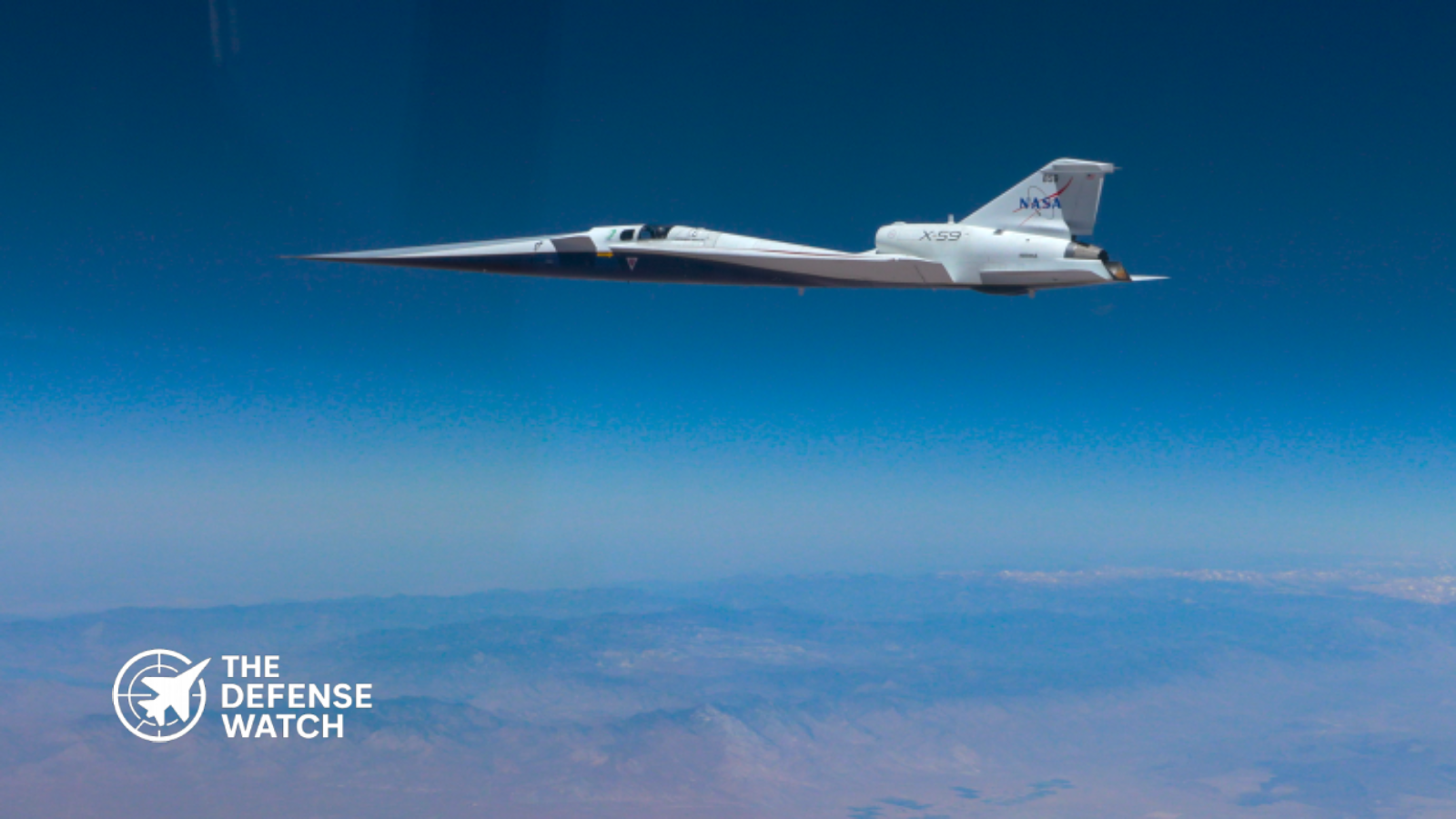
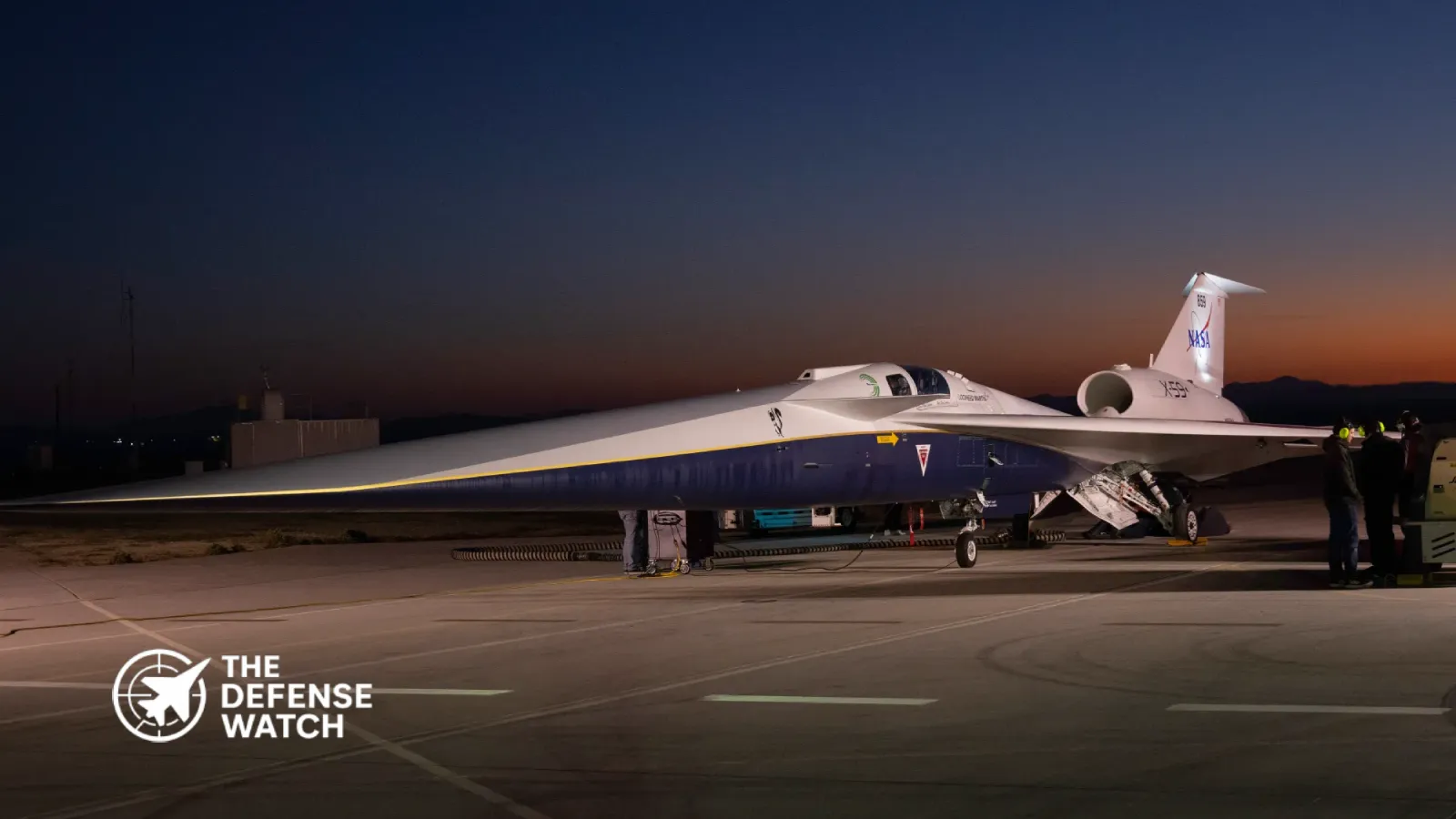
The X-59 features a highly elongated nose and advanced aerodynamic shaping designed to disperse shockwaves. Instead of a sharp sonic boom, the aircraft is expected to produce a quieter “sonic thump.”
Following initial flights, NASA plans to conduct community overflight tests across multiple U.S. locations. These tests will measure how people perceive the reduced noise signature.
The collected data will be shared with regulators, including the Federal Aviation Administration and international aviation bodies, to inform future policy decisions.
Why It Matters
The NASA X-59 test flights could redefine the future of civil aviation. If the aircraft meets its performance goals, regulators may reconsider bans on supersonic flight over land.
This would open new commercial routes and significantly reduce travel times. For example, transcontinental flights could be shortened by several hours.
From a defense perspective, the ability to manage acoustic signatures at high speeds offers clear operational benefits. Reduced noise improves mission discretion and could expand operational flexibility in contested environments.
Strategic Implications
The X-59 program strengthens U.S. technological leadership in advanced aerodynamics and flight testing. It reinforces the role of government-led research in shaping global aviation standards.
Quiet supersonic capability also supports future military aviation concepts. Aircraft that can travel faster than sound without revealing their position through loud booms offer a tactical advantage.
The program may also influence allied nations. NATO partners and close U.S. allies could adopt similar technologies or align their regulatory frameworks with U.S. standards.
Competitor View
China and Russia continue to invest in high-speed aviation, including hypersonic systems and next-generation fighters.
Both countries are likely to monitor the NASA X-59 test flights closely. While their focus remains heavily military, the ability to reduce acoustic signatures has dual-use implications.
China, in particular, has shown interest in commercial supersonic concepts. A successful U.S. demonstration could accelerate competing programs or drive parallel regulatory efforts.
Russia, with its legacy in supersonic aviation, may view the X-59 as a validation of renewed interest in high-speed civilian flight.
What To Watch Next
The next phase involves first flight operations, followed by envelope expansion testing. Engineers will validate handling, stability, and acoustic performance.
Community overflight campaigns will mark a critical milestone. These tests will provide real-world data on public perception, a key factor in regulatory approval.
Regulatory engagement will follow. Authorities will review the data to determine whether current restrictions on supersonic overland flight should be updated.
Capability Gap
The X-59 addresses a clear gap in aviation. Current supersonic aircraft cannot operate over land without violating noise regulations.
By reducing sonic boom intensity, the aircraft aims to make supersonic travel socially acceptable and operationally viable.
However, limitations remain. The X-59 is a demonstrator, not a commercial platform. Scaling the technology for widespread airline use will require further investment, certification, and economic validation.
The Bottom Line
NASA X-59 test flights could unlock quiet supersonic travel and reshape both civilian aviation and future high-speed military operations.
RTX Launches Blue Canyon Satellite for NASA’s Pandora Mission
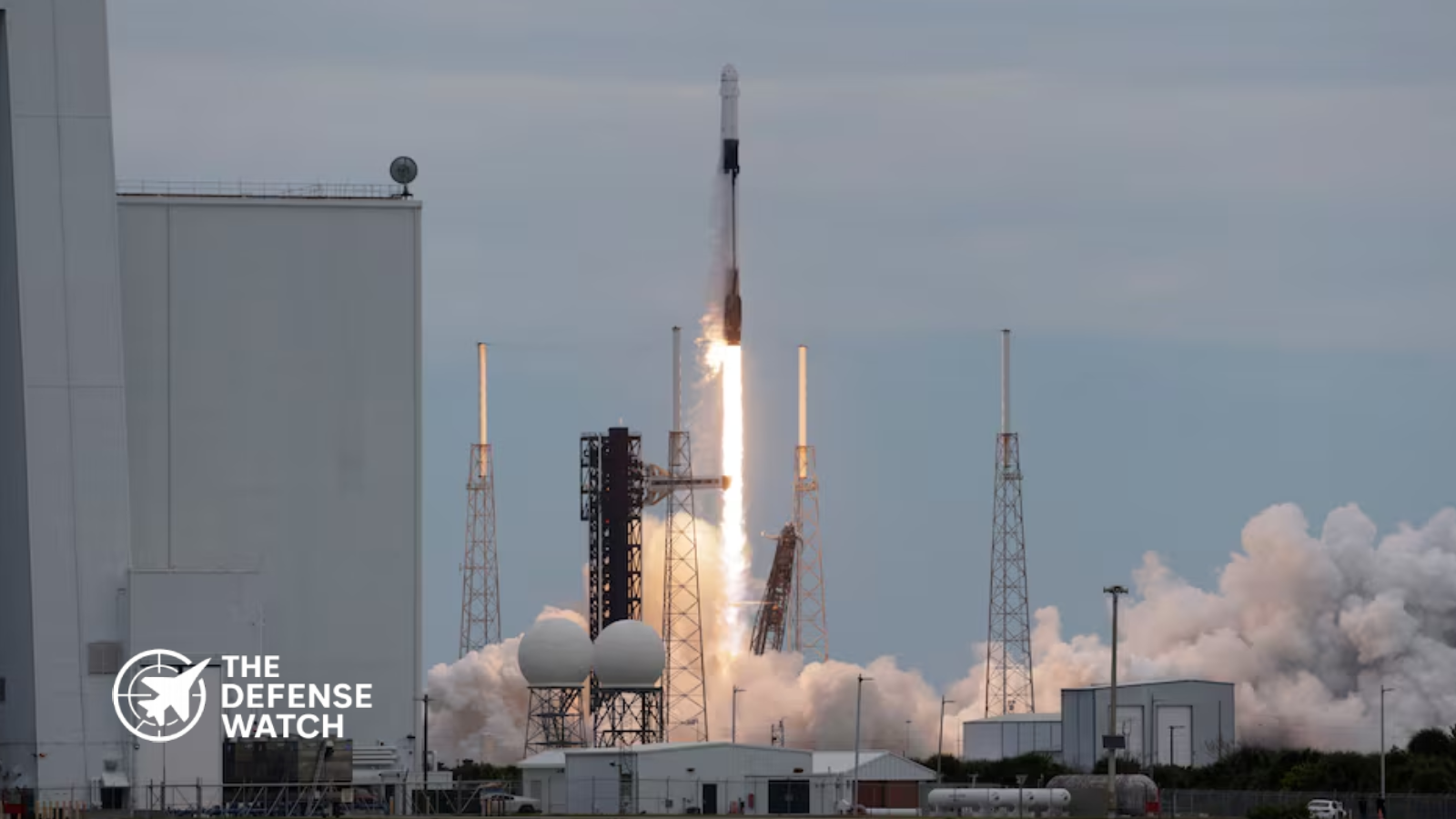
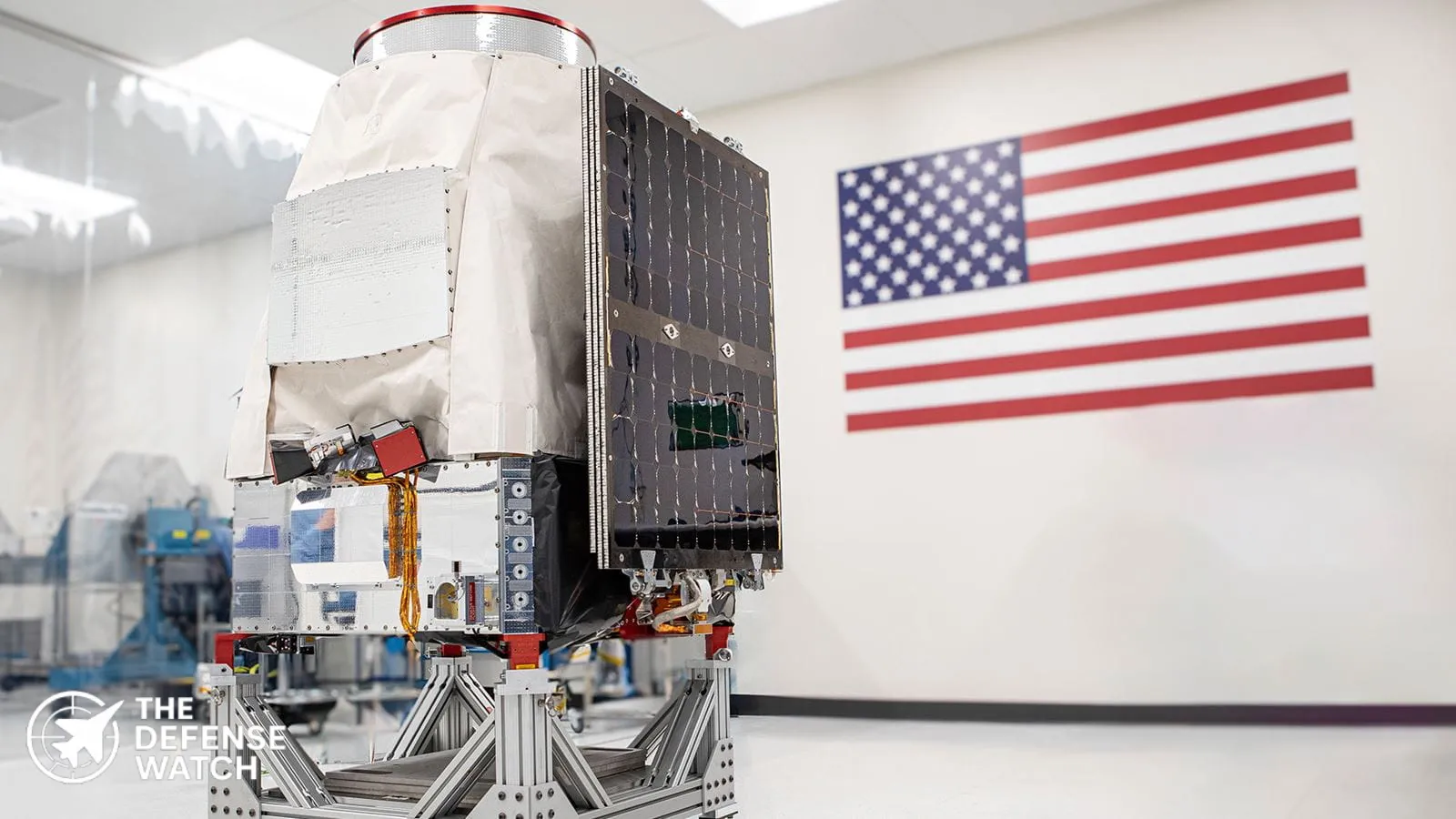
RTX’s (NYSE: RTX) small satellite division, Blue Canyon Technologies, successfully launched its Saturn-200 minisatellite this week in support of NASA’s Pandora mission, aimed at studying the atmospheres of exoplanets and the activity of their host stars.
(adsbygoogle = window.adsbygoogle || []).push({});The Pandora mission will observe at least 20 planets as they transit in front of their stars. During these transits, starlight passes through planetary atmospheres, allowing scientists to measure atmospheric composition and assess habitability potential. The mission focuses on planets with atmospheres primarily composed of hydrogen or water.
Chris Winslett, general manager of Blue Canyon Technologies, noted that Pandora carries the largest telescope payload ever integrated onto a Blue Canyon spacecraft. He highlighted the spacecraft’s advanced guidance, navigation, and control systems, which provide the precision pointing and stability required for the mission’s success.
The Pandora program is managed by NASA’s Goddard Space Flight Center and Lawrence Livermore National Laboratory under the NASA Science Mission Directorate. Blue Canyon provided the satellite bus, launch vehicle integration, and post-launch commissioning. The launch marks the 87th spacecraft deployed by Blue Canyon Technologies.
(adsbygoogle = window.adsbygoogle || []).push({});Blue Canyon Technologies, a subsidiary of RTX, specializes in small satellite manufacturing and mission services. Its portfolio supports over 160 spacecraft orders for diverse missions, offering reliable, cost-effective platforms for the evolving space economy.
RTX, the world’s largest aerospace and defense company, employs more than 185,000 people worldwide and reported over $80 billion in 2024 sales. Its business units—Collins Aerospace, Pratt & Whitney, and Raytheon—advance aviation, defense systems, and next-generation technologies for global customers.
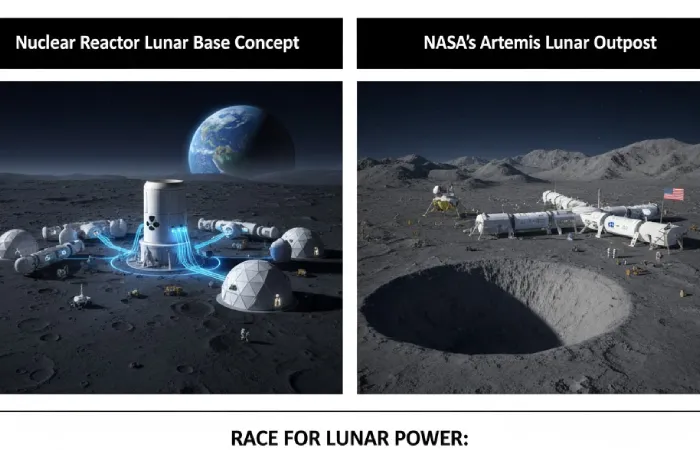
The National Aeronautics and Space Administration (NASA) has accelerated its plans to deploy a nuclear-fission reactor on the surface of the Moon by 2030, setting a target power output of around 100 kilowatts and signaling a strategic move in the expanding lunar infrastructure race. Recent reports indicate that this timeline positions Washington ahead of the China National Space Administration (CNSA) and its Russian partners’ goal of building a lunar reactor by 2035.
Background
The push for nuclear power on the Moon comes amid renewed competition in space beyond traditional exploration. Solar and battery systems struggle with the lunar day-night cycle—approximately two weeks of sunlight followed by two weeks of darkness—making sustained operations difficult. A compact fission reactor could enable permanent bases, power-intensive activities and deep-space precursor missions, including those envisioned under the Artemis program.
Prior NASA initiatives such as the Kilopower experimental reactor project advanced designs for small reactors (1–10 kW) for space applications. These are now being scaled by NASA and industry toward 100 kW class systems for lunar surface deployment.
Meanwhile, China has indicated via a presentation that its broader lunar base initiative—the International Lunar Research Station (ILRS)—will include a nuclear power component, with a baseline manned base expected by 2035.
Details of the Plan
According to policy documents obtained by media outlets, NASA has instructed industry to submit proposals for a lunar surface reactor capable of producing about 100 kW of electrical power by 2030. The directive also notes that the first nation to deploy such a reactor might declare exclusive zones (“keep-out zones”) around its lunar installations, influencing future access.
In a related briefing, interim NASA administrator Sean Duffy emphasized: “To have a base on the Moon, we need energy.” He described the drive as part of a broader “second space race”.
Technical challenges remain significant. In the Moon’s vacuum environment, conventional cooling methods are inadequate. Engineers must design systems that manage heat rejection via radiators and possibly use conduction to the lunar regolith. NASA’s Fission Surface Power project addresses these vacuum-cooling and shielding issues.
China’s lunar reactor plan reportedly targets the same class of power but seeks to deploy by 2035. A Chinese space official, Pei Zhaoyu, presented slides showing a reactor component for the ILRS at a forum in Shanghai earlier in the year.
Expert and Policy Perspectives
From a defense-and-space policy standpoint, the lunar nuclear reactor initiative carries dual-use implications. Reliable power on the Moon could support infrastructure that, while civilian in nature, can bolster strategic presence. The possibility of “keep-out zones” raises questions about how lunar sovereignty and access rights will be managed under the Outer Space Treaty (1967).
Dr. Laura Kirkpatrick, a space-policy analyst, commented: “Deploying nuclear power enables not only habitats but also continuous operations—telemetry, robotics, mining—so whoever does it first gains a significant infrastructure head-start.”
On the technical side, the critical path lies in coupling compact fission units with reliable heat-rejection systems suitable for the lunar vacuum and dust environment. The burn-time, shielding mass, launch mass and automated deployment are all major hurdles. Previous terrestrial micro-reactors such as the Project Pele design for the U.S. Army reflect some of these challenges, though not in lunar conditions.
What’s Next
If NASA meets its 2030 target, the deployment of a 100 kW lunar reactor would mark a major milestone in the Artemis programme’s goal of establishing a sustainable lunar presence. It could also force competing actors, including China–Russia, to accelerate their own timelines or adjust base designs accordingly.
For industry, the next steps will include issuing requests for proposals, selecting commercial partners and commencing ground tests of reactor modules. NASA’s timeline calls for industry consultation within 60 days of the directive.
On the geopolitical front, lunar infrastructure power systems could become a new domain of strategic competition, with infrastructure-led influence extending beyond Earth orbit. The implementation of such systems may influence future agreements on lunar operations, commercial mining rights, and international collaboration.
On 28 October 2025, X‑59 — an experimental supersonic aircraft developed by NASA in partnership with Lockheed Martin (Lockheed Martin) — accomplished its first test flight, lifting off from the Skunk Works facility at U.S. Air Force Plant 42 in Palmdale, California, and landing safely near the Armstrong Flight Research Center at Edwards Air Force Base. The aircraft, built to demonstrate a quieter form of supersonic travel, moved into the airborne phase of its test Program.

Background: Quiet Supersonic Flight and the X-59 Programme
Supersonic flight over land has long been restricted because of the disruptive sonic booms generated when aircraft break the sound barrier. The X-59 is the centerpiece of NASA’s Quiet Supersonic Technology (QueSST) mission, which was formally announced in 2024 with the objective of proving that an aircraft can fly faster than sound while producing a low-decibel “thump” instead of the traditional boom. Built by Lockheed Martin’s Skunk Works in Palmdale, the aircraft incorporates a distinctive elongated nose, canard surfaces and a specially configured intake and engine installation in order to reshape the shock-waves and reduce noise impact. Planned performance metrics include cruising at around Mach 1.4 (approximately 1,490 km/h) at an altitude of around 55,000 ft.

Details of the First Flight
The maiden sortie of the X-59 began from Plant 42 in Palmdale, California, and proceeded toward a landing near NASA’s Armstrong Flight Research Center at Edwards Air Force Base. According to press releases, Lockheed Martin noted the aircraft “performed exactly as planned, verifying initial flying qualities and air-data performance.” The flight was a conservative envelope check: sub-sonic speed, moderate altitude — designed to validate system integration, handling qualities and readiness for more advanced tests. During the sortie it reportedly reached about 230 mph (370 km/h) at roughly 12,000 ft altitude, with the focus on safe climb, controllability and landing rather than high-speed performance. NASA’s lead test pilot, Nils Larson, was at the controls for the flight. Lockheed Martin’s Skunk Works vice-president and general manager, OJ Sanchez, said the milestone “is a testament to the innovation and expertise of our joint team.”

The aircraft is approximately 100 feet long (just under 30 m) and built as a one-off demonstrator to test low-boom supersonic technology. The X-59’s work will include later flights at higher altitudes, supersonic speed, and over-flight of communities and measurement sensors to gather data on sound signatures and public acceptability.
- Maximum Speed: Mach 1.4 (1,490 km/h)
- Range: ~1,000 miles (1,600 km)
- Payload Capacity: N/A (Experimental aircraft)
- Crew: 1
Technical and Program Significance
The X-59 Program addresses one of the major barriers to supersonic commercial flight: noise over populated areas. By reshaping shock-waves via fuselage design and overall aerodynamics, NASA and Lockheed Martin aim to demonstrate that an aircraft can operate at supersonic speeds over land without causing standard sonic-boom levels. The novel design includes features such as a long slender nose, canards, and a top-mounted intake that help manage airflow and reduce the ground-perceived sound. At full performance the aircraft is projected to cruise at around Mach 1.4 at 55,000 ft — more than double typical commercial airliner altitudes and nearly twice their speed.

The aircraft moves the test programme from ground taxi and simulation tests into full-flight mode. Ground testing included engine runs, taxi tests and simulated flight systems, which concluded ahead of the maiden flight. With the first flight completed, the next phases will explore higher altitudes, speed increments, and noise measurement in real-world conditions. This demonstration is intended to provide the data needed by regulators such as the Federal Aviation Administration (FAA) to consider new certification criteria for supersonic commercial flight over land.
Expert / Policy Perspective
From a technical-policy vantage point, the X-59 flight operation carries implications for both aerospace innovation and regulatory frameworks. Quiet supersonic travel has potential commercial, logistical and strategic significance: faster point-to-point travel, possible military applications, and a repositioning of supersonic capability into civil aerospace markets. By producing empirical data on noise levels, shock-wave behavior and aircraft performance, the Program seeks to inform policy changes that currently limit supersonic flight above land. As one specialist noted, “the data gathered from the X-59 flights will help the FAA and international regulators evaluate potential changes to existing rules that currently prohibit civilian supersonic flight over land.”

For the aerospace industry and defence-aerospace sectors, the achievement reinforces the role of experimental “X-plane” programmes as enablers of disruptive technology—whether for commercial aviation, military transport, rapid response or next-generation aircraft concepts. The partnership between NASA and Lockheed Martin Skunk Works underscores the collaboration between government research agencies and industry in bringing advanced aeronautics from concept to flight.
What’s Next / Impact
With the first flight successfully under its belt, the X-59 enters its primary flight-test campaign. Upcoming phases will raise altitude and speed, eventually targeting supersonic flight and over-flight of communities with sensor arrays to quantify the “sonic thump” signature. The data will feed into regulatory review, potential certification pathways and influence future commercial aircraft design. Moreover, if the Program meets its objectives, it could pave the way for a new generation of supersonic commercial aircraft capable of faster travel over land without the prohibitive noise impact that stalled previous efforts.

In terms of impact, the X-59 shows that supersonic transport may be closer to revival than previously assumed, opening possibilities for defence, cargo and passenger applications that leverage speed while being compatible with populated regions. For global aviation and aerospace strategy, this could shift competitive dynamics among aerospace manufacturers, regulatory bodies and national aeronautical agencies.