Executive Summary:
DARPA’s XRQ-73 SHEPARD hybrid electric uncrewed aircraft completed its first flight in April 2026 at Edwards Air Force Base, California. The prototype under DARPA’s Series Hybrid Electric Propulsion Aircraft Demonstration program is a key test of hybrid-electric propulsion for future UAS designs.
First Flight Marks Progress for XRQ-73 Hybrid Electric Uncrewed Aircraft
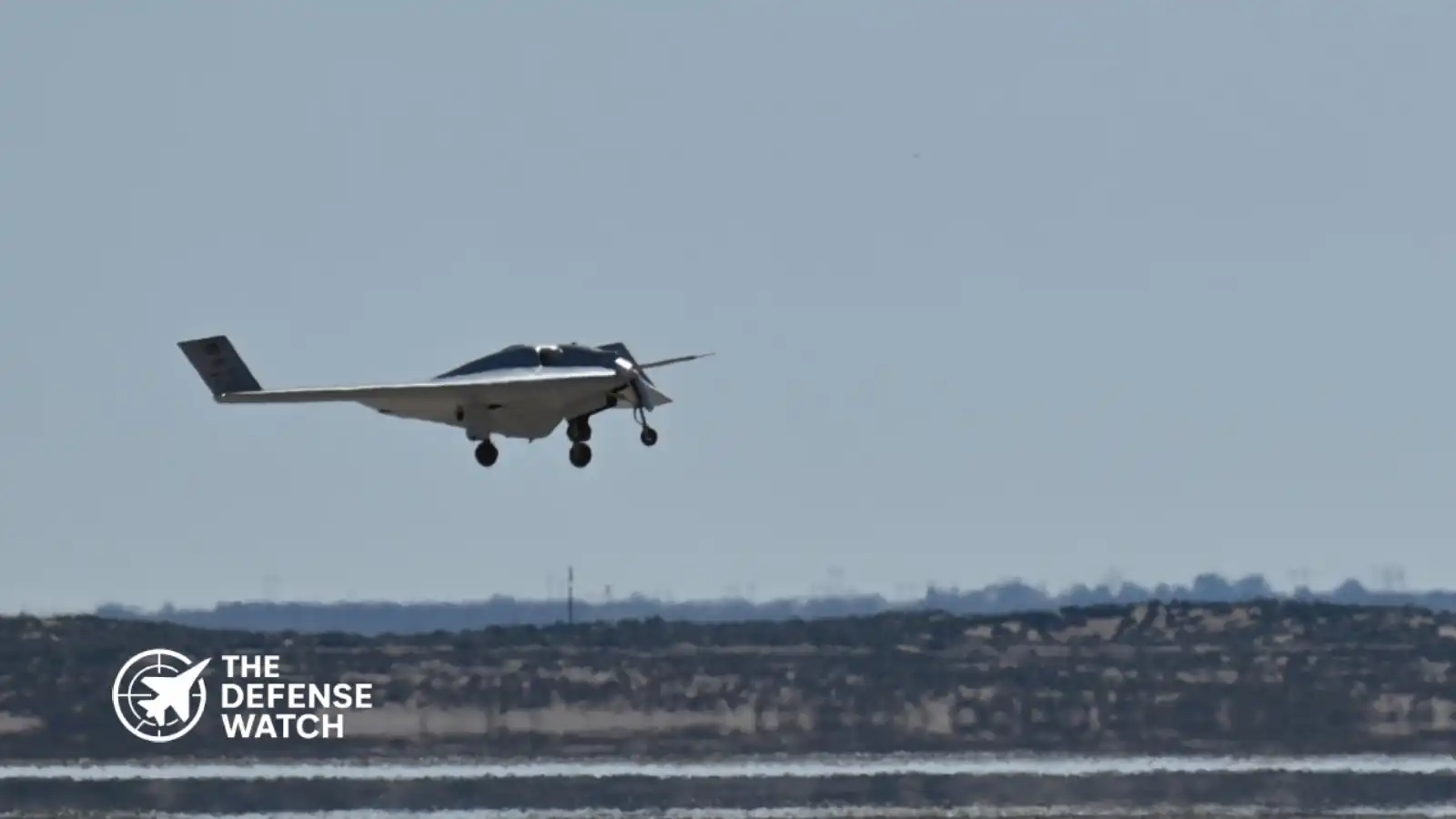
DARPA’s hybrid electric uncrewed aircraft, designated XRQ-73 under the Series Hybrid Electric Propulsion Aircraft Demonstration (SHEPARD) program, completed its first flight in April 2026 at Edwards Air Force Base, California. The flight was confirmed by program partners and announced publicly in early May 2026.
The XRQ-73 aircraft was developed by Northrop Grumman in collaboration with DARPA and with support from the Air Force Research Laboratory and Scaled Composites. The demonstrator uses a series hybrid electric propulsion system where a conventional engine generates electricity to power electric motors that drive the aircraft.
The SHEPARD program aims to assess the operational utility of hybrid-electric technologies for future military aircraft designs. The design blends efficient fuel use with reduced acoustic and thermal signatures, which could benefit long-endurance intelligence, surveillance and reconnaissance (ISR) missions and other applications.
Hybrid Electric Propulsion in a Group 3 UAS
The XRQ-73 SHEPARD is a Group 3 uncrewed aircraft system weighing roughly 1,250 pounds. The flying-wing configuration reflects earlier technology demonstrations such as the XRQ-72 Great Horned Owl, while pushing hybrid electric propulsion forward.
Hybrid electric propulsion uses a fuel-burning engine to generate electricity that drives electric motors. This setup can offer fuel savings, flexibility in mission pacing, and quieter operation compared with traditional propulsion. DARPA’s experiment tests how such systems perform in real flight conditions, data that could influence future military and research platforms.
The April test flight at Edwards occurred within a controlled flight envelope. Details on duration, range, or performance metrics were not disclosed at the time of the announcement. Continued flight testing and data analysis will shape follow-on evaluations.
Broader Research and Industry Context
Hybrid electric propulsion is drawing growing interest across military and civilian aviation sectors. DARPA’s SHEPARD program sits alongside other hybrid UAS projects, including those exploring multi-mode powerplants, quieter signatures, and improved endurance. Because hybrid systems can reduce fuel use and emissions while still tapping conventional power sources, researchers see potential for both defense and commercial applications.
SHEPARD builds on previous DARPA efforts, like the Great Horned Owl initiative, and reflects the Department of Defense’s focus on agile experimental programs that mature technologies fast. The platform’s performance in flight tests will help define whether hybrid-electric designs have practical value for sustained operational use or transition into broader defense acquisition.
What’s Next for XRQ-73 and SHEPARD
DARPA and industry partners will continue flight tests on the XRQ-73 prototype throughout 2026. These trials are expected to probe performance envelopes, endurance characteristics, and propulsion system behavior under varying conditions. The lessons learned could inform future designs for ISR or other uncrewed missions where endurance and low signatures matter.
- Bell completed the Critical Design Review for DARPA’s SPRINT X-Plane program and received the official X-76 designation.
- The experimental aircraft aims to combine helicopter-like vertical lift with jet-like cruise speeds exceeding 400 knots.
- The program is jointly funded by DARPA and U.S. Special Operations Command to enable runway independent military aviation.
- Phase 2 now moves into aircraft construction and ground testing before a planned flight test phase later in the program.
- The X-76 demonstrator could shape future U.S. military vertical lift aircraft capable of rapid deployment without traditional airfields.
DARPA SPRINT X-76 X-Plane Advances Toward Flight Testing
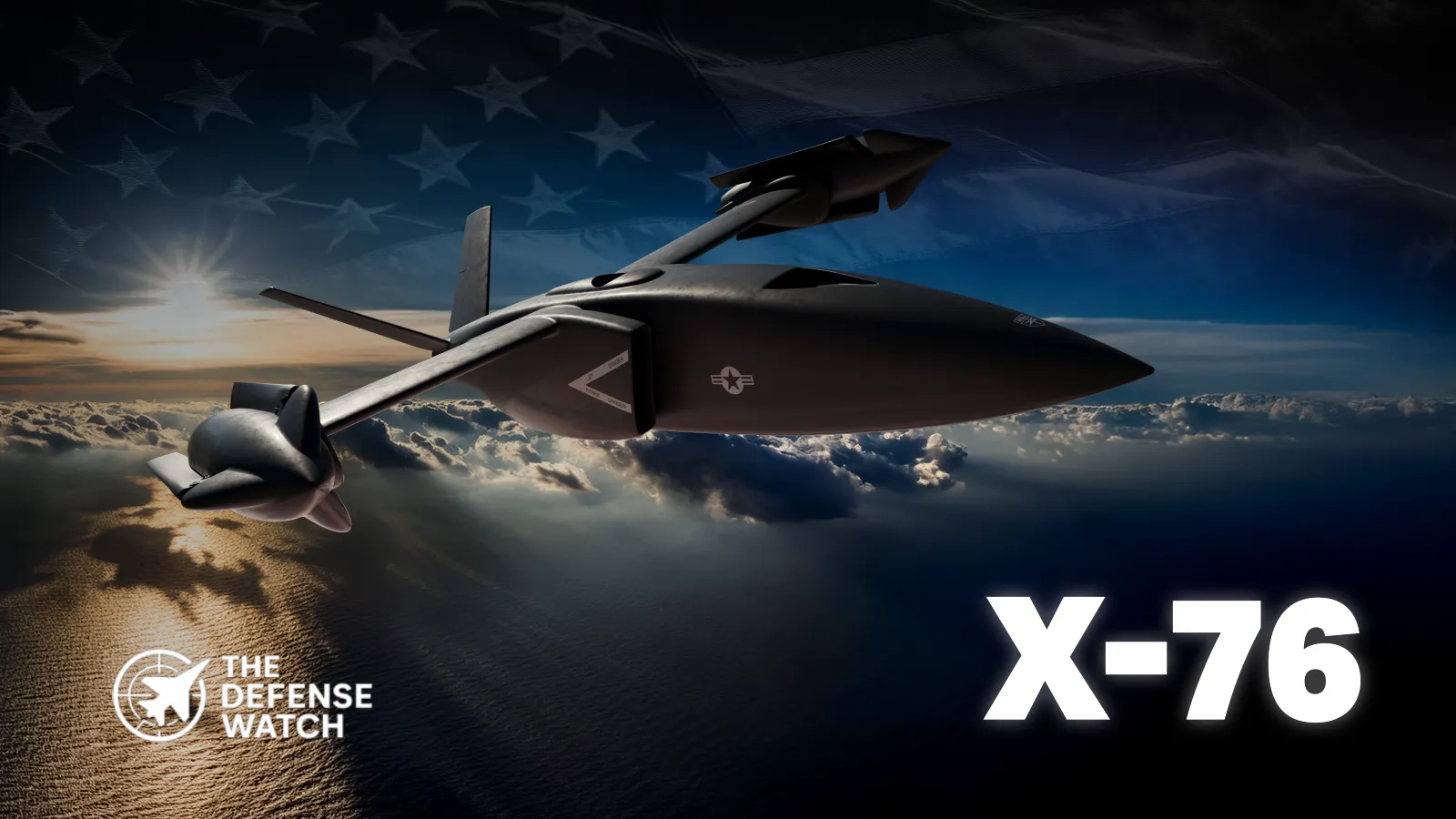
The DARPA SPRINT X-76 X-Plane program has reached a major milestone after Bell Textron completed the aircraft’s Critical Design Review (CDR), clearing the project to move into the manufacturing phase. The aircraft demonstrator, officially designated X-76, is part of DARPA’s Speed and Runway Independent Technologies (SPRINT) initiative aimed at developing a new class of high speed vertical lift aircraft.
Bell will now begin constructing the experimental aircraft as part of Phase 2 of the program, which includes detailed design, manufacturing, integration, and ground testing ahead of a planned flight test campaign.
The program is jointly funded by DARPA and U.S. Special Operations Command and seeks to combine the vertical takeoff capability of helicopters with the speed and range typically associated with fixed wing aircraft.
The Big Picture
The DARPA SPRINT X-76 X-Plane reflects a broader U.S. effort to transform military air mobility through advanced vertical lift technologies. For decades, military planners have faced a fundamental trade off between aircraft that can take off vertically and those capable of high speed cruise.
Helicopters offer flexibility and can operate from small landing zones, but they typically cruise at speeds well below 200 knots. Fixed wing aircraft provide far greater speed and range but depend on runways, which can become vulnerable targets during high intensity conflict.
SPRINT aims to overcome that long standing limitation by developing aircraft that can operate without runways while cruising at speeds exceeding 400 knots.
Such capabilities align closely with emerging U.S. operational concepts such as distributed operations, rapid force projection, and expeditionary logistics in contested environments.
What’s Happening
Bell Textron announced on March 9, 2026, that it had successfully completed the Critical Design Review for the DARPA SPRINT program, enabling the company to begin building the aircraft demonstrator designated X-76.
The milestone follows Bell’s selection for Phase 2 of the program in 2025 after completing earlier conceptual and preliminary design phases.
The SPRINT program seeks to demonstrate an aircraft capable of:
- Cruising between 400 and 450 knots
- Hovering and landing in austere environments
- Operating from unprepared surfaces without traditional runways
Bell’s design uses an innovative stop and fold rotor system, allowing rotor blades to operate during vertical takeoff and landing but fold away during high speed forward flight to reduce aerodynamic drag.
Once the aircraft transitions to cruise mode, a separate propulsion system provides forward thrust, enabling speeds closer to jet powered aircraft.
Why It Matters
The DARPA SPRINT X-76 X-Plane directly addresses one of the most persistent operational constraints in military aviation, reliance on fixed runways.
Runways offer speed and payload advantages but represent a critical vulnerability during modern conflicts. Long range precision weapons and drone attacks have made airfields increasingly easy targets.
A high speed aircraft that can take off vertically and operate from small landing zones could allow U.S. forces to disperse aviation assets across many locations rather than concentrating them at a handful of major bases.
For special operations forces, the ability to insert or extract personnel rapidly without established infrastructure could significantly expand operational flexibility.
Strategic Implications
The technologies demonstrated by the X-76 could influence future U.S. military aircraft across multiple mission sets.
High speed VTOL aircraft could support:
- Special operations infiltration missions
- Rapid logistics and medical evacuation
- Forward resupply for distributed units
- Expeditionary basing in contested environments
In large scale conflict scenarios, these capabilities could improve survivability by reducing dependence on large fixed airfields.
The SPRINT concept also supports the Pentagon’s broader push toward distributed and resilient force structures, particularly in the Indo Pacific where dispersed island chains complicate traditional aviation operations.
Competitor View
Strategic competitors closely track U.S. experimental aviation programs, especially those related to vertical lift and operational mobility.
China has invested heavily in advanced rotorcraft and hybrid aircraft concepts aimed at extending operational reach across the Western Pacific. Russia has also explored high speed helicopter designs intended to increase battlefield mobility.
A successful demonstration of the DARPA SPRINT X-76 X-Plane would reinforce U.S. leadership in advanced vertical lift technology and may accelerate similar research efforts among competing powers.
Experimental X-plane programs have historically influenced global aviation trends. Technologies first demonstrated through such programs often appear later in operational aircraft.
What To Watch Next
With the design phase complete, the program now enters the aircraft construction stage.
Bell will focus on:
- Manufacturing the X-76 demonstrator
- Integrating propulsion and rotor systems
- Conducting ground testing and validation
Flight testing is expected during Phase 3 of the SPRINT program, which DARPA plans to begin around 2028.
Those tests will evaluate how effectively the aircraft can transition between vertical lift and high speed cruise while maintaining stability and efficiency.
Capability Gap
The DARPA SPRINT X-76 X-Plane targets a specific operational gap in military aviation.
Current tiltrotor aircraft such as the V-22 Osprey provide improved speed over helicopters but remain limited in top speed due to aerodynamic drag from their rotor systems.
The stop and fold rotor concept attempts to overcome that limitation by eliminating rotor drag once the aircraft transitions into forward flight.
However, the approach introduces technical challenges, particularly in flight transition, propulsion integration, and structural complexity. Demonstrating reliable transitions between rotor and cruise modes will be critical for the program’s success.
The Bottom Line
The DARPA SPRINT X-76 X-Plane represents a major step toward aircraft that combine helicopter flexibility with jet level speed, potentially redefining future military air mobility.
- ► DARPA’s LongShot program aims to launch uncrewed X-68A vehicles from crewed aircraft to extend strike range.
- ► General Atomics Aeronautical Systems leads design and development of the X-68A missile truck prototype.
- ► Concept enables standoff deployment of precision-guided missiles while keeping crewed aircraft out of harm’s way.
- ► X-68A designation marks progress from concept to tangible prototype with imminent flight testing.
- ► Platform reflects DARPA’s ongoing push for next-generation uncrewed strike capabilities and flexible deployment.
DARPA X-68A LongShot Missile Truck Nears Flight Testing
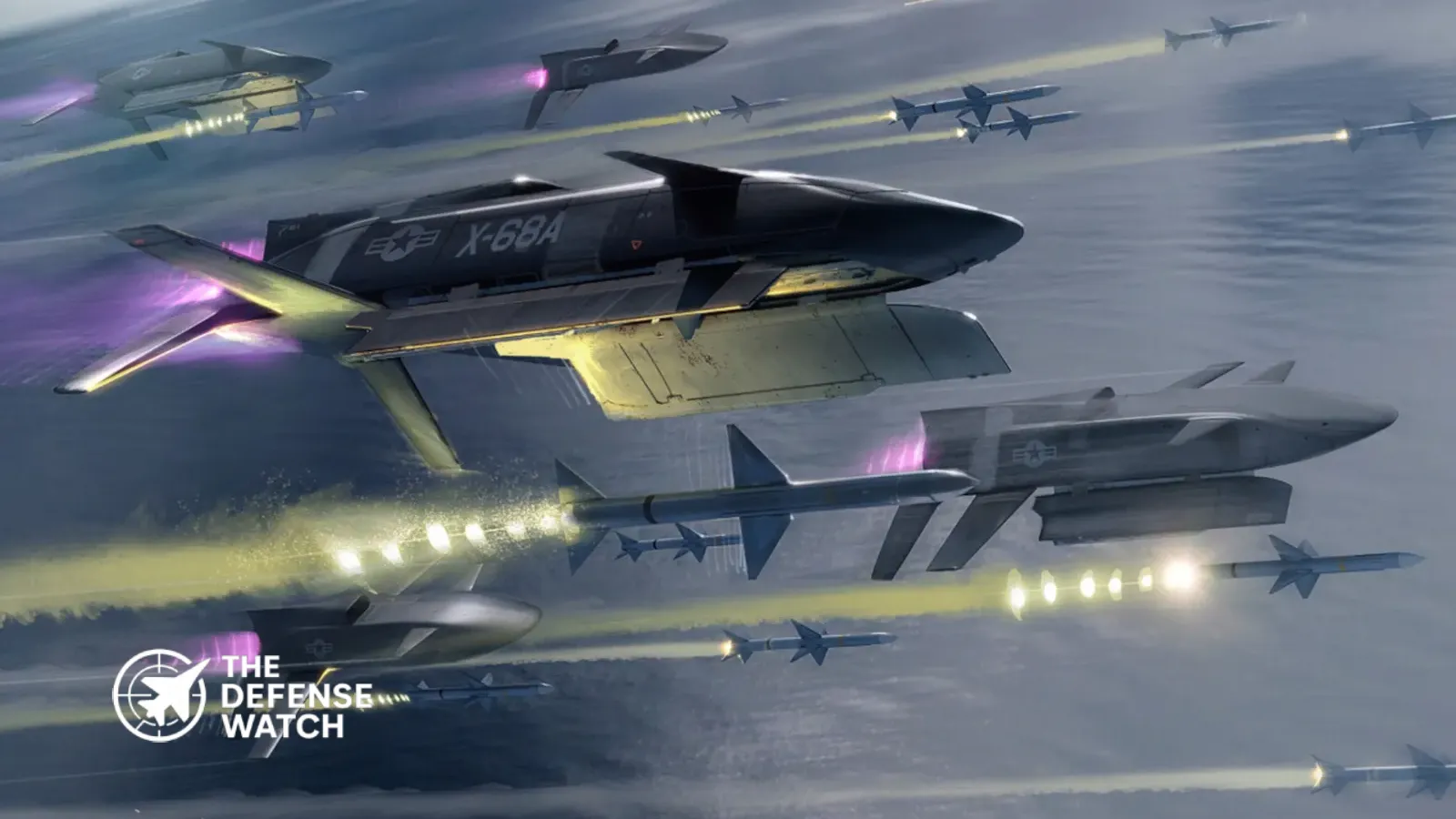
DARPA’s X-68A LongShot missile truck, developed by General Atomics Aeronautical Systems, is advancing toward initial flight tests. The Pentagon’s LongShot program envisions uncrewed missile carriers launched from crewed aircraft to extend operational reach and strike precision.
The X-68A is designed to deploy precision-guided weapons while the launch aircraft remains at a safe distance, minimizing risk to human crews. DARPA first awarded the contract in 2021, and the designation X-68A reflects the progress from early concept to tangible prototype.
General Atomics has led the development, drawing on its experience in UAV systems, and the program represents a five-year effort to explore scalable, flexible strike platforms.
The missile truck concept fits into broader U.S. efforts to enhance standoff strike options, complementing existing air-launched platforms while leveraging uncrewed autonomy. DARPA’s LongShot initiative focuses on adaptability, allowing the X-68A to operate across various scenarios without exposing human pilots to contested airspace.
Flight testing will validate the system’s ability to launch, navigate independently, and deploy munitions reliably. This step moves the program closer to operational evaluation and potential integration into future force structures.
Analysts note that uncrewed missile carriers could provide commanders with flexible options for rapid, precise strikes against high-value targets, a key focus amid evolving global threats.
The X-68A aligns with the Pentagon’s emphasis on force multiplication through autonomous systems, enhancing reach and survivability of U.S. air assets.
DARPA Expands Joint All-Domain Warfighting Software Program
The Defense Advanced Research Projects Agency has awarded a $9.6 million contract modification to Systems & Technology Research LLC to advance the Joint All-Domain Warfighting Software JAWS program, according to a U.S. Department of Defense contract announcement.
The modification, identified as P00023, exercises the Phase 4 option under a cost-plus-fixed-fee contract and brings the total cumulative value of the JAWS program contract to $53.7 million.
Contract Scope and Funding
Systems & Technology Research LLC, based in Woburn, Massachusetts, will continue development work under contract HR001123C0095. Fiscal 2026 research and development funds totaling $9,645,267 are being obligated at the time of award, the Pentagon said.
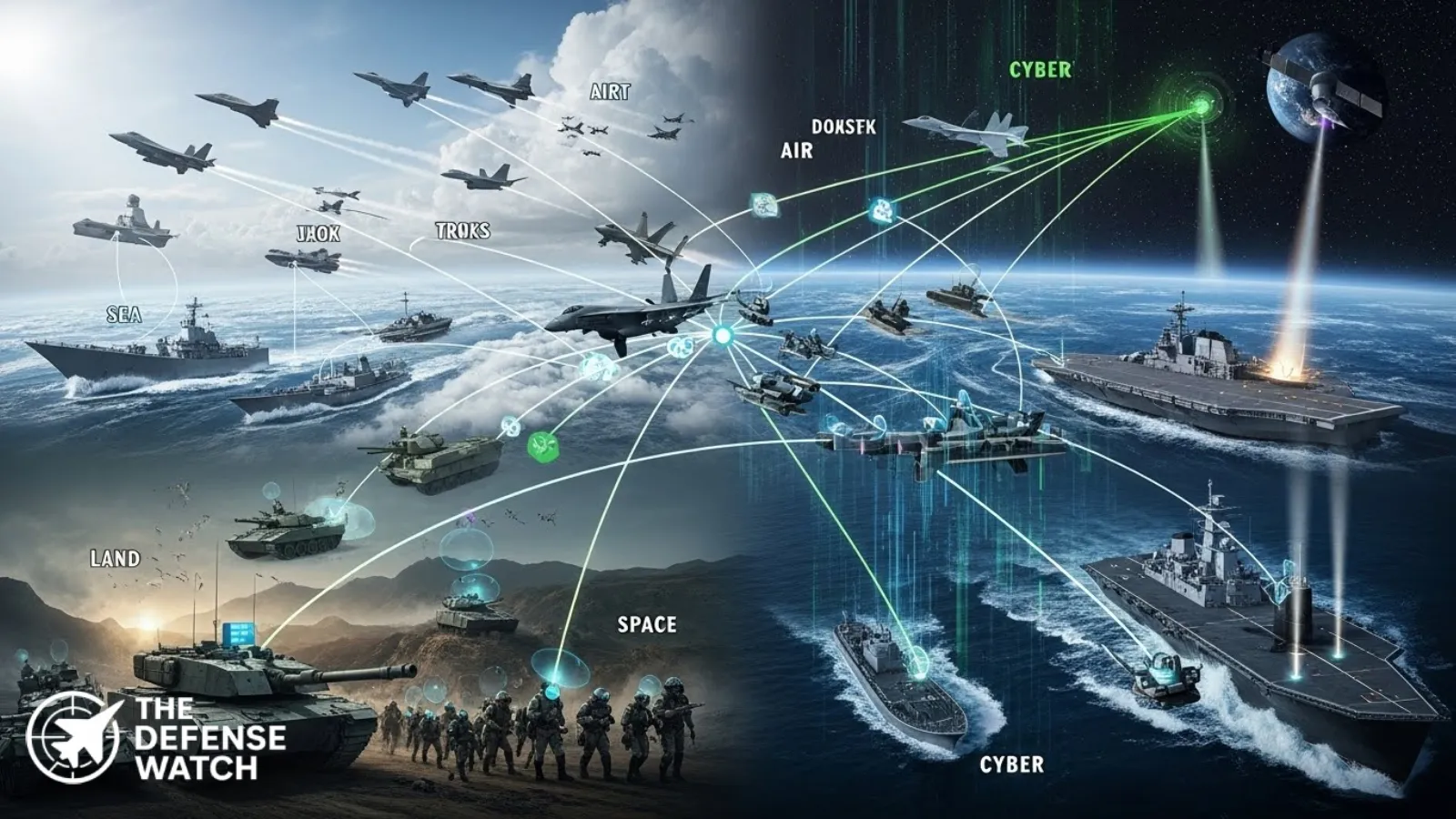
The JAWS program focuses on advancing software technologies that support joint, all-domain military operations, aligning with the U.S. Department of Defense push for improved decision-making, data integration, and operational coordination across air, land, sea, space, and cyber domains.
Work Locations and Timeline
Contract work will be distributed across multiple U.S. locations, including Woburn, Massachusetts at 30 percent, Arlington, Virginia at 20 percent, Denver, Colorado at 10 percent, San Diego, California at 15 percent, Honolulu, Hawaii at 10 percent, and Portland, Oregon at 15 percent.
DARPA estimates the work will be completed by January 2027, extending the JAWS program development timeline as the agency continues to invest in next-generation military software capabilities.
Strategic Context
The Joint All-Domain Warfighting Software effort is part of DARPA’s broader portfolio aimed at accelerating advanced digital tools for future combat environments. These efforts support the Pentagon’s modernization priorities, particularly in areas related to artificial intelligence, decision support, and joint force integration.
DARPA, headquartered in Arlington, Virginia, is the contracting activity. The contract modification was awarded on Jan. 8, 2026.
DARPA’s AI Cyber Challenge Delivers Game-Changing AI for Cyber Defense
The Defense Advanced Research Projects Agency (DARPA) has concluded its landmark AI Cyber Challenge (AIxCC), marking a pivotal shift in how the Pentagon tackles cyber defense. The two-year contest, co-sponsored by ARPA-H, tasked AI-driven systems to autonomously detect and patch vulnerabilities in open-source code underlying critical infrastructure.
At DEF CON 2025, DARPA announced the winners. Team Atlanta—a multinational, multi-institution consortium including Georgia Tech, Samsung Research, KAIST, and POSTECH—secured the $4 million grand prize for its cyber reasoning system (CRS).
Performance That Surpassed Expectations
The finalist systems—which spanned seven teams—demonstrated unprecedented prowess:
- Discovered 77% of injected synthetic vulnerabilities.
- Successfully patched 61% of those defects, often within minutes.
More notably, the systems uncovered 18 real, previously unknown zero-day vulnerabilities. Eleven of those in Java code were automatically patched.
Open-Source Impact and Adoption Roadmap
DARPA is releasing four of the seven finalist CRSs as open-source software, with the remaining models forthcoming. This commitment to openness aims to accelerate adoption across government agencies, private sectors, and critical infrastructure operators.
Additionally, DARPA and ARPA-H have pledged an extra $1.4 million in prizes to support transitioning these systems into real-world infrastructure software, particularly within the healthcare ecosystem.D
Why This Matters—DARPA’s High-Risk, High-Reward Ethos
DARPA Director Stephen Winchell emphasized that patching software using traditional methods is slow, costly, and reliant on limited cybersecurity talent. AIxCC’s autonomous systems provide the U.S. a much-needed speed and scale advantage in vulnerability remediation.
This innovation is especially critical as adversaries increasingly leverage AI to automate and scale attacks. AIxCC tools help defenders keep pace, if not gain the upper hand.
Broader AI Momentum in Pentagon Cyber Defense
DARPA’s efforts sit within a larger Pentagon push to integrate AI across cybersecurity and defense frameworks.
AOX: AI for Cyber Defense Policy Alignment
Earlier in 2025, President Biden’s executive order proposed Pentagon programs using AI for cyber defense, reinforcing the policy framework enabling DARPA’s work.
Contractor Partnerships: OpenAI’s Entry Into Defense AI
In June 2025, OpenAI secured a $200 million contract with the DoD to develop custom AI models—including for cyber defense applications—under its “OpenAI for Government” initiative.
Analysis and Context—What’s Next for AI-Driven Cyber Defense?
AI Patching as a New Defense Standard
DARPA’s launch of CRSs signals a shift from reactive to proactive cybersecurity—moving toward “secure-by-design” methodologies that embed AI remediation directly into development cycles. The cost per patch—averaging just $152—makes AI a viable, scalable solution.
Scaling and Ecosystem Integration
Critical future work includes integrating CRSs into mainstream development tools and CI/CD pipelines, bridging the gap between DARPA’s prototypes and real-world adoption in sectors like energy, water systems, and healthcare.
Leveraging Open Collaboration
With open-source release and AI model credits from tech giants—Google, OpenAI, Anthropic, and Microsoft—DARPA has established a public-private innovation ecosystem to further develop and commercialize these tools.
FAQs
A two-year competition by DARPA (with ARPA-H) to develop AI cyber tools that autonomously locate and patch software vulnerabilities in open-source code used by critical infrastructure.
Team Atlanta, including researchers from Georgia Tech and Samsung Research, won the $4 million top prize. Their CRS uncovered 77% of synthetic vulnerabilities and patched 61%, also identifying real zero-day flaws.
Yes. Four of the finalist systems are openly available as open-source, with the remainder being released soon.
DARPA and ARPA-H are funding further development and integration into real-world critical infrastructure—particularly in healthcare and utility sectors.
Policy advances (e.g. Biden’s executive order), Pentagon investments in AI, and DoD contracts with companies like OpenAI signal growing institutional support for AI-powered cyber defense.