Executive Summary: Turkish Aerospace Industries (TAI) and GE Aerospace have officially signed an agreement to provide F404-GE-102 engines for the serial production of the Hürjet advanced jet trainer. This partnership secures the propulsion requirements for the first batch of aircraft, facilitating Turkey’s transition toward indigenous supersonic flight training and light combat capabilities.
Strategic Propulsion Integration for the Hürjet Program
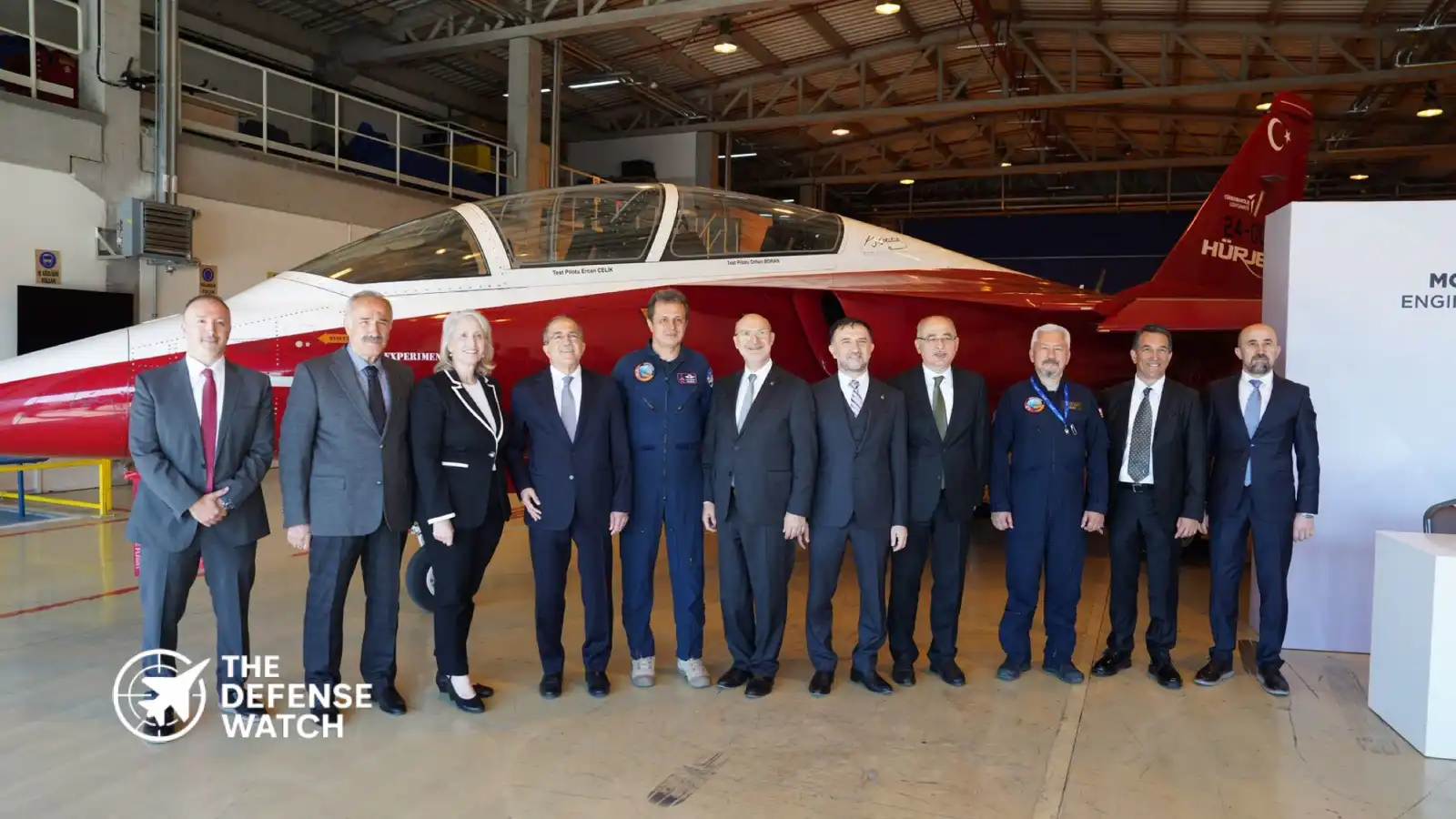
Turkish Aerospace Industries (TAI) has reached a definitive milestone in the Hürjet program by formalizing a propulsion supply agreement with GE Aerospace. The deal ensures the delivery of the F404-GE-102 turbofan engine, a power plant renowned for its reliability in supersonic trainers and light fighter platforms globally.
The Hürjet, which conducted its maiden flight in April 2023, is designed to replace the aging Northrop T-38 Talon and NF-5 fleets within the Turkish Air Force (TuAF). By selecting the F404, TAI leverages a proven engine architecture, reducing technical risk during the critical serial production phase.
Technical Performance and Comparison
The Hürjet is positioned to compete in the high-growth advanced jet trainer (AJT) market, balancing cost-efficiency with supersonic performance. The following table compares the Hürjet against the legacy T-38 it is intended to replace.
Platform Range Payload Status Key Technology TAI Hürjet 2,222 km 2,721 kg Serial Production F404-GE-102, Glass Cockpit, FBW T-38 Talon 1,835 km Internal only Legacy / Active J85-GE-5 Turbojets (Non-FBW) Key Advantages of the F404-GE-102 Integration
The integration of the F404 engine provides several operational and logistical benefits for the Turkish Defense Industry (SSB) and the end-user:
- Supersonic Capability: The engine generates 17,600 lbs of thrust with afterburner, allowing the Hürjet to reach speeds of Mach 1.4.
- Modular Maintenance: The F404 is designed with a six-module architecture, significantly lowering the Mean Time To Repair (MTTR) and increasing fleet availability.
- Established Supply Chain: With over 4,000 units produced globally, the F404 offers a mature logistics network, ensuring long-term spare parts availability.
- Multi-Role Flexibility: Beyond training, the engine’s thrust-to-weight ratio enables the Hürjet to function as a Light Combat Aircraft (LCA) for close air support and air-policing missions.
Strategic Context and Regional Security
The Hürjet program is a cornerstone of Turkey’s broader “National Technology Move,” aimed at achieving strategic autonomy in defense procurement. By securing a reliable Western propulsion system, TAI mitigates immediate bottlenecks while continuing parallel domestic engine development programs (such as those by TRMotor).
As regional tensions necessitate rapid pilot throughput and modernization, the Hürjet serves as a bridge to fifth-generation platforms like the KAAN (TF-X). The ability to train pilots on a platform with modern Fly-By-Wire (FBW) systems and high-alpha maneuverability is essential for the transition to stealth-capable aircraft. Furthermore, the Hürjet’s export potential to nations in the Middle East and Southeast Asia is bolstered by the presence of the GE Aerospace engine, which is already familiar to many international maintenance crews.
Future Outlook for Serial Production
Following the January 2022 decision by the Defense Industry Executive Committee (SSIK) to move to serial production, TAI is scaling its facilities to meet the Turkish Air Force’s initial requirement for 16 aircraft. Deliveries are expected to commence by 2025, with the F404 agreement serving as the primary guarantor of the program’s industrial timeline.
TAI Malaysia Defense Cooperation Gains New Momentum
TAI Malaysia defense cooperation moved into sharper focus this week after Turkish Aerospace Industries said it is targeting broader collaboration with Kuala Lumpur during the Defense Services Asia (DSA) 2026 exhibition in Malaysia.
According to comments reports, TAI CEO Mehmet Demiroglu said existing programs with Malaysia are progressing successfully and new opportunities are under discussion. These include ongoing work linked to unmanned aerial systems and the HURJET advanced jet trainer.
- TAI said it aims to expand defense cooperation with Malaysia during the DSA 2026 exhibition in Kuala Lumpur.
- Malaysian Prime Minister Anwar Ibrahim visited the TAI stand and signed a full-scale HURJET model.
- TAI said ongoing cooperation includes ANKA unmanned aerial vehicles and the HURJET trainer aircraft program.
- The company operates a Malaysia office employing more than 120 personnel.
- The announcement reflects rising Southeast Asian demand for airpower modernization and industrial partnerships.
Malaysia has become an increasingly important export market for Turkish defense firms as Southeast Asian governments seek cost-effective modernization options, diversified suppliers, and technology transfer arrangements.
HURJET And ANKA Programs Highlighted
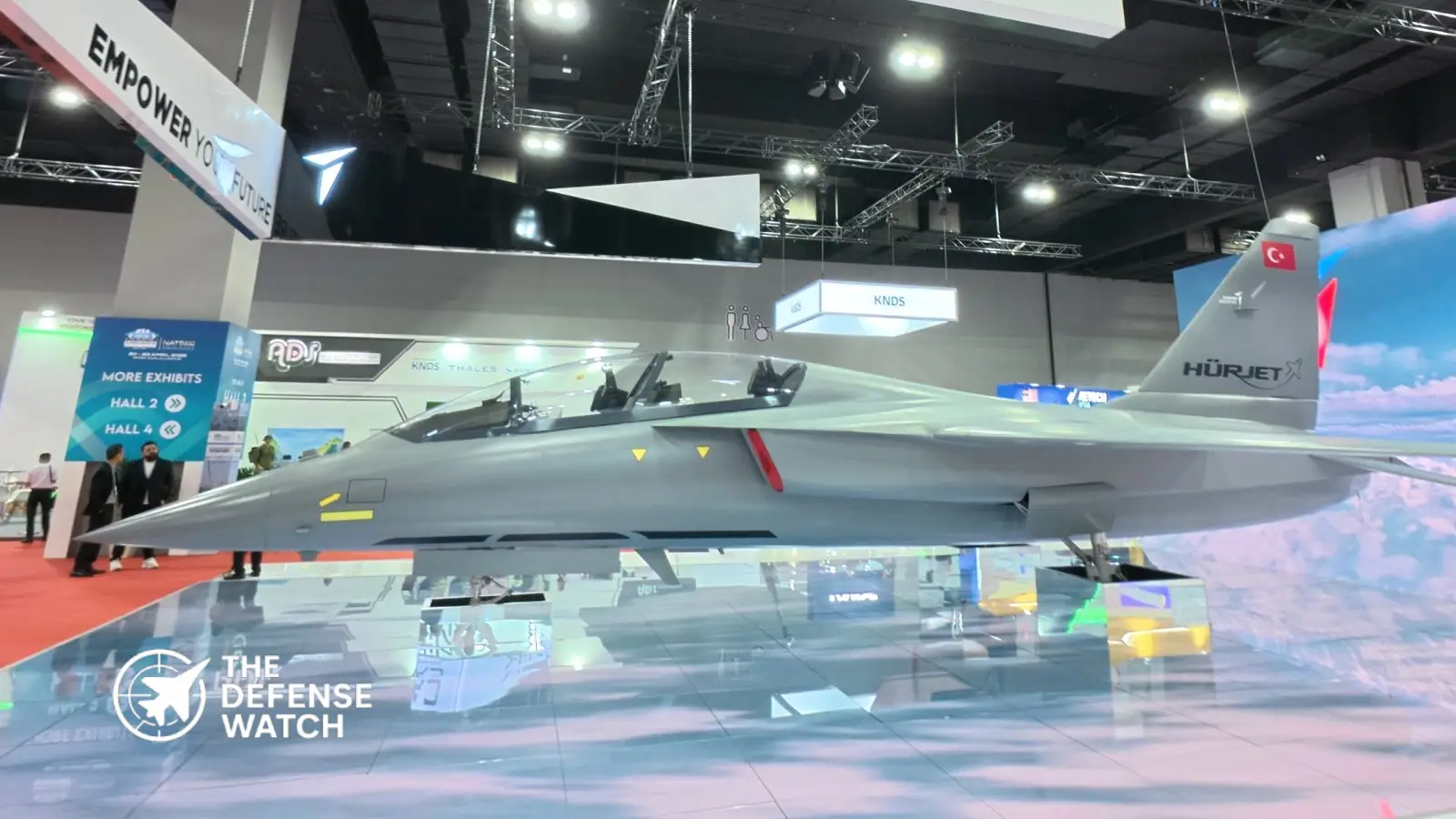
At the event, Malaysian Prime Minister Anwar Ibrahim visited the TAI pavilion and signed a full-scale model of the HURJET trainer aircraft on display, a symbolic gesture that drew attention to the platform’s export potential.
HURJET is designed as an advanced jet trainer with light combat potential. For air forces replacing aging trainers while preserving fighter pilot pipelines, the aircraft could offer a practical middle-tier solution.
TAI also referenced its ANKA unmanned aerial vehicle relationship with Malaysia. Earlier deliveries of three ANKA UAVs to the Royal Malaysian Air Force helped establish the company’s presence in the country.
That matters because once a supplier delivers one platform successfully, follow-on contracts for sustainment, upgrades, training, sensors, or additional aircraft often become easier to secure.
Why Malaysia Matters To Turkish Defense Industry
TAI said it maintains an office in Malaysia with more than 120 employees, indicating the relationship goes beyond simple exports.
A local footprint can support:
- In-country maintenance and logistics
- Engineering cooperation
- Training support
- Faster customer response times
- Long-term industrial integration
For Malaysia, partnerships structured around domestic participation are increasingly valuable. Like many mid-sized defense buyers, Kuala Lumpur wants capability growth without total dependence on overseas sustainment chains.
Strategic Context In Southeast Asia
The timing is notable. Southeast Asia faces growing maritime competition, gray-zone pressure, and persistent airspace monitoring demands. As a result, regional states are reviewing force structure priorities across aircraft, drones, radars, and naval systems.
Malaysia has multiple modernization requirements, including maritime patrol, air surveillance, pilot training, and fleet recapitalization. That creates openings for suppliers able to combine affordability with flexible industrial terms.
Turkey has been steadily expanding into this market by offering systems that are generally less expensive than many Western alternatives while still delivering NATO-linked engineering standards and operational relevance.
What Comes Next
No new contract value or signed procurement decision was announced in the latest statement. However, public signaling at a major regional exhibition often precedes formal negotiations.
If discussions progress, likely areas to watch include:
- Additional UAV support or expansion
- HURJET trainer evaluation
- Aerospace industrial cooperation
- Maintenance and repair partnerships
- Future avionics or sensor integration work
For Washington and allied observers, the broader takeaway is that second-tier defense exporters are becoming more competitive in Asia, reshaping procurement dynamics once dominated by a narrower group of suppliers.
Bottom Line
TAI Malaysia defense cooperation is more than a trade-show headline. It reflects Malaysia’s search for practical modernization partners and Turkey’s rise as a serious aerospace exporter. If current ANKA ties expand into HURJET or broader industrial programs, the relationship could become one of Ankara’s most important defense footholds in Southeast Asia.
Türkiye And Saudi Arabia Sign Gökbey Helicopter Joint Production Deal In Major Defense Industry Move
Türkiye And Saudi Arabia Finalize Gökbey Helicopter Joint Production Agreement
The Gökbey helicopter joint production agreement between Türkiye and Saudi Arabia marks a significant step in expanding defense industrial cooperation between the two countries.
According to Turkish media outlet Daily Sabah, Ankara and Riyadh have agreed to jointly produce the Gökbey helicopter, Türkiye’s domestically developed utility helicopter manufactured by Turkish Aerospace Industries.
The agreement was reached as part of broader defense and industrial discussions between the two governments, reflecting growing strategic alignment in the Middle East defense sector.
Expanding The Gökbey Helicopter Program
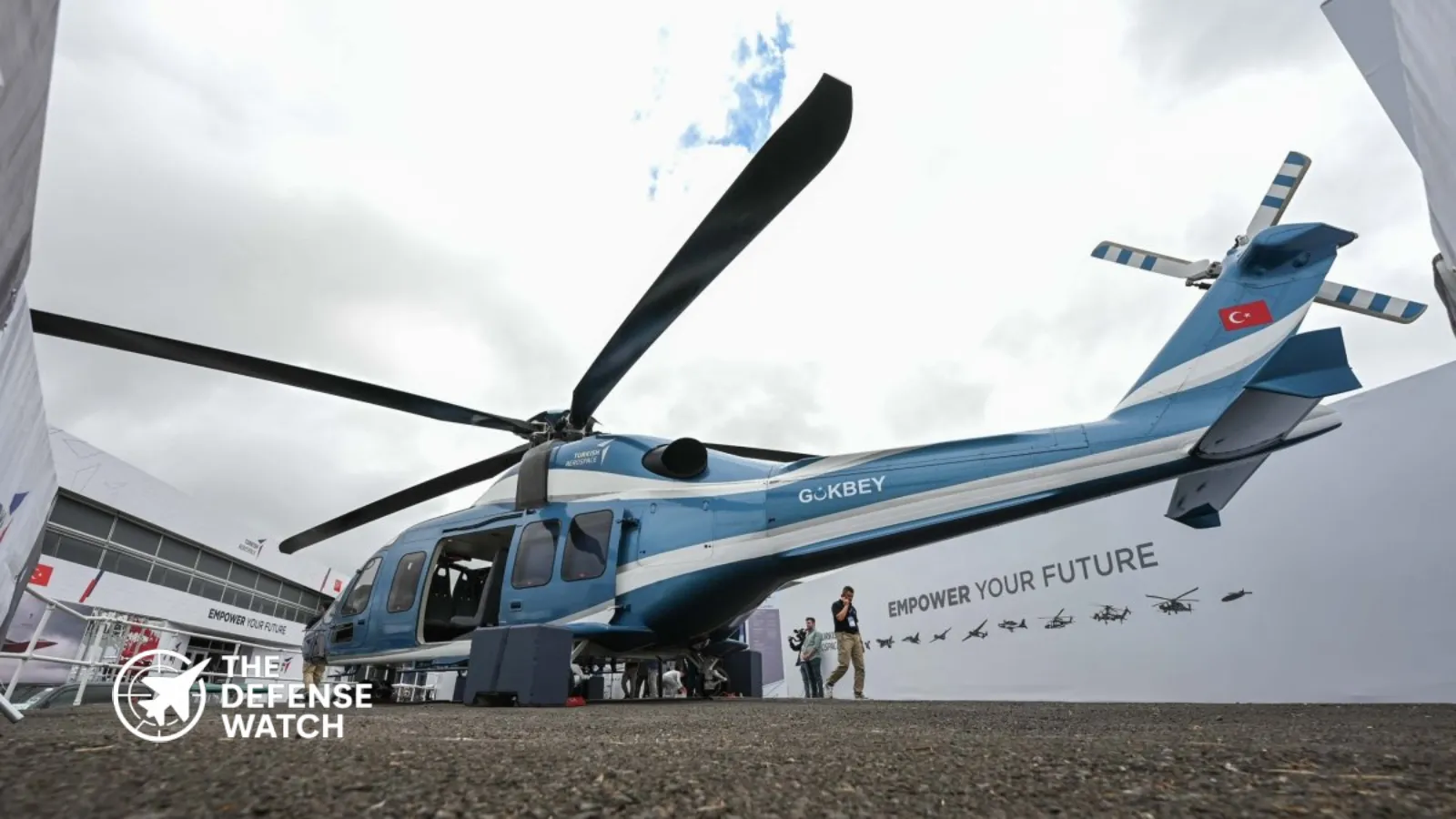
The Gökbey helicopter, officially designated T625, is a twin engine, multi role utility platform designed to meet both civilian and military requirements. Developed by Turkish Aerospace Industries, the aircraft conducted its maiden flight in 2018 and has since entered limited production.
The platform is intended to replace aging utility helicopters in Turkish service and to compete in export markets.
Key specifications include:
- Twin engine configuration
- Five blade main rotor
- Seating for up to 12 personnel
- Maximum takeoff weight of approximately 6 tons
- Advanced avionics suite
The helicopter is powered by the domestically developed TS1400 turboshaft engine, produced by TUSAŞ Engine Industries. The integration of an indigenous engine has been a major milestone for Türkiye’s aerospace sector, reducing reliance on foreign suppliers.
The Gökbey helicopter joint production deal is expected to include technology transfer, local assembly, and potential industrial participation in Saudi Arabia, though detailed production arrangements have not yet been publicly disclosed.
Deepening Türkiye–Saudi Defense Cooperation
The agreement builds on recent defense cooperation between Ankara and Riyadh.
In 2023 and 2024, Saudi Arabia signed defense contracts with Turkish firms covering unmanned aerial systems, armored vehicles, and naval platforms. The Gökbey helicopter joint production initiative signals a shift from simple procurement to co production and industrial collaboration.
Saudi Arabia has been actively pursuing localization under its Vision 2030 strategy, which aims to increase domestic defense manufacturing capacity and reduce import dependency. Partnerships with established foreign defense companies are central to that effort.
For Türkiye, the deal strengthens its position as a competitive exporter of indigenous aerospace platforms in the Middle East.
Strategic And Industrial Implications
The Gökbey helicopter joint production agreement carries both industrial and geopolitical significance.
From an industrial perspective, joint production can:
- Expand production capacity
- Open access to Gulf markets
- Enhance supply chain resilience
- Support long term sustainment cooperation
From a geopolitical standpoint, the deal reflects improving bilateral relations after several years of diplomatic strain earlier in the decade.
Defense cooperation often serves as a stabilizing pillar in broader political engagement. By collaborating on a high value aerospace platform, both sides signal long term strategic intent.
Gökbey’s Role In The Global Utility Helicopter Market
The global utility helicopter segment remains highly competitive, dominated by established Western manufacturers. Türkiye’s strategy with the Gökbey helicopter focuses on offering a cost effective platform with modern avionics and reduced export restrictions.
Industry analysts note that platforms with fewer third party export limitations may appeal to countries seeking flexible procurement options.
The Gökbey helicopter joint production arrangement could improve market visibility and provide operational credibility if the platform enters service in Saudi Arabia.
Program Status And Outlook
Turkish authorities have stated that serial production of the Gökbey has begun, with deliveries to Turkish security forces underway.
As of early 2026, the helicopter continues certification and operational integration processes for various configurations, including search and rescue and VIP transport variants.
Further details regarding production timelines, quantities, and financial terms under the Gökbey helicopter joint production agreement are expected as negotiations advance.
Why The Deal Matters
The Gökbey helicopter joint production agreement reflects several broader trends:
- Growing defense industrial cooperation within the Middle East
- Increased emphasis on technology transfer and localization
- Türkiye’s expanding aerospace export footprint
- Saudi Arabia’s push to build indigenous defense capabilities
For Washington and European defense observers, the partnership underscores the evolving competitive landscape in the global aerospace sector, where emerging producers are gaining traction beyond traditional Western suppliers.