Bell and KAI Sign MOU to Explore MV-75 Cheyenne II for South Korea’s Next-Generation Helicopter Requirement
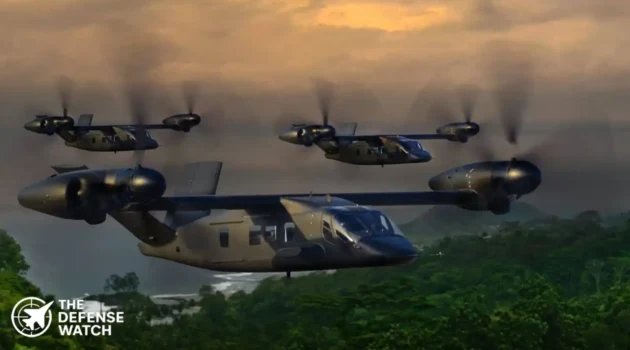
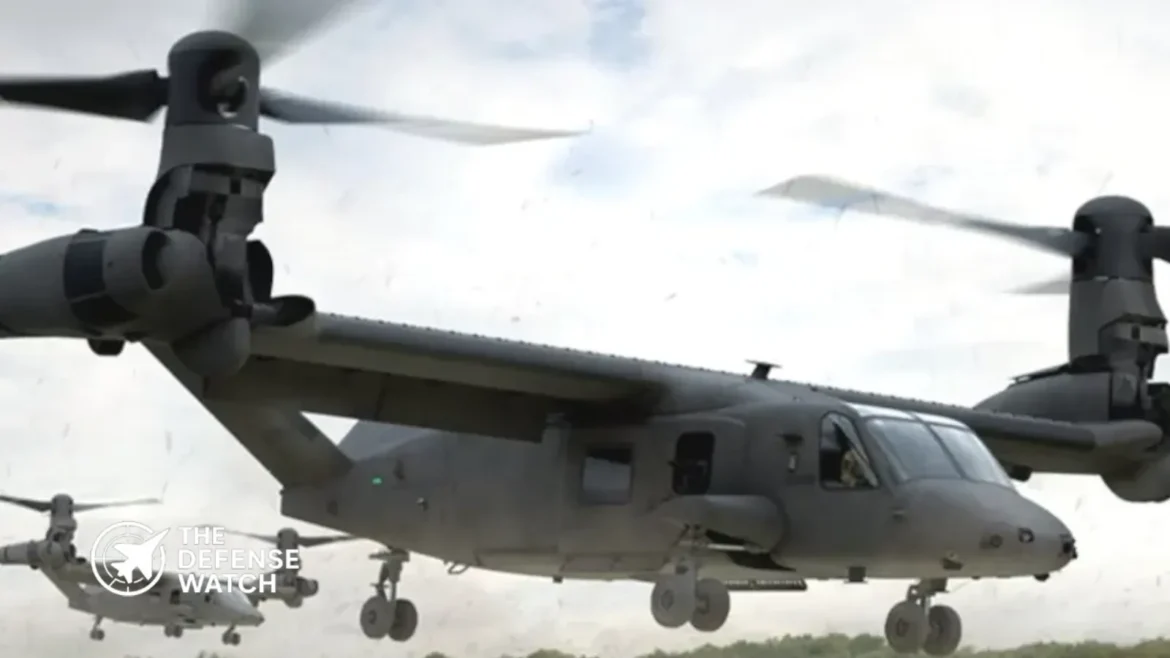
Bell Textron and Korea Aerospace Industries signed a Memorandum of Understanding to explore solutions based on the MV-75 Cheyenne II tiltrotor for South Korea’s High Speed Medium Utility Helicopter (HSMUH) program, the two companies announced April 28, 2026. The agreement — signed at Bell’s Fort Worth, Texas, headquarters — marks the first publicly disclosed international cooperation effort tied to the MV-75 since the U.S. Army formally named the aircraft the Cheyenne II earlier in April.
- Bell Textron and Korea Aerospace Industries (KAI) signed an MOU on April 27–28, 2026, at Bell’s headquarters in Fort Worth, Texas, to explore MV-75 Cheyenne II solutions for South Korea’s High Speed Medium Utility Helicopter (HSMUH) program.
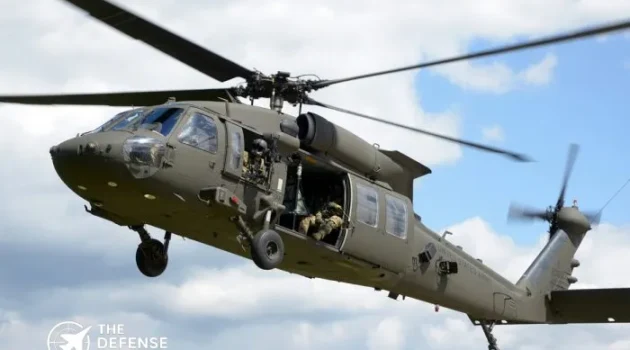
- The MV-75 Cheyenne II is the U.S. Army’s selected Future Long-Range Assault Aircraft (FLRAA), offering more than twice the speed and range of the UH-60 Black Hawk it is designed to replace.
- This is the first publicly disclosed international cooperation effort tied to the MV-75, signaling Washington’s intent to extend next-generation tiltrotor capability to allied forces in the Indo-Pacific.
- The exploratory work is supported under U.S. Army Contracting Command Contract No. W58RGZ-23-C-0001, tying any potential South Korean variant directly to the Army’s program of record and future U.S. export policy decisions.
- Both companies will evaluate a Modular Open Systems Approach (MOSA) to allow South Korean forces to modify and upgrade the platform affordably over time, reducing long-term dependency on a single supplier.
The Big Picture
The United States is actively working to extend its most advanced defense platforms to close allies, and vertical-lift aviation represents one of the clearest examples of this effort. As Washington deepens its focus on Indo-Pacific deterrence, ensuring that allies like South Korea operate compatible, interoperable platforms becomes strategically essential.
South Korea sits at the crossroads of one of the world’s most volatile security environments. The Korean Peninsula borders a nuclear-armed North Korea, exists within striking range of Chinese military assets, and demands a defense posture that can respond rapidly across difficult terrain — mountainous, coastal, and urban. The Republic of Korea Army relies heavily on rotary-wing aviation for troop transport, logistics, and close support, making the HSMUH program a high-priority modernization effort.
Simultaneously, the U.S. Army’s own FLRAA program is maturing rapidly. Rolls-Royce began ground testing the AE 1107F turboshaft engines that will power the MV-75 in December 2025. Collins Aerospace received contracts in April 2026 to supply five onboard systems including main power generation, the interconnect drive system, and the SmartProbe air data system. Bell opened a dedicated Wichita Assembly Center for MV-75 fuselage production on April 27, 2026 — one day before the KAI MOU was announced. The domestic program’s accelerating pace creates the conditions necessary for international offers to become credible.
What’s Happening
Bell Textron and KAI signed the MOU on April 27 (local time) at Bell’s Fort Worth headquarters. The signing was attended by KAI Rotary Wing Business Division Head Jo Jung-il and Bell Senior Vice President of Strategic Pursuits Jeff Schloesser.
Under the agreement, the two companies will assess MV-75-based solutions for South Korea’s HSMUH requirement. The scope includes evaluating a Modular Open Systems Approach (MOSA) framework to allow the Republic of Korea Armed Forces to modify the platform’s weapons systems rapidly and affordably as operational needs evolve.
Bell and KAI will also explore areas for industrial cooperation as the program matures. The press release notes the effort is “aligned with U.S. Government priorities and policies,” language that signals the partnership’s scope is bounded by Washington’s export authorization framework. Critically, the work is supported under U.S. Army Contracting Command Contract No. W58RGZ-23-C-0001 — the same FLRAA development contract that funds the domestic MV-75 program. That structure directly ties any future South Korean variant to U.S. policy decisions on technology transfer.
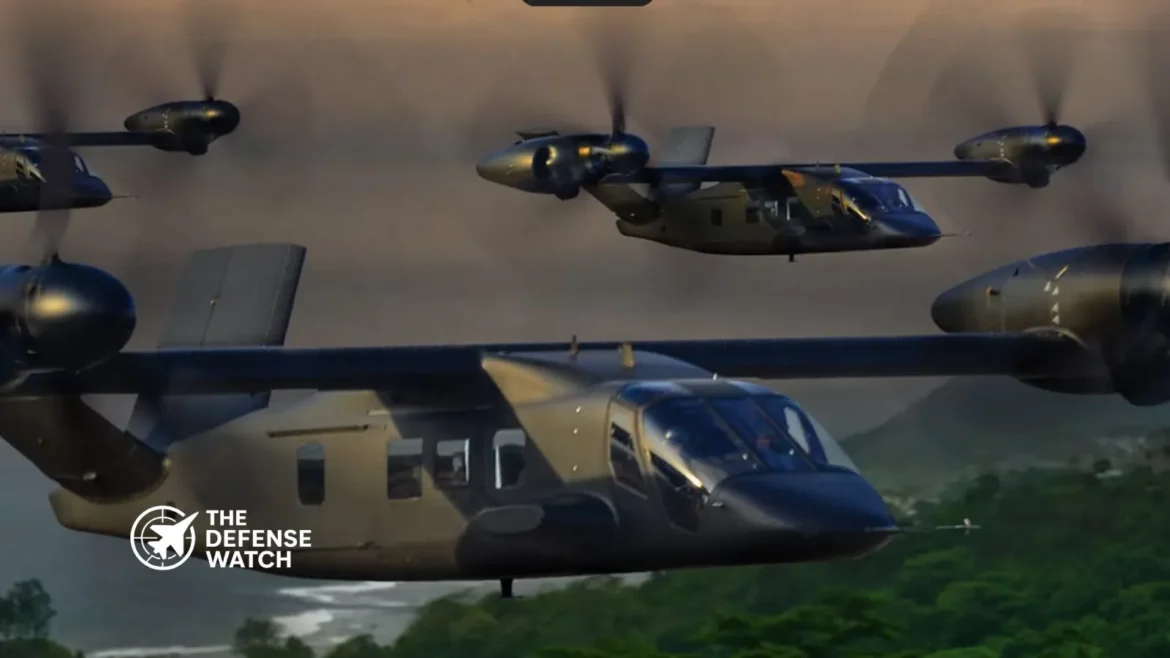
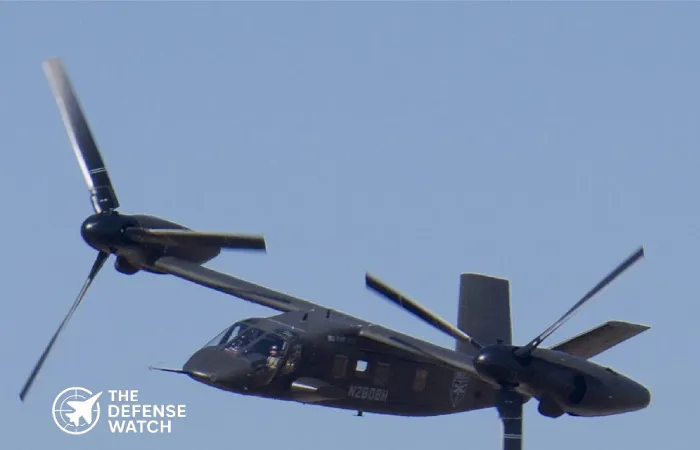
The MV-75 Cheyenne II is derived from Bell’s V-280 Valor demonstrator, which the U.S. Army selected for FLRAA in December 2022. The platform offers more than twice the speed and range of the UH-60 Black Hawk it is designed to replace, using tiltrotor technology to combine vertical-takeoff-and-landing capability with fixed-wing cruise efficiency.
Why It Matters
The Bell-KAI MOU carries significance on multiple levels — industrial, operational, and geopolitical.
For the ROK military, the HSMUH requirement represents a generational leap. South Korea’s current utility helicopter fleet, including aging UH-60 variants and domestically produced Surion helicopters, operates at conventional speeds and ranges. A tiltrotor-based replacement would dramatically expand the operational reach of ROK ground forces, enabling faster troop insertion, logistics support, and medical evacuation across a broader area of operations.
For Bell, the MOU represents the first concrete step toward internationalizing the MV-75 platform. Defense contractors rarely recoup development costs from a single-nation program of record. Export sales extend production runs, reduce per-unit costs, and generate revenue streams that sustain long-term program health. Establishing a partnership with KAI early — before the domestic program reaches initial operational capability — positions Bell to shape the HSMUH competition on its terms.
For the U.S.-ROK alliance, interoperability is the key operational dividend. If South Korea fields a variant of the same tiltrotor platform the U.S. Army operates, combined arms planning, logistics, and maintenance support become significantly simpler in a conflict scenario. That alignment has tangible value in a theater where American and South Korean forces train together under the Combined Forces Command structure.
Strategic Implications
The MOU carries strategic weight beyond its immediate industrial scope.
Tiltrotor technology represents a genuine capability gap relative to China’s current rotary-wing aviation inventory. The People’s Liberation Army Ground Force operates conventional helicopters — the Z-8, Z-9, and Z-20 families — none of which match the projected speed and range envelope of the MV-75. A South Korea operating tiltrotors alongside U.S. forces would widen that advantage and complicate Chinese planning assumptions about the pace at which allied forces could maneuver in a Peninsula contingency or Taiwan Strait escalation scenario.
The MOSA requirement embedded in the MOU also reflects a deliberate strategic choice. By designing a framework that allows South Korea to modify weapons systems without relying on a single supplier, the arrangement hedges against potential export control friction in a future crisis. This approach mirrors the philosophy Washington has applied to the F-35 program — providing advanced platforms while retaining control over the most sensitive subsystems through strict access agreements.
The fact that this cooperation is explicitly tied to a U.S. Army contract rather than structured as a pure foreign military sale adds another dimension. It keeps the program within the oversight architecture of U.S. defense acquisition law, ensuring Washington retains visibility and approval authority over how MV-75 technology flows to a third party — even a close treaty ally.
Competitor View
China will note this MOU as part of a broader pattern of the United States extending advanced military aviation to Indo-Pacific allies. Beijing has watched the U.S. deepen defense industrial cooperation with Japan, Australia, and South Korea through multiple channels, and the prospect of a tiltrotor-equipped ROK Army adds another layer to the military balance on the Peninsula and in the broader region.
North Korea’s military planners face a more immediate concern. The Korean People’s Army relies on a mix of Soviet-era helicopters for assault and logistics missions. A South Korean fleet equipped with tiltrotors capable of faster infiltration speeds, longer operational radii, and greater payload flexibility would significantly complicate DPRK air defense planning, particularly for high-value targets deeper inside North Korean territory.
Russia’s defense establishment, closely watching Western military technology proliferation, has tracked the MV-75 program with interest. Moscow understands the FLRAA concept and has invested in its own high-speed rotorcraft research — the Mil Mi-X1 compound helicopter program — though Russian development timelines have been substantially disrupted by the Ukraine war and associated industrial pressures.
What To Watch Next
The MOU is a framework for exploration, not a procurement commitment. Several milestones will determine whether this agreement matures into a formal program.
The MV-75’s domestic development timeline remains the first gating factor. Army Program Acquisition Executive Maj. Gen. Clair Gill stated in April 2026 that the first flight will happen “when it’s going to happen,” declining to commit to a specific date. Until the aircraft demonstrates flight performance, any South Korean variant remains conceptual.
Watch for indicators of formal South Korean government engagement. The HSMUH program has been discussed in Seoul’s defense acquisition circles for several years, but budget allocation and a formal Request for Information or Proposal have not yet been publicly announced. Korean defense budget decisions in the 2027–2028 timeframe will signal whether this program accelerates or remains in long-range planning.
Industrial cooperation terms will also shape the deal’s political viability. South Korea’s defense procurement process strongly favors domestic industrial participation — offsets, technology transfer, and co-production arrangements. How Bell and KAI structure any future workshare agreement will be a decisive factor in Korean governmental support for the MV-75 bid.
Capability Gap
South Korea’s current medium utility helicopter fleet faces several operational limitations relevant to the threat environment on the Peninsula. Conventional helicopter speeds — typically 140 to 160 knots cruise — limit rapid vertical envelopment and deep insertion operations. The Korean terrain, which combines mountainous interior regions with urbanized coastal corridors, demands aviation assets that can transition quickly between low-observable infiltration profiles and high-speed transit.
The MV-75 tiltrotor concept directly addresses this gap. Tiltrotor aircraft cruise at speeds approaching 280 knots — nearly double conventional helicopter performance — while retaining helicopter-style vertical lift capability for confined-area operations. For a military facing a threat from the north that values speed and surprise, this performance differential is operationally significant.
The MOU’s MOSA framework addresses a separate but equally important gap: long-term platform adaptability. Legacy South Korean helicopter programs have faced challenges integrating new sensors, weapons, and communications systems as technology evolved. A platform designed from the outset for modular upgrades reduces that friction and extends operational relevance without costly and time-consuming airframe redesigns.
Limitations remain. The MV-75 is still in development; first flight has not been achieved and production timelines remain unconfirmed. Any South Korean variant would follow the U.S. Army’s own procurement schedule by several years at minimum. The export authorization process adds further uncertainty, as tiltrotor technology — with its military performance implications — will require careful review under U.S. International Traffic in Arms Regulations.
The Bottom Line
The Bell-KAI MOU moves the MV-75 Cheyenne II beyond a single-nation Army program and into the broader architecture of U.S. Indo-Pacific alliance strategy — a signal that Washington intends next-generation vertical lift to become a shared capability, not a unilateral advantage.

Night Stalkers’ MV-75 Cheyenne II Special Ops Variant Makes Its Public Debut
The MV-75 Cheyenne II special operations variant has made its public debut, offering the first concrete look at how the Army’s most capable tiltrotor will be configured for the elite 160th Special Operations Aviation Regiment. The U.S. Army gave the public its first glimpse at the MV-75A Cheyenne II in its special operations configuration on April 15, 2026, at the Army Aviation Association of America’s Warfighting Summit — and what was revealed signals a significant leap forward in how America’s Night Stalkers intend to fight in contested, complex environments.
¦ KEY FACTS AT A GLANCE- The 160th Special Operations Aviation Regiment’s MV-75A Cheyenne II variant has been publicly revealed for the first time via a rendering shown at the Army Aviation Association of America’s 2026 Warfighting Summit.
- The special operations variant features a nose-mounted terrain-following/terrain-avoidance radar — likely the AN/APQ-187 Silent Knight — a sensor turret, Degraded Visual Environment Pilotage System (DVEPS), and an in-flight refueling probe.
- The MV-75 is designed to replace a portion of the 160th’s MH-60M Black Hawk fleet, offering significantly greater range and speed for deep-penetration special operations missions in contested environments.
- The Army accelerated its MV-75 fielding timeline in January 2026, targeting initial delivery to operational units in 2027 — four years ahead of the original 2031 schedule.
- The aircraft features a modular open systems architecture (MOSA), enabling faster, more affordable capability upgrades — a critical design priority for the 160th SOAR commander.
The Big Picture
Special operations aviation has long depended on aging Black Hawk variants to execute the military’s most sensitive missions. The MH-60M, while heavily modified, is a platform rooted in 1970s airframe technology. The Army has said in the past that it plans to replace roughly half of the 160th’s special operations MH-60M Black Hawk helicopters with MV-75s, though whether that proportion remains unchanged is not yet confirmed.
The MV-75 Cheyenne II represents a generational shift — not an incremental upgrade. As a tiltrotor descended from Bell’s V-280 Valor demonstrator, it combines helicopter-like vertical takeoff with fixed-wing cruise speeds and range. For a unit whose entire operational philosophy centers on inserting forces at precisely the right moment, from precisely the right distance, speed and reach are not just performance metrics — they are mission-enabling characteristics.
The unveiling at AAAA comes against the backdrop of a broader U.S. military push to modernize rotary-wing assets ahead of potential high-end conflict with China across the Indo-Pacific — a theater defined by vast maritime distances that fundamentally stress rotorcraft range limitations.
What’s Happening
Army Col. Roger Waleski, commander of the 160th, shared the rendering of the special operations-specific MV-75 during a presentation at the Army Aviation Association of America’s 2026 Warfighting Summit.
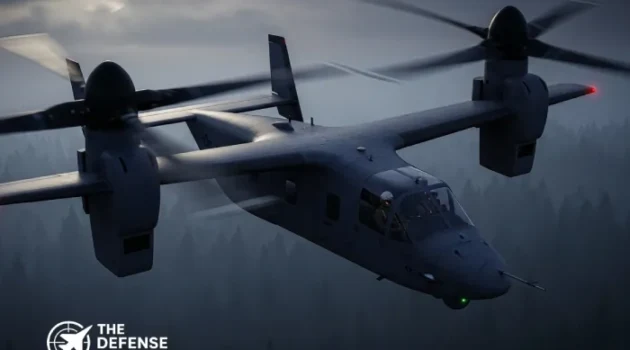
From what is seen in the rendering, the special operations variant of Cheyenne II will differ from the baseline type most in the configuration of its nose end. Like the 160th’s Black Hawks, its version of the MV-75A will feature a nose-mounted radar and sensor turret underneath, as well as an in-flight refueling probe that extends out from the right side.
The radar is likely to be the AN/APQ-187 Silent Knight, or SKR, a terrain-following/terrain avoidance type. SKR is increasingly the default for U.S. special operations aircraft, including Army MH-60M and MH-47G Chinook helicopters, as well as Air Force CV-22 Osprey tiltrotors and MC-130J Commando II special operations tanker/transports.
The rendering also shows what looks to be a fixed, forward-facing aperture on the nose to the left of the radar — most likely reflecting the inclusion of a Degraded Visual Environment Pilotage System (DVEPS) or a similar capability, as is found on the 160th’s MH-60s and MH-47s today. DVEPS uses cameras and LIDAR, together with a terrain database, to help crew navigate through degraded environments full of dust, sand, snow, fog, and other obscurants.
Why It Matters
The sensor suite revealed on the special operations MV-75 is not simply a continuation of prior configurations — it is a deliberate replication and enhancement of the proven architecture used on the Night Stalkers’ current fleet, scaled to a faster, longer-range platform.
TF/TA radar and DVEPS, together with other sensors and in-flight refueling capability, will enable long-range operations along extremely low-altitude nap-of-the-earth flight profiles, even in poor weather and at night. This combination is the operational signature of 160th SOAR missions — the ability to fly fast, low, and undetected across hundreds of miles.
Col. Waleski made clear that performance is only part of what excites the 160th’s leadership. “We’ve gone to a completely modular open system architecture, maintaining the data rights on the aircraft,” he said. “For the warfighters in the room, what that means is your ability to adapt in the warfighting environment, it’s going to be cheaper, it’s going to be quicker.”
That statement carries significant weight. MOSA adoption means the Army — not the prime contractor — controls the integration roadmap. Future sensor upgrades, new electronic warfare packages, or emerging communications systems can be fielded without the contractor dependency that has historically delayed and inflated upgrade costs across military aviation programs.
Strategic Implications
The MV-75’s speed and range advantages over the MH-60M are particularly relevant in the Pacific theater. Rotary-wing platforms operating from sea bases or austere island locations face extreme distance penalties. A tiltrotor with MV-75-class performance could allow the 160th to execute direct-action or personnel-recovery missions from distances that currently fall outside the MH-60M’s practical combat radius.
The in-flight refueling capability shown on the Night Stalker variant further multiplies this reach. Combined with MC-130J tanker support — a mission set already deeply integrated into SOCOM’s theater playbook — the special operations MV-75 would be capable of conducting extremely long-range infiltrations without requiring forward staging bases that may not exist or may be contested in a high-end fight.
“I’ve said this before, I’m exceptionally excited about this platform,” Col. Waleski said. Yes, I’m excited about the speed. Yes, I’m excited about the payload, and I’m excited about the range.
Competitor View
China and Russia will note the MV-75’s special operations configuration with particular attention. Beijing’s military strategists have long studied the operational methods of the 160th SOAR, recognizing that the unit’s ability to project precision force across great distances represents a direct threat to high-value command-and-control assets, leadership targets, and critical infrastructure in a conflict scenario.
The MV-75’s extended range and speed advantage over the MH-60M would meaningfully complicate Chinese integrated air defense planning in the Pacific. A platform that can fly further, faster, and lower — under the radar coverage that Beijing has invested heavily in developing — forces a more distributed and resource-intensive defense architecture.
Russia will similarly factor the Cheyenne II into its special operations threat calculus for European theater contingency planning. The Night Stalkers’ presence in any NATO response scenario has historically required adversaries to allocate additional air defense resources to rear areas, a dynamic that a faster, longer-range MV-75 only amplifies.
What To Watch Next
The baseline MV-75A is still in development, and it is unclear when it might fly for the first time. The Army’s accelerated program timeline, announced in January 2026, targets initial fielding to operational units in 2027 — a compressed schedule that will test Bell’s production and integration pace.
Army Maj. Gen. Clair Gill, the Program Acquisition Executive for Maneuver Air, acknowledged the ambition of the timeline, stating: “We are moving as fast as we can.”
The special operations variant adds another layer of complexity to that schedule. Converting baseline MV-75As into the SOAR configuration requires integration of specialized sensors, avionics, and refueling systems. The Army’s decision to build special operations-friendly conversion features into the baseline airframe from the start suggests the program office is thinking ahead, but the actual timeline for Night Stalker-specific deliveries will likely trail the baseline fielding date by a meaningful margin.
Key near-term milestones to track include the first flight of the production-representative MV-75A, formal confirmation of the 160th SOAR procurement quantity, and any announcement related to Silent Knight radar integration contracts.
Capability Gap
The MH-60M Black Hawk has served the 160th with distinction for decades, but the platform’s speed, range, and altitude performance impose real operational constraints. In the Pacific, those constraints become strategic liabilities. The MV-75 Cheyenne II directly targets this gap.
The special operations variant’s terrain-following radar and DVEPS suite also address a survivability gap: the ability to fly nap-of-the-earth profiles in complete sensor-degraded environments — sandstorms, snowstorms, heavy fog — without mission abort. In contested airspace, the aircraft that can stay low and keep moving is the aircraft that survives.
A realistic limitation to acknowledge is integration risk. The Night Stalker community flies some of the most sensor-dense, software-intensive rotorcraft in the U.S. inventory. Packing equivalent complexity into a new-design tiltrotor airframe, on an accelerated timeline, introduces meaningful developmental risk. Managing that risk without sacrificing fielding speed will be one of the program’s defining challenges in the years ahead.
The Bottom Line
The first public rendering of the Night Stalker MV-75 Cheyenne II confirms that the Army is building a special operations tiltrotor designed from the ground up to dominate the long-range, low-altitude, all-weather mission space — and to keep adapting as the threat environment evolves.
US Army Accelerates MV-75 Tiltrotor Fielding
The US Army is advancing fielding of the Bell MV-75 tiltrotor and aims to receive the first aircraft by late 2026, several years earlier than previously planned, service leaders said. The move marks a major shift in the Army’s Future Long Range Assault Aircraft (FLRAA) program and underlines urgency in modernizing its assault aviation fleet.
(adsbygoogle = window.adsbygoogle || []).push({});Army Chief of Staff General Randy George told soldiers in a January 13 forum that troops could begin flying the MV-75 by this time next year, a timeline that accelerates the delivery schedule from its original early-2030s expectations.
Tiltrotor Program Timeline and Acceleration
The MV-75, derived from Bell’s V-280 Valor tiltrotor demonstrator, was selected by the Army in 2022 to replace aging UH-60 Black Hawk helicopters under the FLRAA initiative. Its tiltrotor design aims to combine vertical takeoff and landing with fixed-wing speed and range.
Originally, first prototype deliveries and early flight testing were expected around 2027-2028, with operational fielding in the early 2030s. The Army and Bell have now agreed to move up that timeline. The service says active duty, National Guard, and Special Operations units may have MV-75s flying late in 2026 in a test and evaluation role.
Bell has begun assembling the first six MV-75 test aircraft in Wichita, Kansas, under contract for eight total, and plans to shift final assembly to its Amarillo, Texas facility, where Bell currently produces the V-22 Osprey tiltrotor.
Program Priorities and Capability Goals
The MV-75 tiltrotor is planned to give the Army significantly greater speed and range than legacy helicopters like the Black Hawk. Tiltrotor aircraft take off and land like rotary-wing platforms but transition to forward flight with proprotors that deliver faster cruise speeds.
(adsbygoogle = window.adsbygoogle || []).push({});Army leaders describe MV-75 as central to future assault and air mobility missions, especially in contested environments where rapid movement over long distances could be decisive. The aircraft is expected to support troop insertion, logistics lift, and other missions once fully operational.
Funding and Industrial Effort
Acceleration of the MV-75 schedule comes with a broader focus on US Army aviation modernization under the Future Vertical Lift framework. The FLRAA program represents one of the largest investments in Army aviation in decades. Funding adjustments and reprioritization of other programs have played a role in advancing tiltrotor development.
(adsbygoogle = window.adsbygoogle || []).push({});Bell says digital engineering methods have reduced manufacturing timelines for fuselage production, helping to support the accelerated delivery goal.
What Comes Next
Acceptance of the first MV-75 airframe in late 2026 will likely be followed by flight testing and evaluation well before initial operational capability. There is no confirmed date yet for full deployment with operational units.
Even with early deliveries, the Army plans to operate the MV-75 alongside a large fleet of Black Hawks for years, gradually replacing a significant portion of the current fleet.

Rolls Royce Begins Engine Testing for US FLRAA Program
Rolls Royce has started engine testing for the US FLRAA program, a major milestone in the US Army Future Long Range Assault Aircraft effort. The company confirmed that testing is underway on its Advanced Turbine Engine designed to power next generation Army rotorcraft.
The engine is intended for the Future Long Range Assault Aircraft, part of the US Army Future Vertical Lift initiative. FLRAA aims to replace the UH 60 Black Hawk with a platform offering greater speed, range, and operational reach.
According to Rolls Royce, the current testing phase focuses on validating performance, durability, and efficiency. The work supports the Army requirement for higher power output while reducing fuel consumption and maintenance demands. The engine is being developed to meet demanding operational profiles, including hot and high conditions and long range missions.
The FLRAA program is led by Bell, which was selected by the US Army in 2022 to develop the V 280 Valor tiltrotor. Rolls Royce is a key industry partner, providing propulsion expertise based on decades of military engine development. The company has stated that lessons from earlier programs are being applied to improve reliability and lifecycle costs.
US Army officials have consistently emphasized that propulsion is a critical element of Future Vertical Lift. Improved engines are seen as essential to achieving the speed and range goals that distinguish FLRAA from legacy helicopters.
The start of engine testing signals steady progress as the FLRAA program moves toward detailed design and risk reduction. While flight testing of full aircraft prototypes remains ahead, propulsion development is a major step in keeping the program on schedule.
Defense analysts note that FLRAA is expected to play a central role in future US Army air assault and air mobility operations, particularly in the Indo Pacific and other large theaters.
U.S. Army Looks to Drone Swarms Over Helicopters
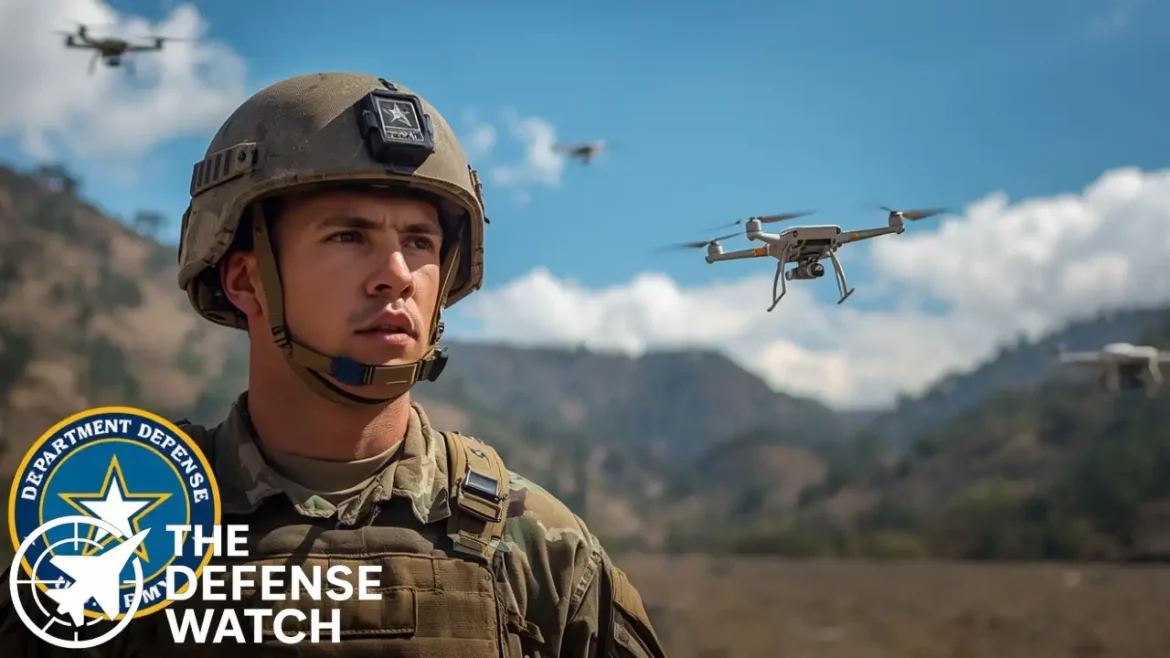
The U.S. Army is intensifying efforts to develop drone swarms capable of replacing or supplementing manned attack helicopters in future combat operations. As warfare evolves toward greater reliance on unmanned systems, Army officials have signaled that swarming drones could eventually take on roles currently performed by platforms such as the AH-64 Apache and future vertical lift helicopters.
This shift comes as the service reevaluates its aviation modernization plans following the decision earlier this year to cancel the Future Attack Reconnaissance Aircraft (FARA) program. Instead of pursuing another manned helicopter, the Army is redirecting resources toward advanced unmanned systems, autonomy, and drone swarm experimentation.
From Helicopters to Drones
According to Army leaders, the growing effectiveness and affordability of small, networked drones are reshaping the calculus of battlefield aviation. A drone swarm can provide persistent reconnaissance, electronic warfare, and strike capabilities at a fraction of the cost of deploying traditional helicopters.
Unlike single aircraft, swarms of drones operate cooperatively, overwhelming enemy air defenses, saturating electronic warfare systems, and providing commanders with unmatched flexibility. The Army envisions drone swarms delivering precision strikes, supporting ground units, and even carrying out missions too risky for manned aircraft.
Source: U.S. Army modernization updates
Lessons from Ukraine and Beyond
The war in Ukraine has underscored how drones—ranging from small quadcopters to long-range loitering munitions—are transforming modern combat. Both Russia and Ukraine have demonstrated how swarms of unmanned aircraft can bypass traditional defenses, strike armor, and disrupt command networks.
U.S. Army planners are drawing on these lessons, recognizing that future peer conflicts may demand scalable, attritable drone forces rather than expensive, high-maintenance helicopters.
Technical Challenges Ahead
Despite the promise, significant hurdles remain. Developing fully autonomous drone swarms capable of operating in contested environments requires breakthroughs in artificial intelligence, secure communications, and resilient networking. The Army is also exploring how drone swarms can integrate with existing command-and-control systems while avoiding fratricide on crowded battlefields.
The logistics of deploying and sustaining swarms—ranging from battery endurance to rapid rearming—also remain an area of focus. Critics argue that while drone swarms may supplement manned platforms, they may not fully replace helicopters’ lift capacity, speed, or versatility.
Analysis: A Doctrinal Shift in U.S. Army Aviation
The pivot toward drone swarms reflects a broader doctrinal change within the U.S. Army. For decades, attack helicopters such as the Apache have served as the centerpiece of Army aviation, offering close air support and deep strike capabilities. But as adversaries field more advanced air defense systems, survivability for manned helicopters is increasingly questioned.
Drone swarms, by contrast, offer a low-cost, high-volume alternative aligned with emerging concepts of distributed operations. By replacing vulnerable helicopters with unmanned systems, the Army could preserve combat power while reducing risk to pilots.
Still, analysts caution that helicopters will not disappear overnight. Instead, a hybrid model—where drone swarms augment manned aircraft—may dominate U.S. Army aviation for the next two decades.
FAQs
What is a drone swarm?A drone swarm is a coordinated group of unmanned aerial systems operating together to achieve a mission through autonomy and networked control.
Will drone swarms fully replace Army helicopters?Not immediately. Analysts expect swarms to supplement rather than fully replace helicopters, at least in the near term.
Why did the Army cancel its next helicopter program?The Army canceled FARA in 2024, citing changing battlefield needs, budget priorities, and the growing effectiveness of unmanned systems.
What lessons has the Army learned from Ukraine?Ukraine has demonstrated the effectiveness of massed, affordable drones in contested environments, accelerating U.S. interest in drone swarm warfare.
Note: The images are AI-generated.