Takeaways
Key facts from the contract announcement
1. Boeing receives Lot 7 award
The Department of the Air Force awarded Boeing a contract for 22 F-15EX Eagle II aircraft under Lot 7. The award was made on September 29, 2026.
2. Contract value reaches $2.38 billion
Boeing separately reported the $2.38 billion value. The Air Force announcement itself did not disclose the contract price.
3. Total contracted aircraft reaches 120
With Lots 1 through 7 now under contract, Boeing says the total number of F-15EX aircraft under U.S. Air Force contract is 120.
4. Production continuity remains a priority
The Air Force said Lot 7 accounts for inflation and the effects of a 2025 production disruption while maintaining all 22 planned aircraft within available funding.
Boeing Wins $2.38B Contract for 22 F-15EX Fighters
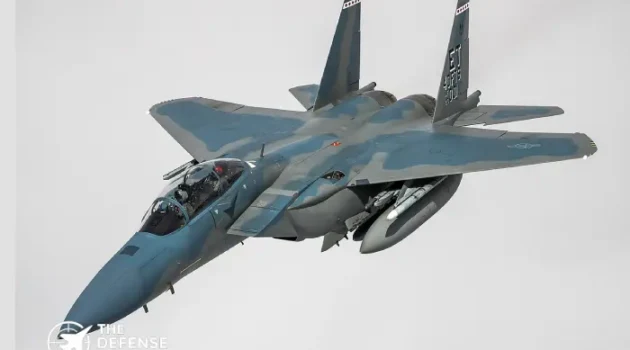
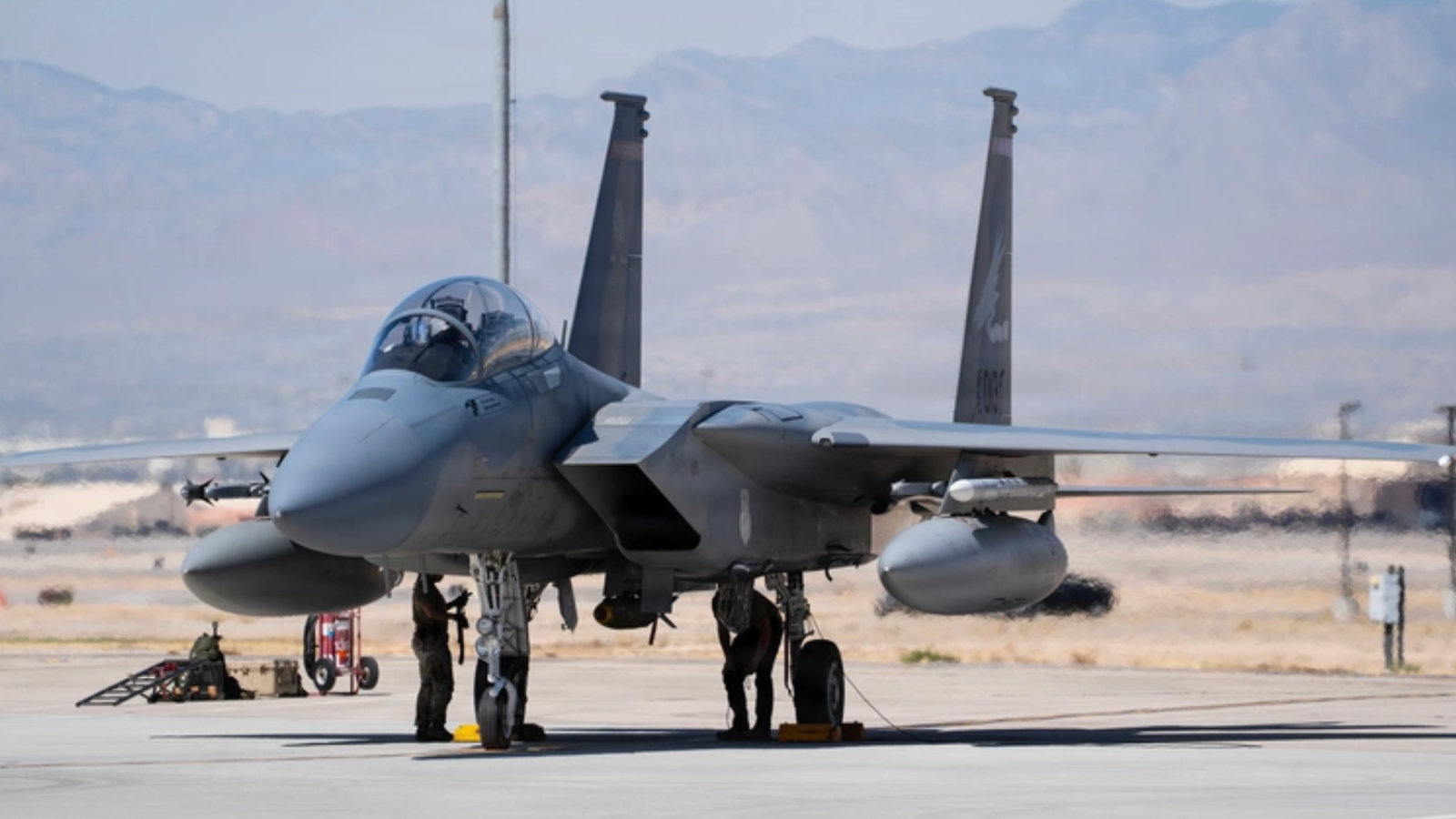
The U.S. Department of the Air Force has awarded Boeing a contract for 22 F-15EX Eagle II fighter aircraft under the program’s seventh production lot, preserving the full Lot 7 quantity and sustaining production of the heavy multirole fighter.
The award was made September 29, one day before the end of fiscal year 2026. The Department of the Air Force said the agreement accounts for the effects of a 2025 production disruption and inflation across the defense industrial base. Boeing separately reported the contract value at $2.38 billion.
Scope of the Boeing F-15EX Eagle II Contract
The Lot 7 agreement covers 22 F-15EX Eagle II aircraft for the U.S. Air Force. Boeing is now under contract for Lots 1 through 7, bringing the total number of F-15EX aircraft under contract to 120.
The Air Force said negotiations between its F-15 Program Office and Boeing were conducted to keep all 22 aircraft within available funding despite changing production conditions and higher costs.
The final Lot 7 quantity is notable because earlier Air Force fiscal year 2026 planning documents identified funding for 21 F-15EX aircraft, including conformal fuel tanks, initial spares and other supporting requirements. The final contract covers 22 aircraft.
The Air Force announcement did not disclose a contract type, individual aircraft price, detailed delivery schedule, or a breakdown of the $2.38 billion between aircraft and supporting equipment. Those figures should not be inferred from the headline contract value.
F-15EX Eagle II Technical and Operational Context
The F-15EX Eagle II is a twin-seat, multirole heavy fighter derived from the F-15 family. The Air Force describes the aircraft as incorporating advanced avionics, large-area displays, a digital backbone architecture and enhanced survivability capabilities. Its intended role includes replacing aging F-15C and F-15D aircraft while retaining capacity for future modernization.
The aircraft also forms part of the Air Force’s broader approach to maintaining fighter capacity while introducing newer technologies. The F-15EX is not a replacement for every role performed by fifth-generation aircraft. Instead, its acquisition provides additional heavy-fighter capacity alongside platforms such as the F-35A and F-22.
The F-15EX entered operational service with the Oregon Air National Guard’s 142nd Wing in 2024. The first aircraft arrived at Portland on June 5, 2024.
The aircraft’s survivability architecture also includes the Eagle Passive Active Warning Survivability System, or EPAWSS. Air Force procurement documents identify EPAWSS procurement and modernization work as part of the F-15EX program.
Operational Impact on the U.S. Air Force Fighter Fleet
The Lot 7 award extends the production pipeline for a fighter that the Air Force is using to recapitalize its older F-15 fleet.
From a force-structure perspective, the F-15EX provides a large airframe capable of carrying substantial weapons and supporting future system upgrades. That capacity is relevant to an Air Force balancing stealth aircraft, uncrewed systems and traditional fighter capacity.
The Air Force has also begun moving F-15EX aircraft toward overseas operational locations. In August 2026, the first F-15EX designated for Kadena Air Base, Japan, departed Boeing’s St. Louis facility for Portland for additional preparations before its eventual movement to Japan.
The deployment is significant in practical terms because the F-15EX is moving beyond test and initial operational units into the replacement of older fighters at established operational bases.
Contract Breakdown: Boeing F-15EX Award Details
Contract Value
Boeing reported the Lot 7 contract value at $2.38 billion. The Department of the Air Force announcement did not state the contract value.
Contractor
The Boeing Company is the prime contractor for the F-15EX program. Boeing’s production activity is centered in St. Louis, Missouri.
Contract Type
The Air Force’s September 29 announcement did not disclose the contract type for the Lot 7 aircraft award. Earlier F-15EX production actions have used different contract structures, so the Lot 7 mechanism should not be assumed without a specific award document.
Work Locations
The current announcement identifies Boeing as the contractor but does not provide a detailed percentage breakdown of work locations.
Boeing’s F-15 production activity is centered in St. Louis, Missouri. The Air Force has previously identified Boeing’s St. Louis operation as the prime production location for F-15EX aircraft.
Performance Period
The September 29 Air Force announcement did not disclose a complete Lot 7 delivery schedule.
Boeing said it expects to continue delivering Lot 3 aircraft through the remainder of 2026 while working with the Air Force to increase F-15EX production to two aircraft per month.
Funding
The award used congressionally provided reconciliation funding. The Air Force said the Lot 7 negotiations preserved the buying power of that funding and kept all 22 aircraft within available resources.
Air Force FY2026 budget documentation had identified $2.408818 billion in mandatory reconciliation funding for F-15EX advance procurement and related Lot 7 requirements, including 21 aircraft, conformal fuel tanks, initial spares and other supporting requirements. The final contract value reported by Boeing was $2.38 billion.
These figures should not be treated as interchangeable. The budget request, reconciliation allocation and final contract value represent different stages of the acquisition process.
Options Or Follow-On Work
The September 29 announcement did not disclose specific options associated with the Lot 7 aircraft award.
Boeing said the company is under contract for Lots 1 through 7 and that the latest award brings the contracted total to 120 aircraft.
Boeing Defense Industrial Base and Acquisition Impact
The Lot 7 agreement comes as the F-15EX production line manages inflation and the effects of a production disruption in 2025. The Air Force said those conditions were explicitly considered during negotiations with Boeing.
The acquisition process also illustrates the relationship between production continuity and aircraft procurement. Maintaining a production order can help preserve the manufacturing pipeline, but the contract itself does not establish that the production line has reached its targeted future rate.
Boeing and the Air Force are working toward a production rate of two F-15EX aircraft per month, according to Boeing. The Government Accountability Office previously identified production-rate growth as an important program risk, reporting that Boeing needed to increase output to support future delivery requirements.
The broader F-15EX program has also undergone changes in planned quantities. Earlier Air Force documents contemplated different procurement totals as service priorities changed. The current Lot 7 award establishes 120 aircraft under contract, but it does not by itself guarantee procurement of aircraft beyond those contracted lots.
Program Milestones and Next Steps
The immediate milestone is continued production and delivery of aircraft already under contract.
Boeing said Lot 3 deliveries will continue through the remainder of 2026 and that the company is working with the Air Force toward a production rate of two aircraft per month.
Operationally, the F-15EX transition is also progressing. The Oregon Air National Guard’s 142nd Wing became the first operational F-15EX unit in 2024, while the first aircraft designated for Kadena has begun its movement toward Japan.
The Lot 7 contract therefore represents both a procurement milestone and a continuation of the manufacturing pipeline. Its longer-term significance will depend on aircraft delivery, production-rate performance, integration of planned systems and future Air Force decisions on fighter force structure.