Executive Summary
- Belgium will accelerate delivery of three operational F-16 fighter aircraft to Ukraine by December 31, 2026, according to Ukrainian President Volodymyr Zelenskyy’s September 29 announcement.
- The three aircraft are part of seven Belgian F-16 airframes allocated for transfer during 2026, with four intended for spare parts and technician training rather than combat operations. Ukraine had previously secured a Belgian commitment for 30 aircraft by 2028.
- The immediate value of the delivery is not simply the number of aircraft. Ukraine is using F-16s within an integrated air-defense network, while the broader Belgian contribution adds aircraft sustainment, spare parts, training and ammunition support to an increasingly important Western fighter capability.
Belgium to Accelerate Three F-16 Deliveries to Ukraine in 2026
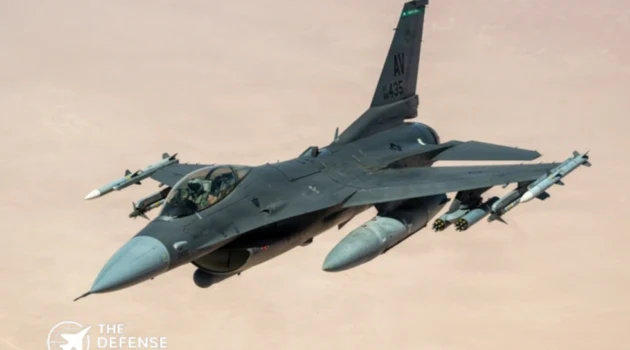
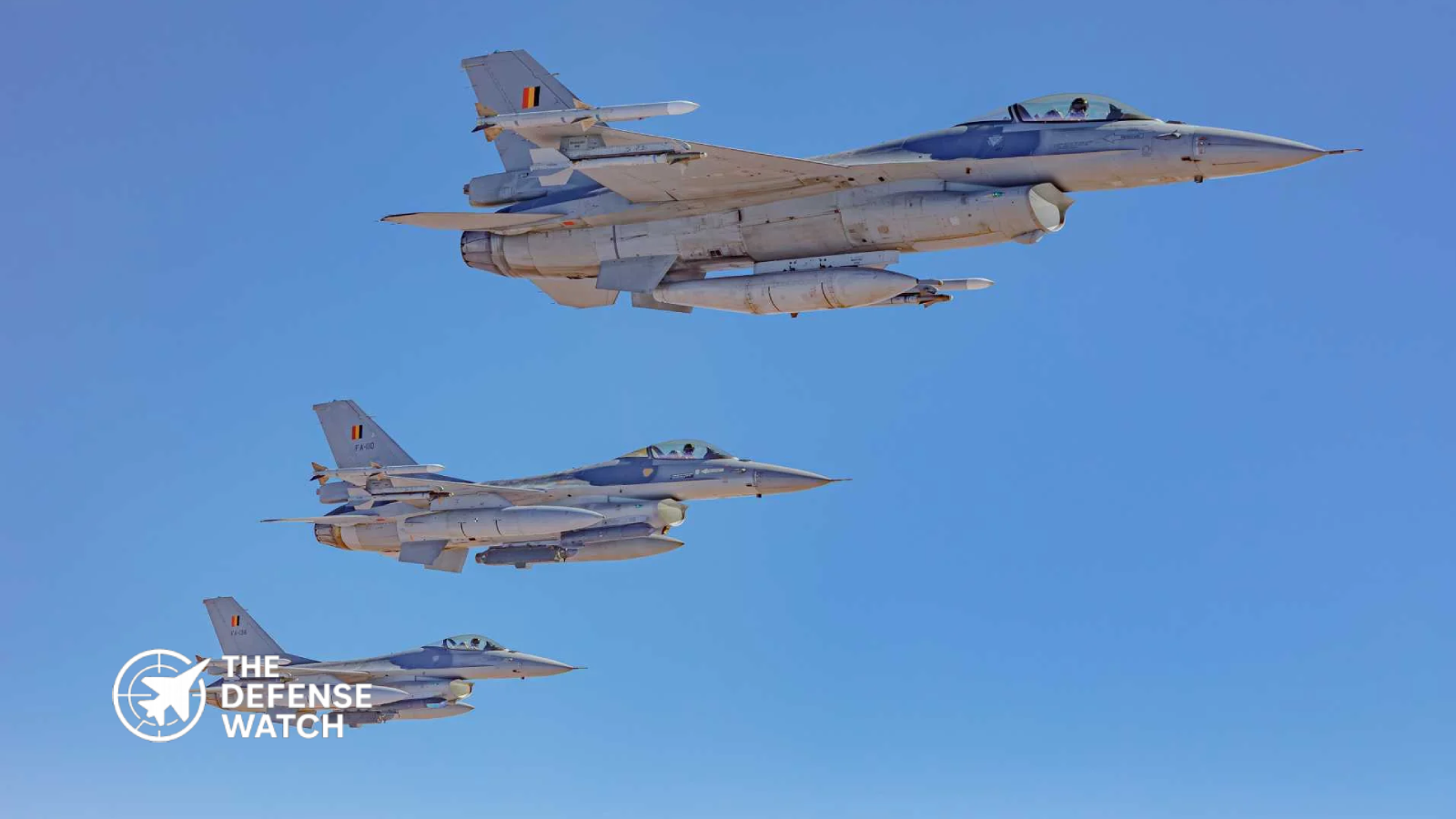
Belgium is accelerating the transfer of three operational F-16 fighter aircraft to Ukraine before the end of 2026, giving Kyiv additional Western fighter capacity at a time when Russian missile, drone and jet-powered unmanned attacks continue to place pressure on Ukrainian air defenses.
Ukrainian President Volodymyr Zelenskyy announced on September 29 that Belgium had agreed to provide three more aircraft this year. He said the fighters would contribute to Ukraine’s ability to defend its airspace, including against Shahed-type drones. Reuters independently reported the same three-aircraft commitment.
The decision represents an acceleration of a Belgian commitment that dates back to the 2024 bilateral security agreement between Belgium and Ukraine. That agreement originally specified the delivery of 30 F-16 aircraft by 2028, alongside training, ammunition and long-term support for Ukraine’s F-16 capability.
Three F-16s Will Arrive Before the End of 2026
The immediate transfer consists of three aircraft intended for operational use. Ukraine’s government previously stated that Belgium planned to transfer seven F-16s during 2026, of which three would be used for combat operations and four would support spare-parts requirements.
That distinction matters.
An aircraft transferred to Ukraine is not automatically equivalent to an additional aircraft available for combat sorties. Fighter availability depends on pilot training, maintenance capacity, spare engines and components, weapons stocks, inspections, airfield support and the number of flight hours remaining on individual airframes.
The Belgian F-16s are also part of a wider transition in Belgium’s own combat-aircraft fleet. Belgium is replacing its F-16 force with the F-35A, creating the conditions for the gradual transfer of F-16s to Ukraine. Belgian Defence has continued operating F-16s for NATO air-policing and multinational missions during the transition.
What Belgium Is Providing
Item 2026 status Operational F-16s 3 Additional F-16 airframes 4 for spare parts and training Total Belgian F-16 airframes allocated in 2026 7 Original bilateral commitment 30 F-16s by 2028 2026 military assistance €1 billion announced by Belgium Belgium’s Foreign Affairs ministry says a new €1 billion military-aid package was approved in April 2026. The package includes support for the F-16 coalition, air defense, artillery, drones and other Ukrainian defense priorities.
Why Three Fighters Matter to Ukraine’s Air Defense
The most important feature of the Belgian transfer is its role within Ukraine’s broader air-defense architecture.
Ukraine does not operate its F-16s as a stand-alone fighter force. The aircraft are being incorporated into a network that includes ground-based air-defense systems, radar and command-and-control infrastructure, electronic warfare and other Western-supplied capabilities.
Ukraine’s Defense Ministry has described the Air Force Capability Coalition as a mechanism for developing a Western-standard Ukrainian air force. The coalition covers not only aircraft, but also pilot and technician training, weapons, maintenance and sustainment.
That architecture is increasingly important as Russian attacks combine different types of aerial threats.
F-16s can contribute to the defense of Ukrainian airspace while ground-based systems remain focused on threats that require surface-launched interceptors. This division of labor can help preserve scarce air-defense missiles, although the precise allocation of missions depends on Ukraine’s operational requirements and available weapons.
Ukraine’s Defense Ministry has also confirmed that Belgium has supported the supply of spare parts for F-16s already in Ukrainian service. Canada has supplied AIM-9 missiles for Ukrainian F-16 operations with Belgian logistical support, illustrating how the fighter program has become a multinational sustainment effort rather than a series of isolated national donations.
The Real Constraint Is Sustainment, Not Airframe Numbers
The Belgian delivery highlights a broader issue with Western fighter assistance to Ukraine: aircraft numbers alone provide an incomplete picture of combat power.
A fighter force requires a continuous supply chain covering:
- Airframe inspections and structural maintenance
- Engines and major components
- Avionics and mission systems
- Pilot training and replacement crews
- Ground equipment
- Weapons and targeting systems
- Runway and hardened-airfield support
- Technical personnel
- Maintenance facilities and spare parts
Belgium’s contribution of non-flying aircraft is therefore operationally relevant even though those airframes will not increase the number of fighters available for combat.
They can provide components and training opportunities that help keep operational aircraft flying. Ukraine’s Defense Ministry has separately emphasized the importance of spare parts and maintenance support for the F-16 fleet.
This is particularly important because Ukraine is operating aircraft supplied by several countries, with different histories, configurations and support arrangements.
The long-term effectiveness of the Ukrainian F-16 force will therefore depend on standardization, maintenance capacity and the availability of compatible weapons and components as much as on the number of aircraft delivered.
Belgium’s F-16 Transition Is Driving the Delivery Timeline
Belgium’s F-16 transfer is closely tied to the country’s transition to the F-35A.
Belgian Defence has already begun operating F-35As while continuing to use F-16s for national and NATO missions. In August 2026, Belgium deployed four F-16s for NATO’s Icelandic Air Policing mission, demonstrating that the aircraft remain operationally relevant to Belgium during the transition.
That creates a practical limitation on how quickly Belgium can release additional aircraft.
The Belgian F-16 fleet cannot simply be transferred in its entirety while those aircraft remain responsible for NATO commitments. As F-35A aircraft, pilots and support personnel progressively replace the F-16 force, more F-16s can become available for Ukraine.
This explains why the delivery should be viewed as part of a multi-year force transition rather than a single transfer event.
From a 30-Aircraft Commitment to a Larger Planned Contribution
Belgium’s original 2024 security agreement with Ukraine committed the country to providing 30 F-16 aircraft by 2028. The agreement also covered ammunition, pilot and technician training, maintenance and facilities required to sustain the Ukrainian fleet.
Ukraine subsequently announced a larger Belgian F-16 allocation, including seven aircraft in 2026.
The important distinction is between airframes transferred and aircraft immediately available for combat. Four of the seven aircraft identified for 2026 are intended for spare parts and technician training, according to Ukraine’s September update.
That structure is consistent with the broader evolution of Ukraine’s fighter program. Western governments are increasingly treating aircraft delivery, weapons, maintenance and training as one interconnected capability.
F-16s and the Changing Air Threat
The operational environment facing Ukrainian F-16s has also changed since the first aircraft entered Ukrainian service.
Russian forces have increasingly combined cruise missiles, conventional drones and newer jet-powered unmanned systems. Ukraine’s President said on September 29 that Ukrainian F-16s were being used to intercept Shahed-type drones, while Ukraine continues to seek additional air-defense missiles for systems such as Patriot and NASAMS.
That creates a difficult resource-allocation problem.
Using a fighter against a relatively inexpensive unmanned aircraft can protect ground infrastructure without consuming a surface-to-air interceptor, but fighter operations still consume aircraft flight hours, weapons, fuel and maintenance capacity.
The appropriate balance will vary by threat, location and available weapons. Three additional aircraft therefore do not translate into a fixed number of additional interceptions.
Instead, their value comes from giving Ukrainian commanders another air-defense option within a layered system.
What the Transfer Does Not Change
The Belgian delivery does not by itself resolve Ukraine’s broader air-defense requirements.
Ukraine still needs sufficient numbers of aircraft, trained pilots, maintainers, weapons and spare parts to maintain persistent coverage. It also needs ground-based systems capable of defending key areas against ballistic and cruise missiles that fighters cannot efficiently replace.
Belgium’s own contribution illustrates this point. Its 2026 military assistance includes air-defense support alongside the F-16 program, while Ukraine continues to seek additional Patriot and NASAMS missile stocks from other partners.
The F-16 should therefore be understood as one layer of Ukraine’s air-defense and air-power architecture, not a substitute for ground-based air defense.
Strategic Significance for European Air Power
Belgium’s accelerated delivery also demonstrates how the European fighter transition is becoming linked to Ukraine’s wartime air-power requirements.
Belgium is moving from the F-16 toward the F-35A. Denmark and the Netherlands have already transferred F-16s to Ukraine, while other members of the Air Force Capability Coalition contribute aircraft, training, weapons or sustainment. Ukraine’s Defense Ministry describes the coalition as part of a longer effort to establish a Western-standard air force.
The industrial implication is significant.
As more European F-16 operators retire older aircraft, Ukraine can potentially receive additional airframes, components and technical expertise. But those transfers will remain constrained by structural life, configuration differences, maintenance capacity and the availability of compatible weapons.
The result is likely to be a Ukrainian fighter force that becomes progressively more dependent on coordinated multinational logistics.
That is a different model from simply donating aircraft. It resembles a coalition-managed capability in which aircraft, weapons, training, maintenance and spare parts are distributed among several countries.
The Bottom Line
Belgium’s decision to accelerate three operational F-16 deliveries by the end of 2026 provides Ukraine with additional fighter capacity during a period of sustained Russian air attacks.
The immediate number is modest, but the broader contribution is larger than three aircraft because Belgium is also supporting the F-16 ecosystem through spare parts, training, ammunition and the wider Air Force Capability Coalition.
The key measure over time will not be the number of F-16s physically transferred. It will be the number of aircraft that Ukraine can keep operational, armed and supported while sustaining pilots and maintenance crews.
That makes Belgium’s latest decision an important step in building a durable Ukrainian combat-air capability, while also showing the practical limits imposed by aircraft age, NATO commitments and the pace of Belgium’s F-35A transition.