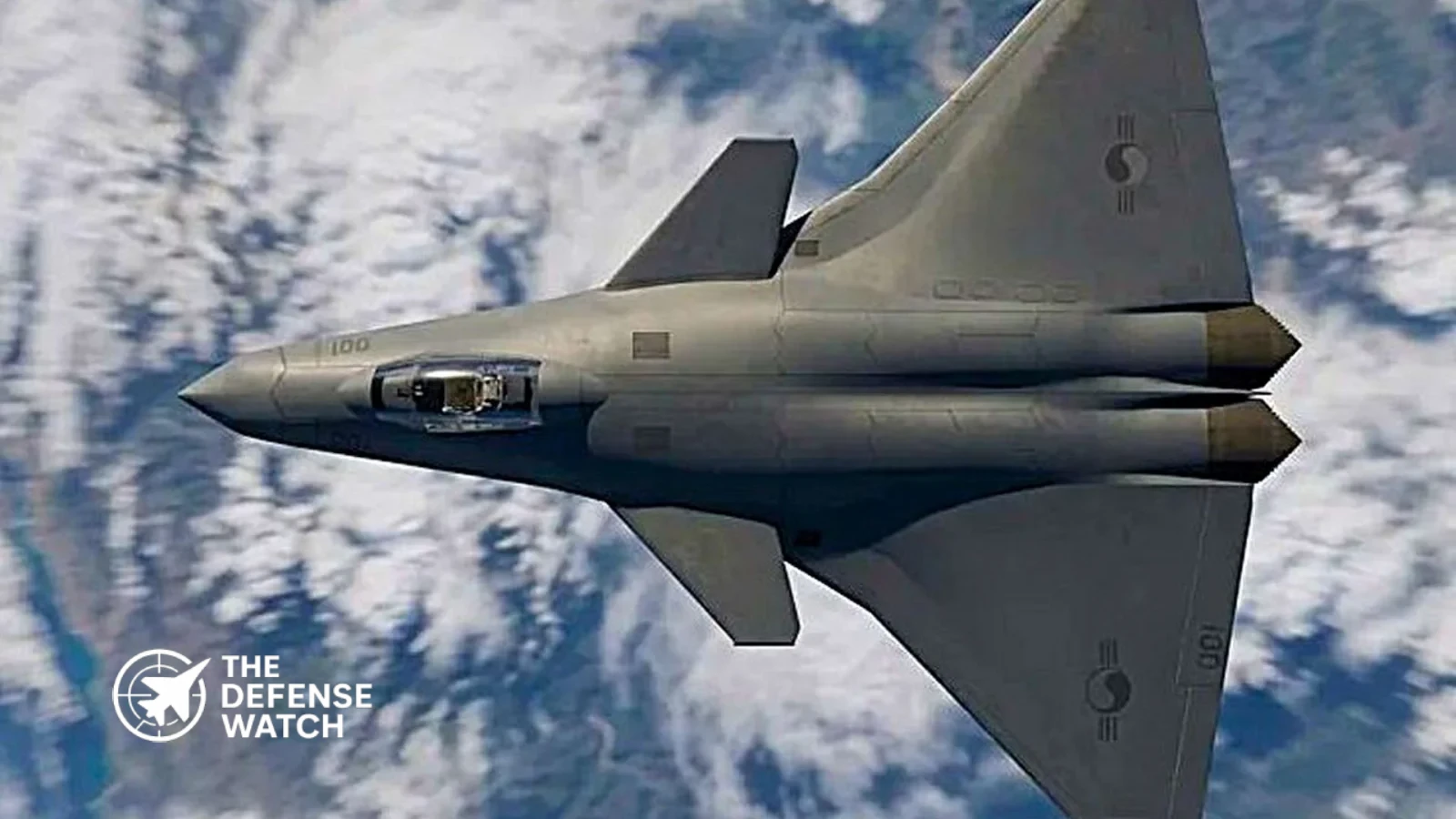
South Korea Begins Sixth Generation Fighter Concept Study
South Korea’s sixth generation fighter effort has entered a formal concept phase after the Defense Acquisition Program Administration, or DAPA, issued a request for proposals on August 21 for a Korean Next Generation Fighter Concept Study. The 14-month effort is intended to define future operational requirements, examine aircraft configurations and establish a technology roadmap for a possible next generation combat aircraft.
- South Korea Begins Sixth Generation Fighter Concept Study
- Takeaways
- What The Korean Next Generation Fighter Study Will Examine
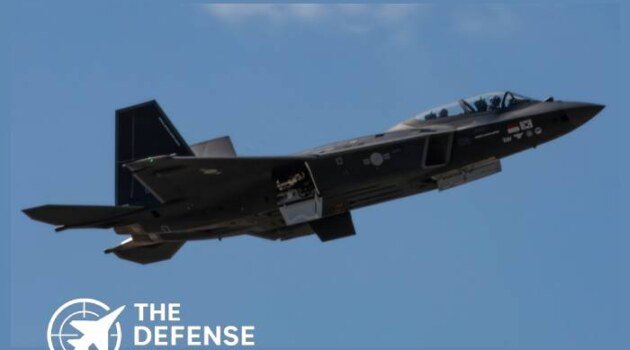
- KF-21 Gives Seoul A Starting Point
- Why A Tailless Design Matters
- Propulsion Could Become The Critical Technology
- From A Fighter To A Combat Air System
- South Korea Is Building On Its KF-21 Technology Base
- Regional And U.S. Defense Implications
- South Korea Enters A Crowded Sixth Generation Race
- The Next Decision Is Still Years Away
Takeaways
South Korea has started a formal concept study for a future fighter beyond the KF-21, but no sixth generation aircraft acquisition program has yet been approved.
The initiative comes only weeks after South Korea formally completed development of the KF-21 Boramae. DAPA said the KF-21 passed its final combat suitability assessment in May after more than 1,600 flight tests, while the first production aircraft are scheduled for delivery to the Republic of Korea Air Force during the second half of 2026.
The new study should not be confused with an approved aircraft acquisition program. At this stage, Seoul is defining what a future fighter would need to accomplish and which technologies would be necessary to support those requirements.
What The Korean Next Generation Fighter Study Will Examine
The reported study has a budget of KRW 900 million, approximately $650,000, and is scheduled to run for 14 months. Its purpose is to develop operational concepts, examine competing aircraft configurations and establish technology development priorities before any potential full-scale fighter program.
Available reporting indicates that the study is considering both conventional and tailless aircraft configurations.
Reported areas of investigation include:
Area Reported Direction Aircraft configuration Conventional and tailless designs Crew Single-seat configuration under study Low observability Broadband stealth Radar bands L, S and X bands Weapons Internal weapons carriage Propulsion Twin adaptive-cycle engines under study Flight performance Supersonic cruise capability Combat architecture Manned-unmanned teaming Mission systems AI-enabled capabilities These characteristics remain study requirements and concepts, not confirmed specifications for an operational South Korean fighter.
That distinction is important. The current effort is intended to provide technical and operational evidence that could later support formal requirements, preliminary studies and a possible acquisition decision.
KF-21 Gives Seoul A Starting Point
The timing of the study is significant because South Korea has just demonstrated that it can complete a domestically led fighter development program.
The KF-21 began system development in 2015. In May 2026, DAPA announced that the aircraft had received a combat suitability determination after completing more than 1,600 flight tests and validating more than 13,000 test conditions.
The aircraft subsequently received its initial type certification after South Korean authorities determined that it met all 745 applicable airworthiness requirements across 14 areas.
Those achievements matter beyond the KF-21 itself. Developing a modern combat aircraft requires expertise in aerodynamic design, flight controls, avionics, radar integration, weapons integration, structural testing, certification and large-scale industrial production.
South Korea now has experience in each of those areas that it did not possess at the same level before the KF-21 program.
The next challenge is significantly more demanding.
Why A Tailless Design Matters
One of the most technically important elements reported in the new study is the examination of tailless configurations.
Conventional fighters use vertical and horizontal tail surfaces to provide aerodynamic stability and control. Removing those surfaces can reduce radar reflections and potentially improve low observability, but it also creates difficult flight-control problems.
A tailless fighter must maintain adequate control authority through alternative aerodynamic surfaces, thrust management and sophisticated flight-control software.
The challenge becomes greater as the aircraft is optimized for multiple radar-frequency bands. Low observability is not simply a matter of shaping the aircraft. Designers must account for the interaction among the airframe, materials, apertures, sensors, weapons carriage, propulsion system and antennas.
South Korea’s decision to study these issues at the concept stage indicates that the country is evaluating a clean-sheet architecture rather than simply adding individual stealth features to the KF-21.
Propulsion Could Become The Critical Technology
Aircraft propulsion represents one of the largest remaining gaps between South Korea’s current fighter capability and a fully sovereign future combat-air system.
The KF-21 uses foreign propulsion, while Seoul has started work on indigenous aviation engines for future aircraft.
In July, DAPA and the Agency for Defense Development publicly displayed a 5,500-pound-class turbofan prototype intended for possible use on collaborative unmanned combat aircraft. DAPA also said South Korea plans to develop an indigenous engine for a future crewed fighter, with the effort extending to 2041.
A separate advanced aviation-engine program approved by South Korea calls for development of a 16,000-pound-force-class turbofan, rising to approximately 24,000 pounds-force with afterburning. The program is scheduled to run from 2027 through 2040 and has a reported total cost of about KRW 3.35 trillion.
These engine efforts are strategically important because propulsion affects almost every major aircraft characteristic, including acceleration, range, thermal management, electrical power generation and sustained high-speed performance.
For a future stealth aircraft using high-powered sensors and electronic warfare systems, thermal and electrical management can be almost as important as raw engine thrust.
From A Fighter To A Combat Air System
Another major change under consideration is the relationship between the future crewed aircraft and uncrewed platforms.
South Korea is increasingly developing technology for manned-unmanned teaming, in which a crewed fighter operates alongside collaborative combat aircraft or other autonomous systems.
This approach changes the role of the fighter. Instead of treating the aircraft as an isolated weapons platform, the crewed aircraft becomes part of a wider network involving sensors, autonomous aircraft, communications and other combat systems.
That architecture could allow uncrewed aircraft to perform missions such as sensing, electronic warfare or weapons delivery while the crewed aircraft retains responsibility for higher-level decisions.
The technology is still developing, and the precise level of autonomy that South Korea would ultimately authorize remains a requirements question rather than an established capability.
Nevertheless, DAPA’s simultaneous investment in uncrewed aircraft engines and future crewed fighter technology suggests that Seoul is approaching future airpower as an interconnected system rather than as a single aircraft project.
South Korea Is Building On Its KF-21 Technology Base
The sixth generation study also runs alongside continued interest in more advanced KF-21 configurations.
Future KF-21 development has been associated with greater low observability, internal weapons carriage, improved sensors, mission computing and the ability to control collaborative aircraft. These capabilities could provide a technology bridge between the current aircraft and a clean-sheet future fighter.
That distinction could become important for South Korea’s force planning.
A clean-sheet sixth generation fighter would require decades of technology development and testing. Developing selected technologies through the KF-21 family could allow engineers to mature systems before integrating them into a new airframe.
South Korea is already pursuing additional KF-21 sensor capabilities. The Agency for Defense Development began a three-year effort in January to validate the aircraft’s AESA radar for air-to-ground and air-to-sea modes, with testing scheduled through December 2028.
This creates a potential technology progression from the current KF-21, through more advanced derivatives, toward a future aircraft architecture.
Regional And U.S. Defense Implications
South Korea’s move has significance for the wider Indo-Pacific defense environment.
The Republic of Korea Air Force operates in a region where advanced fighters, long-range missiles, increasingly capable air defenses and uncrewed systems are reshaping the air domain. A future South Korean fighter would therefore need to address more than traditional fighter-versus-fighter combat.
Survivability against integrated air defenses, electronic warfare resistance, sensor networking, long-range weapons employment and coordination with autonomous aircraft are likely to be central design considerations.
For the United States, the development of a stronger South Korean combat-air industrial base could also have implications for alliance interoperability.
The United States and South Korea already operate closely integrated air forces, including U.S. F-35A and South Korean F-35A fleets. A future Korean aircraft designed around advanced networking and collaborative systems could eventually add another indigenous layer to the alliance’s air combat architecture.
At the same time, an indigenous fighter program does not automatically mean South Korea will become independent of foreign suppliers. Engines, weapons, electronic components and other critical technologies can remain internationally sourced even when an aircraft is domestically designed.
The more meaningful measure of sovereignty will therefore be how much of the aircraft’s design, software, propulsion, sensors and upgrade cycle South Korea can control.
South Korea Enters A Crowded Sixth Generation Race
South Korea’s study is beginning as other major powers pursue their own next generation combat-air programs.
The U.S. Air Force’s F-47 is being developed under the Next Generation Air Dominance effort. The United Kingdom, Japan and Italy are pursuing the Global Combat Air Programme, while China is developing advanced future combat-aircraft designs.
These programs do not share identical requirements.
The emerging sixth generation category is therefore unlikely to produce one standard aircraft configuration. Some countries may prioritize range and weapons capacity, while others may place greater emphasis on affordability, distributed operations, autonomous systems or operating from geographically constrained bases.
South Korea’s geography makes those trade-offs particularly important. A future aircraft must provide high survivability and advanced sensing while remaining compatible with the country’s force structure, industrial capacity and operating environment.
That could make the Korean program distinct from much larger aircraft being studied elsewhere.
The Next Decision Is Still Years Away
The most important point is that South Korea has not yet committed to building a sixth generation fighter.
The 14-month study is intended to establish the operational concepts, performance requirements, configuration options and technology roadmaps that could support a future decision. The aircraft’s final design, propulsion system, development schedule, production quantity and acquisition budget remain unresolved.
For Seoul, however, the timing provides an opportunity to build on the KF-21 while its engineering workforce, suppliers, testing infrastructure and institutional knowledge remain active.
That may ultimately be the most important strategic feature of the new study.
South Korea’s fighter ambitions are moving from proving that it can build a modern combat aircraft toward determining whether it can sustain an indigenous combat-air ecosystem spanning aircraft design, stealth, sensors, propulsion, autonomy, weapons integration and continuous upgrades.
The current study is only an early step, but it provides the framework for answering that larger question.