
Ukraine Minehunting Ships Could Join Hormuz Security Mission
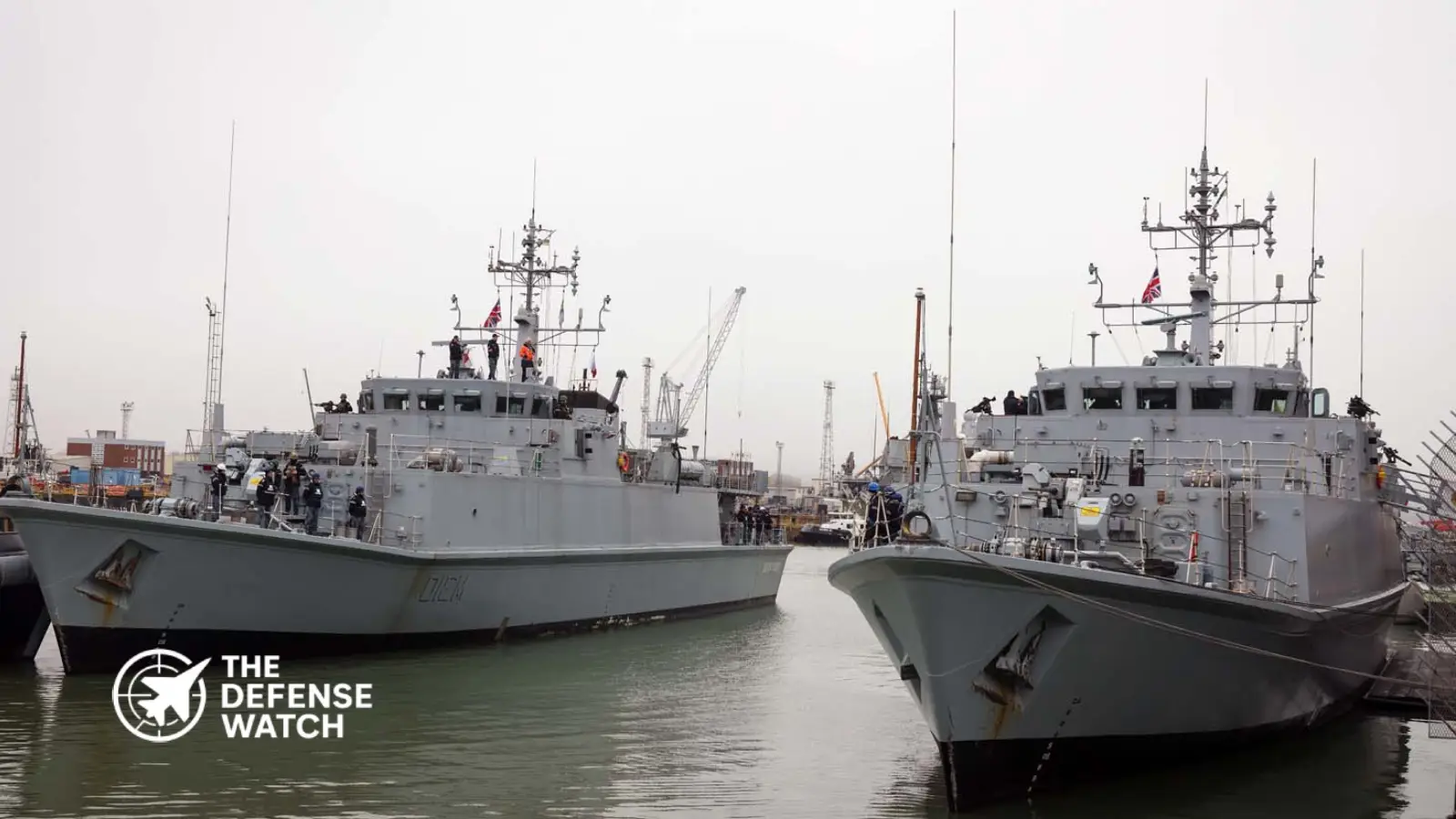
Ukraine minehunting ships may soon play a role far from the Black Sea, with Kyiv reportedly prepared to send British-built minehunters to support a future multinational mission in the Strait of Hormuz. The proposed effort is being led by Britain and France and would focus on protecting commercial shipping and clearing naval mines once active combat conditions ease.
- Ukraine could offer up to four minehunting vessels currently based in Portsmouth for a future Hormuz security mission.
- The proposed operation is being coordinated by Britain and France to restore safe commercial shipping.
- Two of the vessels were originally transferred from the United Kingdom, with two more from Belgium and the Netherlands.
- Deployment discussions remain conditional on reduced fighting between the United States and Iran.
- Mine warfare capability has become central to reopening the Strait of Hormuz.
The development reflects how Ukraine is increasingly positioning itself not only as a recipient of Western military aid, but also as a contributor to wider security operations. That shift carries political and strategic value as Kyiv seeks to maintain close defense ties with European allies.
Why The Strait Of Hormuz Matters
The Strait of Hormuz remains one of the most important maritime chokepoints in the world. Roughly one fifth of global oil and gas shipments typically transit the narrow waterway. Any disruption quickly affects energy markets, shipping insurance rates, and naval force posture across the Middle East.
Recent tensions involving Iran and the United States have increased fears that mines, drone attacks, or missile threats could halt traffic again. That has pushed allied governments to examine specialized mine countermeasure fleets rather than relying only on larger surface combatants.
The Ships Ukraine Could Send
Reports indicate up to four minehunters connected to Ukraine are currently in Portsmouth. Two were previously transferred from the United Kingdom, while two others came from Belgium and the Netherlands. Because wartime restrictions limited their movement into the Black Sea, the vessels remained outside the theater and available for alternative use.
These vessels are particularly relevant because minehunting requires specialized hull designs, sonar systems, remotely operated vehicles, and explosive ordnance disposal teams. Destroyers and frigates are not optimized for that mission.
Why This Matters Strategically
If Ukraine contributes ships, it would send several signals at once.
First, it would demonstrate that Kyiv can provide niche military capability despite being engaged in a major war with Russia.
Second, it would reinforce the growing European role in maritime security at a time when many allies want to show burden-sharing.
Third, it would highlight the value of older Western mine warfare fleets that still remain highly relevant in modern conflict.
Mine threats are relatively low cost to deploy but expensive and slow to remove. That imbalance gives naval mines strategic power far beyond their price.
Britain And France Driving Planning
British and French officials have been coordinating multinational talks on freedom of navigation and possible post-conflict maritime security arrangements. Officials have described any future mission as defensive and focused on commercial traffic rather than offensive combat operations.
That language is important. Many governments remain cautious about direct escalation in the Gulf, but are more willing to support defensive escort and mine-clearing tasks.
Operational Challenges Ahead
Even if approved, deployment would not be simple.
Mine clearance is slow, deliberate work. Each contact must be detected, identified, and neutralized safely. Weather, traffic density, shallow waters, and hostile drone or missile threats all complicate the mission. Reuters recently noted that clearing even limited lanes could take weeks depending on the density and type of mines used.
That means any coalition force would likely combine crewed vessels, unmanned surface craft, underwater drones, helicopters, and surveillance aircraft.
Bottom Line
The possible deployment of Ukraine minehunting ships to the Strait of Hormuz shows how naval mine warfare has re-emerged as a major strategic issue in 2026. It also underlines Ukraine’s effort to convert wartime experience into broader geopolitical influence.
For Britain and France, adding Ukrainian vessels would bring useful capacity. For Kyiv, it could strengthen alliances at a critical moment.