
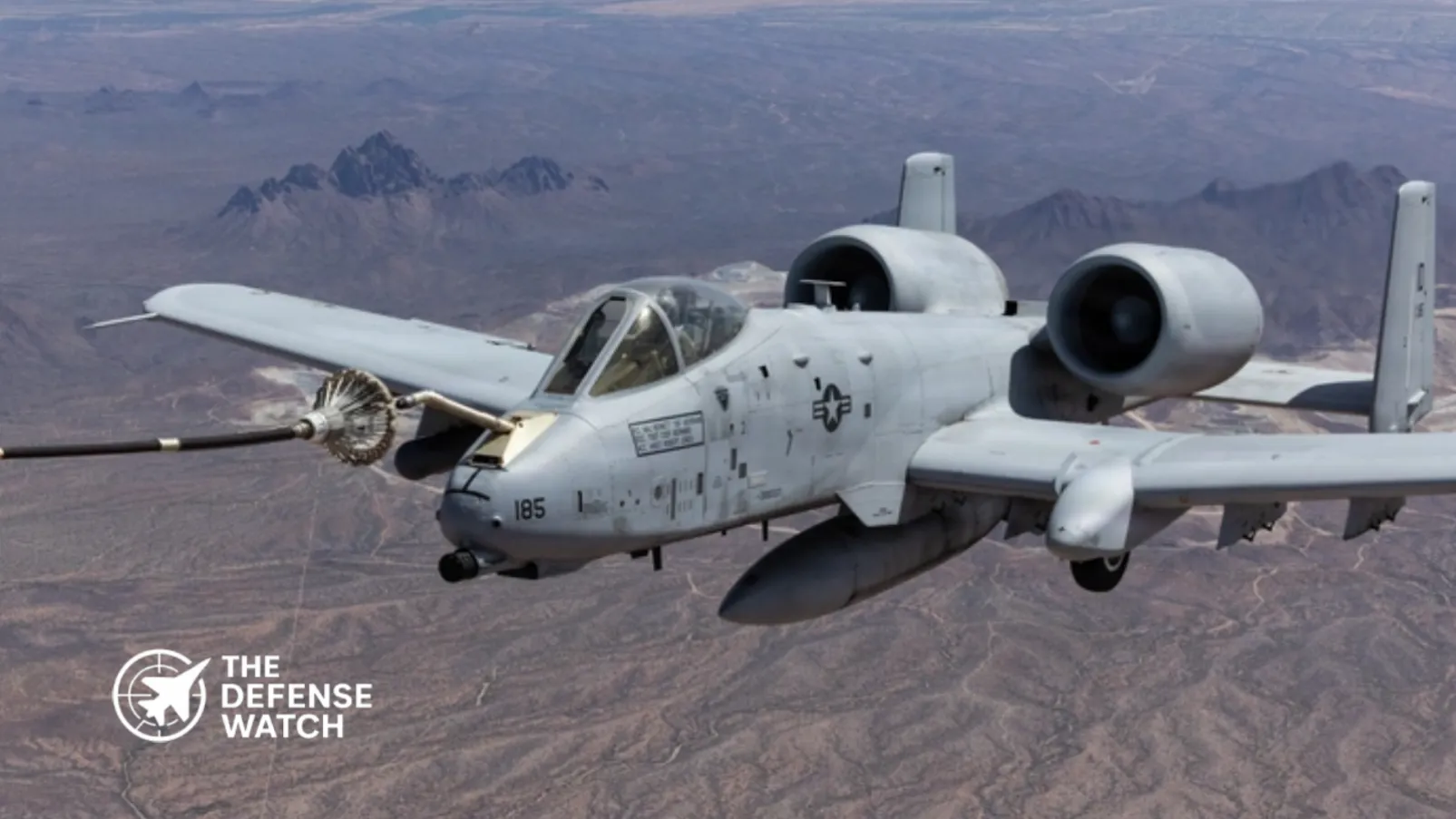
A-10 Warthog Service Extended To 2030
The A-10 Warthog service extended decision marks a major reversal in long-running U.S. Air Force plans to retire the iconic close air support aircraft. Air Force Secretary Troy Meink announced that the A-10 Thunderbolt II fleet will remain in service through 2030, citing the need to preserve combat power while the U.S. defense industrial base increases production of newer aircraft.
- The U.S. Air Force has extended A-10 Warthog service life to 2030.
- The aircraft had previously faced retirement as early as 2026 under earlier plans.
- Officials said the move preserves combat power while aircraft production ramps up.
- A-10 aircraft were recently used in operations linked to the Iran conflict.
- The decision highlights continuing demand for close air support capability.
The move follows renewed operational use of the aircraft during the current Iran conflict, where U.S. Central Command-linked reporting indicated A-10 aircraft were employed in combat missions.
Why The Pentagon Changed Course
For years, the U.S. Air Force argued that the A-10 was aging, costly to maintain, and increasingly vulnerable in highly contested airspace. Service leaders repeatedly sought to retire the aircraft and redirect funding toward newer platforms such as the Lockheed Martin F-35 Lightning II and Boeing F-15EX Eagle II.
But combat realities often shape procurement timelines more than planning documents.
The latest extension suggests the Pentagon still sees value in aircraft that can loiter for long periods, carry heavy ordnance, and provide direct support to ground forces. In lower-to-medium threat environments, the A-10 remains a practical tool even if it is no longer considered ideal for high-end peer conflict.
That distinction matters. The aircraft may not be central to a Pacific war scenario, but it can still be useful in regional conflicts, maritime security operations, convoy protection, and rapid response missions.
Why The A-10 Still Matters
The Fairchild Republic A-10 Thunderbolt II first entered service in the 1970s and was built around its powerful 30mm GAU-8/A cannon. It became famous during the Gulf War and later saw action in Afghanistan, Iraq, and operations against ISIS.
Its strengths remain clear:
- Long loiter time over the battlefield
- Heavy weapons load
- Rugged design and battle damage tolerance
- Strong close air support performance
- Lower operating complexity than some advanced fighters
Critics, however, note that survivability against modern integrated air defense systems remains a serious concern.
Strategic Meaning Behind The 2030 Extension
The extension is also a signal about industrial capacity. U.S. officials specifically tied the move to the need for more combat aircraft production. That implies replacement fleets are not arriving fast enough to fully absorb the A-10 mission set.
In practical terms, Washington appears to be choosing available combat mass over a cleaner retirement schedule.
That is a broader lesson across many air forces today. Legacy aircraft once marked for retirement are staying in service longer because new production, pilot training pipelines, and maintenance transitions take time.
What Comes Next
The A-10 Warthog service extended announcement does not guarantee the aircraft survives beyond 2030. Instead, it likely creates a bridge period while newer aircraft numbers grow and force structure decisions mature.
For now, the Warthog has won another reprieve.
And once again, a combat-tested legacy aircraft has outlasted retirement plans.
Get real time update about this post category directly on your device, subscribe now.


